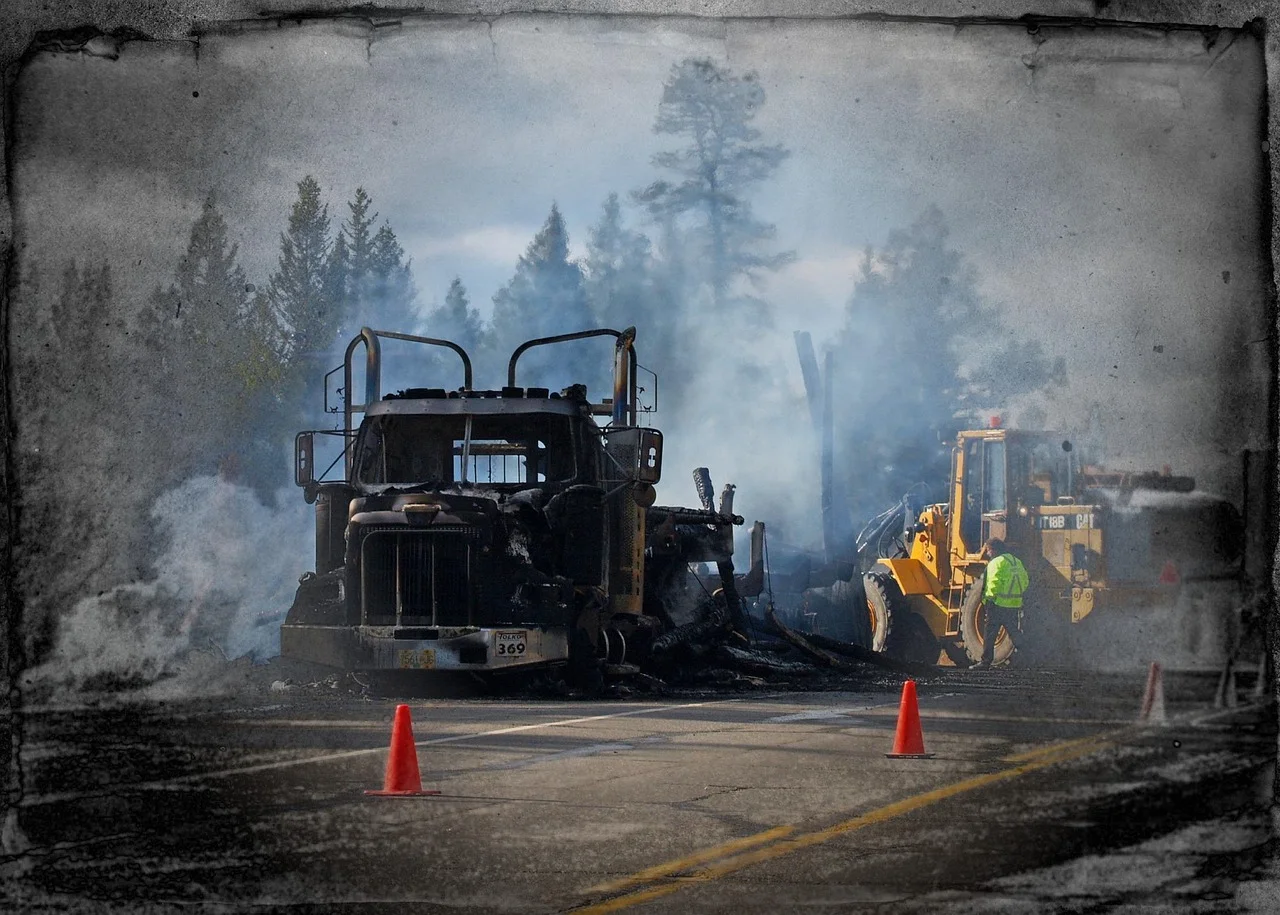
Commercial transportation is changing in the U.S. with its rapid growth. Commercial transportation is advancing as a result of rapid growth. From last-mile delivery vans to regional freight trucks, commercial fleets are becoming an important segment of the national transportation network. As businesses are moving more goods to cater to the escalating demand for faster as well as more frequent deliveries, the number of commercial vehicles on American roads is also surging. That momentum is shown in the General Freight Trucking Market, which is expected to grow from USD 1.3 trillion in 2026 to approximately USD 2.6 trillion by 2033, advancing at a CAGR of 10.4% from 2026 to 2033. Put simply, more freight moving through the economy means more trucks in motion, more routes being covered, as well as greater exposure to the risks that come with commercial transportation.
That growth is also reshaping how fleets operate and manage risk. E-commerce, regional distribution, construction, manufacturing, and last-mile delivery are driving businesses to put more vehicles into service and keep them on the road for longer. At the same time, connected fleet technology is becoming a bigger part of everyday operations, with GPS, electronic logging devices, onboard computers, dash cameras, and telematics helping companies monitor vehicles and drivers. Just as importantly, fleet operators are placing greater emphasis on proactive safety and risk management, recognizing that driver behavior, vehicle maintenance, insurance, and recordkeeping can all influence what happens when an accident occurs.
Liability is one of the critical issues. In a commercial vehicle accident, finding fault may be a much more complex process than in a typical passenger vehicle accident. There may be more than one company, insurance policy, driver, broker, or maintenance company that is associated with the same vehicle or shipment. As the U.S. General Freight Trucking Market continues to expand, understanding these relationships becomes increasingly important for both fleet operators and parties involved in commercial vehicle claims.
Commercial Fleet Growth Is Increasing Road Exposure
As e-commerce, regional distribution, construction, manufacturing, or last mile deliveries have increased so have the number of commercial vehicles on American roads. As consumers demand more timely and regular deliveries, businesses are also having to purchase new vehicles.
But the growth of the fleet is not just a growth in the number of vehicles. It also leads to higher vehicle-miles travelled. If a company is running more than one delivery vehicle, they may have hundreds or thousands of additional miles on the road every week. The more you travel, the more chances you have for an accident. And the equation is simple: the more a commercial vehicle is on the road, the more opportunities there are for an accident.
That exposure becomes even more pronounced when considering how the freight trucking industry is structured. Long-distance trucking leads the General Freight Trucking Market by type, accounting for approximately 86.4% of the market in 2026. The segment includes both long-distance and local trucking, but long-distance operations naturally place vehicles on the road for extended periods as they move freight between distribution centers, cities, ports, and other destinations. In other words, a market increasingly driven by long-haul movement also means more sustained exposure to traffic, road conditions, and potential collisions.
This is where fleet growth and transportation risk intersect. Higher utilization can improve delivery capacity and business efficiency, but it can also increase liability exposure if driver management, vehicle maintenance, insurance coverage, and safety protocols fail to keep pace. For fleet operators, growth is therefore not simply a matter of adding trucks it is about adding the right safeguards to every additional mile.
Why Commercial Vehicle Accidents Are Different
Commercial vehicle accidents may have complex legal and business issues that are not encountered in standard motor vehicle collisions. In a passenger-car crash, there could be two separate driver-to-driver and insurance company-to-insurance company claims. There are many individuals who can be considered a commercial accident. These can include the driver, the trucking company, the vehicle owner, the leasing company, the freight broker, the shipper, and the maintenance contractor.
To be able to determine responsibility, one must consider more than just who's at fault, and who is responsible for the immediate impact. Investigators may have to decide if the company policies were adhered to, if the driver was properly trained, if the vehicle was properly maintained, and if another business entity contributed to the circumstances of the collision.
Vehicle type can add another layer to that investigation. Not every commercial truck brings the same operational risks to the road, and the sheer presence of certain vehicle types in freight activity makes that distinction important. Dry vans and box trucks are expected to account for 43.2% of the General Freight Trucking Market in 2026, putting them at the center of a large share of commercial freight movement. Alongside them, the market spans refrigerated trucks, tanker trucks, flatbed trucks, and other configurations, each built around different cargo, routes, loading requirements, and operating conditions.
Multiple Parties Can Share Responsibility
Commercial transportation is often run through interrelated business relationships. The trucking firm can carry the goods for a broker, and the truck itself can be leased from another trucking firm. Another option for maintaining is to hire a third party to do it.
There is therefore a possibility of liability going beyond the driver. Responsibility might include the party responsible for the maintenance, if the failure was mechanical due to poor maintenance. Likewise, over-scheduling, weak training procedures or negligent hiring is a concern that may be raised in regards to an employer's liability in an accident.
The layered system renders commercial collision investigations more critical. It also reflects the broader structure of a market supported by an extensive network of carriers, logistics companies, brokers, and transportation service providers. Major industry participants and related freight operators include United Parcel Service (UPS), FedEx Corporation, DHL Express, J.B. Hunt Transport Services, XPO Logistics, C.H. Robinson Worldwide, Schneider National, Maersk, Nippon Express, CEVA Logistics, Landstar System, Werner Enterprises, Ryder, Yellow Corporation, and Kuehne + Nagel.
The Importance of Driver Qualification and Training
One of the key issues in commercial vehicle safety is driver behaviour. Fleet owners are interested in having the right drivers in place, trained and experienced to drive their vehicles.
Information about licenses, training, driving records, disciplinary issues and employer policies can be relevant following a serious accident. Any evidence that a company put an unqualified individual at the wheel should factor into the liability determination.
Therefore, driver suitability should not be seen as a one-off when you hire someone but should be regarded as a continuous process of the responsible fleet manager.