Automotive and Transportation

Top 8 Last Mile Delivery Providers Transforming E-Commerce Logistics Market

By GoboltOct 15, 202614 min read
Top 8 Last Mile Delivery Providers Transforming E-Commerce Logistics Market

Last mile delivery is the final stage of the supply chain, in which a parcel moves from a local distribution center or delivery station to the customer's door. It is the most visible and usually the most expensive part of the journey, because every stop is a separate address and each failed attempt adds cost. Retailers now treat it as part of the customer experience, and shoppers judge a brand as much by when and how an order arrives as by what it contains.

The market is served by integrated carriers, retailer-owned networks, regional carriers, and technology-led crowdsourced platforms. They compete on speed, tracking, reliability at peak season, price, and the quality of their delivery data. High operating costs, traffic congestion, and urban regulation are the main constraints on the sector, and they push providers toward better routing, denser networks, and cleaner fleets.

Market Introduction

The demand is mostly generated by e-retailers, grocers, and on-demand companies where consumers expect timely deliveries and instant feedback. According to CMI, the rapid development of e-commerce and increased need for speedy deliveries are the two key factors driving this industry's growth. Software route optimization, drones, autonomous vehicles, and IoT have improved efficiency, while retailers have engaged more than one carrier at a time.

As per Coherent Market Insights, the Global Last Mile Delivery Market is valued at US$ 207.10 Billion in 2026 and is projected to reach US$ 378.59 Billion by 2033, growing at a CAGR of 9.0% during the forecast period of 2026 to 2033.

3 Key Market Trends

  1. E-commerce growth is pushing providers to add capacity: As online orders rise, carriers are adding vehicles, tracking tools, and storage close to customers. CMI cites Flipkart's partnership with neighborhood shops and small storage centers as an example, and Amazon announced in April 2025 a US$ 4 billion investment, to be spent by the end of 2026, to expand its delivery network in rural parts of the U.S. The impact is a wider and denser delivery footprint, and a rising cost of entry for smaller operators that cannot match this scale.
  2. Demand for quick delivery is moving inventory closer to the customer: Shoppers require same-day and next-day deliveries; therefore, local distribution centers, local delivery facilities, and small-sized fleets become preferred. CMI mentions the merger of DPDgroup in October 2023 with a local delivery company and the April 2025 takeover by InPost of 95.5% share of Yodel for US$ 136 million. Crowdsourced solutions like Roadie provide additional opportunities at the network edge, including launching RoadieXD in 2024 to carry heavy and bulky freight. The effect of this trend is reallocation of investments into short-distance rather than long-distance capacity, as well as tiered services allowing to adjust shipping speeds and prices.
  3. AI, route optimization, and cleaner fleets are changing operations: Providers use machine learning to predict delivery windows, adjust routes for weather and traffic, and give customers accurate arrival estimates. CMI cites Amazon's delivery-window predictions and FedEx's weather- and traffic-aware estimates, and notes growing interest in drones and electric vehicles. Cost is a concern, since CMI also records that U.S. tariffs could raise the cost of electric delivery fleets by 15-20%. The impact is lower cost per stop and fewer failed deliveries for operators that invest in data, while sustainability becomes a factor in carrier selection.

Last Mile Delivery Market Insights

At present the market is shaped by e-commerce volumes, consumer expectations of speed, and the cost of delivering to individual addresses. CMI names high operational costs, traffic congestion, and regulatory challenges in urban areas as the main restraints. External factors include tariffs, emissions rules such as the expansion of London's Ultra Low Emission Zone in August 2023 and the update to EU CO2 regulations in May 2025, and changes in labor and fuel costs. CMI also points to geopolitical disruption, such as Red Sea rerouting since March 2025, which strains final-mile efficiency because delayed goods require costly expedited delivery.

CMI sees its main opportunity in innovative delivery technology, especially drones, which can lower the cost of delivery and support on-demand and same-day models. Providers that combine dense local networks with accurate tracking and flexible capacity are best placed to win business from retailers who want to lessen their dependence on any single carrier.

Market Segmentation

The CMI report segments the last mile delivery market by service type, delivery mode, and region:

  • By service type: B2C (business to consumer) and B2B (business to business).
  • By delivery mode: road, drone, bicycle, walking, and others.
  • By region: North America (U.S., Canada), Latin America (Brazil, Argentina, Mexico, and the rest of the region), Europe (Germany, U.K., Spain, France, Italy, Russia, and the rest of the region), Asia Pacific (China, India, Japan, Australia, South Korea, ASEAN, and the rest of the region), Middle East (GCC countries, Israel, and the rest of the region), and Africa (South Africa, North Africa, and Central Africa).

Two sub-segments, B2C from the service type segment and road from the delivery mode segment, are analysed below.

Sub-Segment Analysis

  • B2C (service type segment)

B2C is estimated to hold 66.8% of the market in 2026, the largest share of the service type segment. Growth comes from online shopping by households, from consumers' expectation of fast delivery with live tracking, and from retailers that compete on delivery promises and free returns. CMI names tech-savvy millennials and Gen Z shoppers as key demographic groups driving this trend. Typical uses are apparel, electronics, groceries, and household goods delivered to homes and pickup points. The segment also drives the technology agenda, since scheduled windows, photo confirmation, and delivery updates were built first for consumer parcels. Because it accounts for about two thirds of the market, B2C volumes set the pace for the whole sector, and carriers such as UPS, FedEx, Amazon, and Veho design their networks around residential density.

  • Road (delivery mode segment)

Road delivery services are projected to represent 73% of the market by 2026, having the largest market share of the delivery mode market segment. The delivery by road can be carried out using vans, trucks, and motorbikes, which are capable of delivering various sizes of parcels, reaching all kinds of locations, whether it is dense urban areas or the suburbs. CMI attributes its lead to well-established road infrastructure, lower cost than other modes for average-sized packages at scale, multi-stop capacity, and streamlined regulatory compliance. The growth will be propelled by the increase in delivery centers, multi-stop delivery, and gradual shift to electric vans like GoBolt. Road delivery services applications include same-day groceries and retail parcels, bulky parcels, and business parcels.

U.S. Country Analysis

The United States is the main market in North America Last mile delivery market. CMI links this position to demand for fast shipping from large retailers such as Amazon and Walmart, a dense population near major consumption centers, multi-stop routes that lower the cost per delivery, and strong consumer spending. Some recent examples include Amazon Hub Delivery, which began operations in June 2023 in small businesses in 23 states, and Amazon’s testing of its Prime Air drone deliveries in selected areas of the United States. In addition, Walmart entered into an agreement worth $520 million with Symbotic in February 2025 to automate its deliveries, according to CMI. Carriers are also adapting to the new environment; FedEx is launching its Network 2.0 network strategy, and UPS made an agreement with Amazon in January 2025 to reduce its Amazon deliveries by more than half by mid-2026.

How to Choose a Last Mile Partner: Key Considerations

The providers below are discussed against criteria that matter to retailers and logistics managers: technology, reliability, coverage, scalability, and sustainability. Each ties back to the market themes above.

  • Technology integration: Real-time visibility, predictive delivery windows, and APIs should be tested in practice, since the value of tracking depends on how accurate and timely the data is. This links to the AI and route optimization trend.
  • Reliability and peak capacity: On-time rates, damage claims, and customer complaint patterns show how a provider performs, and peak-season data and written capacity commitments show whether it can handle surges.
  • Coverage and service levels: Not every parcel needs premium speed, so tiered options let shippers match service levels to shipment types, and a multi-carrier approach reflects the retailer behavior CMI describes.
  • Sustainability: Fleet composition, such as the share of electric vehicles, is a useful test of environmental claims, particularly given emissions rules and the tariff pressure on electric fleet costs.

Piloting a provider before committing fully, and verifying its claims with data, reduces the risk of a poor fit.

Prominent Players in the Last Mile Delivery Industry

  • GoBolt

By GoBolt

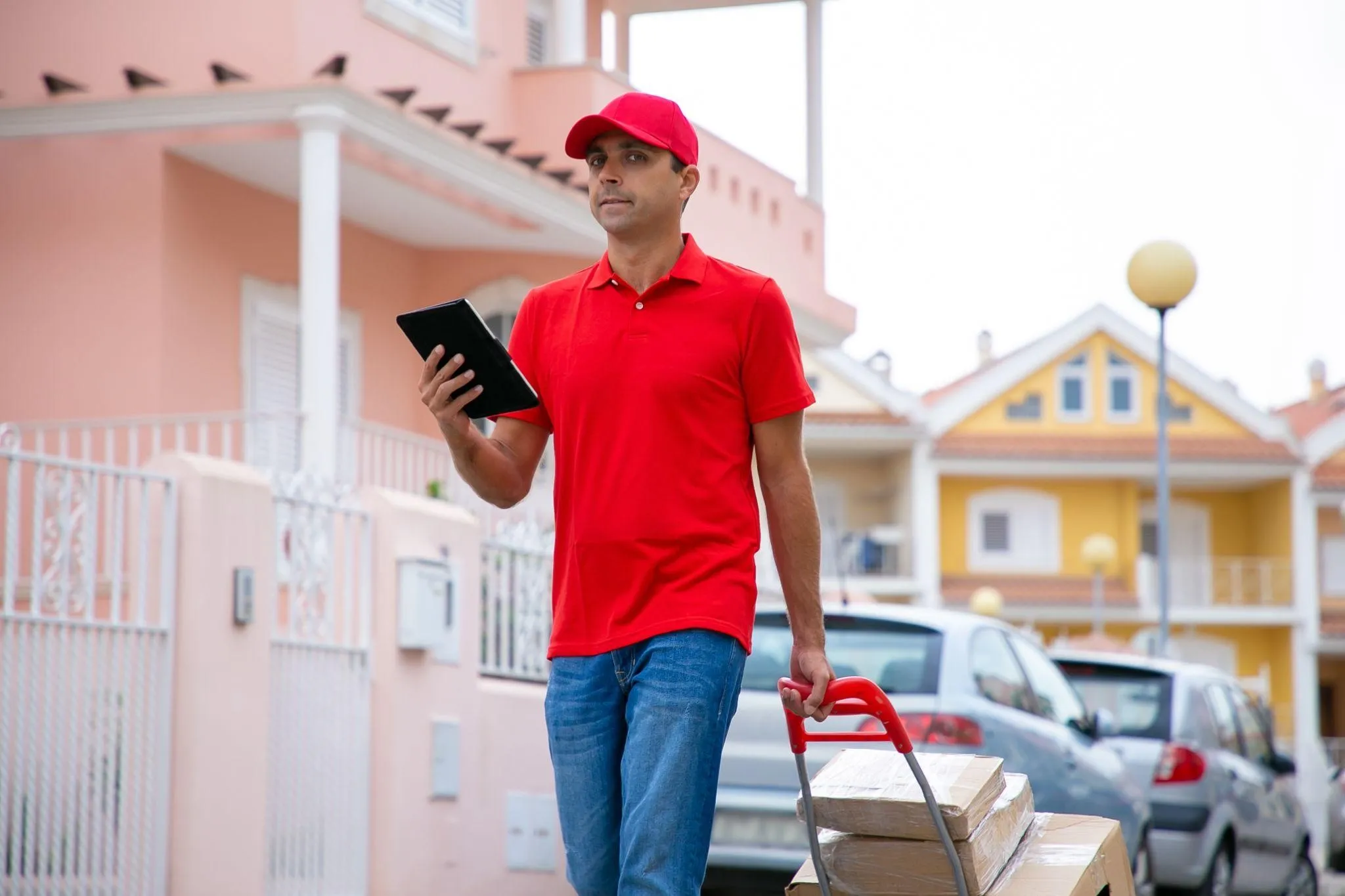
GoBolt is a Toronto-based third-party logistics company that offers warehousing, fulfillment, and same-day and next-day last mile delivery to e-commerce merchants in Canada and the U.S. It was founded in 2017 and expanded through the acquisition of BoxKnight in June 2022. The company operates an electric-vehicle delivery fleet and a platform that links warehouse and delivery data.

Its services include real-time tracking, a recipient app to change the delivery location, and route optimization. A November 2024 profile said the company planned to run 24-hour operations at selected fulfillment centers and enter new markets in 2025.

SWOT Analysis
  • Strengths: Electric fleet that supports sustainability-focused shippers; integrated fulfillment and delivery platform.
  • Weaknesses: Smaller scale and network reach than the large integrated carriers; concentration in Canada and selected U.S. markets.
  • Opportunities: Retailers seeking lower-emission delivery options; entry into new markets.
  • Threats: Rising cost of electric fleets and charging infrastructure; dependence on a limited set of merchant customers.
  • FedEx Corporation

FedEx is a global logistics company headquartered in Memphis, Tennessee. It was founded in 1971 as Federal Express and operates air and ground express networks in more than 220 countries and territories. FedEx Ground was merged into the Federal Express segment on 1 June 2024 under a single network structure.

Its delivery tools include FedEx Delivery Manager, tracking with machine learning-based delivery estimates, and FedEx Surround for package visibility. CMI notes that FedEx uses deep learning models that factor in weather and traffic for delivery estimates. The company launched its fdx data-driven commerce platform in September 2024 and is implementing Network 2.0, which had reached about 355 U.S. and Canadian locations by the end of November 2025.

SWOT Analysis

  • Strengths: Extensive national and international network; strong tracking and digital tools.
  • Weaknesses: Premium pricing; large enterprise accounts may receive more attention than smaller shippers.
  • Opportunities: Efficiency gains from Network 2.0; growth in cross-border and e-commerce parcels.
  • Threats: Fuel and labor cost increases; weaker volumes during economic slowdowns.
  • United Parcel Service (UPS)

UPS is a package delivery and supply chain company headquartered in Atlanta, Georgia. It was founded in 1907 in Seattle and offers domestic and international delivery, freight, and warehousing. Its UPS My Choice program gives consumers control over the timing and location of deliveries, and it owns the crowdsourced delivery service Roadie.

In January 2025 UPS agreed with Amazon to reduce its Amazon volume by more than 50% by the second half of 2026. In April 2025 the company announced about 20,000 job cuts and the closure of 73 buildings by the end of June 2025 as part of a network reconfiguration. CMI also cites UPS’s ORION system as an example of AI-driven route optimization.

SWOT Analysis

  • Strengths: Integrated delivery, warehousing, and freight services; recognized brand and large residential delivery network.
  • Weaknesses: Heavy reliance on large accounts, as shown by the planned reduction of Amazon volume; progress on sustainability commitments is still ongoing.
  • Opportunities: Higher-margin business from small and mid-sized shippers; healthcare and same-day services.
  • Threats: Labor cost pressure; changes in shipper contracts and network capacity.
  • Amazon Logistics

By Amazon Logistics

Amazon Logistics is the delivery network of Amazon, which was founded in 1994 and is based in Seattle, Washington. It delivers through a combination of delivery stations, Delivery Service Partners, and Amazon Flex drivers, and it is known for same-day and next-day delivery in large markets.

On 30 April 2025 Amazon announced a US$ 4 billion investment, to be spent by the end of 2026, to expand its rural delivery network in the U.S. to more than 200 delivery stations. CMI also records the launch of Amazon Hub Delivery in 2023 and trials of Prime Air drone delivery.

SWOT Analysis

  • Strengths: Scale of its own delivery network; tight integration with the Amazon marketplace.
  • Weaknesses: Limited use by outside brands that compete with Amazon; dependence on a contractor-based driver model.
  • Opportunities: Rural delivery expansion; drone and automated delivery.
  • Threats: Labor and contractor regulation; scrutiny of its position in retail and logistics.
  • DHL eCommerce

DHL eCommerce is the e-commerce parcel division of DHL Group, which is headquartered in Bonn, Germany. It handles cross-border and domestic e-commerce parcels, and its Americas operations are based in Weston, Florida. The unit is known for its international network, customs knowledge, and global tracking.

In December 2024 DHL eCommerce took a 25% stake in CTT Expresso Portugal, while CTT took 25% of DHL eCommerce Spain, subject to regulatory approval. Scott Ashbaugh became CEO of DHL eCommerce Americas from 1 July 2025.

SWOT Analysis

  • Strengths: Strong cross-border network and customs expertise; backing of a global logistics group.
  • Weaknesses: Domestic delivery in North America is less distinctive than its international offer; premium pricing.
  • Opportunities: Growth in cross-border e-commerce; partnerships in European markets.
  • Threats: Changes in customs and de minimis rules; trade policy uncertainty.
  • OnTrac

OnTrac is a U.S. e-commerce parcel carrier headquartered in Chantilly, Virginia. It traces its history to Laser Courier, founded in 1986 and later renamed LaserShip. LaserShip acquired OnTrac Logistics in October 2021 for US$ 1.3 billion, and the combined networks were rebranded as OnTrac in 2023.

The company serves retailers, marketplaces, and third-party logistics providers with seven-day operations and positions itself as an alternative carrier network. In January 2026 it named Mike Brown as chief executive officer, effective 1 February 2026, after record volumes in 2025.

SWOT Analysis

  • Strengths: Combined national network built from regional carriers; strong local speed in western states.
  • Weaknesses: Smaller national coverage than FedEx and UPS; best used alongside other carriers.
  • Opportunities: Shippers diversifying away from the largest carriers; lower pricing through unused network capacity.
  • Threats: Pressure on prices from larger carriers; leadership and integration risks.
  • Veho

Veho is a technology-enabled parcel delivery company in the U.S. that was founded in 2016 by Itamar Zur. It delivers e-commerce parcels using a crowdsourced driver network and company-operated warehouses, with tracking and rescheduling through a consumer app.

The company raised US$ 170 million in a Series B round in February 2022 led by Tiger Global and SoftBank Vision Fund 2. In January 2025 Veho launched Premium Economy, a two-to-five-day service for parcels under one pound, routed through six regional hubs.

SWOT Analysis

  • Strengths: Technology-led delivery experience with photo confirmation and live tracking; flexible driver capacity.
  • Weaknesses: Consistency of service depends on a gig workforce; best suited to dense urban markets.
  • Opportunities: Lower-cost service tiers for lightweight parcels; expansion into new regions.
  • Threats: Regulation of gig labor; capital needs for network growth.
  1. Roadie

Roadie is a crowdsourced delivery service founded in 2014 and based in Atlanta, Georgia. It matches deliveries with independent drivers who are already traveling in the same direction, and it is used for same-day and scheduled local delivery. UPS agreed to acquire Roadie in 2021, and the service has kept its own brand.

In 2024 UPS and Roadie launched RoadieXD for big and bulky items of up to 200 pounds, using cross-dock facilities and offering same-day delivery within 100 miles in launch markets.

SWOT Analysis

  • Strengths: Flexible, on-the-way driver model; support and reach of UPS.
  • Weaknesses: Driver supply can be unpredictable; better suited to specific same-day needs than to core fulfillment.
  • Opportunities: Demand for same-day delivery of large and bulky items; returns and perishables.
  • Threats: Regulation of independent contractor status; variation in service quality.

Other companies covered in the CMI report include DHL Supply Chain (a separate DHL Group division from DHL eCommerce), XPO Logistics, Schenker AG, DPD Group, JD Logistics, ZTO Express, Yunda Express, Postmates (Uber), Glovo, DoorDash, Lalamove, and Sendy. CMI’s industry news also records Uber’s May 2025 acquisition of an 85% stake in Trendyol Go for US$ 700 million and DoorDash’s May 2025 acquisition of Deliveroo for US$ 2.9 billion.

Overall Market Outlook

The last mile delivery market is expected to grow steadily, from US$ 207.10 billion in 2026 to US$ 378.59 billion in 2033, at a CAGR of 9.0%, supported by e-commerce growth and demand for fast delivery.

North America is expected to keep the largest regional share, at 37.7% in 2026. B2C is expected to remain the leading service type and road the leading delivery mode. CMI describes Asia Pacific as the fastest-growing region, supported by rising online shopping and rapid urbanization.

Competition will center on speed, tracking accuracy, reliability at peak, and cost per delivery. Providers will have to manage high operating costs, congestion, urban regulation, and tariff effects on fleets, while investing in data, flexible capacity, and cleaner vehicles.

What’s Inside the
Sample Report?

9 sections, free — no obligation.

Request Free Sample
  • Current Industry Events of 2026
  • Market Size Estimation
  • Regional Breakdown
  • Competitive Landscape
  • Customer Intelligence
  • Segmental Analysis
  • Pricing Analysis
  • Key Market Drivers, Challenges & Future Trends
  • Customized Insights Section

Definition

Last mile delivery is the final step of the delivery process, in which goods are moved from a local distribution center or delivery station to the end customer. It is carried out by road, drone, bicycle, or on foot, and it covers deliveries to consumers (B2C) and to businesses (B2B).

Disclaimer: This post was provided by a guest contributor. Coherent Market Insights does not endorse any products or services mentioned unless explicitly stated.

Share this story

About Author

Shanique Brophy

Shanique Brophy

A marketing professional with a degree in Marketing and eight years of hands-on experience in PR and SEO. She loves exploring and writing about diverse topics, from branding to lifestyle and everything in between.