Moving off the grid promises freedom, quiet mornings, and monthly bills that finally stop climbing. Yet the single component that makes that lifestyle possible, the battery bank, is also the one that most homesteaders, cabin owners, and remote workers get wrong. A poorly matched or mistreated storage system will not just underperform. It can leave you in the dark on the coldest night of the year, force an expensive replacement far earlier than expected, and quietly eat into the savings you thought you were building.
And this is no longer a niche problem. Energy storage is becoming a much bigger piece of the power equation, with the global energy storage system market estimated at USD 56.90 billion in 2026 and projected to reach USD 94.44 billion by 2033, growing at a CAGR of 7.5%. As the market expands, storage is being asked to do more than simply keep the lights on: it needs to carry energy through longer gaps in renewable generation, provide smarter visibility into how a system is performing, and flex as household energy demands grow.
The good news? Nearly every failure traces back to a short list of avoidable errors made during selection, wiring, or daily use. This guide walks through the mistakes that most often sabotage independent power systems, and shows how to correct each one before it becomes a costly lesson. Whether you are planning your first setup or troubleshooting a bank that never quite delivers, the fixes below will help you build a system that actually earns its keep.
Choosing the Wrong Chemistry for Your Loads
The first and most expensive mistake happens before a single cable is cut. Many buyers pick a battery based on sticker price alone, then discover the chemistry cannot handle their real usage pattern. Flooded lead acid remains cheap up front, but its usable depth of discharge sits around fifty percent, meaning half the rated capacity is off limits if you want reasonable cycle life. AGM units tolerate a bit more abuse, yet still fade quickly under daily deep cycling. Lithium iron phosphate, by contrast, delivers around ninety percent usable capacity and thousands of cycles, which almost always makes it cheaper per kilowatt hour delivered over a decade. If your loads include a fridge running around the clock, an inverter powering tools, or an electric well pump, the right off grid battery is almost always lithium based, and skimping here dooms every downstream decision.
Storage is no longer a one-technology game. Pumped Storage, Electrochemical Storage, Electromechanical Storage, and Thermal Storage are all being used for different energy needs, and Pumped Storage alone is expected to represent about 36.8% of the energy storage system market in 2026. For someone building an off-grid system, that broader shift comes down to a simple question: what kind of storage actually fits the way you use power?
If your loads include a fridge running around the clock, an inverter powering tools, or an electric well pump, the answer usually starts with a battery that can handle repeated cycling without giving away too much of its usable capacity. That is where lithium-based storage has an edge for many off-grid applications. The cheapest battery may win on day one, but the better chemistry is the one that keeps delivering when the system is working hard.
Undersizing the Bank to Save on Purchase Cost
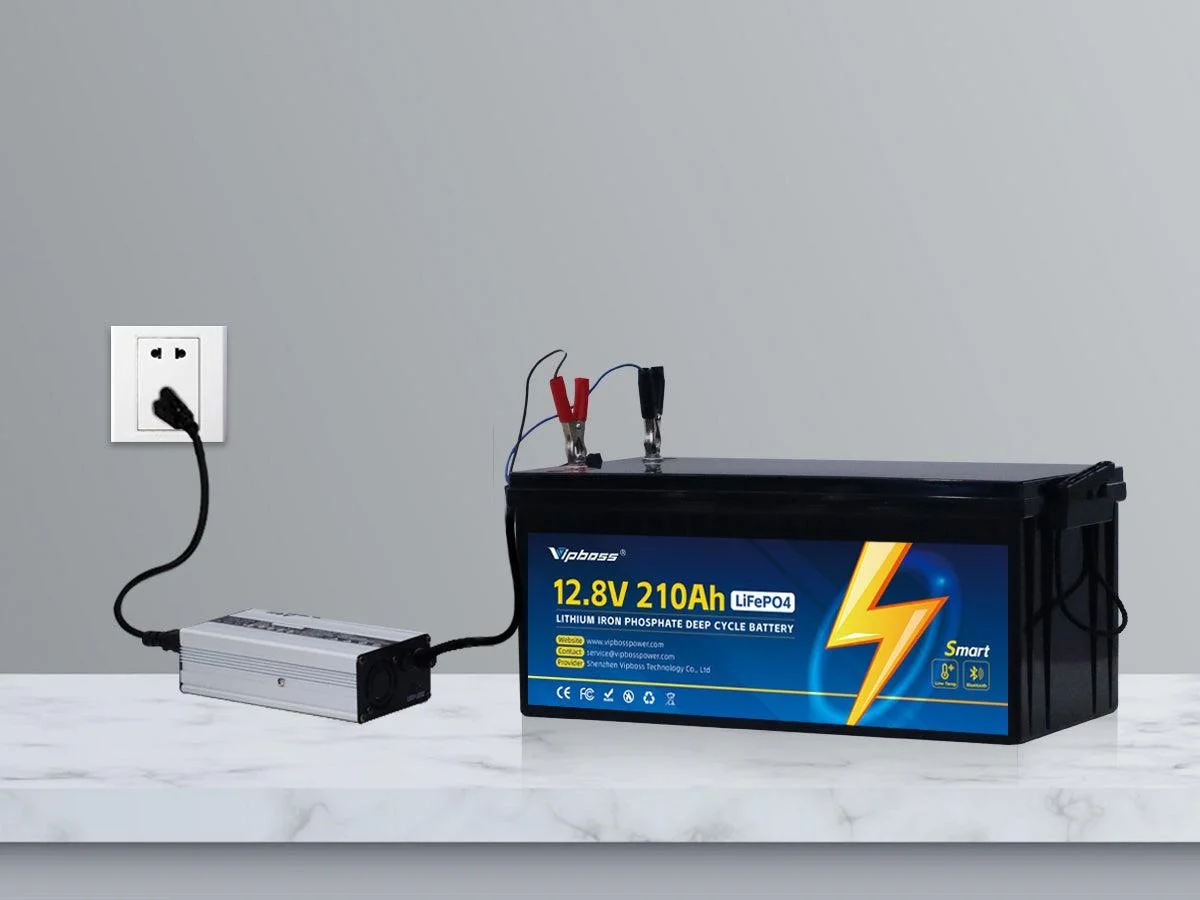
A bank sized to just barely cover average daily consumption will spend most of its life at low state of charge, and low state of charge is where batteries die young. Aim to size your storage so that a normal day uses no more than thirty to forty percent of the total usable capacity. That leaves headroom for cloudy stretches, unexpected loads, and the winter months when solar input drops sharply. Calculating the load carefully, in watt hours per day, and multiplying by at least two days of autonomy is a proven starting point that keeps replacement cycles far apart.
That same thinking is behind the growing emphasis on longer-duration storage. For off-grid households, the goal is not simply to have enough battery capacity for an average day, but enough reserve to carry the system through cloudy weather, seasonal changes, and periods when solar generation falls short.
Ignoring Temperature and Ventilation
Batteries are chemistry, and chemistry hates extremes. Lead acid banks in a hot uninsulated shed can lose half their expected life. Lithium units generally handle heat better but refuse to charge below freezing without an integrated heater, which is a specification worth confirming before purchase if your climate demands it.
Place the bank in a temperature-stable, ventilated space, keep it off concrete floors when possible, and check that any enclosure allows heat to escape during heavy discharge. As storage systems become more sophisticated, thermal management is becoming a more visible part of system design rather than an afterthought. The battery may be the heart of an off-grid installation, but its surroundings still determine how reliably that heart can operate.
Wiring and Charging Errors That Shorten Life
Even a well-chosen battery will fail early if the surrounding system fights against it. Undersized cables cause voltage drop that confuses charge controllers into terminating too early, leaving the bank chronically undercharged. lose lugs create resistance, resistance creates heat, and heat cooks terminals. Every connection should be torqued to the manufacturer specification, checked seasonally, and coated with an appropriate anti corrosion compound in humid environments. Fuses belong within inches of the positive terminal, not somewhere down the run, because a short in an unfused cable can turn a battery into an incendiary device in seconds.
Mismatched Charge Profiles
Programming a charge controller for the wrong chemistry is one of the quietest killers of expensive banks. Lithium units want a specific bulk and absorption voltage with almost no float, while lead acid needs a proper equalization schedule. Using the default settings and hoping for the best often means the battery is either starved or overfed for years without any obvious warning. Read the datasheet, enter the exact values, and confirm with a monitor that voltages during a full charge actually match what you programmed.
Skipping a Battery Monitor
Voltage alone is a crude fuel gauge, especially under load. A coulomb counting monitor tracks amp hours in and out, showing true state of charge and revealing efficiency losses that a voltmeter hides. Investing in a good monitor pays for itself the first time it flags a phantom load, a failing cell, or a solar array that is not producing what it should. Without one, you are essentially driving a car with no fuel gauge and guessing when to refill.
Voltage alone is a crude fuel gauge, especially under load. A coulomb counting monitor tracks amp hours in and out, showing true state of charge and revealing efficiency losses that a voltmeter hides. That visibility is becoming increasingly valuable as storage systems move beyond simply holding energy. Modern battery setups are being paired with smarter monitoring, battery-management systems, and connected controls that can track charging behavior, identify unusual consumption, and give users a much clearer picture of what is happening inside the system. For an off-grid owner, a monitor therefore does more than show a number on a screen; it can help catch a phantom load, a failing cell, or a solar array that is not producing what it should before the problem becomes an outage. Without one, you are essentially driving a car with no fuel gauge and guessing when to refill.
Daily Habits That Quietly Drain Capacity
Systems fail from neglect as often as from disaster. Leaving a bank sitting near empty for weeks, running loads that were never in the design brief, or ignoring the seasonal shift in solar production all take their toll. Build a simple weekly routine that includes glancing at state of charge, confirming the inverter is not idling loads you forgot about, and noting any unusual behavior. Vipboss and similar established suppliers publish clear maintenance intervals for their storage products, and following those intervals costs almost nothing while extending life by years.
Phantom loads deserve special attention. A satellite receiver, a wireless router, a coffee maker with a clock, and a garage door opener can together consume more energy than the lights they replaced. Audit every device with a clamp meter, unplug what does not need constant power, and consider a master switch for entertainment gear that only runs in the evenings. These small changes often reclaim more capacity than adding another panel would.
Planning for Growth Without Painting Yourself into a Corner
Off grid life has a way of expanding. The freezer joins the fridge, the tool shop gets a welder, the guest cabin needs its own lights. A bank designed to exactly match today's loads become a bottleneck in three years. The same challenge shows up at a much larger scale across the energy storage market, where systems are being built for very different users from Residential setups to Commercial and Industrial applications and Grid Storage. Grid Storage is expected to account for approximately 34.8% of the market by end user in 2026, reflecting how storage is increasingly being built to accommodate changing loads rather than a fixed power requirement. Choose components that allow parallel expansion, keep documentation of every setting, and leave physical space and cable runs for future capacity. Buying batteries from a line that will still exist next year, and that supports mixing older and newer units within reason, protects the investment as needs grow.
Building a Bank That Actually Lasts
Energy independence rewards patience and punishes shortcuts. The mistakes covered here, wrong chemistry, undersized banks, sloppy wiring, mismatched charging, and quiet neglect, are responsible for the vast majority of premature failures reported by off grid households. Avoiding them is not glamorous work. It looks like reading datasheets, torquing lugs, entering the correct absorption voltage, and glancing at a monitor over morning coffee.
The same practical priorities are becoming more visible in the U.S. energy storage system market, where storage is increasingly being used for resilience, renewable integration, and more flexible power management across residential and larger-scale applications. As these systems become more connected and modular, developments in the U.S. market are also influencing the technologies available to off-grid users from smarter monitoring and battery-management systems to storage designs that can be expanded as energy needs change.
Do those things consistently and the same battery bank can keep delivering usable power for years, long after the initial anxiety about self-reliance has faded into routine. And behind that evolution is a broader storage industry spanning batteries, power electronics, controls, and energy infrastructure, with companies such as Tesla, Inc., LG Chem Ltd., Samsung SDI Co., Ltd., Panasonic Corporation, BYD Company Limited, Siemens AG, ABB Ltd., Schneider Electric SE, Fluence Energy, Inc., Eos Energy Enterprises, Inc., Enphase Energy, Inc., AES Corporation, Saft Groupe S.A., Varta AG, and Kokam Co., Ltd. contributing across different parts of the ecosystem.

