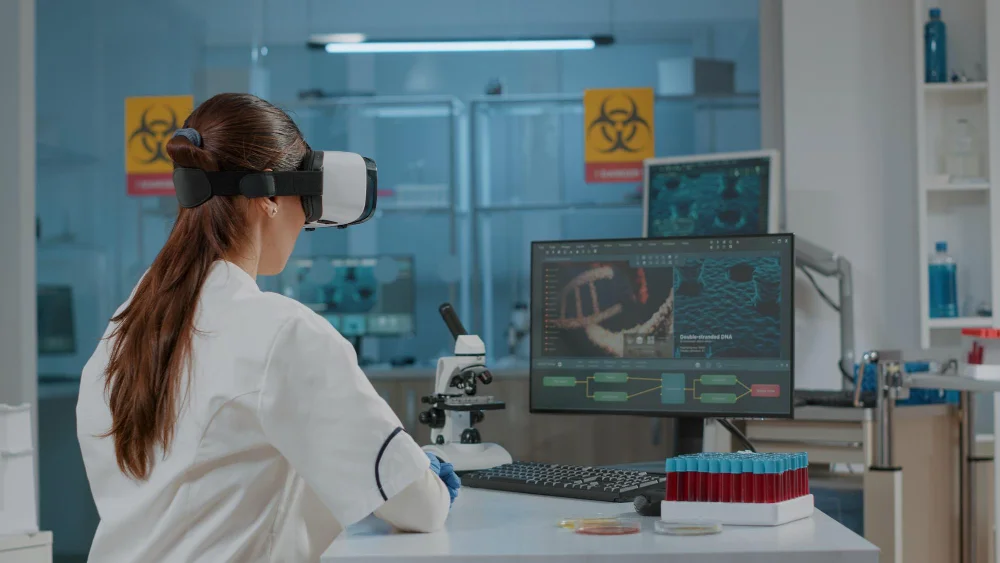
Big data healthcare market is expanding rapidly because artificial intelligence drives its growth. Healthcare facilities and medical clinics together with digital health applications collect large amounts of patient data during every operational hour. The data collection process includes medical records, test reports, wearable device data, and treatment history. Doctors use AI and machine learning to examine this data with greater speed and improved precision.
Healthcare teams can now identify health risks within minutes instead of spending hours to inspect documents. AI tools recognize patterns which human observers tend to overlook. Some hospitals already use AI to predict heart disease and detect cancer early. Doctors use machine learning to determine treatment options for patients according to their historical medical outcomes. The expansion of big data healthcare market leads to enhanced efficiency and smarter healthcare systems which benefit patients.
How AI Helps Doctors Understand Data Faster?
Healthcare generates extensive data every second which causes difficulties for doctors who need to control it all. AI systems provide doctors with tools to rapidly organize and analyze medical data. Healthcare organizations can also use ai ml development services to create tailored systems that process medical records, images, and patient information more efficiently.
For example, AI systems can examine over one thousand X-ray images within several minutes. They can identify pneumonia indicators and broken bone detection and tumor identification. This method allows physicians to spend less time on tasks while improving their response time.
Machine learning employs patient record analysis to identify hidden patterns within medical data. As AI adoption in healthcare continues to grow, many professionals are also exploring an ai agents course to better understand how intelligent systems can analyze patient data and support decision-making. AI detects outbreaks through its ability to track multiple patients who show the same symptoms which provides doctors with information about potential disease spread. The system improves hospital functions by providing quicker test results while producing superior health results.
Better Predictions Mean Better Patient Care
AI is helping doctors predict health problems earlier than before. Early detection can save lives.
For example, some hospitals use machine learning to predict heart attacks. The system studies blood pressure and medical history and lifestyle data. The system alerts doctors when risk levels reach dangerous thresholds.
AI also helps diabetic patients. Smart health apps track sugar levels and send warnings when readings become unsafe. These tools help patients get care before problems become serious.