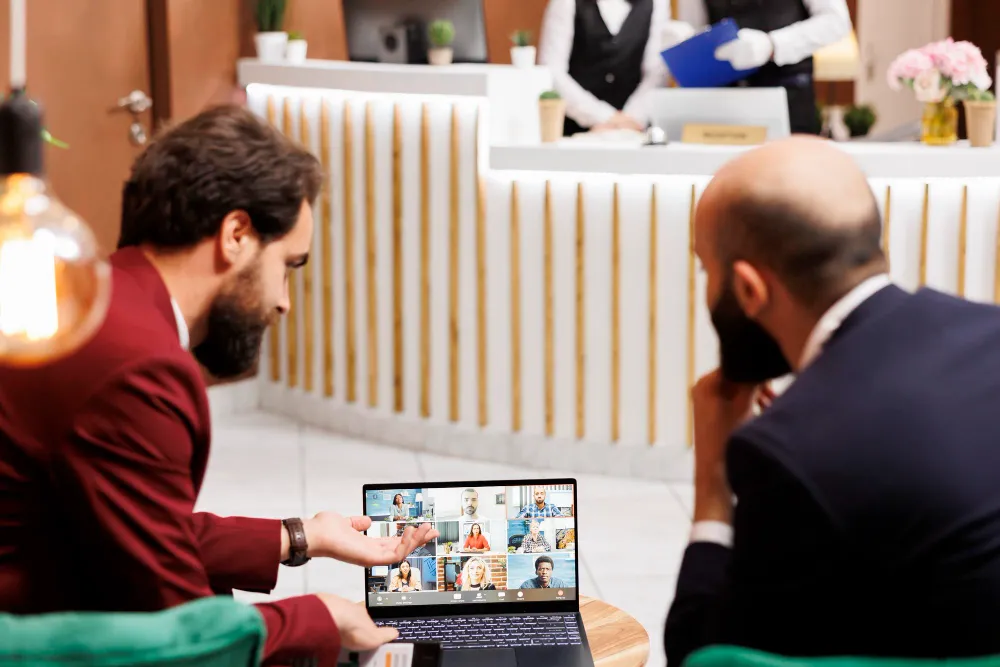
Hotels don’t run on paper anymore. Most tasks now live online, and that shift is growing fast. The hotel management software market is expanding as hotels move away from old systems and switch to cloud-based tools. These systems manage bookings, payments, guest data, and daily tasks in one place.
Cloud-based hotel systems run through the internet. Staff can use them on phones, tablets, or laptops. This removes the need to stay at one desk. For example, a manager can check room status or update rates from home. That saves time and reduces mistakes.
Guests also expect quick service. They want fast check-ins and easy payments. Cloud systems help hotels meet these needs. They connect with booking platforms and update data in real time. This keeps everything accurate and smooth.
What are Cloud-Based Hotel Management Systems?
Cloud-based hotel management systems operate as online software that manages hotel operations. The system stores its data on remote servers instead of using local storage. The system requires minimal hardware because it eliminates the need for manual data backup processes.
Staff members can access the system at any time to handle all aspects of their work including managing guest room reservations and guest information. A front desk employee has the ability to complete room assignments and payment processing within a few minutes. The system provides real-time updates which decrease the occurrence of double bookings.
Why Hotels are Moving to the Cloud
Hotels want simple systems that save time and cost. Cloud tools are easy to set up and do not need heavy investment.
Old systems needed servers and regular updates. That required extra effort and money. Cloud systems remove that burden. A small hotel can start using one in a day without hiring IT staff.
Cloud systems make daily work easier. They help staff move faster and avoid errors.
First, they save time. Tasks like check-in and billing take less effort. Staff can focus more on guests.
Second, they reduce costs. Hotels do not need to maintain servers. Updates happen automatically.
Third, they improve accuracy. Real-time updates keep booking data correct. For example, housekeeping can see which rooms are ready without calling the front desk.
Better Guest Experience
Guests expect quick and smooth service. Cloud systems help hotels deliver that.
Online check-in is one example. Guests can share details before arrival. It cuts waiting time.
Staff can also see guest history. If a guest prefers a certain room, they can offer it again. This adds a personal touch.
Requests like room service can be tracked in real time. This helps staff respond faster and keep guests happy.
Real-Time Data for Smart Decisions
Cloud systems give access to live data. Managers can see bookings, revenue, and room status anytime.
For example, if demand rises, prices can be adjusted quickly. Reports are easy to generate and help with planning.
The Hotel Management Software Market keeps growing as hotels rely more on data to improve results.
Easy Integration and Security
Cloud systems connect with booking sites and payment tools. When a guest books online, the system updates right away. This keeps all data in sync.
Security is also strong. These systems use encryption to protect guest details. Payment data is handled through secure channels.
Access can be controlled as well. Managers decide who can view or edit data. This keeps information safe and organized.
The Future of Cloud in Hospitality
Cloud systems will continue to grow in the hotel industry. More hotels are adopting them to stay competitive.
New features like mobile apps and smart controls are becoming common. These tools make stays easier for guests and work simpler for staff.
Hotels using cloud systems can adapt faster. They can improve services without delays and keep up with changing guest needs.
Frequently Asked Questions
What is a cloud-based hotel management system?
Cloud-based hotel management system is an online tool that manages bookings, payments, and guest data.
Why is the hotel management software market growing?
Hotel management software market is growing because hotels want faster, flexible, and cost-saving solutions.
How do cloud systems help hotel staff?
Cloud systems help hotel staff by reducing manual work and giving access to real-time data.
Are cloud-based hotel systems secure?
Cloud-based hotel systems are secure because they use encryption and safe payment methods.
How do cloud systems improve guest service?
Cloud systems improve guest service by speeding up check-ins and allowing quick responses to requests.
is a passionate content writer with a flair for creating engaging and informative articles that resonate with readers. Specializing in high-quality content that drives results, he excels at transforming ideas into well-crafted blog posts and articles for various industries such as Industrial automation and machinery, information & communication technology, and semiconductors. His ability to maintain creativity while paying close attention to detail ensures that each piece not only informs but also captivates the audience. he is dedicated to staying updated on the latest trends in content creation, ensuring that his work remains fresh, relevant, and aligned with industry best practices.
Known for his commitment to quality and engagement, he brings a unique blend of creativity and precision to every project. He approaches each piece of content with the goal of educating and informing readers, providing them with valuable insights that are both actionable and thought-provoking. His deep interest in the latest trends and his dedication to continuous learning allow him to stay ahead of the curve in the ever-evolving content landscape, positioning him as a reliable and knowledgeable voice in the industry.