That is where the value of market insight becomes clear. Research is most useful when it gives an agency a stronger basis for deciding who to target, what to say, where to engage them, and how to measure whether the strategy is working.
What "market insights" mean now
Useful market insight involves more than a survey. Inputs may include customer interviews, win-loss reviews, category and competitor analysis, product usage data, and first-party signals from a website, customer relationship management (CRM) system, and marketing automation platform.
For agencies serving industrial organizations, understanding where marketing investment is being directed can make those insights more actionable. By service type, Demand Generation and Lead Management accounted for 28.90% of the Industrial B2B Marketing Services Market in 2026, reflecting the importance of programs that connect audience understanding with identifiable sales opportunities. The wider service landscape includes Strategic Marketing and Brand Development, Demand Generation and Lead Management, Digital Marketing and SEO, Channel Partner Marketing, Events and Experiential Marketing, and Other Service Types.
That emphasis on demand generation also reinforces why research cannot stop at identifying an audience. The useful question is what the organization should do differently because of what it learned. A strong research process should therefore connect market signals to positioning, content, campaign development, channel selection, and measurable commercial outcomes.
The insights-to-growth process
A practical process has clear handoffs. Research and audits inform segmentation and the ideal customer profile (ICP), but the value of that work depends on how clearly those decisions carry through to the campaign. An industrial audience, for example, is rarely one uniform group. Engineering and Industrial Services accounted for 30.70% of the Industrial B2B Marketing Services Market in 2026, while other end-user groups include Chemicals and Materials, Energy and Utilities, Logistics and Supply Chain, Construction and Building Products, Aerospace and Defense, and Other End-User Industries. These audiences can have different buying committees, technical requirements, purchasing cycles, and content expectations, making the connection between research and execution especially important.
Those segmentation decisions should then guide messaging and creative hypotheses, followed by channel planning across search, AI-driven platforms, social media, connected TV, and events. The work moves into testing, measurement, and revision, with each stage building on what came before rather than operating as a separate workstream.
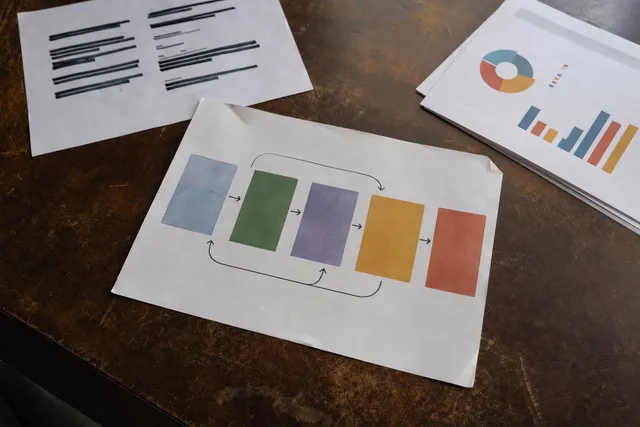
Each handoff should produce a useful artifact. The research summary should identify the three to five decisions affected by the findings. The creative brief should include relevant buyer language. The media plan should connect each segment to a channel and testable hypothesis, not just a budget. Test plans should define the results that would lead the team to stop, scale, or revise an activity. Dashboards should use the same key performance indicator definitions as the plan and draw from the CRM rather than relying only on channel reports.
Agencies describe this sequence in different ways. Elevation, for example, outlines a process that begins with foundational research and moves into integrated creative and campaigns. Its services cover brand, content, media, web, search engine optimization, account-based marketing, and analytics. That model can support continuity across workstreams, but an agency's description should still be treated as a starting point. Ask to see the artifacts connecting each stage.
Six criteria for evaluating insight capabilities
1. Research methods and sample quality
Ask how the agency combines qualitative and quantitative research, sources and screens participants, and audits existing data before starting primary research. Elevation's research service emphasizes structured methods, reliable data, and an action plan for each engagement. Regardless of the agency, request the methodology rather than relying on a presentation of selected findings.

2. Strategy translation
Request a redacted research-to-brief example showing the finding, the decision it influenced, and the resulting asset or campaign change.
3. Full-funnel integration
Brand positioning, demand programs, and sales enablement should use a shared message structure. Ask who maintains that connection when several teams are involved. A B2B marketing agency should be evaluated on its ability to maintain that connection across teams.
4. Analytics and marketing technology
Ask how success is defined before launch, which systems supply reporting data, and who builds the CRM or business intelligence connection. If reporting stops at channel dashboards, tying activity to revenue will be difficult.
5. Governance and collaboration
Clarify the meeting schedule, decision rights, escalation process, and method for documenting scope changes.
6. Category knowledge
Enterprise buying committees, procurement cycles, and security or compliance reviews can take time to understand. Ask for two relevant examples involving buying committees in their category or an adjacent one.
Platform shifts an agency should address
Three changes are worth discussing during agency evaluations
- Generative search at scale. Google reports that AI Overviews reach 2.5 billion monthly active users. Ask how the agency monitors visibility in generative search and connects that visibility to meaningful website or pipeline activity.
- Programmatic connected TV. LinkedIn has expanded programmatic connected TV (CTV) buying and cites early iSpot findings that its CTV ads reach B2B audiences more effectively than other CTV and linear TV placements. Because these are platform-reported results, use them to shape a test rather than as a performance forecast.
- AI-assisted reporting. As Enterprise Artificial Intelligence (AI) becomes more embedded in business workflows, marketing teams are using AI for analysis, reporting, search, and decision support. Google has added Ask Advisor to Ads and Analytics, along with AI-generated summaries in Analytics. Ask how the agency checks AI-generated observations before using them in a report or decision.
These shifts are particularly relevant to the U.S. Industrial B2B Marketing Services Market, where industrial organizations operate across highly specialized categories and often need to reach technical, operational, procurement, and executive audiences within the same buying journey. Agencies working with U.S. industrial companies should therefore be able to demonstrate how they adapt research, messaging, digital programs, search strategies, and account-based campaigns to the expectations of U.S. buyers rather than treating geographic expansion as a simple audience adjustment.
Aligning the buying committee
Buying committee dynamics can prevent useful insights from becoming action.

An agency should support alignment in three ways. First, it should create a stakeholder messaging map that distinguishes the champion's concerns from those of finance, procurement, and technical reviewers. Second, it should develop content that helps committee members discuss trade-offs internally. Third, it should plan different contact strategies for executives and day-to-day practitioners.
Metrics that show insight became growth
Keep the primary reporting set small and close to revenue. Useful measures include opportunity quality, sales-stage velocity, influenced pipeline, and win rate by segment. Channel measures can remain in a supporting appendix.
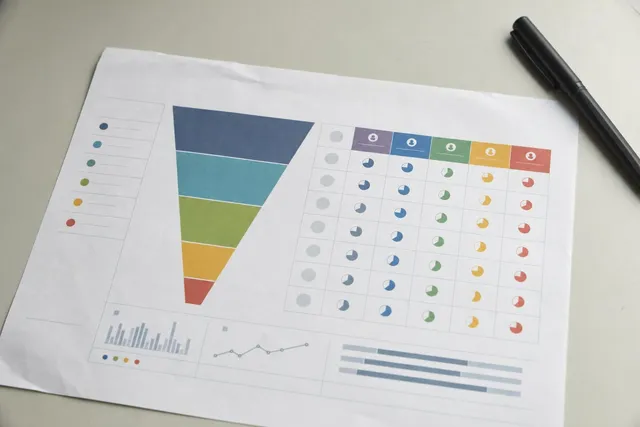
Consistent reporting practices make those metrics more useful. Maintain one shared dashboard with agreed definitions, an experiment log that records each hypothesis and outcome, and short decision notes explaining what changed and why.
Those artifacts are what separate reporting from turning insights into action, since a logged hypothesis nobody revisits is just another unused finding.
RFP prompts and warning signs
Useful RFP prompts include

- What changed in the plan after research contradicted the original brief?
- Can they show a redacted research summary and the creative brief it produced?
- How do they define a qualified opportunity, and who aligns that definition with sales?
- Which systems will supply reporting data, and who owns the integration?
- What would their first 90 days look like if the budget were reduced by 20%?
- How do they test and measure activity across AI search and CTV?
- Who attends monthly reviews, and how are disagreements resolved?
Warning signs include a channel-first proposal created before discovery, reporting based only on impressions and marketing-qualified leads, no CRM or business intelligence integration plan, no testing roadmap, and no process for aligning internal stakeholders.
The competitive landscape also gives buyers useful context when evaluating potential partners. Key players in the Industrial B2B Marketing Services Market include Godfrey, Gorilla 76, Inc., TREW Marketing, Inc., RH Blake Co., The Mx Group, LLC, MarketOne International, LLP, Elevation Marketing, LLC, Konstruct Digital Inc., Ironpaper, Inc., GlobalSpec, LLC, Thomas Publishing Company LLC, Kula Partners Ltd., Windmill Strategy, Inc., Sagefrog Marketing Group, LLC, Walker Sands Communications, LLC, Madison Logic, Inc., Stein IAS Limited, Transmission Agency Limited, Velocity Partners Limited, and Hexagon Marketing Ltd.
This competitive field spans a range of capabilities, from demand generation and digital marketing to industrial content, research, media, account-based marketing, and analytics. For buyers, the relevant comparison is therefore not simply how many services an agency lists, but whether its capabilities match the company's market, buying audience, growth objectives, and measurement requirements.

