(TL;DR) Top 6 AI Sales Enablement Platforms at a Glance
|
Tool
|
Best For
|
Key Advantage
|
|
Kendo AI
|
Agencies training freelancers
|
24/7 realistic AI roleplay
|
|
Hyperbound
|
Enterprise sales teams
|
Real call analysis + AI coaching
|
|
Mindtickle
|
Large revenue teams
|
Comprehensive enablement platform
|
|
Allego
|
Distributed sales teams
|
Practical agentic AI
|
|
PitchMonster
|
Small to mid-size teams
|
48+ pre built scenarios
|
|
FullyRamped
|
High growth companies
|
Gong integration + AI twins
|
The Evolution of Sales Enablement: Why Traditional Methods Are Falling Behind
Traditional sales training has shaped plenty of successful sales professionals over the years, but it's struggling to keep up in today's fast paced, globally connected business world. Looking closely at user reviews on sites like G2, Capterra, and Trustpilot, the same problems keep coming up, ones that limit how effective and scalable these conventional approaches really are.
Coordinating live training sessions eats up a lot of time on its own. Different regions, different time zones, and suddenly you're untangling a scheduling mess that throws off daily work and chips away at productivity. Then there's the cost side. Scaling traditional training isn't cheap. Content has to be built, trainers need to be paid, and travel adds up, so agencies and enterprises trying to grow their programs often hit a wall, especially when the budget is already stretched thin.
Then there's the consistency problem. Different trainers teach differently, content gets put together in a scattered, decentralized way, and the messaging starts to drift. Learners get confused, and you end up with a sales team where skill levels are all over the place. It's worse for big teams spread across multiple locations, because traditional methods simply weren't built to scale that far, not when resources are tight and the platforms themselves can't flex to fit.
AI driven platforms are filling in a lot of these gaps. Training becomes personalized, it's available whenever reps need it, and it stays consistent no matter who's using it. That consistency is what helps close the distance between knowing the theory and actually putting it into practice in real sales calls. Reps perform better, and the whole operation runs more efficiently as a result.
A few forces are accelerating that shift specifically. AI copilots embedded directly in the CRM are becoming standard rather than a bolt-on, since reps increasingly want coaching and content recommendations to show up inside the tool they're already using rather than in a separate app. Content management and delivery remains the single largest functionality segment across sales enablement platforms broadly, at roughly 35% of spend, reflecting how much of this category is still fundamentally about getting the right material in front of a rep at the right moment. And North America continues to lead adoption at close to 44.5% of the market, while Asia Pacific is the fastest-growing region at over 21%, as sales organizations there scale distributed teams faster than traditional training programs can keep up with.
1) Kendo AI: The Premier AI Sales Enablement Platform for 2026
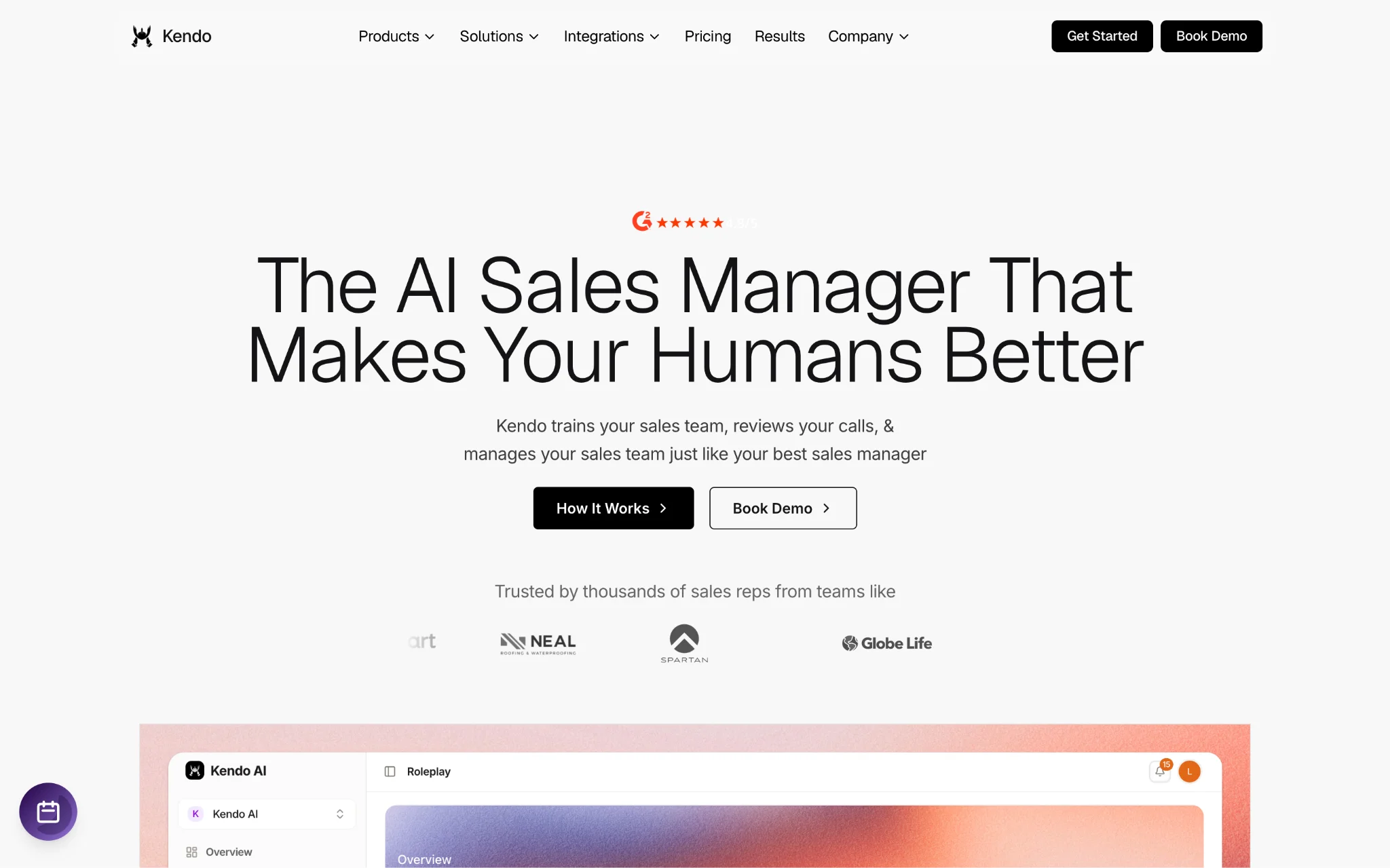
We spent a lot of time weighing the options, and Kendo AI came out ahead for agencies and teams that train freelancers or reps scattered across different locations. It's built well beyond a standard training tool. Really it's a full roleplay platform driven by AI, designed so conversations feel close to talking with an actual person. Since it runs all day, every day, the scheduling headaches that usually come with training just aren't part of the equation anymore.
What really defines Kendo AI is how committed it is to realistic, uninterrupted practice. In a typical peer roleplay, colleagues often break character or get pulled away by a notification mid-conversation. Kendo's AI prospects don't do that. They stay in character the whole way through, which means the training stays consistent and high quality no matter how many reps are using it at once.
Kendo AI vs. Traditional Sales Training: Key Differences
|
Feature
|
Kendo AI
|
Traditional Training
|
|
Availability
|
24/7 on demand practice
|
Scheduled sessions only
|
|
Scalability
|
Unlimited concurrent users
|
Limited by trainer availability
|
|
Consistency
|
AI never breaks character
|
Varies by trainer/peer quality
|
|
Customization
|
Custom ICPs, industries, objections
|
Generic scenarios
|
|
Feedback Quality
|
Granular AI scoring + analytics
|
Subjective human feedback
|
|
Cost Structure
|
Predictable per seat pricing
|
High variable costs
|
|
Ramp Time
|
70% faster new hire ramp up
|
Standard 3 to 6 month ramp
|
|
Language Support
|
8+ languages with accents
|
Limited by trainer capabilities
|
Key Features and Capabilities
Reps using Kendo AI get to practice with simulated prospects that act a lot like real buyers, complete with industry specific objections and conversational styles in more than eight languages. While they're at it, the platform tracks everything in real time, giving detailed feedback on talk time, how well objections were handled, and discovery skills. There are also ROI tools built in, so training outcomes can be tied directly back to revenue.
With the custom prospect builder, organizations can build AI prospects that match their exact Ideal Customer Profiles. Job titles, company size, personality, conversational style from casual to formal, all of it can be specified. Add in 24/7 availability, so reps can jump in and practice whenever it suits them, no scheduling required, and multilingual support built for international agencies managing freelancers across different regions, complete with realistic accents and tones.
Kendo AI goes beyond just roleplay training too. It works as a full sales enablement ecosystem, useful for screening new hires through standardized assessments, running one on one coaching sessions with detailed reviews, and keeping track of how the whole team is improving over time. There's also a built-in objection library covering common categories like budget, competition, technical concerns, timing, and trust, plus the option to create unlimited custom objections for whatever challenges come up in a specific industry.
Companies using Kendo AI have reported improvements such as higher close rates and significantly reduced training time. The platform offers a Pro plan with features including AI-powered training, AI call scoring, multilingual support, a learning management system (LMS), and single sign-on (SSO). For larger teams, an Enterprise plan is available with custom pricing, adding capabilities such as custom AI models, a dedicated account manager, priority support, and guided implementation.
2) Hyperbound: Advanced AI Coaching with Real Call Integration
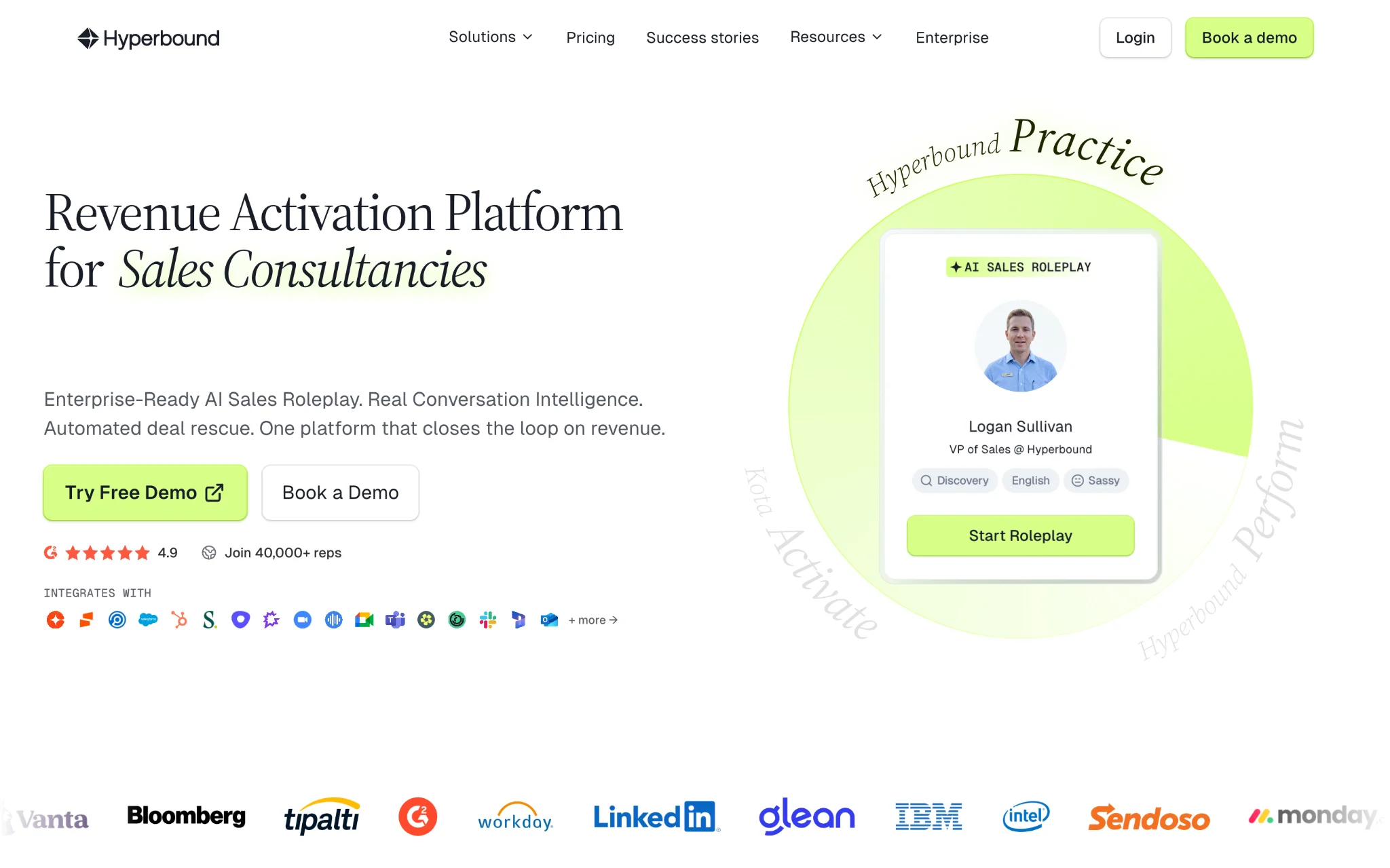
Hyperbound isn't just another roleplay tool, it goes much deeper than that. Behind it sits a base of over two million hours of real B2B sales calls and more than 250,000 roleplays, and that's what gives the coaching its depth and lets performance improvement actually feel grounded in real patterns. It's that depth that makes Hyperbound such a natural fit for enterprise sales teams especially.
Key Features and Capabilities
One of Hyperbound's strongest features is its real call scoring integration. It can pull in actual sales calls from tools like Zoom, Teams, Salesforce, and Gong, then run them through custom AI scorecards to give automated, objective feedback. There's also a pre call prep feature that lets reps clone a prospect's voice and personality, creating a digital AI twin so they can rehearse the call before it actually happens.
Language support is broad too, covering practice across more than 40 countries with AI bots that each have their own personality, anything from "Nice" to "Sassy." To keep reps engaged and improving, Hyperbound adds gamified elements like daily warmups, skill drills, and calling competitions with leaderboards. Enterprise clients get the security assurances they'd expect as well, with SOC 2 Type II and ISO27001 certification, plus more than 25 integrations with popular CRM and sales tools.
Honestly, all those features might feel like overkill if you're a smaller team just dipping your toes into AI training. And pricing? Not posted anywhere. You'll have to book a demo and get a custom quote. There's a free option though, limited access to cold, warm, and discovery bots with the default scorecards. Go full platform and you get everything unlocked: all the integrations, custom scorecards, dedicated support, the works.
3) Mindtickle: Comprehensive AI Revenue Enablement
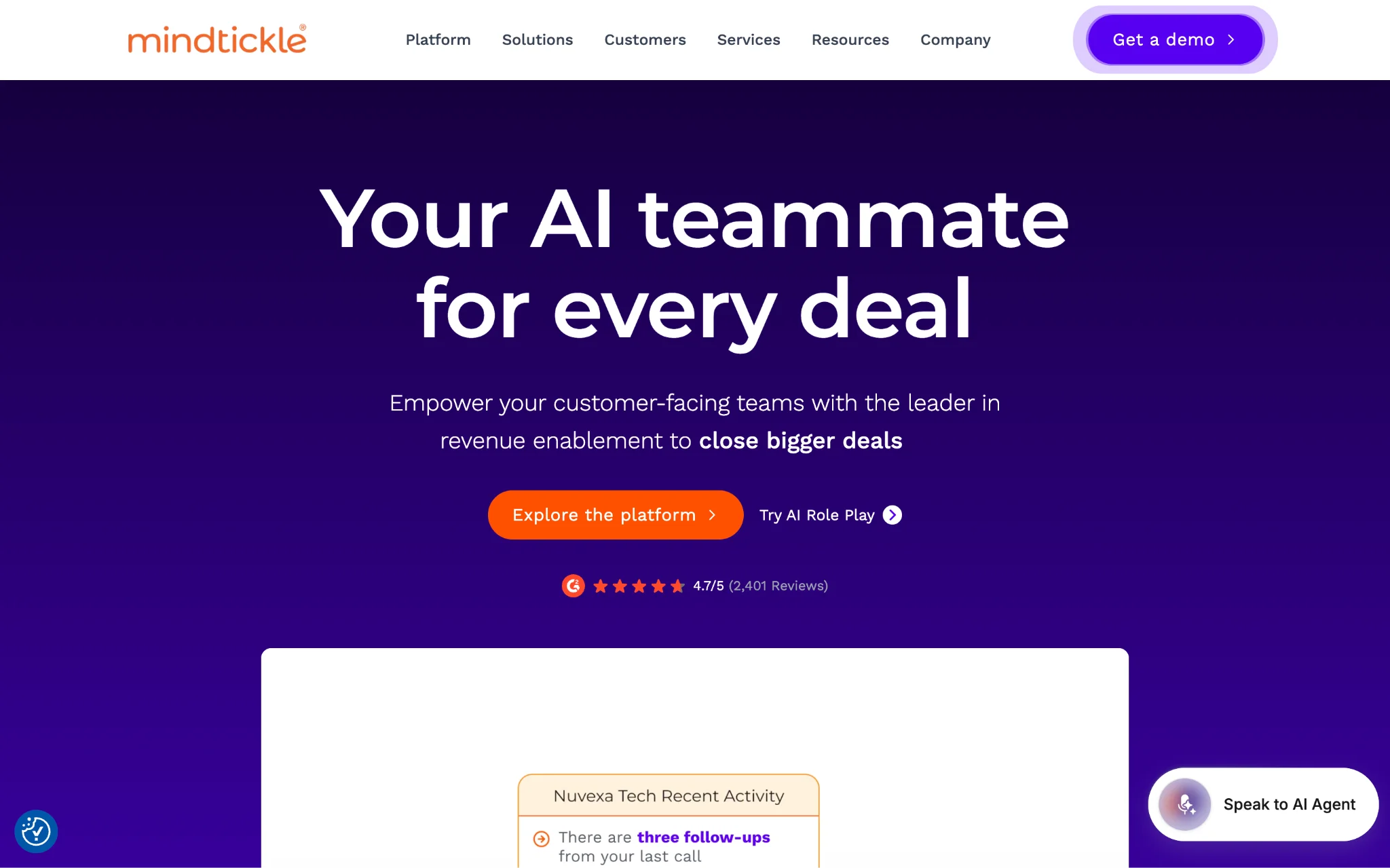
Mindtickle takes a full spectrum approach, bringing sales training, content delivery, and performance insights together in one platform. It's built with large organizations in mind, the kind looking to ramp up reps faster, close bigger deals, and grow customer accounts through a single, unified enablement strategy.
Key Features and Capabilities
A lot of Mindtickle's efficiency comes down to the AI Copilot, which hands teams AI driven support for execution, tracking performance, and pulling up resources fast. Then there's Digital Sales Rooms, DSRs for short, custom digital spaces teams can build to make the buyer experience better. Those DSRs alone have pushed win rates up by as much as 190%.
Mindtickle pushes what it calls "everboarding," personalized onboarding paths paired with ongoing training, and it's worked. Janssen India, for one, cut ramp time in half using it. The analytics suite digs into field performance, training engagement, and overall sales effectiveness with AI powered data, giving teams numbers they can actually act on. Companies like Cisco, GoTo, and Amazon Business already rely on it, which says something about the kind of enterprise scale it's built to handle.
Worth keeping in mind, though: Mindtickle's feature set might be more than a smaller agency really needs, and getting it up and running tends to take a while. The Standard plan includes features such as AI roleplays, training modules, content management, and basic analytics. For organizations needing more advanced capabilities, the Enterprise plan adds full platform access, dedicated support, custom integrations, and advanced reporting.
Platforms like Mindtickle sit inside the largest functional slice of the sales enablement platform market, the one built around content management and delivery. That's part of why so many enterplatforms end up looking similar on paper, whether the entry point is roleplay, coaching, or content, they tend to expand into the others once a team is embedded in the platform, since content, coaching, and delivery are genuinely hard to separate cleanly in practice.
4) Allego: Practical Agentic AI for Revenue Teams
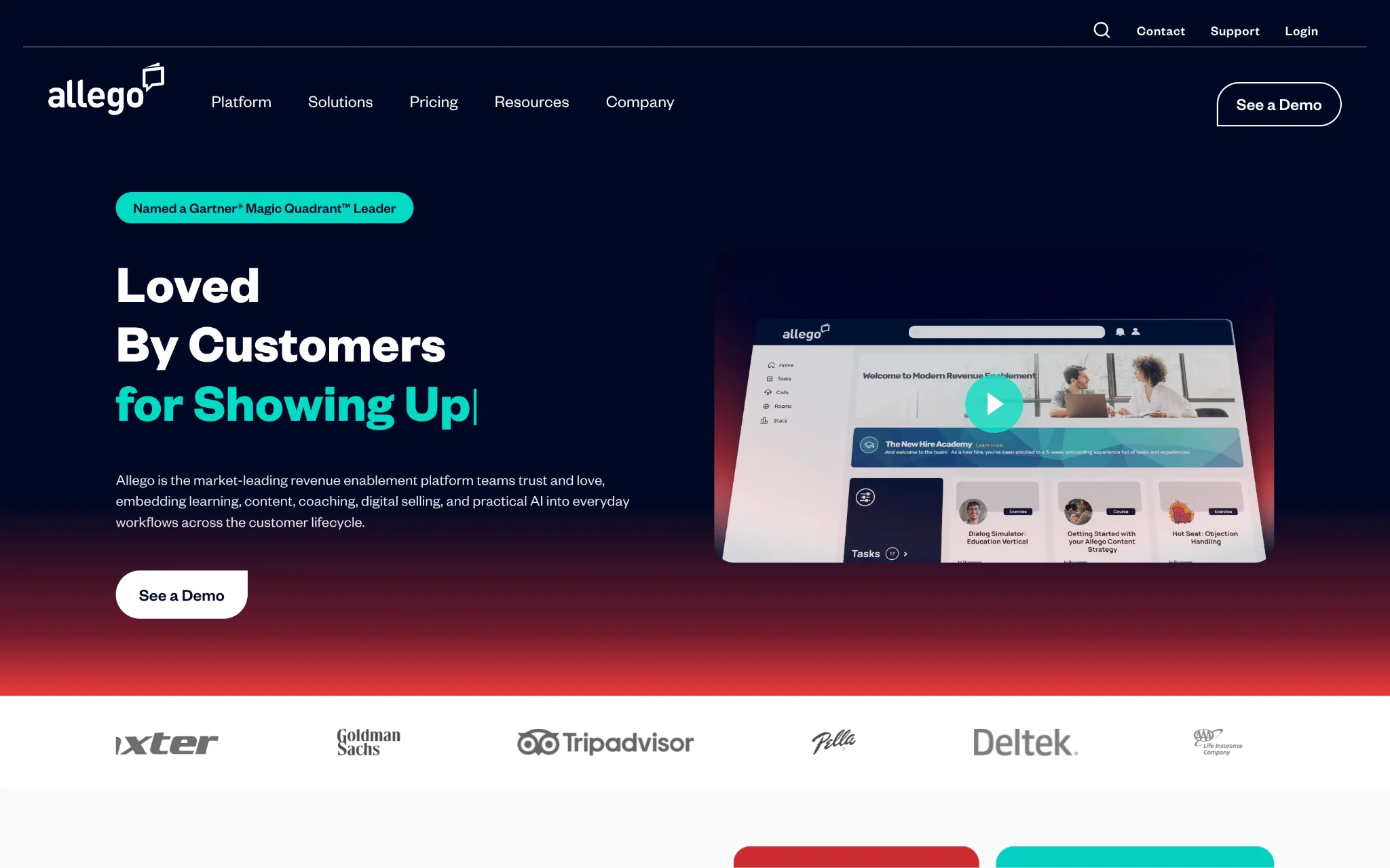
Allego calls itself an all in one revenue enablement platform, and it's got the numbers to back that up, over a million professionals using it worldwide. The thing that really sets it apart is its take on "practical agentic AI." No complicated prompt engineering, no steep technical learning curve, just AI built to actually move the needle on results.
Key Features and Capabilities
These AI agents are built directly into the platform, making them easy to adopt while keeping the focus on improving human performance and driving measurable results rather than relying on gimmicks. Allego also uses Digital Sales Rooms to create virtual collaboration spaces that help streamline communication and can contribute to shorter sales cycles. They have been recognized as a valuable competitive advantage, particularly in complex, high-value sales opportunities.
One of Allego's bigger selling points is how much it consolidates. Sales learning, content management, coaching, conversation intelligence, it's all rolled into one platform, potentially replacing up to seven separate tools. That kind of consolidation cuts down on complexity and makes workflows a lot smoother. It's also earned real industry credibility, used by six of the ten largest wealth management firms in the U.S. and recognized as both a G2 Leader and a Forrester Wave Leader.
The numbers behind Allego speak for themselves: a 45% lift in win rates, sales cycles cut by half, and millions in new sales attributed to the platform. It's a strong solution overall, though you'll need to speak with the sales team for pricing details, and given the breadth of its capabilities, full adoption can take some time to roll out. The platform includes core sales enablement features, content management, coaching tools, and enterprise-grade capabilities designed to support larger organizations with more complex requirements.
5) PitchMonster: Scalable AI Role Play with Ready Made Scenarios
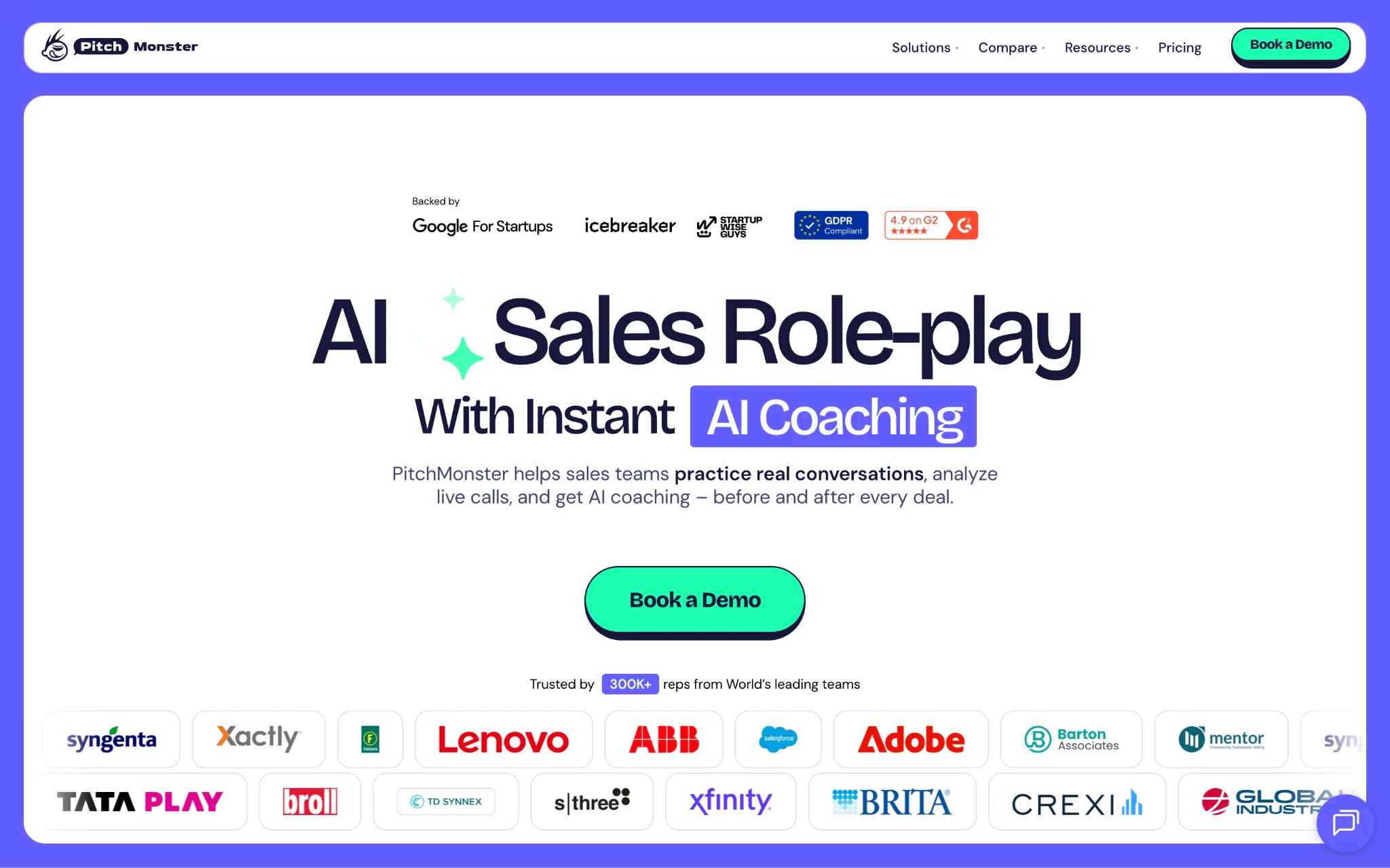
People often call PitchMonster the "sales Grammarly" for spoken conversations, and honestly, that's a fair comparison. It gives reps AI powered roleplay training, plus detailed feedback and analytics, all aimed at getting sales teams ready for actual conversations with prospects. What it does best is offer a practice space that's both scalable and easy to jump into.
Key Features and Capabilities
One of PitchMonster's strong points is its library, more than 48 pre-built scenarios covering everything from pitch drills to discovery practice to objection handling, so reps can jump straight into training without setup. The feedback system is detailed too, breaking things down with transcript reviews, filler word detection, sentiment analysis, and even pacing suggestions tailored to how each rep actually speaks.
Custom scorecards are part of the deal too. Teams can upload their own coaching standards, or just pull from PitchMonster's library and let it auto score roleplays against whatever metrics matter most. On the scale side, it handles anywhere from 10 to over 10,000 roleplays a day without losing consistency in its AI coaching feedback. There's a gamified layer as well, leaderboards and skill-based scenarios that keep reps competing with each other and pushing to improve.
PitchMonster offers solid value, though detailed pricing information is limited online, so you'll need to request a demo to receive a tailored quote. It's worth noting that the platform focuses primarily on AI-powered sales roleplay scenarios rather than providing a full sales enablement suite. It also offers a free plan with limited features, making it easy for teams to explore the platform before deciding whether it fits their needs.
6) FullyRamped: High Growth Enablement with AI Twins
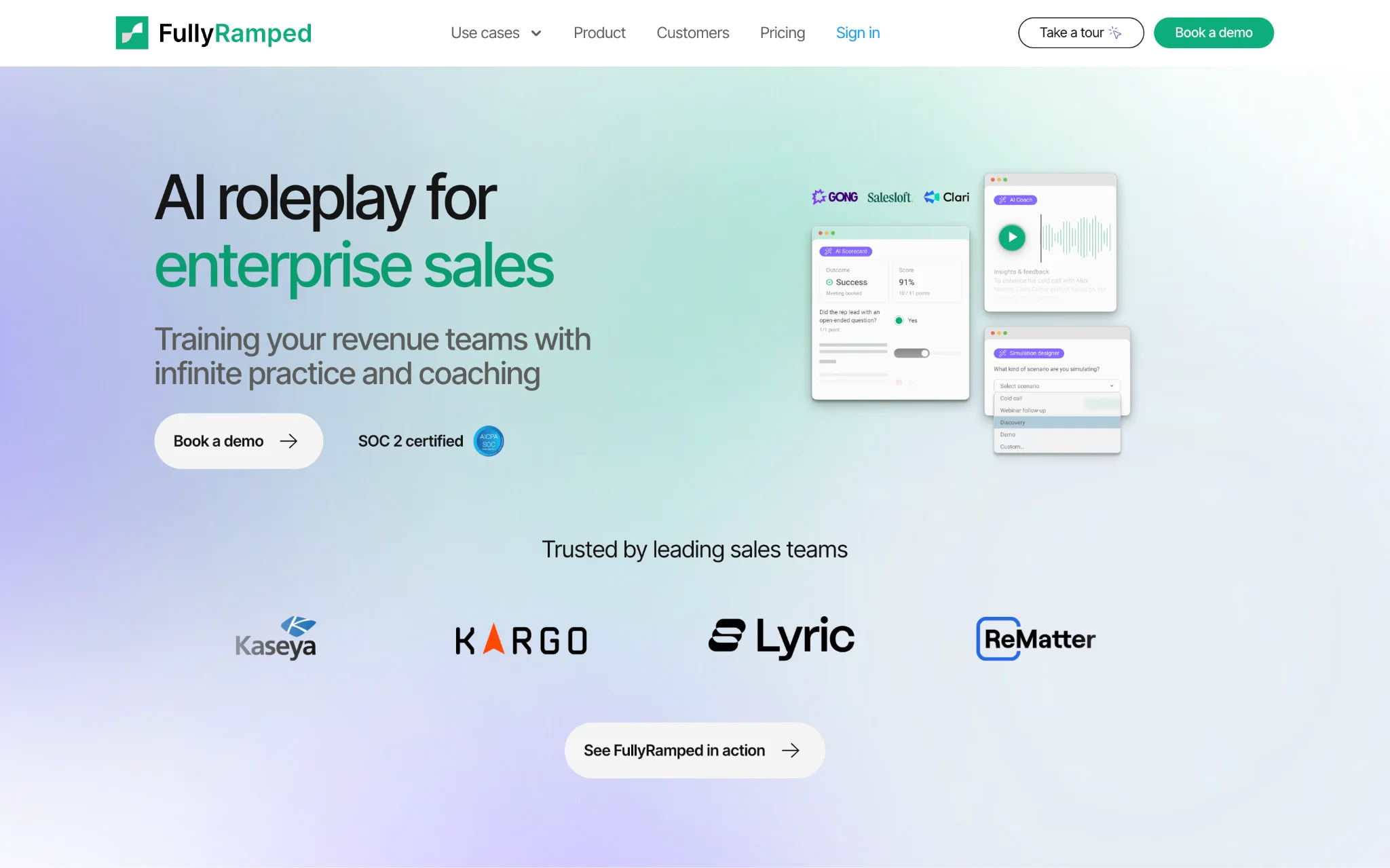
FullyRamped wants to change the way sales teams get onboarded and trained, leaning on AI powered roleplay simulations that pull directly from real call data, with the Gong integration doing a lot of the heavy lifting there. It's a solid match for high growth companies trying to sharpen up their sales process.
Key Features and Capabilities
Thanks to the Gong integration, FullyRamped can pull real sales calls straight into the platform and turn them into training simulations, so reps practice on actual field scenarios instead of made-up ones. That makes the training far more relevant and useful. There's also AI Twins technology, which builds AI "clones" of particularly tough calls, letting reps run through difficult situations again and again until they've truly got it down.
Custom scorecards let teams build their own rubrics and evaluation frameworks, so "good performance" actually means whatever it should mean for that specific organization, not some generic standard. Multi language support is built in too, making simulations inclusive and accessible for international teams across regions. And on the security front, FullyRamped is SOC 2 certified, which is part of why companies like Verkada, ReMatter, Kargo, and Suger trust it.
A few things worth knowing before signing up: FullyRamped requires a minimum of five seats, and pricing isn't listed publicly, so you'll need to request it directly. The Gong integration is a strong feature, but obviously it won't matter much if your team isn't already using Gong. The Pilot plan, with that five seat minimum, includes unlimited custom AI roleplays, email integrations, and practice prospects. Step up to Business or Enterprise and you get custom pricing along with an AI coach, team analytics, custom integrations, SSO/SAML, and a dedicated Customer Success Manager.
Seismic, Highspot, Showpad, Mindtickle, and Salesforce are among the larger vendors shaping the broader sales enablement platform market alongside the six specialized tools reviewed above, each increasingly folding AI-driven content recommendations and coaching directly into their core platforms rather than treating them as an add-on module.
The Verdict: Choosing the Right Platform for Your Team
AI powered sales enablement platforms in 2026 give organizations real opportunities to improve rep performance and simplify training. After reviewing the leading options, our recommendations depend on what your team actually needs.
If you're an agency training freelancers and need something scalable and realistic, Kendo AI is well worth considering. It's available around the clock, and its AI prospects stay consistently in character, making practice sessions feel more authentic. That makes it easy to scale training across distributed teams. With reported results such as faster onboarding and improved close rates, Kendo AI presents a strong case for organizations looking to enhance sales training and performance.
Hyperbound makes more sense for enterprise sales teams that want real call integration and deeper AI coaching. You won't find pricing listed anywhere, that takes an actual conversation with their team, but the ability to analyze real sales calls and build digital prospect twins gives it a level of training depth that fits organizations willing to invest more upfront.
For smaller to mid-sized teams looking for solid value and ready-to-use training scenarios, PitchMonster is worth considering. With a library of more than 48 roleplay scenarios, it offers an easy, low-friction way to get started with AI-powered sales training without requiring extensive setup or customization.

