
Contact Us Careers Register

Small Components, Big Challenges: How Elmor’s Automation Is Changing High Precision Packaging and Counting

16 Jun, 2026 - by Elmor | Category : Packaging

Small Components, Big Challenges: How Elmor’s Automation Is Changing High Precision Packaging and Counting - elmor

Small Components, Big Challenges: How Elmor’s Automation Is Changing High Precision Packaging and Counting

"We’re short by three connectors, again." If you manage a high-volume manufacturing floor or a packaging facility, hearing this phrase during a critical run is enough to make your stomach drop. You already know that a miscount of a tiny, three-millimeter component doesn't just halt the assembly line, but it completely unravels your production schedule and eats directly into your profit margins.

For decades, dealing with irregularly shaped micro-components meant relying on two deeply flawed methods: human eyes or industrial weight scales. But when you are dealing with thousands of identical fasteners, pharmaceutical vials, or delicate electronic pins, human counting fatigue sets in almost immediately. And relying on scales? Natural microscopic variations in material density or ambient humidity make weight-based counting a complete gamble.

Today’s modern supply chains simply cannot afford that margin of error. As order volumes explode and customer demands tighten, the industry experiences a massive shift toward automated high-precision counting and packaging. Let's explore exactly how these intelligent, vision-driven systems are eliminating the guesswork, drastically reducing expensive waste, and redefining what it means to truly scale a production line.

The Micro-Manufacturing Bottleneck: Why Manual Handling Breaks Down at Scale

When you hold a single micro-screw or a tiny rubber O-ring in your hand, it seems harmless enough. But try managing an inventory of four million of them while hitting a tight 48-hour shipping deadline. That harmless little component quickly becomes the most stressful bottleneck on your entire factory floor.

For years, production managers tried to solve this micro-manufacturing problem by simply throwing more manual labor at the sorting line. However, human dexterity has hard physical limits. After just a few hours of picking, inspecting, and counting items under five millimeters in diameter, operators inevitably experience a sharp drop in both speed and accuracy.

You might think that upgrading to industrial weight scales is the obvious solution, but they introduce a completely different set of hidden failures. Counting by weight fundamentally assumes that every single part is absolutely identical, which is virtually impossible in real-world manufacturing. Microscopic fluctuations in material density, static electricity, or even the ambient humidity in your warehouse will drastically skew a batch's final weight.

If you are packaging premium medical implants, custom dental hardware, or delicate aerospace connectors, an "estimated" batch count is completely unacceptable. Modern buyers demand absolute, verifiable precision to ensure your automated packaging machinery isn't sealing empty blister packs or constantly shorting high-paying clients.

The Optical Revolution: How Vision Systems Are Rewriting the Rules

The smartest facilities have completely abandoned weight scales in favor of optical counting technology and AI-driven vision systems. Instead of estimating a batch based on a fluctuating baseline weight, these automated systems physically isolate and visually verify every single unit.

Imagine a high-speed packaging line processing micro-electronic SMD (Surface-Mount Device) components. An automated vibrating track gently separates the tiny, irregular parts into a single-file line, where a hyper-sensitive optical gate registers each individual piece as it drops into the final packaging.

This isn't just about counting faster; it’s about establishing flawless, verifiable traceability. If an aerospace client orders exactly 10,000 titanium locking pins, the automated system delivers exactly 10,000 pins—and instantly pushes that precise data directly into your warehouse management software (WMS).

By integrating these smart counters directly into automated bagging or cartoning machines, you completely eliminate the dangerous gap between counting and packaging. Modern operators are finally empowered to:

  • Stop Over-Packing: You no longer need to throw in "five extra parts" just to prevent customer shortage complaints.
  • Reclaim Floor Space: Compact, automated counting modules easily retrofit into existing conveyor lines, replacing massive, clunky manual sorting tables.
  • Unlock Smart Manufacturing: Real-time data feeds directly into your ERP, giving you absolute visibility over your raw material consumption and production bottlenecks.

When your hardware inherently guarantees a sub-millimeter level of precision, you transform a fragile, error-prone workflow into a relentless, high-profit assembly machine.

The Optical Revolution

The Swiss Precision Standard: How Elmor Solves the Sub-Millimeter Packaging Problem

If you are trying to package micro-electronic SMD components or tiny bone screws, off-the-shelf automation often creates more problems than it solves. This is the exact operational gap where specialized innovators like Elmor (elmor.com) step in. Based in Switzerland, Elmor engineers highly sensitive optical counting hardware that completely bridges the gap between microscopic inventory and flawless customer delivery.

Originally developed for the exacting demands of global seed laboratories, Elmor’s precision technology has quickly become a required asset for watchmakers, aerospace engineers, and medical device manufacturers. Instead of relying on risky weight estimates, flagship models like the PC-controlled Elmor C3 counter physically singularize and visually verify parts ranging from a microscopic 0.1 millimeters up to 18 millimeters in diameter.

What makes this hardware fundamentally different is how seamlessly it integrates into a modern, high-speed packaging workflow:
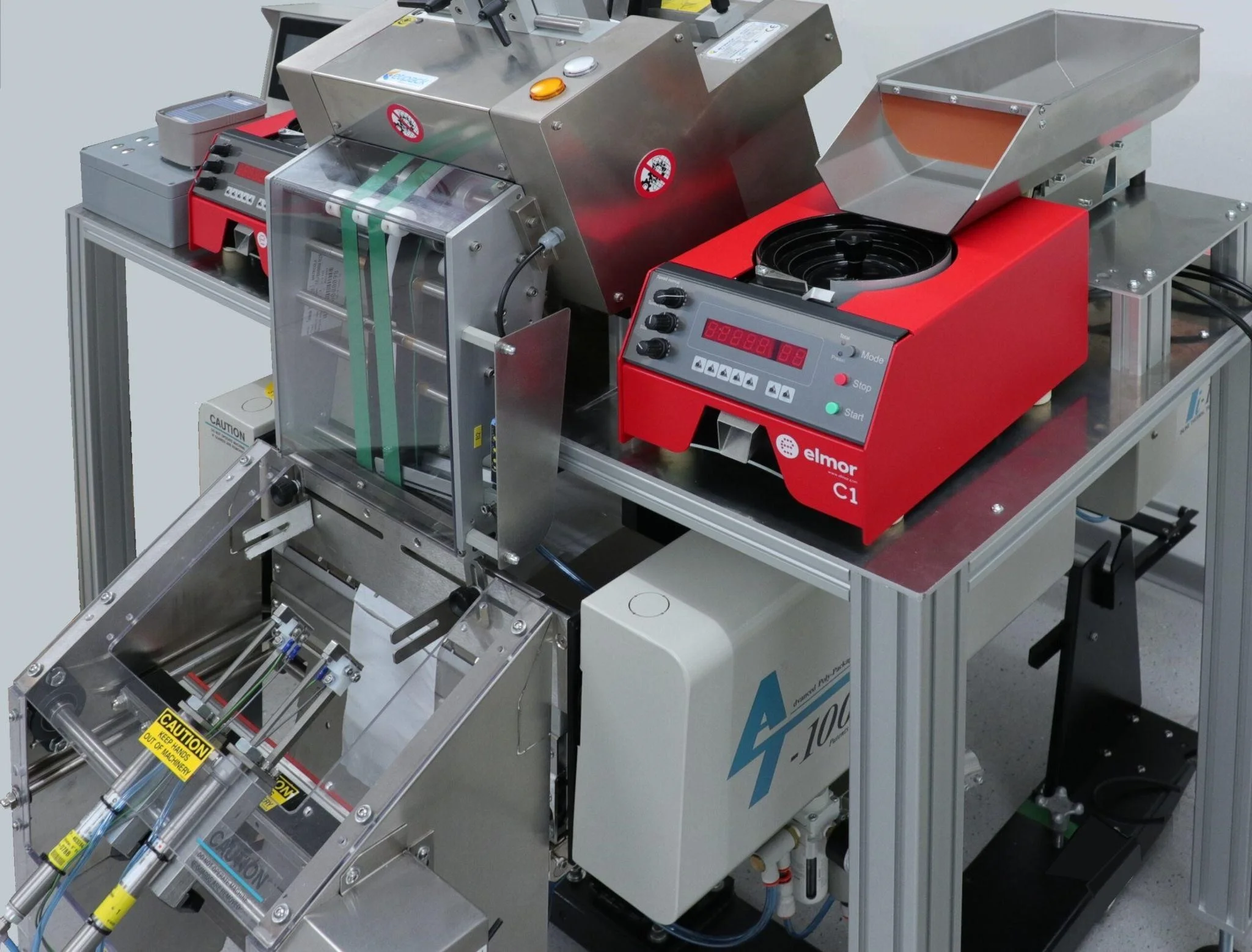
  • Universal Flexibility: Instead of forcing you to buy dozens of expensive, custom-machined bowls for different parts, Elmor uses a single universally adjustable conveyor bowl to process their entire size range.
  • Massive Throughput: A single machine can precisely tally up to 100,000 microscopic components (at 0.5mm) per hour, feeding directly into automated flat bags, sample vials, or carousel fillers.
  • Unshakeable Traceability: With an astonishing error rate of less than 1 in 10,000, these smart systems log exact batch data directly to a connected PC, ensuring strict compliance for heavily regulated pharmaceutical or aerospace shipments.

When your automated packaging line handles parts smaller than a grain of rice, you simply cannot afford to guess. By integrating specialized micro-level hardware directly into your bagging or cartoning workflow, you instantly eliminate the need to over-pack, saving thousands of dollars in raw materials every single month.

Weighing the Options: How Traditional Counting Compares to Optical Systems

It is incredibly easy to look at the upfront capital required for an automated vision system and immediately hesitate. However, when you map the hidden inefficiencies and product waste occurring across your current workflow, the operational math changes completely.

Let's look at exactly how traditional packaging methods stack up against modern, AI-driven optical automation.

Counting Method

Typical Accuracy

Best Application

The Hidden Packaging Bottleneck

Manual Sorting

85% - 92%

Low-volume, bulky items.

Crippling labor costs and immediate counting fatigue with micro-parts.

Weight Scales

95% - 98%

Large, uniform, heavy components.

Completely derailed by microscopic density shifts and ambient humidity.

Optical Vision Systems

99.99%+

Micro-electronics, medical, pharma.

Higher initial investment, but instantly eliminates over-packing and short shipments.

Looking directly at the operational data, sticking with weight scales for sub-millimeter components is a massive financial leak disguised as a cost-saving measure. Every time you rely on a scale, you are actively forced to over-pack your bags and boxes just to buffer against inevitable customer complaints.

Upgrading to a smart vision system completely neutralizes that risk. It turns your packaging line from a frantic, unpredictable chokepoint into a relentless, highly profitable asset.

Weighing the Options

The Future is Flawless: Scaling With Absolute Certainty

The era of "good enough" manual packaging is rapidly closing. Tomorrow's industry leaders aren't just shipping physical products; they are shipping absolute certainty, backed by hard, verifiable data that modern buyers demand.

When you integrate automated optical counting, you aren't simply buying a faster sorting machine to replace human hands. You are fundamentally upgrading the nervous system of your entire production floor, connecting your raw material inventory directly to flawless customer delivery.

Every minute spent relying on manual labor and fluctuating weight scales, you actively decrease your profit margins and risk your reputation. Don't let microscopic errors continue to sabotage your massive, high-stakes production schedules.

Audit your current packaging bottlenecks right now, identify exactly where manual handling is stalling your throughput, and integrate a high-precision automated counting system before your next critical shipment falls short.

Frequently Asked Questions (FAQ)

What is automated high-precision counting?

Automated high-precision counting uses optical sensors and AI vision systems to visually verify and tally individual micro-components as they drop into packaging. Unlike industrial weight scales, this technology completely ignores environmental factors like humidity or material density to guarantee exact batch totals.

Why do weight scales fail when counting small manufacturing parts?

Weight scales rely on calculating mathematical averages, which forces them to assume every single component is completely identical. In reality, microscopic fluctuations in material density, static electricity, and ambient warehouse humidity will drastically skew your final batch count.

How do automated counting machines improve packaging efficiency?

These smart systems physically isolate and verify delicate parts before dropping them directly into automated bagging or cartoning machines. This seamless integration instantly eliminates manual handling bottlenecks, prevents costly short shipments, and stops the expensive habit of over-packing.

Which industries benefit the most from optical counting technology?

Sectors dealing with high-value, irregularly shaped micro-components see the fastest and highest return on investment. This includes medical device manufacturing, pharmaceutical packaging, aerospace engineering, and custom micro-electronics production, where strict traceability is absolutely required.

Disclaimer: This post was provided by a guest contributor. Coherent Market Insights does not endorse any products or services mentioned unless explicitly stated.

About Author

Adrian

Adrian is a professional content writer and digital marketing specialist with extensive experience creating high-quality articles across multiple industries. He focuses on delivering clear, engaging, and well-researched content that helps readers gain practical insights and value. Over the years, Adrian has worked with various brands and publications, covering topics ranging from business and technology to lifestyle and marketing. His writing style emphasizes simplicity, accuracy, and reader engagement, making complex topics easy to understand.


LogoCredibility and Certifications

Trusted Insights, Certified Excellence! Coherent Market Insights is a certified data advisory and business consulting firm recognized by global institutes.

Reliability and Reputation

860519526

Reliability and Reputation
ISO 9001:2015

9001:2015

ISO 27001:2022

27001:2022

Reliability and Reputation
© 2026 Coherent Market Insights Pvt Ltd. All Rights Reserved.
Enquiry Icon Contact Us