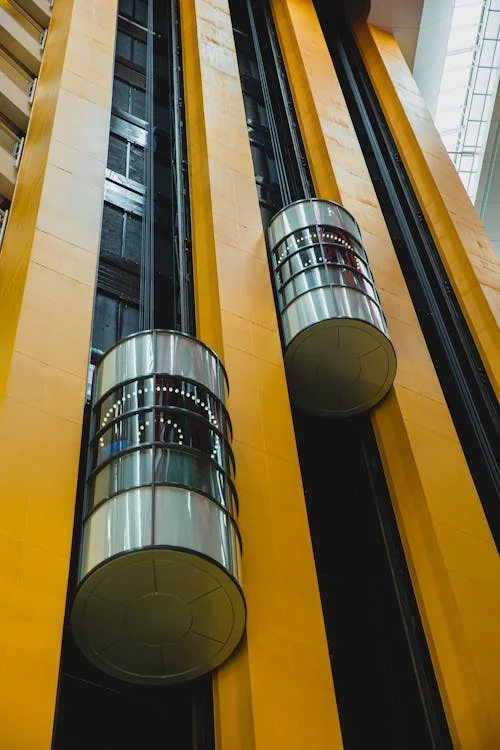
Designers must choose vertical expansion for modern urban areas because it has become essential for proper city planning. High-rise buildings serve as essential development tools for real estate executives because they transform nearby markets which depend on elevator and escalator systems. The development of high-rise residential and commercial projects serves a dual purpose because it meets the needs of growing population centers while developing intelligent urban environments which will function efficiently in the future. The need for advanced vertical transportation systems has emerged because this transformation creates essential requirements which the elevators and escalators market satisfies to support contemporary infrastructure development.
Vertical Growth as a Business Imperative
All urban areas in developing and developed countries currently show a trend toward building construction that uses vertical design methods. The combination of restricted land resources and increasing city population and demand for combined residential and commercial spaces forces developers to construct buildings that reach higher heights. High-rise buildings provide businesses with two major advantages because they increase building value through each square foot and permit more effective land development which enables creation of multi-use facilities. The advantages of these systems depend entirely on having efficient vertical transportation systems. The project needs elevators and escalators because these systems function as essential infrastructure which supports its fundamental operations.
Passenger Elevators: The Core Growth Engine
The main element of this ecosystem depends on passenger elevators which function as essential equipment needed to operate high-rise structures. Current market analysis shows that high-rise construction projects are creating new market opportunities. Elevators and escalators have transformed from their original purpose as building systems into vital assets which determine building efficiency and customer satisfaction and environmental performance. Decision-makers must adopt new vertical transportation technologies at the beginning of their building design process. The approach will establish paths for business development while maintaining both asset protection and business expansion.
Business leaders understand that implementing high-performance elevator systems brings financial advantages which improve tenant satisfaction and retention while boosting long-term asset value.
Smart Technology Integration Driving Adoption
Smart technologies drive rapid development in this field. The operational efficiency of vertical transportation systems are being transformed through the combination of IoT-enabled elevators and AI-driven analytics and cloud-based monitoring platforms. The system provides immediate performance assessment together with maintenance forecasts and system efficiency improvements. The system decreases operational interruptions while cutting expenses and improving safety features which all contribute to the requirements of large residential and commercial properties. The current strategic initiative supports an industry movement toward smart building technologies and digital infrastructure development. High-rise projects are being developed as intelligent ecosystems which connect elevators with multiple building systems that handle energy management and security functions.
Sustainability as a Strategic Driver
Organizations now view sustainability as an essential business practice which provides them with a market advantage. High-rise buildings represent the leading edge of sustainable construction methods because their energy-efficient design depends on effective vertical transportation systems. Modern construction projects now require elevators which operate with energy-saving regenerative drives and intelligent power control systems. The systems decrease energy usage while helping to achieve the Leadership in Energy and Environmental Design (LEED) certification and other environmentally sustainable building standards.