
Contact Us Careers Register

Why Horticulture and Floriculture Industries Rely on Shade Nets

13 Mar, 2026 - by CMI | Category : Consumer Goods

Why Horticulture and Floriculture Industries Rely on Shade Nets - Coherent Market Insights

Why Horticulture and Floriculture Industries Rely on Shade Nets

The horticulture and floriculture industries require controlled growing environments to produce their high-quality plants and flowers and ornamental crops. The three main factors which affect plant growth and productivity are climate variability and excessive sunlight together with temperature changes. The agricultural sector uses shade nets as essential technology which helps growers solve these problems by controlling light and temperature and humidity while safeguarding their crops from environmental damage.

The shade net market is experiencing rapid growth. The horticulture and floriculture sectors have adopted protected cultivation techniques, which have contributed to this market growth.

Shade Nets in Horticulture and Floriculture

Shade nets are specialized mesh fabrics made from materials such as polyethylene, polypropylene, or HDPE. These nets function as sunlight filters that create optimal conditions for plant growth in greenhouses and net houses and nurseries and open fields. 

The product provides multiple shading options which range from 30 percent to 90 percent thus enabling growers to adjust light levels according to their specific crop needs. The growth of flowering plants like orchids and foliage plants depends on 50 to 75 percent shade because this level protects them from excessive sunlight while providing enough light for photosynthesis. 

According to industry data, the agriculture segment alone accounts for around 28.5 percent of the global shade net market which demonstrates how essential these solutions prove to be for crop production purposes.

Key Reasons Horticulture and Floriculture Industries Use Shade Nets

  1. Protection from Excess Sunlight

Plants and flowers experience damage when exposed to extreme sunlight during summer's most intense period. Shade nets block sunlight which helps protect plants from leaf burning and flower fading and water loss through dehydration.

The shade nets create an even light distribution which enables plants to develop correctly while avoiding heat-induced damage.

  1. Temperature Regulation

Temperature serves as an essential factor which determines the growth of horticultural crops. The shade nets achieve temperature control by blocking heat buildup while permitting adequate air movement. The system maintains optimal plant growth temperatures through its cooling system which operates during extreme weather conditions.

  1. Improved Crop Yield and Quality

Shade nets establish a microclimate system, which enhances plant growth and agricultural production. The system maintains humidity and light and temperature controls, which support plant development through improved leaf growth and flower production.

Farmers who implemented shade nets in their greenhouse operations achieved crop yield increases between 15 percent because the nets reduced environmental stress and created better conditions for plant development.

  1. Protection from Pests, Birds, and Wind

Another major advantage of shade nets is physical protection from pests and environmental damage. The net structure protects delicate flowers and young plants from insect and bird attacks and strong wind damage. The protection system helps floriculture growers who cultivate high-value flowers like roses and carnations and chrysanthemums to decrease their crop losses.

  1. Water Conservation

Modern agriculture faces a significant problem because of water scarcity. Shade nets help reduce water evaporation by limiting direct sunlight and maintaining soil moisture. The system enables farmers to achieve better irrigation water usage while they keep their plants in good condition.
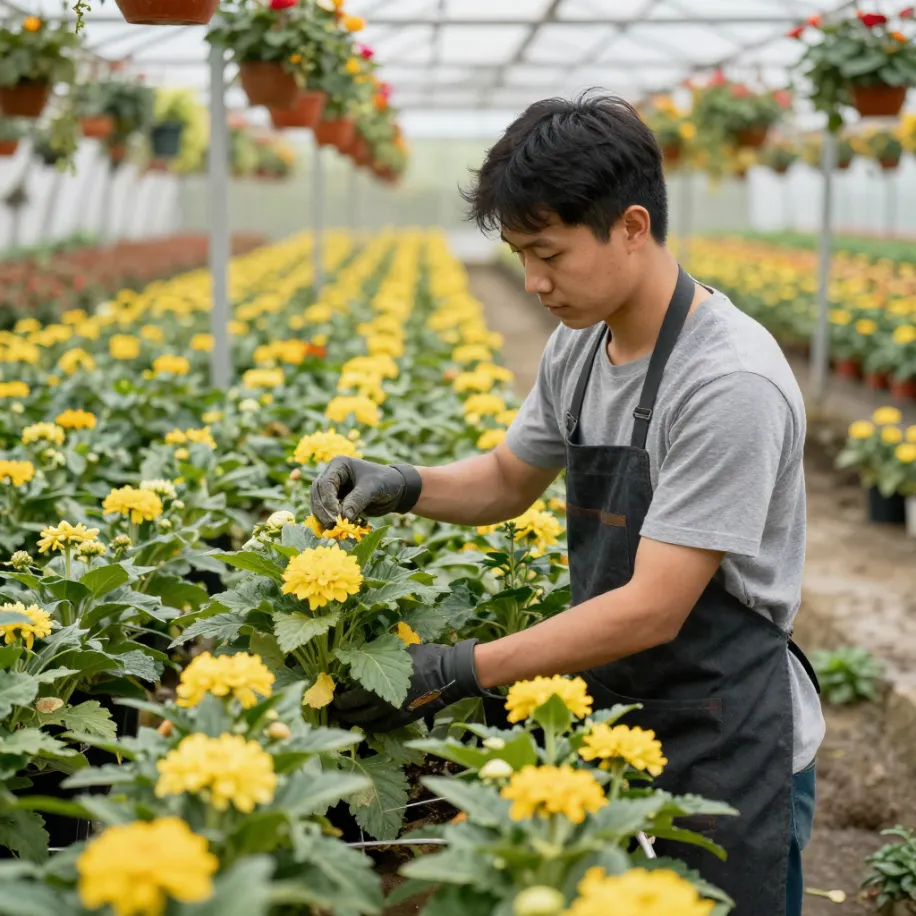
Market Trends Driving Shade Net Adoption

Why Horticulture & Floriculture Industries Rely on Shade Nets By Driving Shade Net Adoption

Several factors are driving the increasing use of shade nets in horticulture and floriculture:

  • Rising adoption of protected cultivation techniques such as greenhouses and net houses
  • Growing focus on sustainable agriculture practices
  • Technological innovations such as UV-stabilized and anti-pest shade nets
  • Expansion of commercial floriculture and ornamental plant production

The Asia Pacific region controls 32.2 percent of the shade net market because its agricultural economies which include India and China support its dominance. The North American market experiences rapid growth because investors are putting more money into greenhouse farming operations.

Real-World Instances of Shade Net Usage

  1. Tomato Cultivation in India
    Farmers in regions like Rajasthan use shade nets to protect tomato plants from extreme heat. The nets control temperature and minimize water evaporation which leads to enhanced fruit quality and increased crop production.
  2. Orchid Farming in Southeast Asia
    Orchid enthusiasts usually shade their orchids to 50-70 percent from the heat. Not only does the shade prevent the sun from burning the leaves; with the right amount of sun and humidity levels, orchids will bloom throughout the year
  3. Flower Nurseries in Greenhouses
    The commercial rose and chrysanthemum production relies on the provision of shade netting for uniform growth and protection of those fragile flowers from sunburn; this is a very important factor which assures the niche products' disadvantages and subsequent benefits.

Future Outlook

The shade net industry will keep growing because climate change makes it necessary for farms to have better crop protection methods. The development of HDPE-based UV-stabilized nets together with biodegradable materials.

The horticulture and floriculture sectors worldwide will require shade nets because they function as essential tools for contemporary agricultural practices.

FAQs

  • Which material dominates the shade net market and why?
    • Polyethylene is the leading material in the shade net market, accounting for about 31.3% of the share in 2025 due to its durability, lightweight structure, and strong resistance to UV radiation and harsh weather conditions.
  • Which region leads the global shade net market?
    • The Asia Pacific region leads the global shade net market, holding around 32.2% market share in 2025, driven by strong agricultural activity in countries like India, China, and Japan.
  • Why are shade nets important for greenhouse farming?
    • Shade nets create an optimal climate control system for greenhouses because they control temperature and sunlight and water evaporation, which leads to better plant growth and higher crop output.
  • What factors are driving the growth of the shade net market?
    • The main factors that drive growth for our business include two points which are the increasing need for crop protection solutions and the rising use of protected cultivation techniques and the unpredictable nature of climate patterns and the increasing understanding of environmentally friendly farming methods.
  • What challenges does the shade net market face?
    • Small-scale farming presents a challenge when it comes to high installation costs and the availability of alternative shading solutions, amongst other issues that have slowed down its adoption.

About Author

Nayan Ingle

Nayan Ingle

Nayan Ingle is an Associate Content Writer with 3.5 years of experience specializing in research, content writing, SEO optimization, and market analysis, primarily within the consumer goods, packaging, semiconductor, and aerospace & defense domains. He has a proven track record of crafting insightful and engaging content that enhances digital visibility an... View more

LogoCredibility and Certifications

Trusted Insights, Certified Excellence! Coherent Market Insights is a certified data advisory and business consulting firm recognized by global institutes.

Reliability and Reputation

860519526

Reliability and Reputation
ISO 9001:2015

9001:2015

ISO 27001:2022

27001:2022

Reliability and Reputation
© 2026 Coherent Market Insights Pvt Ltd. All Rights Reserved.
Enquiry Icon Contact Us