Resource Optimization in Healthcare Operations
Hospital administrators have a difficult job. Administrators need to allocate hospital resources wisely on limited budgets and provide good-quality services. Hospital leaders cannot view reducing costs and improving quality separately – they must do both simultaneously.
This is where workforce planning becomes important. Hospitals need to understand not only how many employees are available, but also their skills, work schedules as well as the level of care patients require. Staffing needs in an intensive care unit, for example, differ from those in an outpatient clinic. A uniform staffing plan may therefore leave some departments short-handed while others have more capacity than they need.
Healthcare staffing firms can help fill these gaps by connecting facilities with qualified professionals for temporary, contract, travel as well as locum tenens assignments. When used alongside good workforce planning, these services can give hospitals more flexibility without requiring every staffing need to be met through permanent hiring.
Three Key Trends Shaping the Healthcare Staffing Market
1. Growing Demand for Flexible and Travel Nursing Staff
Healthcare facilities often face changes in patient admissions, seasonal demand, employee absences as well as local workforce availability. Maintaining enough permanent staff for every possible increase in demand can be costly. At the same time, operating with too few professionals can place pressure on existing teams and affect patient care.
Travel nurse and per diem staffing services offer one way to respond. They allow hospitals to bring in qualified nurses for a defined period or specific shifts. This can be particularly useful in emergency departments, intensive care units, and facilities experiencing persistent vacancies.
As for the impact on the market, healthcare organizations now require staffing partners that would be able to quickly find the right candidates and fill the open position. But such an approach should complement a broader staff retention strategy rather than replace it.
2. Rising Demand for Specialized Healthcare Professionals
Not every staffing shortage involves nurses. Hospitals, clinics, and other healthcare providers also need physicians, therapists, technicians as well as other allied healthcare professionals. Demand can vary by specialty, location, and type of service.
Locum tenens staffing helps facilities bring in physicians for temporary assignments, while allied healthcare staffing supports roles such as rehabilitation, diagnostic services, and other clinical functions. These services can help maintain operations when a specialist is unavailable or a facility needs extra support.
This trend creates opportunities for staffing companies with strong professional networks and experience in specialized recruitment. It also makes credential checks, licensing as well as matching the right skills to each assignment essential. A fast placement is useful only when the professional is qualified for the role and the requirements of the facility.
3. Greater Use of Digital Tools for Workforce Planning
Healthcare staffing is also changing through the use of digital recruitment, scheduling as well as workforce management tools. These systems can help organizations track vacancies, manage shift requests, maintain candidate records, and identify gaps before they affect service delivery.
Better access to workforce data can support more informed decisions. For example, recurring shortages in a particular department may point to a need for a different hiring strategy, changes to shift patterns, or improved employee retention. Scheduling systems can also help managers see whether available staff match expected patient demand.
For staffing providers, digital tools can make recruitment and placement processes more efficient. For hospitals, the benefit comes from having clearer information about staffing needs and available professionals. Technology cannot solve a shortage of qualified workers on its own, but it can help existing resources be used more effectively.
The use of technology may help recruitment agencies make these processes more efficient. The advantages for hospitals lie in gaining a better understanding of their staffing requirements and the professionals they need. Technology is unable to resolve the problem of a lack of qualified staff, but it helps improve the efficiency of resource utilization.
Balancing Cost Efficiency and Care Quality
Research on the relationship between healthcare costs and quality has produced mixed results. A review of 61 studies cited in the original research found that 34% reported a positive relationship between costs and quality, 30% reported a negative relationship, and 36% found no clear correlation.
These results suggest that spending more does not automatically lead to better care, just as spending less does not guarantee efficiency. The way resources are allocated matters. A hospital may reduce costs in one department but create greater expenses elsewhere if the change leads to delayed treatment, avoidable complications, or staff overload.
The original research also reports that care plans developed with patient involvement were associated with a 31.9% reduction in cost per patient and a 62.5% improvement in care quality. Such results depend on the setting and the methods used, but they underline the value of coordinating care around patient needs.
Staffing decisions should follow the same principle. Rather than relying only on fixed staffing numbers, hospitals can consider patient acuity, expected admissions, staff availability as well as the skills required for each shift.
Flexible Staffing Approach
More healthcare organizations now use flexible staffing models to handle changing patient needs. But there's a catch - staffing plans that aim for average demand often leave units short-handed. This leads to patients staying 1.7% longer in hospitals and an 8.3% higher risk of death. The better option is resilient staffing plans, complemented by platforms like Nursa for healthcare facilities, that meet demand 90% of the time. These plans help reduce hospital stays by 1.2% and cut death risk by 4.5%.
Healthcare networks are increasingly adopting centralized scheduling systems to manage resources more efficiently. For example, Mercy used a gig-model staffing platform that increased nurse staffing by 20% over two years. The platform helped fill 94% of shifts, save USD 52 million in premium labor costs as well as reduce agency staffing costs by 62%.
Flexible staffing is not simply about filling vacancies quickly. It is about matching the number and skills of healthcare professionals to actual patient demand while keeping costs and care quality in view.
What CMI's Healthcare Staffing Market Report Covers
The workforce challenges described above help explain the growth projected by Coherent Market Insights. Its healthcare staffing report estimates the global market will likely expand 1.7X between 2026 and 2033.
The report divides the market by service type into four main segments:
- Travel nurse staffing: Nurses placed in temporary assignments, often to help hospitals manage vacancies or changes in patient demand.
- Allied healthcare staffing: Staffing for other healthcare professionals, including relevant diagnostic, rehabilitation, and clinical support roles.
- Per diem nurse staffing: Nurses who work on a daily or shift-based basis to cover short-term requirements.
- Locum tenens staffing: Temporary placement of physicians and other eligible medical professionals.
The report also covers North America, Europe, Asia Pacific, Latin America, and the Middle East and Africa, with further country-level breakdowns. These regional differences matter because healthcare systems face different workforce pressures, regulations as well as recruitment challenges.
Travel nurse staffing is projected to be the leading service-type segment, with a 32.5% share in 2026. North America is expected to account for 44.9% of the global market in the same year. These estimates point to the importance of temporary nursing services and the established staffing industry in the region.
Staffing Segments Worth Watching
Travel nurse staffing helps hospitals bring in qualified nurses for temporary assignments. Demand can increase when permanent employees leave, patient admissions rise, or local recruitment cannot keep up with staffing needs.
Travel nurses may work in emergency departments, intensive care units, medical-surgical units as well as other areas where an unfilled shift can put pressure on the wider team. Their temporary assignments allow hospitals to add capacity while permanent recruitment is still underway.
This segment matters to the overall market because nursing shortages can affect several departments at once. Travel staffing gives hospitals another source of qualified professionals, particularly when local candidates are difficult to find. It can also offer nurses the chance to work in different clinical settings.
There are trade-offs. Contract rates may be higher than the cost of employing permanent staff, and temporary nurses need time to become familiar with a facility's procedures. Hospitals therefore need to weigh the cost of a placement against the risk of leaving a shift uncovered. Used for the right reasons, travel nurse staffing can help maintain services during difficult periods.
Inefficiencies in Healthcare Resource Allocation: A Quantitative Overview
The U.S. wastes USD 400-USD 800 billion in its USD 2 trillion healthcare budget due to poor use of resources; these inefficiencies are a major barrier to achieving universal healthcare. Assessing the effectiveness of the U.S. healthcare system, therefore, requires a way to evaluate the efficiency of the system.
-
Three-Stage DEA Model for Technical Efficiency
Standard Data Envelopment Analysis (DEA) models don't handle environmental and random factors very well. These models often show efficiency scores much higher than real values. Researchers now use the three-stage DEA approach to solve this issue.
This method separates external environmental influences to more accurately reflect internal management efficiency. A study in Gansu Province found that healthcare services had a technical efficiency of 0.962 after adjusting for environmental factors.
All regions were identified as efficient, except for three, which were identified as inefficient. The technical efficiency of resource allocation for traditional Chinese medicine hospitals in China varies significantly across regions. However, there are regions achieving maximum Technical Efficiency values. GN City fell behind with an overall Technical Efficiency Value of just 0.610, indicating poor resource utilization.
-
Malmquist Index for Productivity Trends (2018–2024)
Changes in the Malmquist Productivity Index can help track overall trends and efficiency improvements or declines in U.S. Healthcare Systems from 2018 through 2024. This Index tracks both improvements in efficiency and improvements in technology, as well as how these improvements have contributed to an overall increase in Total Factor Productivity (TFP) within U.S. Healthcare Systems over time.
As reported, TFP has been trending downward since 2018. In 2018-2024, the average Malmquist Productivity Index was 0.955. Thus, every year, healthcare productivity is down 4.5%. Technical Change averaged .960 per year. During 2022-2023, technical change peaked at 1.318 and remained under 1.0 in other years. Overall, these results suggest that while there are occasional increases in technology use in healthcare systems, the rate of productivity growth in healthcare systems remains low.
-
Slack Variable Analysis in Underperforming Cities
Slack variable analysis provides a comprehensive picture of resource-use problems in struggling healthcare systems. This analysis shows whether DEA-inefficient cities use their resources (staff, equipment, facilities) and services optimally.
To name just one example, see the study of three inefficient cities. BY and PL optimized three input indicators (S2-, S3-, and S4-). GN managed to optimize only one (S4-). The cities also differed in output optimization. GN reached optimal levels for just one variable (S3+), while BY and PL achieved two. These results highlight specific areas where resource allocation strategies need improvement.
Geographic and Population-Based Inequities in Resource Distribution
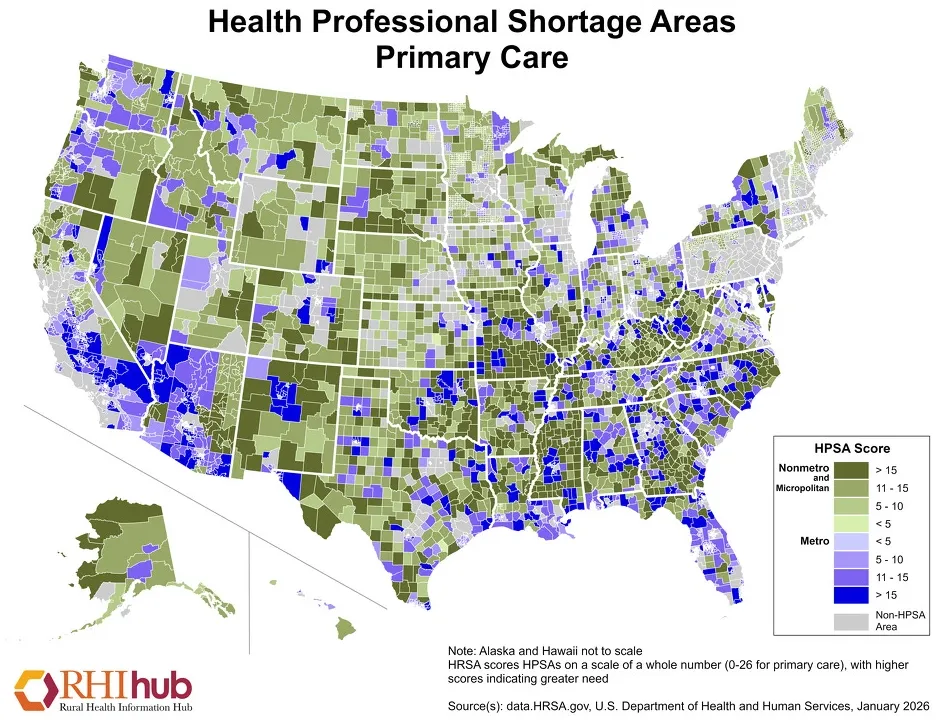
Healthcare resources are often unfairly distributed in many regions. These inequities can be demonstrated through the use of various measurement tools that show how resource availability affects the level of quality of patient care in these types of areas.
-
HRAD vs PAD: Measuring Spatial and Demographic Fairness
The Health Resource Agglomeration Degree (HRAD) and the Population Agglomeration Degree (PAD) provide two perspectives of resource equity. When HRAD = 1, it indicates that there is an optimal geographic distribution of healthcare resources. Values for HRAD greater than 1 indicate a higher concentration of healthcare resources relative to the population, while values less than 1 indicate an inequitable distribution of resources relative to the population.
An alternative approach to assessing whether sufficient health care resources are being made available is to use the HRAD/PAD ratio. A ratio of > 1 indicates a surplus of health care resources in relation to population demand; a ratio of < 1 indicates a deficit of health care resources in relation to the population.
-
Disparities in TCM Bed Allocation Across Gansu
The allocation of TCM beds in Gansu Province, as stated by the traditional Chinese medicine (TCM), is highly unequal. The ratio of health resources available/needed (Hrad) was found to be between 0.029 and 5.126 for Gansu, while the population fairness ratios were found to range between 0.219 and 2.065; this indicates that the eastern provinces of China have been given a significantly greater amount of TCM resources.
-
Population-Weighted Resource Gaps in Rural Areas
There are many barriers to accessing healthcare in rural communities. Forty-three million rural Americans live in areas with a shortage of primary care physicians. Ninety-two percent of rural counties have too few health professionals. In terms of regional differences, the rural counties in the South and West are experiencing the greatest number of primary care shortages -- 97% of the time.
U.S. Healthcare Staffing Market: Key Factors and Developments
The U.S. is an important market for healthcare staffing because hospitals, clinics, and other providers continue to need qualified workers across a wide range of services. An aging population, chronic disease, and demand for care in different settings add pressure to workforce planning. According to Coherent Market Insights, North America, led by the U.S., is projected to account for a global market share of 44.9% in 2026.
Digital recruitment and scheduling tools are also becoming part of workforce management. They can help track open shifts and match available professionals to facility needs, although licensing and credential requirements remain important. For healthcare providers, the challenge is to balance temporary coverage with staff retention and long-term recruitment. Flexible staffing can keep services running, but it cannot remove the underlying causes of persistent shortages.
Key Players in the Healthcare Staffing Market
The healthcare staffing market includes companies with different areas of focus. CMI's report identifies several participants, including:
- AMN Healthcare — offers healthcare workforce and staffing services across multiple professional categories.
- Aya Healthcare — provides staffing services, including travel nurse placements.
- Cross Country Healthcare, Inc. — supplies healthcare staffing and workforce solutions.
- Maxim Healthcare Group — provides staffing and related healthcare services.
- CHG Management, Inc. — is associated with physician staffing and locum tenens services.
- TeamHealth — operates in physician staffing and clinical services.
- Trustaff — focuses on healthcare staffing, including travel nursing.
- LocumTenens.com — connects healthcare facilities with professionals for temporary medical assignments.
- Adecco Group — provides broader recruitment and workforce solutions.
- Envision Healthcare Corporation — operates in physician and clinical services.
These companies serve different staffing needs, from temporary nursing assignments to physician coverage and broader workforce services. Their ability to recruit qualified professionals, complete credential checks as well as respond to changing demand is central to the services they provide.
For healthcare facilities, choosing a staffing partner should involve more than comparing placement costs. Experience with the required specialty, the quality of candidate screening, responsiveness, and familiarity with local requirements can all affect the outcome.
Conclusion
Poor resource allocation is not always caused by a shortage of money or equipment. Sometimes the problem is that the right professional is not available at the right time, or that staffing plans do not reflect the actual needs of patients.
Travel nurse staffing, per diem nursing, locum tenens, and allied healthcare staffing can help providers respond to these gaps. Digital scheduling and workforce data can also support better decisions, especially when demand changes from one department or location to another.
The healthcare staffing market is expected to grow as providers continue to look for ways to manage workforce needs. CMI's market outlook reflects this demand, but lasting progress will depend on more than filling open shifts. Hospitals and staffing companies need to consider qualifications, staff wellbeing, patient needs, and the long-term reasons behind vacancies.

