Contact Us Careers Register

5 Best Multi-Tenant Headless CMS For Distributed Enterprise Teams

14 Jul, 2026 - by Hygraph | Category : Information And Communication Technology

5 Best Multi-Tenant Headless CMS For Distributed Enterprise Teams - hygraph

5 Best Multi-Tenant Headless CMS For Distributed Enterprise Teams

Distributed teams have become the guideline for a number of enterprise organizations. Whether content teams are spread across regions, business units, or  rather acquired brands, they all need to collaborate without compromising governance, consistency, or speed.

Traditional CMS architectures usually face problem to support this balance, forcing organizations to opt between centralized control or team autonomy.

Multi-tenant headless CMS platforms take a different approach by integrating shared infrastructure with isolated workspaces, enabling teams to work autonomously along with maintaining enterprise-wide standards.

In this guide, we will understand 5 of the best solutions for distributed enterprise teams as well as compare their strengths and ideal use cases.

What Is a Multi-Tenant Headless CMS?

A multi-tenant CMS is a platform where multiple teams, brands, business units, as well as regions share the same infrastructure along with working in their own isolated environments, tenants.

Each tenant can have its own content, workflows, permissions, configurations, etc., without impacting on other teams, as well as IT manages a single platform instead of multiple CMS instances. This model lowers infrastructure costs, ease administration, as well as makes it easier to measure content operations across the organization.

A headless CMS separates content from the presentation layer. Instead of being tied to a specific website, content is kept as structured data as well as delivered through APIs to websites, mobile apps, ecommerce platforms, customer portals, as well as other digital platforms.

These capabilities make a multi-tenant headless CMS, a platform that maintains centralized infrastructure with team-level autonomy.

What to Look for in a Multi-Tenant Headless CMS

Enterprise organizations need a platform that make sure distributed teams to work independently while maintaining centralized governance, security, and operational efficiency. Here are the major capabilities to prioritize when evaluating your options.

Tenant Isolation

A correct multi-tenant CMS should provide isolated environments for each team, brand, as well as business unit. Every tenant should have its own content, workflows, permissions, as well as configurations, making teams to work autonomously. This separation lower the risk of accidental alterations as well as supporting collaborations in the organization.

Structured Content

Structured content brings information to be made once as well as reused across multiple websites, applications, and digital channels. Instead of replicating content for every brand or region, teams can have a single source of truth that builds consistency as well as ease content handling.

API-First Architecture

An API-first CMS provide development teams the flexibility to make content to websites, mobile apps, ecommerce platforms, customer portals, as well as future digital experiences from the same content repository. This approach also enables teams to choose the frontend technologies that best fit their projects without being limited by the CMS.

Centralized Governance

Distributed teams need autonomy, and enterprise organizations still need centralized take. Find features including role-based access control, approval workflows, audit logs, as well as security policies, that aid manage governance alongside making individual teams to handle their own content.

Scalability

The CMS should scale without requiring different platform deployments with organizations expanding into new markets, launching additional brands, as well as acquiring new businesses. A scalable multi-tenant architecture makes it simple to onboard new teams while keeping infrastructure as well as administrative overhead under control.

1. Hygraph 
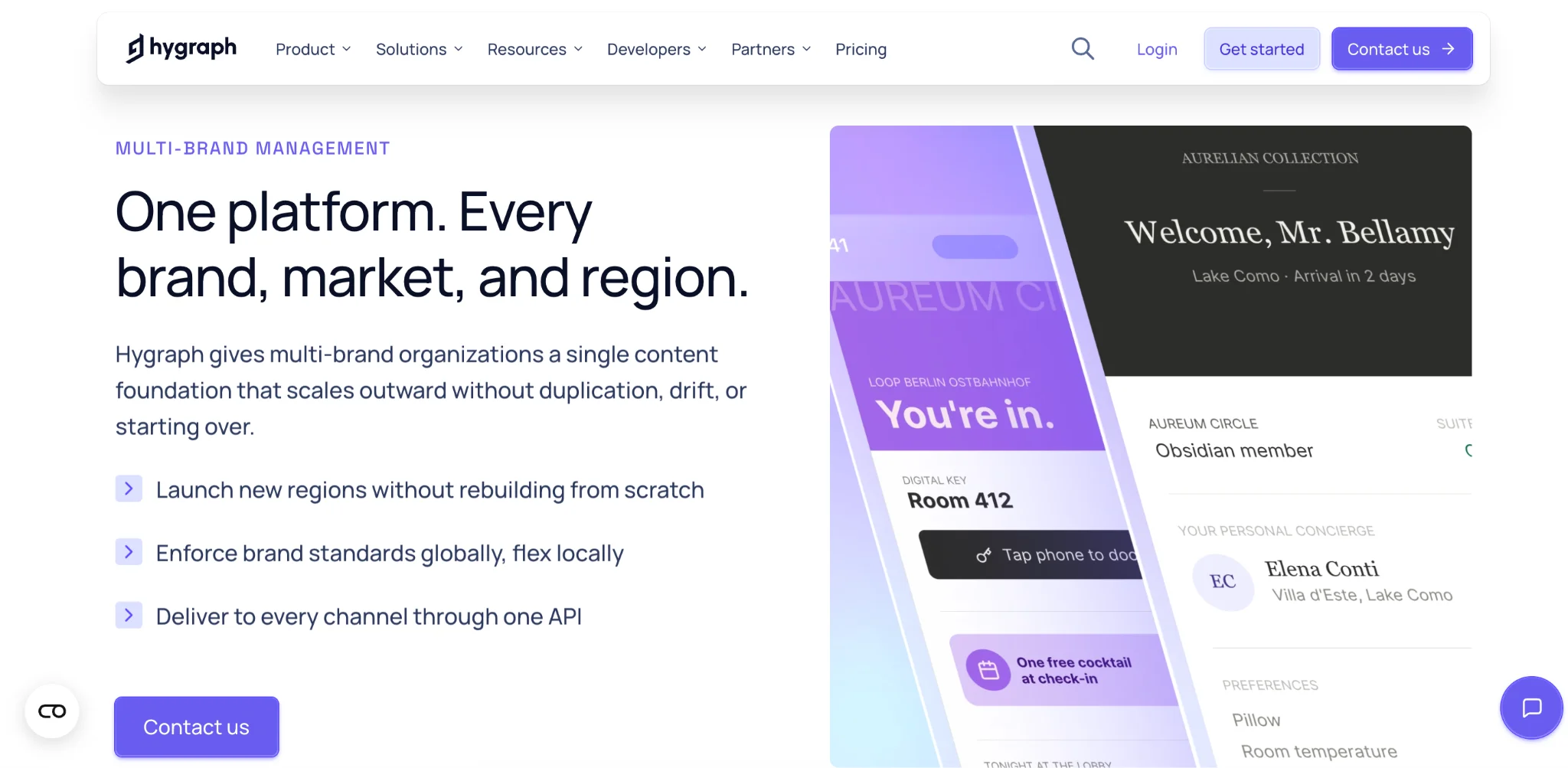
Hygraph

Hygraph is a multi-tenant headless CMS that make sure enterprises to manage multiple brands, business units, or regional teams from a single platform. Instead of installing separate CMS instances, organizations make focused content spaces for each tenant while operating on shared infrastructure.

Each content space functions independently, making sure teams to build as well as manage content without disrupting other tenants. This approach ease platform administration while supporting distributed content operations at enterprise scale.

Where It Excels

  • Schema autonomy: Every tenant can make its own content models without impacting other teams.
  • Centralized governance: Platform administrators manage consistent security, access control, as well as integrations along with allowing teams to work independently.
  • Cross-brand content reuse: Structured content can be shared as well as syndicated across brands without duplication.
  • Incremental scalability: New brands or acquired business units can be taken as new content spaces rather than having separate CMS deployments.
  • Frontend flexibility: Teams can utilize separate frontend frameworks while consuming content from the same API-first platform.

Best For

Large enterprises with distributed engineering as well as content teams that need centralized infrastructure while giving individual brands or business units the autonomy to manage their own content.

2. Magnolia CMS 
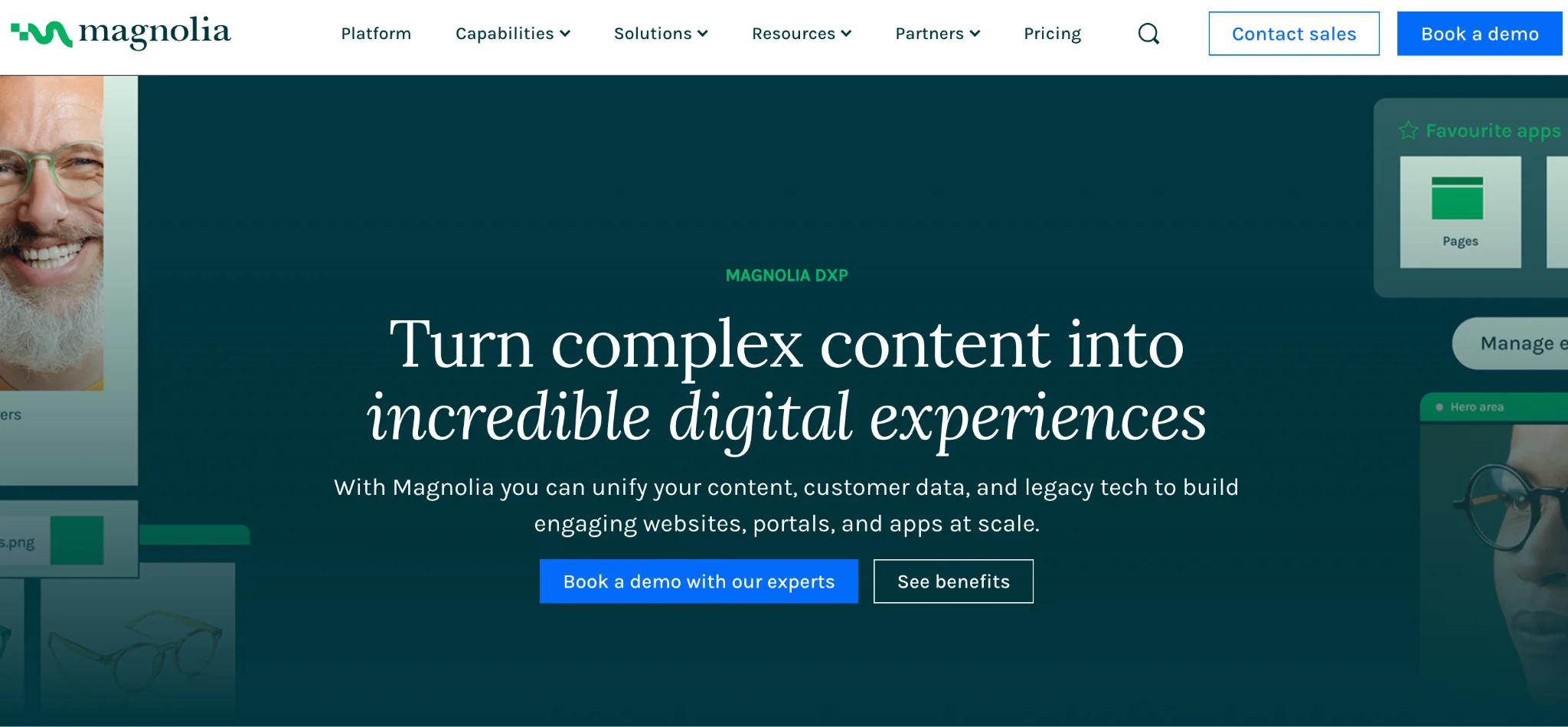
Magnolia CMS

Magnolia CMS is an enterprise content management platform that integrates hybrid headless capabilities with multi-site as well as multi-tenant support. Organizations can manage multiple websites, business units, or regional teams from a centralized platform while allowing each tenant to maintain its own content, branding, and publishing workflows.

Its modular architecture make teams to send infrastructure without sacrificing operational independence. Magnolia is commonly used by enterprises with complicated digital ecosystems as well as long-term governance need.

Where It Excels

  • Flexible multi-site as well as multi-tenant architecture
  • Strong role-based access control with governance
  • Reusable content across multiple websites
  • Broad integration with enterprise systems
  • Supports both traditional as well as headless delivery models

Best For

Enterprises that need centralized governance across multiple websites, business units, regional teams, etc., while supporting both traditional and headless content delivery.

3. Bloomreach 
Bloomreach

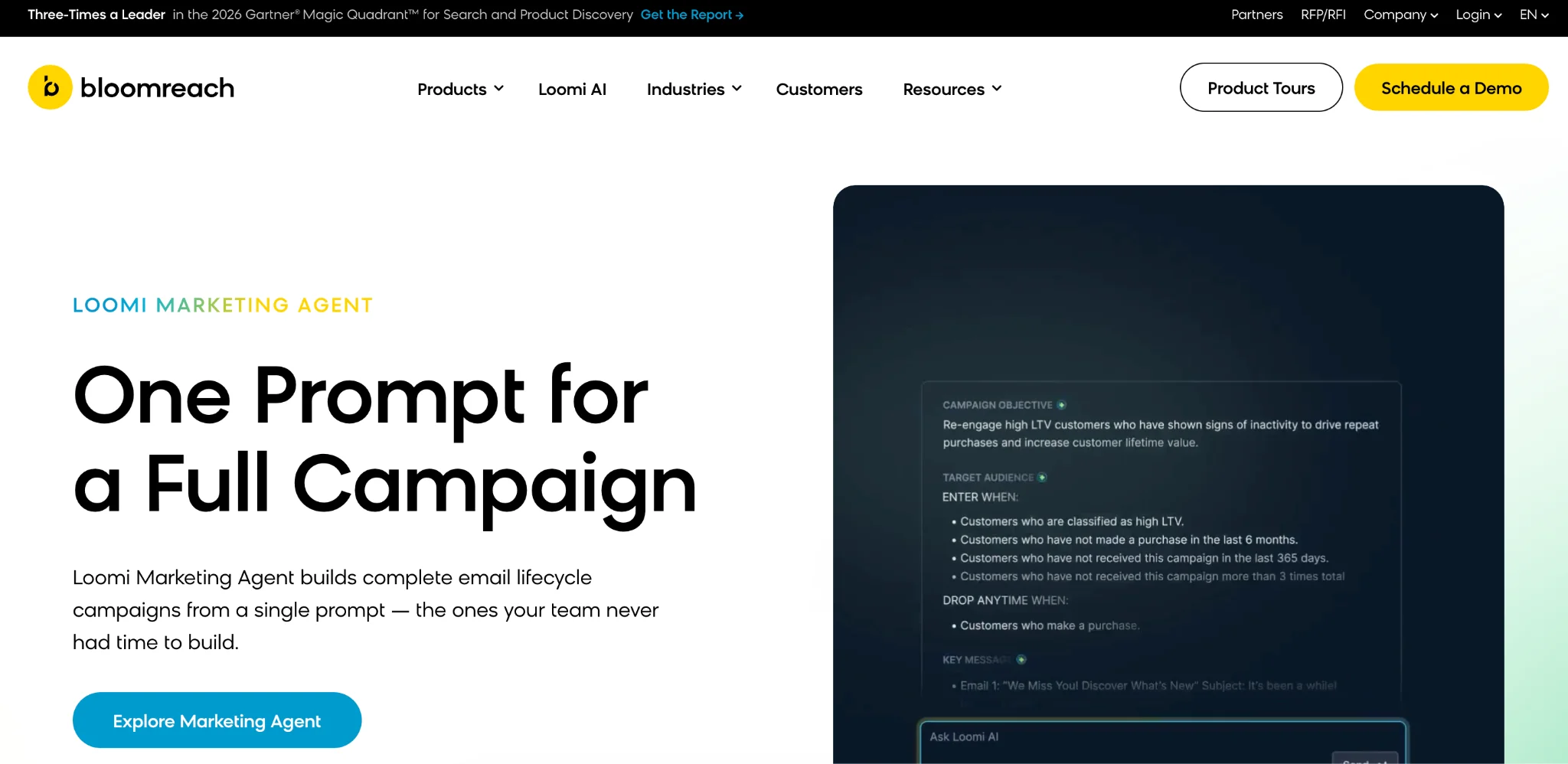
Bloomreach is a digital experience platform that integrates headless content management with commerce as well as customer experience capabilities. Its multi-tenant architecture makes organizations to support multiple brands, markets, and ecommerce experiences from a shared platform while maintaining localized content and workflows.
Distributed teams can collaborate independently without duplicating infrastructure. This makes Bloomreach particularly well versed for global commerce organizations.

Where It Excels

  • Multi-brand ecommerce management
  • Centralized content with localized experiences
  • AI-powered search as well as merchandising capabilities
  • High personalization across digital channels
  • Enterprise integrations for commerce ecosystems

Best For

Retailers as well as global commerce enterprises managing multiple storefronts, regional teams, as well as localized customer experiences.

4. Kentico Xperience 

Kentico Xperience

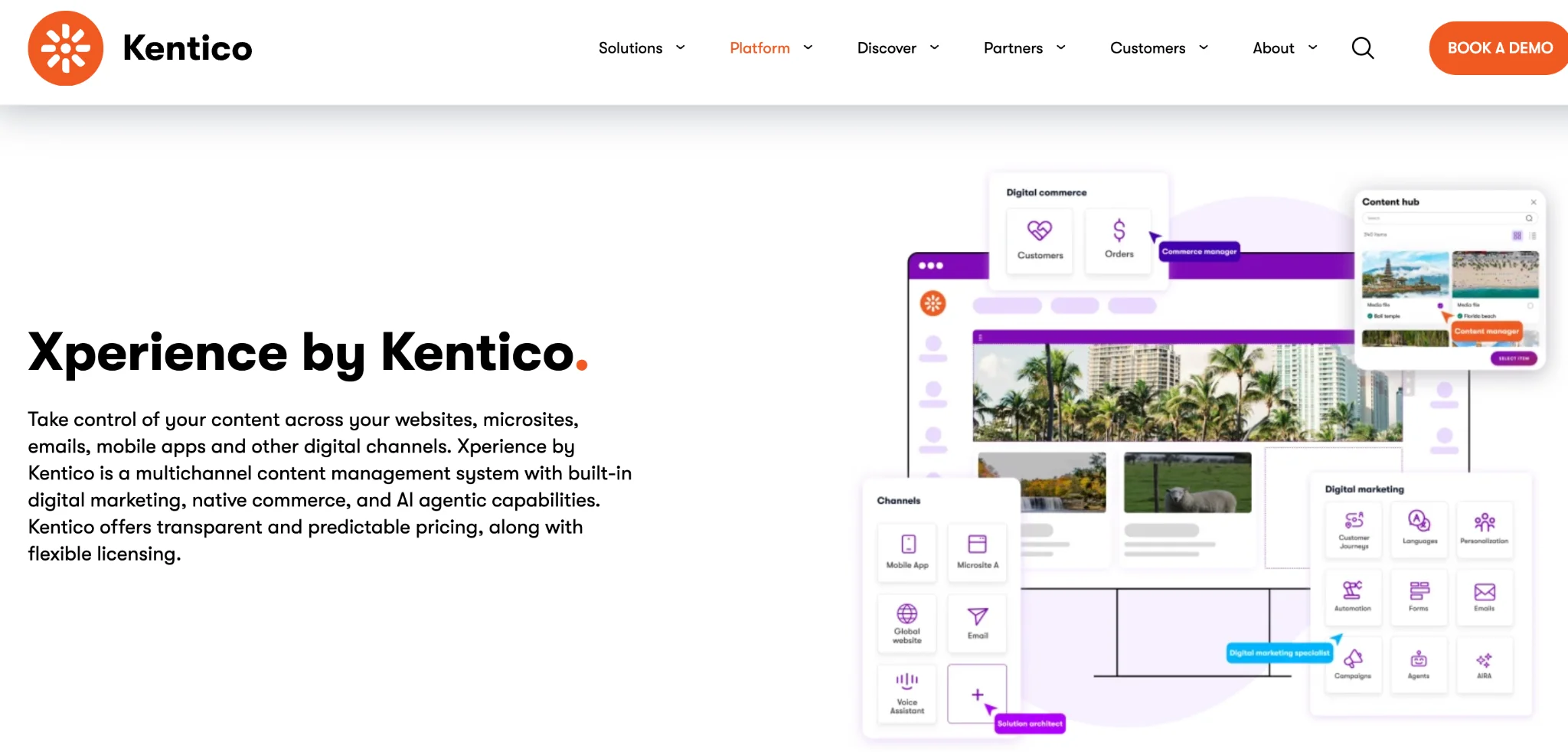
Kentico Xperience is a hybrid headless digital experience platform that optimize enterprise content management across a number of websites as well as business units. Organizations can manage content from a centralized platform while giving regional or departmental teams the liberty to track their own digital experiences.

Its multi-site features aid reduce copied infrastructure while supporting continuous governance. The platform also connect content management with marketing as well as personalization tools.

Where It Excels

  • Multi-site content handling in a shared platform
  • Marketing automation as well as personalization
  • Flexible hybrid headless architecture
  • Enterprise workflow as well as approval capabilities
  • Straightforward administration for distributed marketing teams

Best For

Enterprises that want to centralize content operations while giving distributed marketing teams control over their own websites as well as campaigns.

5. dotCMS

dotCMS

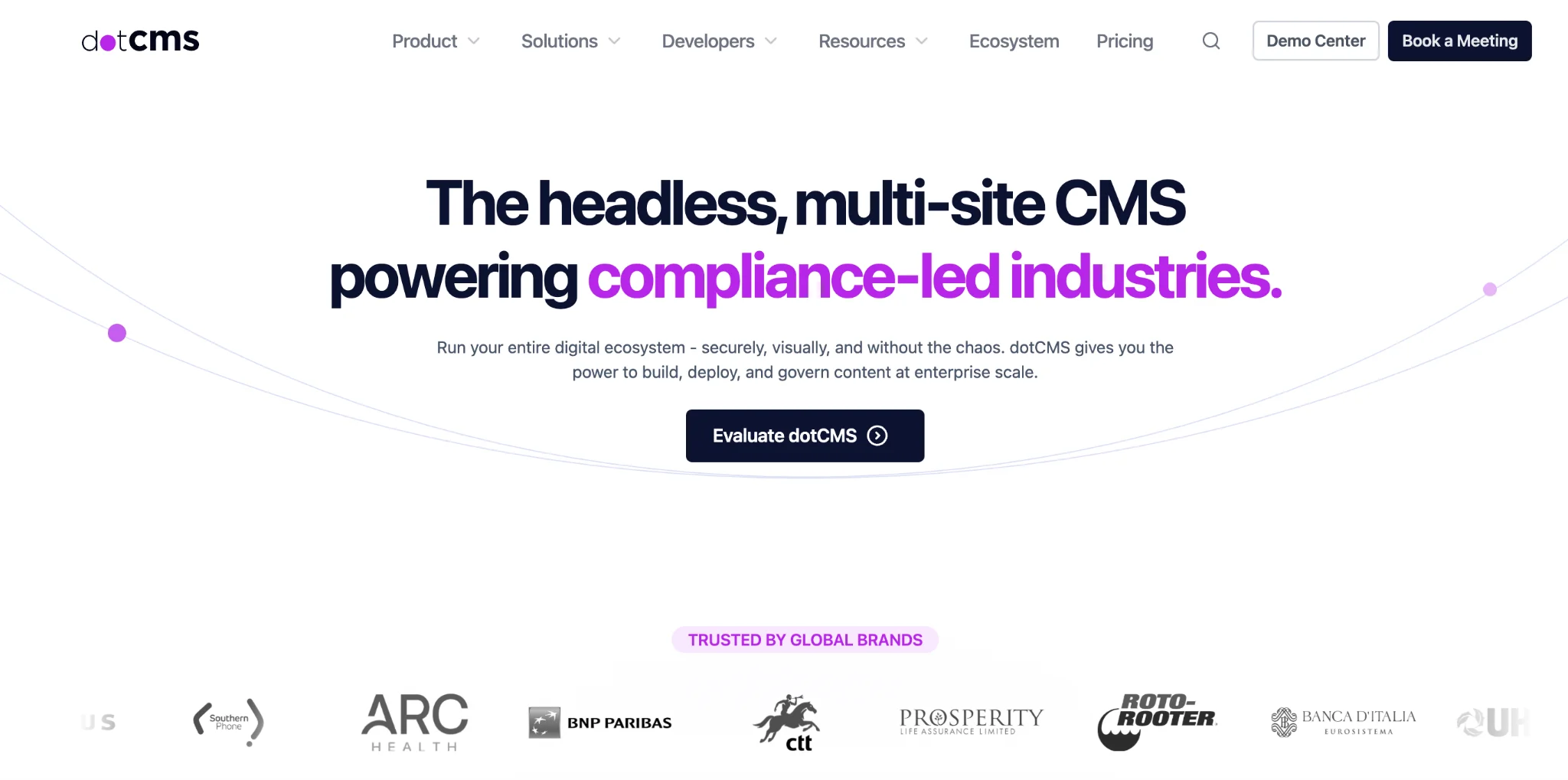
dotCMS is an enterprise content management platform with hybrid headless capabilities made for organizations operating multiple websites, brands, business units, etc. Its multi-tenant architecture brings teams to share infrastructure while maintaining different content, permissions, as well as publishing workflows.

The platform focus flexibility, enterprise governance, and extensibility for organizations managing complex digital ecosystems. It supports traditional website management as well as API-driven content management.

Where It Excels

  • Multi-tenant management with isolated permissions
  • Enterprise governance as well as workflow controls
  • Hybrid headless delivery options
  • Extensive API support and integrations
  • Flexible deployment alternative, including cloud as well as self-hosted environments

Best For

Large organizations that need enterprise governance, flexible instalment models, as well as centralized management of multiple digital properties.

6. Sitecore XM Cloud 

Sitecore XM Cloud

Sitecore XM Cloud is a cloud-native digital experience platform that brings enterprises to manage multiple websites, brands, as well as regional teams from a centralized content platform. Its multi-site architecture supports shared content, governance, along with publishing workflows while allowing individual teams to maintain localized digital experiences.

Built as a SaaS offering, it lower the infrastructure management as well as supports modern headless delivery patterns alongside traditional web experiences. This makes it a strong option for organizations modernizing enterprise content operations.

Where It Excels

  • Multi-site content management for global organizations
  • Enterprise governance as well as role-based access control
  • Shared content across brands and regions
  • Cloud-native deployment as well as automatic updates
  • Strong personalization and digital experience capabilities

Best For

Large enterprises managing a number of regional websites as well as digital experiences that need enterprise-grade governance with better personalization.

7. Progress Sitefinity 

Progress Sitefinity

Progress Sitefinity is a hybrid headless CMS that aid organizations manage multiple websites, departments, as well as regional teams from a centralized platform. Its multi-site capabilities allow content, assets, as well as templates to be shared while enabling each team to maintain independent websites and publishing workflows.

The platform connects conventional content management with headless APIs, giving organizations flexibility with modernizing digital infrastructure. It also connect with a variety of enterprise applications with the broader Progress ecosystem.

Where It Excels

  • Centralized management of multiple websites
  • Shared templates as well as reusable content
  • Enterprise workflow and governance controls
  • Hybrid headless architecture for gradual modernization
  • Extensive enterprise integrations

Best For

Organizations that want to manage a number of websites as well as distributed content teams while altering from conventional CMS architecture to a hybrid headless model.

To Sum Up

Business units, as well as regions, managing content through segregated CMS instances become highly difficult to maintain with enterprise organizations expanding across brands. A multi-tenant headless CMS give better approach by integrating shared infrastructure with isolated workspaces, enabling distributed teams to work independently by maintaining centralized governance as well as security.

The correct platform ultimately depends on priorities of your organization. If your focus is enterprise governance, digital experiences, or commerce, platforms including Magnolia CMS, Sitecore XM Cloud, Bloomreach, Kentico Xperience, Progress Sitefinity, dotCMS, etc., each offer capabilities tailored to different use cases.

Organizations searching for a platform made around multi-tenant architecture, rather, may find Hygraph particularly compelling. Its content space model, structured content foundation, API-first architecture, etc., make enterprises to support independent teams on a single platform without compromising flexibility.

As digital ecosystems become complicated, investing in a multi-tenant headless CMS can aid ease content tasks today by making a stronger base for future growth.

Disclaimer: This post was provided by a guest contributor. Coherent Market Insights does not endorse any products or services mentioned unless explicitly stated.

About Author

Jing Li

Jing is the Organic Growth Lead at Hygraph. Besides telling compelling stories, Jing enjoys dining out and catching occasional waves on the ocean.


LogoCredibility and Certifications

Trusted Insights, Certified Excellence! Coherent Market Insights is a certified data advisory and business consulting firm recognized by global institutes.

Reliability and Reputation

860519526

Reliability and Reputation
ISO 9001:2015

9001:2015

ISO 27001:2022

27001:2022

Reliability and Reputation
© 2026 Coherent Market Insights Pvt Ltd. All Rights Reserved.
Enquiry Icon Contact Us