In today’s market, video content isn’t just everywhere, it’s tailored, dynamic, and increasingly personalized. Businesses large and small are investing in tools that automate the creation of personalized video at scale for marketing, sales outreach, onboarding, and more. This overview looks at the marketing technology market behind video personalization, covering key trends, segments, the U.S. market and market participants, and uses five tools to illustrate how the technology is applied.
Market Introduction
Personalized video creation is gaining popularity in the broad marketing technology industry. Companies are applying data, automation, and analytics in order to provide customers with relevant video messages in their sales, advertising, customer onboarding, and retention campaigns. Rather than creating customized videos individually for each customer, marketing professionals are now able to utilize dynamic templates, customer data, and automation workflows.
Coherent Market Insights forecasts that the global Marketing Technology Market will have a valuation of US$ 680.50 Billion in 2026 and US$ 2,104.09 Billion in 2033, recording a CAGR of 17.5%. Digital marketing development, need for customized customer experience, and AI implementation contribute to the development of the market.
In this context, personalized video software unites the creative process of video making with the automation of the marketing campaign and the measurement of customer interaction. The effectiveness of such solutions does not only depend on the quality of videos, but also on their ability to interact with customer data and CRM systems.
3 Key Market Trends
- Video content production using AI: With the help of AI, marketers have become able to develop, edit, and customize their video content very easily. Clipping, generation of captions automatically, and content customization will reduce the production time of videos. The CMI report notes that generative AI integration is changing how MarTech platforms create content and automating personalization at scale, and cites HCL Technologies’ AI-first HCL Unica+ platform, launched in September 2025, for hyper-personalised, data-driven engagement. The impact is a shift in what marketing platforms are expected to offer.
- Integration with marketing automation software: It is expected that video platforms will be integrated into CRMs, email marketing software, and marketing campaigns management software. It will help marketers deliver personalized videos to customers based on various stages of customer journey and measure their engagement.
- Focus on measuring engagement: Besides the number of video views, marketers are also concentrating on customer engagement through videos and the effectiveness of videos in generating leads and customers or driving sales.
These are some of the trends that indicate that video personalization has to be considered in relation to marketing technology rather than as a separate creative process.
Selected Video Personalization Tools
1. Nexrender: Best for Automation and Customization
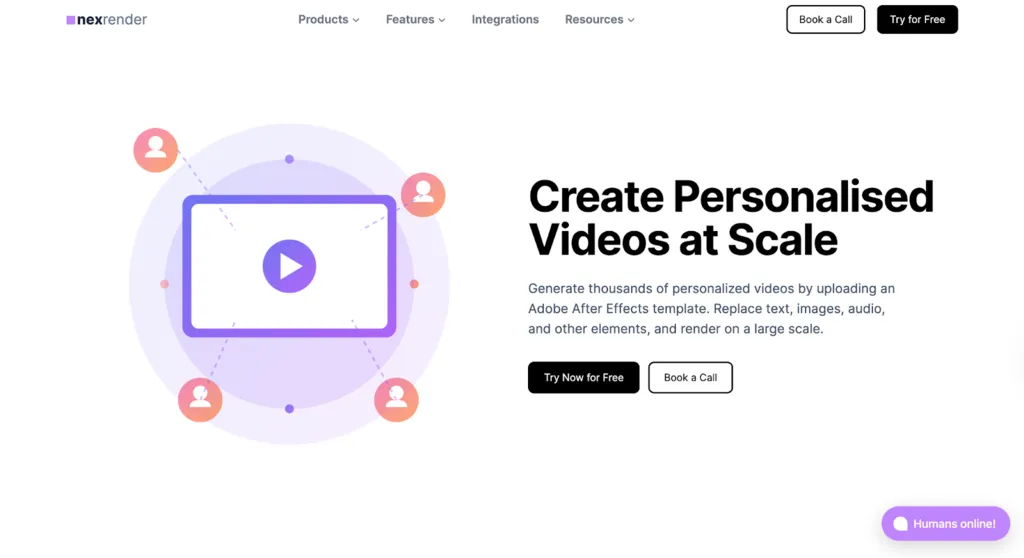
Nexrender was designed with the purpose of offering users total control over their video customization process. First of all, Nexrender is an open-source software which is capable of integrating with Adobe After Effects to automatically render videos depending on external dynamic data. For companies using After Effects for their high-quality visual content creation, Nexrender solves the problem of the connection between manual editing process and automated video production. Many solutions available on the market concentrate on templated video content generation in closed systems. However, with Nexrender users have the opportunity to specify themselves how video inputs should be adjusted according to dynamic data sources.
- Key Features
- Flexible Data Integration: Nexrender can leverage CSV, JSON, or API data in order to change text, images, audio, and animation in an After Effects project. This way, teams can switch out names, product images, or customer reviews depending on the recipient's characteristics or actions.
- Developer-Friendly Architecture: Nexrender offers the capability to perform automated rendering and command line interfaces. The rendering tasks may be initiated through scripting, webhooks or back end options like payment and signup processes.
- No Vendor Lock-In: The open-source nature of Nexrender provides more freedom for organizations to control the process of rendering. Nevertheless, self-hosting requires certain infrastructure.
- High-Quality Output: The use of After Effects as the rendering platform allows for complex visual compositions and custom creative results.
- SWOT Analysis
- Strengths
- The open-source system facilitates customization of the rendering process.
- The After Effects capability enables creating motion graphics with precision.
- Weaknesses
- The system requires technical proficiency in order to operate effectively.
- The company itself must maintain its own infrastructure and rendering capabilities.
- Opportunities
- Personalized demo videos and marketing videos based on individual accounts.
- Integration into enterprise infrastructure and campaign automation.
- Threats
- Video automation on managed cloud platforms.
- Compatibility changes in rendering software and infrastructure cost fluctuations.
2. Vidyard: CRM-Friendly Personalized Video Solution
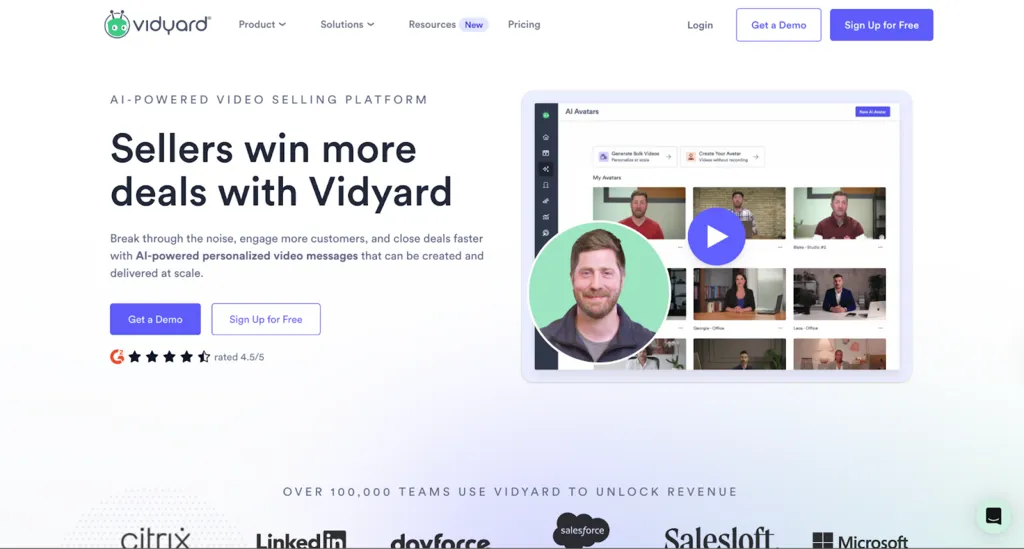
Vidyard is a video service that combines hosting, analytics and personalization. This tool is particularly important for sales and customer success teams who wish to create individualized videos.
- Key Features
- Customized Video Messages: Produce customized videos for each contact or audience segment using text overlay capability.
- Analytics Integration: Measure engagement and take advantage of the insights gained to conduct follow-ups.
- Integrations with HubSpot & Salesforce: Tie video engagement data to customer relationship management processes.
- SWOT Analysis
- Strengths
- Video hosting, messaging, and analytics for measuring engagement in one package.
- Integrations with CRMs help to perform follow-ups and manage leads.
- Weaknesses
- Personalization features might need additional tools or workflow setup.
- Whether it is suitable for complicated custom rendering or not will depend on the needs.
- Opportunities
- Use personalized video solutions for B2B prospecting or account-based marketing initiatives.
- Lead scoring based on engagement metrics.
- Threats
- Sales engagement software and video communication competitors.
- Potential privacy limitations and email/CRM integration changes.
3. Bonfire: Simplifying Personalized Video Campaigns
Bonfire is described as a cloud-based platform for video personalization, which allows marketing and communication professionals to develop dynamic and data-driven video content in bulk. It is especially useful for campaign-based applications like onboarding of customers, promotional campaigns, and life cycle communication.
It enables collaboration between creative and marketing teams. Creative personnel could create video templates and marketing personnel could leverage the data within them to create personal videos in larger numbers.
- Key Features
- Drag-and-Drop Video Editor: A visual editing approach allows users to arrange and customize text, images, and video clips without writing code.
- Data-Driven Personalization: Customer attributes can be mapped to video elements, supporting tailored messaging, visuals, and calls to action.
- API and Webhooks: Workflow integrations can help connect video creation and delivery to external systems and customer events.
- SWOT Analysis
- Strengths
- Template-based workflow might make collaboration easy between creative and marketing team.
- Data-driven video creation might lower the number of repetitive video productions.
- Weaknesses
- Cloud-based workflow might not give full control regarding local rendering and storage.
- Usefulness for more advanced applications might be based on validated integrations and product features.
- Opportunities
- Automated onboarding, promotional campaigns and lifecycle communication.
- Integration with CRMs and marketing automation software.
- Threats
- Competition from marketing technology companies offering comprehensive solutions.
- Restrictions due to customer data security and integration needs.
4. Vizard: AI-Powered Video Repurposing Platform
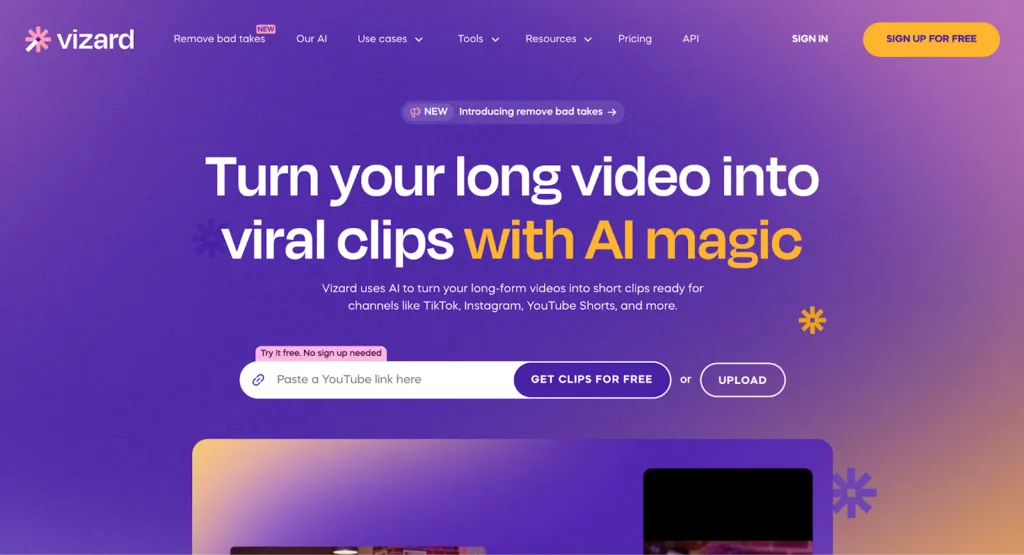
Vizard is an AI-powered video tool that helps marketers repurpose longer videos into shorter, channel-ready content. Its current publicly described capabilities include automated clipping, caption generation, resizing, and editing for social platforms. It is relevant to promotional messaging, social campaigns, and product updates, although these capabilities should not be confused with every form of recipient-level video personalization.
- Key Features
- Pre-Built Templates: Templates help users create variations of promotional content without starting from scratch.
- Dynamic Content and Editing: Automated editing and content adaptation can reduce manual work when preparing videos for different audiences and platforms.
- Batch-Oriented Production: Automated workflows can help marketing teams prepare multiple content assets more efficiently, depending on the selected plan and features.
- SWOT Analysis
- Strengths
- Clipping and captioning powered by AI accelerate repurposing of content.
- Social media formats make it easy to distribute content on different channels.
- Weaknesses
- The use of automated repurposing is not the same as the creation of personalized videos using data.
- Personalized motion graphics might call for more editing software.
- Opportunities
- Repurposing of webinars, interviews, and product demos to be used in marketing campaigns.
- Facilitating multilingual and multi-channel content.
- Threats
- Fast production of products by competing video editing software companies that use AI.
- Dependency on formats of social media platforms.
5. Hippo Video: Create, Personalize, and Share Videos Quickly
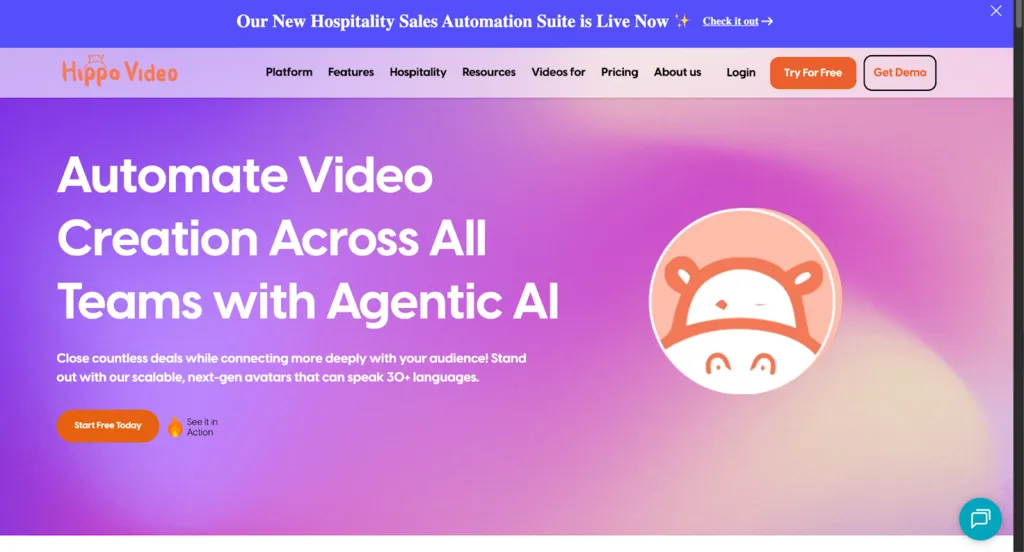
Hippo Video links video customization with CRM workflow automation. This tool caters to the sales team, customer support staff, and marketing team looking to connect on a personal level.
- Key Features
- Personalized Video Messaging: Create videos tailored to individual recipients.
- CRM Sync: Connect video engagement with contact records in systems such as Salesforce.
- Sales Outreach Tools: Include videos in email sequences and related sales workflows.
- SWOT Analysis
- Strengths
- Personalized components aid communication that is recipient-oriented.
- The CRM/sales process integration helps tie up video engagement to outreach efforts.
- Weaknesses
- Integration quality and functionality may differ based on the platform used and its subscription type.
- Effective utilization of the tool demands sales teams to include video in their processes.
- Opportunities
- Personalized prospecting, customer onboarding, and post-sales communication.
- Engagement analytics can help sales teams adjust their follow-up strategies.
- Threats
- Sales engagement tools competing through video features integration.
- Privacy, consent, and email deliverability concerns could impact campaign performance.
Market Context: Where Video Personalization Fits
Coherent Market Insights classifies marketing technology by product type and application. Video personalization sits at the intersection of rich media tools, content marketing tools, and automation tools. Its commercial value comes from connecting these capabilities: content is created, adapted for a specific audience, delivered through marketing channels, and evaluated through engagement data.
Market Segmentation
The Marketing Technology Market is segmented as follows:
- By Product Type
- Automation tools
- Content marketing tools
- Social media tools
- Rich media tools
- By Application
- Retail and e-commerce
- Healthcare
- IT and telecom
- Media and entertainment
- Financial services
- Real estate
- Others
- By Region
- North America
- Europe
- Asia Pacific
- Latin America
- Middle East
- Africa
Sub-Segment Analysis
- Automation tools: Linking Personalization to Customer Journeys
Automation tools allow businesses to synchronize repetitive marketing activities, such as campaign triggering, customer segmentation, email sending, and subsequent follow-up messages. The implementation of automation tools is facilitated by the necessity to maintain big customer databases and achieve efficiency and message consistency across all channels.
Concerning video personalization, automation tools allow one to send a video to a customer in response to his or her registration, request for demo or purchase, or reaching a certain stage of the sales funnel. One can use automation tools to offer recommendations to customers, give post-purchase guidance, and make personalized introductions and demo accounts for B2B businesses. Thus, one can simplify the process of campaign management and link video use to other marketing goals.
CMI predicts that the share of automation tools in the marketing technology market will be 36.4% in 2026.
- Rich Media Tools: Facilitating Interactive and Personalized Content
Rich media tools enable visual and multimedia marketing content formats that include video marketing. The demand for such tools stems from businesses looking for more effective means of conveying information about products, services, and complicated concepts. Personalization comes into play as an additional feature by which content, images, offers, or any other element of video is adapted based on target audience specifics.
Tailored product videos can be used by retailers, financial services can be described in videos, and software vendors can create demos that are personalized for each particular customer. This range of examples makes rich media tools indispensable part of marketing technology toolkit. Its value relies on the capability to produce high-quality content effectively.
Combining together automation and rich media, we see why video personalization is not just a production tool, but a connection between content creation and campaign management.
U.S. Country Analysis
The US is an important target market for video personalization due to its advanced digital infrastructure, developed market of e-commerce, and fast rate of adopting marketing automation and customer analysis technology. Companies can easily combine video content with CRM, email marketing campaigns, and sales platforms for customer retention purposes.
As mentioned by Coherent Market Insights, North America will hold 33.5% of the global marketing technology market in 2026. The reason behind this forecast lies in already developed vendors (Adobe, Salesforce, and Oracle) in the region and a wide range of marketing technology vendors. The report describes the U.S. as a leader because businesses across sectors are investing heavily in AI-powered marketing automation, data analytics and omnichannel strategies. A recent example is Alkami’s June 2026 launch of Out-of-the-Box Campaigns for banks and credit unions, which simplifies audience segmentation for multi-channel campaigns.
However, adoption depends on the cost of implementation, complexity of integration, and privacy requirements. U.S. organizations have to take into account specific requirements to collect and process customer data, which include certain state privacy requirements.
Market Participants and Competitive Landscape
The above video personalization solutions cover different stages of the marketing process. While Nexrender focuses on developer-centric automation and rendering capabilities, Vidyard and Hippo Video are associated with video communication tied to sales workflows. Bonfire revolves around templated campaign creation, while Vizard concentrates on AI-driven video repurposing.
The competition among these vendors is held in the context of a much broader ecosystem involving more comprehensive marketing technology vendors. According to CMI, some of the players included in the company's Marketing Technology Market report include Adobe Inc., Salesforce, HubSpot, Oracle, Microsoft Corporation, Google LLC, SAP, ActiveCampaign, Bazaarvoice, 6Sense, Foursquare Labs, Amdocs, Acoustic, Scanbuy, and Aptean.
The competitive dynamics involve factors such as integration, usability, analytics, automation, and the vendor's ability to demonstrate business value. Organizations need to assess vendors in terms of their specific needs and not based on the assumption that all platforms have the same personalized video generation capabilities.
Overall Market Outlook
Video personalization is becoming more applicable to the issues of marketing engagement and conversion. Proper technology helps teams to personalize videos while staying in control over the process and working effectively. In particular, Nexrender can be used for flexible and automated rendering workflows by developers, and Vidyard and Hippo Video are good for video communication aimed at sales. Bonfire's solution relies on template-based video campaigns, and Vizard can repurpose videos using AI.
The overall perspective of video personalization involves investment in marketing automation, rich media, and data-driven experiences. However, increased use does not always mean better conversion, which depends on the target audience, creativity, delivery, integration, and analysis.