Hyperlocal commerce isn’t a new concept. For years, small businesses have accessed third-party vendors to connect consumers to their products faster and more efficiently.
The location-based model has proven a winning formula. Businesses deliver goods within a small geographical radius, usually within an hour. No fuss. No wait time. Just excellent service delivering a quality product.
They expect businesses to meet them where they are. If their local grocery store can deliver to their doorstep within minutes, why can’t a large store do the same?
Big brands are taking note of the change in consumer behavior. They’re thinking on a smaller scale, neighborhood-wise. And if you manage a brand that’s gone global, maybe you should zoom back in to see what you’re missing.
Digital Commerce But Make It Local
The International Journal of Electronic Commerce published the findings from an empirical analysis on transactional behaviors in hyperlocal e-commerce in 2025.
Analyzing a dataset of more than 35 million transactions from Karrot, a hyperlocal marketplace, the study compared outcomes in paid sales versus free giveaways.
Active buyer engagement greatly improved the chances of a successful transaction. Passive interest had little or a negative effect.
But the interesting part was that seller trust increased transaction success. The findings showed that engagement and trust are the foundations of digital confidence in neighbor-to-neighbor marketplaces in a hyperlocal landscape.
Is Traditional Advertising Dead?
It’s extreme to assume that traditional advertising is no longer required. Change the context, and it might be true. Because if you’re going to venture into local business advertising, a billboard campaign isn’t going to win.
Local business marketing takes on whole new local marketing strategies. Geofencing, GPS targeting, Near-me SEO, and Google Business Profile optimization drive more local customers through the door.
According to SQ Magazine, 98% of users searching for local businesses choose one from the first page of search results.
Rise Marketing Group explains that local marketing services can help local businesses accomplish big things. So technically, nothing’s stopping you from landing on the first page of those search results.
The Rise of Dark Stores
The biggest advantage local businesses have is that their customers are a few blocks away. Some might walk into the physical store. Others make a quick phone call and have the product delivered. Quick. Simple. Easy.
“The vendors and sellers in the hyperlocal e-commerce model are so closely related to each other that delivery times are naturally slashed to a few minutes.” - Dr Shamael Zaheer Khan, PhD, digital marketing expert.
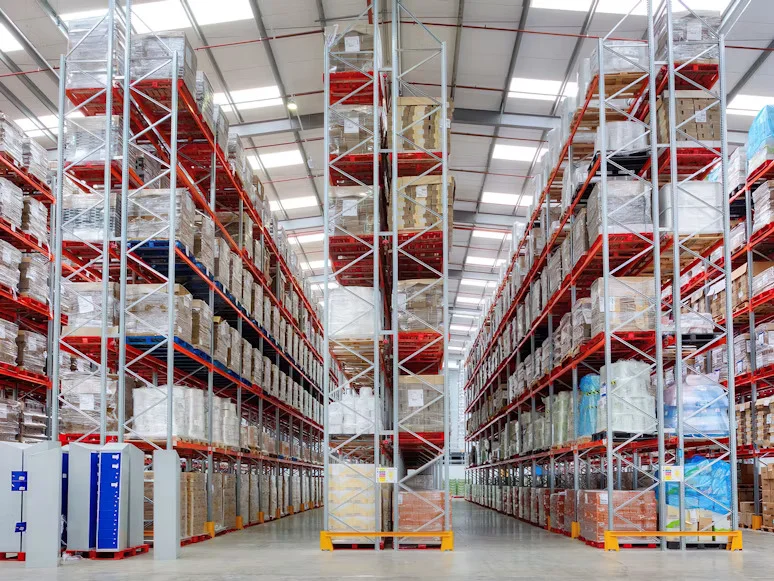
Previously, global brands didn’t have that luxury. Warehouses were situated outside the city. Replenishment cycles ran over days or weeks. Inventory was too little or too much.
And then came dark stores. Sounds mysterious and intriguing, doesn’t it? The location might be closed to the public, but it signals that the mini-warehouse is dedicated entirely to online shoppers.
And guess what? It works.
The tightly packed networks of hyperlocal dark stores have fewer SKUs, and every item earns its place. Products are fixed to frequency, impulse, and relevance. If it doesn’t move, it’s swiftly phased out.
FAQs
1. What is hyperlocal commerce?
Hyperlocal commerce is a business model that connects customers with nearby sellers, delivering products or services within a small geographic area, often in under an hour.
2. Why are global brands investing in hyperlocal commerce?
Consumer expectations have changed. Shoppers want same-day or same-hour delivery, personalized experiences, and local availability.
3. What makes hyperlocal marketing effective?
Hyperlocal marketing targets customers based on their location using tools such as geofencing, GPS targeting, near-me SEO, and Google Business Profile optimization.
4. What technologies are driving hyperlocal commerce?
Automation, AI, real-time inventory visibility, digital payments, and data analytics are transforming hyperlocal commerce.
Hyperlocal Commerce at a Glance
Stat
What it Means
35+ million
Transactions analyzed in a major hyperlocal commerce study conducted on the Karrot marketplace.
Under 1 hour
Delivery window offered by many hyperlocal commerce platforms.
Dark stores
Retail fulfillment hubs with curated inventories that enable rapid neighborhood deliveries.
The Takeaway
Countries like India and China were the first to test hyperlocal commerce, but the U.S. is catching up fast.
In the U.S., the rising demand for grocery delivery, personal care, and home services is expanding market penetration. Automation and real-time visibility have helped hyperlocal service providers streamline operations and personalize recommendations.
If there’s ever a reason to go hyperlocal, this is it. Time is of the essence, and so is changing consumer behavior. Catch the bus before it misses your stop.
Disclaimer: This post was provided by a guest contributor. Coherent Market Insights does not endorse any products or services mentioned unless explicitly stated.
Share this story
M
About Author
Marchelle Abrahams
Writer by day, dream catcher by night. Marchelle Abrahams cut her teeth in the infancy of the internet, when the dial-up sound of the modem was more than a soundbite at a rave. Not a Millennial and not a Boomer, Marchelle is an in-betweener, making her a special breed of human. As a qualified journalist, Marchelle believes her superpower is stringing a few words together and people reading them. That, and the ability to take her kids on with her unique brand of gnarly comebacks.
Interested in industry outlook for E-commerce Analytics Market?Request Free Sample