

Global Acoustic Neuroma Market Size and Forecast – 2026 To 2033
The global acoustic neuroma market is expected to grow from USD 2.04 Bn in 2026 to USD 3.37 Bn by 2033, registering a compound annual growth rate (CAGR) of 7.4% from 2026 to 2033. The market for global acoustic neuroma is poised for significant expansion, fueled by the increasing investment in advanced diagnostic imaging infrastructure and high-precision medical technologies.
In July 2026, the Government of India reported that its Production Linked Incentive Scheme for Medical Devices had approved 27 projects, with USD 12.20 million (₹1,153.07 crore) in actual investment and domestic production of MRI and CT equipment underway. The initiative strengthens access to advanced imaging technologies, supporting earlier and more precise diagnosis of conditions such as acoustic neuroma.
Key Takeaways of the Global Acoustic Neuroma Market
- Sporadic acoustic neuroma is projected to hold 94.2 % of the global acoustic neuroma market share in 2026, making it dominant disease type segment, across North America due to its established neuro-oncology infrastructure and higher availability of specialized vestibular schwannoma care. In June 2025, the Congress of Neurological Surgeons (CNS) issued updated vestibular schwannoma guidelines covering imaging, surgery, radiation therapy, and hearing preservation, supporting standardized management across specialized centers in the region.
- Microsurgical resection is projected to hold 38.6 % of the global acoustic neuroma market share in 2026, making it dominant treatment type segment, across Europe due to its established multidisciplinary neuro-oncology and skull-base surgery infrastructure. For instance, the European Association of Neuro-Oncology (EANO) recommends surgical decompression as the primary treatment for large vestibular schwannomas, particularly where mass effect is present, supporting continued demand for specialized microsurgical management across European centers.
- Magnetic Resonance Imaging (MRI) is projected to hold 62.3 % of the global acoustic neuroma market share in 2026, making it dominant diagnosis segment, across North America due to the region’s established access to advanced neuroimaging and specialized neurological care. For instance, the U.S. National Institute on Deafness and Other Communication Disorders (NIDCD) identifies MRI as critical for the early detection of vestibular schwannoma and for determining tumor location and size, supporting its central role in acoustic neuroma diagnosis and treatment planning.
- North America market maintains dominance with an expected share of 40.3 % in 2026, bolstered by region’s concentration of specialized skull-base centers and multidisciplinary acoustic neuroma services. UT Southwestern Medical Center reports treating approximately 200 new acoustic neuroma patients annually through a dedicated program offering observation, advanced radiosurgery, and microsurgical care, demonstrating the region’s established specialized-care infrastructure.
- Asia Pacific is expected to exhibit the fastest growth in the global acoustic neuroma market, registering an estimated CAGR of 9.2 % during 2026–2033, driven by expanding access to advanced neuroimaging and high-precision medical technologies. For instance, India’s Economic Survey 2025–26 reported that domestic manufacturers now produce high-end MRI and CT scanners, reflecting the region’s strengthening diagnostic technology base and supporting broader access to neurological imaging.
Segmental Insights
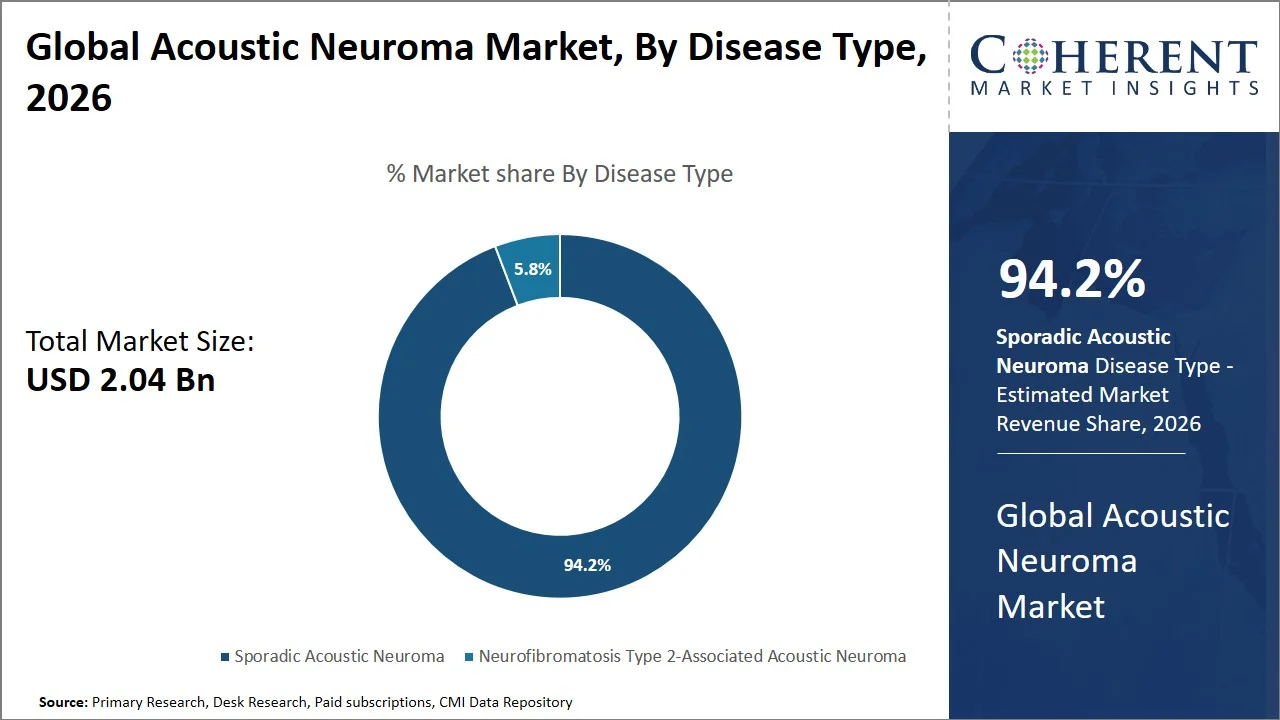
Why Do Sporadic Acoustic Neuroma Dominate the Global Acoustic Neuroma Market?
Sporadic acoustic neuroma is projected to hold the market share of 94.2% in 2026, because its occurrence rates are much higher and the patient pool of such condition is significantly larger than that of NF2 related acoustic neuroma. Primarily the non-genetic, unilateral nature, creates the requirement for further diagnosis such as MRI, hearing assessment, treatment, among others, along with post operative treatment follow up, leading to better market value share. Furthermore, availability of improved diagnosis techniques including better imaging resolutions and technology for precision surgery further adds to this segment's market dominance. For instance, in November 2025, Siemens Healthineers gained U.S. Food and Drug Administration (FDA) clearance in the U.S for their MAGNETOM Free. Max and MAGNETOM Free. Star MRI systems, strengthening the use of modern MRI platforms in both neurological imaging and for diagnosis in acoustic neuroma workflow.
- Current Industry Events of 2026
- Market Size Estimation
- Regional Breakdown
- Competitive Landscape
- Customer Intelligence
- Segmental Analysis
- Pricing Analysis
- Key Market Drivers, Challenges & Future Trends
- Customized Insights Section
Why Does Microsurgical Resection Represent the Largest Treatment Type Segment in the Acoustic Neuroma Market?
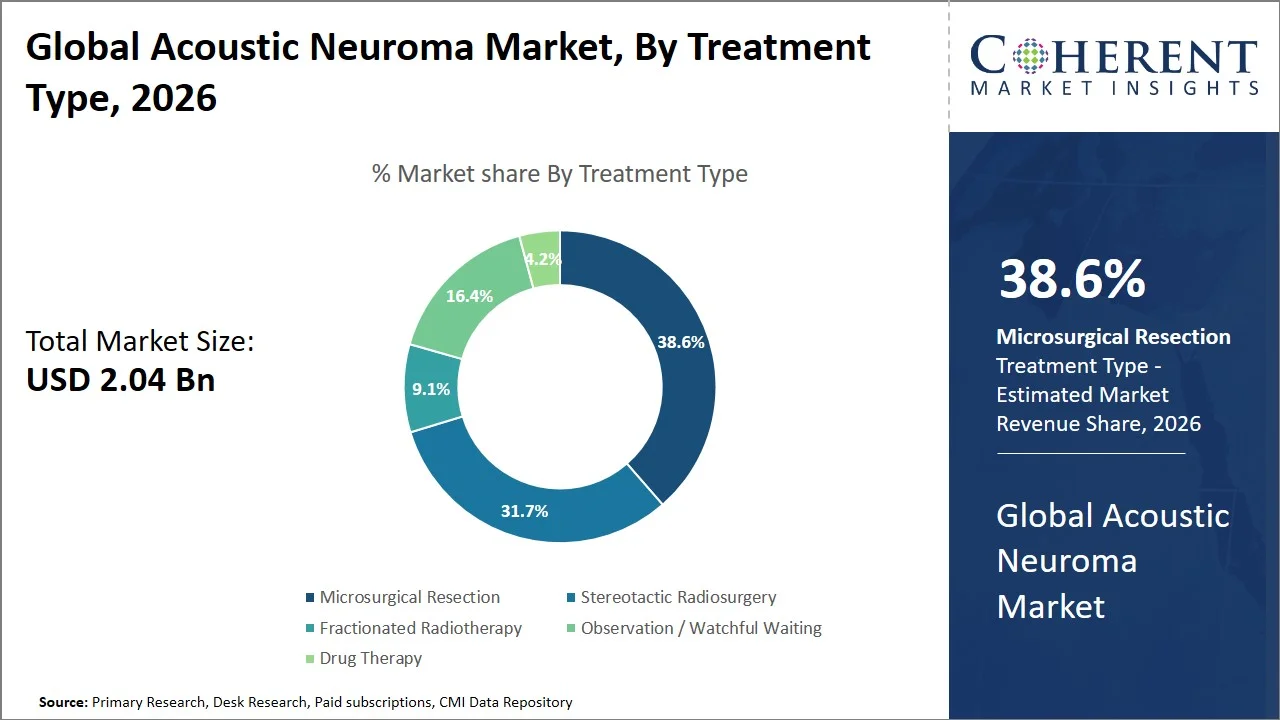
Microsurgical resection is projected to hold a market share of 38.6% in 2026, as it can achieve complete removal of the tumor in instances where a tumor is large and / or symptomatic. Surgical navigation, highly magnified visualization techniques, and intraoperative neuromonitoring assistance for the optimal visualization, localization, and preservation of the facial and cochlear nerves is enhancing the clinical practice of microsurgery. In February 2026, a study involving 829 vestibular schwannoma patients published by National Library of Medicine, optimized functional results following an improved microsurgical procedure combined with pre-operative CT-MRI based planning, intra-operative neuromonitoring and nerve-sparing dissection with a greater incidence of preservation of cochlear nerve.
Magnetic Resonance Imaging (MRI) Segment Dominates the Global Acoustic Neuroma Market
The magnetic resonance imaging (MRI) segment is projected to hold a market share of 62.3% in 2026, due to its high detail visibility on soft tissues and detection and monitoring of tiny vestibular schwannomas without utilizing ionizing radiation. Its role has been integral in defining tumor location and size, establishing management strategy and monitoring the growth of tumours over time, leading to an optimal diagnostic tool in acoustic neuroma care pathway. Furthermore, advancements in high field and AI-assisted imaging are further contributing to the improvement of its clinical role. In April 2026, AIIMS New Delhi began clinical use of Hyperfine, Inc’s Swoop portable MRI system, expanding access to bedside brain imaging in India and demonstrating the growing deployment of advanced MRI technologies for neurological care.
Current Events and their Impact
Current Events | Description and its Impact |
U.S. Medicare Coverage Framework Continues to Recognize SRS for Acoustic Neuroma (April 2026) |
|
NHS England Expands Specialist Funding Framework for Stereotactic Radiotherapy (April 2025) |
|
NHS England Maintains Vestibular Schwannoma Within Specialized SRS Services (2025/26) |
|
Acoustic Neuroma Market Dynamics
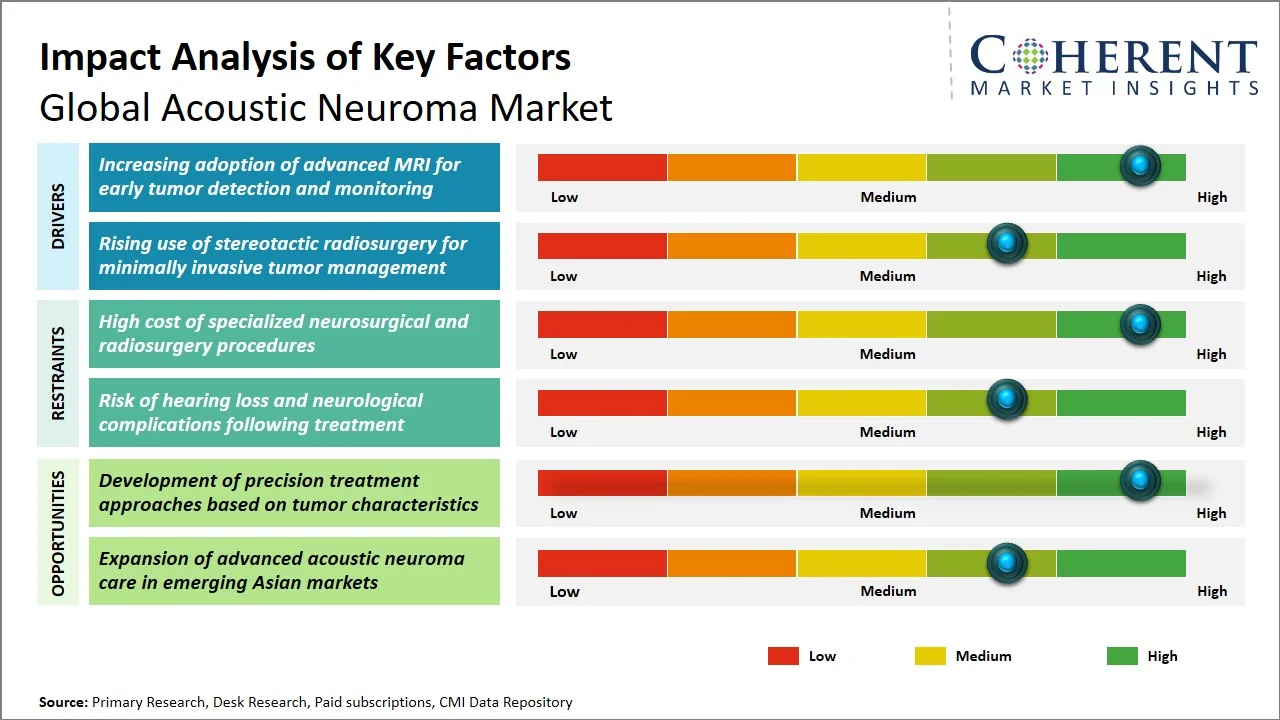
Market Drivers
- Increasing adoption of advanced MRI for early tumor detection and monitoring: Increasing adoption of high-resolution MRI is strengthening early detection and longitudinal monitoring of vestibular schwannoma, particularly as patients may present with subtle or nonspecific symptoms. For instance, in July 2026, a study from Odense University Hospital, Denmark, identified vestibular schwannoma in 11 of 600 patients (1.8%) referred for MRI, highlighting the role of MRI-based evaluation in clinical diagnosis. The growing use of MRI for both detection and surveillance is expected to support demand for advanced neuroimaging solutions.
- Rising use of stereotactic radiosurgery for minimally invasive tumor management: The adoption of stereotactic radiosurgery (SRS) is increasing as a minimally invasive approach for vestibular schwannoma, particularly for small- to medium-sized tumors where tumor control can be achieved without open surgery. For instance, in July 2026, international multicenter study published by National Library of Medicine, found significantly lower tumor progression with SRS than observation in patients aged 60 years and older, with 5-year freedom from progression of 100% versus 43%. This evidence is expected to support broader clinical adoption of SRS for appropriately selected acoustic neuroma patients.
- Rising diagnosis of vestibular schwannoma among older populations: The increasing detection of vestibular schwannoma among older adults is supporting demand for acoustic neuroma diagnosis and treatment services, as incidence rises with age. The 2026 UK Vestibular Schwannoma Registry analysis reported 19,092 cases between 2012 and 2024, with the highest burden concentrated among older adults and increasing diagnosis over time. This expanding diagnosed population is expected to strengthen demand for MRI surveillance, radiosurgery, and other specialized management approaches.
Emerging Trends
- AI-powered MRI analysis and radiomics: Artificial intelligence is increasingly being integrated with MRI to automate vestibular schwannoma detection, segmentation, volumetric measurement, and growth assessment. This trend is expected to improve diagnostic consistency and support more data-driven treatment planning.
- Greater emphasis on hearing-preservation treatment: Treatment strategies are increasingly focused on controlling tumor growth while preserving functional hearing and facial-nerve function. This is encouraging refinement of SRS dose planning, microsurgical techniques, and patient-selection approaches based on tumor size and baseline hearing.
- Expansion of precision and drug-based therapies: Research is moving beyond surgery and radiation toward molecularly targeted and biologically driven therapies, particularly for patients with progressive, recurrent, or difficult-to-treat tumors. Emerging therapeutic research is examining genetic and epigenetic mechanisms as potential targets for future vestibular schwannoma treatments
Regional Insights
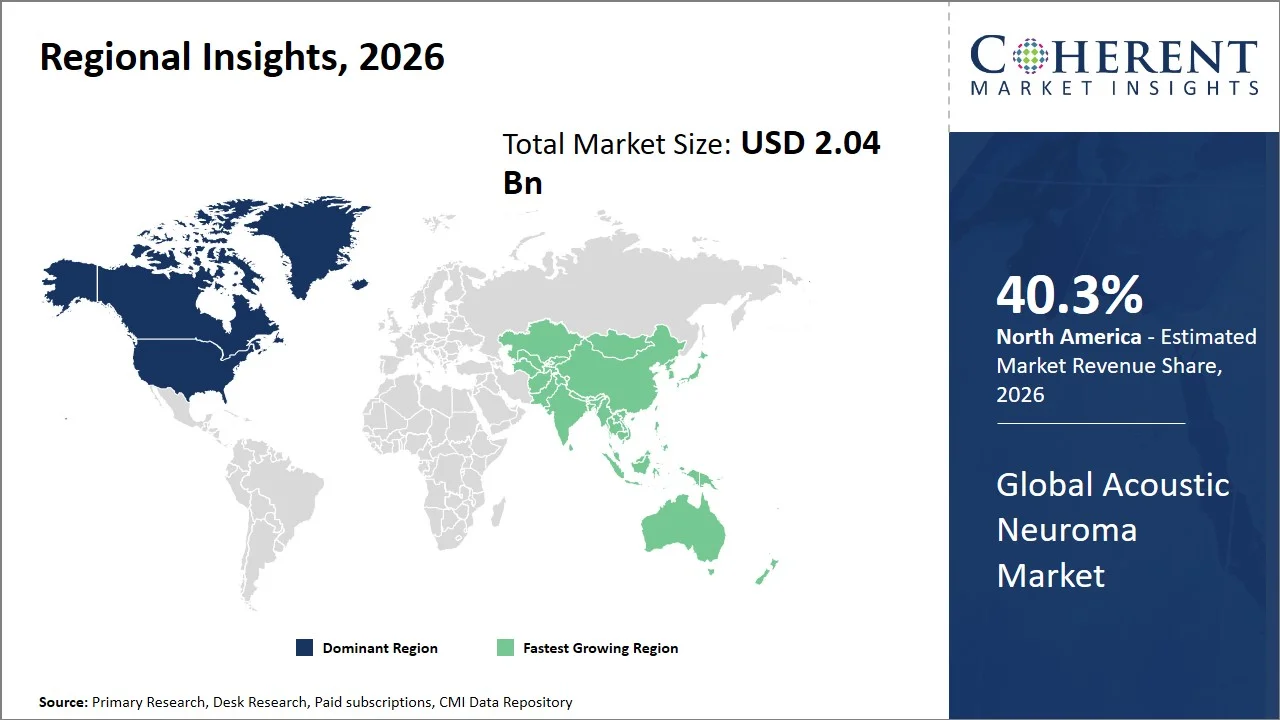
Why is North America a Strong Market for Acoustic Neuroma?
North America leads the global acoustic neuroma market, accounting for an estimated 40.3% share in 2026, due to the region's well-established infrastructure, easy access of specialty neuro-oncology, and skull-base treatment facilities, and efficient adoption of sophisticated diagnostic and treatment technologies. Increasing governmental backing from favorable healthcare policies and financial support for neurological disorders research additionally drives the market.
For instance, the U.S. National Institute of Neurological Disorders and Stroke (NINDS) spends some USD 200 million annually through cooperative agreements, grants and contracts, supporting the development of novel early-stage technologies, therapeutic programs and devices to their entry into clinical application and industrial deployment. Furthermore, extensive access of the modern treatment modalities like MRI, stereotactic radiosurgery, specialty microsurgery techniques, which also supports the better diagnoses and treatments without losing function as well as the ecosystem for clinical trials contribute for a leading position of this market.
Why Does Asia Pacific Acoustic Neuroma Market Exhibit High Growth?
Asia Pacific is expected to exhibit the fastest growth in the global acoustic neuroma market, registering an estimated CAGR of 9.2% during 2026–2033. The region is projected to account for 22.5% of the global market in 2026, owing to ongoing development of healthcare infrastructure in the region and improvement in accessibility for advanced diagnostic and treatment devices. Increasing healthcare spending and supportive government initiatives with growing participation from private sectors and foreign investment are positively affecting market growth especially in countries such as China, India, Japan and South Korea.
For instance, China’s Healthy China 2030 plan supports expanded health care services, increased disease prevention and greater access to modern medical technologies, providing infrastructure needed for specialized neurological care and diagnosis. (Source: ScienceDirect) Furthermore, improving access to specialized neuro-surgical, MRI and stereotactic radiosurgery is helping to boost treatment capability of region and providing momentum for market development with enhancement in access to tertiary care centers and advance neurology care services.
Global Acoustic Neuroma Market Outlook for Key Countries
Why is the U.S. Leading Innovation and Adoption in the Acoustic Neuroma Market?
The U.S. has been in the forefront of innovation and adoption in the acoustic neuroma market driven by high volume multidisciplinary acoustic neuroma centres where treatment can flow seamlessly through all aspects of management. These centers have expertise in otology and neurosurgery with its partners neuro-radiology, audiology and radiation oncology. At these centers, both microsurgical and radio surgical options can be applied based on tumor volume, hearing status, among others. Technologies involving advanced imaging, specifically high-resolution MRI and precision radiosurgery platforms are also evolving rapidly in the U.S.
Is Japan a Favorable Market for Acoustic Neuroma Market?
Japan is a desirable market for acoustic neuroma due to existing strong capabilities in vestibular schwannoma treatment through both microsurgery, stereotactic irradiation, and formal surveillance approaches. Japanese clinical practice uses approach in deciding the mode of therapy based on tumor volume, the type and progression of the tumor, age of patient and patient circumstances; thereby both surgical and non-surgical treatment approaches are in demand. Also, due to specialization centers that has strong radiosurgery capabilities at higher dimension it opens up a window of opportunity for precision treatment modalities.
Is China Emerging as a Key Growth Hub for the Acoustic Neuroma Market?
China represents a growing market for vestibular schwannoma, with improved access to specialized neurosurgical treatment, MRI diagnosis and stereotactic radiosurgery. The nation is developing several high-volume centers utilizing microsurgery with operative facial/cochlear nerve monitoring. Radio surgical techniques are also gaining popularity in China. This synergy of improved diagnosis and specialized treatment is a great growth prospect for acoustic neuroma treatment in China.
Why Does Germany Top the European Acoustic Neuroma Market?
Germany boasts the highest market penetration in Europe, with an established framework of specialized skull base centers combining neurotology and neurosurgery specialists as well as MRI surveillance and both microsurgery and stereotactic radiosurgery expertise. Key University sites like Charité (Berlin), Düsseldorf, Tbingen and Freiburg provide for a multidisciplinary approach and for state-of-the-art nerve preservation. Furthermore, Germany's established payment system and evaluation of stereotactic radiosurgery for vestibular schwannoma encourages the implementation of sophisticated technologies.
Is Acoustic Neuroma Market Developing in India?
India is proving to be an appealing market in acoustics neuroma, owing to increasing accessibility to neurosurgical treatments and state of the art stereotactic radiosurgery treatments. Expanding services related to the access of Gamma Knife and other specific treatment at the centers specialized in tertiary care is fortifying the treatments to vestibular schwannoma. In addition to this, enhancing neuroimaging and multidisciplinary team is also contributing to the growth of the market.
Vestibular Schwannoma Treatment Distribution by Tumor Size
Tumor Size | Observation / Watchful Waiting | Microsurgical Resection | Radiotherapy / SRS | Combined Treatment |
Small (<1.5 cm) | 64.8% | 21.4% | 14.0% | 0.1% |
Medium (1.5–3 cm) | 26.5% | 50.2% | 22.2% | 1.2% |
Large (>3 cm) | 13.2% | 72.8% | 5.2% | 8.8% |
How is the development of precision treatment approaches based on tumor characteristics creating new growth opportunities in the acoustic neuroma market?
The concept of precise treatments is increasingly crucial, as vestibular schwannomas present significant heterogeneous tumor growth patterns, hearing prognoses and treatment responsiveness. Molecular profiling, imaging biomarkers and tumor-growth profiles can help stratify patients and provide evidence-based individualized surveillance and treatment decisions. These techniques will likely allow to develop targeted treatments for patients with aggressive or treatment-resistant disease. In February 2026, a study published by National Library of Medicine, reviewed a diversity of circulating, tissue- derived and MRI biomarkers implicated with tumoral growth, hearing loss and treatment results, highlighting their potential for more precise diagnosis and individualized management of vestibular schwannoma.
Market Players, Key Development, and Competitive Landscape
Key Developments
- In September 2025, Elekta announced that more than two million patients worldwide had received Leksell Gamma Knife radiosurgery, with the milestone treatment performed at Karolinska University Hospital in Sweden. The achievement highlights the extensive clinical utilization of stereotactic radiosurgery for brain and neurological conditions. This growing adoption of Gamma Knife technology supports the expansion of radio surgical treatment options relevant to acoustic neuroma management.
- In April 2025, Accuray presented 25-year clinical data on CyberKnife stereotactic radiosurgery for vestibular schwannoma (acoustic neuroma) at the Radiosurgery Society Scientific Meeting. The study reported an 89.3% local tumor-control rate at 25 years, supporting the long-term effectiveness of stereotactic radiosurgery. The findings strengthen the role of advanced radio surgical technologies in acoustic neuroma management.
Competitive Landscape
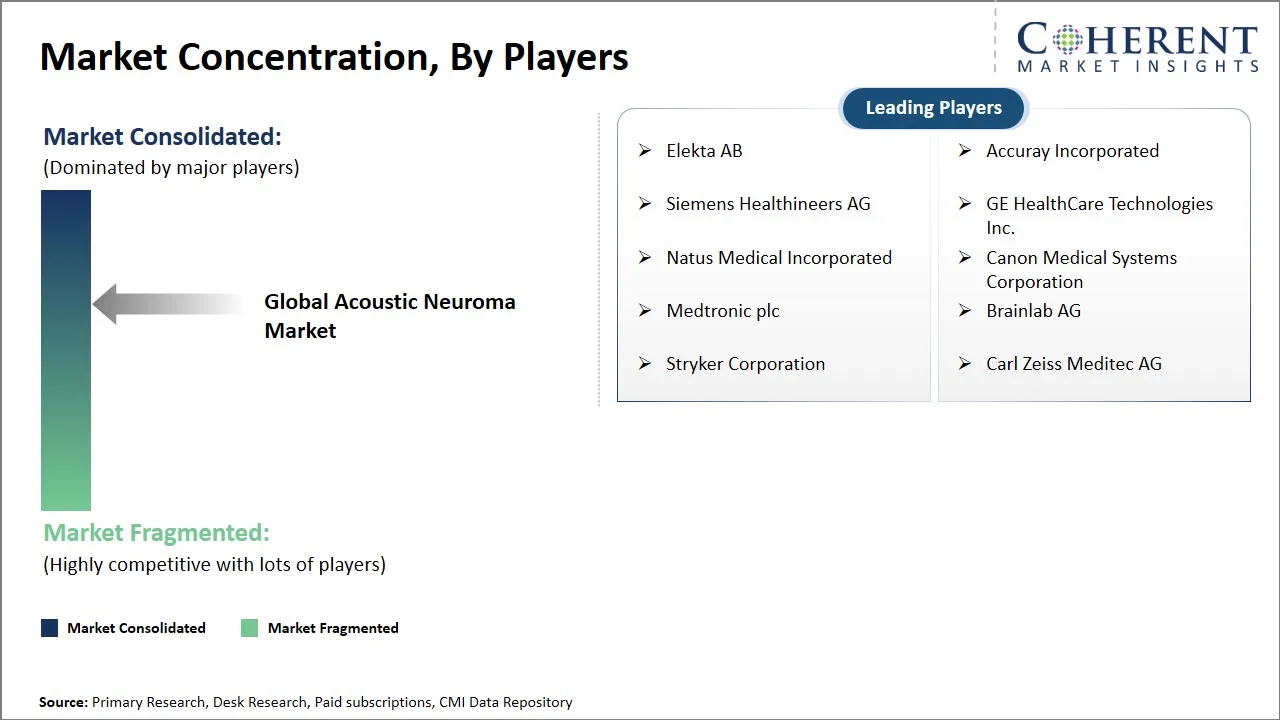
The global acoustic neuroma market is moderately competitive, with competition centered on imaging accuracy, radio surgical precision, surgical navigation, intraoperative nerve monitoring, and treatment-planning capabilities. Market participants are increasingly focusing on advanced MRI visualization, AI-enabled tumor assessment, precision radiosurgery, and technologies that support hearing and facial-nerve preservation across acoustic neuroma diagnosis and treatment. Key focus areas include:
- Development of advanced MRI and volumetric imaging capabilities
- Advancement of stereotactic radiosurgery platforms
- Integration of neuronavigation and high-definition surgical visualization technologies
- Expansion of intraoperative neuromonitoring solutions
- Integration of artificial intelligence into diagnosis and treatment planning
Market Report Scope
Acoustic Neuroma Market Report Coverage
| Report Coverage | Details | ||
|---|---|---|---|
| Base Year: | 2025 | Market Size in 2026: | USD 2.04 Bn |
| Historical Data for: | 2020 To 2024 | Forecast Period: | 2026 To 2033 |
| Forecast Period 2026 to 2033 CAGR: | 7.4% | 2033 Value Projection: | USD 3.37 Bn |
| Geographies covered: |
| ||
| Segments covered: |
| ||
| Companies covered: | Elekta AB, Accuray Incorporated, Siemens Healthineers AG, GE HealthCare Technologies Inc., Natus Medical Incorporated, Canon Medical Systems Corporation, Medtronic plc, Brainlab AG, Stryker Corporation, Carl Zeiss Meditec AG | ||
| Growth Drivers: |
| ||
| Restraints & Challenges: |
| ||
Analyst Opinion (Expert Opinion)
- In the coming years, global acoustic neuroma market is expected to move toward personalized, function-preserving treatment, with greater emphasis on balancing tumor control against hearing and facial-nerve preservation. The treatment landscape will increasingly integrate advanced MRI, image-guided microsurgery, stereotactic radiosurgery, and longitudinal tumor monitoring rather than relying on a single treatment modality. Over the longer term, precision diagnostics and emerging drug-based approaches could further expand treatment options for patients with progressive or difficult-to-treat tumors.
- The maximum opportunities are foreseen within stereotactic radiosurgery for small- to medium-sized acoustic neuromas in China, where demand can benefit from expanding access to advanced radiation oncology and neuroimaging infrastructure. Players should focus on compact, high-precision SRS platforms, treatment-planning software, and solutions that improve hearing preservation while reducing treatment complexity. This combination offers an attractive growth avenue as Asian healthcare systems continue to develop specialized neurological treatment capacity.
- In order to gain a competitive advantage, market players should differentiate through integrated acoustic neuroma solutions rather than standalone equipment, combining high-resolution imaging, tumor volumetric assessment, treatment planning, navigation, and postoperative monitoring. Investment in AI-assisted tumor characterization and personalized treatment planning can create stronger clinical value, while partnerships with specialized neurosurgical and skull-base centers can accelerate technology adoption. Companies should also prioritize solutions that demonstrate improved workflow efficiency and preservation of hearing and facial-nerve function
Speak to the analyst
Want personalized insights?
Take the findings above to one of our principal consultants, or have the report rebuilt around the segments, geographies and competitors you actually track.
Market Segmentation
- Disease Type Insights (Revenue, USD Bn, 2021 - 2033)
- Sporadic Acoustic Neuroma
- Neurofibromatosis Type 2-Associated Acoustic Neuroma
- Treatment Type Insights (Revenue, USD Bn, 2021 - 2033)
- Microsurgical Resection
- Stereotactic Radiosurgery
- Fractionated Radiotherapy
- Observation / Watchful Waiting
- Drug Therapy
- Diagnosis Insights (Revenue, USD Bn, 2021 - 2033)
- Magnetic Resonance Imaging (MRI)
- Audiometry
- Vestibular Testing
- Others
- Tumor Size Insights (Revenue, USD Bn, 2021 - 2033)
- Small Tumors
- Medium Tumors
- Large Tumors
- End User Insights (Revenue, USD Bn, 2021 - 2033)
- Hospitals
- Specialty Clinics
- Ambulatory Surgical Centers
- Academic and Research Institutes
- Others
- Regional Insights (Revenue, USD Bn, 2021 - 2033)
- North America
- U.S.
- Canada
- Latin America
- Brazil
- Argentina
- Mexico
- Rest of Latin America
- Europe
- Germany
- U.K.
- Spain
- France
- Italy
- Russia
- Rest of Europe
- Asia Pacific
- China
- India
- Japan
- Australia
- South Korea
- ASEAN
- Rest of Asia Pacific
- Middle East
- GCC Countries
- Israel
- Rest of Middle East
- Africa
- South Africa
- North Africa
- Central Africa
- North America
- Key Players Insights
- Elekta AB
- Accuray Incorporated
- Siemens Healthineers AG
- GE HealthCare Technologies Inc.
- Natus Medical Incorporated
- Canon Medical Systems Corporation
- Medtronic plc
- Brainlab AG
- Stryker Corporation
- Carl Zeiss Meditec AG
Sources
Primary Research Interviews
- Neurosurgeons, neurotologists, otolaryngologists, and neurologists involved in acoustic neuroma management
- Radiation oncologists and stereotactic radiosurgery specialists treating vestibular schwannoma
- Neuroradiologists and radiologists specializing in MRI-based acoustic neuroma diagnosis
- Audiologists and vestibular specialists conducting hearing and balance assessments
- Hospital and specialty-clinic procurement professionals responsible for MRI, radiosurgery, and neurosurgical systems
- Medical-device distributors and healthcare technology specialists supporting acoustic neuroma treatment
Stakeholders
- MRI and medical-imaging system manufacturers
- Stereotactic radiosurgery and radiotherapy system manufacturers
- Neurosurgical navigation and intraoperative neuromonitoring technology providers
- Hospitals, specialty clinics, and dedicated skull-base treatment centers
- Academic medical centers and vestibular schwannoma research institutions
- Diagnostic imaging, audiology, and vestibular testing centers
- End-use Sectors
- Hospitals and Health Systems
- Specialty Clinics and Skull-Base Centers
- Ambulatory Surgical Centers
- Diagnostic Imaging and Audiology Centers
- Academic Medical and Research Institutions
- Radiation Oncology and Stereotactic Radiosurgery Centers
- Regulatory & Health Bodies
- U.S. Food and Drug Administration – Center for Devices and Radiological Health
- Centers for Medicare & Medicaid Services – SRS coverage and reimbursement information
- European Commission – Medical Device Coordination Group
- Medicines and Healthcare products Regulatory Agency – United Kingdom
- Pharmaceuticals and Medical Devices Agency – Japan
- National Medical Products Administration – China
Databases
- ClinicalTrials.gov – Acoustic neuroma and vestibular schwannoma clinical trials
- SEER Program – Population-based tumor incidence and treatment data
- Central Brain Tumor Registry of the United States (CBTRUS) – Brain and CNS tumor epidemiology
- WHO International Clinical Trials Registry Platform – Global clinical-trial information
- FDA Medical Device Databases – Medical-device regulatory and safety information
Associations
- Congress of Neurological Surgeons (CNS)
- American Association of Neurological Surgeons (AANS)
- American Academy of Otolaryngology–Head and Neck Surgery (AAO-HNS)
- European Association of Neuro-Oncology (EANO)
- American Society for Radiation Oncology (ASTRO)
- International Stereotactic Radiosurgery Society (ISRS)
Public Domain Sources
- National Institute on Deafness and Other Communication Disorders (NIDCD) – Vestibular schwannoma and hearing-related information
- National Cancer Institute (NCI) – Acoustic neuroma and tumor-related information
- National Institutes of Health (NIH) – Neurological and biomedical research information
- Centers for Medicare & Medicaid Services (CMS) – Healthcare coverage and reimbursement data
- NHS England – Specialist radiotherapy and stereotactic radiosurgery service information
- World Health Organization (WHO) – Global healthcare and health-system data
Proprietary Elements
- CMI Data Analytics Tool, Proprietary CMI Existing Repository of information for last 10 years.
Get access to 250+ pages report
Every segment, forecast, competitor profile and data table behind the analysis above — available for instant download.
- ESOMAR Member
- ISO 9001:2015 Certified
- D-U-N-S Registered
- GDPR & CCPA Compliant
Missing comfort of reading report in your local language? Find your preferred language:
Frequently Asked Questions
Acoustic neuroma is primarily diagnosed through MRI, with audiometry and vestibular testing used to assess hearing and balance function.
MRI enables detailed visualization of acoustic neuromas and supports tumor detection, size assessment, treatment planning, and long-term monitoring.
The main treatment options include observation, microsurgical resection, stereotactic radiosurgery, and fractionated radiotherapy.
Microsurgery is generally considered for larger, symptomatic, or progressively growing tumors, particularly when significant mass effect is present.
Stereotactic radiosurgery is commonly used for selected small-to-medium acoustic neuromas where effective tumor control can be achieved without open surgery.
Yes, selected patients can undergo observation, stereotactic radiosurgery, or fractionated radiotherapy depending on tumor characteristics and clinical factors.
Tumor size is a key treatment determinant, with smaller tumors more frequently managed through observation or radiosurgery and larger tumors more often treated surgically.