

Global AI Hospital Operations Market Size and Forecast – 2026 To 2033
The global AI hospital operations market is expected to grow from USD 6,840.0 Mn in 2026 to USD 34,920.0 Mn by 2033, registering a compound annual growth rate (CAGR) of 26.2% from 2026 to 2033. The market for global AI hospital operations is poised for significant expansion, fueled by the global healthcare workforce shortages and the need to automate operational workloads.
According to the World Health Organization (WHO), the global health workforce shortage is projected to reach 11.1 million workers by 2030, while ageing population is increasing demand for healthcare services. This shortage is driving hospitals to adopt AI for workforce planning, scheduling, resource allocation, and administrative automation, supporting growth of the AI hospital operations market.
Key Takeaways of the Global AI Hospital Operations Market
- Software is projected to hold 68.4% of the global AI hospital operations market share in 2026, making it dominant offering segment across North America due to established certified health IT infrastructure. For instance, the U.S. Office of the National Coordinator for Health IT (ONC) requires algorithm-transparency capabilities under its HTI-1 Final Rule, while USCDI Version 3 became the baseline interoperability standard for certified health IT from January 2026.
- Patient flow and bed capacity management is projected to hold 24.8% of the global AI hospital operations market share in 2026, making it dominant use case segment across Europe. The European Commission's European Health Data Space (EHDS) establishes a harmonized framework for EHR interoperability and cross-border health-data exchange, supporting more connected hospital workflows and data-driven operational management.
- Machine learning is projected to hold 29.7% of the global AI hospital operations market share in 2026, making it dominant technology segment across Asia Pacific. In November 2025, China's National Health Commission has issued national guidance promoting AI-enabled applications across healthcare, including intelligent clinical decision support, chronic-disease management, medical imaging, and optimization of healthcare resource allocation
- North America market maintains dominance with an expected share of 41.7% in 2026, bolstered by federal investments in AI-ready healthcare data infrastructure and interoperability. The U.S. Centers for Medicare & Medicaid Services (CMS) is consolidating healthcare data repositories to create a unified data foundation for advanced analytics and AI-enabled operational decision-making.
- Asia Pacific is expected to exhibit the fastest growth in the global AI hospital operations market, registering an estimated CAGR of 30.6% during 2026–2033, driven by expanding national AI-health strategies. India launched its Strategy for AI in Healthcare (SAHI) in 2026 to support responsible and scalable AI adoption across health-system operations and service delivery.
Segmental Insights
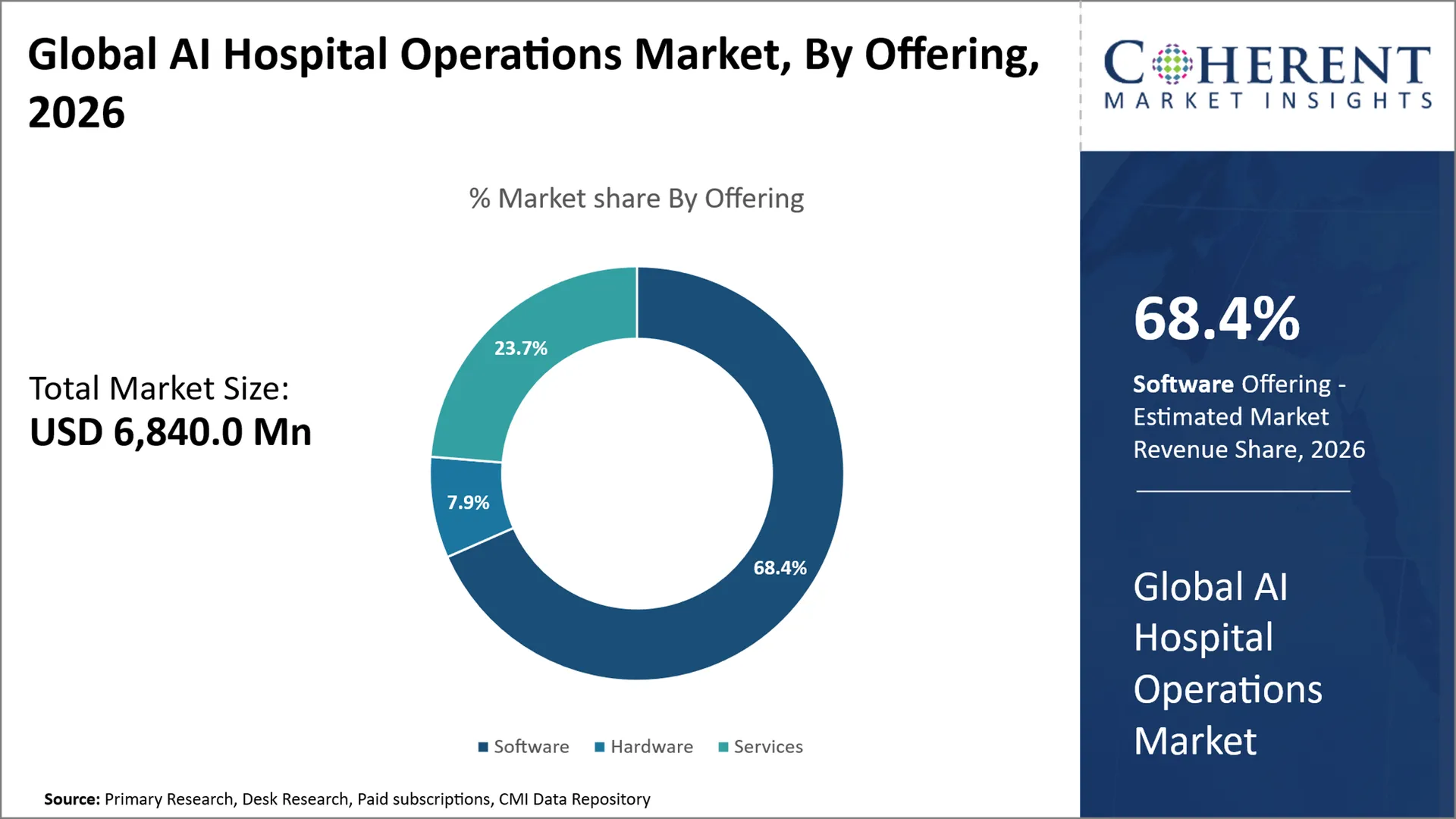
Why Do Software Dominate the Global AI Hospital Operations Market?
Software is projected to hold the market share of 68.4% in 2026, because of its scalability and ability to work with anything and everything-and to embed artificial intelligence in patient flow, workforce, admin, and resource-management workflows. In addition, by leveraging data-based resources, it could possibly automate its facilities' processes and provide real-time operational insights-potentially without replacing their already existing IT infrastructure. For instance, in February 2026, the U.S. Office of the National Coordinator for Health Information Technology reported that there were close to 464 million documents exchanged via the Trusted Exchange Framework and Common Agreement, versus close to 10 million prior to 2025. This expansion of interoperable health data exchange infrastructure supports the environment needed for the adoption of AI-enabled hospital software and workflows.
- Current Industry Events of 2026
- Market Size Estimation
- Regional Breakdown
- Competitive Landscape
- Customer Intelligence
- Segmental Analysis
- Pricing Analysis
- Key Market Drivers, Challenges & Future Trends
- Customized Insights Section
Why Does Patient Flow and Bed Capacity Management Represent the Largest Use Case Segment in the AI Hospital Operations Market?
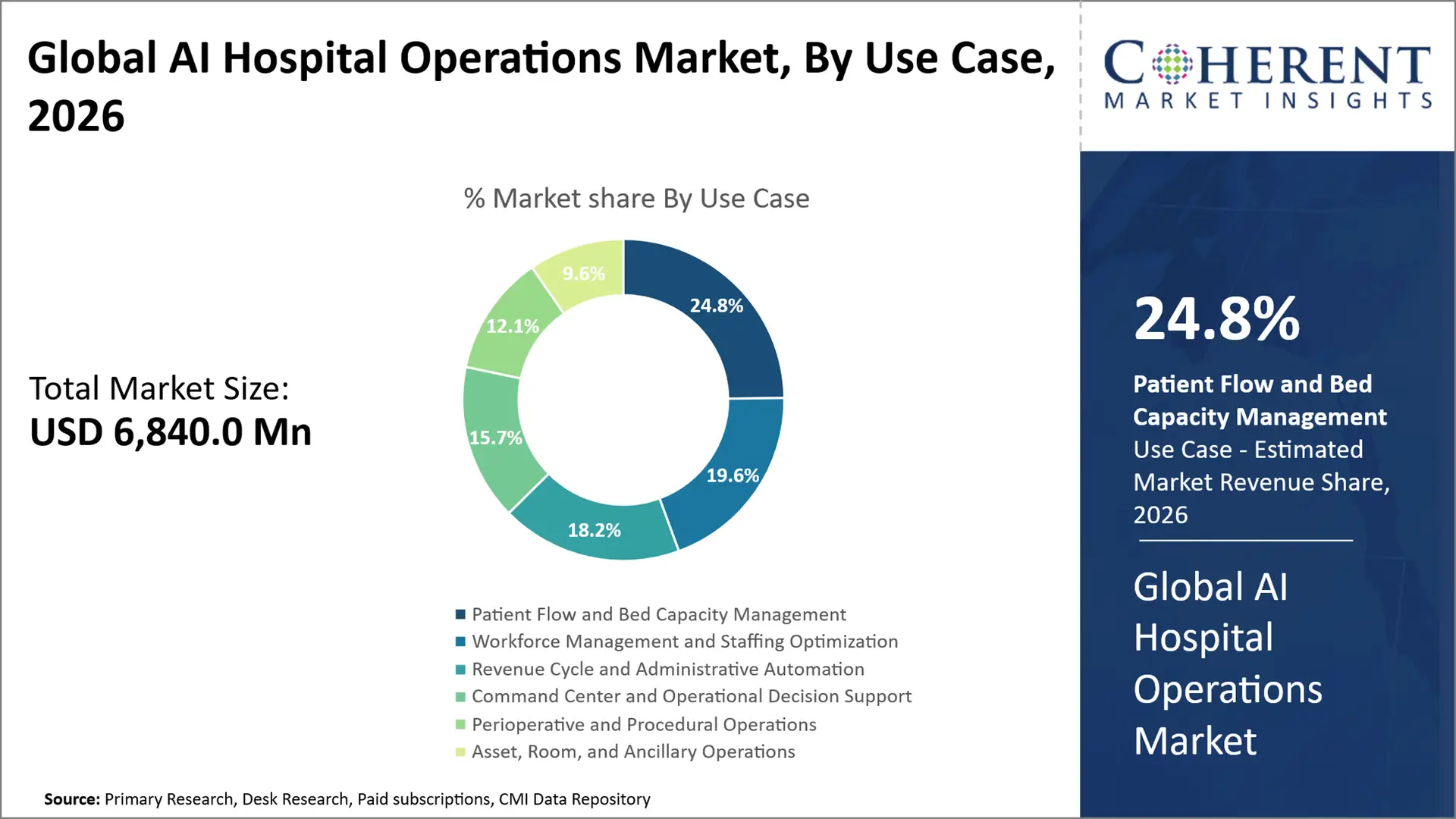
Patient flow and bed capacity management is projected to hold a market share of 24.8% in 2026, because it directly supports the reduction of bottlenecks, effective bed utilization, and the prioritization of admissions, transfers and discharges. AI allows hospitals to predict demand and capacity needs for a faster, more-data driven allocation decision. For instance, in December 2025, UK Government reported that it was piloting an AI-based demand-forecasting tool in 50 NHS (National Health Service) hospitals that estimates accident and emergency demand, and areas of potential congestion, to help inform better planning of bed and staff capacity.
Machine Learning Segment Dominates the Global AI Hospital Operations Market
The machine learning segment is projected to hold a market share of 29.7% in 2026, due to its ability to analyze patterns in large hospital data sets and to generate forecasts and predictions on demand, staffing, scheduling and resource use. It also seems to improve decision-making and operational forecasting by learning from existing and from live data. For instance, in April 2026, the UK Government stated that the model for accident and emergency admissions data used by NHS England to forecast hospital admissions and attendances to Hospital for period from one to three weeks was used for planning of capacity and resource planning.
Current Events and their Impact
Current Events | Description and its Impact |
UK MHRA Publishes Recommendations for AI Healthcare Regulation (September 2026) |
|
NHS England Accelerates AI Rollout Across Healthcare (July 2026) |
|
U.S. ONC Launches 2026 Funding Program for Agentic AI in Health IT (May 2026) |
|
AI Hospital Operations Market Dynamics
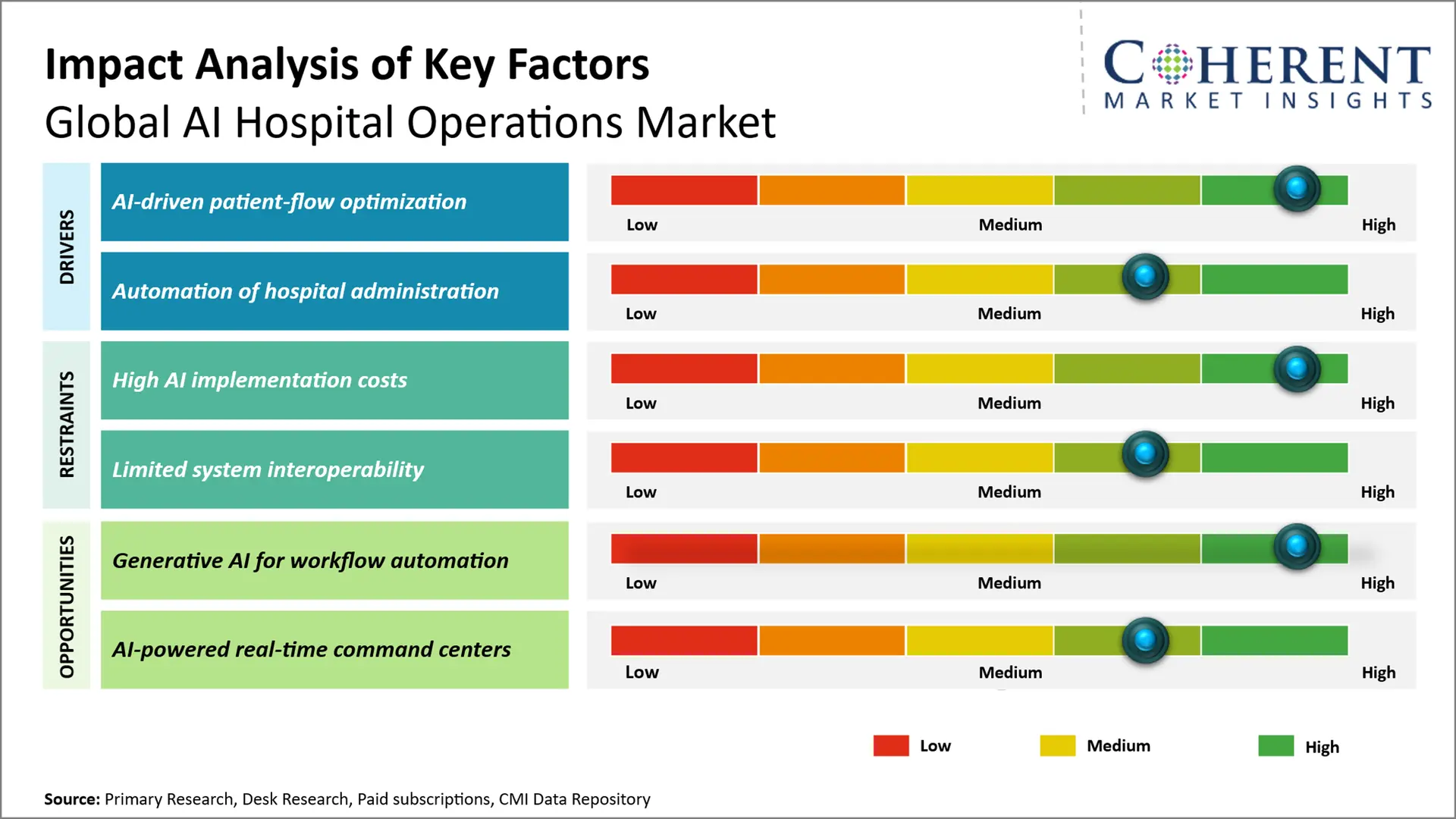
Market Drivers
- AI-driven patient-flow optimization: AI-driven patient-flow optimization is becoming a key driver as hospitals seek to manage rising patient volumes, bed constraints, and bottlenecks more efficiently. AI can forecast demand, optimize bed allocation, prioritize patients, and coordinate admissions and discharges using real-time and historical operational data. This enables hospitals to improve throughput while reducing unnecessary delays and manual decision-making. For instance, NHS England’s AI project at Kettering General Hospital used historical admission and patient-flow data to forecast demand and generate bed-allocation options for hospital staff, supporting faster and more consistent patient-flow decisions.
- Automation of hospital administration: AI is increasingly automating repetitive hospital administrative tasks such as scheduling, billing, coding, documentation, claims processing, and patient-record management. By reducing manual data entry and administrative workload, these systems can improve processing speed, reduce errors, and allow staff to focus on higher-value activities. For instance, Great Ormond Street Hospital is implementing AI to automate administrative workflows, including data entry, document creation, billing, discharge summaries, and pathway management, as part of its hospital-wide AI strategy.
- AI-driven workforce optimization: AI is increasingly being used to optimize hospital staffing by matching workforce capacity with patient demand, automating rostering, and identifying workload imbalances. This can improve staff utilization, reduce scheduling inefficiencies, and help hospitals manage workforce pressures while maintaining service capacity. For instance, NHS England is expanding AI-enabled tools across 505,000 staff, including applications for rota building, bed management, HR, finance, and procurement, demonstrating growing use of AI for hospital workforce and operational management.
Emerging Trends
- Shift toward agentic AI in hospital operations: Hospitals are moving beyond predictive AI and chatbots toward agentic systems capable of executing multi-step operational workflows, such as scheduling, patient routing, and administrative coordination.
- Real-time AI for operational decision-making: AI is increasingly being integrated with live hospital data to support real-time patient-flow, capacity, staffing, and resource decisions, enabling hospitals to identify bottlenecks and respond proactively.
- Expansion from point solutions to integrated AI platforms: Hospitals are increasingly seeking interoperable AI platforms that connect multiple operational functions rather than deploying isolated tools, with greater emphasis on governance, workflow integration, and measurable operational outcomes.
Regional Insights
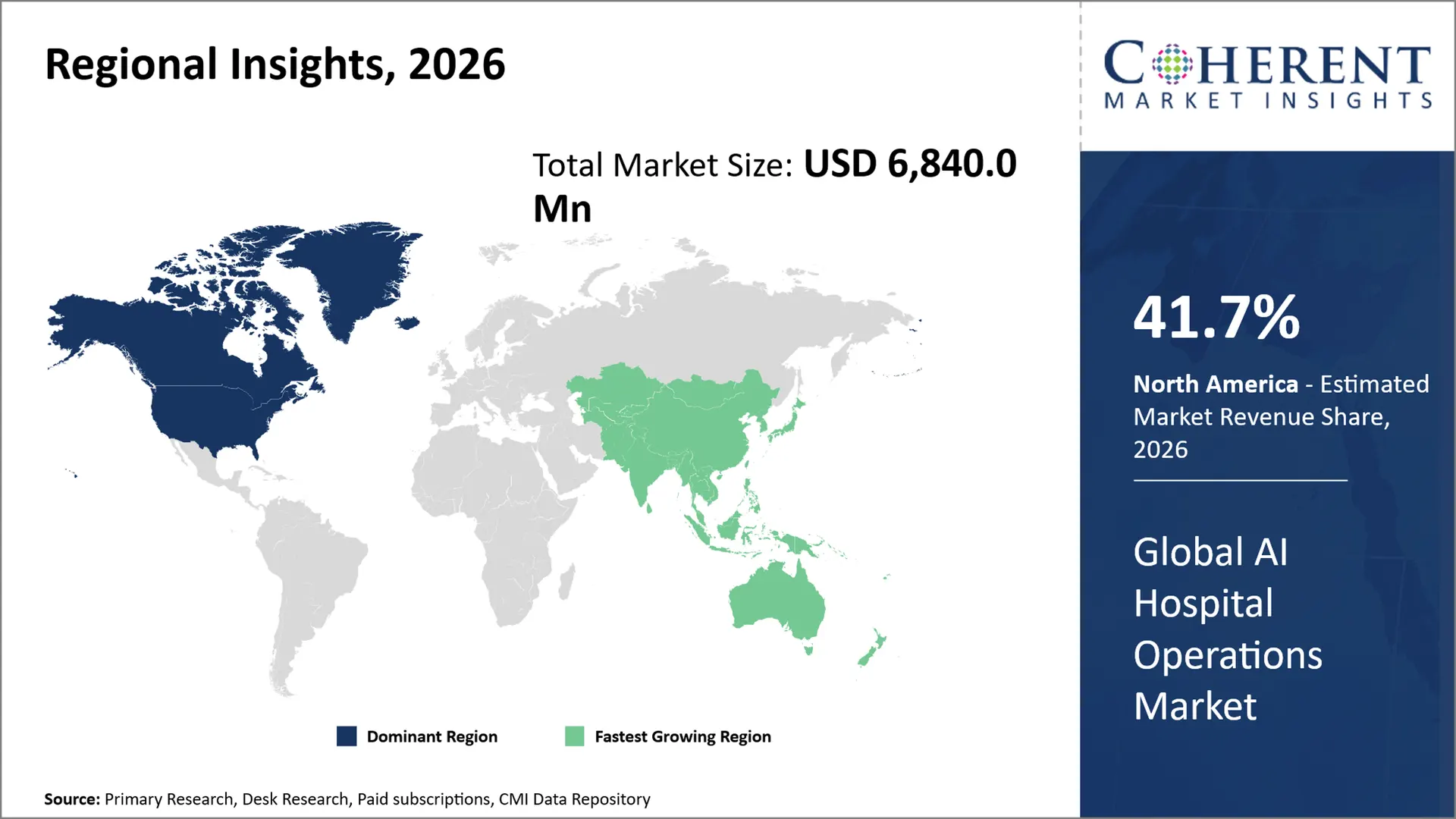
Why is North America a Strong Market for AI Hospital Operations?
North America leads the global AI hospital operations market, accounting for an estimated 41.7% share in 2026, due to well-established healthcare infrastructure, advanced digital health systems, and existing deployment of interoperable health IT solutions. The increasing government initiatives to leverage the benefits of AI adoption across hospitals through various funds, regulations, interoperability standards, and AI governance is also expected to fuel the growth of the market.
For instance, in May 2026, the U.S. Office of the National Coordinator for Health Information Technology (ONC) announced its 2026 LEAP in Health IT funding opportunity which promotes standards-based agentic AI to drive adoption of health IT and advances in healthcare. Furthermore, the implementation of various initiatives is likely to be instrumental in driving innovation in healthcare without compromising patient safety, algorithm transparency and data security and accountability.
Why Does Asia Pacific AI Hospital Operations Market Exhibit High Growth?
Asia Pacific is expected to exhibit the fastest growth in the global AI hospital operations market, registering an estimated CAGR of 30.6% during 2026–2033. The region is projected to account for 22.1% of the global market in 2026, driven by increased adoption of smart hospitals, the increasing digitization of healthcare establishments, increased hospital facilities, and government initiatives in the region.
Furthermore, governments in the countries like China, India, Japan, and South Korea provide strong incentives and policy support to promote the deployment of AI in healthcare institutions. These measures are boosting AI-enabled infrastructure, digital health readiness, data interoperability, and intelligent hospital operations in the region. For instance, in November 2025, China’s National Health Commission issued guidelines to encourage and govern the development of “AI + Healthcare.” The guidelines set out a plan for the broader use of intelligent clinical decision support and artificial intelligence in healthcare institutions by 2030.
Global AI Hospital Operations Market Outlook for Key Countries
Why is the U.S. Leading Innovation and Adoption in the AI Hospital Operations Market?
The U.S. leads the innovation and adoption in the AI hospital operations market owing to its advanced health IT ecosystem and AI integration across hospital processes. Existing interoperability standards, cloud-based healthcare ecosystem, and AI policy may drive the market for deployment solutions in patient flow, work optimization, admin automation, and operational decision-making.
Is Japan a Favorable Market for AI Hospital Operations Market?
Japan's Healthcare DX strategy and the digitalization of medical records and healthcare data infrastructure have created a conducive ecosystem for hospital operations with AI. Government strategies are probably improving digital connectivity among healthcare facilities, laying a strong groundwork for employing AI for patient flow, workforce and administrative automation.
Is China Emerging as a Key Growth Hub for the AI Hospital Operations Market?
China is gradually emerging as a major hub for proliferating AI-driven hospital operations, which is being driven by nation-wide efforts promoting "AI + Healthcare" and digital transformation of the healthcare system. Such efforts by the government seem to be accelerating the application of AI to clinical decision support, hospital management, allocation of medical resources, and healthcare data foundation.
Why Does Germany Top the European AI Hospital Operations Market?
Germany is expected to dominate the European AI hospital operations Market due to its strong healthcare digitalization policy of the government sector, and the increased hospital modernization fund in the country. 'Digital Together 2026,' a digitalization strategy published in February 2026, sets vision for demand into new health data IT system and digital health care process and documentation support with the help of AI.
Is AI Hospital Operations Market Developing in UK?
The UK’s AI hospital operations market is “rapidly evolving” with NHS-led initiatives deploying AI to help run hospitals and optimize automation and patient flow, as well as staffing and capacity planning. In June 2026, NHS England announced access to AI had been given to 505,000 staff, with use cases including discharge, rota building and bed management.
AI Adoption Across Key Hospital Operational Functions
Hospital Operational Function | Key AI Application | Primary Operational Benefit |
Patient Flow & Bed Management | Predictive bed allocation, admission/discharge forecasting, patient-flow optimization | Improved bed utilization and throughput |
Workforce Management | Predictive staffing, scheduling, workload optimization | Better staff allocation and reduced administrative burden |
Revenue Cycle Management | Automated coding, billing support, denial management | Faster processing and improved coding accuracy |
Administrative Operations | Document processing, appointment scheduling, workflow automation | Reduced manual workload and processing time |
Clinical Documentation | Ambient documentation, clinical summarization, EHR data extraction | Reduced documentation burden |
Supply Chain & Inventory | Demand forecasting, inventory optimization, procurement automation | Improved resource availability and cost control |
Command Centers & Decision Support | Real-time operational analytics and predictive alerts | Faster identification of bottlenecks and operational risks |
Perioperative Operations | OR scheduling, procedure forecasting, utilization optimization | Improved operating-room utilization |
How is the generative AI for workflow automation creating new growth opportunities in the AI hospital operations market?
Generative AI has been rapidly evolving to provide new solutions for hospital management through the automation of complex administrative processes, record keeping, scheduling and resource allocation. Its ability to analyze unstructured data and generate in-context outcomes points to reduce manual effort, more efficient workflows and assistance in faster operational decision-making. It is also inevitable that the technology is likely to accelerate the creation of more integrated AI agents specializing in workflows instead of isolated automation tools.
For instance, Brown Health has deployed over 24 agents of artificial intelligence (Microsoft Copilot Studio, Microsoft 365 Copilot, and Dragon Copilot) within its clinical, scheduling, emergency room, and operational workflows, including agents designed to facilitate hospital policy implementation and specialty scheduling. The deployment demonstrates the practical implementation of agentic AI to assist hospital workflow automation.
Market Players, Key Development, and Competitive Intelligence
Key Developments
- On September 15, 2026, GE HealthCare launched CareIntellect for Operations, an AI-enabled SaaS application designed to forecast hospital capacity constraints up to 72 hours in advance. The platform analyzes patient and operational data, including bed availability, staffing, wait times, and patient delays, to identify emerging bottlenecks. It also provides recommended actions for optimizing capacity, throughput, discharge, imaging, and patient transfers.
- In August 2026, Moolchand Hospital launched AI SAGE (Smart Analytics and Guidance Engine), an AI-powered conversational analytics platform integrating 14 clinical and operational modules. The platform uses natural-language queries to provide real-time insights across bed management, emergency throughput, OT utilization, patient journeys, discharge efficiency, and operational intelligence. It is designed to reduce manual reporting and support faster hospital decision-making.
- In May 2026, IKS Health announced the acquisition of ARAI Solutions to accelerate its agentic AI technology stack for healthcare. The acquisition adds ARAI’s biomedical knowledge graphs and reasoning capabilities to IKS Health’s AI platform, supporting applications including autonomous coding, denial prevention, prior-authorization reasoning, and clinical decision support. The integration is also intended to strengthen AI-driven clinical and operational models across healthcare organizations.
- In December 2025, Inferenz and Caregence announced a strategic merger combining Inferenz’s data, cloud, and enterprise AI capabilities with Caregence’s healthcare-focused agentic AI platform. The combined platform targets workflow automation across digital front doors, matching and scheduling, revenue-cycle management, clinical documentation, and post-care monitoring, with integration across EHR/EMR, payer, HR, and CRM systems.
Competitive Landscape
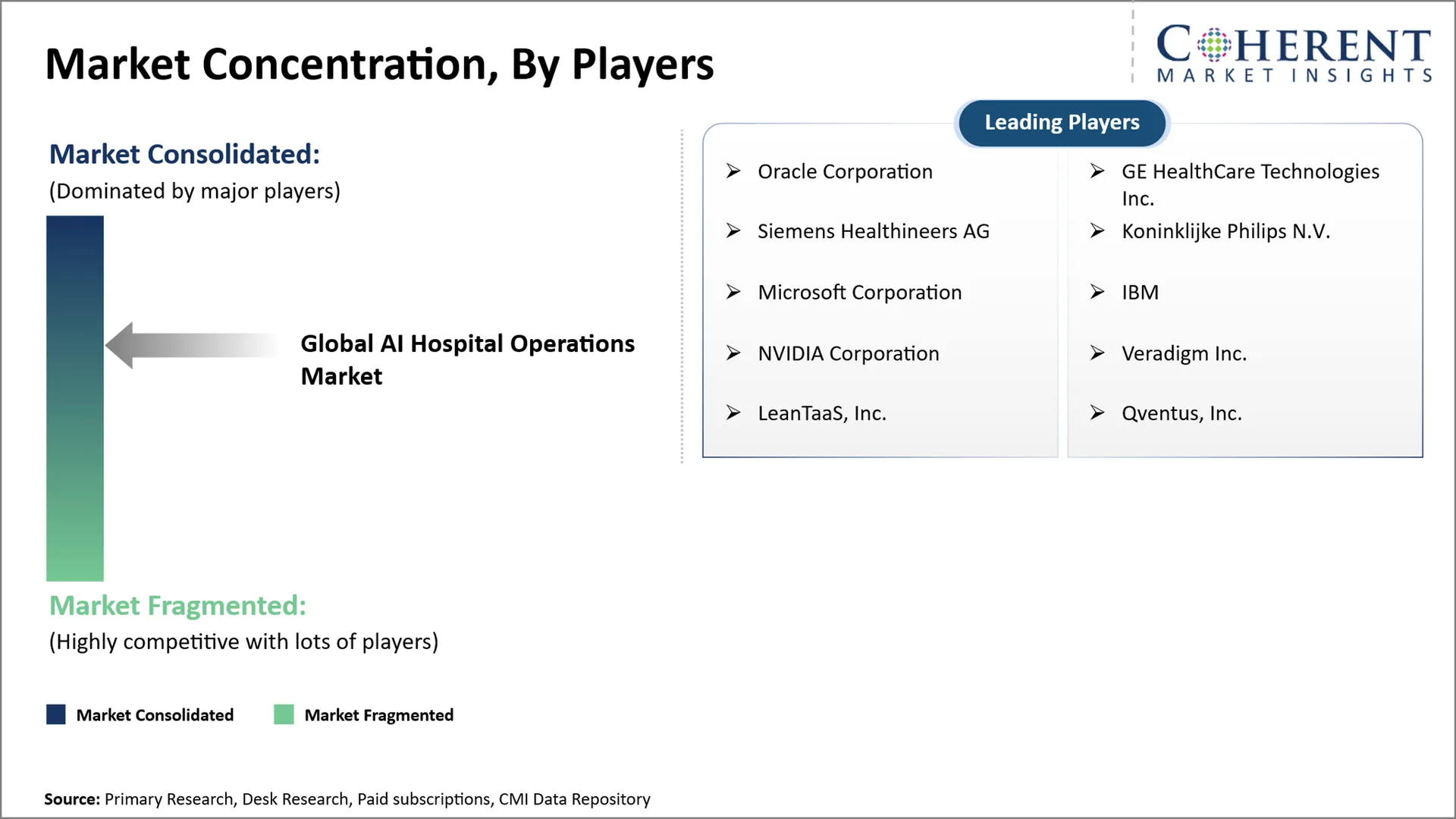
The global AI hospital operations market is moderately competitive, with competition centered on AI capabilities, workflow integration, predictive analytics, interoperability, scalability, and implementation across hospital environments. Market participants are increasingly focusing on developing AI-powered solutions that optimize patient flow, workforce utilization, administrative processes, resource allocation, and operational decision-making. Key focus areas include:
- Optimization of patient flow, bed capacity, and hospital throughput
- AI-driven workforce planning, staffing, and scheduling
- Automation of revenue cycle and administrative workflows
- Integration of AI with EHRs, hospital information systems, and operational platforms
- Development of predictive analytics and real-time command-center capabilities
- Expansion of generative and agentic AI for automated operational decision-making
Market Report Scope
Global AI Hospital Operations Market Report Coverage | |||
Report Coverage | Details | ||
Base Year | 2025 | Market Size in 2026: | USD 6,840.0 Mn |
Historical Data For: | 2020 To 2024 | Forecast Period: | 2026 To 2033 |
Forecast Period 2026 To 2033 CAGR: | 26.2% | 2033 Value Projection: | USD 34,920.0 Mn |
Geographies covered: |
| ||
Segments covered: |
| ||
Companies covered: | Oracle Corporation, GE HealthCare Technologies Inc., Siemens Healthineers AG, Koninklijke Philips N.V., Microsoft Corporation, IBM, NVIDIA Corporation, Veradigm Inc., LeanTaaS, Inc., Qventus, Inc. | ||
Growth Drivers: |
| ||
Restraints & Challenges: |
| ||
Analyst Opinion (Expert Opinion)
- In the coming years, global AI hospital operations market will shift from standalone automation tools toward integrated intelligent operating platforms that connect patient flow, workforce, capacity, financial, and administrative functions. Generative and agentic AI are expected to increasingly automate multi-step workflows, identify operational bottlenecks in real time, and support proactive decision-making while retaining human oversight for critical hospital decisions.
- The maximum opportunities are foreseen within Generative & Agentic AI for patient flow and bed capacity management in the U.S. This combination can address bed allocation, admission and discharge coordination, patient transfers, staffing requirements, and throughput optimization within a unified operational environment, creating scope for measurable improvements in hospital utilization and workflow efficiency.
- In order to gain a competitive advantage, market players should focus on developing interoperable, workflow-specific AI platforms rather than isolated AI applications. Integrating deeply with EHRs and hospital information systems, providing real-time operational intelligence, demonstrating measurable ROI, and incorporating explainability, governance, auditability, and human oversight will be important for building trust and securing broader hospital adoption.
Speak to the analyst
Want personalized insights?
Take the findings above to one of our principal consultants, or have the report rebuilt around the segments, geographies and competitors you actually track.
Market Segmentation
- Offering Insights (Revenue, USD Mn, 2021 - 2033)
- Software
- Hardware
- Services
- Use Case Insights (Revenue, USD Mn, 2021 - 2033)
- Patient Flow and Bed Capacity Management
- Workforce Management and Staffing Optimization
- Revenue Cycle and Administrative Automation
- Command Center and Operational Decision Support
- Perioperative and Procedural Operations
- Asset, Room, and Ancillary Operations
- Technology Insights (Revenue, USD Mn, 2021 - 2033)
- Machine Learning
- Natural Language Processing (NLP)
- Generative AI and Agentic AI
- Computer Vision and Ambient Intelligence
- Rules-based Optimization and Simulation
- Deployment Model Insights (Revenue, USD Mn, 2021 - 2033)
- Cloud
- On-premise
- Hybrid
- End User Insights (Revenue, USD Mn, 2021 - 2033)
- Hospitals
- Ambulatory Surgical Centers
- Imaging Centers
- Others
- Regional Insights (Revenue, USD Mn, 2021 - 2033)
- North America
- U.S.
- Canada
- Latin America
- Brazil
- Argentina
- Mexico
- Rest of Latin America
- Europe
- Germany
- U.K.
- Spain
- France
- Italy
- Russia
- Rest of Europe
- Asia Pacific
- China
- India
- Japan
- Australia
- South Korea
- ASEAN
- Rest of Asia Pacific
- Middle East
- GCC Countries
- Israel
- Rest of Middle East
- Africa
- South Africa
- North Africa
- Central Africa
- North America
Sources
Primary Research Interviews
- Hospital and health-system executives responsible for AI strategy, operations, and digital transformation
- Chief information, technology, data, and AI officers overseeing hospital technology deployment
- Hospital operations and capacity-management leaders responsible for patient flow, bed utilization, and workforce planning
- Revenue-cycle, finance, and administrative leaders evaluating AI-enabled process automation
- Clinical informatics and health IT professionals integrating AI with EHR and hospital information systems
- AI solution providers and implementation specialists developing hospital workflow and operational intelligence platforms
Stakeholders
- Hospitals and integrated health systems adopting AI for operational optimization
- AI and healthcare technology companies developing hospital operations solutions
- EHR, health IT, and interoperability platform providers
- Healthcare AI implementation, consulting, and systems-integration organizations
- Cloud computing and data infrastructure providers supporting healthcare AI deployments
- Healthcare insurers and value-based care organizations using AI for utilization and administrative optimization
- Academic medical centers and healthcare innovation institutions
- End-use Sectors
- Hospitals and Health Systems
- Ambulatory Surgical Centers
- Imaging and Diagnostic Centers
- Specialty and Academic Medical Centers
- Long-term and Post-acute Care Facilities
- Other Healthcare Facilities
- Regulatory & Health Bodies
- U.S. Food and Drug Administration (FDA) – oversight and regulatory guidance for AI-enabled medical technologies and software
- Centers for Medicare & Medicaid Services (CMS) – healthcare reimbursement, interoperability, and administrative data-exchange policies
- Office of the National Coordinator for Health Information Technology (ONC) – EHR interoperability, health IT standards, APIs, and certification
- U.S. Department of Health and Human Services (HHS) – healthcare data privacy, security, and digital-health policy
- European Medicines Agency (EMA) – regulatory considerations for AI applications associated with healthcare and medical products
- European Commission – AI governance and regulatory framework applicable to high-risk healthcare AI
- World Health Organization (WHO) – global guidance on AI governance, ethics, and responsible use in healthcare
- National Medical Products Administration (NMPA), China – regulation of AI-enabled medical technologies
- Ministry of Health, Labour and Welfare (MHLW), Japan – healthcare technology, digital-health, and medical-device regulation
Databases
- CMS Data – Medicare, Medicaid, claims, utilization, and healthcare-provider data
- ONC Health IT Data – EHR adoption, interoperability, API, and health IT datasets
- Healthcare Cost and Utilization Project (HCUP) – hospital utilization, admissions, procedures, and healthcare outcomes data
- ClinicalTrials.gov – clinical studies involving AI-enabled healthcare technologies
- WHO Global Health Observatory (GHO) – global health-system and healthcare utilization indicators
- OECD Health Statistics – healthcare expenditure, workforce, hospital, and health-system indicators
Associations
- American Hospital Association (AHA) – hospital operations, AI adoption, workforce, and healthcare technology insights
- Healthcare Information and Management Systems Society (HIMSS) – health IT, AI, interoperability, digital transformation, and AI governance
- Healthcare Financial Management Association (HFMA) – healthcare finance, revenue-cycle operations, and health-system AI adoption
- College of Healthcare Information Management Executives (CHIME) – healthcare IT leadership, digital transformation, and technology adoption
- Health Level Seven International (HL7) – healthcare interoperability standards and FHIR
- International Medical Informatics Association (IMIA) – medical informatics, digital health, and healthcare information systems
- Association for Healthcare Resource & Materials Management (AHRMM) – healthcare supply-chain and resource-management practices
Public Domain Sources
- U.S. Department of Health and Human Services (HHS) – healthcare AI, health IT, privacy, and digital-health information
- Centers for Medicare & Medicaid Services (CMS) – hospital, claims, reimbursement, interoperability, and healthcare utilization data
- Office of the National Coordinator for Health Information Technology (ONC) – public health IT, EHR, API, and interoperability resources
- American Hospital Association (AHA) – public resources on hospital AI adoption, operational applications, and healthcare transformation
- World Health Organization (WHO) – global digital-health, AI governance, and health-system resources
- Organisation for Economic Co-operation and Development (OECD) – publicly available healthcare expenditure, workforce, hospital, and health-system datasets
Proprietary Elements
- CMI Data Analytics Tool
- Proprietary CMI Existing Repository of information for last 10 years.
Get access to 250+ pages report
Every segment, forecast, competitor profile and data table behind the analysis above — available for instant download.
- ESOMAR Member
- ISO 9001:2015 Certified
- D-U-N-S Registered
- GDPR & CCPA Compliant
Frequently Asked Questions
The global AI hospital operations market is estimated to be valued at USD 6,840.0 Mn in 2026 and is expected to reach USD 34,920.0 Mn by 2033.
Software dominates due to its ability to integrate AI across patient flow, workforce management, administrative automation, and real-time operational decision-making.
AI hospital operations use artificial intelligence to optimize hospital workflows, resources, staffing, patient flow, and administrative processes.
The CAGR of global AI hospital operations market is projected to be 26.2% from 2026 to 2033.
AI-driven patient-flow optimization, and automation of hospital administration are the major factors driving the growth of the global AI hospital operations market.
High AI implementation costs, and limited system interoperability are the major factors hampering the growth of the global AI hospital operations market.
In terms of technology, machine learning is estimated to dominate the market revenue share in 2026.