

Celiac Disease Treatment Market Size and Share Analysis- Growth Trends and Forecasts (2026-2033)
The Celiac Disease Treatment Market size is anticipated to grow at a CAGR of 11.03% with USD 752.84 Mn in 2026 and is expected to reach USD 1,565.97 Mn in 2033. The primary drivers are largely defined by the increasing prevalence of celiac disease, rising awareness and early diagnosis, growing adoption of gluten-free dietary management, and increasing research and development activities for novel therapeutic interventions. According to the National Institute of Diabetes and Digestive and Kidney Diseases (NIDDK), approximately 1% of the global population has celiac disease, while nearly 20% of patients experience persistent or recurrent symptoms despite following a gluten-free diet, thereby creating significant opportunities for the development of alternative therapeutic interventions and targeted drug treatments.
Key Takeaways of the Global Celiac Disease Treatment Market
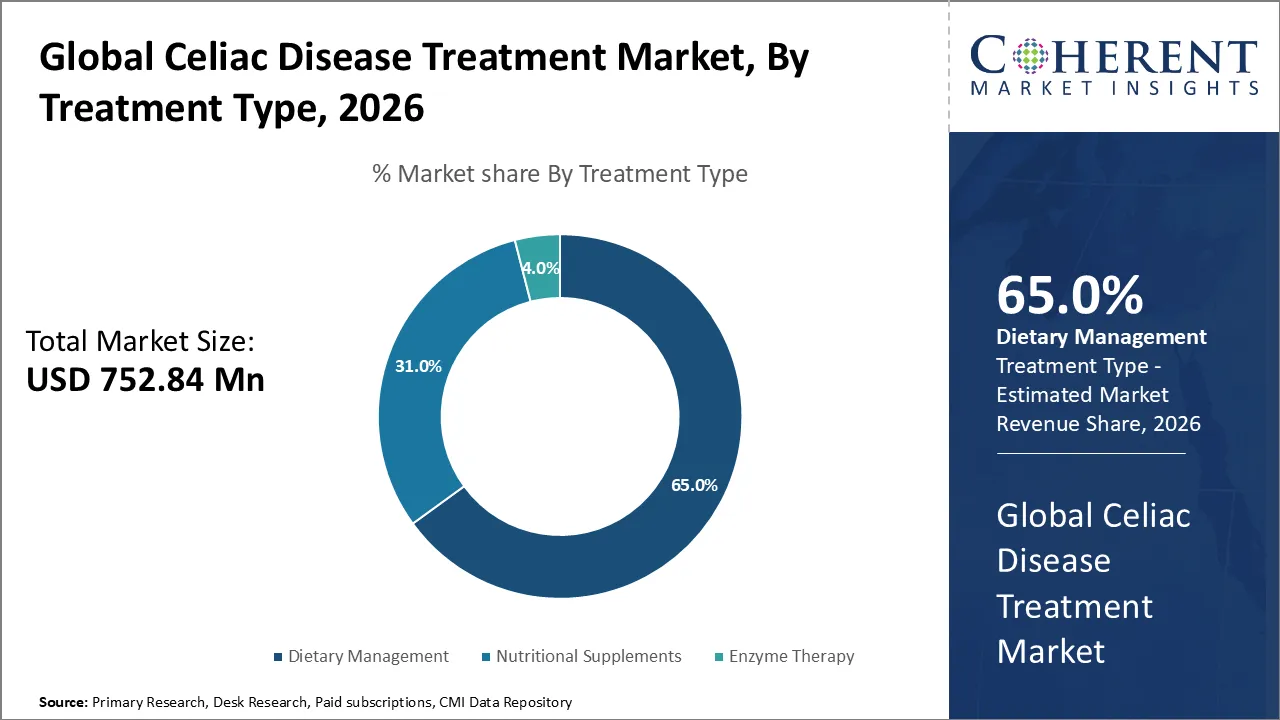
- The Dietary Management segment is expected to account for 65.0% of the global celiac disease treatment market share in 2026. Increasing adoption of lifelong gluten-free diets is driving the growth of the segment. In July 2026, the British Society of Gastroenterology updated its guidelines for celiac disease in adults, including guidance on the gluten-free diet, nutritional advice, and long-term monitoring of the disease.
- The Retail Pharmacies segment is projected to hold 38.0% of the market share in 2026. The segment is witnessing growth due to increased accessibility to nutritional supplements and prescribed gluten-free products. NHS Inform stated in November 2026 that Scotland’s Gluten-Free Food Service is available in all community pharmacies, so eligible patients can get gluten-free dietary products directly from their pharmacist.
- The Adults segment is expected to account for 58.0% of the market in 2026. The segment is growing owing to increasing diagnosis in adults and the rising need for long-term management of the disease. The European Society for the Study of Celiac Disease reported in 2026 that around 10%–20% of adult patients still have symptoms even when they appear to be on a gluten-free diet, highlighting the need for more therapeutic approaches.
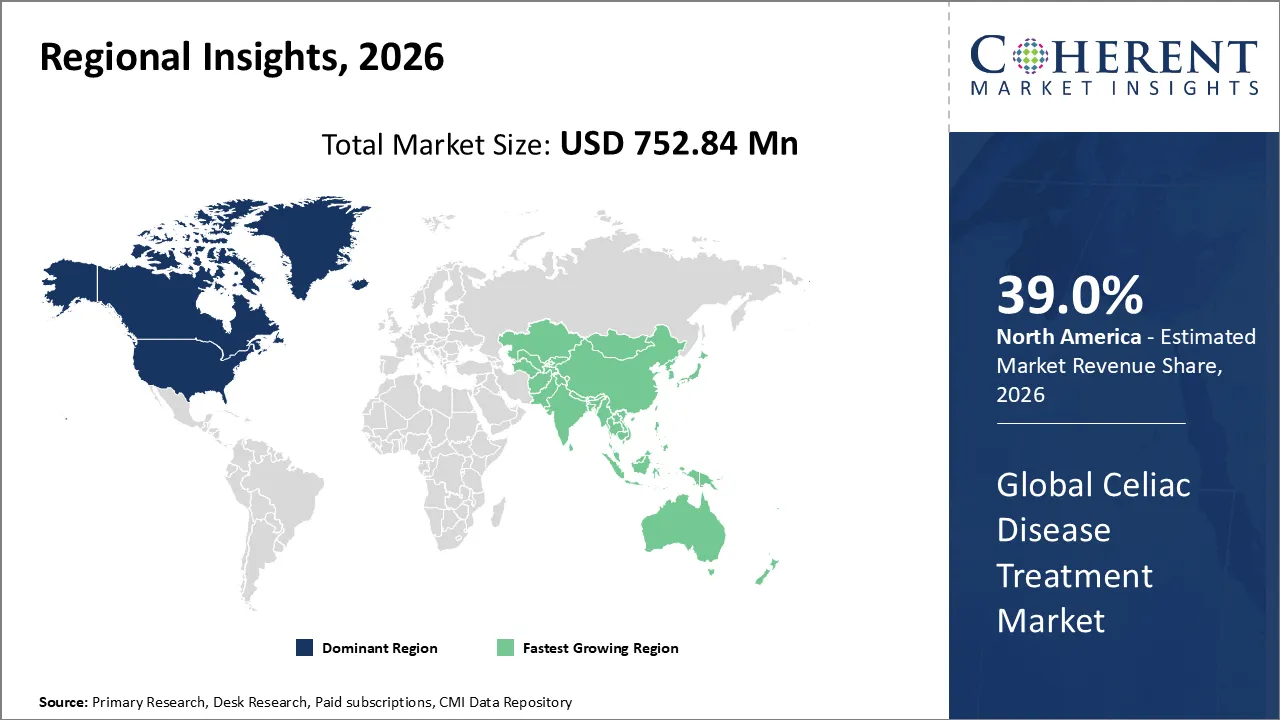
- North America is projected to hold the largest market share of the celiac disease treatment market in 2026 at 39.0%. The regional market growth is supported by increasing investments in clinical research and development of specific therapeutic candidates. On April 1, 2025, Beyond Celiac and the American Gastroenterological Association announced a USD 40,000 research grant to further research on celiac disease and gluten-related disorders, with funding to begin in April 2026.
- Asia Pacific is expected to hold 22.0% market share in 2026 and is expected to be the fastest growing region during the forecast period. Growth in the regional market is driven by increasing disease awareness and improved diagnostic capabilities. An Indian multicenter study of more than 23,000 adults cited in a 2026 review published in Celiac Disease: Epidemiology and Management found age-adjusted celiac disease seroprevalence of 1.23% in Delhi, 0.87% in Assam and 0.10% in Tamil Nadu .
Segmental Insights
Why Does Dietary Management Dominate the Global Celiac Disease Treatment Market?
The dietary management segment is expected to account for 65.0% of the global celiac disease treatment market share in 2026. Dietary management is the mainstay of treatment, as no pharmacological therapy has been approved that can replace a gluten-free diet. People with celiac disease need to avoid gluten for the rest of their lives to prevent intestinal damage, relieve gastrointestinal symptoms, and reduce the risk of long-term complications. Segment growth is supported by growing availability of gluten-free products, improved nutritional counseling and increasing awareness about disease management. Furthermore, the increasing availability of specialized dietary products through retail and online distribution channels is improving patient accessibility and treatment adherence.
On August 18, 2025, a study published in BMC Gastroenterology involving 300 patients with celiac disease found that only 55.3% of patients adhered strictly to a gluten-free diet. The results demonstrated the significance of nutritional support and diet counseling in improving treatment adherence and clinical outcomes.
- Current Industry Events of 2026
- Market Size Estimation
- Regional Breakdown
- Competitive Landscape
- Customer Intelligence
- Segmental Analysis
- Pricing Analysis
- Key Market Drivers, Challenges & Future Trends
- Customized Insights Section
Why Are Retail Pharmacies the Most Preferred Distribution Channel?
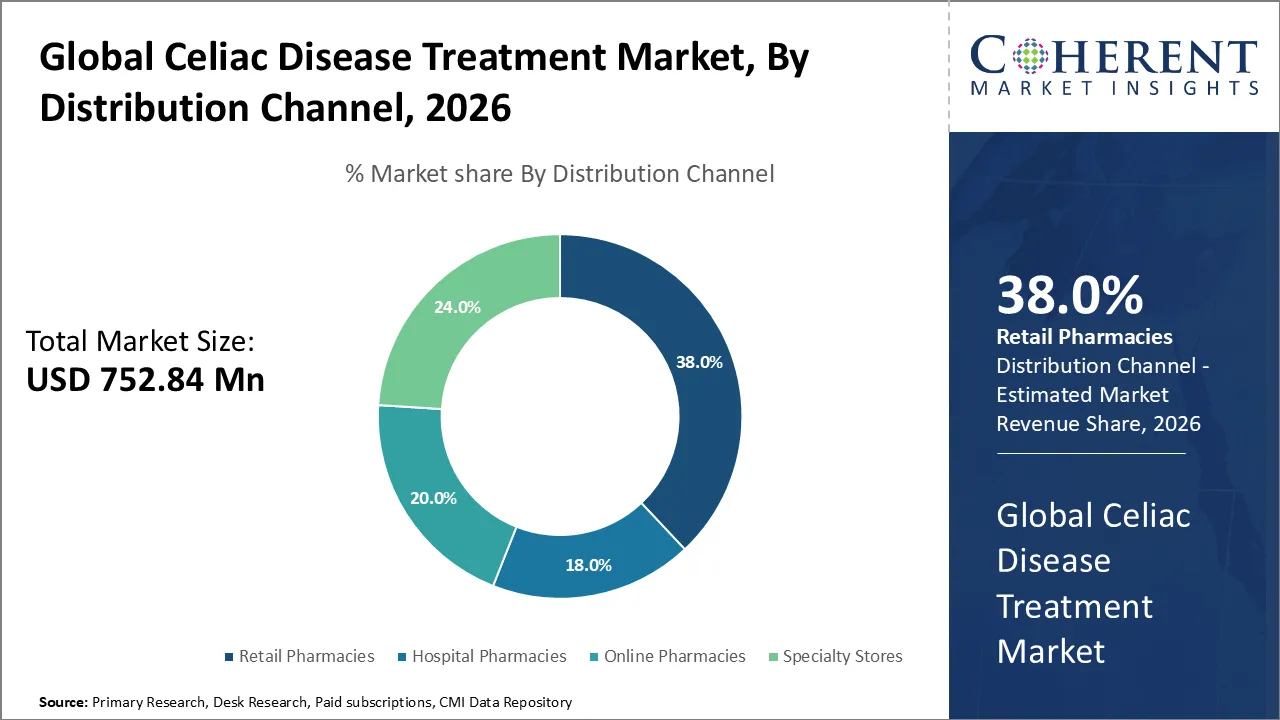
The retail pharmacies segment is expected to account for a 38.0% share of the global celiac disease treatment market in 2026. Retail pharmacies are preferred due to their wide accessibility, convenient procurement and availability of nutritional supplements and prescribed gluten-free products. They also help patients find the right products, address nutritional deficits, and understand what is in their medications. Lifelong management of celiac disease leads to recurrent demand for dietary supplements and other supportive treatment products. Moreover, governmental prescription programs in some countries are expanding the role of community pharmacies in the management of celiac disease.
On 3 February 2025, U.K. Parliament announced that gluten-free bread and flour mixes will still be available on prescription through the National Health Service in England. Eligible patients can receive these products through existing prescription dispensing channels, highlighting the role of retail pharmacies in disease management.
Why Does the Adults Segment Dominate the Global Celiac Disease Treatment Market?
The adult segment is projected to account for a 58.0% market share of the global celiac disease treatment market in 2026. The segment’s growth is attributable to the rising diagnosis of celiac disease in adults, rising awareness regarding gluten-related autoimmune disorders, and rising demand for long-term nutritional management. In adult patients, long-term management of associated complications such as iron deficiency anemia, osteoporosis, and micronutrient deficiencies is often required. Improvements in serological screening and diagnosis are enabling earlier recognition of the disease. Further, the rising research for alternative therapeutic interventions for adult patients is generating business opportunities in the segment.
In June 2025, a study of 56,042 adults in Norway, published in Clinical Gastroenterology and Hepatology, identified 853 biopsy-confirmed cases of celiac disease, for a prevalence of 1.5%. Of these, 470 had not previously been diagnosed, indicating a significant unmet diagnostic and treatment need in adults.
Current Events and Their Impact on the Celiac Disease Treatment Market (regulatory shifts, government policies)
Current Event | Description and its Impact |
U.S. FDA Advances Gluten Ingredient Disclosure and Cross-Contact Prevention Initiatives (January 2026) |
|
U.K. Government Reaffirms National Health Service Prescription Coverage for Gluten-Free Products (July 2026) |
|
Celiac Disease Treatment Market Dynamics
Market Drivers
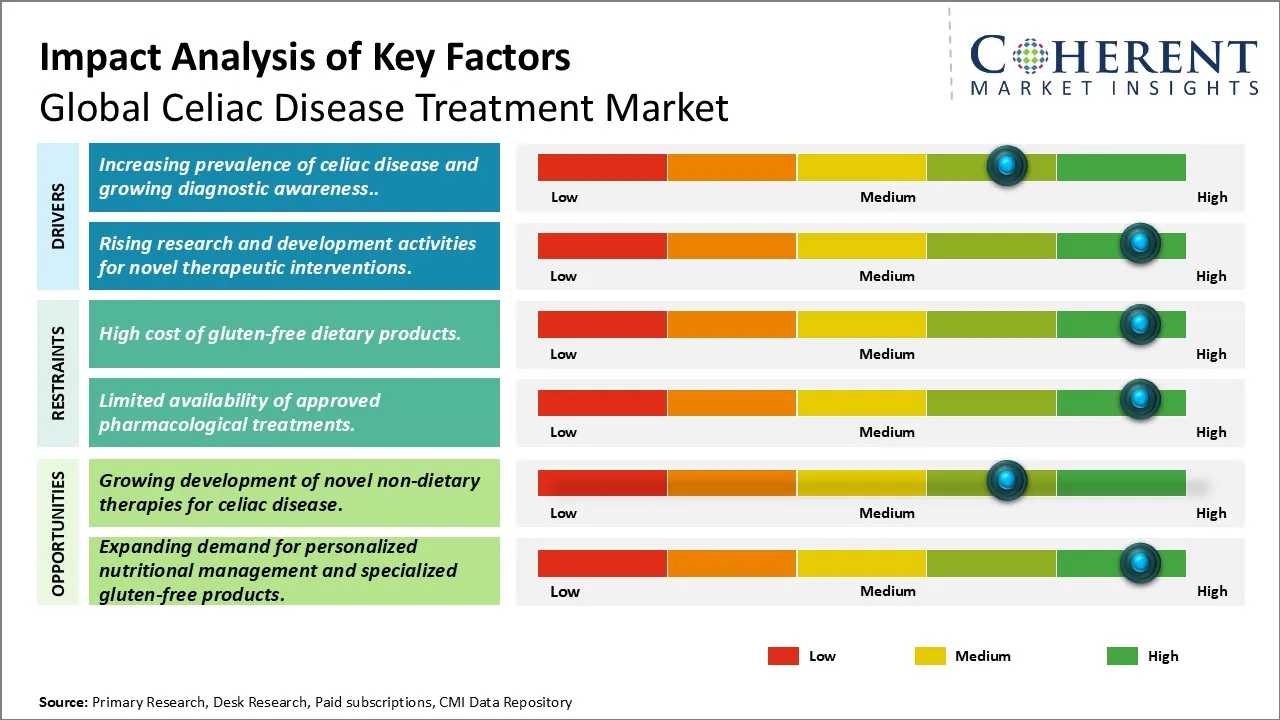
- Increasing prevalence of celiac disease and diagnostic awareness: The increasing burden of celiac disease is driving the growth of the global celiac disease treatment market. Increased awareness of autoimmune and GI diseases and advancements in serological testing and intestinal biopsy techniques are helping to identify the diseases. Patients with celiac disease need lifelong dietary management and regular monitoring to prevent complications such as malnutrition, anemia and osteoporosis. Increased screening in high-risk groups such as those with type 1 diabetes and family history of celiac disease is expanding the pool of patients requiring treatment. Thus growing awareness about the disease is creating continuous demand for gluten-free food products, dietary supplements and supportive therapeutic treatments.
- On August 18, 2026, a systematic review and meta-analysis published in Gastroenterology found that the global seroprevalence of celiac disease was 1.5% and the biopsy confirmed prevalence was 0.8%. The study also showed that the prevalence was 50% higher in females and almost twice as high in children, indicating the large patient population that needs diagnostic evaluation and long-term disease management.
- Increasing research and development activities for novel therapeutic interventions: The global celiac disease treatment market is anticipated to grow due to increased investments in novel pharmaceutical treatments. The standard therapy is still a strict gluten free diet, but accidental gluten exposure and its associated intestinal damage is a major unmet medical need. Pharmaceutical and biotech companies are increasingly developing targeted antibodies, immunomodulatory agents, enzyme-based therapies and drugs to protect the intestinal barrier. These therapies aim to decrease gluten-induced inflammation, protect intestinal tissue and improve disease management. Positive clinical trial results and increasing drug development pipelines are fueling more pharma investment and future commercialization opportunities.
- On September 2, 2026 Teva Pharmaceutical Industries Ltd. announced positive topline results from its Phase 2a clinical trial of TEV-’408, an investigational anti-interleukin-15 antibody. The randomized placebo-controlled study included 50 adult patients with celiac disease and showed statistically significant protection against gluten-induced intestinal damage compared to placebo (p-value < 0.05).
Celiac Disease Treatment Market Trends
- The increasing availability of noninvasive disease-monitoring technologies, such as gluten immunogenic peptide testing, is allowing healthcare providers more accurate assessment of dietary adherence and unintended gluten exposure.
- The growing importance of objectively assessing dietary adherence is leading to the inclusion of sophisticated monitoring tools in the management of celiac disease. In October 2025, a systematic review and meta-analysis found that stool-based gluten immunogenic peptide testing had pooled sensitivity of 85.1% and specificity of 92.5% for identifying gluten exposure.
- The increasing emergence of targeted transglutaminase-2 inhibitors is promoting innovation in non-dietary treatment modalities. A review in the United European Gastroenterology Journal in 2026 discussed the Phase 2b clinical development of ZED1227, an investigational oral therapy intended to reduce intestinal damage caused by gluten. Dose levels of 50 mg, 100 mg and 200 mg were evaluated.
Regional Insights
Why is North America a Strong Market for Celiac Disease Treatment?
North America is expected to dominate the global celiac disease treatment market with a market share of 39.0% in 2026. The region’s dominance is due to its advanced healthcare infrastructure, rising awareness of autoimmune diseases, well-established diagnostic capabilities, and the availability of gluten-free dietary products. In the U.S., there is a strong presence of pharmaceutical and biotechnology companies involved in the clinical development of novel therapies for celiac disease. Rising awareness of gluten-related disorders and availability of specialized nutritional services are helping treatment adoption in Canada.
On September 14, 2025, a study published in the Journal of Clinical Medicine by researchers from Weill Cornell Medicine and Beyond Celiac looked at 9,344 U.S. patients with high-risk conditions before they were diagnosed with celiac disease. The study found that the average time taken to reach a diagnosis was around three years, suggesting that there is room for improvement in the early diagnosis and access to appropriate treatment and nutritional management.
Why Does the Asia Pacific Celiac Disease Treatment Market Exhibit High Growth?
Asia Pacific is expected to register the fastest growth during the forecast period and is projected to account for 22.0% of the global celiac disease treatment market in 2026. Rising awareness about gluten-related disorders, enhanced healthcare infrastructure, and increasing diagnostic capabilities are aiding the regional market growth. In countries like India and China, celiac disease is being increasingly recognized clinically in high-risk populations. Treatment demand is being supported by established practices for disease management and access to specialized gluten-free products in Australia. Increasing organized retail chain and increasing availability of nutritional supplements through e-commerce platforms are further boosting the treatment accessibility. In addition, undiagnosed celiac disease has a great potential for dietary management and supportive therapeutic measures due to its large weight.
In August 2026, a multicenter study of 11 tertiary medical centers in China reported a prevalence of 1.6% among 321 children with unexplained gastrointestinal symptoms and a biopsy-confirmed prevalence of 1.2%. These results underscore the importance of targeted screening and the potential for increased treatment availability in the region.
Global Celiac Disease Treatment Market Outlook for Key Countries
Why is the U.S. Emerging as a Major Hub in the Celiac Disease Treatment Market?
The U.S. celiac disease treatment market is driven by the advanced diagnostic infrastructure, increasing awareness about autoimmune disorders, and rising pharmaceutical research for alternative treatment modalities. The country has a well-developed network of specialized centers for gastroenterology, nutritional counseling services, and patient advocacy organizations that support early diagnosis and long-term disease management. Pharma companies are investing more and more in investigational therapies that seek to protect patients against accidental gluten exposure and to reduce intestinal inflammation. In addition, the growing availability of gluten-free products in supermarkets, specialty stores and online is supporting dietary management.
On October 12, 2026, First Tracks Biotherapeutics reported positive topline results from the first cohort of its Phase 1b clinical trial of ANB033, an investigational antibody for celiac disease. The study showed statistically significant protection against gluten-induced intestinal damage and associated symptoms, supporting plans for late-stage clinical development in 2027.
Is China the Next Growth Engine for the Celiac Disease Treatment Market?
The China celiac disease treatment market is driven by the growing awareness of gluten-related autoimmune disorders, improved diagnostic infrastructure and increased awareness among healthcare professionals. Previously, underdiagnosis was due to lack of awareness of the disease and insufficient targeted screening. A systematic review and meta-analysis published in the Journal of Digestive Diseases on November 3, 2025, demonstrated a pooled prevalence of celiac disease of 4.55% in Central China, 3.60% in North China, and 2.50% in East China in high-risk populations. These findings highlight opportunities for expanding targeted screening and treatment services. Expanding healthcare expenditure, better access to gastroenterology services and the growing availability of specialized nutritional products are likely to create opportunities for gluten-free dietary products and supportive therapies.
Germany Celiac Disease Treatment Market Analysis and Trends
Germany's celiac disease treatment market is driven by the country’s well-established gastroenterology infrastructure, its advanced pharmaceutical research, and the growing focus on better long-term management of the disease. Domestic biotech companies are developing new therapies that aim to target the immune response specific to gluten. Germany-based Topas Therapeutics said on May 6 that topline results from a Phase 2a clinical trial of TPM502, its investigational antigen-specific immunotherapy for celiac disease, were positive. The study found that a dose-dependent reduction in GI symptoms occurred in patients exposed to controlled gluten vs placebo. These developments are strengthening Germany’s position in research into novel treatments for celiac disease. The established practices of dietary management and the availability of specialized nutritional products also add to the recurring demand for treatment.
U.K. Celiac Disease Treatment Market Analysis and Trends
The U.K. celiac disease treatment market is propelled by the availability of well-organized healthcare services, national disease awareness programs, and growing focus on early detection. Patient advocacy groups and the National Health Service support disease management through diagnostic services, nutrition advice and patient education. Celiac disease affects approximately one in 100 people in the country, but only 36.0% of those affected have been diagnosed, according to Celiac UK, in May 2026. This leaves about 500,000 people undiagnosed, indicating substantial unmet diagnostic and treatment needs. The increasing diagnosed patient population owing to rising screening initiatives and healthcare professional awareness is likely to drive demand for gluten-free dietary products, nutritional supplements and long-term treatment services.
Japan Celiac Disease Treatment Market Analysis and Trends
Japan Celiac Disease Treatment Market is driven by changing dietary habits, rising clinical awareness regarding gluten-associated disorders and development in gastrointestinal disease screening. A multicenter study of 583 adult patients from 23 medical centers in Japan was published on September 1, 2026 in Inflammatory Intestinal Diseases. In patients with disorders of gut-brain interaction, the frequency of biopsy-confirmed celiac disease was found to be 0.17%. The results suggest a low disease burden in the studied population, but increasing clinical awareness and targeted diagnostic work-up may lead to an increase in treatment demand. Japan has a developed healthcare infrastructure and specialized nutritional product industry that can develop targeted dietary management solutions for diagnosed patients.
How is the Development of Novel Non-Dietary Therapies Creating New Growth Opportunities in the Celiac Disease Treatment Market?
Growth opportunities are being created by increasing development of non-dietary therapeutic interventions in the global celiac disease treatment market. The standard of care is a strict gluten-free diet. However, there are significant unmet medical needs associated with accidental exposure to gluten, persistent gastrointestinal symptoms, and difficulties in maintaining compliance with a gluten-free diet. The intestinal damage caused by gluten is being increasingly addressed by pharmaceutical and biotechnology companies using oral enzyme therapies, antigen-specific immunotherapies and targeted molecular inhibitors. These new approaches may provide opportunities to improve disease management beyond traditional dietary restrictions. Furthermore, the progress in the drug delivery technologies and immunological studies are encouraging the pharmaceutical companies to increase their clinical development pipelines.
For instance, according to the Celiac Disease Foundation, Chugai Pharmaceutical is conducting a Phase 2 clinical trial of DONQ52, an investigational antibody designed to treat intestinal damage and persistent symptoms in patients after a gluten-free diet. ZymagenX is also developing latiglutenase (ZMGX003), a mix of two enzymes that break down gluten, which is designed to reduce exposure to toxic fragments of gluten.
Market Players, Key Development, and Competitive Intelligence
Key Developments
- On July 22, 2025, Celiac Canada and Conagra Brands Canada announced a partnership to improve access to gluten-free meals in healthcare and long-term care facilities. The collaboration aims to improve access to safe and nutritionally appropriate meals for people with celiac disease and gluten intolerance.
- In February 2026 Dr. Schär announced planned investments of EUR 28 million as part of a new growth cycle after the consolidation of its business in 2025. The investments will help the company to further develop its specialized nutrition and gluten free food products, further strengthening its competitive position in dietary management.
Competitive Landscape
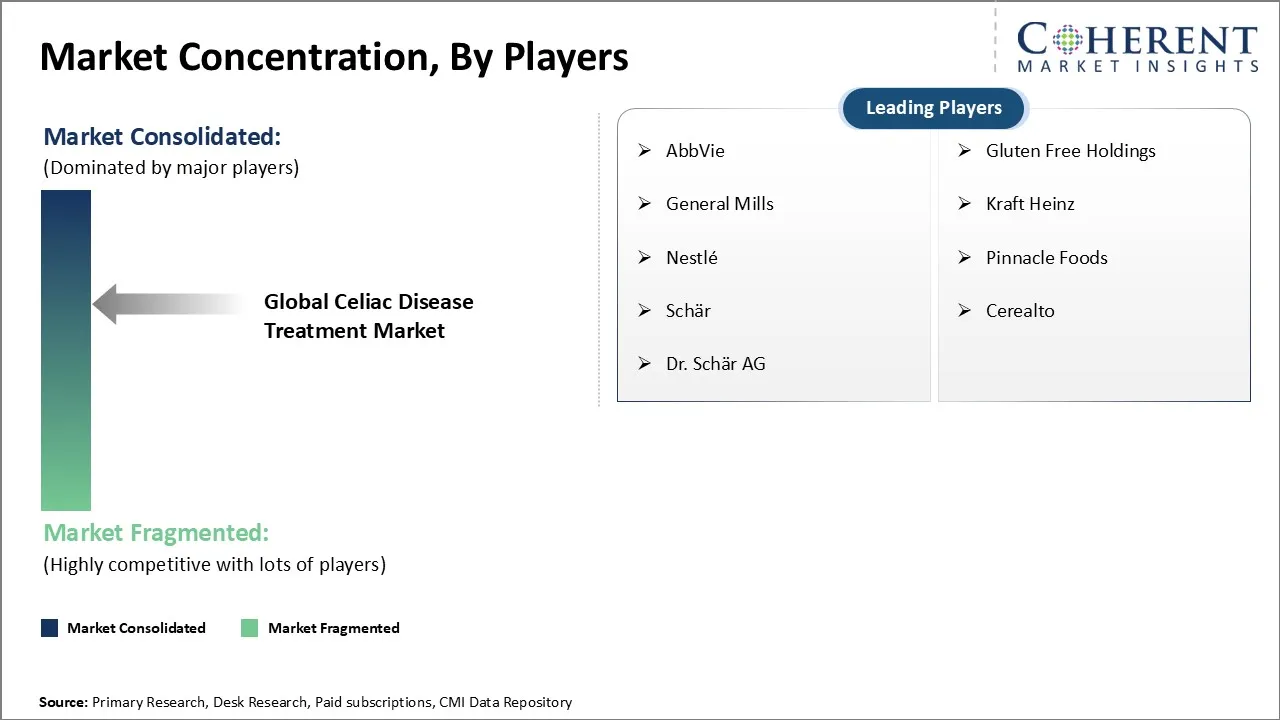
The global celiac disease treatment market is competitive with the presence of specialized nutrition manufacturers, food companies and pharmaceutical developers. Dr. Schär AG, General Mills, Kraft Heinz and Conagra Brands are investing in expanding their gluten-free product line and distribution network. Chugai Pharmaceutical and Takeda are also developing new therapies to meet clinical needs that are currently unmet. Competitive differentiation increasingly depends on product safety, nutritional quality, affordability, gluten-free certification, treatment innovation, and distribution accessibility.
Top Manufacturers and Notable Products/Solutions in the Celiac Disease Treatment Market
Company/Manufacturer | Notable Product/Brand | Key Features |
Dr. Schär AG | Schär Gluten-Free Bread and Pasta | Specialized gluten-free formulations, dietary management of celiac disease, controlled gluten cross-contamination, diverse nutritional product portfolio |
General Mills | Gluten-Free Cheerios | Gluten-free oat-based cereal, whole-grain nutrition, essential vitamins and minerals, convenient daily dietary management |
Kraft Heinz | Kraft Gluten Free Macaroni & Cheese | Gluten-free pasta, convenient meal preparation, alternative to conventional wheat-based macaroni, supportive dietary management |
Conagra Brands | Udi’s Gluten Free Multigrain Bread | Gluten-free formulation, multigrain ingredients, wheat-based bread alternative, convenient dietary management |
Chugai Pharmaceutical | DONQ52 (Investigational) | Multispecific antibody targeting gluten peptide complexes, designed to inhibit gluten-induced immune responses, Phase 2 clinical development |
Market Report Scope
Celiac Disease Treatment Market Report Coverage
Report Coverage | Details | ||
Base Year: | 2025 | Market Size in 2026: | USD 752.84 Mn |
Historical Data for: | 2020 to 2024 | Forecast Period: | 2026 to 2033 |
CAGR: | 11.03% | 2033 Value Projection: | USD 1,565.97 Mn |
Geographies covered: |
| ||
Segments covered: |
| ||
Companies covered: | AbbVie, Gluten Free Holdings, General Mills, Kraft Heinz, Nestlé, Pinnacle Foods, Schär, Cerealto, Dr. Schär AG. | ||
Growth Drivers: |
| ||
Restraints & Challenges: |
| ||
Analyst Opinion (Expert Opinion)
- The future of the global celiac disease treatment market is going to be more centered on the combination of traditional gluten-free diet management with targeted therapeutic interventions. "Oral enzyme therapies, antigen-specific immunotherapy and molecular inhibitors are likely targets for pharmaceutical companies to manage accidental gluten exposure and associated intestinal damage. However, key commercialization factors will be clinical effectiveness, long term safety, regulatory approval and cost of treatment. Companies that can develop clinically-validated therapies that complement gluten-free diets will be better positioned to address unmet patient needs.
- The biggest opportunities lie in personalized nutritional management, innovative pharmaceutical therapies and specialized gluten-free products. The United States and Germany offer significant opportunities for clinical research and pharmaceutical development, while India and China have the potential for growth driven by increased disease awareness, accessibility to diagnostic testing, and the development of healthcare infrastructure. Manufacturers need to focus on affordable gluten-free products, nutritional supplements and treatment solutions that improve long-term adherence to the diet and patient outcomes.
- Market players should differentiate on product safety, clinical efficacy, nutritional quality and real improvements in patient quality of life. In May 2026, The Celiac Disease Foundation and Chugai Pharmaceutical presented research at ISPOR 2026 showing that of U.S. adults surveyed, 45.8% reported moderate financial hardship and 20.5% experienced severe economic consequences of accidental gluten exposure. These results suggest the potential for low-cost therapeutic interventions and existing dietary management products. Manufacturers should strengthen gluten contamination prevention, product certification, and healthcare professional collaborations. Expanding distribution through pharmacies, specialty stores, and e-commerce platforms could further improve treatment accessibility and long-term customer retention.
Speak to the analyst
Want personalized insights?
Take the findings above to one of our principal consultants, or have the report rebuilt around the segments, geographies and competitors you actually track.
Market Segmentation
- By Treatment Type (Revenue, USD Mn, 2021-2033)
- Dietary Management
- Nutritional Supplements
- Enzyme Therapy
- By Distribution Channel (Revenue, USD Mn, 2021-2033)
- Hospital Pharmacies
- Retail Pharmacies
- Online Pharmacies
- Specialty Stores
- By Patient Demographics (Revenue, USD Mn, 2021-2033)
- Children
- Adults
- Elderly
- Gender Specific
- By Region (Revenue, USD Mn, 2021-2033)
- North America
- U.S.
- Canada
- Latin America
- Brazil
- Mexico
- Argentina
- Rest of Latin America
- Europe
- Germany
- U.K.
- France
- Italy
- Spain
- Russia
- Rest of Europe
- Asia Pacific
- China
- India
- Japan
- Australia
- South Korea
- ASEAN
- Rest of Asia Pacific
- Middle East
- GCC
- Israel
- Rest of Middle East
- Africa
- South Africa
- Central Africa
- North Africa
- North America
- Key Players
- AbbVie
- Gluten Free Holdings
- General Mills
- Kraft Heinz
- Nestle
- Pinnacle Foods
- Schar
- Cerealto
- Dr. Schar AG
Sources
Primary Research Interviews
- Gastroenterologists and clinical nutritionists
- Registered dietitians and nutritional therapists
- Celiac disease specialists and immunologists
- Pharmaceutical and biotechnology company executives
- Research and development heads from gluten-free product manufacturers
- Hospital and retail pharmacy procurement managers
- Key opinion leaders (KOLs) in autoimmune and gastrointestinal disorders
Databases
- World Health Organization (WHO)
- National Institutes of Health (NIH)
- National Library of Medicine (PubMed)
- ClinicalTrials.gov
- Global Burden of Disease (GBD) Database
- European Union Clinical Trials Information System (CTIS)
- U.S. Food and Drug Administration (FDA) Databases
- European Medicines Agency (EMA) Databases
Magazines
- Gastroenterology & Endoscopy News
- Gluten-Free Living
- Today's Dietitian
- Nutritional Outlook
- Food Business News
- Pharmaceutical Technology
Journals
- Gastroenterology
- American Journal of Gastroenterology
- Clinical Gastroenterology and Hepatology
- Gut
- United European Gastroenterology Journal
- BMC Gastroenterology
- Nutrients
- Journal of Pediatric Gastroenterology and Nutrition
Newspapers
- The New York Times
- The Guardian
- The Wall Street Journal
- Financial Times
- The Economic Times
Associations
- Celiac Disease Foundation (CDF)
- Beyond Celiac
- American Gastroenterological Association (AGA)
- American College of Gastroenterology (ACG)
- European Society for the Study of Coeliac Disease (ESsCD)
- Coeliac UK
- Celiac Canada
- World Gastroenterology Organisation (WGO)
Public Domain Sources
- Company Annual Reports and Investor Presentations
- National Institute of Diabetes and Digestive and Kidney Diseases (NIDDK) Publications
- U.S. Food and Drug Administration (FDA) Regulatory Publications
- European Medicines Agency (EMA) Regulatory and Clinical Assessment Reports
- National Health Service (NHS) Clinical Guidelines
- Government Publications on Gluten-Free Food Labeling and Dietary Standards
- Publicly Available Clinical Trial Results and Drug Development Pipeline Reports
- University Research Publications and Epidemiological Studies
- Patent Databases such as WIPO, USPTO, and Google Patents
Proprietary Elements
- CMI Data Analytics Tool
- Proprietary CMI Existing Repository of Information for the Last 10 Years
Get access to 250+ pages report
Every segment, forecast, competitor profile and data table behind the analysis above — available for instant download.
- ESOMAR Member
- ISO 9001:2015 Certified
- D-U-N-S Registered
- GDPR & CCPA Compliant
Frequently Asked Questions
The Celiac Disease Treatment Market is expected to reach USD 1,565.97 Mn in 2033.
Major players covered in the global Celiac Disease Treatment Market include AbbVie, Gluten Free Holdings, General Mills, Kraft Heinz, Nestlé, Pinnacle Foods, Schär, Cerealto, and Dr. Schär AG.
The high cost of gluten-free dietary products and limited availability of approved pharmacological treatments are the key factors hampering market growth.
The increasing prevalence of celiac disease, growing diagnostic awareness, and rising research and development activities for novel therapeutic interventions are driving market growth.
The Celiac Disease Treatment Market is anticipated to grow at a CAGR of 11.03% between 2026 and 2033, as stated in the report.
North America is expected to account for the largest market share of 39.0% in the global Celiac Disease Treatment Market in 2026.
Celiac disease treatment primarily involves lifelong adherence to a strict gluten-free diet, nutritional supplementation when needed, and regular medical monitoring to manage symptoms, prevent intestinal damage, and reduce long-term complications.