

Corneal Cross Linking Devices Market Size and Share Analysis- 2026 To 2033
The Global Corneal Cross Linking Devices Market is estimated to grow from USD 185.0 Mn in 2026 and to reach USD 338.2 Mn by 2033, while exhibiting a CAGR of approximately 9% during same timeframe. The major growth factors in this sector lies within the increasing demand for ultraviolet-A (UVA) irradiation systems, riboflavin-based cross-linking technologies, accelerated treatment platforms, and epithelium-on procedures. This surge is induced from the requirements in managing progressive keratoconus and corneal ectasia.
Growing adoption of corneal tomography for early disease detection, improvements in minimally invasive ophthalmic treatments, and improving availability of specialized corneal services further support future market expansion. Signaling potential patient pool enlargement through these technologies, in February 2026, a Brazilian study involving 521 participants and 1,041 eyes identified suspected keratoconus (KC) in 4.2% and clinical keratoconus in 1.0% of examined eyes among the cohort of 521 participants using advanced tomographic and biomechanical tools.
Key Takeaways of the Global Corneal Cross Linking Devices Market
- By Product Type, UVA delivery systems are expected to account for 57.0% of the global market in 2026. Demand in this category originates from the growing need for specialized irradiation equipment in conventional, accelerated, and customized cross-linking procedures. Displaying commercial opportunities under the influence of regulatory advancements, in October 2025, the U.S. FDA approved EPIOXA for epithelium-on corneal cross linking in patients aged 13 years and above. Specifically for use with the O₂n UVA delivery system and Boost Goggles.
- By Application, the Keratoconus treatment segment is poised to acquire 79.0% of market revenue in 2026. Increasing identification of progressive keratoconus, particularly among younger patients, supports clinical surge in this use case. Evidencing the clinical requirement for early intervention for this ailment, a 2025 German clinical study involving 158 keratoconic eyes recorded a concerning disease progression rate of 76.8% among patients aged 19-24 years, based on maximum corneal curvature (Kmax).
- By End User, ophthalmology clinics and eye centers are predicted to contribute 46.0% of global revenue in 2026. Growth in dedicated corneal clinics are largely responsible for this positioning, as they are capable of combining corneal topography, progression monitoring, and specialist treatment capabilities. Demonstrating such abilities of specialized corneal clinics, a 2026 NLM study evaluating a dedicated keratoconus service at Queen’s Medical Centre, Nottingham, UK, covered 177 patients (271 eyes), of whom 92 patients (128 eyes) underwent corneal cross linking. All patients received baseline corneal topography and subsequent monitoring.
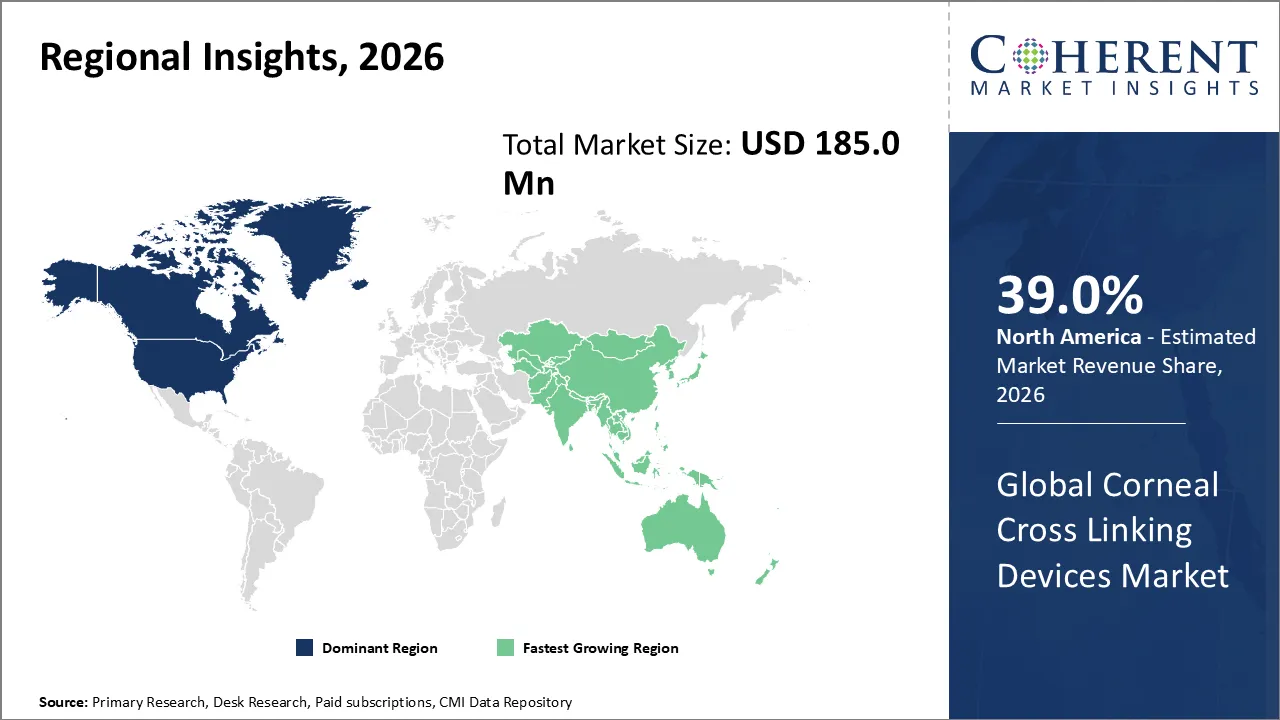
- North America is projected to hold the largest revenue share of 39.0% in the global market in 2026. Established specialist practices, commercial access to approved CXL systems, and procedural reimbursement infrastructure support regional demand. Testifying to the financial support availability, in an April 2025 article, the U.S. commercial health insurance plans representing over 95% of commercially insured individuals recognized cross linking using the FDA-approved iLink system as a covered service.
- Asia Pacific is estimated to exhibit the fastest growth through 2026-2033. Expanding ophthalmic treatment capacity, increased diagnostic awareness, and demand for accessible corneal stabilization procedures increases adoption, particularly in India, China, and other large Asian markets. For instance, in February 2025, Aravind Eye Care System inaugurated five new vision centres and expanded its specialty care infrastructure, including a dedicated cornea clinic in Tirunelveli.
Segmental Insights

Why Do UVA Delivery Systems Dominate the Global Corneal Cross Linking Devices Market?
The UVA delivery systems segment is estimated to hold 57.0% of the global corneal cross linking devices market in 2026. The segment primarily benefits from the clinical importance of precise light delivery during corneal stabilization procedures, where specialized platforms can provide controlled irradiation intensity, exposure duration, and treatment-zone positioning. This allows ophthalmologists to perform cross-linking according to the selected clinical protocol.
Manufacturers are increasingly developing advanced systems compatible with accelerated protocols, oxygen-assisted treatments, and patient-specific irradiation strategies to improve clinical workflow and equipment utilization. A 2025 U.S. clinical trial, initiated by McNeel Eye Center, investigated new irradiation protocols using 9 mW/cm² for 10 minutes and 18 mW/cm² for 5 minutes for treating, to find an alternative to FDA-approved 3 mW/cm². Such research activities illustrate the continuing interest in optimizing irradiation time and energy delivery.
- Current Industry Events of 2026
- Market Size Estimation
- Regional Breakdown
- Competitive Landscape
- Customer Intelligence
- Segmental Analysis
- Pricing Analysis
- Key Market Drivers, Challenges & Future Trends
- Customized Insights Section
Why Does Keratoconus Treatment Represent the Largest Application Segment?
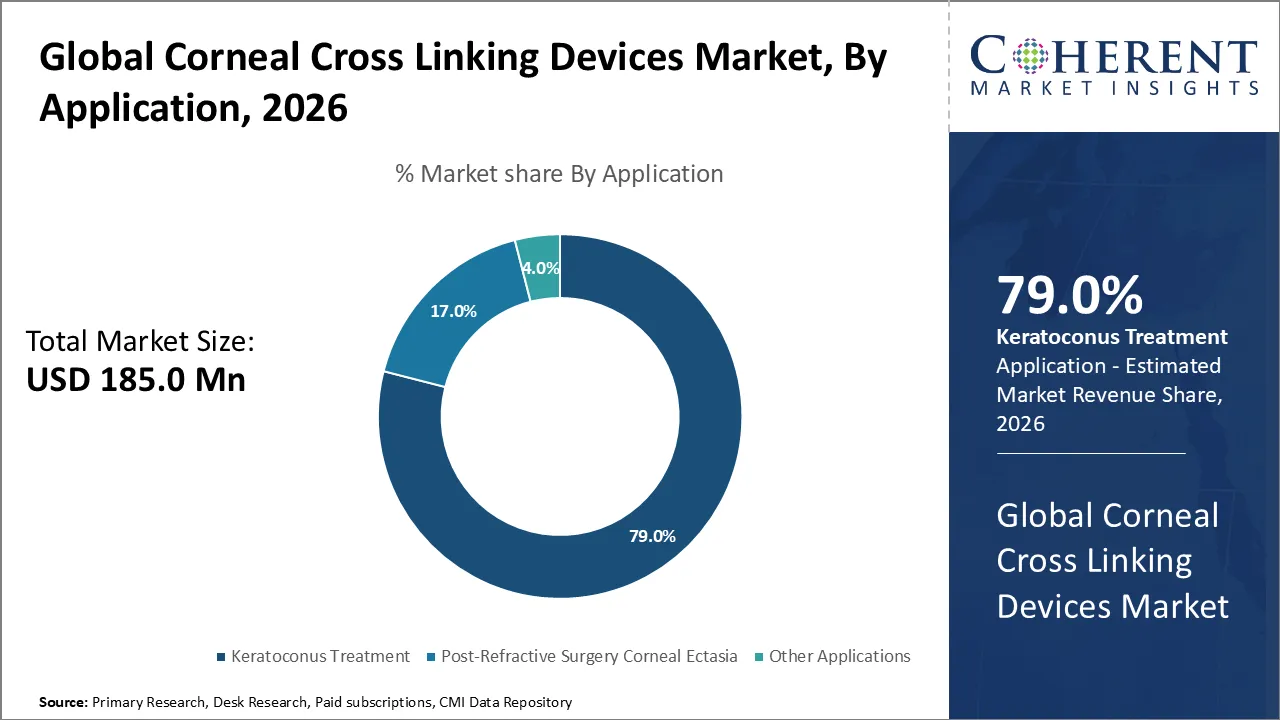
The keratoconus treatment segment is projected to account for the leading share of 79.0% in revenue generation from the global corneal cross linking devices market in 2026. Keratoconus progressively alters corneal curvature and thickness, potentially causing irregular astigmatism and reduced visual quality, which raises the need for more complex interventions. On the other hand, corneal cross-linking addresses disease progression by increasing corneal biomechanical stability rather than simply correcting refractive error, making this technology highly suitable for this field of application.
Currently, greater use of anterior-segment imaging and patient monitoring is allowing specialists to identify progressive disease earlier. This increases the sector’s relevance in adolescent and young adult populations, where clinical progression may be more pronounced. Evidencing such developments, in October 2026, Glaukos announced positive topline results from a three-year extension study, (GLK-202-03), evaluating the durability and safety of its groundbreaking epi-on corneal cross-linking therapy, Epioxa treatment, for treating keratoconus.
Why Do Ophthalmology Clinics and Eye Centers Lead Market Demand?
Ophthalmology clinics and eye centers are expected to contribute 46.0% of the global market in 2026. Their position is consolidated by the growing availability of dedicated corneal services and the relatively focused equipment requirements for outpatient cross-linking treatment. Demonstrating substantial adoption within these facilities, results from a 2024 survey of corneal specialists in India, displayed through the U.S. National Library of Medicine (NLM), found 92.7% of 234 participating specialists performed corneal cross-linking (CXL).
Besides, specialist clinics often manage the full treatment pathway, including corneal topography, pachymetry, documented progression assessments, CXL treatment, and postoperative monitoring. This integrated approach helps clinicians determine treatment eligibility and reduces the need to refer all patients to larger hospital-based operating facilities.
Current Events and Their Impact on the Corneal Cross Linking Devices Market
Current Event | Description and its Impact |
European Commission Implements Mandatory EUDAMED Registration (May 2026) |
|
U.K. Strengthens Medical Device Post-Market Surveillance (June 2025) |
|
Corneal Cross Linking Devices Market Dynamics
Market Drivers
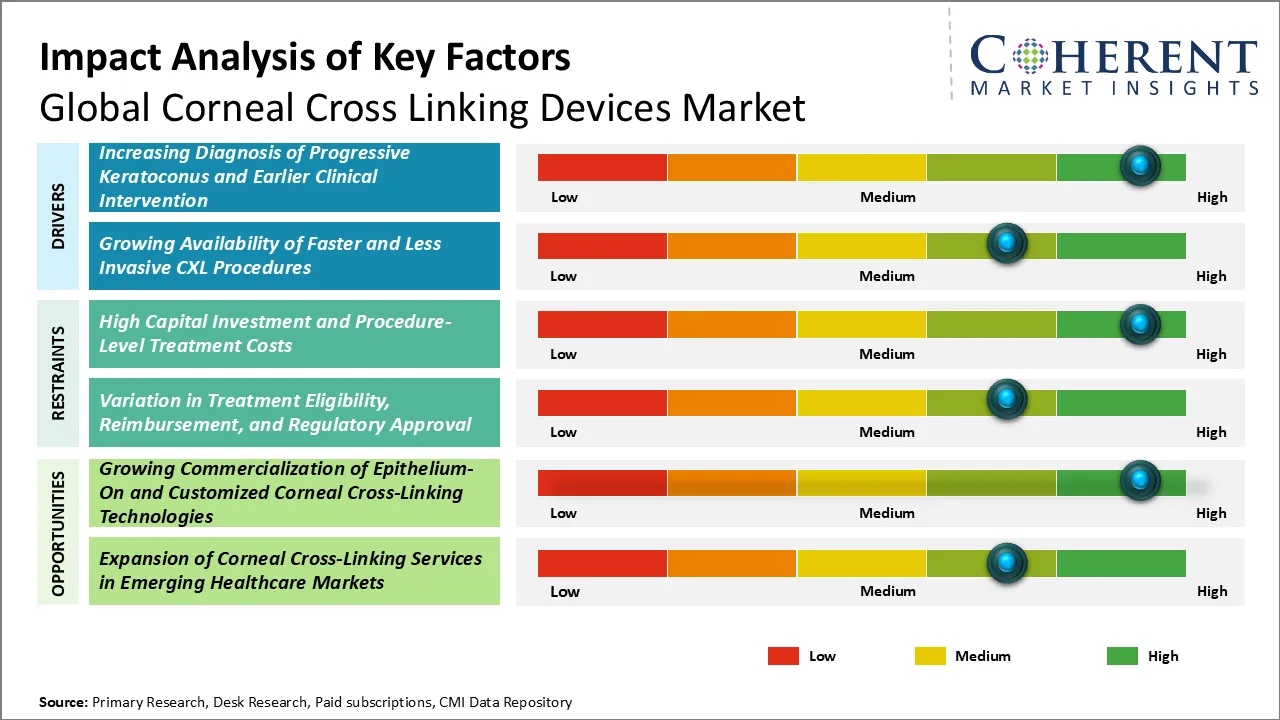
- Increasing Diagnosis of Progressive KC & Earlier Clinical Intervention: Improvements in corneal tomography and biomechanical assessment allow ophthalmologists to recognize subtle curvature changes and monitor progression more precisely. On the other hand, earlier identification expands the population potentially eligible for cross-linking, particularly among adolescents and younger adults. Subsequently, rising awareness of progressive corneal disorders is fostering greater demand for technologies capable of stabilizing corneal structure before severe visual deterioration occurs.
- A 2026 NLM article, citing a 2025 systematic review and meta-analysis, reported a pooled KC prevalence of approximately 289 cases per 100,000 people across the globe, with marked variation between populations.
- Growing Availability of Faster & Less Invasive CXL Procedures: Advances in light-delivery technology and riboflavin administration are supporting the development of treatment protocols intended to reduce procedural burden. In addition, accelerated UVA exposure, oxygen supplementation, and epithelial-preserving approaches are attracting clinical attention on account of their potential in improving patient experience and treatment workflow, when backed by appropriate efficacy and safety evidence.
- In this regard, a 2026 NLM study introduced a customized transepithelial cross-linking (TE-CXL) with oxygen supplementation for patients with progressive KC. The assessment involved 74 eligible participants and reported a decrease in maximum keratometry (Kmax) values from 56.2 D at baseline to 54.9 D, 54.4 D, and 54.2 D at 1, 2, and 3 years, respectively.
Corneal Cross Linking Devices Market Trends
- Increasing Adoption of Customized Irradiation Protocols: Ophthalmic researchers are evaluating techniques that adjust UV exposure according to corneal characteristics rather than applying identical irradiation to every patient. A 2026 investigation, indexed by the NLM, published comparative data of two different UV energy levels using anterior-segment optical coherence tomography (AS-OCT) and in-vivo confocal microscopy (IVCM) in evaluating demarcation line depth (DLD) after performing CXL. The results recognized the superiority of IVCM in visibility across different energy levels and during follow-up at various time points.
- Integration of Cross-Linking with Refractive Surgery: Some specialized refractive centers are investigating prophylactic cross-linking combined with LASIK in selected patients at elevated risk of postoperative ectatic changes. A March 2026 Chinese clinical study, cited by the NLM, evaluated 40 patients (80 eyes) receiving combined FS-LASIK and cross-linking. The findings recognized FS-LASIK Xtra as a potential alternative for effective myopic correction, along with improvements in corneal morphology and biomechanics, in borderline cases during 2-year visit.
- Growing Focus on Long-Term Corneal Stability and Treatment Outcomes: Hospitals and manufacturers are placing greater emphasis on follow-up imaging, visual-function assessments, retreatment considerations, and the duration of therapeutic response, encouraging closer integration between CXL treatment platforms and longitudinal clinical assessment. For instance, in October 2025, Epion Therapeutics raised USD 18.5 million through a financing round led by OCULUS Optikgeräte GmbH and AXA IM Alts. The collaboration brings together OCULUS's established Pentacam corneal diagnostic capabilities and Epion's cross linking treatment technology, while supporting development and manufacturing of the EpiSmart UVA therapeutic device.
Regional Insights
Why Does North America Lead the Global Corneal Cross Linking Devices Market?
North America is predicted to capture 39.0% share in the global corneal cross linking devices market in 2026. The region’s leadership is largely anchored to the presence of established ophthalmology practices, specialized corneal treatment services, clinical research activity, and supportive regulatory framework. Documenting substantial local CXL therapy demand, in 2025, Glaukos generated a lucrative sales value of USD 75.0 million for its Photrexa in the U.S., compared with USD 68.6 million in 2024.
Further regional analysis revealed that the U.S. remains the principal contributor to the entire demand base of North America. Its commercial environment includes ophthalmic device manufacturers, corneal specialists, dedicated treatment centers, and organizations engaged in evaluating new therapeutic approaches. It also marked a considerable increase in attention to early KC management through diagnostic imaging as part of routine treatment planning.
Why Is Asia Pacific Expected to Record the Fastest Growth?
Asia Pacific is projected to register the highest growth rate through 2026-2033, which is attributed to the region’s expanding ophthalmic capacity, increasing specialization in corneal disorders, and wider availability of surgical & diagnostic technologies. A 2026 Japanese clinical investigation followed 74 individuals receiving customized transepithelial cross-linking with supplemental oxygen, indicating continuing development of advanced CXL treatment approaches within the region.
Particularly, India and China represent important opportunities for regional participants due to their large patient populations and expanding private ophthalmology networks. Evidencing the same, a 2026 systematic review (published by NLM) on Indian keratoconus epidemiology cited a large hospital-based investigation involving 2,384,523 patients, of whom 14,749 were identified with KC in at least one eye, equivalent to approximately 0.62% of the study population. Whereas Japan contributes through its network of advanced ophthalmic clinical research, technology development, and customized corneal treatment protocols.
Global Corneal Cross Linking Devices Market Outlook for Key Countries
How Is the U.S. Advancing the Transition to Epithelium-On Corneal Cross-Linking?
The U.S. corneal cross linking devices market is influenced by its established regulatory pathway for drug-device combination treatments and the availability of dedicated corneal specialist practices. The favorability of the nation’s regulatory framework in this aspect can be evidence by the FDA receiving 645 combination product submissions in FY2024, with no formal dispute resolution requests, which further resulted in a 0% formal dispute rate.
To succeed in such a competitive landscape, manufacturers are investing heavily in differentiating their offerings through improvements in treatment comfort, procedural efficiency, and clinical outcomes. Newer treatment methods may create additional commercial opportunities, depending on physician adoption, reimbursement, and patient eligibility.
How Is Germany Supporting Advanced Corneal Treatment and Clinical Evaluation?
Germany's strong positioning in the Europe corneal cross linking devices market originates from its established ophthalmic clinical infrastructure and an active medical technology ecosystem. Tracing the continued investment interest in the nation's specialized ophthalmic infrastructure, in September 2025, Threestones Capital acquired an ophthalmology facility, Bellevue Eye Clinic, situating in Kiel, Germany. The country's regulatory environment also encourages technology suppliers to maintain detailed device documentation and clinical evidence.
As specialist centers in Germany are emphasizing on corneal stabilization outcomes, treatment effectiveness, and the role of advanced imaging in postoperative monitoring, manufacturers with established EU conformity assessment processes and reliable distributor can be better positioned to address institutional equipment procurement requirements. Exemplifying such activities, a 2025 study involving the Germany-based Hamburg Vision Clinic examined quality-of-life outcomes in patients with progressive KC receiving epi-off CXL.
How Is the U.K. Strengthening Corneal Cross-Linking Services?
The U.K. corneal cross linking devices market is empowered by domestic availability of specialist ophthalmology services, corneal treatment pathways, and clinical monitoring practices. The National Health Service (NHS) plays an important role in providing such a wide access to appropriate procedures, while private specialist clinics contribute to additional treatment capacity. Testifying to the broadening operational service provision, an NHS recruitment notice published in October 2026 described corneal cross-linking and postoperative service responsibilities involving at least two to three clinical sessions weekly.
Greater emphasis on safety surveillance and outcome monitoring is further encouraging medical device manufacturers to provide reliable servicing arrangements, clinical documentation, and appropriate training for treatment teams. For instance, in January 2026, Grafton Optical signed an exclusive distribution partnership with Visionix across the U.K. and Ireland for advanced ophthalmic imaging systems, including Optovue SOLIX, Optovue iVue 80, and Optovue Autofusion.
Why Is India Becoming an Important Emerging Market for Corneal Cross-Linking Devices?
India's corneal cross linking devices market is gaining traction through its expanding specialist hospital networks, increasing diagnostic access, and growing awareness of corneal conditions among younger patients. Displaying massive robust expansion in the country’s ophthalmic networks, in June 2026, L V Prasad Eye Institute (LVPEI) inaugurated its 285th vision centre at Lepakshi, Andhra Pradesh to improve access to diagnostic services and specialist corneal treatment referrals.
Nationwide demand is particularly relevant for multispecialty eye hospitals and dedicated corneal centers that can integrate treatment with tomography, contact lens services, and follow-up management. Moreover, India's large ophthalmic care ecosystem creates opportunities for suppliers offering scalable equipment platforms, training, service support, and cost-effective treatment protocols.
How Is Japan Contributing to Innovation in Customized Corneal Cross-Linking?
Japan's corneal cross linking devices market is shaped by advanced ophthalmic practice, research-oriented specialist centers, and expertise in precision imaging & medical instrumentation. Such an extensive clinical research environment signal continuation of localized development in treatment platforms that combine corneal structural measurements with individualized procedural settings.
Furthermore, clinical investigation of personalized treatment approaches is gathering interest in commercializing advanced CXL systems that are capable of modifying irradiation patterns and incorporating oxygen supplementation. For instance, in August 2026, NIDEK renewed its global strategic partnership with HOYA Vision Care to accelerate integrated ophthalmic technology development. The collaboration focuses on advancing diagnostic capabilities, connected clinical workflows, and personalized eye care solutions.
How Is the Development of Patient-Specific Cross-Linking Creating New Market Opportunities?
Conventional protocols generally rely on standardized irradiation patterns, while customized approaches seek to account for differences in corneal curvature, thickness, and biomechanical characteristics. Thus, patient-specific corneal cross-linking represents a lucrative opportunity to create new avenues for manufacturers developing advanced UVA treatment platforms.
Specifically, manufacturers capable of integrating programmable irradiation, corneal imaging information, and treatment planning software have better chances in securing long-term procurement partnerships from high-value specialist centers. This approach also has the potential to enable more precisely targeted interventions while helping clinicians monitor changes in corneal stability.
Highlighting how measurement-based optimization could benefit future platform development, in May 2025, Visionix launched new corneal topography module for its ultra-high-speed, multimodal optical coherence tomography (OCT) platform, Optovue Solix FullRange. This combination of OCT, OCT angiography, and corneal topography enable detailed assessment of anterior and posterior corneal surfaces while differentiating epithelial and stromal structures.
Market Players, Key Development, and Competitive Intelligence
Key Developments
- In November 2026, Epion Therapeutics announced the first peer-reviewed publication from its Phase III clinical program for the investigational EpiSmart epithelium-on corneal cross-linking system. The publication represents an important milestone in building clinical evidence for alternative keratoconus treatment technologies.
- In August 2026, TECLens, Inc. secured USD 10 million in Series A2 extension financing to advance clinical development of its proprietary quantitative CXL technology, supporting expansion of its first-in-human clinical program and further development of the CXLens System, which delivers personalized ultraviolet-light patterns for non-invasive refractive correction.
Competitive Landscape
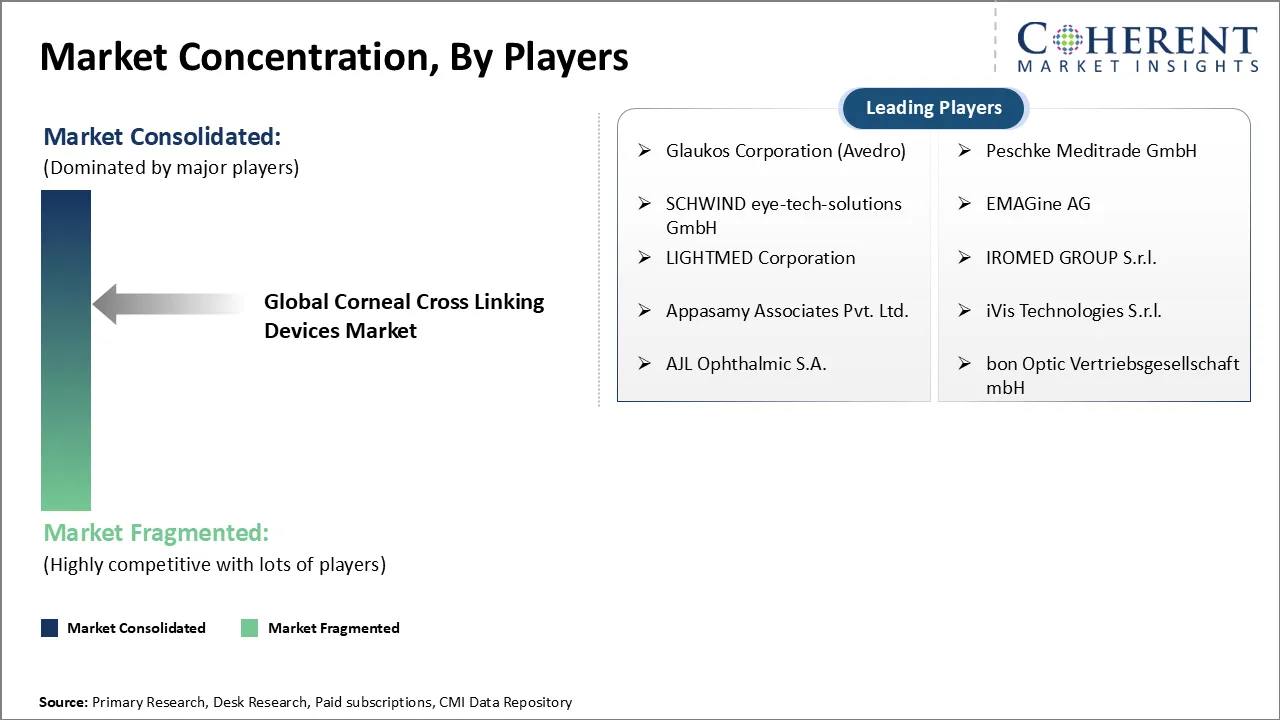
The global corneal cross linking devices market is moderately consolidated by the presence of companies specializing in ultraviolet irradiation systems, integrated cross-linking platforms, and ophthalmic treatment technologies. As a result, their competitive positioning differs according to treatment platform design, regional availability, and ophthalmic equipment integration. Meanwhile, manufacturers competing in accelerated and conventional CXL systems can differentiate through equipment usability, protocol compatibility, clinical training, and operating costs.
Competition is further influenced by system performance, the range of supported treatment protocols, regulatory authorization, procedural costs, and service network availability. For instance, Glaukos Corporation has a differentiated U.S. position through its corneal cross-linking therapies and associated device systems. Besides, Peschke Meditrade GmbH and SCHWIND eye-tech-solutions GmbH are also notable participants in cross-linking technology.
Furthermore, the commercial development of epi-on treatment is likely to increase the importance of integrated drug-device systems. Exemplifying participation following this approach, in April 2026, Regensight received funding from Lazio Innova under the STEP Lazio initiative for its KERANOSTICS project. This was particularly intended to support the development and clinical validation of a combination product integrating a 0.22% riboflavin ophthalmic formulation with a theranostic UVA medical device for personalized treatment of progressive keratoconus.
Top Manufacturers and Notable Products/Solutions in the Corneal Cross Linking Devices Market
Company / Manufacturer | Notable Product or Technology | Key Features / Market Relevance |
Glaukos Corporation / Avedro | KXL System | UVA irradiation platform associated with Photrexa-based CXL treatment and established epi-off treatment applications |
Glaukos Corporation | O₂n System with Epioxa | FDA-approved epithelium-on treatment configuration incorporating oxygen supplementation and specified riboflavin solutions |
Peschke Meditrade GmbH | CCL-VARIO platform | Dedicated corneal cross-linking equipment associated with conventional and accelerated treatment approaches |
SCHWIND eye-tech-solutions GmbH | Corneal cross-linking technology | Ophthalmic laser and corneal treatment technology integration; specific available configurations and authorizations require market-by-market confirmation |
Market Report Scope
Corneal Cross Linking Devices Market Report Coverage
Report Coverage | Details | ||
Base Year: | 2025 | Market Size in 2026: | USD 185.0 Mn |
Historical Data for: | 2020 to 2024 | Forecast Period: | 2026 to 2033 |
CAGR: | 9% | 2033 Value Projection: | USD 338.2 Mn |
Geographies covered: |
| ||
Segments covered: |
| ||
Companies covered: | Glaukos Corporation (Avedro); Peschke Meditrade GmbH; SCHWIND eye-tech-solutions GmbH, EMAGine AG, LIGHTMED Corporation, IROMED GROUP S.r.l., Appasamy Associates Pvt. Ltd., iVis Technologies S.r.l., AJL Ophthalmic S.A., and bon Optic Vertriebsgesellschaft mbH. | ||
Growth Drivers: |
| ||
Restraints & Challenges: |
| ||
Analyst Opinion (Expert Opinion)
- The global corneal cross linking devices market is moving toward more specialized and patient-friendly treatment technologies. Demand is expected to favor platforms offering consistent UV energy delivery, efficient treatment workflows, and compatibility with clinically supported procedures. The FDA's 2025 approval of an epi-on drug-device combination represents an important technological milestone, but the adoption of alternative systems will remain dependent on clinical evidence and market-specific regulatory authorization.
- Commercial opportunities extend beyond new equipment placements to treatment-linked recurring revenue. Riboflavin formulations, compatible disposable components, servicing, clinical training, and device upgrades can contribute to manufacturers' long-term commercial models. For instance, in April 2026, Glaukos announced that the U.S. Centers for Medicare and Medicaid Services assigned a permanent reimbursement code, J2789, to its Epioxa corneal cross linking therapy, effective from July of the same year.
- Asia Pacific offers considerable expansion potential, while North America and Europe are expected to remain important established markets. Manufacturers targeting developing regions should prioritize local clinical partnerships, distributor training, service availability, and procedure affordability. Companies offering robust equipment alongside education and technical support may achieve stronger penetration among specialist eye-care providers.
Speak to the analyst
Want personalized insights?
Take the findings above to one of our principal consultants, or have the report rebuilt around the segments, geographies and competitors you actually track.
Market Segmentation
- By Product Type (Revenue, USD Mn, 2021-2033)
- UVA Delivery Systems
- Conventional Cross-Linking Systems
- Accelerated Cross-Linking Systems
- Customized and Oxygen-Assisted Cross-Linking Systems
- Riboflavin Solutions and Procedure Consumables
- Epithelium-Off Riboflavin Solutions
- Epithelium-On Riboflavin Formulations
- Other Cross-Linking Procedure Consumables
- UVA Delivery Systems
- By Application (Revenue, USD Mn, 2021-2033)
- Keratoconus Treatment
- Post-Refractive Surgery Corneal Ectasia
- Other Applications
- By End User (Revenue, USD Mn, 2021-2033)
- Ophthalmology Clinics and Eye Centers
- Hospitals
- Ambulatory Surgical Centers
- By Region (Revenue, USD Mn, 2021-2033)
- North America
- U.S.
- Canada
- Latin America
- Brazil
- Mexico
- Argentina
- Rest of Latin America
- Europe
- Germany
- U.K.
- France
- Italy
- Spain
- Russia
- Rest of Europe
- Asia Pacific
- China
- India
- Japan
- Australia
- South Korea
- ASEAN
- Rest of Asia Pacific
- Middle East
- GCC
- Israel
- Rest of Middle East
- Africa
- South Africa
- Central Africa
- North Africa
- North America
- Key Players
- Glaukos Corporation (Avedro)
- Peschke Meditrade GmbH
- SCHWIND eye-tech-solutions GmbH
- EMAGine AG
- LIGHTMED Corporation
- IROMED GROUP S.r.l.
- Appasamy Associates Pvt. Ltd.
- iVis Technologies S.r.l.
- AJL Ophthalmic S.A.
- bon Optic Vertriebsgesellschaft mbH
Sources
Primary Research Interviews
- Corneal surgeons and keratoconus treatment specialists
- Ophthalmologists specializing in corneal and refractive surgery
- Corneal cross-linking device manufacturers and technology developers
- UVA irradiation system manufacturers and product development executives
- Riboflavin formulation manufacturers and ophthalmic pharmaceutical specialists
- Ophthalmology clinic directors and specialized eye hospital administrators
- Ophthalmic medical equipment distributors and procurement managers
- Clinical researchers specializing in corneal biomechanics and tomography
- Regulatory affairs specialists in ophthalmic medical devices
- Healthcare reimbursement and ophthalmic treatment accessibility experts
- Key opinion leaders (KOLs) in corneal cross-linking and keratoconus management
Databases
- U.S. National Library of Medicine (NLM) – PubMed and PubMed Central
- U.S. Food and Drug Administration (FDA) – Medical Device and Drug Approval Databases
- ClinicalTrials.gov – Corneal Cross-Linking Clinical Trials Registry
- U.S. National Institutes of Health (NIH) – Research and Clinical Studies Database
- European Commission – EUDAMED Medical Device Database
- U.K. Medicines and Healthcare products Regulatory Agency (MHRA)
- U.S. Centers for Medicare & Medicaid Services (CMS)
- World Health Organization (WHO) – Global Health Observatory
- National Center for Biotechnology Information (NCBI)
- U.S. Securities and Exchange Commission (SEC) – EDGAR Filings Database
- World Intellectual Property Organization (WIPO) – PATENTSCOPE
- India Ministry of Health and Family Welfare – National Eye Care Program Data
Magazines
- Ophthalmology Times
- EyeWorld
- CRST Global – Cataract & Refractive Surgery Today
- Review of Ophthalmology
- Ophthalmology Management
- The Ophthalmologist
- Modern Optometry
- Ophthalmology Breaking News
- Medical Device Network
- MedTech Dive
Journals
- Cornea
- American Journal of Ophthalmology
- Ophthalmology
- Journal of Cataract & Refractive Surgery
- Eye
- Indian Journal of Ophthalmology
- BMC Ophthalmology
- Journal of Refractive Surgery
- Translational Vision Science & Technology
- Investigative Ophthalmology & Visual Science
- Scientific Reports
- Frontiers in Medicine
Newspapers
- The New York Times
- Financial Times
- The Wall Street Journal
- Reuters
- The Guardian
- The Economic Times
- The Japan Times
Associations
- American Academy of Ophthalmology (AAO)
- American Society of Cataract and Refractive Surgery (ASCRS)
- European Society of Cataract and Refractive Surgeons (ESCRS)
- Association for Research in Vision and Ophthalmology (ARVO)
- Cornea Society
- Asia-Pacific Academy of Ophthalmology (APAO)
- International Society of Refractive Surgery (ISRS)
- All India Ophthalmological Society (AIOS)
- European Association for Vision and Eye Research (EVER)
- Royal College of Ophthalmologists (RCOphth)
- International Agency for the Prevention of Blindness (IAPB)
Public Domain Sources
- Company Annual Reports and Investor Presentations
- Glaukos Corporation – Corneal Health Business Updates and Epioxa Commercialization Announcements
- Epion Therapeutics – EpiSmart Clinical Development and Financing Announcements
- TECLens, Inc. – Quantitative Corneal Cross-Linking Technology and Investment Announcements
- Regensight – KERANOSTICS Technology Development and Funding Announcements
- OCULUS Optikgerate GmbH – Ophthalmic Diagnostic Technology and Strategic Partnership Announcements
- Visionix – Corneal Topography and Anterior Segment Imaging Product Announcements
- U.S. FDA – Corneal Cross-Linking Treatment Approvals and Regulatory Publications
- U.S. Centers for Medicare & Medicaid Services – Ophthalmic Procedure Reimbursement and Coverage Publications
- European Commission – Medical Device Regulation and EUDAMED Publications
- U.K. MHRA – Medical Device Post-Market Surveillance Regulations
- National Health Service (NHS) – Corneal Cross-Linking Clinical Services and Treatment Guidelines
- L V Prasad Eye Institute – Ophthalmic Infrastructure Expansion and Clinical Research Publications
- Aravind Eye Care System – Vision Centre Expansion and Corneal Care Initiatives
- University and Hospital-Based Keratoconus Epidemiological Studies
- Clinical Research Publications on Accelerated and Epithelium-On Corneal Cross-Linking
- Government Healthcare Infrastructure and Ophthalmic Treatment Accessibility Reports
- Patent Publications Related to UVA Irradiation and Customized Corneal Cross-Linking Technologies
Proprietary Elements
- CMI Data Analytics Tool
- Proprietary CMI Existing Repository of Information for the Last 10 Years
Get access to 250+ pages report
Every segment, forecast, competitor profile and data table behind the analysis above — available for instant download.
- ESOMAR Member
- ISO 9001:2015 Certified
- D-U-N-S Registered
- GDPR & CCPA Compliant
Frequently Asked Questions
The global market is estimated at USD 185.0 Mn in 2026 under the analytical market model used in this draft.
The market is projected to reach approximately USD 338.2 Mn by 2033.
The forecast CAGR is approximately 9 %.
UVA delivery systems are estimated to lead, accounting for 57.0% of global revenue in 2026.
Treatment of progressive keratoconus is the leading application, with an estimated 79.0% share in 2026.
Ophthalmology clinics and eye centers are projected to account for approximately 46.0% of market revenue in 2026.
North America is estimated to lead the global market with a 39.0% share in 2026.