

Global Cosmetics and Personal Care Ingredients Market Size and Forecast – 2026 to 2033
The global Cosmetics and Personal Care Ingredients Market is estimated to be valued at USD 11.23 Bn in 2026 and is expected to reach USD 15.85 Bn by 2033, exhibiting a compound annual growth rate (CAGR) of 5.0% from 2026 to 2033. The market growth is primarily driven by increasing demand for high-performance skincare actives, biotechnology-derived ingredients, and multifunctional cosmetic formulations. According to Cosmetics Europe, European cosmetics and personal care retail sales reached EUR 110 Bn in 2025, with skincare accounting for EUR 32.3 Bn, indicating substantial downstream demand for cosmetic ingredients.
Key Takeaways of the Global Cosmetics and Personal Care Ingredients Market
- The surfactants segment is expected to dominate the market with an estimated 24% share in 2026. The segment’s growth is driven by rising demand for mild cleansing formulations, biodegradable surfactants, sulfate-free personal care products, and multifunctional cleansing ingredients. On April 14, 2026, Eastman launched Kalidex, a readily biodegradable foam booster and thickener for sulfate-free formulations.
- The emollients segment is projected to lead the application category with an estimated 27.0% market share in 2026. Growth is supported by increasing demand for skin-conditioning ingredients, moisturizing formulations, natural-origin oils, and sustainable alternatives to conventional silicones. On January 14, 2025, BASF highlighted its climate-adaptive skincare formulations incorporating Cetiol Ultimate and Cetiol iSan, sustainable emollients developed as alternatives to volatile silicones.
- The skincare segment is anticipated to dominate the end-use category with an estimated 38.0% market share in 2026. The segment’s expansion is driven by increasing consumer expenditure on facial care, anti-aging formulations, skin-barrier repair products, and scientifically validated active ingredients. According to Circana’s 2026 B-Book, prestige skincare sales increased by 15% in China, 13% in Latin America, and 4% in Europe during 2025, reflecting strong consumer demand across major beauty markets.
- Asia Pacific is projected to lead the cosmetics and personal care ingredients market in 2026 with a forecasted market share of 35.0%. Growth in the regional market is driven by increased cosmetics manufacturing, rising demand for multifunctional skincare ingredients and increasing adoption of botanical extracts and specialty surfactants. According to Circana’s 2026 B-Book, China’s prestige beauty e-commerce sales jumped 16% in January-November 2025, with skincare sales up 15% and fragrance sales up 26%.
- North America is expected to account for an estimated 29.0% market share in 2026 and grow further during the forecast period. Increasing demand for clinically proven skincare ingredients, premium anti-aging formulations, and multifunctional cosmetic chemicals is a key factor driving the regional market growth. U.S. prestige beauty sales rose 7% to USD 17.1 Bn in the first half of 2026, with prestige skincare sales up 9%. Sales of body care and sun care increased 16% and 19%, respectively, creating opportunities for moisturizing agents, UV filters, emollients and specialty cosmetic ingredients.
Segmental Insights
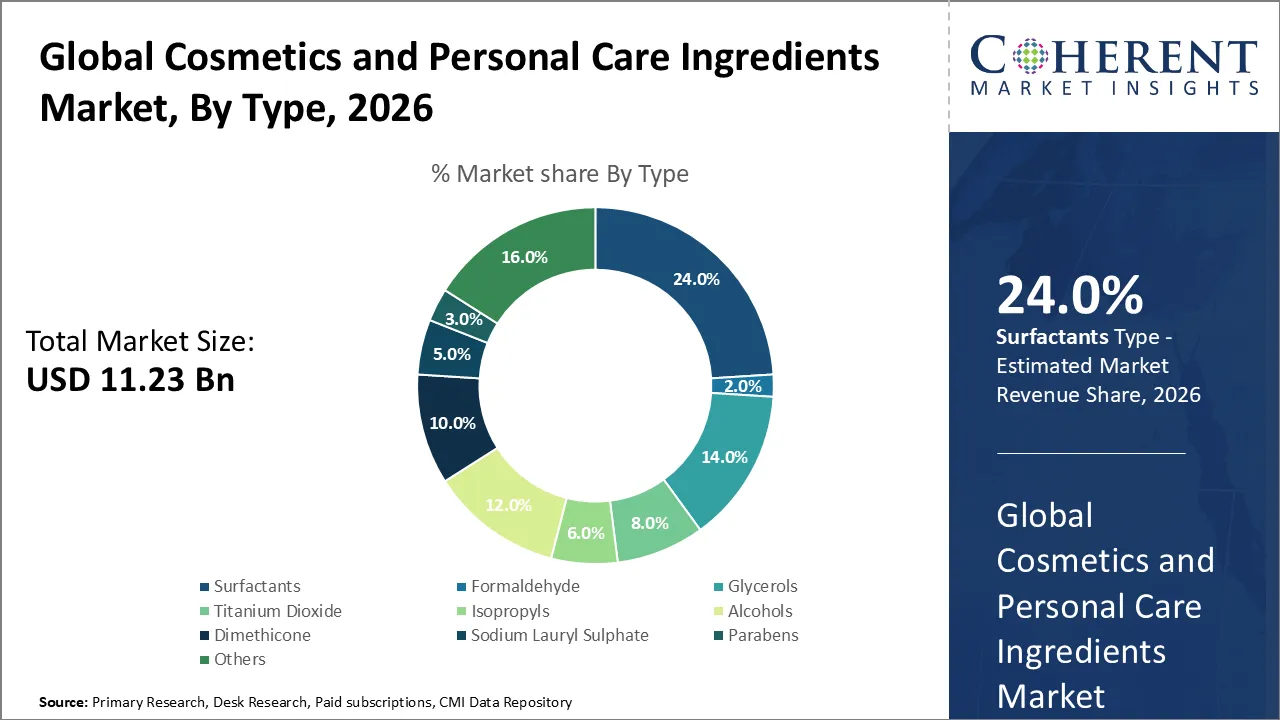
Why Do Surfactants Dominate the Global Cosmetics and Personal Care Ingredients Market?
The surfactants segment is projected to hold a 24% share of the global cosmetics and personal care ingredients market by 2026. Surfactants are used widely in shampoos, facial cleaners, body washes and other personal care products because they can clean, foam, emulsify and solubilize. The growth of the segment is attributed to the rising demand for sulfate-free cleansing systems, biodegradable ingredients and mild formulations for sensitive skin. Manufacturers are working on amino acid-based surfactants, biosurfactants and alternatives made from renewable feedstocks to increase product tolerability and environmental performance. Growing consumer demand for skin-barrier-friendly cleansing products is also pushing manufacturers to add specialty surfactants to premium formulations.
On April 14, 2026, Clariant launched Hostapon CT solid, a salt-free taurate surfactant with 90% active content and an 80% Renewable Carbon Index. The company cited Mintel data that showed dry-skin claims in new cosmetic product launches increased from 0.6% in 2023 to 3.9% in 2025, indicating increased demand for gentle cleansing ingredients.
- Current Industry Events of 2026
- Market Size Estimation
- Regional Breakdown
- Competitive Landscape
- Customer Intelligence
- Segmental Analysis
- Pricing Analysis
- Key Market Drivers, Challenges & Future Trends
- Customized Insights Section
Why Do Emollients Lead the Application Category in the Cosmetics and Personal Care Ingredients Market?
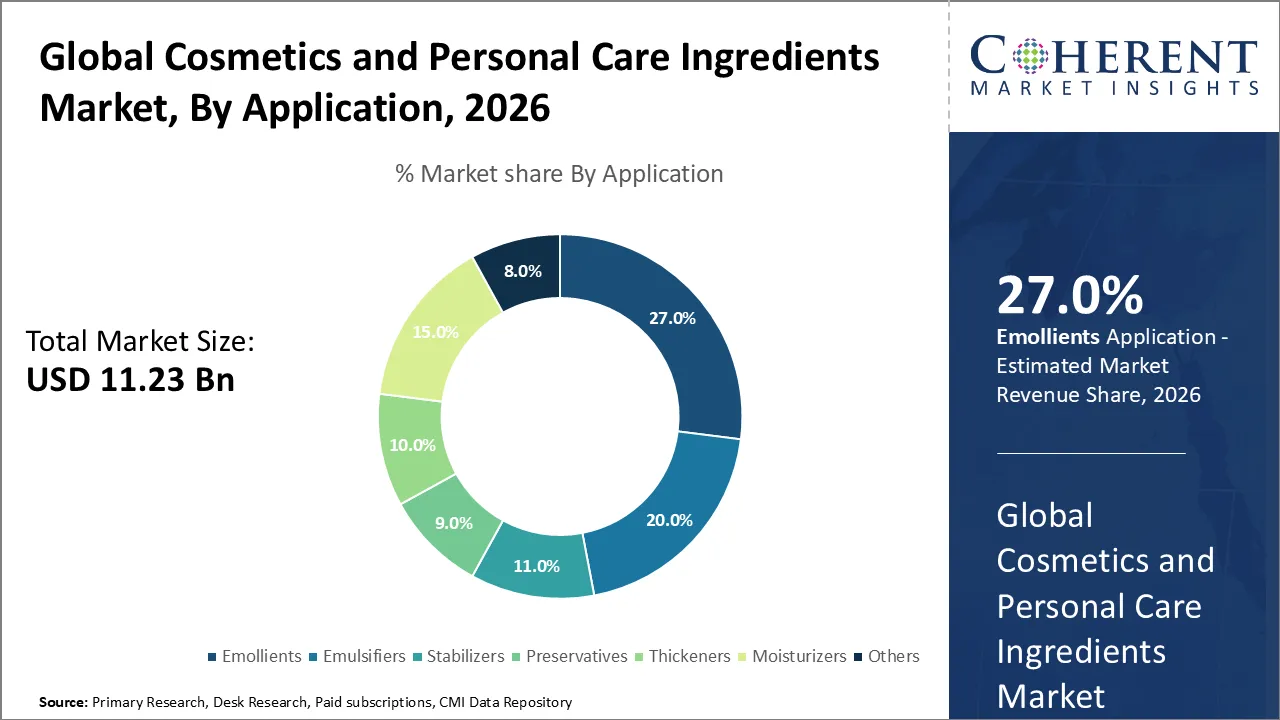
The emollients segment is expected to hold an estimated 27.0% share of the global cosmetics and personal care ingredients market in 2026. Emollients are commonly found in moisturizers, sunscreens, lotions, facial creams and color cosmetics to enhance the softness, spreadability and sensory performance of the skin. Demand for skin-barrier supporting formulations, lightweight textures and natural-origin skincare products is supporting the segmental growth. But there's a lot of interest in biodegradable esters and plant-derived oils and emollients that can replace silicone, to meet sustainability requirements without sacrificing formulation performance. This demand is further strengthened by the development of multifunctional emollients that provide conditioning, compatibility with UV filters and improved sensory properties.
On November 3, 2026, Dow introduced four personal care ingredients at in-cosmetics Asia 2026, including EcoSmooth Universal Fluid 2000, a readily biodegradable emollient designed to provide smooth, non-tacky sensory performance in personal care formulations. The company also introduced DOWSIL EL-9400 Hybrid Elastomer Blend with 97% bio-based carbon and an ISO 16128 natural-origin index of 0.86. This is a sign of the increasing innovation in sustainable technologies for cosmetic formulations.
Why Does Skincare Dominate the Global Cosmetics and Personal Care Ingredients Market?
The skincare segment is anticipated to hold around 38.0% share of the global cosmetics and personal care ingredients market in 2026. The growth of the segment is being fueled by surging demand for anti-aging products, facial serums, moisturizers, sunscreens, and dermatologically tested skincare formulations. Consumers are increasingly interested in preventive skin care, skin-barrier repair and products with clinically tested active ingredients. This drives manufacturers to develop sophisticated peptides, hyaluronic acid derivatives, ceramides, antioxidants and biotechnology-derived ingredients. Growing demand for customized skincare and multifunctional formulations is also driving ingredient innovation. Moreover, the increasing emphasis on skin health and protection from environmental stressors is supporting the market for high-end specialty skincare ingredients.
On March 27, 2026, dsm-firmenich announced the launch of ALPAFLOR NEUROSOOTH, a climate-adaptive botanical active that strengthens skin resilience and reduces heat-induced skin stress. The ingredient, which the company claims has been shown to reduce skin redness by 34% vs placebo in stress-induced conditions and transepidermal water loss by 26% under heat-stress conditions after two months of use, is an example of advances in clinically evaluated skincare ingredients.
Current Events and Their Impact on the Cosmetics and Personal Care Ingredients Market
Current Event | Description and its Impact |
European Union Implements New Restrictions on Carcinogenic, Mutagenic, and Reprotoxic Cosmetic Ingredients (May 2026) |
|
U.S. FDA Strengthens Cosmetic Facility Registration and Ingredient Disclosure Implementation Under MoCRA (February–September 2026) |
|
Cosmetics and Personal Care Ingredients Market Dynamics
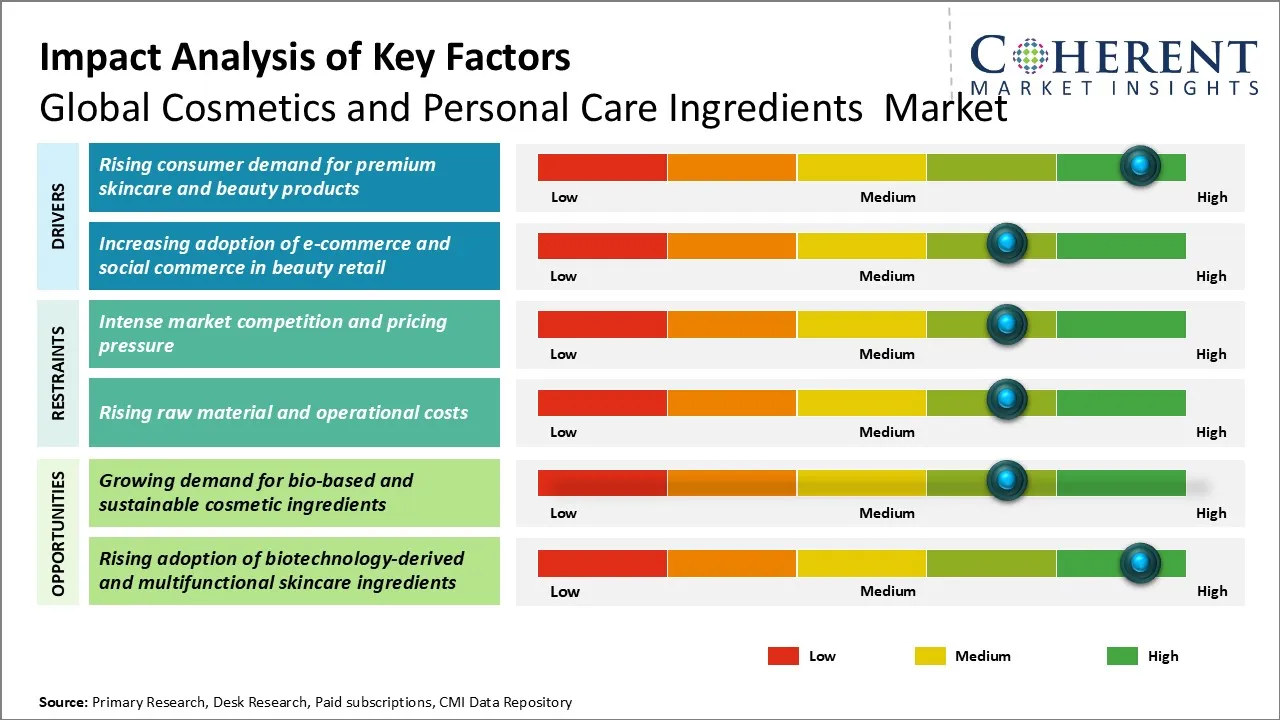
Market Drivers
- Rising demand for clinically proven and multifunctional skincare ingredients: Rising consumer preference for preventive skincare, skin-barrier repair and science-backed beauty products is driving the growth of the global cosmetics and personal care ingredients market. Consumers are looking for formulations that contain peptides, ceramides, hyaluronic acid, antioxidants, and other active ingredients that have been clinically proven. This encourages cosmetic manufacturers to develop multifunctional products that offer hydration, anti-aging effects, skin protection, and better skin tolerance. Demand for specialty emollients, stabilizers, and functional ingredients is also pushed by the growing use of dermocosmetics and targeted skincare treatments. To meet evolving consumer expectations and differentiate premium skincare products, manufacturers are investing in ingredient efficacy testing and advanced formulation technologies.
- According to a Beauty Survey October 2026, 25% of respondents said they had sensitive skin concerns, whereas 19% stated safety for sensitive and reactive skin was their main requirement for dermocosmetics. These results highlight the increasing importance of mild, clinically supported skincare ingredients and formulations.
- Increasing demand for bio-based and sustainable personal care ingredients: Consumers are more conscious of ingredient safety, environmental sustainability and renewable raw materials, leading to the use of bio-based ingredients in cosmetics and personal care formulations. Manufacturers are increasingly replacing conventional petroleum-derived chemicals with biodegradable surfactants, plant-based emollients, renewable oleochemicals, and sustainably sourced botanical extracts. Demand for sulfate-free shampoos, mild facial cleansers, and environmentally responsible personal care products is encouraging ingredient suppliers to develop alternative chemical technologies. Advances in green chemistry and renewable feedstock processing are also improving the performance and commercial feasibility of sustainable ingredients. These developments are expected to expand opportunities for manufacturers offering biodegradable and multifunctional ingredients.
- On March 3, 2026, Sironix Renewables announced the launch of Furasoft-LFS and Furasoft-SF, two bio-based surfactants developed for personal care applications. The ingredients are designed for shampoos, body washes, and hand soaps, offering renewable alternatives to conventional petrochemical surfactants while maintaining formulation performance.
Emerging Trends
- The increasing integration of artificial intelligence into cosmetic ingredient research is transforming molecular screening, formulation development, and ingredient-performance prediction. AI-assisted computational chemistry enables manufacturers to evaluate complex ingredient interactions and improve formulation efficiency. On March 17, 2026, L'Oréal expanded its partnership with NVIDIA to integrate the NVIDIA ALCHEMI machine-learning framework into beauty research. The technology enables scientists to evaluate thousands of formulation variables simultaneously, supporting faster identification of promising ingredient combinations.
- The growing preference for skin longevity and clinically substantiated active ingredients is strengthening demand for advanced peptides, niacinamide, ceramides, and antioxidant formulations. Manufacturers are increasingly focusing on preventive skincare and long-term skin health instead of conventional anti-aging claims. Mintel's Global Beauty Ingredient Trends 2026 identifies NAD+, NMN, signal peptides, and epidermal growth factor as emerging areas of ingredient innovation.
- The rising adoption of multifunctional ingredients is encouraging cosmetic formulators to combine moisturizing, emulsifying, stabilizing, and texture-enhancing properties within fewer raw materials. These formulations can reduce the complexity of the formulation, while improving sensory performance, and product differentiation.
Regional Insights
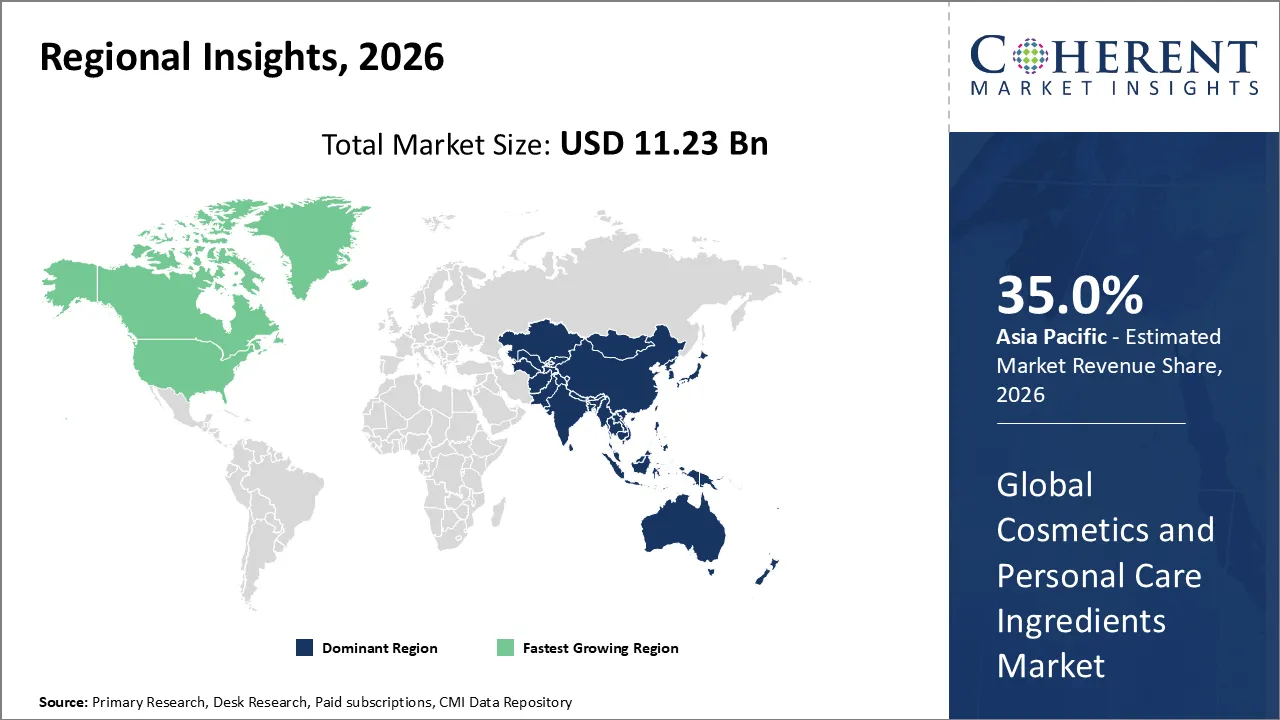
Why Does Asia Pacific Dominate the Global Cosmetics and Personal Care Ingredients Market?
Asia Pacific is anticipated to lead the global cosmetics and personal care ingredients market, with a share of 35.0% in 2026. The region’s leadership is attributed to a large cosmetics manufacturing base, strong chemical production capabilities, and growing demand for skincare and personal care formulations. Regional ingredients are mainly consumed in China, Japan, South Korea and India. In these countries, manufacturers are increasing production of specialty surfactants, emollients, botanical extracts and functional polymers for domestic and international beauty brands. The market development is further facilitated by increasing consumer interest in innovative skincare products, increasing localization of ingredient sourcing and expanding contract manufacturing activities. The region also has integrated chemical supply chains and established exports of cosmetic formulations.
According to Basic Chemicals, Cosmetics & Dyes Export Promotion Council (CHEMEXCIL), exports of cosmetics, soaps and toiletries from India to China increased by about 204% from USD 31 Mn in FY 2024–25 to USD 95 Mn in FY 2025–26. Exports to Singapore also grew by 24% to USD 128 Mn, highlighting the growing regional trade opportunities for cosmetics manufacturers and their ingredient supply chain.
Why Is North America the Fastest-Growing Regional Market for Cosmetics and Personal Care Ingredients?
North America is estimated to constitute an estimated 29.0% of the global cosmetics and personal care ingredients market in 2026 and turn out to be the fastest growing region during the forecast period. The regional market is receiving a boost from growing investment in specialty cosmetic ingredients, biotechnology-derived skincare actives, and high-performance personal care formulations. The U.S. also has a strong ecosystem of ingredient manufacturers, contract formulators, dermatology-focused brands, and research institutions. The rising demand for clean label ingredients, multi-functional emollients, advanced peptides and sustainable surfactants is giving a push to the manufacturers to expand their product portfolio. Canada and Mexico are also contributors to the sector through cosmetics manufacturing, cross-border supply chains, and rising demand for specialized formulation ingredients. Regional market growth is anticipated to be driven by strong industry investment and ingredient innovation.
According to NielsenIQ’s, the U.S. beauty and personal care market generated sales of USD 123.3 billion, up 12.0% year-on-year, U.S. Mid-Year State of Beauty 2026 report published in October 2026. The expansion points to robust downstream demand for skincare actives, surfactants, preservatives and other functional cosmetic ingredients across North America.
Global Cosmetics and Personal Care Ingredients Market Outlook for Key Countries
Why Is the U.S. Emerging as a Major Hub in the Cosmetics and Personal Care Ingredients Market?
The U.S. market for cosmetics and personal care ingredients is being driven by increasing investments in specialty chemical formulations, premium skincare ingredients, and the development of advanced beauty products. Established cosmetics manufacturers, ingredient suppliers and contract formulators support demand for surfactants, emollients, preservatives and biotechnology-derived active ingredients.
According to NielsenIQ consumer analysis in September 2026, U.S. beauty and personal care sales reached USD 150.3 billion for the 52 weeks ending April 18, 2026, an 18% increase from two years ago. Also, 57% of Generation Z’s health and beauty aids spending was on premium products, suggesting opportunities for specialty ingredient makers serving premium beauty brands.
Is China the Next Growth Engine for the Cosmetics and Personal Care Ingredients Market?
The China cosmetics and personal care ingredients market is driven by its large cosmetics manufacturing ecosystem, the emergence of domestic beauty brands and growing investments in sophisticated formulation technologies. Increasingly, manufacturers are adding botanical extracts, functional polymers, mild surfactants and skin-conditioning ingredients to products for consumers. Specialty chemicals are in demand due to growing trends in science-backed skincare, localized beauty formulations and multi-functional personal care products.
Germany Cosmetics and Personal Care Ingredients Market Analysis and Trends
Germany’s cosmetics and personal care ingredients market is characterized by strong chemical manufacturing capabilities, established personal care brands and rising demand for sustainable formulation technologies. The country’s specialty chemical industry is supporting the development of advanced emulsifiers, functional polymers, biodegradable surfactants and ingredients from renewable raw materials. Traceability of ingredients, safety of the formulations and compliance with the European chemical regulations are the points German cosmetics manufacturers are stressing. Increasing consumer inclination toward skin protection, mild cleansing products and natural origin formulations is also driving the adoption of specialized cosmetic ingredients.
According to the German Cosmetic, Toiletry, Perfumery and Detergent Association (IKW) 2025/2026 Annual Report states that sales of skin and facial care products in Germany increased by 11.1% in 2025 and sales of hair care products increased by 8.1%. The association also said 92% of surveyed member companies faced significant cost pressures, highlighting the growing importance of efficient ingredient sourcing and formulation optimization.
U.K. Cosmetics and Personal Care Ingredients Market Analysis and Trends
The UK cosmetics and personal care ingredients market is underpinned by a mature beauty industry, increasing demand for specialty skincare actives and growing innovation in sustainable personal care formulations. To meet changing consumer needs, manufacturers are focusing on multifunctional emollients, natural preservatives, botanical extracts and advanced skin-conditioning ingredients. The country’s cosmetics manufacturing and product development ecosystem fosters collaboration between beauty brands, ingredient suppliers and contract formulation specialists.
In 2025, the U.K. beauty and personal care industry contributed GBP 28.3 billion to the national economy, supported over 595,000 jobs and generated GBP 8.8 billion in tax revenue (British Beauty Council, Value of Beauty 2026 Report, July 2026). Year-on-year, tax contributions were up 7.5%, reinforcing the substantial economic footprint of the industry and the downstream ecosystem that supports consumption of cosmetic ingredients.
Japan Cosmetics and Personal Care Ingredients Market Analysis and Trends
Japan’s cosmetics and personal care ingredients market is driven by a strong demand for high-performance skincare formulations, advanced chemical technologies, and premium personal care products. Japanese manufacturers are very concerned about ingredient purity, product safety, sensory performance, and scientifically validated benefits of the formulation. Growing demand for facial serums, anti-aging products, moisturizing ingredients and specialized skin-conditioning agents are prompting the manufacturers to expand their ingredient portfolio.
According to the Japan Cosmetic Industry Association said on September 17, 2026 that Japan's domestic cosmetics shipments increased by 1.2% in 2025 to JPY 1.391 trillion, a third consecutive year of growth. Skincare products made up 45.2% of the value shipped, while haircare accounted for 26.9%. The shipment value of facial serums was JPY 121.9 billion, the largest single product category, indicating the demand for advanced skincare active ingredients.
How Are the Expansion of Social Commerce and AI-Powered Beauty Shopping Creating New Growth Opportunities in the Cosmetics and Personal Care Ingredients Market?
Growing popularity of social commerce, AI-enabled product recommendations and omnichannel shopping experiences are creating lucrative growth opportunities in the global cosmetics and personal care ingredients market. More and more consumers are discovering skincare, haircare, fragrance and makeup products through social media, beauty influencers and customized digital recommendations. Retailers are launching virtual product consultations, AI-powered beauty assistants and interactive shopping experiences to enhance consumer engagement and ease shopping. Beauty brands are also using livestream shopping, exclusive product launches online and creator-led marketing campaigns to connect with younger consumers and build loyalty. This is pushing retailers to invest in digital infrastructure, personalized product discovery and smooth online-to-offline shopping experiences.
For example, on October 29, 2026, Maybelline New York introduced its Makeup Virtual Try-On experience on ChatGPT, marking the first beauty brand to offer real-time virtual makeup trials directly on the platform. Using L'Oréal's ModiFace technology, the experience allows consumers to get personalized makeup recommendations, test products and shades virtually and discover retail purchasing options in one AI-powered conversation.
Market Players, Key Development, and Competitive Intelligence
Key Developments
- In November 2026, Unilever announced an additional EUR 35 million investment to upgrade its research and development facilities in Mumbai and Bengaluru, India. The investment includes EUR 5 million for a Bio-Futures Partnership focused on biotechnology, microbiome science, and biomanufacturing, supporting future innovation across beauty and personal care products.
- In September 2026, Beiersdorf introduced Eucerin DERMOPURE CLINICAL PROBIOM8, an acne-focused skincare innovation containing a patented cosmetic active based on viable, skin-native probiotics. The launch follows more than 20 years of microbiome research and strengthens the company's dermatological skincare portfolio.
Competitive Landscape
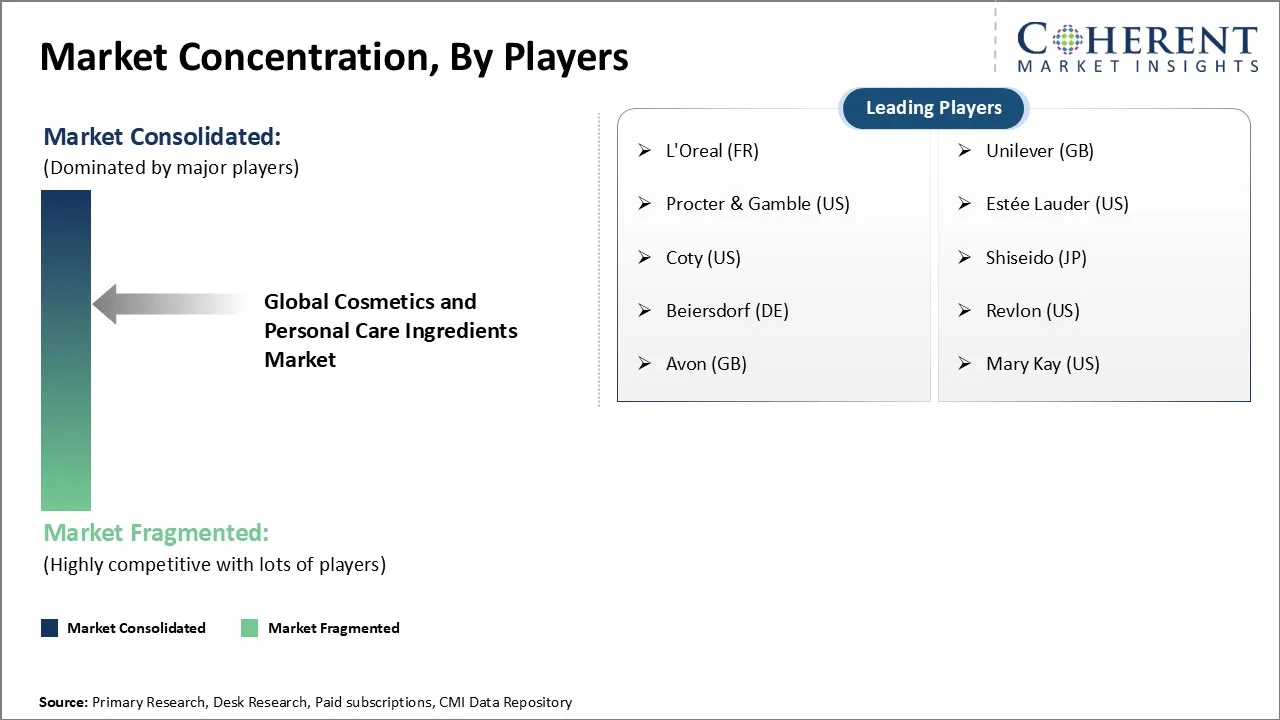
The global cosmetics and personal care ingredients market is highly competitive. The key players in the market are L'Oréal, Unilever, Procter & Gamble, Estée Lauder, Coty, Shiseido, Beiersdorf, Revlon, Avon, and Mary Kay, competing on the basis of product innovation, premiumization, and omnichannel distribution. L’Oréal and Estée Lauder are focused on premium skincare and beauty innovation, whereas Unilever and P&G have solid mass market portfolios. Sephora and Ulta Beauty ramp up competition with personalized shopping, loyalty programs and digital shopping experiences.
Top Manufacturers and Notable Products in the Cosmetics and Personal Care Ingredients Market
Company/Manufacturer | Notable Product/Brand | Key Features |
L'Oréal | L'Oréal Paris Revitalift | Anti-aging skincare, hyaluronic acid formulations, skin hydration, wrinkle reduction, facial serums |
Unilever | Dove Beauty Bar | Moisturizing cleansing, mild surfactants, skin-conditioning ingredients, everyday personal care |
Procter & Gamble | Olay Regenerist | Anti-aging skincare, peptide-based formulations, niacinamide, skin hydration, barrier support |
Estée Lauder Companies | Estée Lauder Advanced Night Repair | Premium skincare serum, hydration, antioxidant protection, skin repair-focused formulation |
Coty | Burberry Goddess Eau de Parfum | Prestige fragrance, vanilla-based scent composition, luxury positioning, premium retail distribution |
Shiseido | SHISEIDO Ultimune Power Infusing Concentrate | Premium skincare, antioxidant-focused formulation, skin resilience, hydration |
Beiersdorf | NIVEA Soft Moisturizing Cream | Lightweight moisturizing, skin conditioning, everyday skincare, mass-market availability |
Revlon | Revlon Super Lustrous Lipstick | Color cosmetics, moisturizing lip formulation, multiple shades and finishes |
Avon | Avon Anew Skincare | Anti-aging skincare, moisturizing formulations, direct-selling distribution |
Mary Kay | Mary Kay TimeWise | Anti-aging skincare, cleansers, moisturizers, skincare routines, beauty consultant distribution |
Market Report Scope
Cosmetics and Personal Care Ingredients Market Report Coverage
Report Coverage | Details | ||
Base Year: | 2025 | Market Size in 2026: | USD 11.23 Bn |
Historical Data for: | 2020 to 2024 | Forecast Period: | 2026 to 2033 |
CAGR: | 5.0% | 2033 Value Projection: | USD 15.85 Bn |
Geographies covered: |
| ||
Segments covered: |
| ||
Companies covered: | L'Oreal (FR), Unilever (GB), Procter & Gamble (US), Estée Lauder (US), Coty (US), Shiseido (JP), Beiersdorf (DE), Revlon (US), Avon (GB), and Mary Kay (US) | ||
Growth Drivers: |
| ||
Restraints & Challenges: |
| ||
Analyst Opinion (Expert Opinion)
- The future of the global cosmetics and personal care ingredients market will increasingly focus on personalized beauty experiences, science-backed products, and integrated digital shopping channels. Retailers are expected to invest in AI-powered product recommendations, virtual beauty consultations, and omnichannel services to improve customer engagement and conversion rates. Demand for clinically validated skincare, premium fragrances, and affordable beauty products will also influence retail strategies. According to Euromonitor International, September 2026, global skincare sales reached USD 175 billion in 2026, while fragrances emerged as the fastest-growing beauty category, expanding by 4.9%. These trends highlight opportunities for retailers offering differentiated products and personalized shopping experiences.
- The largest growth opportunities are expected to emerge from expanding beauty consumption in India, Southeast Asia, and Latin America, alongside continued premium beauty demand in established markets. Retailers should prioritize affordable premium products, localized assortments, and digital distribution strategies to reach consumers across different income groups. According to Euromonitor's World Market for Beauty and Personal Care, September 2026, Southeast Asia's beauty and personal care market is projected to register a 4.4% CAGR during 2026–2030, supported by demographic trends and increasing e-commerce adoption.
- Market participants should prioritize customer retention, personalized engagement, competitive pricing, and seamless integration between physical and online retail channels. Retailers should strengthen loyalty programs, improve inventory availability, offer product recommendations based on consumer preferences, and invest in efficient fulfillment systems. Rather than relying only on promotional discounts, companies should demonstrate product value through ingredient transparency, verified efficacy, and convenient shopping experiences. According to Adobe's September 2026 U.S. Holiday Shopping Forecast, U.S. online cosmetics sales are projected to reach USD 9.2 billion during November–December 2026, increasing 9.5% year-on-year. This projected expansion highlights the importance of digital retail infrastructure, mobile commerce, and targeted promotional strategies for beauty retailers
Speak to the analyst
Want personalized insights?
Take the findings above to one of our principal consultants, or have the report rebuilt around the segments, geographies and competitors you actually track.
Market Segmentation
- By Type (Revenue, USD Bn, 2021-2033)
- Formaldehyde
- Glycerols
- Titanium Dioxide
- Isopropyls
- Alcohols
- Dimethicone
- Sodium Lauryl Sulphate
- Parabens
- Surfactants
- Others
- By Application (Revenue, USD Bn, 2021-2033)
- Emulsifiers
- Stabilizers
- Preservatives
- Thickeners
- Moisturizers
- Emollients
- Others
- By End-Use (Revenue, USD Bn, 2021-2033)
- Skincare
- Haircare
- Fragrance
- Bath & Shower
- Others
- By Region (Revenue, USD Bn, 2021-2033)
- North America
- U.S.
- Canada
- Latin America
- Brazil
- Mexico
- Argentina
- Rest of Latin America
- Europe
- Germany
- U.K.
- France
- Italy
- Spain
- Russia
- Rest of Europe
- Asia Pacific
- China
- India
- Japan
- Australia
- South Korea
- ASEAN
- Rest of Asia Pacific
- Middle East
- GCC
- Israel
- Rest of Middle East
- Africa
- South Africa
- Central Africa
- North Africa
- North America
- Key Players
- L'Oreal (FR)
- Unilever (GB)
- Procter & Gamble (US)
- Estee Lauder (US)
- Coty (US)
- Shiseido (JP)
- Beiersdorf (DE)
- Revlon (US)
- Avon (GB)
- Mary Kay (US)
Sources
Primary Research Interviews
- Cosmetics and personal care ingredients industry experts
- Skincare, haircare, and beauty product manufacturers
- Beauty ingredients chain executives and category managers
- E-commerce and omnichannel ingredients specialists
- Product development and R&D heads from cosmetics companies
- Beauty brand marketing and consumer insights professionals
- Distributors, wholesalers, and ingredients procurement managers
- Key opinion leaders (KOLs) in cosmetics and personal care ingredients
Databases
- World Bank
- Organisation for Economic Co-operation and Development (OECD)
- United Nations Comtrade Database (UN Comtrade)
- Eurostat
- U.S. Census Bureau – Monthly ingredients Trade Survey
- U.S. Bureau of Economic Analysis (BEA)
- UNCTADstat
- International Trade Centre (ITC Trade Map)
Magazines
- Cosmetics & Toiletries
- Cosmetics Business
- BeautyMatter
- Global Cosmetic Industry (GCI)
- Beauty Packaging
- Premium Beauty News
- Happi Magazine
Journals
- International Journal of Cosmetic Science
- Journal of Cosmetic Dermatology
- Cosmetics
- Journal of Retailing and Consumer Services
- Journal of Business Research
- Journal of Consumer Behaviour
- Journal of Retailing
Newspapers
- The New York Times
- The Guardian
- The Wall Street Journal
- Financial Times
- The Economic Times
- Reuters
- Nikkei Asia
Associations
- Cosmetics Europe
- Personal Care Products Council (PCPC)
- Cosmetic, Toiletry and Perfumery Association (CTPA)
- Independent Beauty Association (IBA)
- British Beauty Council
- Japan Cosmetic Industry Association (JCIA)
- German Cosmetic, Toiletry, Perfumery and Detergent Association (IKW)
- Cosmetic Executive Women (CEW)
- Federation of Indian Chambers of Commerce and Industry (FICCI)
Public Domain Sources
- Company Annual Reports and Investor Presentations
- Government Retail Trade and Consumer Spending Statistics
- National Statistical Offices and Census Publications
- Cosmetics Industry Association Reports and Publications
- Company Press Releases and Product Launch Announcements
- Government E-commerce and Digital Trade Publications
- Cosmetics Safety and Labeling Regulatory Publications from FDA and European Commission
- Publicly Available Consumer Behavior and Retail Industry Studies
- International Trade and Import–Export Statistics
- Sustainability and Corporate ESG Reports of Beauty Retailers and Manufacturers
Proprietary Elements
- CMI Data Analytics Tool
- Proprietary CMI Existing Repository of Information for the Last 10 Years
Get access to 250+ pages report
Every segment, forecast, competitor profile and data table behind the analysis above — available for instant download.
- ESOMAR Member
- ISO 9001:2015 Certified
- D-U-N-S Registered
- GDPR & CCPA Compliant
Frequently Asked Questions
The global Cosmetics and Personal Care Ingredients Market is expected to reach USD 15.85 Bn by 2033, increasing from USD 11.23 Bn in 2026, according to the report estimates.
Major players operating in the global Cosmetics and Personal Care Ingredients Market include L'Oréal, Unilever, Procter & Gamble, Estée Lauder Companies, Coty, Shiseido, Beiersdorf, Revlon, Avon, and Mary Kay.
Intense market competition, pricing pressure, rising raw material costs, stringent cosmetics regulations, and increasing operational expenses are the key factors hampering market growth.
Rising consumer demand for premium skincare and beauty products, increasing adoption of e-commerce and social commerce, growing interest in personalized beauty solutions, and continuous product innovation are driving market growth.
The Cosmetics and Personal Care Ingredients Market is anticipated to grow at a CAGR of approximately 5.0% between 2026 and 2033.
Asia Pacific is expected to dominate the market with an estimated 35.0% share in 2026, supported by expanding cosmetics manufacturing, increasing beauty consumption, and growing demand for skincare and personal care products.
The Cosmetics and Personal Care Ingredients Market encompasses the sale of beauty and personal care products, including skincare, haircare, fragrances, makeup, and bath and shower products, through physical retail stores, e-commerce platforms, and direct-selling channels.