

Global Digital Allergy Market Size and Forecast – 2026 To 2033
The global digital allergy market is expected to grow from USD 1,185.4 Mn in 2026 to USD 3,096.1 Mn by 2033, registering a compound annual growth rate (CAGR) of 14.7% from 2026 to 2033. The market for global digital allergy is poised for significant expansion, fueled by the high prevalence of allergic conditions and the growing need for accessible, technology-enabled allergy management.
According to the U.S. Centers for Disease Control and Prevention (CDC), 31.7% of U.S. adults had at least one diagnosed seasonal allergy, eczema, or food allergy in 2024, while 25.2% had diagnosed seasonal allergies, indicating a substantial population requiring ongoing allergy monitoring and management.
Key Takeaways of the Global Digital Allergy Market
- Digital allergy management applications are projected to hold 34.6% of the global digital allergy market share in 2026, with North America representing a key regional market due to its established digital-health regulatory environment. For instance, the U.S. FDA finalized its Clinical Decision Support Software guidance in January 2026, clarifying regulatory considerations for software used by healthcare professionals, patients, and caregivers. This framework supports the development of patient-facing digital allergy applications incorporating symptom assessment, monitoring, and decision-support functions.
- Respiratory allergies are projected to hold 38.4% of the global digital allergy market share in 2026, making it dominant allergy type segment, across Europe because of its structured regulatory framework for digital medical-device software. For instance, the European Commission's Medical Device Coordination Group (MDCG) issued guidance in June 2025 on the interaction between the MDR, IVDR, and Artificial Intelligence Act, directly addressing regulatory considerations for AI-enabled medical technologies. This provides a regulatory foundation for digital solutions supporting allergy assessment, monitoring, and AI-assisted care.
- Drug development and clinical trials are projected to hold 28.2% of the global digital allergy market share in 2026, making it dominant technology segment, with Asia Pacific, particularly Japan, emerging as an important market for regulated medical-device software. For instance, Japan's PMDA expanded its Software as a Medical Device review structure in July 2024, increasing review capacity, while a priority-review framework for SaMD was introduced for continuous applications from FY2026. This regulatory infrastructure can facilitate the adoption of digital technologies in clinical development and evidence-generation activities.
- North America market maintains dominance with an expected share of 39.6% in 2026, bolstered by its mature regulatory environment for mobile medical applications and digital allergy-management software. For instance, the U.S. FDA explicitly recognizes software functions that allow patients to record allergy-related information and environmental triggers, while its digital-health framework provides risk-based oversight for software functions that meet the medical-device definition.
- Asia Pacific is expected to exhibit the fastest growth in the global digital allergy market, registering an estimated CAGR of 16.7% during 2026–2033, driven by strengthening regulatory frameworks for software-based medical devices and AI-enabled healthcare technologies. For instance, Australia's TGA published updated guidance in February 2026 explaining how software and AI products, including mobile apps used for disease diagnosis, monitoring, prediction, or treatment, are regulated and when ARTG inclusion is required.
Segmental Insights
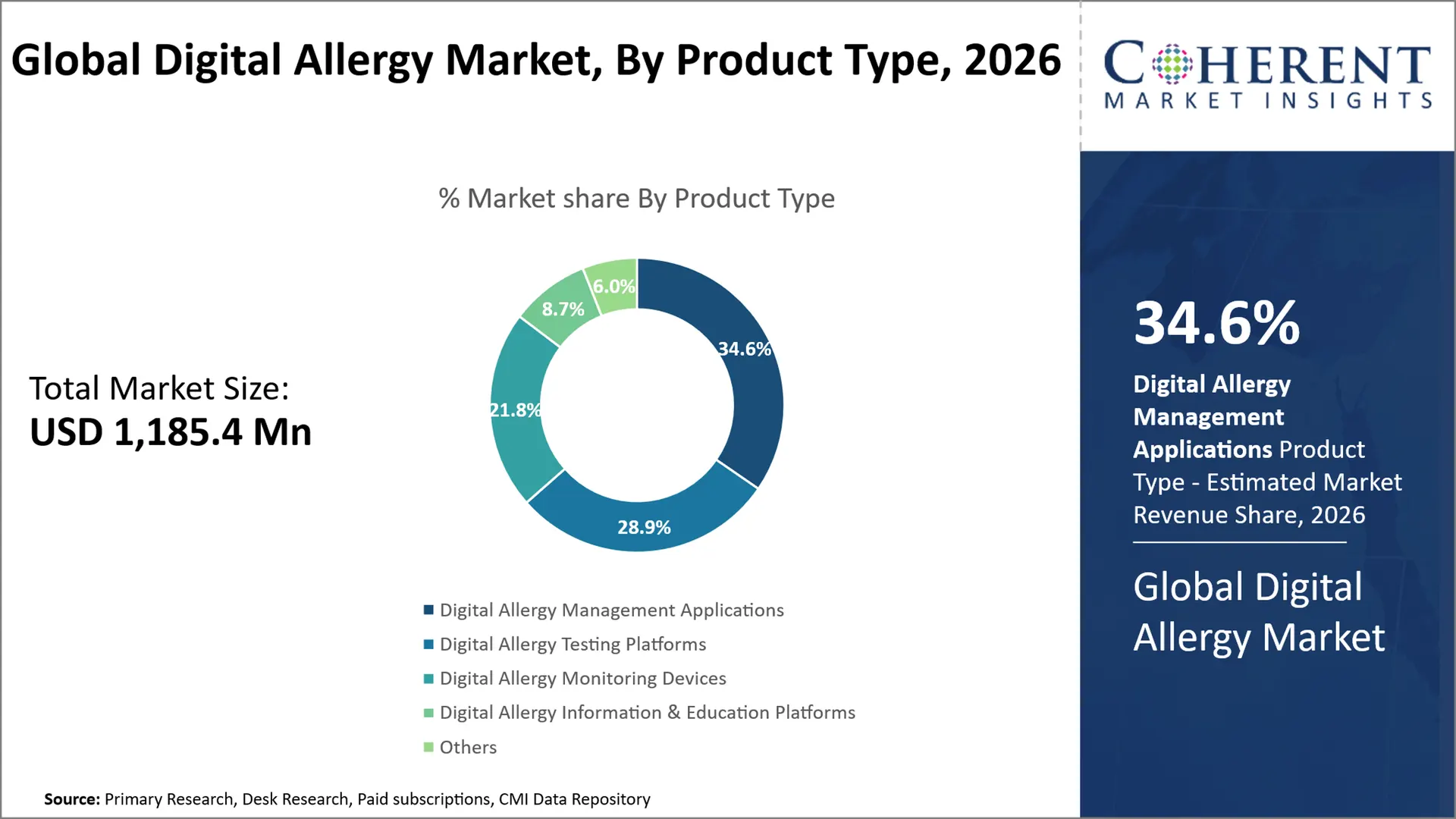
Why Do Digital Allergy Management Applications Dominate the Global Digital Allergy Market?
Digital allergy management applications are projected to hold the market share of 34.6% in 2026, owing to combined use of symptom diaries, allergen avoidance, alerts, medication reminders, and personalized self-management on a single app. Additionally, being available on a smartphone device, the allergy app could be used for monitoring on-the-go outside of traditional clinic setting. For instance, the U.S. Food and Drug Administration (FDA)'s Digital Health Policy Navigator specifically indicates that software can help patients self-manage their diseases and conditions while in their everyday environment is in a regulatory grey zone for digital health applications.
- Current Industry Events of 2026
- Market Size Estimation
- Regional Breakdown
- Competitive Landscape
- Customer Intelligence
- Segmental Analysis
- Pricing Analysis
- Key Market Drivers, Challenges & Future Trends
- Customized Insights Section
Why Does Respiratory Allergies Represent the Largest Allergy Type Segment in the Digital Allergy Market?
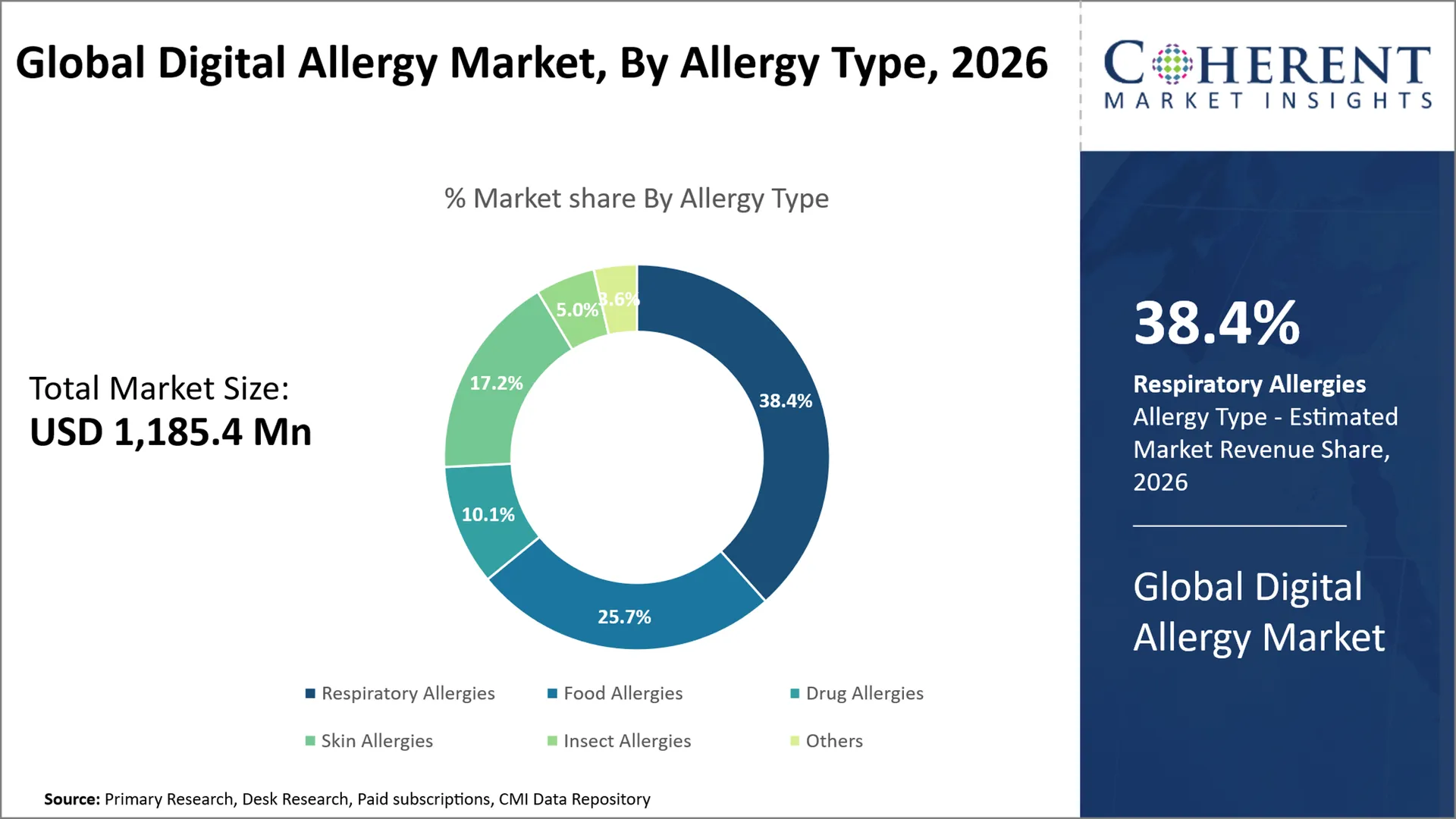
Respiratory allergies are projected to hold a market share of 38.4% in 2026, as patients need to track their symptoms and cope with the variation in airborne irritants such as pollen and pollution particles. Online technology can combine symptom monitoring with the location of the individual to cause-specific airborne irritant information in a time-specific manner. For instance, the Air Now digital platform of the U.S. Environmental Protection Agency provides current and forecasted real-time and location-specific information on air quality and Air Quality Index (AQI), which helps sensitive respiratory groups to understand the times of high air pollution exposure.
Mobile and Web Applications Segment Dominates the Global Digital Allergy Market
The mobile and web applications segment is projected to hold a market share of 28.2% in 2026, due to their wider availability, no significant hardware requirement, and the potential to bundle symptom logging, allergy data, alerts and remote care in one single interface. In addition, using these on smartphones allows for timely, non-intrusive patient interaction and ongoing allergy self-management in various contexts. For instance, in June 2026, The Weather Channel releases its new allergy experience in its iOS and Android apps with hyperlocal pollen forecasts, environmental information, past pollen data, and allergy-specific content and tools.
Current Events and their Impact
Current Events | Description and its Impact |
MHRA Completes AI Airlock Phase 2 for AI as a Medical Device (July 2026) |
|
U.S. FDA Finalizes Clinical Decision Support Software Guidance (January 2026) |
|
EU Issues Guidance on Medical Device Software and AI Act Interplay (June 2025) |
|
Digital Allergy Market Dynamics
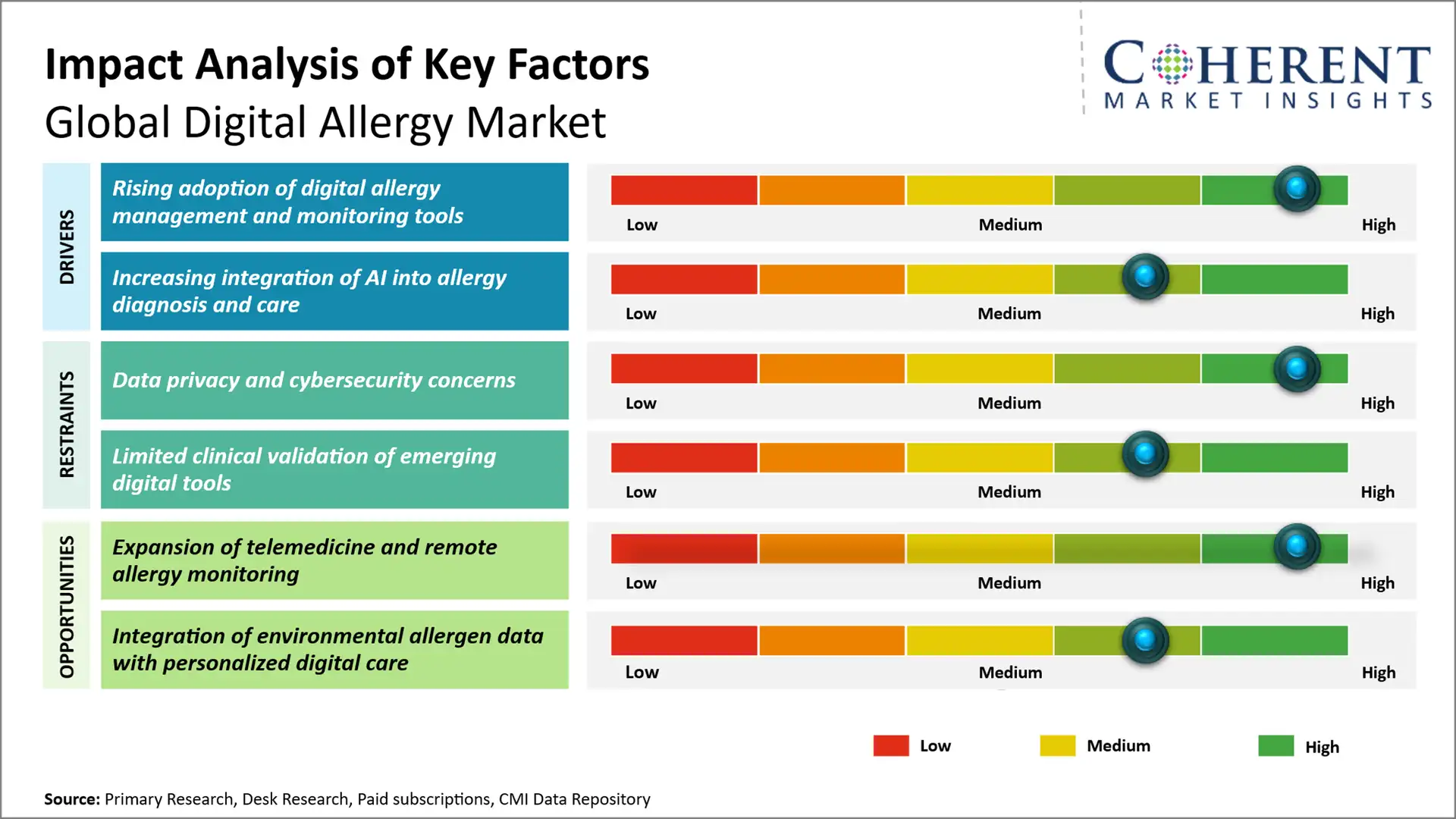
Market Drivers
- Rising adoption of digital allergy management and monitoring tools: The adoption of digital allergy management tools is increasing as patients and clinicians seek more convenient ways to track symptoms, treatment adherence, and disease control. Mobile platforms are increasingly being used to capture real-world patient data and support personalized allergy management. This is expanding the role of digital tools from simple symptom diaries toward continuous monitoring and treatment support. For instance, in January 2026, a real-world study of 815 seasonal allergic-rhinitis patients across seven Southern European and Mediterranean countries published by National Library of Medicine, reported a 75.2% average completion rate for prescribed e-diary monitoring, demonstrating sustained patient engagement with digital symptom-tracking tools.
- Increasing integration of AI into allergy diagnosis and care: The integration of AI into allergy diagnosis and care is expanding as machine-learning models can analyze clinical histories, symptoms, test results, and patient-generated data to support more precise assessment. AI is also being applied to risk prediction, treatment personalization, medication adherence, and disease monitoring. This is moving digital allergy platforms beyond basic tracking toward AI-assisted clinical decision support and personalized care. For instance, in March 2026, a study published by National Library of Medicine, developed an AI-based clinical decision-support system for seasonal allergic rhinitis that combined clinical history, skin-prick testing, molecular IgE data, and electronic/environmental diaries; the best-performing models achieved AUC values above 95% in replicating expert diagnosis.
- Growing integration of wearable and connected technologies: Wearable and connected technologies are expanding the scope of digital allergy monitoring by enabling continuous collection of physiological and environmental data outside clinical settings. Integration with mobile platforms can help connect symptom patterns with potential triggers and support more personalized disease management. For instance, in October 2025, a study conducted in Finland published by National Library of Medicine, used a mobile health application with daily symptom and medication reporting plus micro spirometry among 48 pediatric patients during birch-pollen season, demonstrating the use of digital monitoring to support allergic-rhinitis and asthma management.
Emerging Trends
- AI-Powered Personalized Allergy Management: AI is increasingly being integrated into digital allergy platforms to analyze symptoms, triggers, environmental exposures, and patient histories. These capabilities support personalized risk assessment, symptom prediction, and tailored management recommendations.
- Integration of Wearables and Environmental Data: Digital allergy solutions are moving toward combining wearable-device data with pollen, air-quality, weather, and other environmental information. This enables more continuous monitoring of potential triggers and supports proactive allergy management.
- Expansion of Virtual Allergy Care and Remote Monitoring: Telemedicine and remote monitoring are becoming increasingly integrated into allergy-care pathways, enabling virtual consultations, digital follow-ups, symptom tracking, and treatment adherence monitoring. This is expanding digital allergy management beyond standalone mobile applications.
Regional Insights
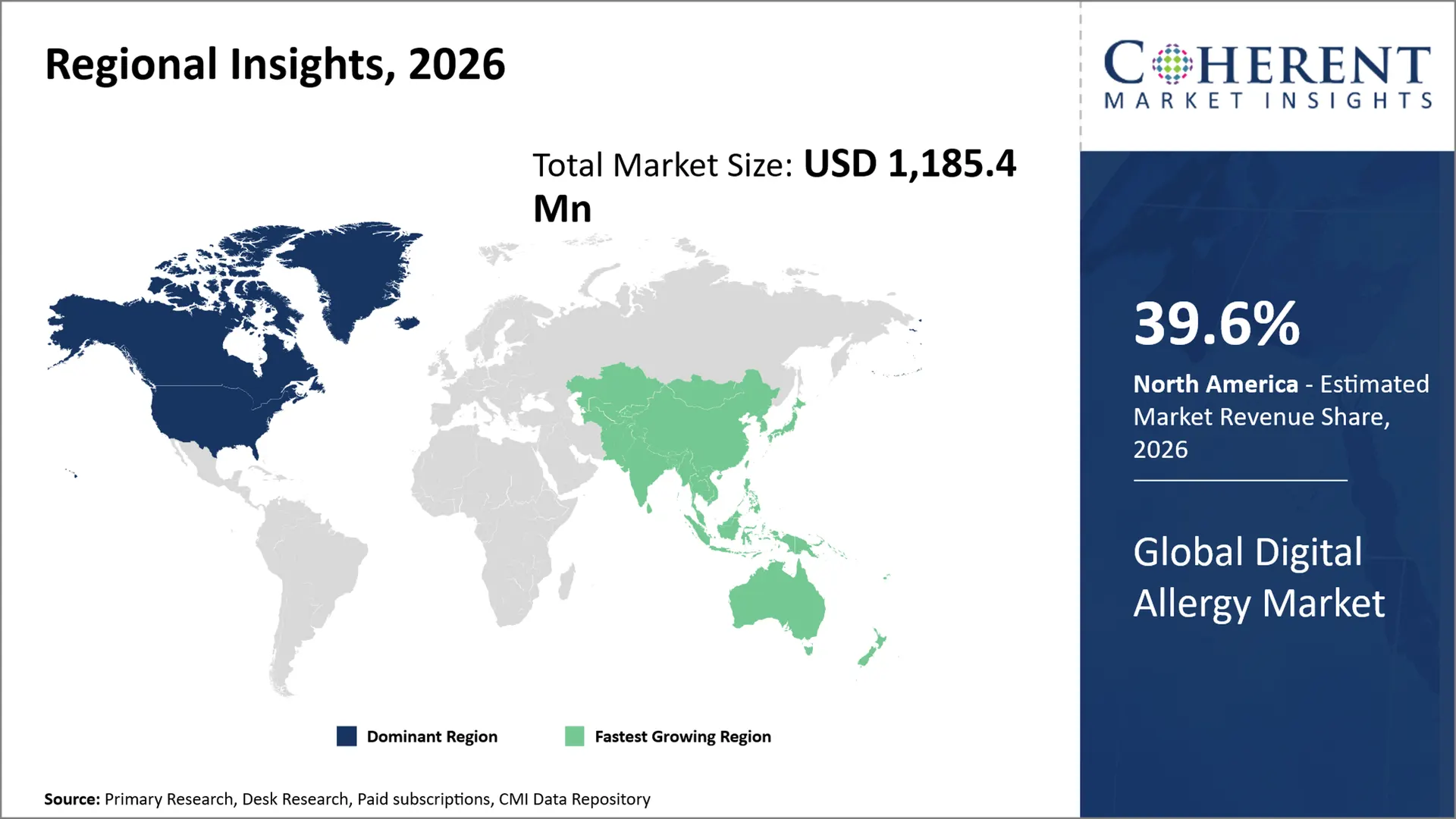
Why is North America a Strong Market for Digital Allergy?
North America leads the global digital allergy market, accounting for an estimated 39.6% share in 2026, attributed to the well-developed healthcare infrastructure, technology availability, and high level of healthcare technology investments. The region exhibits significant application of digital allergy diagnosis, monitoring, telemedicine, and remote patient management applications in the healthcare setting. In addition, the presence of favorable reimbursement policies and government initiatives for the promotion of telemedicine and remote patient management solutions in healthcare are likely to further aid the penetration of digital health technologies in region.
For instance, the U.S Medicare program reimburses CPT codes 99453, 99454, 99457, 99458 for remote patient monitoring. These codes include device setup, data collection, transmission, and treatment-management services. This reimbursement structure facilitates the adoption of remote monitoring in normal care and could stimulate the uptake of digital health technology. (Source: U.S. Centers for Medicare & Medicaid Services (CMS))
Why Does Asia Pacific Digital Allergy Market Exhibit High Growth?
Asia Pacific is expected to exhibit the fastest growth in the global digital allergy market, registering an estimated CAGR of 16.7% during 2026–2033. The region is projected to account for 23.4% of the global market in 2026, owing to increased allergy awareness, rising allergic disease prevalence, growing penetration of digital health solutions with improved infrastructure. Government initiatives to improve digital health development and include the usage of smart healthcare technology across China, India, and South Korea lead to market acceleration.
For instance, India's Ayushman Bharat Digital Mission (ABDM) is establishing an interoperable digital health ecosystem through the use of digital health records, healthcare registry and data exchange between healthcare providers. It also enables the integration of digital health applications into the national health system along with infrastructure to make way for technology-enabled healthcare delivery. (Source: National Health Authority (NHA)) Furthermore, growing healthcare expenditure and increasing middle-class population are expected to drive market demand as well for digital allergy monitoring and management solutions which is convenient and accessible.
Global Digital Allergy Market Outlook for Key Countries
Why is the U.S. Leading Innovation and Adoption in the Digital Allergy Market?
The U.S. is estimated to dominate the digital allergy market attributable to its well-developed regulations for digital health, including mobile medical apps and AI-enabled software. The increasing use of the FDA's 2026 Clinical Decision Support Software guidance, which has a potential to offer more clarity for software used for clinical care and support decisions has been observed. Moreover, country’s digital-health ecosystem provides opportunities for online allergy monitoring and telehealth and remote patient management.
Is Japan a Favorable Market for Digital Allergy Market?
Japan is expected to be a lucrative area for the digital allergy market in the view of access to the structured process for regulation of software as a medical device (SaMD) and government projects encouraging digital health. In addition, the Pharmaceuticals and Medical Devices Agency (PMDA) have a SaMD review pathway, while DASH for SaMD 2 and 2026 priority-review program are intended to speed up the implementation of innovative medical software.
Is China Emerging as a Key Growth Hub for the Digital Allergy Market?
China is emerging as a major growth hub for the digital allergy market, owing to the rapid progress in the development of AI-enabled digital medicine & healthcare solutions. The directive introduced by the National Health Commission of China in 2025, probably boosts the adoption of "AI + healthcare" which includes digital health services, personalized medicine, and smarter disease management. In addition, the National Medical Products Administration strengthened regulatory provisions for AI-enabled software and medical devices.
Why Does Germany Top the European Digital Allergy Market?
Germany's role in the European digital allergy market is strengthened by its existing DiGA (Digital health application) format, under which certain prescribed health apps are reimbursable via statutory health insurance. Subsequently, BfArM evaluates these apps for medical benefits, data protection, and information security, thus paving the way for digital allergy-management solutions.
Is Digital Allergy Market Developing in UK?
UK is emerging as an important digital allergy market, owing to the use of remote monitoring, digital health apps and tech-enabled care by the UK's health service, the National Health Service. The National Institute for Health and Care Excellence's technology appraisal process is also set to be broadened to certain digital health products, from April 2026, which could result in NHS funding for some of these products.
Key Digital Allergy Solutions and Their Core Applications
Digital Allergy Solution | Primary Use | Key Functionality | Target Allergy/Condition | Digital Technology |
AllergyMonitor | Allergy monitoring | Symptom and medication tracking; immunotherapy adherence | Allergic asthma, seasonal allergic rhinitis | Mobile/Web application |
MASK-air | Patient self-management | Allergy diary, symptom assessment, quality-of-life tracking, air-quality information | Allergic rhinitis, allergic asthma | Mobile application |
AirRater | Environmental and symptom monitoring | Symptom diary and environmental exposure tracking | Allergic rhinitis, allergic asthma | Mobile application |
AllergyVax | Immunotherapy management | Immunotherapy and adherence management | Allergic rhinitis, allergic asthma | Mobile/Web application |
AllerSearch | Allergy monitoring | Allergy diary and quality-of-life tracking | Allergic rhinitis | Mobile application |
Drug Allergy App | Clinical decision support | Point-of-care drug-allergy assessment | Drug allergy | Mobile application/EHR integration |
Pollen App | Trigger monitoring | Pollen forecasts, allergy diary, and self-monitoring | Pollen-related allergic rhinitis | Mobile application |
How is the expansion of telemedicine and remote allergy monitoring creating new growth opportunities in the digital allergy market?
Telemedicine and remote allergy monitoring provide a path to more accessible, continuous, and tailored allergy care. Through digital tools, telehealth will provide remote allergy consultations, symptom and medication monitoring, and the incorporation of other patient reported and environmental data. Combined with connected devices and AI, telehealth will provide opportunities for more personalized treatment and proactive care. For instance, in April 2025, a controlled study conducted in Germany published by National Library of Medicine, the researchers tested 167 people with grass-pollen allergies. The team discovered that the allergy app, which offered pollen forecasts, was associated with a decrease in symptoms reported and showed that symptoms could be predicted by combining information from a patient and from the environment.
Market Players, Key Development, and Competitive Intelligence
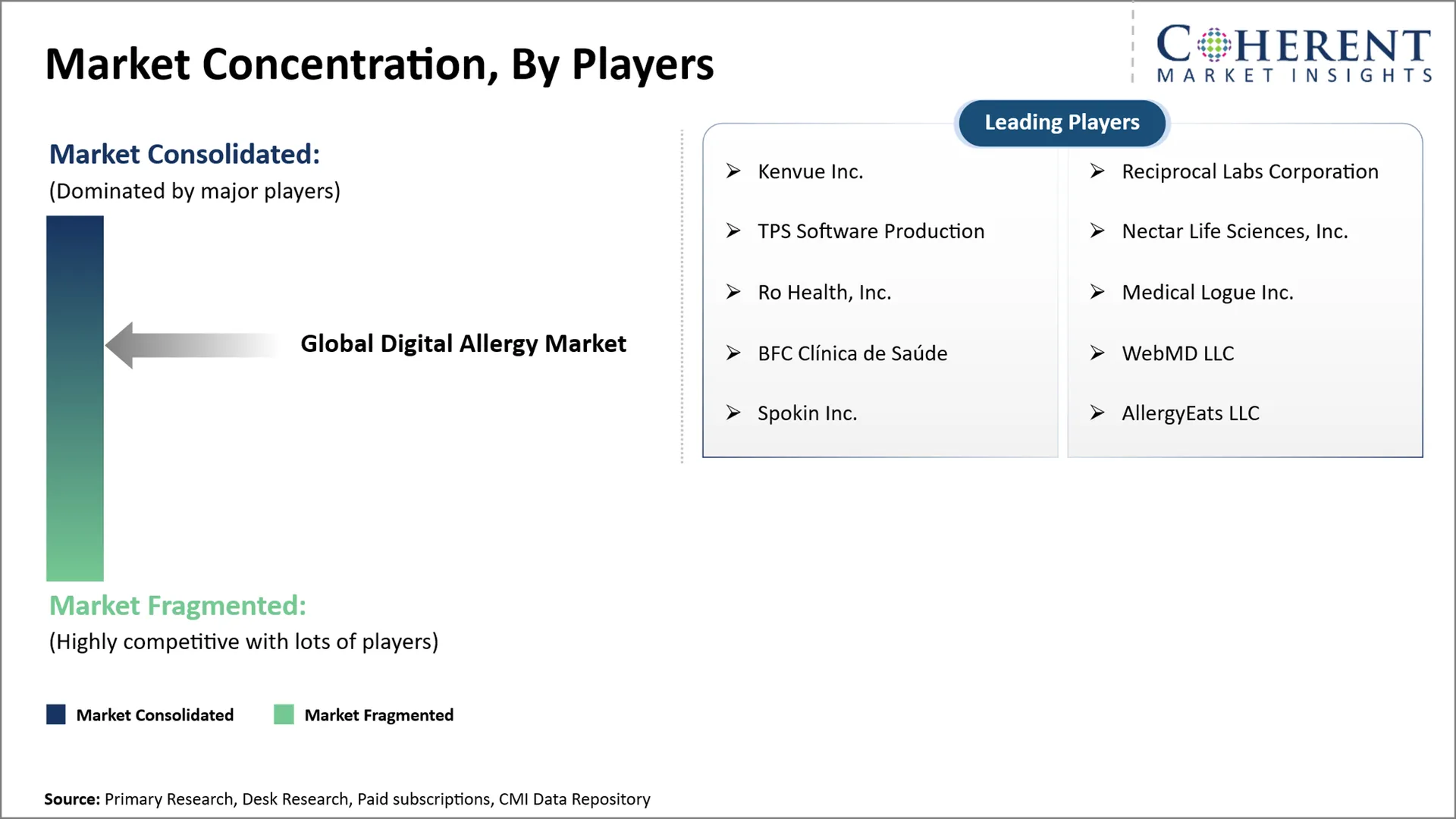
Key Developments
- In October 2025, bioMerieux acquired a stake in Allergen Alert, a startup developing a portable solution for rapid food-allergen detection. The system analyzes food samples and delivers results through a smartphone application, supporting real-time allergen exposure tracking. The development is directly relevant to digital allergy monitoring and prevention
- In May 2025, Quello expanded its allergy-care services into five additional U.S. states, bringing its total footprint to 21 states. The company used AI-powered data engineering, robotic process automation, and automated patient workflows to support online allergy testing and treatment. The development demonstrates the application of AI and digital infrastructure to scale remote allergy diagnosis and treatment services
Competitive Landscape
The global digital allergy market is moderately competitive, with competition centered on digital allergy assessment, AI-enabled diagnostic support, personalized allergen profiling, remote patient monitoring, and integration of digital health technologies. Market participants are increasingly focusing on improving allergy detection, expanding digital patient-management solutions, enabling personalized treatment pathways, and strengthening connectivity between patients, healthcare providers, and diagnostic platforms. Key focus areas include:
- Development of AI-enabled digital tools
- Expansion of personalized allergen profiling and digital platforms
- Integration of telehealth, mobile applications, connected devices, and remote monitoring
- Integration of electronic health records, allergy test results, patient-reported symptoms, and environmental exposure data
- Enhancement of data interoperability, diagnostic accuracy, patient privacy, cybersecurity, and regulatory compliance
Market Report Scope
Global Digital Allergy Market Report Coverage | |||
Report Coverage | Details | ||
Base Year | 2025 | Market Size in 2026: | USD 1,185.4 Mn |
Historical Data For: | 2020 To 2024 | Forecast Period: | 2026 To 2033 |
Forecast Period 2026 To 2033 CAGR: | 14.7% | 2033 Value Projection: | USD 3,096.1 Mn |
Geographies covered: |
| ||
Segments covered: |
| ||
Companies covered: | Kenvue Inc., Reciprocal Labs Corporation, TPS Software Production, Nectar Life Sciences, Inc., Ro Health, Inc., Medical Logue Inc., BFC Clínica de Saúde, WebMD LLC, Spokin Inc., AllergyEats LLC | ||
Growth Drivers: |
| ||
Restraints & Challenges: |
| ||
Analyst Opinion (Expert Opinion)
- In the coming years, global digital allergy market will move from basic symptom-tracking applications toward integrated, personalized allergy-management ecosystems that combine digital assessment, allergy testing data, patient-reported symptoms, environmental triggers, and longitudinal monitoring. AI-driven interpretation and personalized recommendations are expected to become increasingly important, particularly for differentiating allergy patterns and supporting treatment decisions. The industry is likely to converge with telehealth and connected-care models, making continuous allergy management more accessible outside traditional clinical settings.
- The maximum opportunities are foreseen within AI-enabled allergy diagnosis and personalized allergy for management applications in the U.S. This combination can address the need for faster symptom assessment, individualized trigger identification, remote monitoring, and integration of patient data into clinical workflows. Opportunities should be particularly strong for platforms that connect patients, allergists, diagnostic testing, and longitudinal disease-management tools rather than offering standalone symptom-tracking functions.
- In order to gain a competitive advantage, market players should prioritize clinically meaningful personalization, interoperability, and seamless integration with existing allergy-care workflows rather than competing solely on application features. Building platforms that can combine multiple patient data inputs and translate them into actionable insights can create stronger differentiation. Companies should also focus on intuitive patient engagement, strong data-security architecture, and partnerships that enable their solutions to fit directly into allergists' and healthcare providers' existing practices.
Speak to the analyst
Want personalized insights?
Take the findings above to one of our principal consultants, or have the report rebuilt around the segments, geographies and competitors you actually track.
Market Segmentation
- Product Type Insights (Revenue, USD Mn, 2021 - 2033)
- Digital Allergy Management Applications
- Digital Allergy Testing Platforms
- Digital Allergy Monitoring Devices
- Digital Allergy Information & Education Platforms
- Others
- Allergy Type Insights (Revenue, USD Mn, 2021 - 2033)
- Respiratory Allergies
- Food Allergies
- Drug Allergies
- Skin Allergies
- Insect Allergies
- Others
- Technology Insights (Revenue, USD Mn, 2021 - 2033)
- Mobile and Web Applications
- Artificial Intelligence and Machine Learning
- Wearable Technology
- Internet of Medical Things (IoMT)
- Telemedicine and Remote Monitoring
- Data Analytics and Cloud Computing
- Others
- Application Insights (Revenue, USD Mn, 2021 - 2033)
- Allergy Diagnosis and Testing
- Allergy Monitoring
- Allergy Management and Treatment Support
- Allergen Exposure Tracking
- Patient Education and Self-management
- Clinical Decision Support
- Others
- End User Insights (Revenue, USD Mn, 2021 - 2033)
- Hospitals and Clinics
- Allergy and Immunology Centers
- Diagnostic Laboratories
- Pharmaceutical and Biotechnology Companies
- Research and Academic Institutions
- Patients and Home-care Users
- Others
- Regional Insights (Revenue, USD Mn, 2021 - 2033)
- North America
- U.S.
- Canada
- Latin America
- Brazil
- Argentina
- Mexico
- Rest of Latin America
- Europe
- Germany
- U.K.
- Spain
- France
- Italy
- Russia
- Rest of Europe
- Asia Pacific
- China
- India
- Japan
- Australia
- South Korea
- ASEAN
- Rest of Asia Pacific
- Middle East
- GCC Countries
- Israel
- Rest of Middle East
- Africa
- South Africa
- North Africa
- Central Africa
- North America
Sources
Primary Research Interviews
- Allergists, immunologists, and clinical researchers involved in allergy diagnosis, digital care, and patient-management research
- Digital health and clinical informatics specialists developing or evaluating mobile applications, AI-enabled allergy tools, and digital clinical decision-support systems
- Healthcare providers and allergy specialists involved in digital symptom monitoring, telehealth, remote patient management, and allergy-care delivery
- Data scientists, AI/ML specialists, and healthcare analytics experts working with patient-generated health data, environmental exposure data, and digital allergy datasets
- Digital therapeutics, medical device, and health technology specialists evaluating connected devices, wearable technologies, and digital allergy-management platforms
Stakeholders
- Digital health and digital therapeutics companies
- Allergy and immunology clinics, hospitals, and healthcare systems
- Pharmaceutical and biotechnology companies developing allergy treatments and digital patient-support solutions
- Medical device and connected-health technology companies
- Telehealth providers and remote patient-monitoring companies
- Academic and research institutions specializing in allergy, immunology, digital health, and clinical informatics
- Payers and health insurance providers
- Regulatory authorities and health technology assessment (HTA) organizations
- End-use Sectors
- Healthcare Providers and Allergy Clinics
- Hospitals and Health Systems
- Pharmaceutical and Biotechnology Companies
- Medical Device and Digital Health Companies
- Telehealth and Remote Patient Monitoring Providers
- Academic and Research Institutions
- Payers and Health Insurance Providers
- Government and Public Health Organizations
- Regulatory & Health Bodies
- U.S. Food and Drug Administration (FDA) – Digital health technologies, software as a medical device, clinical decision-support software, and regulatory oversight of medical devices
- European Medicines Agency (EMA) – Digital health, medicines development, clinical evidence, and regulatory science relevant to digital healthcare
- Medicines and Healthcare products Regulatory Agency (MHRA), United Kingdom – Software and digital technologies used as medical devices and medical device regulation
- Pharmaceuticals and Medical Devices Agency (PMDA), Japan – Review and regulatory oversight of medical devices and digital health technologies
- National Medical Products Administration (NMPA), China – Medical device registration and regulatory oversight of digital and software-based healthcare technologies
- Health Canada – Medical device licensing and regulatory oversight of software and digital health technologies
Databases
- ClinicalTrials.gov – Clinical studies evaluating digital health applications, allergy-management technologies, diagnostic tools, and connected healthcare interventions
- WHO International Clinical Trials Registry Platform (ICTRP) – Global clinical trial and research information relevant to digital allergy and healthcare technologies
- FDA Digital Health Database and device resources – Regulatory and device information relevant to software and digital health technologies
- FDA MAUDE Database – Medical device adverse-event reports relevant to connected and digital medical technologies
Associations
- American Academy of Allergy, Asthma & Immunology (AAAAI) – Allergy and immunology clinical practice, research, education, and digital-health developments
- European Academy of Allergy and Clinical Immunology (EAACI) – Allergy and immunology research, clinical guidance, digital health, and patient-management initiatives
- World Allergy Organization (WAO) – Global allergy research, clinical guidance, education, and allergy-care initiatives
- American College of Allergy, Asthma & Immunology (ACAAI) – Allergy and immunology clinical practice, patient care, and professional education
- Allergic Rhinitis and its Impact on Asthma (ARIA) – Digitalized allergy-management approaches, allergic-rhinitis research, and mobile health initiatives
Public Domain Sources
- National Institutes of Health (NIH) – Biomedical research, allergy and immunology research, clinical studies, and digital health research
- Centers for Disease Control and Prevention (CDC) – Population health, chronic disease, environmental health, and public health information relevant to allergic conditions
- World Health Organization (WHO) – Global digital health, health-system, disease-burden, and population-health information
- U.S. Food and Drug Administration (FDA) – Public regulatory information on digital health, software as a medical device, and medical-device technologies
- Organisation for Economic Co-operation and Development (OECD) – Digital health, healthcare-system, health expenditure, and health-data indicators
- World Bank – Population, healthcare, economic, digital-development, and country-level development indicators
- National health ministries and statistical agencies – Country-level healthcare, demographic, digital-health, and allergy-related health information
Proprietary Elements
- CMI Data Analytics Tool
- Proprietary CMI Existing Repository of information for last 10 years.
Get access to 250+ pages report
Every segment, forecast, competitor profile and data table behind the analysis above — available for instant download.
- ESOMAR Member
- ISO 9001:2015 Certified
- D-U-N-S Registered
- GDPR & CCPA Compliant
Frequently Asked Questions
The global digital allergy market is estimated to be valued at USD 1,185.4 Mn in 2026 and is expected to reach USD 3,096.1 Mn by 2033.
Digital allergy management applications dominate due to their accessibility, continuous symptom tracking, personalized allergy management, and integration with telehealth and remote monitoring.
Digital allergy refers to the use of digital technologies such as mobile applications, AI, connected devices, and telehealth platforms to support allergy detection, monitoring, and management.
The CAGR of global digital allergy market is projected to be 14.7% from 2026 to 2033.
Rising adoption of digital allergy management and monitoring tools, and increasing integration of AI into allergy diagnosis and care are the major factors driving the growth of the global digital allergy market.
Data privacy and cybersecurity concerns, and limited clinical validation of emerging digital tools are the major factors hampering the growth of the global digital allergy market.
In terms of technology, mobile and web applications are estimated to dominate the market revenue share in 2026.