

Global Digital Human Twins Market Size and Forecast – 2026 To 2033
The global digital human twins market is expected to grow from USD 1,185.6 Mn in 2026 to USD 3,742.8 Mn by 2033, registering a compound annual growth rate (CAGR) of 17.8% from 2026 to 2033. The market for global digital human twins is poised for significant expansion, fueled by the increasing public funding for virtual human modeling and personalized medicine research.
In June 2026, the Government of Canada announced a USD 100 million (C$ 100 million) investment in the VITAL health data platform, which will connect de-identified hospital data to support medical research, clinical trials, and AI innovation. This investment strengthens the health-data infrastructure needed to develop and validate digital human twins highlighting the importance of robust health-data infrastructure in advancing digital human twins by enabling the integration of diverse patient data for more accurate physiological modeling, disease prediction, and personalized treatment planning.
Key Takeaways of the Global Digital Human Twins Market
- Software is projected to hold 57.8% of the global digital human twins market share in 2026, making it dominant component segment, across North America due to established digital health regulatory framework and adoption of medical software technologies. For instance, the U.S. Food and Drug Administration (FDA) regulates AI-enabled medical devices through risk-based pathways, including 510(k) clearance, De Novo classification, and premarket approval. This regulatory framework supports the development and commercialization of software-based healthcare technologies relevant to digital human twin platforms.
- Artificial intelligence and machine learning is projected to hold 38.7% of the global digital human twins market share in 2026, making it dominant technology segment, across Asia Pacific particularly Australia offering opportunities as regulators clarify requirements for AI-enabled medical software. For instance, Australia’s Therapeutic Goods Administration (TGA) updated its guidance on regulating software-based medical devices in February 2026, explaining when AI and other software products fall under medical-device regulation and the associated compliance obligations. This framework reinforces the importance of safety, performance evidence, and regulatory compliance for AI technologies used in patient-specific modeling and clinical decision support.
- Personalized healthcare and precision medicine are projected to hold 32.4% of the global digital human twins market share in 2026, making it dominant application segment, with Europe positioned for opportunities through public investment in virtual human twin research and personalized care. For instance, the European Commission’s Virtual Human Twins Initiative supports the development and adoption of virtual models of human health and disease to advance personalized medicine and clinical research. Such public-sector support can encourage the validation and integration of patient-specific models into healthcare and research workflows.
- North America market maintains dominance with an expected share of 36.8% in 2026, bolstered by government investment in biomedical modeling and digital health research. For instance, in September 2026, the U.S. Advanced Research Projects Agency for Health (ARPA-H) supported the ReSCUED initiative with approximately USD 30.1 million to develop AI-powered digital twins for critically ill patients. The initiative aims to simulate patient-specific physiological responses to support treatment decisions for conditions such as sepsis, severe burns, and traumatic injuries, strengthening regional capabilities in digital human twin development.
- Asia Pacific is expected to exhibit the fastest growth in the global digital human twins market, registering an estimated CAGR of 19.4% during 2026–2033, driven by government initiatives promoting AI-enabled healthcare and digital health infrastructure. For instance, in February 2026, India’s Ministry of Health and Family Welfare launched the Strategy for Artificial Intelligence in Healthcare (SAHI) and the Benchmarking Open Data Platform for Health AI (BODH) to encourage responsible healthcare AI and strengthen the evaluation of AI-based health solutions. These initiatives could support the regional ecosystem for data-driven patient modeling and digital human twin applications.
Segmental Insights
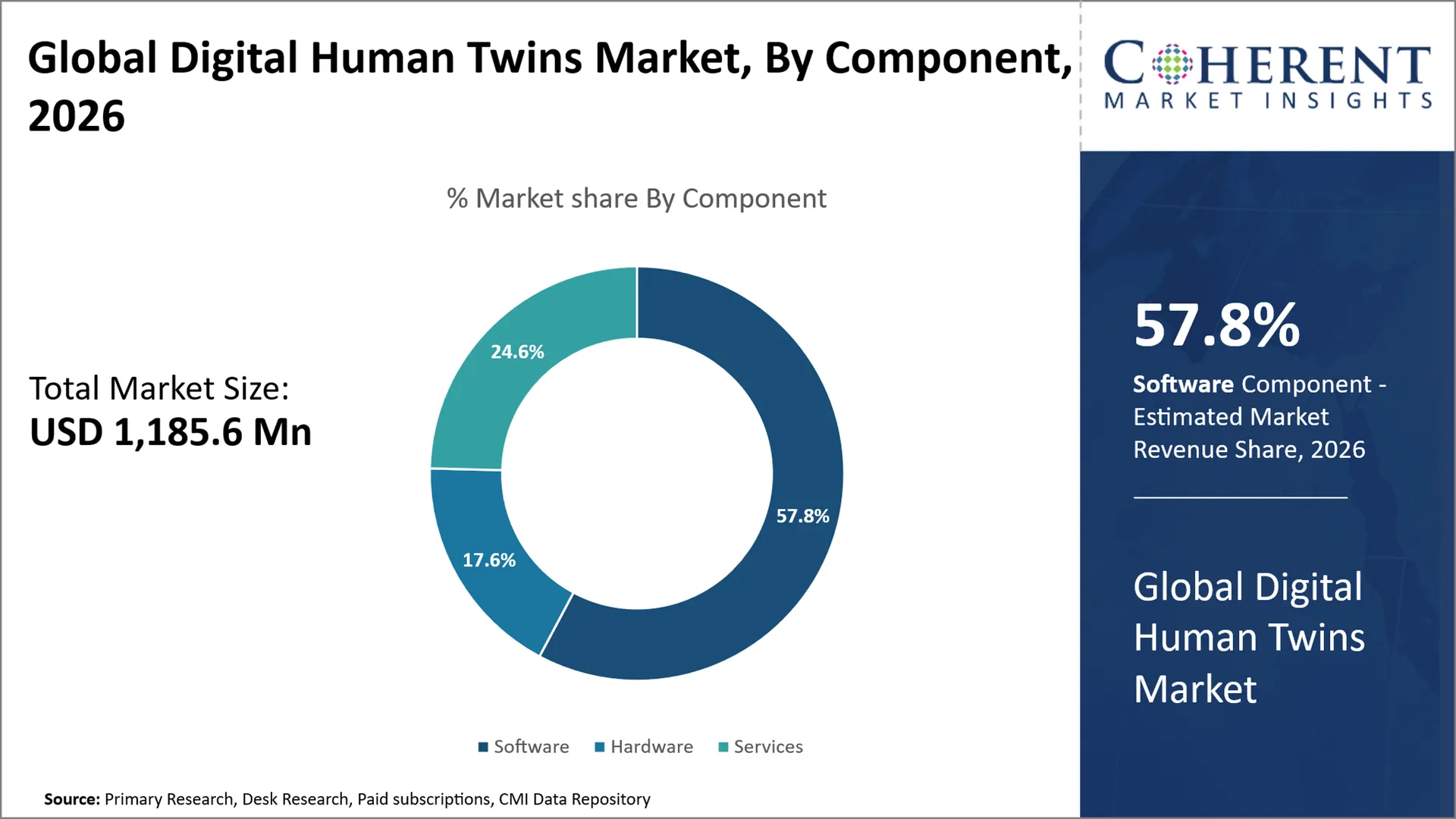
Why Do Software Dominate the Global Digital Human Twins Market?
Software is projected to hold the market share of 57.8% in 2026, owing to the advantages offered by software in modelling human physiology, harnessing heterogeneous data, and ascribing predictive analytics. Cloud-based solutions and AI algorithms drive the adoption of software for frequent model updates, complex simulations, and interaction with health information technology (IT) systems. For instance, The 3DEXPERIENCE platform from Dassault Systèmes connects virtual twin technologies, simulation and data analytics to a digital thread between digital and real. In healthcare, its virtual human twin capabilities would assist in the modeling and simulation of human biology to progress personalized medicine and improve the assessment of potential therapies.
- Current Industry Events of 2026
- Market Size Estimation
- Regional Breakdown
- Competitive Landscape
- Customer Intelligence
- Segmental Analysis
- Pricing Analysis
- Key Market Drivers, Challenges & Future Trends
- Customized Insights Section
Why Do Artificial Intelligence and Machine Learning Represent the Largest Technology Segment in the Digital Human Twins Market?
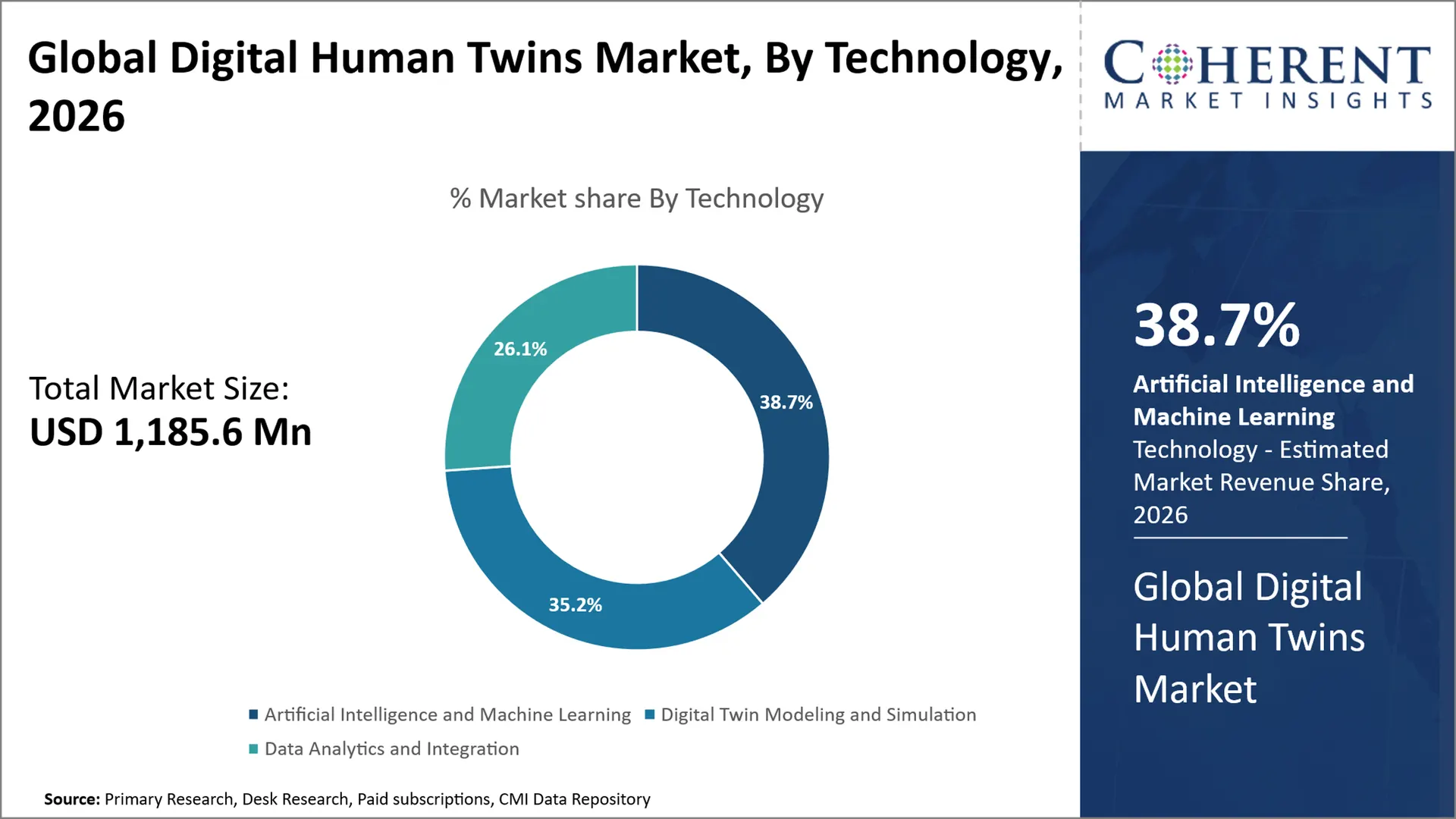
Artificial intelligence and machine learning is projected to hold a market share of 38.7% in 2026, owing to the ability to connect complex health data, model predictively, personalize and replicate the model to predict disease course and treatment. These technologies iteratively update the digital twin based on new patient data, thereby offering an optimized decision support capability. For instance, in June 2026, TWIN-X project was launched by the European Union with a budget of around USD 16.8 million (€15 Million). It uses generative AIs and multimodal data integration to develop digital twins for personalized medicine with specific reference to oncology and cardiovascular medicine.
Personalized Healthcare and Precision Medicine Segment Dominates the Global Digital Human Twins Market
The personalized healthcare and precision medicine segment is projected to hold a market share of 32.4% in 2026, propelled by the rising applications of digital human twins to model the progression of individual disease state and explore personalized treatment pathways. These models are expected to combine the patient's clinical records, genetic information, imaging and physical data for decision making. For instance, the Humanitas Digital Twin project in Italy, funded with USD 3.36 million (€3 million) by the Ministry of University and Research in 2025, employs digital twins based on artificial intelligence to support clinical decision-making and to research rare cancers. (Source: Humanitas Research Hospital)
Current Events and their Impact
Current Events | Description and its Impact |
U.S. NIH Launches Digital Twins Grand Challenge (September 2026) |
|
U.S. DARPA Advances Its VITAL Digital Twin Program (March 2026) |
|
European Commission Expands Virtual Human Twins Initiative (2025–2026) |
|
Digital Human Twins Market Dynamics
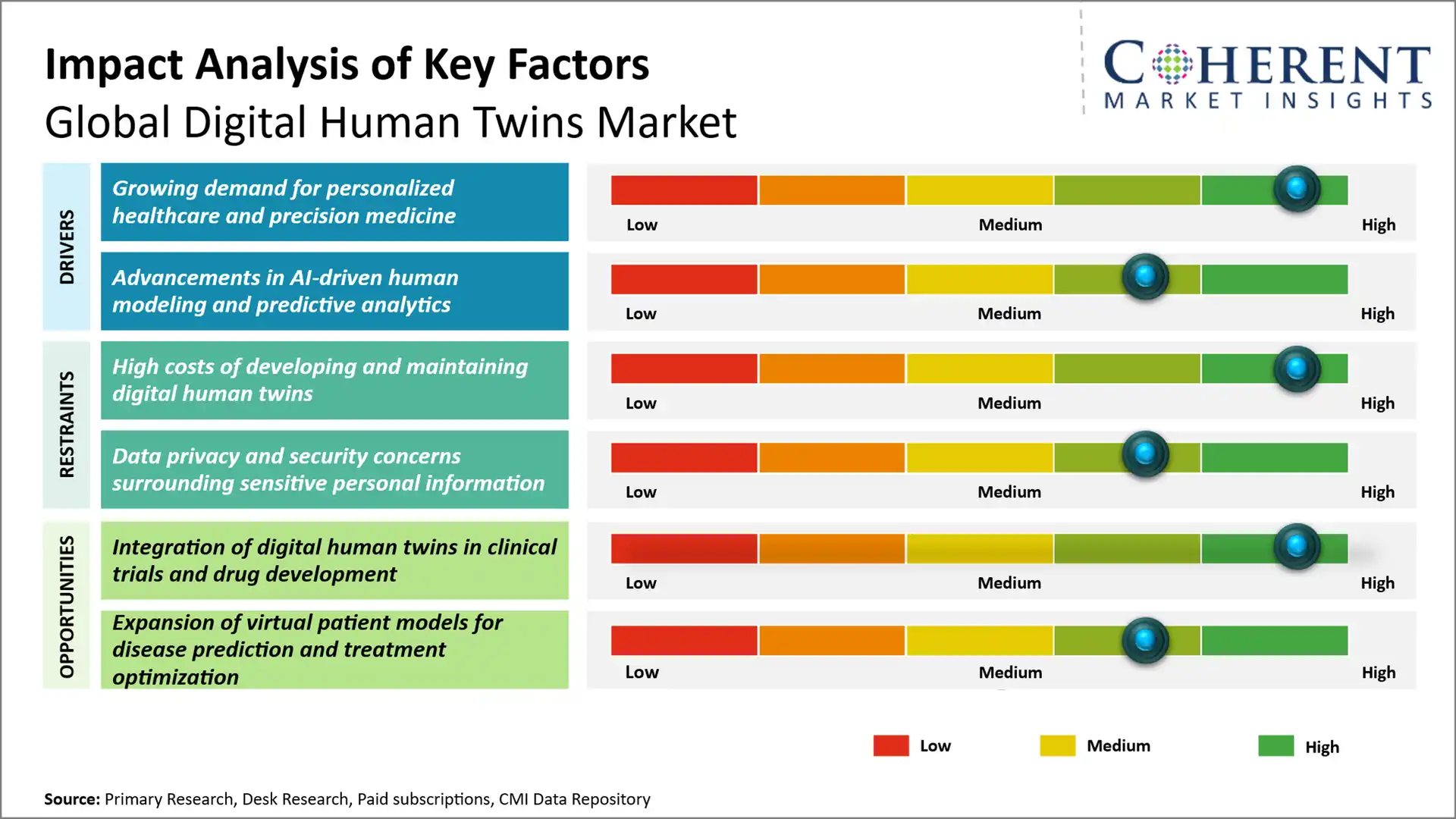
Market Drivers
- Growing demand for personalized healthcare and precision medicine: Growing demand for personalized healthcare and precision medicine is accelerating the development of digital human twins that can represent individual patients and simulate disease progression and treatment outcomes. For instance, Twin Health’s Whole-Body Digital Twin uses data from wearable sensors, clinical measurements, and lifestyle patterns to create personalized metabolic models that help guide interventions for conditions such as type 2 diabetes. This demonstrates the potential of digital human twin technology to support individualized care rather than relying solely on generalized treatment protocols.
- Advancements in AI-driven human modeling and predictive analytics: Advancements in artificial intelligence and predictive analytics are strengthening digital human twins by enabling more accurate modeling of human physiology, disease progression, and potential treatment outcomes. For instance, the University of Vermont’s ReSCUED project, supported by an award of up to USD 38 million, aims to develop AI-powered medical digital twins for critically ill patients, including those with sepsis, severe burns, and traumatic injuries. The project highlights how AI-driven modeling can support patient-specific clinical decision-making and more targeted interventions.
- Growing use of digital human twins in clinical research and drug development: Growing use of digital human twins in clinical research and drug development is creating opportunities to simulate patient-specific biological responses, evaluate therapeutic outcomes, and optimize clinical trial design. For instance, the European Commission’s GENz-trials project is developing a clinical trial framework using digital twins and synthetic data to create comparison groups, potentially reducing reliance on conventional control groups and improving trial evaluation.
Emerging Trends
- AI-powered virtual patient modeling: Advancements in artificial intelligence and machine learning are enabling more sophisticated virtual patient models that simulate individual physiology, disease progression, and treatment responses. These models are increasingly being explored to support personalized treatment planning and clinical decision-making.
- Integration of real-time health data: Digital human twins are increasingly incorporating data from wearable devices, connected biosensors, electronic health records, and medical imaging. This integration supports continuous model updates and may improve patient monitoring, early risk identification, and individualized healthcare management.
- Digital human twins in drug development and clinical trials: Pharmaceutical companies and research institutions are exploring digital human twins to simulate disease pathways, predict treatment responses, and support virtual patient modeling in clinical research. This trend could help improve trial design and research efficiency while reducing reliance on repeated physical experimentation, subject to scientific validation.
Regional Insights
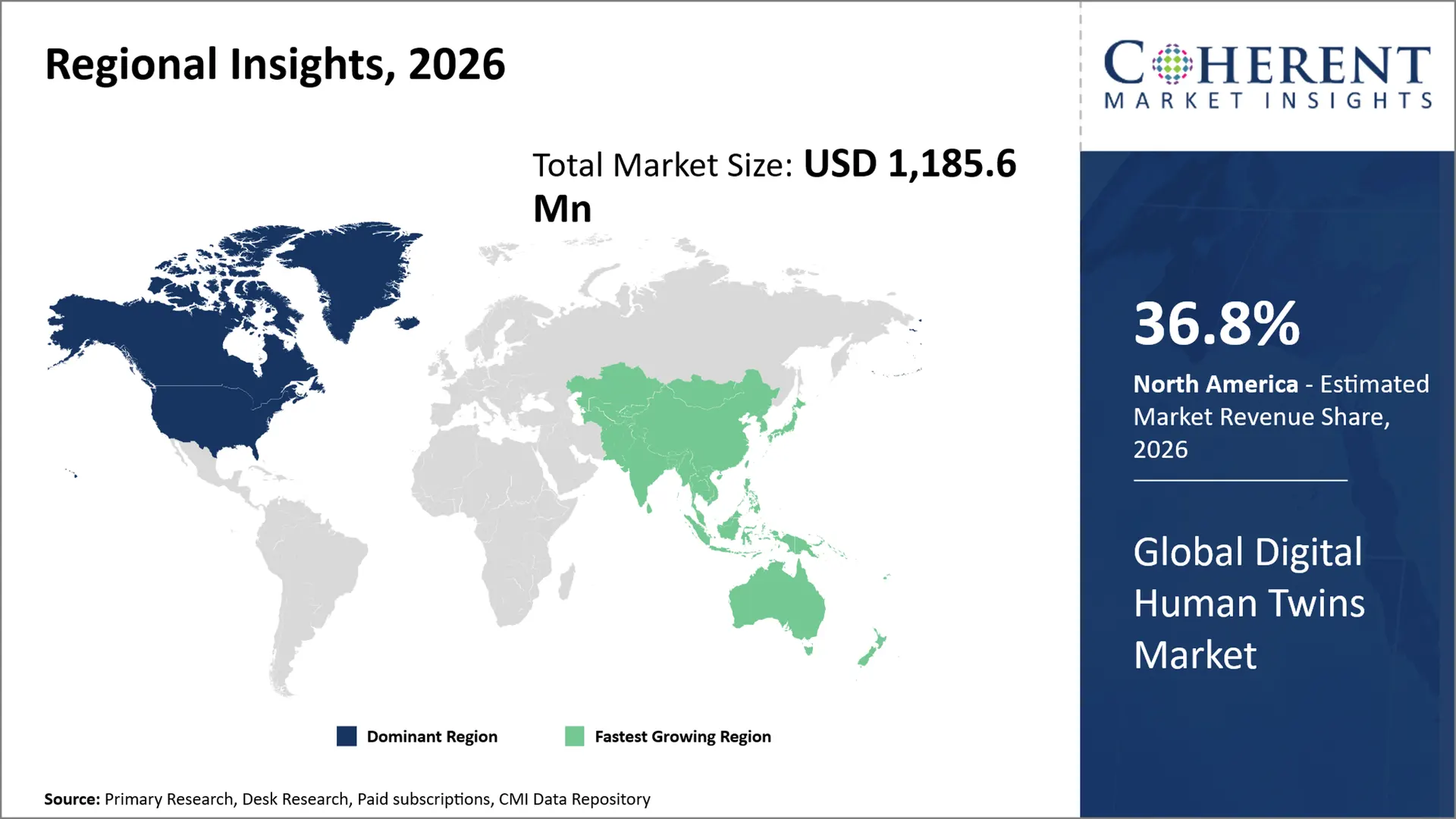
Why is North America a Strong Market for Digital Human Twins?
North America leads the global digital human twins market, accounting for an estimated 36.8% share in 2026, due to the advanced digital infrastructure, advanced AI ecosystem, well-developed healthcare ecosystem, and research network. In addition, higher government support for innovation and advanced research and development activities in AI, healthcare, and manufacturing can drive the development and commercialization of a digital human twin.
For instance, the U.S. National Institutes of Health (NIH), National Science Foundation (NSF), and Food and Drug Administration (FDA) jointly implemented the Foundations for Digital Twins as Catalyzers of Biomedical Technological Innovation (FDT-Bio Tech) program, which is intended to promote fundamental research on digital twins for biomedical and healthcare applications, such as the assessment of medical devices. Furthermore, growing research and development investments, partnerships between research institutions and healthcare systems, and availability of venture funding are expected to support the commercialization and adoption of digital human twin solutions.
Why Does Asia Pacific Digital Human Twins Market Exhibit High Growth?
Asia Pacific is expected to exhibit the fastest growth in the global digital human twins market, registering an estimated CAGR of 19.4% during 2026–2033. The region is projected to account for 25.1% of the global market in 2026, rapid industrialization, rising adoption of digital health services and government investments in technology. In addition, government policies encouraging innovation and thriving ecosystem for smart manufacturing in the countries like China, Japan and South Korea are expected to accelerate digital transformation and augment adoption of simulation technology based on artificial intelligence.
For instance, Japan’s Society 5.0 initiative promotes the integration of AI, IoT, and advanced digital technologies across industry and healthcare, supporting the development of smart manufacturing ecosystems and data-driven innovation. (Source: Government of Japan) Moreover, growing healthcare digitization, upgradation of digital infrastructure and growing demand for customized medicine are likely to support growth of region.
Global Digital Human Twins Market Outlook for Key Countries
Why is the U.S. Leading Innovation and Adoption in the Digital Human Twins Market?
The U.S. is likely to dominate the digital human twins market through innovation and adoption owing to its deep biomedical research ecosystem, penetration of AI in healthcare industry and the maturity of the precision medicine ecosystem. Readily available clinical data repositories, HPC infrastructure and high-fidelity medical modeling tools would enable higher-fidelity patient digital twins. Additionally, collaborations between health systems, biomedical research organizations and digital twin software providers are expected to fast track clinical adoption for disease prediction, treatment planning and drug discovery.
Is Japan a Favorable Market for Digital Human Twins Market?
Japan is an attractive growth market for digital human twins, as a highly developed healthcare system, high maturity of robotics and artificial intelligence technology, and a focus on personalized medicine support digital twin adoption in the country. With aging society and aging-related chronic diseases, there is an increasing demand for solutions that facilitate disease specific treatment customization as well as preventive measures. Furthermore, digital twins' potential role in clinical studies and services help to enhance growth. However, clinical validation, data interoperability, and costs are key issues to address.
Is China Emerging as a Key Growth Hub for the Digital Human Twins Market?
The global market for digital human twins is being driven by rising adoption of connected healthcare applications. The emerging need for effective clinical workflows, technological advancements, and increasing patient population globally has led to the rising adoption of connected healthcare applications. China is projected to witness faster adoption of such connected healthcare applications due to the presence of a large patient pool, growing prevalence of chronic diseases, and enhancement in the capabilities of artificial intelligence. The increasing use of digital models for disease prediction and treatment of individualized patients is expected to flourish in the country.
Why Does Germany Top the European Digital Human Twins Market?
Germany leads the European human twins market primarily due to its large medical technology and engineering industry, strong clinical research ecosystem and renowned competence in the application of computer sciences and modelling. Germany has been a leading country in applying real-world data-driven precision medicine, AI enabled healthcare, and simulation driven medical innovations, all of which contribute towards the development of patient-specific digital twins. Furthermore, collaboration between hospitals, research institutes, and technology companies help drive adoption of digital twins in disease modelling, therapeutics selection, and drug development.
Is Digital Human Twins Market Developing in UK?
The digital human twins market in the UK is growing through the investment in the use of artificial intelligence in the healthcare setting, life sciences research and for more data-driven clinical innovation. The established research-oriented universities, NHS infrastructure, life science cluster in UK underpin the creation of virtual patient models for disease progression, simulation of treatment and disease management and individualization of treatment.
Key Government Initiatives Supporting Digital Human Twins
Government body / initiative | Region | Funding / support | Primary focus | Market relevance |
European Commission – Virtual Human Twins Initiative | Europe | More than USD 111.9 million (€100 million) | Virtual models of human health and disease | Supports research, validation, and adoption of digital human twins |
U.S. NIH – Digital Twins Grand Challenge | North America | US$1 million prize pool | Whole-person health and chronic disease disparities | Encourages digital twin and synthetic population modeling |
U.S. NIH – Digital Twins for Biomedical Research | North America | Research-priority initiative; funding varies by opportunity | Biomedical, biological, and behavioral research | Encourages development and validation of human-health digital twins |
Government of India – SAHI and BODH initiatives | Asia Pacific | Public-sector policy and infrastructure support | Responsible AI adoption and evaluation in healthcare | Supports the broader digital health and data ecosystem needed for digital human twin development |
U.S. National Science Foundation (NSF) – Smart Health and Biomedical Research in the Era of Artificial Intelligence and Advanced Data Science | North America | Competitive research grants; amounts vary by award | AI, biomedical research, and advanced health-data analytics | Supports enabling technologies for physiological modeling, predictive analytics, and digital human twin development |
National Institutes of Health (NIH) – Bridge2AI Program | North America | Federally funded research program; funding varies by project | Development of high-quality, ethically sourced biomedical datasets and AI-ready tools | Supports the data infrastructure and AI capabilities needed to construct, train, and validate healthcare-focused digital human twins |
How is the integration of digital human twins in clinical trials and drug development creating new growth opportunities in the digital human twins market?
Digitally leveraging human twins into the clinical trial landscape enables an enormous opportunity by improving the design of the trials, track how a patient may respond to a potential treatment, and potentially lead to more efficient testing and approval of new drugs. This simulation of disease pathways and drug response in patients with varying characteristics enable researchers to develop predictive insights and prioritize clinical tests of various treatment approaches. For instance, in September 2026, the U.S. Department of Health and Human Services (HHS) launched the SURPASS program through the Advanced Research Projects Agency for Health (ARPA-H) to innovate clinical trial. The program uses digital twins, predictive computational models and real-time analytics to make trials more efficient, reduce trial participant burden, and strengthen evidence-based drug development.
Market Players, Key Development, and Competitive Landscape
Key Developments
- On October 12, 2026, L&T Technology Services inaugurated its AI-Native Engineering Intelligence Lab for Digital Manufacturing in Bengaluru, featuring NVIDIA-accelerated digital twins, Industrial AI, and Physical AI. The facility will demonstrate applications in factory simulation, virtual validation, intelligent operations, and autonomous manufacturing, highlighting continued integration of digital twin technologies with AI.
- In September 2026, the University of Vermont received a research contract worth up to USD 38 million to develop AI-powered medical digital twins for critically ill patients. The ReSCUED project aims to simulate individual patient responses to treatments for conditions such as sepsis, severe burns, and trauma, supporting more personalized clinical decision-making.
- In August 2026, Human8 launched Twin Communities, an AI-powered solution that uses digital representations of people to help businesses understand consumer attitudes and evaluate decisions. The platform enables organizations to explore scenarios and test ideas using insights derived from real human perspectives, extending digital twin applications into consumer research and business strategy.
- In August 2025, Twin Health announced a USD 53 million investment led by Denmark-based Maj Invest to expand its AI-powered digital twin platform for metabolic health. The technology creates individualized models using biomarker, lifestyle, and behavioral data to support personalized diabetes management, weight loss, and reduced reliance on medications.
Competitive Landscape
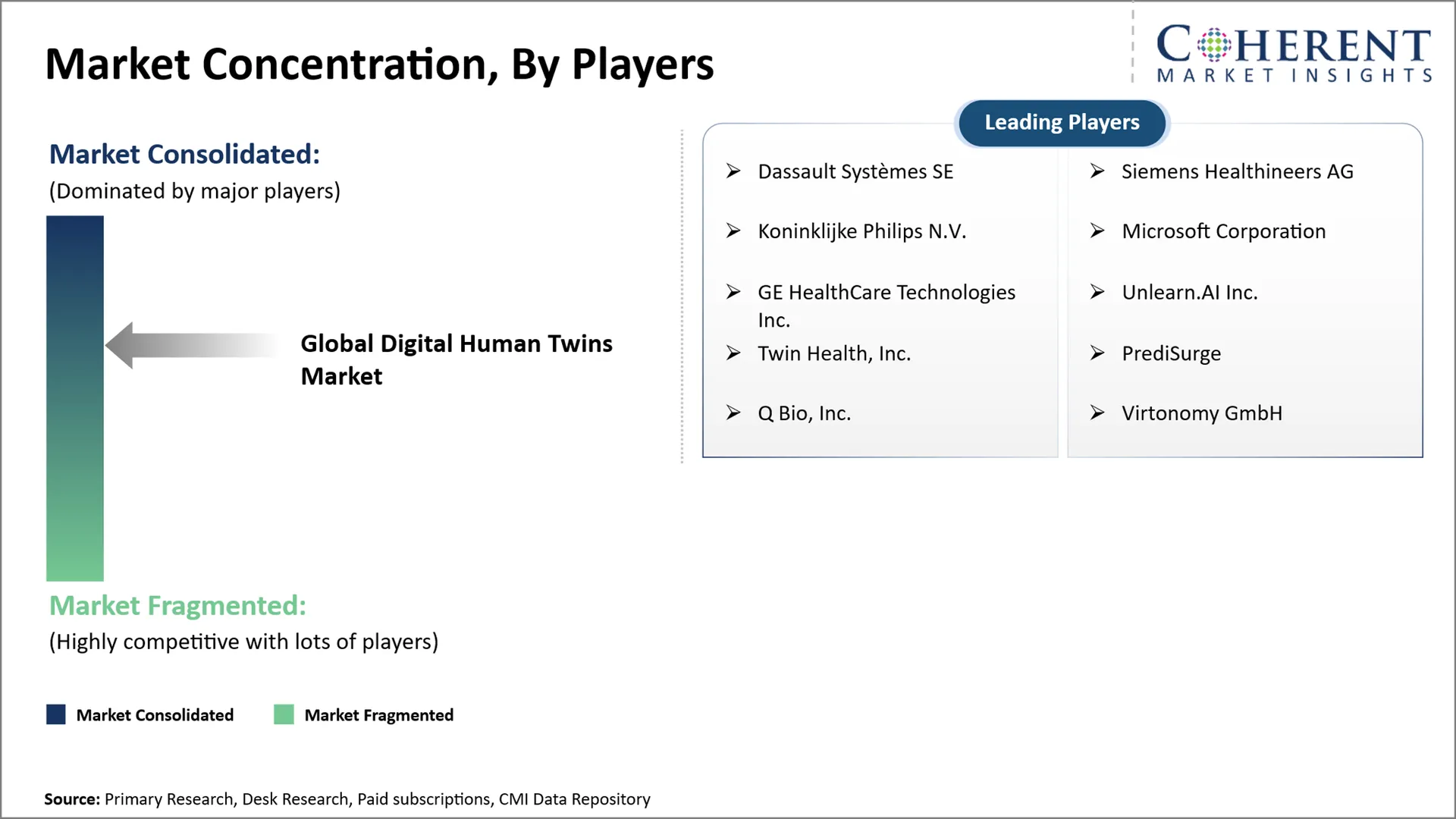
The global digital human twins market is evolving through advancements in AI-driven human modeling, physiological simulation, predictive analytics, and personalized healthcare technologies. Market participants are increasingly focusing on improving model accuracy, integrating diverse human data, and expanding applications across healthcare, pharmaceutical research, and human performance analysis. Key focus areas include:
- Development of AI-powered digital human models for personalized health assessment and prediction
- Integration of wearable devices, biosensors, and real-time physiological data streams
- Advancement of virtual patient models for drug discovery and clinical trial simulation
- Enhancement of data interoperability, model accuracy, and predictive capabilities
- Strengthening of data privacy, cybersecurity, and clinical validation frameworks
Market Report Scope
Digital Human Twins Market Report Coverage | |||
Report Coverage | Details | ||
Base Year | 2025 | Market Size in 2026: | USD 1,185.6 Mn |
Historical Data For: | 2020 To 2024 | Forecast Period: | 2026 To 2033 |
Forecast Period 2026 To 2033 CAGR: | 17.8% | 2033 Value Projection: | USD 3,742.8 Mn |
Geographies covered: |
| ||
Segments covered: |
| ||
Companies covered: | Dassault Systèmes SE, Siemens Healthineers AG, Koninklijke Philips N.V., Microsoft Corporation, GE HealthCare Technologies Inc., Unlearn.AI Inc., Twin Health, Inc., PrediSurge, Q Bio, Inc., Virtonomy GmbH | ||
Growth Drivers: |
| ||
Restraints & Challenges: |
| ||
Analyst Opinion (Expert Opinion)
- In the coming years, global digital human twins market will be shaped by advances in artificial intelligence, real-time physiological data integration, and increasingly personalized human modeling. Digital human twins are expected to evolve from simulation-based models into adaptive systems capable of supporting individualized healthcare decisions, predicting disease progression, and improving drug development. Commercial growth will depend on model accuracy, reliable data integration, clinical validation, and the ability to demonstrate measurable outcomes.
- The maximum opportunities are foreseen within personalized healthcare and precision medicine in the U.S., where digital human twins can support patient-specific disease modeling, treatment optimization, and therapy-response prediction. Clinical research and drug development in China also represent a promising opportunity, particularly for virtual patient modeling and simulation-assisted drug evaluation. These applications offer potential to improve research efficiency and tailor interventions, although adoption will depend on scientific validation and integration into existing healthcare and research workflows.
- In order to gain a competitive advantage market players should prioritize application-specific digital human twin platforms, strengthen AI capabilities, and integrate diverse data sources into reliable, continuously updated models. Companies should also invest in interoperability, data privacy, cybersecurity, and validation processes to build user confidence. Strategic partnerships with healthcare providers, pharmaceutical companies, research institutions, and technology developers will help accelerate commercialization and establish sustainable competitive positioning.
Speak to the analyst
Want personalized insights?
Take the findings above to one of our principal consultants, or have the report rebuilt around the segments, geographies and competitors you actually track.
Market Segmentation
- Component Insights (Revenue, USD Mn, 2021 - 2033)
- Software
- Hardware
- Services
- Technology Insights (Revenue, USD Mn, 2021 - 2033)
- Artificial Intelligence and Machine Learning
- Digital Twin Modeling and Simulation
- Data Analytics and Integration
- Application Insights (Revenue, USD Mn, 2021 - 2033)
- Personalized Healthcare and Precision Medicine
- Disease Prediction and Prevention
- Clinical Research and Drug Development
- Fitness and Wellness Management
- Others
- End User Insights (Revenue, USD Mn, 2021 - 2033)
- Hospitals and Healthcare Providers
- Pharmaceutical and Biotechnology Companies
- Research and Academic Institutions
- Others
- Regional Insights (Revenue, USD Mn, 2021 - 2033)
- North America
- U.S.
- Canada
- Latin America
- Brazil
- Argentina
- Mexico
- Rest of Latin America
- Europe
- Germany
- U.K.
- Spain
- France
- Italy
- Russia
- Rest of Europe
- Asia Pacific
- China
- India
- Japan
- Australia
- South Korea
- ASEAN
- Rest of Asia Pacific
- Middle East
- GCC Countries
- Israel
- Rest of Middle East
- Africa
- South Africa
- North Africa
- Central Africa
- North America
- Key Players Insights
- Dassault Systèmes SE
- Siemens Healthineers AG
- Koninklijke Philips N.V.
- Microsoft Corporation
- GE HealthCare Technologies Inc.
- Unlearn.AI Inc.
- Twin Health, Inc.
- PrediSurge
- Q Bio, Inc.
- Virtonomy GmbH
Sources
Primary Research Interviews
- Healthcare professionals specializing in personalized medicine, precision healthcare, and patient-specific disease modeling
- Clinical researchers and investigators involved in digital twin-based clinical trials and virtual patient simulation
- Pharmaceutical and biotechnology R&D specialists working on computational drug development and in-silico testing
- Biomedical engineers, computational biologists, and AI researchers developing human physiological models
- Digital health technology providers specializing in wearable monitoring, biosensors, and real-time health data integration
Stakeholders
- Healthcare digital twin platform developers and AI-based medical technology companies
- Pharmaceutical and biotechnology companies developing virtual patient models for drug discovery and clinical research
- Medical simulation, computational biology, and physiological modeling technology developers
- Wearable health monitoring and connected medical-device manufacturers
- Healthcare data analytics, cloud computing, and digital health infrastructure providers
- End-use Sectors
- Hospitals and healthcare providers
- Pharmaceutical and biotechnology companies
- Research and academic institutions
- Clinical research organizations (CROs)
- Medical device and digital health technology companies
- Government-funded biomedical research centers
- Regulatory & Health Bodies
- U.S. Food and Drug Administration (FDA) — medical devices, software as a medical device, and digital health technologies
- European Medicines Agency (EMA) — medicines development and clinical research
- European Commission — Virtual Human Twins Initiative and digital health research
- Medicines and Healthcare products Regulatory Agency (MHRA), UK — medical devices and software-based health technologies
- Pharmaceuticals and Medical Devices Agency (PMDA), Japan — medical products and digital health technologies
- National Medical Products Administration (NMPA), China — medical devices and digital health products
- Central Drugs Standard Control Organisation (CDSCO), India — medical devices and clinical research
Databases
- ClinicalTrials.gov — clinical studies involving digital twins, personalized medicine, and virtual patient models
- WHO International Clinical Trials Registry Platform (ICTRP) — international clinical trial records
- FDA Medical Device Databases — regulatory information for relevant medical technologies
- EU Clinical Trials Information System (CTIS) — clinical trial information across the European Union
- Clinical Trials Registry–India (CTRI) — Indian clinical trial registrations
Journals
- Nature Medicine
- The Lancet Digital Health
- npj Digital Medicine
- Journal of Medical Internet Research
- IEEE Journal of Biomedical and Health Informatics
- JACC: Basic to Translational Science
Associations
- Healthcare Information and Management Systems Society (HIMSS)
- IEEE Engineering in Medicine and Biology Society (EMBS)
- American Medical Informatics Association (AMIA)
- International Society for Computational Biology (ISCB)
- Biomedical Engineering Society (BMES)
- Digital Medicine Society (DiMe)
Public Domain Sources
- National Institutes of Health (NIH) — biomedical research and digital twin initiatives
- National Science Foundation (NSF) — computational modeling and biomedical technology research
- U.S. Food and Drug Administration (FDA) — medical device and digital health guidance
- European Commission Virtual Human Twins Initiative — virtual human twin research, integration, and validation
- World Health Organization (WHO) — digital health and global health information
- National Center for Biotechnology Information (NCBI) — biomedical literature and biological datasets
- Office of the National Coordinator for Health Information Technology (ONC) — health information technology and interoperability
Proprietary Elements
- CMI Data Analytics Tool, Proprietary CMI Existing Repository of information for last 10 years.
Get access to 250+ pages report
Every segment, forecast, competitor profile and data table behind the analysis above — available for instant download.
- ESOMAR Member
- ISO 9001:2015 Certified
- D-U-N-S Registered
- GDPR & CCPA Compliant
Frequently Asked Questions
The global digital human twins market is estimated to be valued at USD 1,185.6 Mn in 2026 and is expected to reach USD 3,742.8 Mn by 2033.
Software dominates due to its central role in human modeling, simulation, data integration, and AI-driven predictive analysis.
Digital human twins are virtual representations of individuals or human biological systems that use real-world data to simulate, monitor, and predict physiological or behavioral outcomes.
The CAGR of global digital human twins market is projected to be 17.8% from 2026 to 2033.
Growing demand for personalized healthcare and precision medicine, and advancements in AI-driven human modeling and predictive analytics are the major factors driving the growth of the global digital human twins market.
High costs of developing and maintaining digital human twins, and data privacy and security concerns surrounding sensitive personal information are the major factors hampering the growth of the global digital human twins market.
In terms of technology, artificial intelligence and machine learning is estimated to dominate the market revenue share in 2026.