

Global Flexible Sensors Market Size and Forecast – 2026 To 2033
The global flexible sensors market is expected to grow from USD 6.85 Bn in 2026 to USD 11.15 Bn by 2033, registering a compound annual growth rate (CAGR) of 8.2% from 2026 to 2033. The market for flexible sensors is driven by increasing use of flexible human machine interfaces. On January 6, 2025, Wearable Devices Limited launched Mudra Link commercially. The neural gesture-control wristband uses proprietary Surface Nerve Conductance sensors to capture electromyography signals from subtle finger movements.
Key Takeaways of the Global Flexible Sensors Market
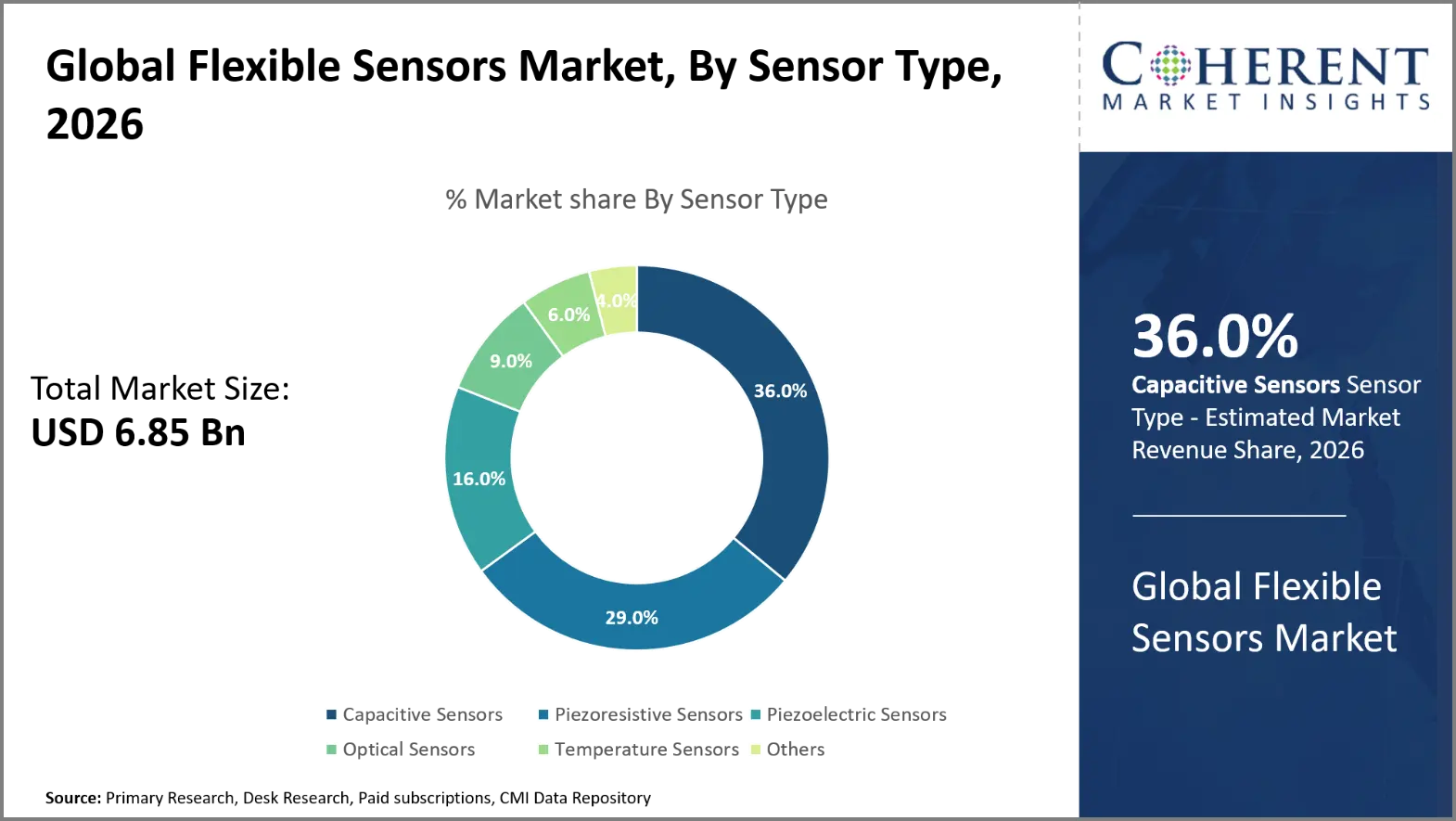
- The Capacitive Sensors segment is expected to account for 36.0% of the global flexible sensors market share in 2026. Expansion of electronic skin and tactile sensing is driving the growth of the segment. In June 2025, Fulai New Materials launched its second-generation electronic skin. The flexible tactile system detects multidimensional force and temperature for robotic applications.
- The Polymer-Based Materials segment is estimated to capture 34.0% of the market share in 2026. Increasing demand for lightweight automotive sensing is majorly driving the growth of the segment. On October 8, 2025, Brighter Signals and Jiangsu Changshu Automotive Trim Group (CAIP) formed a strategic partnership. CAIP will manufacture Brighter Signals' fabric-based tactile sensors in China.
- The Healthcare segment is estimated to capture 32.0% of the market share in 2026. Advancements in flexible substrates and functional materials is majorly driving the growth of the segment. On June 9, 2026, Covestro and Insulectro announced a flexible-electronics materials partnership. The collaboration combines Covestro's specialty films with Insulectro's distribution and engineering capabilities.
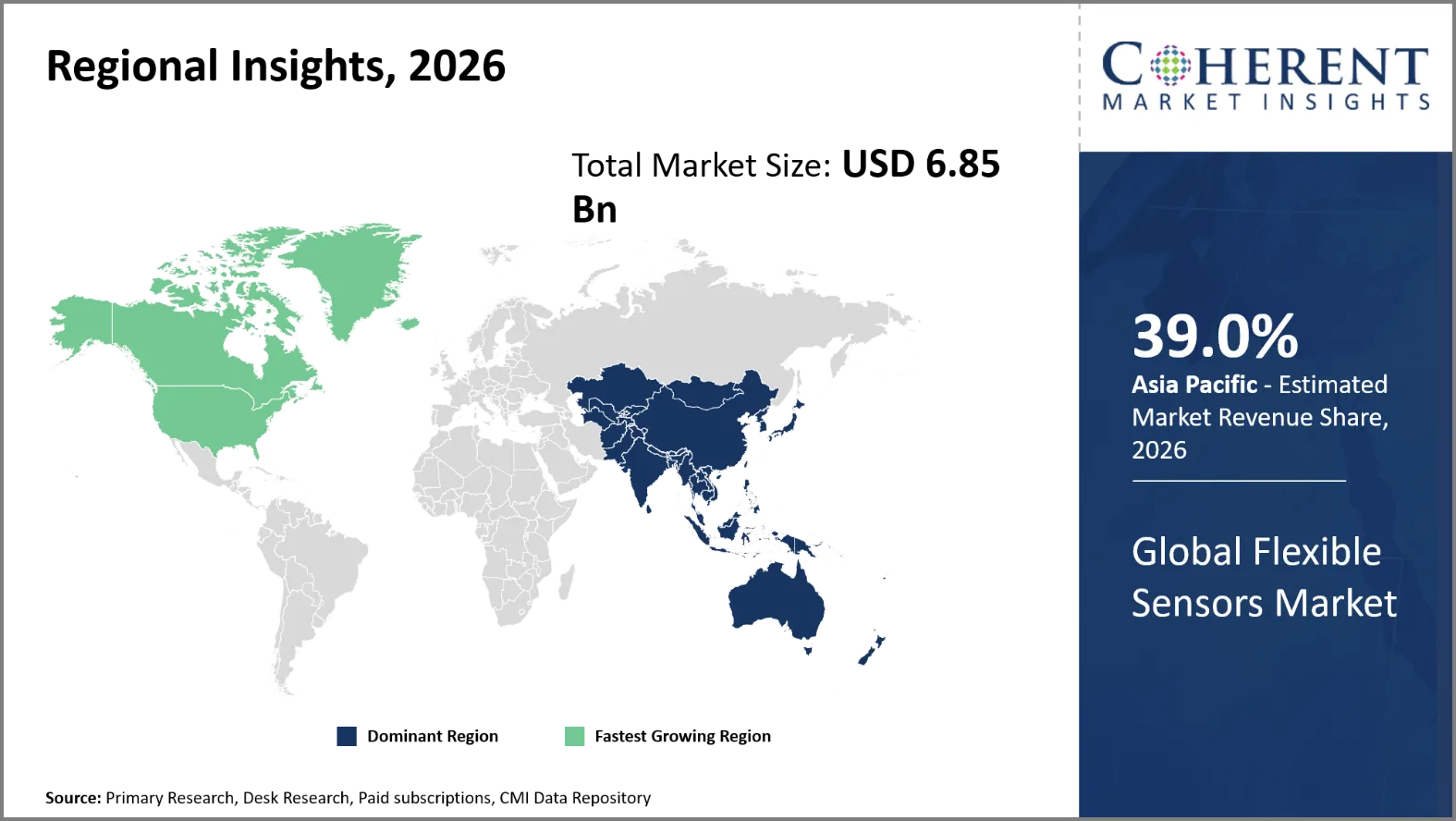
- Asia Pacific is expected to dominate the flexible sensors market in 2026 with a market share of 39.0%. Growing deployment in robotics and industrial automation in Asia Pacific is driving the growth of the regional market. On April 16, 2025, Daimon Robotics launched its embodied intelligence product line in China. The portfolio included DM-Tac W vision-based tactile sensors and DM-Hand1 dexterous hands.
- North America is expected to account for 30.0% share in 2026 and is projected to record the fastest growth over the forecast period. Growing printed sensor integration with Internet of Things devices in North America is driving the growth of the regional market. For instance, Florida-based Feel with Me received a National Science Foundation Phase I award for flexible sensor arrays in 2025. The project uses inkjet printing and carbon nanotube technology for smart fabrics and surfaces.
Segmental Insights
Why Does Capacitive Sensors Dominate the Global Flexible Sensors Market?
The capacitive sensors segment is expected to account for 36.0% of the global flexible sensors market share in 2026. Capacitive sensing offers high sensitivity while requiring relatively low power for flexible electronic applications. Simple electrode structure of capacitive sensors supports integration with thin and bendable substrates. The technology can sense pressure, touch, proximity and deformation in a range of flexible gadgets. Capacitive elements can be used with printed conductive elements for scalable manufacture. These characteristics support adoption across wearable devices, healthcare equipment, consumer electronics, and human-machine interfaces.
On September 3, 2025, with the serial production of sensor laminates, the WACKER group announced it is taking the production of flexible printed electronics to the next level. At this year’s K 2025 trade fair, held in Düsseldorf, Germany, from October 8-15, 2025, the company will be presenting itself as a manufacturer of prefabricated components for the first time. The laminates which are offered under the brand name NEXIPAL Sense are produced using a specially developed and fully automated roll-to-roll manufacturing process.
- Current Industry Events of 2026
- Market Size Estimation
- Regional Breakdown
- Competitive Landscape
- Customer Intelligence
- Segmental Analysis
- Pricing Analysis
- Key Market Drivers, Challenges & Future Trends
- Customized Insights Section
Why is Polymer-Based Materials the Most Preferred Material?
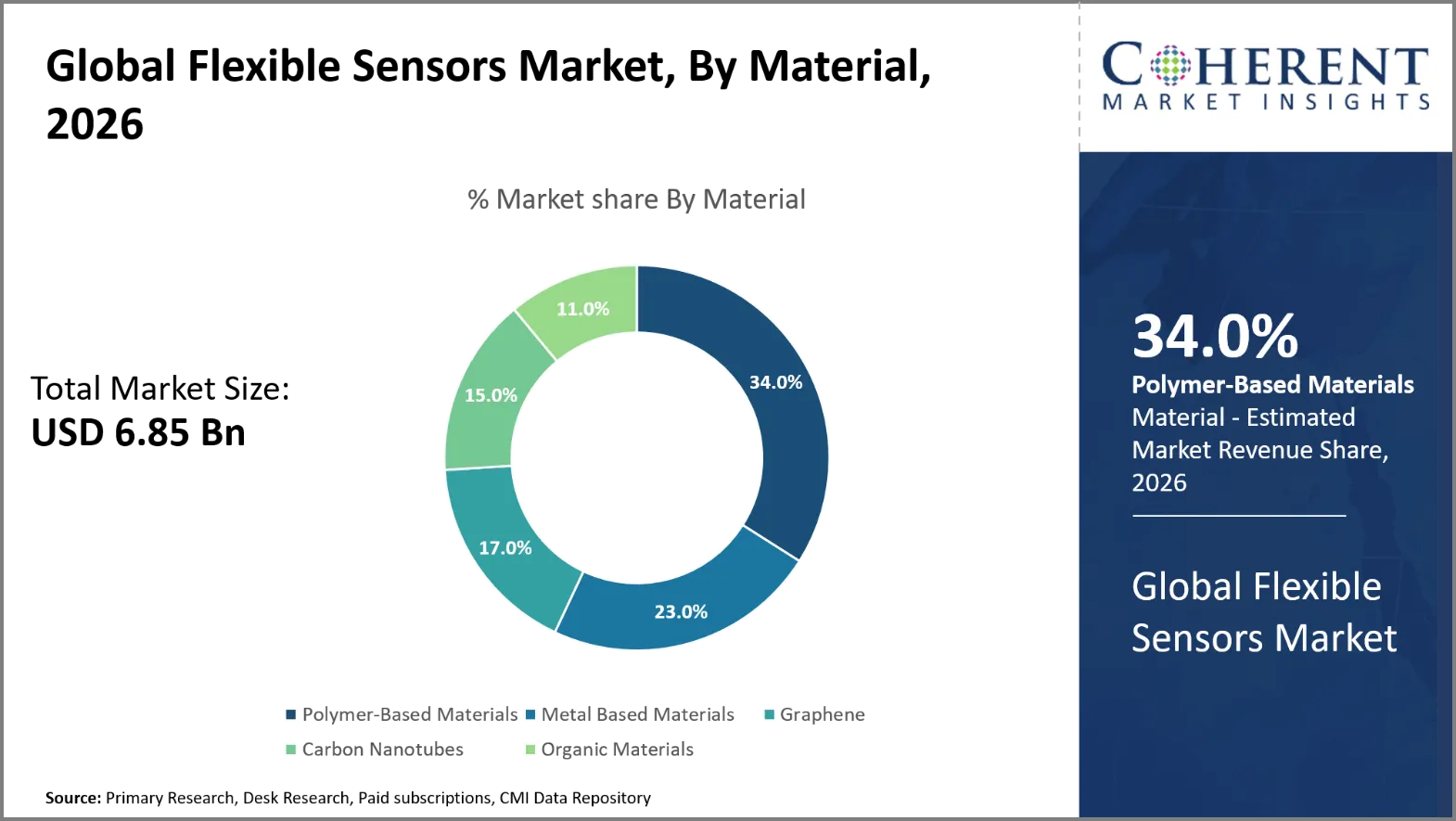
The polymer-based materials segment is expected to account for 34.0% of the global flexible sensors market share in 2026. Polymer materials have remarkable flexibility and mechanical durability in repeated bending and stretching. Due to their light structure, they can be easily integrated into wearable and portable electronics. Conductive inks, nanoparticles and functional coatings can be incorporated into sensors using polymers. Owing to the wide chemical diversity of these materials, manufacturers can tailor electrical, thermal, and mechanical properties for specific applications. These features enable broader applications in healthcare wearables, flexible electronics, automobile interiors, and industrial monitoring systems. In April 2025, DuPont launched silver nanowire material solutions for smart surfaces and in-mold electronics in South Korea. The company positioned these materials for automotive and consumer electronics applications. The portfolio supports transparent heaters, advanced driver assistance systems, and transparent electromagnetic interference shielding.
Healthcare Dominates the Global Flexible Sensors Market
The healthcare segment is expected to account for 32.0% of the global flexible sensors market share in 2026. Healthcare applications increasingly require continuous and unobtrusive monitoring of physiological parameters. Flexible sensors can be well adapted to skin surfaces, which can increase the comfort for long-term monitoring. These gadgets are capable of measuring pressure, temperature, mobility, heart activity and other physiological information. Their tiny architectures allow for integration into patches, smart fabrics, and wearable medical equipment. The increasing demand for remote patient monitoring is also boosting use in hospitals, clinics, and home healthcare settings. On April 22, 2025, Biolinq Incorporated announced a USD 100 million Series C funding headed by Alpha Wave Ventures. The funding will support Biolinq through the U.S. regulatory approval process as the company prepares to bring the first autonomous intradermal glucose sensor to market.
Current Events and their Impact
Current Events | Description and its Impact |
European Union Medical Device Regulation |
|
European Union EUDAMED Requirements Regulation (EU) 2024/1860 |
|
Flexible Sensors Market Dynamics
Market Drivers
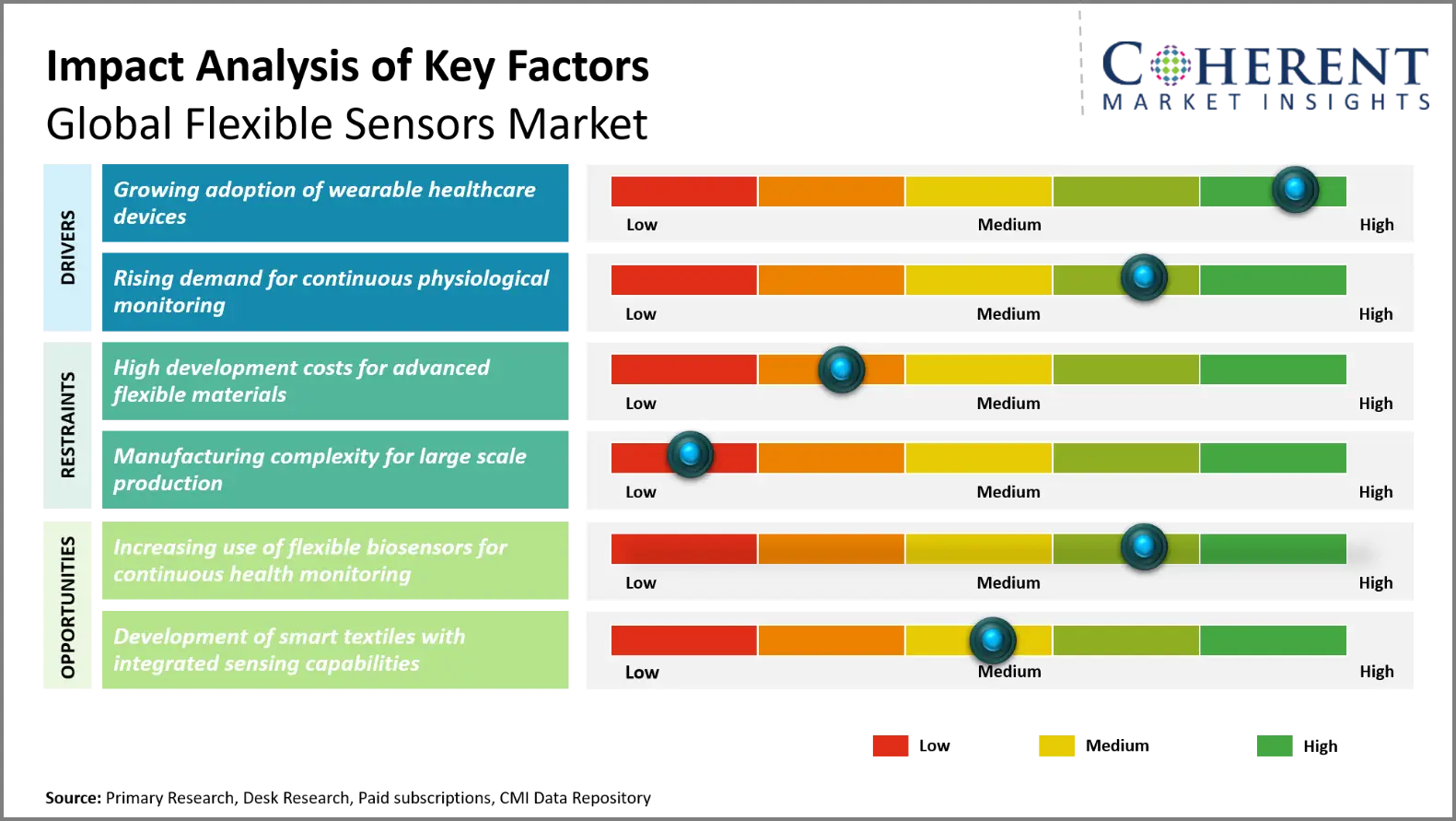
Growing adoption of wearable healthcare devices
Flexible sensors are being used more and more in wearable healthcare devices to enable comfortable continuous tracking during everyday activities. Their flexible designs allow the sensors to fit tightly around curved body surfaces without limiting motion. Flexible sensing components are widely utilized in smart patches, fitness monitors, smartwatches, and connected textiles. Providers also employ wearable devices in healthcare to remotely monitor and manage chronic conditions. The growing device ecosystem requires flexible sensors that are tiny, light weight and mechanically robust.
On September 9, 2025, Vivalink, a leading provider of digital healthcare solutions, announced the commercial availability of a new wearable ECG sensor adhesive that enhances p-wave identification during ambulatory cardiac monitoring. P-wave abnormalities are strong predictors of future adverse cardiac events such as atrial fibrillation, ischemic stroke and even sudden cardiac death.
Rising demand for continuous physiological monitoring
Continuous physiological monitoring is increasing demand for sensors capable of collecting measurements over extended periods. Flexible sensors can sense things like temperature, pressure, motion and electrical signals from the body. Their conformability allows for closer skin contact and can improve signal capture during motion. The remote monitoring devices can send the obtained measurements to the healthcare specialists for further examination. This trend resulted in the creation of flexible sensors with higher accuracy, durability, and low-power operation.
On February 26, 2026, Sibel Health received the U.S. Food and Drug Administration authorization for ANNE Maternal. The wireless platform is used for continuous tracking of maternal and fetal physiological data. It enables monitoring during labor and pregnancy care without an intrusive procedure.
Emerging Trends
- AI-Enabled Flexible Sensor Analytics: Flexible sensors are increasingly using artificial intelligence to analyze physiological and environmental data in real time. Machine learning algorithms are capable of learning patterns, detecting outliers and forecasting monitoring. This development makes sensors smarter in the health care, wearables, robotics and industrial applications.
- Stretchable Electronic Sensor Architectures: Manufacturers are creating stretchy sensors that can keep their electrical performance after repeated deformation. Increased mechanical flexibility is provided through advanced elastomers, conductive nanoparticles and serpentine architectures. These breakthroughs enable applications such as electronic skin, wearable healthcare gadgets, soft robotics and motion tracking.a
- Self-Powered Flexible Sensing Systems: Flexible sensors are increasingly being integrated with energy harvesting technologies to lessen dependence on conventional batteries. The triboelectric, piezoelectric and photovoltaic can be used to harvest power when in motion or in contact with the environment. Self-powered designs result in longer operation times for wearable and remote monitoring systems.
- Multimodal Flexible Sensor Integration: Developers are integrating several sensing functionalities on tiny flexible platforms. Integrated systems can simultaneously measure pressure, temperature, motion and strain and physiological signs. Multimodal sensing enhances context awareness and enables sophisticated applications in healthcare, human-machine interfaces, robotics, and smart textiles.
Regional Insights
Why is Asia Pacific a Strong Market for Flexible Sensors?
Asia Pacific is expected to account for a market share of 39.0% in 2026. Progress in Asia Pacific is driven by large-scale electronics manufacturing and fast integration of wearable devices. Together, China, Japan, and South Korea boost regional sensor research and production capacity. In 2025, Chinese scientists announced the development of flexible wearable sensors for health monitoring and motion detection. Japan keeps developing flexible electronics for healthcare and human-machine interfaces. South Korean scientists create bendable neuromorphic circuitry for wearable near-sensor computing. Regional universities are also progressing in the areas of nanomaterials, printed electronics, energy harvesting designs. These developments are expanding flexible sensor applications across smart textiles, healthcare patches, robotics, and consumer electronics.
Why Does North America Flexible Sensors Market Exhibit High Growth?
North America is expected to register the fastest growth with a CAGR of 8.8% over the forecast period. It is projected to account for 30.0% of the global flexible sensors market in 2026. North America benefits from strong research activity linking flexible sensors with healthcare, robotics, and human-machine interaction. The National Institute of Standards and Technology maintains dedicated research programs covering flexible electronics and advanced manufacturing. U.S. research teams are creating flexible sensor platforms for physiological monitoring and medicinal uses. In 2025, researchers exhibited a 3D printed platform of wearable carbon-nanotube pressure sensors and tactors. These systems included prosthetic, sole, and glove implementations. The region is also developing flexible sensors for artificial skin, brain-computer interfaces, and intelligent wearables.
Global Flexible Sensors Market Outlook for Key Countries
Why is China Emerging as a Major Hub in the Flexible Sensors Market?
China is strengthening flexible sensor development through coordinated university research and national research programs. Researchers from Nanjing University and Soochow University published work on nanowire-based flexible sensors in 2025. Their research is on wearable electronics, brain-computer interfaces and the artificial skins. This work was supported by the National Key Research Program of China and the National Natural Science Foundation of China. Chinese research also includes liquid-metal flexible electronics, with work financed by Beijing and Shenzhen scientific programs. Advances are growing applications in healthcare wearables, human-machine interfaces, electronic skin and biomedical sensors.
Is the U.S. the Next Growth Engine for the Flexible Sensors Market?
The U.S. is advancing flexible sensors through national laboratories, universities, and medical technology research. The National Institute of Standards and Technology operates flexible-electronics research covering materials, devices, manufacturing, and characterization. The U.S. researchers are also creating wearable systems that combine sensing with therapeutic feedback. A 2025 study showed a 3D-printed device that combines touch sensors, actuators, a prosthetic, sole and glove. Pressure changes were registered in the system by carbon-nanotube sensors. Such research supports flexible sensing for prosthetics, rehabilitation, human-machine interaction, and personalized healthcare technologies.
Germany Flexible Sensors Market Analysis and Trends
Germany is strengthening flexible sensor adoption through automotive engineering, industrial automation, medical technology, and printed electronics research. German research institutions are investigating flexible piezoelectric materials capable of combining sensing, actuation, and energy harvesting. These capabilities are relevant to industrial condition monitoring and autonomous sensor platforms. German universities also participate in research covering flexible materials for body-function and athletic-performance monitoring. The country's established machinery and automotive ecosystems create additional applications for conformable pressure, strain, and tactile sensing. These applications include robotic interaction, vehicle interiors, wearable medical systems, and industrial human-machine interfaces.
Japan Flexible Sensors Market Analysis and Trends
Japan is developing flexible sensors around wearable electronics, advanced materials, and human-machine interfaces. Japanese research has increasingly examined flexible devices that maintain functionality during bending and repeated deformation. Flexible piezoelectric devices are particularly useful because they combine sensing with mechanical energy harvesting. Japanese electronics competence enables integration into tiny wearable platforms and smart fabrics. Research appearing in 2025 points to stretchy materials that could monitor physiology and sporting performance. These developments support applications requiring lightweight sensing, continuous body monitoring, motion detection, and energy-efficient wearable operation.
South Korea Flexible Sensors Market Analysis and Trends
South Korea is developing flexible sensors alongside advanced semiconductor, display, and wearable-electronics technologies. Researchers at the University of Seoul published work on flexible neuromorphic electronics in 2025. Their architectures combine artificial sensory neurons with processing capabilities for wearable near-sensor and in-sensor computing. In 2025, Korean researchers developed chip-less, battery-free, textile-based body sensor networks. The technology involves wireless physiological monitoring using passive sensors attached to the body. This opens up prospects for smart clothing, healthcare monitoring, human-machine interfaces and low power wearable systems.
Global Flexible Sensors Market - Integration with Wearable Electronics, Smartwatches, Patches, Smart Rings, and Connected Medical Devices:
Wearable or Connected Device | Flexible Sensor Integration | Key Sensing Parameters | Primary Applications |
Smartwatches | Flexible electrodes and skin-contact sensors | Heart rate, ECG, temperature, motion | Fitness, wellness, cardiac monitoring |
Smart patches | Flexible epidermal and electrochemical sensors | Glucose, ECG, temperature, sweat biomarkers | Remote patient monitoring, chronic disease management |
Smart rings | Miniaturized flexible and compact sensing elements | Heart rate, SpO2, skin temperature, sleep, motion | Sleep, wellness, metabolic monitoring |
Connected medical devices | Flexible biosensors with wireless connectivity | ECG, respiration, oxygen saturation, temperature | Hospitals, home healthcare, rehabilitation |
Smart textiles | Printed conductive structures and flexible sensors | Pressure, strain, temperature, movement | Sports, healthcare, worker monitoring |
How is Increasing Use of Flexible Biosensors for Continuous Health Monitoring Creating New Growth Opportunities in the Flexible Sensors Market?
The rising popularity of flexible biosensors provides options for ongoing monitoring beyond conventional clinical assessments. Sweat-based technologies can monitor biomarkers such as glucose, lactate, electrolytes and cortisol throughout daily activities. Skin-conformal sensors continuously acquire physiological data without heavy clinical equipment. Flexible electrochemical patches are also being developed for simultaneous biological and physical monitoring. Now, researchers and manufacturers are merging microfluidic channels with flexible electrodes to direct and analyze sweat right on the skin. Such improvements allow for customized monitoring in diabetes treatment, sports performance, stress assessment and rehabilitation. Further integration with wireless electronics provides decentralized monitoring and data-driven health care procedures.
On October 20, 2025, Adaptyx Biosciences reported that it had raised USD 14 million in seed investment, increasing total funding to USD 23 million since establishment. Adaptyx’s biowearable technology is a game changer in continuous health monitoring, going beyond glucose to detect a much broader spectrum of human biochemistry and shedding light on what has been concealed between lab visits for so long.
Market Players, Key Development, and Competitive Landscape
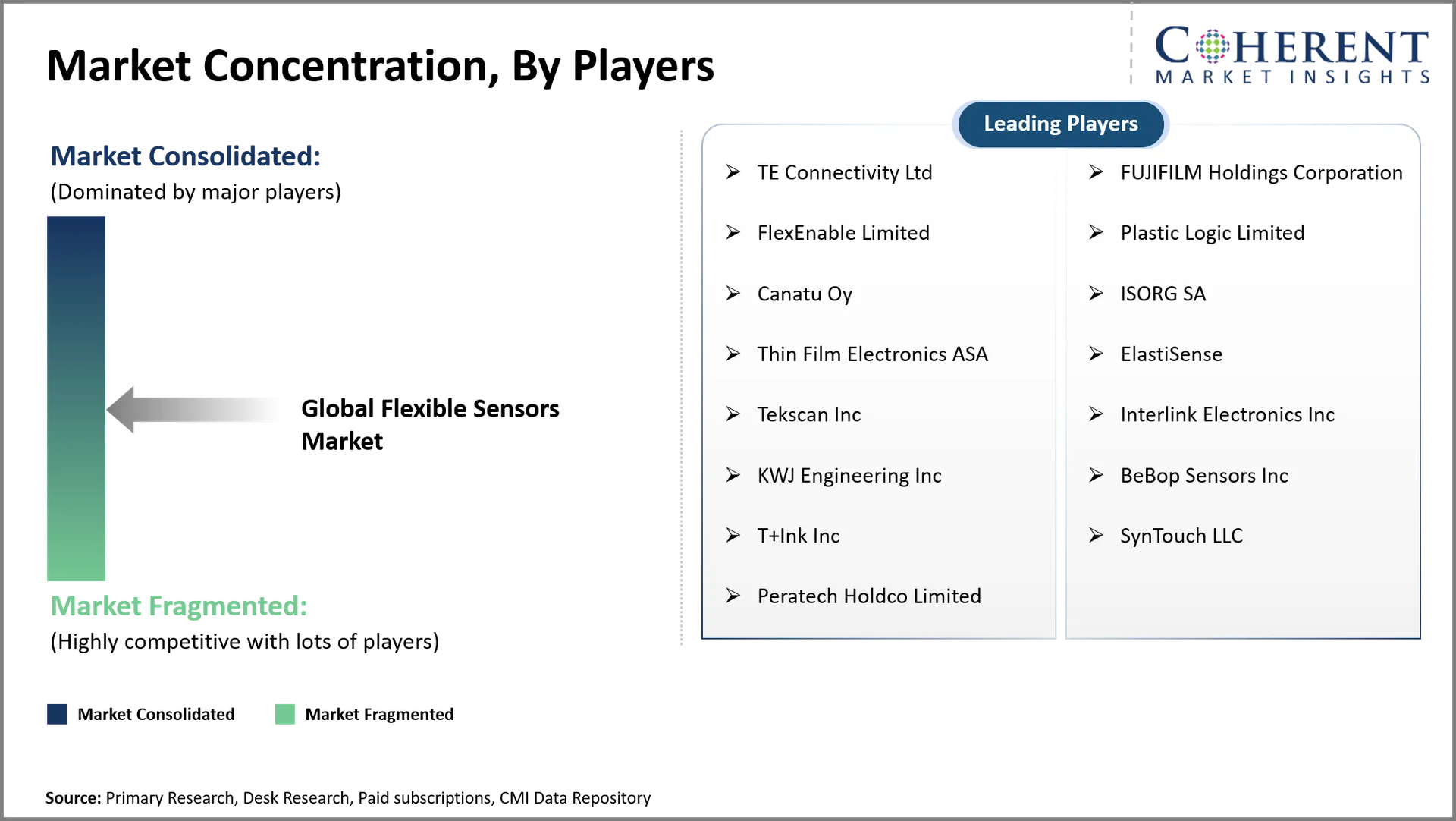
Key Developments
- On January 24, 2026, the Federal Economic Development Agency for Southern Ontario announced a combined investment of over USD 3.5 million for two companies as they expand operations, build new capabilities, and adopt innovative technologies. This includes a USD 1.7 million investment for Voltera Inc. to help engineers and researchers create and test circuit boards and apply advanced materials for new designs.
- On December 10, 2025, Smartkem, Inc. announced that it has created the world's first all-organic-transistor (AOT) biometric sensor, in collaboration with the SJTU. This novel technology significantly increases the sensitivity of optical detection for flexible biometric applications, such as finger or palm print recognition on curved surfaces and has the potential to help address challenges like fingerprint spoofing.
Competitive Landscape
The competitive landscape is shifting toward integrated sensing platforms, scalable manufacturing, and application-specific flexible sensor solutions. Interlink Electronics combines force sensing, printed electronics, embedded electronics, firmware, and software for medical, automotive, wearable, and industrial applications. Interlink created advanced test-strip electrodes, and 3rd-generation wearable technology for a muscle-stimulation device certified in 2026. It also has a South Yorkshire site planned for conductive transfer technologies for smart fabrics and wearables. In 2026, Tekscan and Uneo joined to form the Tekscan Group, integrating pressure mapping expertise with printed flexible sensors and high-volume manufacturing. Canatu is focusing its carbon-nanotube platform on medical diagnostics, mobility, robotics, and safety-critical sensor applications.
Flexible Sensors Market Report Coverage | |||
Report Coverage | Details | ||
Base Year | 2025 | Market Size in 2026: | USD 6.85 Bn |
Historical Data For: | 2020 To 2024 | Forecast Period: | 2026 To 2033 |
Forecast Period 2026 To 2033 CAGR: | 8.2% | 2033 Value Projection: | USD 11.15 Bn |
Geographies covered: |
| ||
Segments covered: |
| ||
Companies covered: | TE Connectivity Ltd, FUJIFILM Holdings Corporation, FlexEnable Limited, Plastic Logic Limited, Canatu Oy, ISORG SA, Thin Film Electronics ASA, ElastiSense, Tekscan Inc, Interlink Electronics Inc, KWJ Engineering Inc, BeBop Sensors Inc, T+Ink Inc, SynTouch LLC, Peratech Holdco Limited | ||
Growth Drivers: |
| ||
Restraints & Challenges: |
| ||
Analyst Opinion (Expert Opinion)
- The industry is moving toward sensor platforms that combine flexibility, sensing, processing, and connectivity within thinner architectures. The strongest technical differentiation should come from sensors maintaining accuracy during repeated bending, stretching, and skin contact. Multimodal platforms combining pressure, temperature, strain, and biochemical measurements should become increasingly important. Flexible sensors will also increasingly connect with embedded processing rather than operating as isolated sensing components. This shift favors suppliers controlling materials, sensor fabrication, electronics integration, and application engineering within one development chain.
- The clearest opportunity should center on biosensors, pressure sensors, and multimodal wearable sensors. Healthcare applications can benefit from continuous biochemical and physiological measurements using skin-conformal architectures. Point-of-care diagnostics also provide an important route for electrochemical flexible sensors. Asia Pacific presents vast opportunities with China, Japan and South Korea being the hub for electronics manufacturing, wearable manufacture and innovative materials development. Medical technology, robotics and enhanced human-machine interfaces are still crucial for North America. Players should therefore not focus on the sale of flexible sensing elements alone, but on application-specific platforms.
- Market players should create specialized materials and manufacturing procedures to develop an increased durability without sacrificing sensitivity. Interlink’s blend of printed electronics, manufacturing, embedded electronics, firmware and software is an example of this integrated method. Biosensing applications can benefit from collaborations with medical-device developers that can simplify validation procedures. Flexible sensor firms also need to have scalable manufacturing processes in place prior to the maturation of high-volume wearable programs. Complementary printed electronics or manufacturing technologies can hasten this shift. The strongest positioning should combine proprietary sensing materials, application engineering, production scalability, and customer-specific integration.
Speak to the analyst
Want personalized insights?
Take the findings above to one of our principal consultants, or have the report rebuilt around the segments, geographies and competitors you actually track.
Market Segmentation
- Sensor Type Insights (Revenue, USD Billion, 2021 - 2033)
- Capacitive Sensors
- Piezoresistive Sensors
- Piezoelectric Sensors
- Optical Sensors
- Temperature Sensors
- Others
- Material Insights (Revenue, USD Billion, 2021 - 2033)
- Polymer-Based Materials
- Metal Based Materials
- Graphene
- Carbon Nanotubes
- Organic Materials
- Application Insights (Revenue, USD Billion, 2021 - 2033)
- Healthcare
- Consumer Electronics
- Automotive
- Industrial
- Wearable Technology
- Robotics
- Aerospace And Defense
- End User Insights (Revenue, USD Billion, 2021 - 2033)
- Medical Devices
- Consumer Electronics
- Automotive Systems
- Industrial Equipment
- Smart Textiles
- Robotics Systems
- Regional Insights (Revenue, USD Billion, 2021 - 2033)
- North America
- U.S.
- Canada
- Latin America
- Brazil
- Argentina
- Mexico
- Rest of Latin America
- Europe
- Germany
- U.K.
- Spain
- France
- Italy
- Russia
- Rest of Europe
- Asia Pacific
- China
- India
- Japan
- Australia
- South Korea
- ASEAN
- Rest of Asia Pacific
- Middle East
- GCC Countries
- Israel
- Rest of Middle East
- Africa
- South Africa
- North Africa
- Central Africa
- North America
Sources
Primary Research Interviews
- Flexible Sensor Manufacturers & OEMs
- Electronics & Semiconductor Component Suppliers
- Wearable Technology Developers & Integrators
- Healthcare Device & Medical Electronics Companies
Magazines
- IEEE Spectrum
- Electronics Weekly
- Sensors Magazine
- Wearable Technologies Magazine
Journals
- Advanced Materials (Wiley)
- Journal of Applied Physics (AIP Publishing)
Associations
- IEEE Electron Devices Society
- Semiconductor Industry Association (SIA)
- lexible Electronics & Display Center (FEDC)
- International Electronics Manufacturing Initiative (iNEMI)
Public Domain Sources
- U.S. Patent and Trademark Office (USPTO)
- European Patent Office (EPO)
- U.S. Department of Energy (DOE) – Advanced Manufacturing Reports
- World Trade Organization (WTO) Trade Data
Proprietary Elements
- CMI Data Analytics Tool
- Proprietary CMI Existing Repository of Information for the Last 10 Years
Get access to 250+ pages report
Every segment, forecast, competitor profile and data table behind the analysis above — available for instant download.
- ESOMAR Member
- ISO 9001:2015 Certified
- D-U-N-S Registered
- GDPR & CCPA Compliant
Frequently Asked Questions
The global flexible sensors market is expected to stand at USD 6.85 Bn in 2026 and is expected to reach USD 11.15 Bn by 2033.
The CAGR of the global flexible sensors market is projected to be 8.2% from 2026 to 2033.
Growing adoption of wearable healthcare devices and rising demand for continuous physiological monitoring are the major factors driving the growth of the global flexible sensors market.
High development costs for advanced flexible materials and Manufacturing complexity for large scale production are the major factors hampering the growth of the global flexible sensors market.
In terms of sensor type, capacitive sensors segment is estimated to dominate the market revenue share in 2026.
Flexible sensors are sensing devices designed to operate while bending, conforming, stretching, or deforming.
They provide skin-conformal monitoring for wearable patches, smart textiles, fitness devices, and medical equipment.