

Global Growth-Adjustable Pediatric Heart Valve Market Size and Forecast – 2026 To 2033
The global growth-adjustable pediatric heart valve market is expected to grow from USD 18.7 Mn in 2026 to USD 47.6 Mn by 2033, registering a compound annual growth rate (CAGR) of 14.3% from 2026 to 2033. The global growth-adjustable pediatric heart valve market is estimated to witness a high growth due to the rise in cases of congenital heart disease (CHD). The rise in prevalence of CHD increases the demand for pediatric cardiac and valve interventions with adjustable size in children.
According to the World Heart Federation's World Heart Report 2026, congenital heart disease (CHD) prevalence occurs in 1.4-2.3 % of newborns globally. The high prevalence of CHD and demand for sustained longer-term cardiac care has implied demand for novel pediatric heart valves that will ideally grow with the patient, thus in turn, reducing the number of additional surgical interventions to replace the prosthetic.
Key Takeaways of the Global Growth-Adjustable Pediatric Heart Valve Market
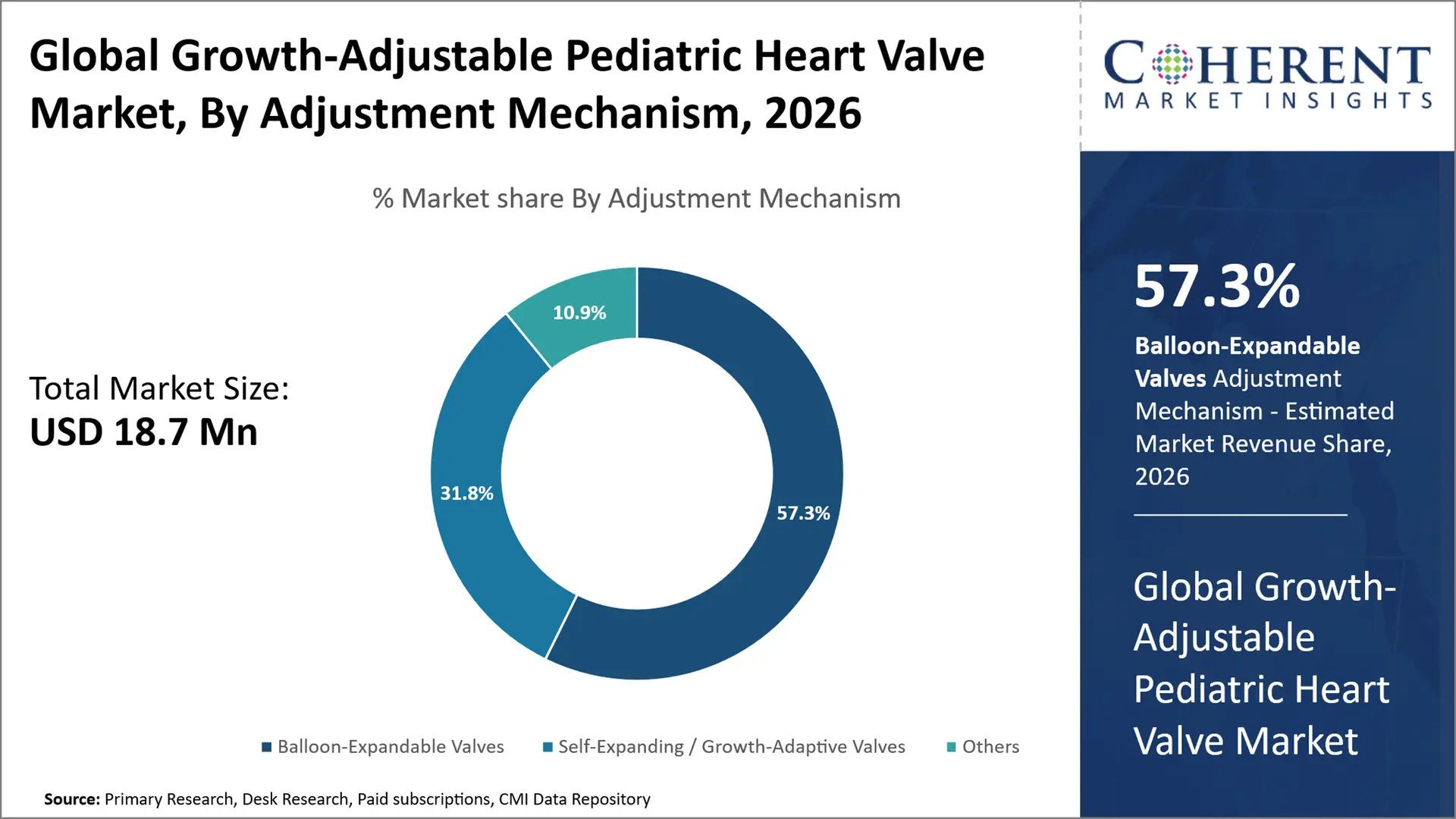
- The balloon-expandable valves are foreseen to account for 57.3% of the global growth-adjustable pediatric heart valve market share in 2026. North America is expected to be the dominant adjustment mechanism segment owing to the increased existing infrastructure for pediatric cardiac care for the conventional patient base in the region as well as for the growing application of advanced interventional procedures for congenital heart diseases. According to Centers for Disease Control and Prevention (CDC), nearly 40,000 babies are born with congenital heart defect annually, with ¼ of them having critical defects that require intervention or surgery within their first year.
- Pulmonary valve is projected to hold 49.6% market share in 2026, contributing to the overall dominance of valve type segment in the Europe. This can be related to the presence of well-established systems for treatment of congenital heart disease in the region and the existence of dedicated cardiac services in the region. The European Society of Cardiology (ESC) has conducted research and offers clinical guidelines on management of pulmonary valve disease and other congenital heart disease.
- Polymeric valves are expected to hold 37.6% of the global growth-adjustable pediatric heart valve market share in 2026, making it dominant material segment, across Asia Pacific due to the growing demand for pediatric care in the. For instance, the National Health Commission of China rolled out the Birth Defects Prevention and Treatment Capacity Improvement Plan (2023-2027) for increasing the newborn screening services for congenital heart disease, along with the improving the diagnostic and treatment facilities and specialized care network.
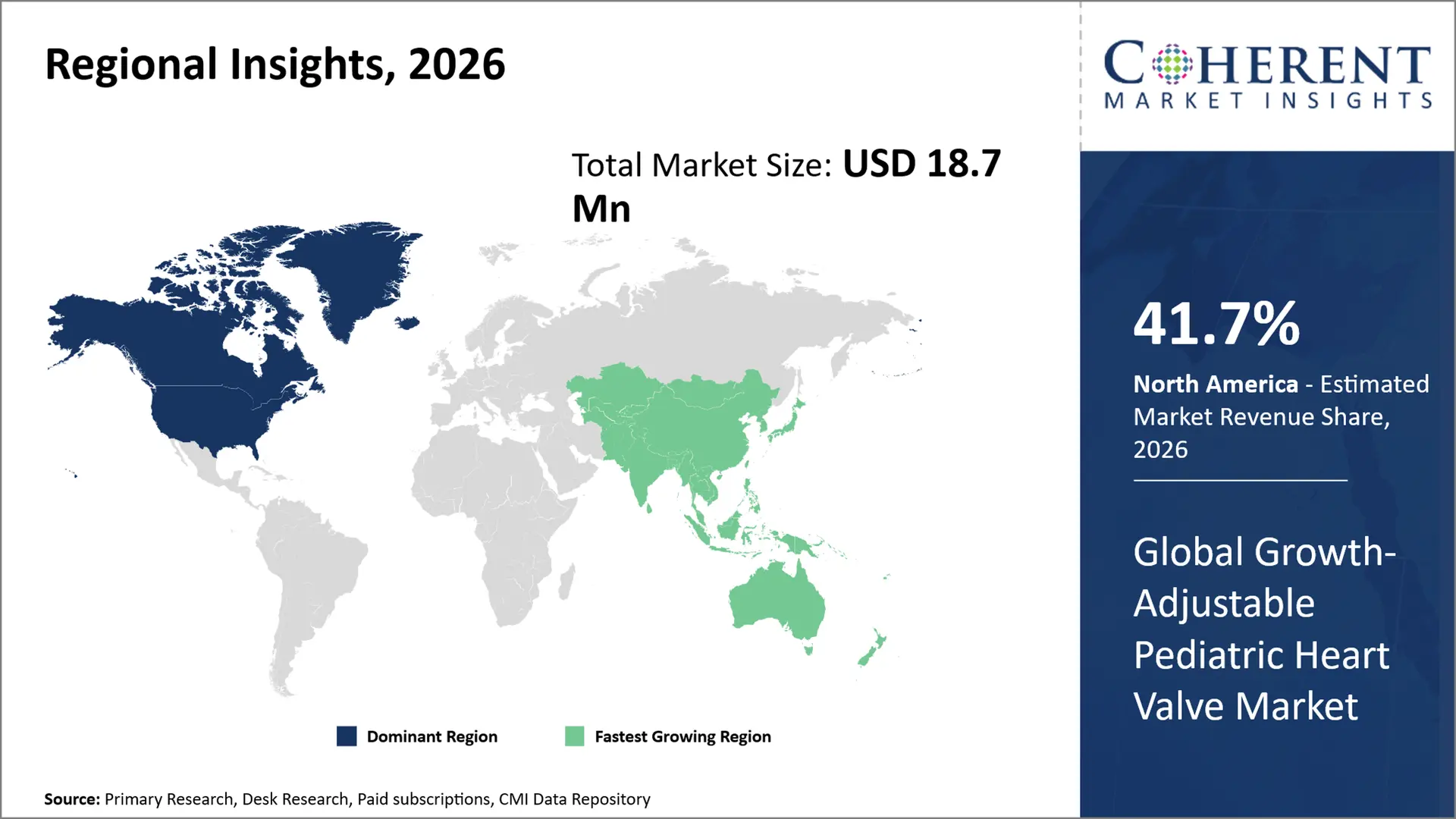
- North America is forecast to retain its market dominance with 41.7% share in 2026, due to the presence of superior pediatric cardiac research and a wide array of congenital heart disease care centers in the region. For instance, the NIH Pediatric Heart Network conducts multicenter research on congenital and acquired heart disease among children to strengthen the evidence base to advance the pediatric cardiovascular population.
- Asia pacific is expected to witness the fastest growth in global growth-adjustable pediatric heart valve market over the forecast period (2026-2033) by registering 10.8% CAGR, owing to high prevalence of congenital heart disease with growing demand for pediatric specialized cardiac services. According to a study published by Australian Institute of Health and Welfare (AIHW), around 68,200 people were living with a diagnosis of congenital heart disease (as the primary reason of hospitalization) in 2023- 2024, which presents the healthcare burden of the chronic disease in this region.
Segmental Insights
Why Do Balloon-Expandable Valves Dominate the Global Growth-Adjustable Pediatric Heart Valve Market?
Balloon-expandable valves are projected to hold the market share of 57.3% in 2026, as they can be enlarged in a controlled fashion using a catheter-based balloon dilatation. This feature might help a valve to grow with the child, while delaying valve replacement. The clinical success of such a device might be related to how it performs after being dilated in terms of valve function and hemodynamic performance. For instance, in October 2024, PolyVascular Inc. presented its investigational transcatheter polymer pulmonary valve at the Transcatheter Cardiovascular Therapeutics (TCT) 2024 meeting. The balloon-expandable cobalt-chromium stent was designed to be expanded from an initial size of 14–16 mm, to accommodate a growing child and future valve-in-valve treatment. (Source: American College of Cardiology Foundation)
- Current Industry Events of 2026
- Market Size Estimation
- Regional Breakdown
- Competitive Landscape
- Customer Intelligence
- Segmental Analysis
- Pricing Analysis
- Key Market Drivers, Challenges & Future Trends
- Customized Insights Section
Why Does Pulmonary Valve Represent the Largest Valve Type Segment in the Growth-Adjustable Pediatric Heart Valve Market?
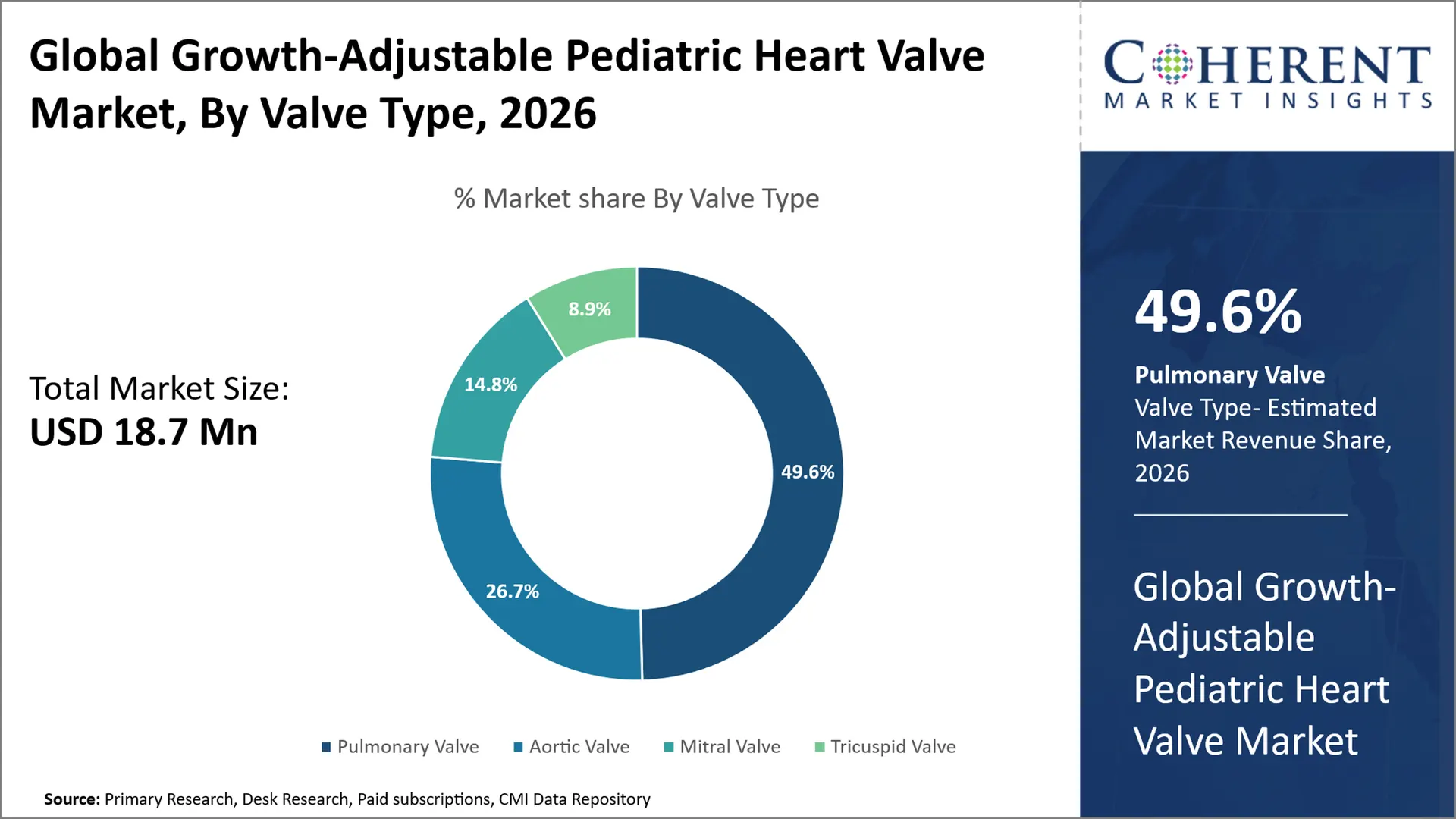
Pulmonary valve is projected to hold a market share of 49.6% in 2026, due to pulmonary stenosis and tetralogy of Fallot that require repeated use over time. The emerging role of right ventricular outflow tract reconstruction is expected to offer chances for flexible valve designs that optimize anatomy changes while being able to control the blood flow. For instance, the Edwards SAPIEN 3 Transcatheter Pulmonary Valve System with Alterra Adaptive Prestent combines a balloon-expandable valve made from bovine pericardial tissue with a cobalt-chromium frame and a self-expanding nitinol prestent. The design supports transcatheter pulmonary valve replacement, with the prestent providing a suitable landing zone for the valve and reducing obstruction to blood flow into the branch pulmonary arteries.
Polymeric Valves Segment Dominates the Global Growth-Adjustable Pediatric Heart Valve Market
The polymeric valves segment is projected to hold a market share of 37.6% in 2026, because of their ability to be designed in a variety of shapes, to adjust their mechanical properties in response to various stresses, and to be used to create expandible structures for pediatric needs. Tailoring fatigue life, flexibility and biocompatibility indicate polymers could hold promise for valves that need to adapt to a growing child but clinical durability will be proven out in the long-term. For instance, in April 2025, the U.S. National Institutes of Health awarded Poly Vascular with USD 3 million SBIR Phase IIb funding to refine the polymer-based transcatheter pulmonary valve for clinical testing. The novel valve with polymer leaflets and a balloon-expandable stent that can be resized as the patient grows represents the potential of polymer components in growth-adapting pediatric valve technology.
Current Events and their Impact
Current Events | Description and its Impact |
U.S. NIH Promotes Less-Invasive Pediatric Heart Valve Treatment Research (Current; as at October 2026) |
|
UK Enhances Medical-Device Post-Market Surveillance (June 2025) |
|
U.S. NIH highlights Progress in Congenital Heart Disease Diagnosis & Care (2025-2026 Institutional Reporting) |
|
Growth-Adjustable Pediatric Heart Valve Market Dynamics
Market Drivers
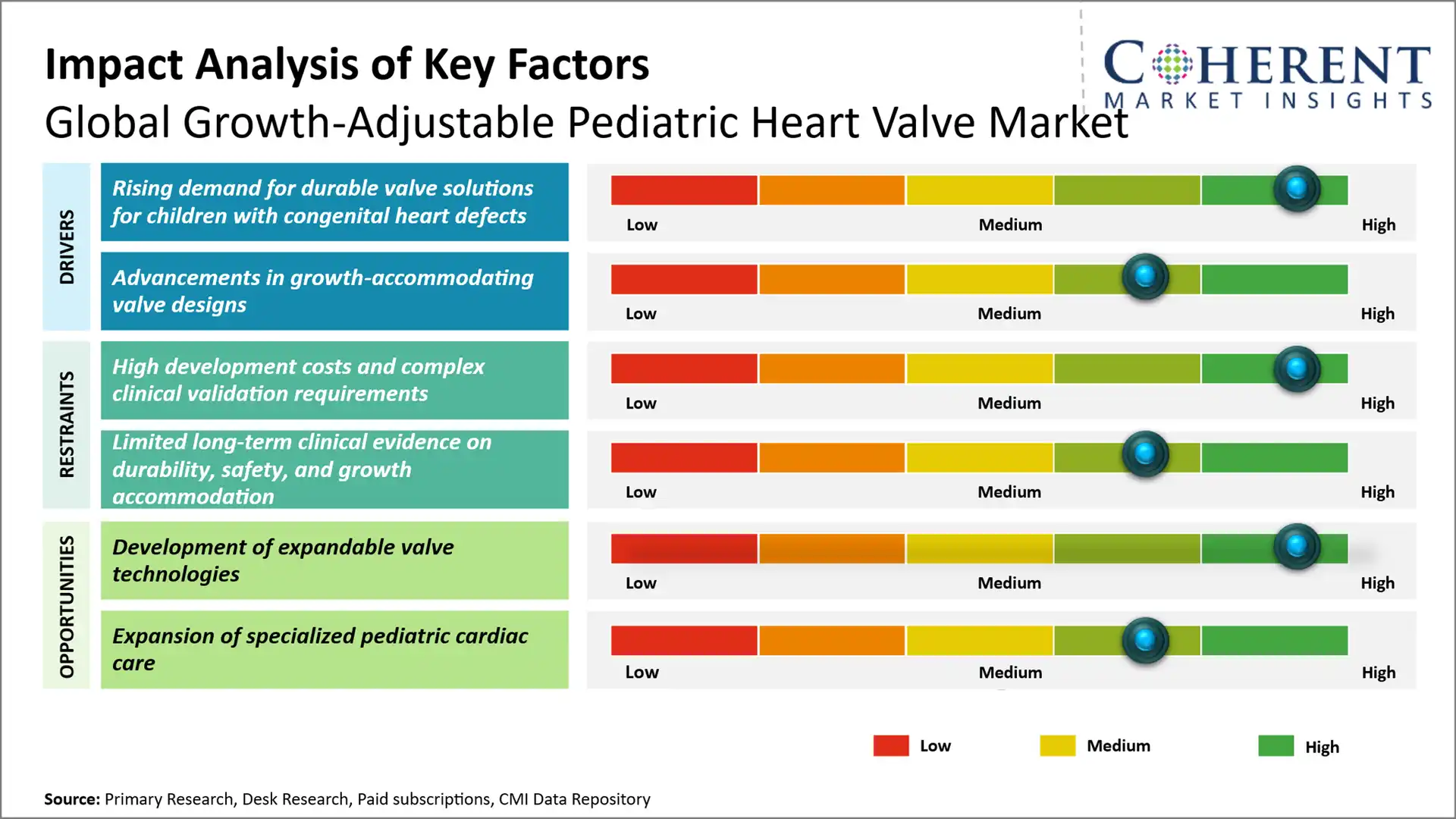
- Rising demand for durable valve solutions for children with congenital heart defects: There is an increasing demand for long-lasting pediatric heart valves which is driven by a demand for treatment of children with congenital heart defects during their infancy and may need further procedures as they grow. For instance, Australian Institute of Health and Welfare (AIHW) reported that approximately 50% of children born with congenital heart disease require surgical or interventional (catheter-based) treatment, with approximately 33% requiring such treatment during their first year.
- Advancements in growth-accommodating valve designs: Improved valve-leaflet design and new sophisticated expandable stents are leading to the creation of pediatric heart valves that grow in size while maintaining normal blood flow and valve function. For instance, a National Library of Medicine study published in February 2026 reported preclinical testing of the LEAP Valve concept developed by Draper Laboratory. During the 6 weeks the prototype grew to double its original outer diameter with no other intervention, scaling proportionally to piglet growth. These advances may help reduce the number of re-interventions as a pediatric patient grows.
- Increasing investment in pediatric cardiac care infrastructure: Rising investment in specialized pediatric hearts is improving access to congenital heart disease diagnosis and surgery as well as novel advanced valve therapies. For instance, the WHO Global Initiative for Childhood Cancer describes how global health programs can coordinate health-systems strengthening efforts for both the diagnosis and treatment of specialized pediatric conditions and expand the ecosystem of care to accommodate the management of more advanced conditions.
Emerging Trends
- Development of growth accommodating valve designs: Pediatric heart valve replacement companies and academia are striving to develop valves that grow after implantation to accommodate a pediatric patient’s long-term growth. The innovation is aimed at reducing the number of patients who will need surgical valve replacement, and the long-term clinical impacts of undergoing the procedure.
- Advancements in polymeric and hybrid biomaterials: Polymeric leaflets combined with hybrid material architectures are currently being created for improved strength, flexibility, and biocompatibility of the valves. Such hybrid material architectures could potentially be better suited for producing flexible valves that will continue to work well as children grow older.
- Shift toward minimally invasive valve implantation: The evolution of catheter and transcatheter delivery systems is creating new avenues for minimally invasive, pediatric valve treatments. The addition of a growth "friendly" valve concept and delivery system may help to reduce trauma and recovery time for young children.
Regional Insights
Why is North America a Strong Market for Growth-Adjustable Pediatric Heart Valve?
North America leads the global growth-adjustable pediatric heart valve market, accounting for an estimated 41.7% share in 2026, owing to well-developed healthcare infrastructure, special facility dedicated for pediatric cardiac care centers, and research and development with advanced medical devices. Furthermore, favorable government policies including, provision of healthcare for pediatric cardiac care and U.S. FDA regulatory pathway for rapid adoption and development of new technology is expected to generate opportunities for growth.
For instance, the U.S.FDA Food and Drug Omnibus Reform Act of 2022 reauthorized the FDA’s Pediatric Device Consortia Grants Program for fiscal years 2023–2027. This program offers funding and technical assistance to encourage the creation of medical devices for children, which creates opportunities for innovation in pediatric cardiac devices, including growth-adjustable heart valves.
Why Does Asia Pacific Growth-Adjustable Pediatric Heart Valve Market Exhibit High Growth?
Asia Pacific is expected to exhibit the fastest growth in the global growth-adjustable pediatric heart valve market, registering an estimated CAGR of 10.8% during 2026–2033. The region is projected to account for 21.8% of the global market in 2026, owing to the growing development of infrastructure for pediatric cardiac care and unmet needs in the treatment of CHDs. Additionally, increasing government initiatives for healthcare spending and reimbursement coupled with the increasing public and private investments in the emerging economies such as China and India to meet unmet needs for pediatric cardiology are anticipated to lead to the overall growth of the market.
For instance, India’s Rashtriya Bal Swasthya Karyakram (RBSK) provides free screening, early intervention, and treatment for children with identified birth defects, including access to surgical management at tertiary-care facilities. This government initiative can improve access to pediatric cardiac treatment and support the broader need for advanced pediatric heart valve technologies. (Source: Ministry of Health and Family Welfare) Moreover, there are potential growth opportunities for countries within APAC due to improved access to specialized cardiac care, changing medical-device regulatory landscape, and growing clinical trial activities.
Global Growth-Adjustable Pediatric Heart Valve Market Outlook for Key Countries
Why is the U.S. Leading Innovation and Adoption in the Growth-Adjustable Pediatric Heart Valve Market?
The U.S. is the dominant region in the growth-adjustable pediatric heart valve market owing to its superior pediatric cardiac care environment and its capacity for cardiovascular device innovation. The country offers a mature ground for the creation and clinical testing of anatomically oriented growth accommodating valves designed for pulmonary valve replacement in pediatric CHD patients. Its advantage in the market is bolstered by its ability to translate advanced valve design into clinical deployable device.
Is China a Favorable Market for Growth-Adjustable Pediatric Heart Valve Market?
China offers a potentially attractive market for growth-adjustable pediatric valves, driven by country’s large patient base requiring pediatric heart care, and the growth of the domestic medical-device industry. These are likely to be driven by the potential of the relatively low-cost and growth capable valves, which are aimed at treating more pediatric patients undergoing pulmonary valve replacement. However, future growth will depend heavily on clinical evaluation, regulatory approval, low-cost, and the availability of products aimed at post-implant growth adjustment.
Is UK Emerging as a Key Growth Hub for the Growth-Adjustable Pediatric Heart Valve Market?
The UK is emerging as a potential growth market for growth-adjustable paediatric heart valves due to its mature congenital cardiac care network and dedicated paediatric cardiac centers. The country presents the opportunity to introduce growth-capable valves which may reduce the likelihood of repeat replacements indicated for paediatric patients requiring a pulmonary valve. However, the United Kingdom's potential as a key growth market depends on clinical data, regulatory clearance, adoption by the National Health Service and commercial validation of the technology.
Why Does Germany Top the European Growth-Adjustable Pediatric Heart Valve Market?
Germany leads the European growth-adjustable pediatric heart valve market due to a well-established cardiac surgery ecosystem, specialized congenital heart disease reference centers, and cardio-centric medical devices manufacturing capacities. The potential of the market is reinforced by demand for durable valve solutions that allow for growth while also minimizing procedures. However, Germany's stand in the growth-adjustable valves market is dependent on technology acceptance and demonstration, since this is a niche segment.
Is Growth-Adjustable Pediatric Heart Valve Market Developing in Japan?
Japan represents a developing opportunity in the growth-adjustable pediatric heart valve market due to the country's world-class cardiovascular care infrastructure and proven medical device ecosystem. Market potential for growing anatomical growth and reducing need for re-replacements, such as for congenital pulmonary valve will likely be high but market access will depend on clinical data, approval by the Japan Pharmaceuticals and Medical Devices Agency (PMDA), and next-generation therapies that are designed for growth after implantation.
Comparison of Growth-Adjustment Technologies for Pediatric Heart Valves
Technology | How it accommodates growth | Potential advantage | Key limitation |
Balloon-expandable valve | Expanded after implantation using a balloon catheter | Allows controlled enlargement without replacing the entire valve | Expansion may require a catheter-based intervention |
Self-expanding / growth-adaptive stent-valve | Uses an expanding structure designed to accommodate anatomical growth | Potential to reduce repeat surgical procedures | Maintaining valve function and durability during expansion requires validation |
Tissue-engineered / regenerative valve | Designed to support tissue integration or regeneration | Potential for more physiological long-term adaptation | Long-term growth and clinical performance remain under investigation |
Bioabsorbable valve technology | Uses materials designed to degrade over time, potentially allowing tissue remodeling | May support future regenerative approaches | Reliable valve function throughout degradation remains a challenge |
How is the development of expandable valve technologies creating new growth opportunities in the growth-adjustable pediatric heart valve market?
Expandable valve technology has the potential to be a key area of growth for the industry in the global market for adjustable pediatric heart valves by addressing the needs of a growing child whilst reducing the need for additional surgical interventions. Furthermore, innovations in biomaterials, valve design and minimally invasive delivery strategies may improve durability and long-term patient outcomes. For instance, in September 2024, an article published in American College of Cardiology Foundation, discussed challenges in treating congenital valvar heart disease in children, including the need for durable valve solutions that can accommodate pediatric patients’ growth. These clinical needs reinforce opportunities for developing adjustable valves that may reduce repeat replacement procedures.
Market Players, Key Development, and Competitive Landscape

Key Developments
- On October 1, 2026, the U.S. Food and Drug Administration (FDA) announced approval of the Autus Size-Adjustable Valve for use in the treatment of the congenital pulmonary valve disease. The Valve is a surgically implanted pulmonary heart valve, designed to accommodate the growth of pediatric patients by growing as a child grows and substantially reducing the number of repeat open heart surgeries.
- In March 2026, Draper announced preclinical results from its Low-force Expanding/Adaptable Pediatric (LEAP) Valve, which also expands alongside a child's heart. Results from tests done on growing piglets demonstrated roughly a 50% increase in valve diameter over six weeks, suggesting a reduction in the number of times a valve would need to be replaced.
- In June 2025, the University of California, Irvine (UCI) announced that it has completed laboratory and animal testing of its Iris Valve, a transcatheter pulmonary heart valve that's designed for growth in toddlers and young kids with congenital heart defects. The transcatheter pulmonary heart valve is designed to reduce repeated replacement of a heart valve as a child grows and represents progress in the development of growth-adaptable pediatric heart valves.
Competitive Landscape
The global growth-adjustable pediatric heart valve market is an emerging, innovative segment of the medical device industry. Competitive factors include valve design for growth potential, biocompatibility, hemodynamic design, implantation methods, performance over time, safety, and regulatory considerations. Current market players and research sponsors are most concerned with technologies that address growth potential, preserve valve function, and avoid repeated surgical procedures. Key focus areas include:
- Expandable valve designs that can grow with the patient.
- Advanced polymeric, bioprosthetic and hybrid materials to extend durability and biocompatibility.
- Refinement of the operation of valves, with regard to blood flow, pressure gradients, and resistance to leakage.
- Pediatric minimally invasive and catheter-based delivery techniques.
- Long-term clinical data development to evaluate safety, long term durability and performance over the duration of childhood.
Market Report Scope
Growth-Adjustable Pediatric Heart Valve Market Report Coverage | |||
Report Coverage | Details | ||
Base Year | 2025 | Market Size in 2026: | USD 18.7 Mn |
Historical Data For: | 2020 To 2024 | Forecast Period: | 2026 To 2033 |
Forecast Period 2026 To 2033 CAGR: | 14.3% | 2033 Value Projection: | USD 47.6 Mn |
Geographies covered: |
| ||
Segments covered: |
| ||
Companies covered: | Edwards Lifesciences Corporation, Autus Valve Technologies Inc., Medtronic plc, Abbott Laboratories, Boston Scientific Corporation, Artivion, Inc., LivaNova PLC, Meril Life Sciences Pvt. Ltd., Foldax, Inc., PECA Labs, Inc. | ||
Growth Drivers: |
| ||
Restraints & Challenges: |
| ||
Analyst Opinion (Expert Opinion)
- The market will likely shift towards the use of growth-adjustable valves with expansion control, long-lasting materials and predictable hemodynamic results. The safe long-term use and the elimination of subsequent reoperations will be important factors for the commercial success of these products.
- The maximum opportunities may exist in the area of pulmonary valves for congenital pulmonary valve disease and in the reconstruction of the right ventricular outflow tract in the U.S., driven by continued improvement in pediatric cardiac care and medical-device innovation.
- For market participants, clinically proven mechanisms for expansion, biocompatible materials, and reliable valve performance should be key considerations. Partnering with pediatric cardiac centers, long term clinical trials, regulatory pathways and cost-effective manufacturing are challenges that will need to be addressed for success.
Speak to the analyst
Want personalized insights?
Take the findings above to one of our principal consultants, or have the report rebuilt around the segments, geographies and competitors you actually track.
Market Segmentation
- Adjustment Mechanism Insights (Revenue, USD Mn, 2021 - 2033)
- Balloon-Expandable Valves
- Self-Expanding / Growth-Adaptive Valves
- Others
- Valve Type Insights (Revenue, USD Mn, 2021 - 2033)
- Pulmonary Valve
- Aortic Valve
- Mitral Valve
- Tricuspid Valve
- Material Insights (Revenue, USD Mn, 2021 - 2033)
- Polymeric Valves
- Bioprosthetic / Tissue Valves
- Hybrid-Material Valves
- Others
- Procedure Insights (Revenue, USD Mn, 2021 - 2033)
- Surgical Valve Implantation
- Transcatheter Valve Implantation
- End User Insights (Revenue, USD Mn, 2021 - 2033)
- Pediatric Hospitals
- Children’s Heart Centers
- Specialized Cardiovascular Hospitals
- Academic Medical Centers
- Others
- Regional Insights (Revenue, USD Mn, 2021 - 2033)
- North America
- U.S.
- Canada
- Latin America
- Brazil
- Argentina
- Mexico
- Rest of Latin America
- Europe
- Germany
- U.K.
- Spain
- France
- Italy
- Russia
- Rest of Europe
- Asia Pacific
- China
- India
- Japan
- Australia
- South Korea
- ASEAN
- Rest of Asia Pacific
- Middle East
- GCC Countries
- Israel
- Rest of Middle East
- Africa
- South Africa
- North Africa
- Central Africa
- North America
- Key Players Insights
- Edwards Lifesciences Corporation
- Autus Valve Technologies Inc.
- Medtronic plc
- Abbott Laboratories
- Boston Scientific Corporation
- Artivion, Inc.
- LivaNova PLC
- Meril Life Sciences Pvt. Ltd.
- Foldax, Inc.
- PECA Labs, Inc.
Sources
Primary Research Interviews
- Pediatric cardiac surgeons specializing in congenital heart valve replacement
- Cardiovascular medical-device developers and regulatory affairs specialists
- Pediatric cardiologists and congenital heart disease specialists
Stakeholders
- Cardiovascular biomaterials and medical-device developers
- Pediatric heart valve manufacturers
- Academic medical centers and pediatric cardiac research institutions
- End-use Sectors
- Pediatric cardiac hospitals
- Academic medical centers and university hospitals
- Children's hospitals and congenital heart centers
- Regulatory & Health Bodies
- U.S. Food and Drug Administration (FDA)
- European Commission — Medical Device Regulation (MDR)
- Central Drugs Standard Control Organisation (CDSCO), India
Databases
- ClinicalTrials.gov
- WHO International Clinical Trials Registry Platform (ICTRP)
- FDA Premarket Approval (PMA) Database
Associations
- American Heart Association (AHA)
- American College of Cardiology (ACC)
- Society of Thoracic Surgeons (STS)
Public Domain Sources
- U.S. Food and Drug Administration (FDA)
- World Health Organization (WHO)
- Centers for Disease Control and Prevention (CDC)
Proprietary Elements
- CMI Data Analytics Tool, Proprietary CMI Existing Repository of information for last 10 years.
Get access to 250+ pages report
Every segment, forecast, competitor profile and data table behind the analysis above — available for instant download.
- ESOMAR Member
- ISO 9001:2015 Certified
- D-U-N-S Registered
- GDPR & CCPA Compliant
Frequently Asked Questions
The global growth-adjustable pediatric heart valve market is estimated to be valued at USD 18.7 Mn in 2026 and is expected to reach USD 47.6 Mn by 2033.
Balloon-expanding valves are more common since they can be expanded after implantation, potentially accommodating child's growth, thus requiring fewer replacements.
A growth-compatible pediatric heart valve is a type of medical equipment that can be scaled up or tailored to accommodate growth, reducing the potential requirement for surgical replacement.
The CAGR of global growth-adjustable pediatric heart valve market is projected to be 14.3% from 2026 to 2033.
Rising demand for durable valve solutions for children with congenital heart defects, and advancements in growth-accommodating valve designs are the major factors driving the growth of the global growth-adjustable pediatric heart valve market.
High development costs and complex clinical validation requirements, and limited long-term clinical evidence on durability, safety, and growth accommodation are the major factors hampering the growth of the global growth-adjustable pediatric heart valve market.
In terms of material, polymeric valves are estimated to dominate the market revenue share in 2026.