

Global Healthcare Semantic Intelligence Market Size and Forecast – 2026 To 2033
The global healthcare semantic intelligence market is expected to grow from USD 2,746.8 Mn in 2026 to USD 8,749.9 Mn by 2033, registering a compound annual growth rate (CAGR) of 18% from 2026 to 2033. The market for global healthcare semantic intelligence is poised for significant expansion, fueled by the increasing adoption of electronic health records and digital healthcare data.
According to the U.S. Office of the National Coordinator for Health Information Technology (ONC), as of 2024, 91% of office-based physicians and more than 99% of non-federal acute-care hospitals had adopted certified electronic health records (EHRs). This expanding digital data foundation supports the adoption of semantic intelligence for healthcare analytics, AI, and clinical decision support.
Key Takeaways of the Global Healthcare Semantic Intelligence Market
- Software is projected to hold 68.4% of the global healthcare semantic intelligence market share in 2026, making it dominant component segment across North America, where mature health IT infrastructure supports semantic data processing and interoperability. For instance, in April 2026, Health Canada published pre-market guidance for machine learning-enabled medical devices, establishing requirements covering data management, clinical validation, transparency, and post-market monitoring. These regulatory requirements are strengthening the software infrastructure needed for reliable AI-enabled healthcare applications.
- Natural Language Processing (NLP) is projected to hold 28.5% of the global healthcare semantic intelligence market share in 2026, making it dominant technology segment, particularly across Europe, where regulators are applying AI-based knowledge-mining technologies to large volumes of medical and regulatory information. In March 2026, the European Medicines Agency (EMA) expanded its AI-enabled Scientific Explorer to search information from initial marketing-authorization applications and regulatory assessment reports, demonstrating growing use of NLP and semantic information retrieval within healthcare regulatory workflows.
- Clinical decision support is projected to hold 32.8% of the global healthcare semantic intelligence market share in 2026, making it dominant application segment with Asia Pacific showing increasing adoption through government-led AI integration into clinical workflows. In May 2026, Singapore’s Ministry of Health announced that its AI models would use local clinical guidelines and health records to identify patients at risk and suggest care pathways for clinicians, with outputs designed to be validated and explainable.
- North America market maintains dominance with an expected share of 41.8% in 2026, bolstered by advanced healthcare IT infrastructure, widespread electronic health record adoption, and strong regulatory emphasis on standardized health-data exchange. For instance, in July 2026, the U.S. Office of the National Coordinator for Health Information Technology (ONC) released United States Core Data for Interoperability (USCDI) v7, adding 31 new data elements to strengthen nationwide electronic health information exchange.
- Asia Pacific is expected to exhibit the fastest growth in the global healthcare semantic intelligence market, registering an estimated CAGR of 17.2% during 2026–2033, driven by accelerating healthcare digitization, AI adoption, and government-led integration of standardized health-data systems. For instance, on September 9, 2026, Singapore’s Ministry of Health updated its Artificial Intelligence in Healthcare Guidelines (AIHGle 2.0), establishing requirements for AI lifecycle governance, safety and performance evaluation, deployment monitoring, and incident reporting.
Segmental Insights
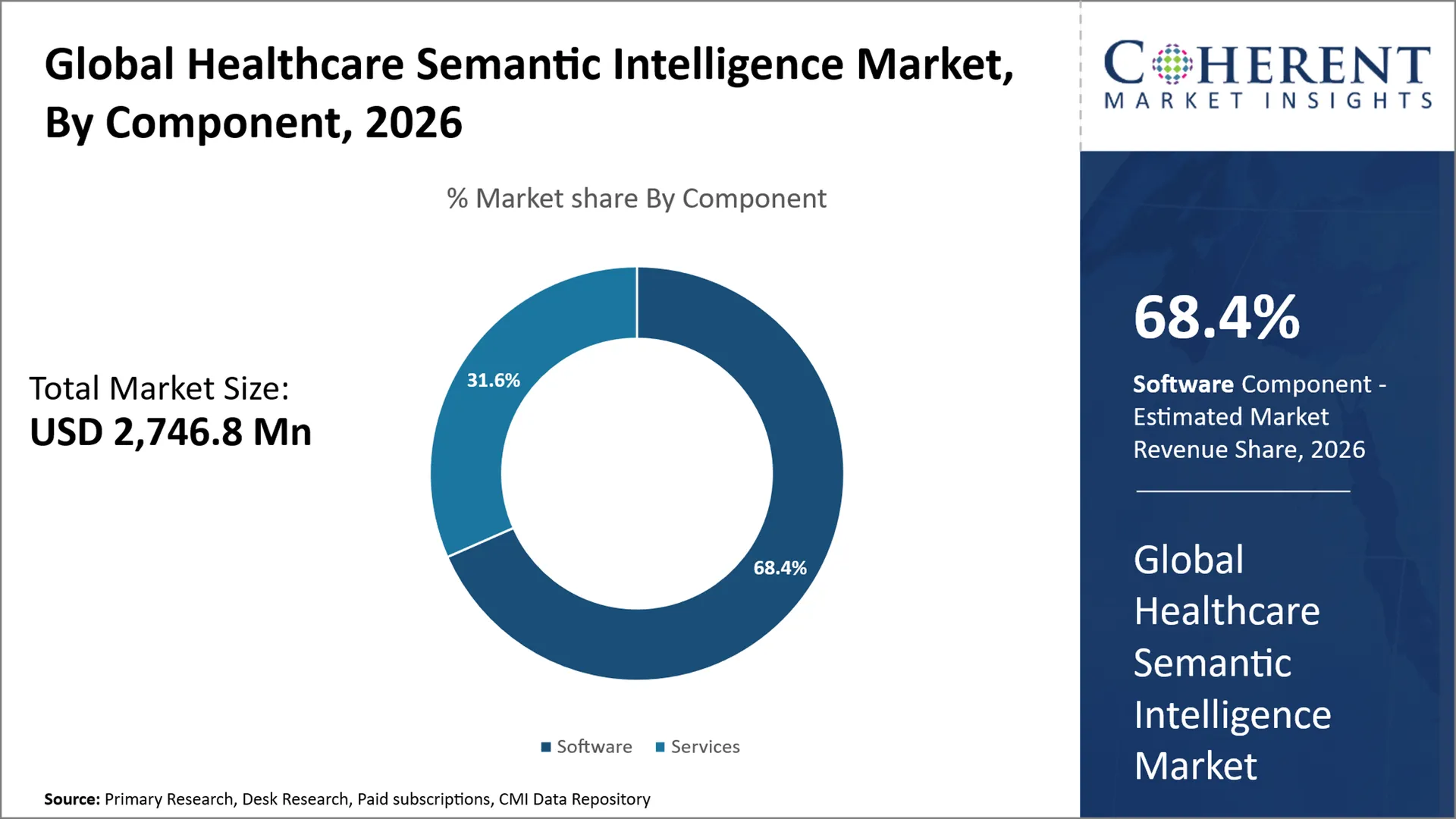
Why Do Software Dominate the Global Healthcare Semantic Intelligence Market?
Software is projected to hold the market share of 68.4% in 2026, attributed to its ability to accommodate the standardization, analysis and inference of complex healthcare data on a large scale. The rise in regulatory focus on AI-enabled analytics and interoperable data is expected to drive demand for scalable software platforms. For instance, in May 2026, West Coast Informatics launched AutomapAI, software platform that automatically transforms fragmented clinical data, legacy codes, and unstructured text into standards-compliant, AI-ready data. The platform is an explicit illustration of the increasing importance of semantic software in preparing healthcare data for analytics and AI.
- Current Industry Events of 2026
- Market Size Estimation
- Regional Breakdown
- Competitive Landscape
- Customer Intelligence
- Segmental Analysis
- Pricing Analysis
- Key Market Drivers, Challenges & Future Trends
- Customized Insights Section
Why Does Natural Language Processing (NLP) Represent the Largest Technology Segment in the Healthcare Semantic Intelligence Market?
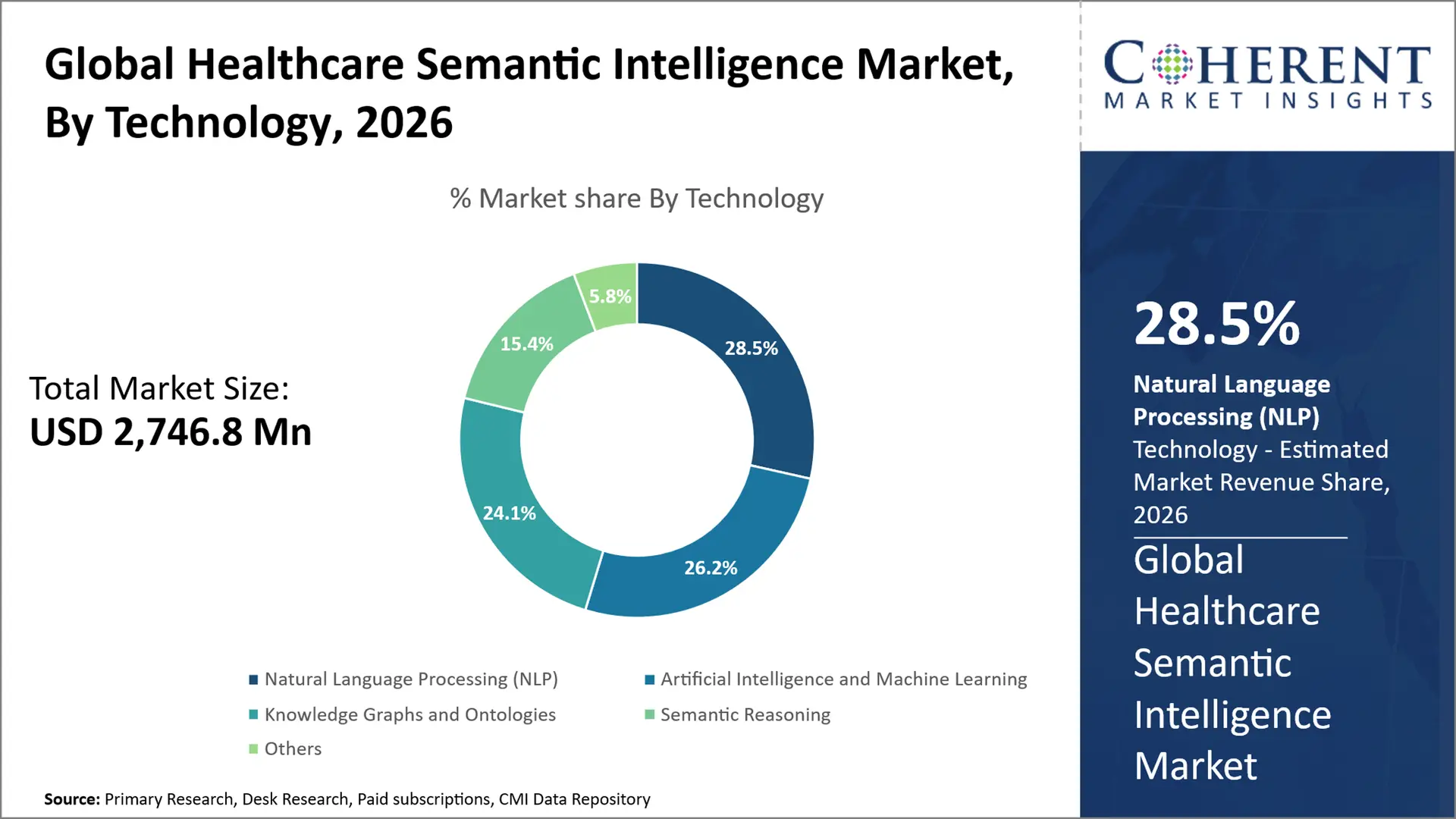
Natural Language Processing (NLP) is projected to hold a market share of 28.5% in 2026, as it has the ability to extract data from unstructured clinical text and put it into context which explains the obvious benefits of using NLP. It is also increasingly being used in clinical documentation, decision support, patient records, and research. For instance, in February 2026, a systematic review published by the National Library of Medicine, examined NLP uses for information extraction from electronic medical records to populate clinical registries, highlighting the reduction in the need for manual data extraction.
Clinical Decision Support Segment Dominates the Global Healthcare Semantic Intelligence Market
The clinical decision support segment is projected to hold a market share of 32.8% in 2026, since it can put patient data into context and provide the appropriate, evidence-based clinical guidance within the workflow. In addition, semantic intelligence improves CDS by connecting different types of clinical data and allowing better understanding for diagnosis, treatment and assessment of risk. In January 2026, the U.S. Food and Drug Administration (FDA) issued concrete guidance related to clinical decision support software. This document is meant to bring greater clarity to the nature of software that is used to support clinicians.
Current Events and their Impact
Current Events | Description and its Impact |
WHO Advances Global Digital Health Wallet Standards (September 2026) |
|
WHO Strengthens Responsible AI Frameworks for Healthcare (September 2026) |
|
European Health Data Space Advances Cross-Border Health Data Interoperability (July 2026) |
|
Healthcare Semantic Intelligence Market Dynamics
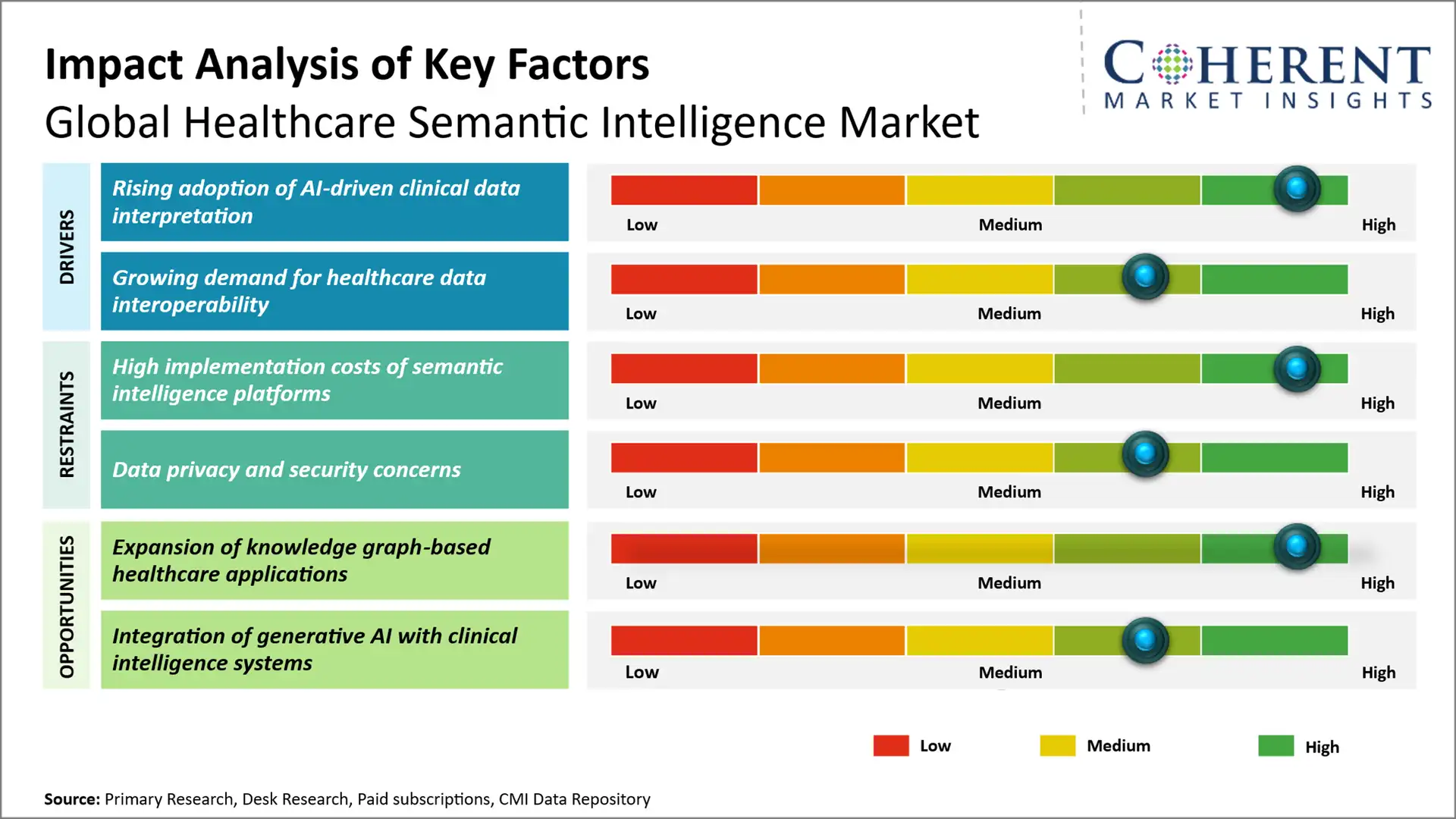
Market Drivers
- Rising adoption of AI-driven clinical data interpretation: The rising adoption of AI-driven clinical data interpretation is accelerating demand for Healthcare Semantic Intelligence solutions that can contextualize complex clinical information and support evidence-based decision-making. Integration of AI with structured and unstructured healthcare data is expanding applications in diagnosis, clinical decision support, and personalized care. For instance, on September 21, 2026, the U.S. National Institutes of Health (NIH) launched a Grand Challenge focused on integrating biomedical, clinical, behavioral, and environmental data into AI-ready ecosystems for actionable healthcare insights.
- Growing demand for healthcare data interoperability: Growing demand for healthcare data interoperability is driving adoption of semantic intelligence solutions that connect fragmented clinical, administrative, and patient data through standardized frameworks. Interoperability enables consistent data exchange across healthcare systems while improving the usability of data for AI, analytics, and clinical decision support. For instance, In April 2026, WHO’s global digital-health consultation identified fragmentation and limited interoperability as persistent barriers and emphasized standards-based digital transformation.
- Increasing adoption of knowledge graph-enabled AI in healthcare: Healthcare organizations are increasingly integrating knowledge graphs with AI to connect clinical concepts, patient data, medical literature, and biomedical information, improving contextual analysis and explainability. This is expanding applications in clinical decision support, biomedical discovery, and precision medicine. For instance, on September 15, 2026, the National Institutes of Health (NIH) launched the SPARK Challenge, which uses AI to map unstructured biomedical data to standardized concepts such as LOINC, RxNorm, and SNOMED CT for interoperable research discovery.
Emerging Trends
- Integration of Generative AI with Knowledge Graphs: Generative AI is increasingly being combined with knowledge graphs to provide context-aware and reliable interpretation of complex healthcare data. This integration supports natural-language querying, clinical reasoning, and more explainable AI-driven insights.
- Expansion of Semantic Interoperability Across Healthcare Systems: Healthcare organizations are increasingly adopting ontologies, standardized terminologies, and semantic layers to connect EHRs, claims, laboratory, and clinical research data. This trend is strengthening cross-system data interoperability and enabling unified healthcare analytics.
- Growth of AI-Powered Clinical Decision Support: Semantic intelligence is increasingly being integrated into clinical decision-support platforms to contextualize patient information and identify relationships across diverse medical datasets. This enables more personalized, evidence-based decision-making and supports precision medicine applications.
Regional Insights
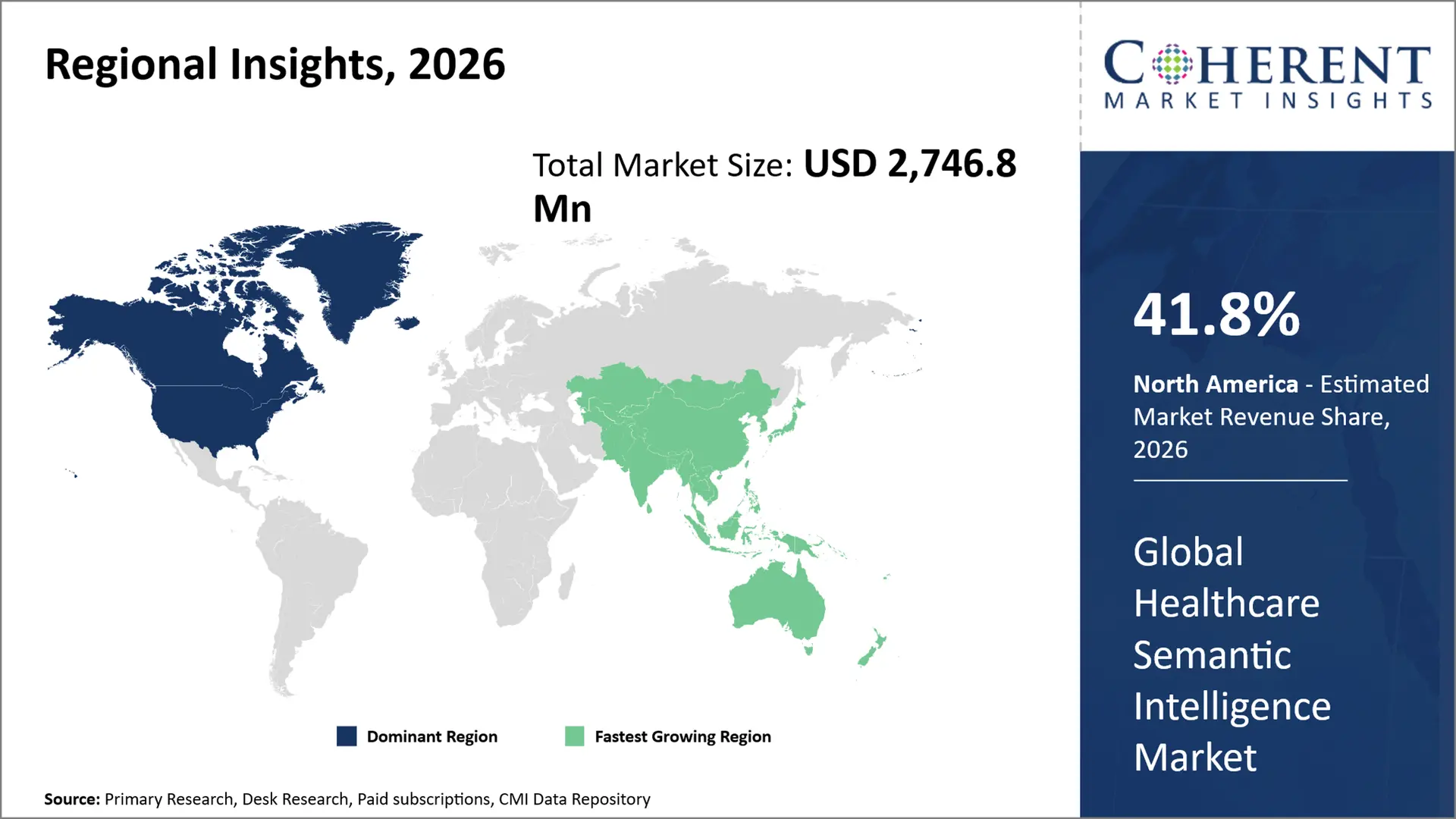
Why is North America a Strong Market for Healthcare Semantic Intelligence?
North America leads the global healthcare semantic intelligence market, accounting for an estimated 41.8% share in 2026, due to a well-developed healthcare market, well established health information technology structure, and the widespread implementation of digital health technologies. The region is supported by an established healthcare data infrastructure, and high demand for AI-based clinical analytics, interoperability and decision support tools. Furthermore, supportive government initiatives supporting AI and digital health innovation, data interoperability, and responsible use of AI is further strengthening the regional ecosystem.
For instance, in February 2026, the Government of Canada unveiled the Connected Care for Canadians Act to establish common standards for the secure transfer of health information and to help drive healthcare innovation using artificial intelligence. Furthermore, the increasing integration of healthcare data from administrative, research, and clinical care settings has also maintained the healthy growth of the market.
Why Does Asia Pacific Healthcare Semantic Intelligence Market Exhibit High Growth?
Asia Pacific is expected to exhibit the fastest growth in the global healthcare semantic intelligence market, registering an estimated CAGR of 17.2% during 2026–2033. The region is projected to account for 21.9% of the global market in 2026, attributable to the rapid digitization of healthcare, growing healthcare expenditure, rising adoption of artificial intelligence and machine learning, and rising healthcare infrastructure. Additionally, the growing healthcare expenditure and rising adoption of data-driven clinical services is among others facilitating adoption in emerging markets.
Additionally, government initiatives, forcing the adoption of smart healthcare solutions, growing focus on digital health and interoperability, and growing adoption of AI-enabled care are stimulating the APAC ecosystem. For instance, in May 2026, the Singapore Ministry of Health disclosed that the Health Information Act would require all licensed health care providers to provide necessary patient data to the National Electronic Health Record (NEHR) starting in September 2027 to promote nationwide data interoperability. (Source: Government of Singapore)
Global Healthcare Semantic Intelligence Market Outlook for Key Countries
Why is the U.S. Leading Innovation and Adoption in the Healthcare Semantic Intelligence Market?
As the most advanced health ecosystem, the U.S. with its combining EHR systems, clinical data platforms, and AI-enabled healthcare apps, appears to be leading in healthcare semantic intelligence market innovations and adoption. Its ecosystem is more actively linking up structured and unstructured clinical data for the intent of semantic indexing, clinical decision support, and health analytics. In addition, the country is building out the interoperability between heterogeneous clinical data sources, enabling larger-scale deployments of context-aware intelligence.
Is Japan a Favorable Market for Healthcare Semantic Intelligence Market?
The confluence of the digitalization, existing electronic medical-record (EMR) ecosystem and adoption of AI in the field of healthcare strengthens Japan as an attractive Healthcare Semantic Intelligence market. The digitalization of healthcare data and its networked sharing between hospitals and research centers pave the way for growth in healthcare semantic interoperability and contextualized data analysis. Furthermore, the rising focus of Japan on the use of healthcare data and digital transformation augments the need for semantic intelligence.
Is China Emerging as a Key Growth Hub for the Healthcare Semantic Intelligence Market?
China is increasingly being seen as a major growth center for the healthcare semantic intelligence market, likely driven by healthcare digitization and the integration of AI systems with clinical data sources. The use of electronic medical records, medical data platforms, and AI-powered analytics suggest a market need for tools that can organize and create context around large healthcare datasets. As the development of digital-health infrastructure continues apace, that need is seen as all but certain to support clinical decision support tools, medical research, and healthcare analytics.
Why Does Germany Top the European Healthcare Semantic Intelligence Market?
Germany leads the European healthcare semantic intelligence market owing to the presence of a strong digital health infrastructure and an increasing adoption of digital health data sharing among healthcare professionals. The state of the health IT infrastructure in Germany paves the way for semantic interoperability, electronic data analysis with AI, and for digitally connected clinical workflows.
Is Healthcare Semantic Intelligence Market Developing in UK?
The UK presents a key opportunity for healthcare semantic intelligence market attributed to the presence of the advanced digital health ecosystem in the country and an increasing demand for data-driven and AI systems in the healthcare industry. The adoption of electronic health records (EHRs), clinical data warehouses and related interoperable systems could be translating into demand for semantic solutions that can facilitate linking different patient and clinical data sources. In addition, the UK’s emphasis on accelerating the adoption of data-enabled healthcare and digital transformation is further supporting adoption across clinical research, analytics, and decision support.
Global Adoption of Healthcare Data Interoperability Standards, 2025
Indicator | Global Result |
Respondents reporting regulation for electronic health data exchange | 78% |
Respondents reporting FHIR is mandated or formally advised | 73% |
Countries with a national organization for health-data standards | 67 of 80 |
Respondents reporting a national core FHIR implementation guide | 65 of 82 |
Respondents reporting adoption deadlines | About 50% |
Respondents reporting funding available for FHIR implementation | About 50% |
How is the expansion of knowledge graph-based healthcare applications creating new growth opportunities in the healthcare semantic intelligence market?
Knowledge graph-based applications include a unification of heterogeneous clinical, biomedical, research data in global healthcare semantic intelligence market into single, unified semantics. This translates to a possibility of improved interoperability and contextual knowledge, as needed by clinical decision support, precision medicine, healthcare analytics and AI-enabled research. For instance, in April 2026, IMO Health launched direct access to Clinical Knowledge Graph, providing a platform through which AI developers and healthcare organizations can query clinically contextualized data via GraphQL and MCP interfaces. The offering creates a semantic layer for AI applications that improves their accuracy and explainability while also driving knowledge graph adoption in the healthcare industry.
Market Players, Key Development, and Competitive Landscape
Key Developments
- In June 2026, Certilytics, Inc. launched its AI Accelerator to help healthcare organizations operationalize AI using answer-ready data, healthcare-specific ontologies, semantic layers, and agentic AI workflows. The platform is designed to convert fragmented healthcare data into actionable, decision-ready insights across clinical, financial, and operational application.
- In April 2026, SpectraMedix launched Spectra IQ, an AI-powered intelligence suite that uses specialized AI agents to analyze complex healthcare performance data. The platform enables natural-language queries and identifies drivers across clinical, financial, population, and provider performance.
- In February 2026, SemantIQ launched a conversational AI platform designed to enable natural-language interaction with complex healthcare claims data. The platform applies AI-driven data interpretation to simplify access to claims insights and support healthcare analytics.
Competitive Landscape
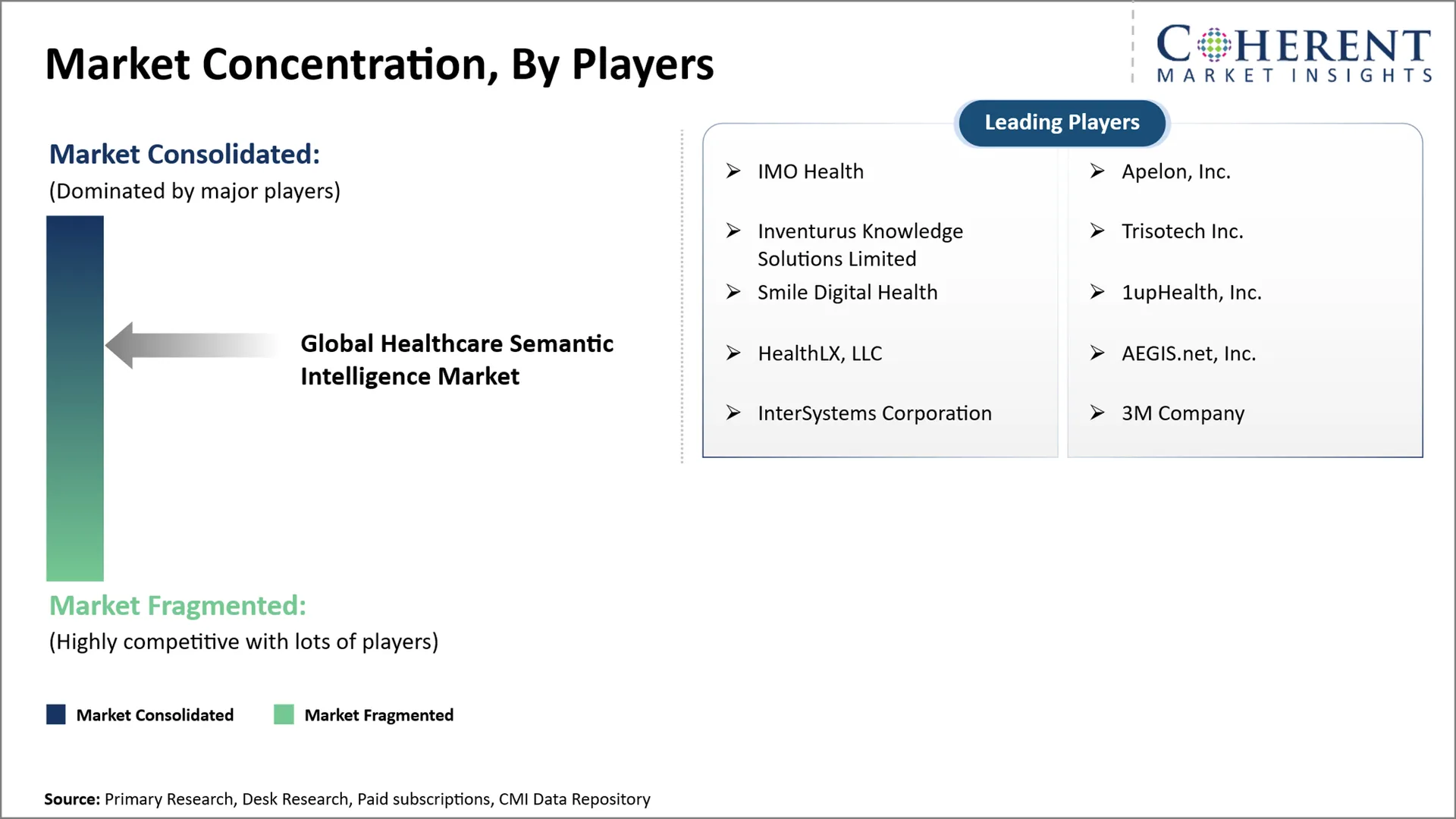
The global healthcare semantic intelligence market is moderately competitive, with market dynamics shaped by advances in AI-driven semantic processing, natural language understanding, knowledge graphs, and healthcare data interoperability. Market participants are increasingly focusing on expanding clinical and administrative use cases, strengthening data integration capabilities, and delivering actionable insights from complex healthcare datasets. Key focus areas include:
- Development of AI and NLP algorithms for contextual interpretation of structured and unstructured healthcare data
- Expansion of semantic intelligence for clinical decision support, healthcare analytics, and automated data interpretation
- Integration of knowledge graphs, ontologies, and semantic layers with EHR, claims, laboratory, and clinical research systems
- Advancement of generative AI and conversational interfaces for natural-language querying of healthcare data
- Enhancement of semantic interoperability across fragmented healthcare data sources and legacy IT environments
Market Report Scope
Healthcare Semantic Intelligence Market Report Coverage | |||
Report Coverage | Details | ||
Base Year | 2025 | Market Size in 2026: | USD 2,746.8 Mn |
Historical Data For: | 2020 To 2024 | Forecast Period: | 2026 To 2033 |
Forecast Period 2026 To 2033 CAGR: | 18% | 2033 Value Projection: | USD 8,749.9 Mn |
Geographies covered: |
| ||
Segments covered: |
| ||
Companies covered: | IMO Health, Apelon, Inc., Inventurus Knowledge Solutions Limited, Trisotech Inc., Smile Digital Health, 1upHealth, Inc., HealthLX, LLC, AEGIS.net, Inc., InterSystems Corporation, 3M Company | ||
Growth Drivers: |
| ||
Restraints & Challenges: |
| ||
Analyst Opinion (Expert Opinion)
- In the coming years, global healthcare semantic intelligence market is expected to evolve from standalone data-integration and terminology solutions toward AI-driven, context-aware intelligence platforms that can understand relationships across clinical, administrative, genomic, and patient-generated data. Generative AI, knowledge graphs, and semantic reasoning will increasingly enable healthcare organizations to move from fragmented data management toward real-time, actionable intelligence.
- The maximum opportunities are foreseen within knowledge graphs & ontologies for clinical decision support in the U.S., driven by the large volume of fragmented healthcare data and the growing need to connect clinical information across electronic health records, claims, laboratory, and other healthcare systems. Semantic technologies can contextualize these datasets and support faster, more accurate, and evidence-based clinical decision-making.
- In order to gain a competitive advantage market players should prioritize interoperable semantic architectures that connect EHRs, claims, laboratory, imaging, and other healthcare datasets while maintaining consistent clinical meaning. Building proprietary healthcare knowledge models, improving AI explainability, and enabling natural-language access to trusted healthcare data can create stronger differentiation and long-term platform value.
Speak to the analyst
Want personalized insights?
Take the findings above to one of our principal consultants, or have the report rebuilt around the segments, geographies and competitors you actually track.
Market Segmentation
- Component Insights (Revenue, USD Mn, 2021 - 2033)
- Software
- Services
- Technology Insights (Revenue, USD Mn, 2021 - 2033)
- Natural Language Processing (NLP)
- Artificial Intelligence and Machine Learning
- Knowledge Graphs and Ontologies
- Semantic Reasoning
- Others
- Application Technique Insights (Revenue, USD Mn, 2021 - 2033)
- Clinical Decision Support
- Healthcare Data Integration and Interoperability
- Clinical Documentation and Coding
- Healthcare Analytics and Research
- Others
- End User Insights (Revenue, USD Mn, 2021 - 2033)
- Hospitals and Healthcare Providers
- Pharmaceutical and Biotechnology Companies
- Healthcare Payers
- Research and Academic Institutions
- Government and Public Health Organizations
- Others
- Regional Insights (Revenue, USD Mn, 2021 - 2033)
- North America
- U.S.
- Canada
- Latin America
- Brazil
- Argentina
- Mexico
- Rest of Latin America
- Europe
- Germany
- U.K.
- Spain
- France
- Italy
- Russia
- Rest of Europe
- Asia Pacific
- China
- India
- Japan
- Australia
- South Korea
- ASEAN
- Rest of Asia Pacific
- Middle East
- GCC Countries
- Israel
- Rest of Middle East
- Africa
- South Africa
- North Africa
- Central Africa
- North America
- Key Players Insights
- IMO Health
- Apelon, Inc.
- Inventurus Knowledge Solutions Limited
- Trisotech Inc.
- Smile Digital Health
- 1upHealth, Inc.
- HealthLX, LLC
- AEGIS.net, Inc.
- InterSystems Corporation
- 3M Company
Sources
Primary Research Interviews
- Healthcare informatics specialists involved in semantic data integration and interoperability
- Clinical informaticians using semantic intelligence for clinical decision support
- Healthcare AI and natural language processing (NLP) specialists
- Knowledge graph and ontology developers working with healthcare data
- Health IT professionals responsible for electronic health record (EHR) integration
- Healthcare data scientists and analytics specialists using semantic technologies
Stakeholders
- Healthcare providers and hospital systems
- Healthcare IT and semantic intelligence platform providers
- Electronic health record (EHR) and health information exchange providers
- Healthcare payers and claims-data organizations
- Pharmaceutical and biotechnology companies
- Diagnostic laboratories and clinical research organizations
- Government and public health organizations
- Academic and biomedical research institutions
- End-use Sectors
- Hospitals & Clinics
- Healthcare Payers
- Pharmaceutical & Biotechnology
- Diagnostic Laboratories
- Contract Research Organizations (CROs)
- Academic & Research Institutions
- Government & Public Health Organizations
- Healthcare IT & Data Analytics
- Regulatory & Health Bodies
- Office of the National Coordinator for Health Information Technology (ONC), U.S. – healthcare interoperability and health-data standards
- U.S. Food and Drug Administration (FDA) – AI, digital health, and healthcare data-related regulatory guidance
- European Commission – European Health Data Space and health-data interoperability
- World Health Organization (WHO) – digital health and health information systems
- National Health Service (NHS), UK – digital health and healthcare data interoperability
- Ministry of Health, Labour and Welfare (MHLW), Japan – healthcare information and digital-health initiatives
Databases
- Unified Medical Language System (UMLS) – biomedical vocabularies, semantic relationships, and terminology mappings
- SNOMED CT – standardized clinical terminology supporting semantic interoperability
- RxNorm – standardized clinical drug terminology
- LOINC – laboratory and clinical-observation terminology
- ICD-10 / ICD-11 – disease classification and coding systems
- ClinicalTrials.gov – clinical research and healthcare data
- FHIR resources – standardized exchange of clinical and administrative health information
Journals
- Journal of the American Medical Informatics Association (JAMIA)
- Journal of Biomedical Semantics
- International Journal of Medical Informatics
- npj Digital Medicine
- BMC Medical Informatics and Decision Making
- Journal of Biomedical Informatics
Associations
- American Medical Informatics Association (AMIA)
- HL7 International
- SNOMED International
- Observational Health Data Sciences and Informatics (OHDSI)
- Healthcare Information and Management Systems Society (HIMSS)
Public Domain Sources
- U.S. Office of the National Coordinator for Health Information Technology (ONC) – interoperability and health IT standards
- National Library of Medicine (NLM) – UMLS, SNOMED CT, biomedical terminology and health-data resources
- National Institutes of Health (NIH) – biomedical informatics and healthcare AI research
- Centers for Medicare & Medicaid Services (CMS) – healthcare claims and administrative data
- Centers for Disease Control and Prevention (CDC) – public health data and health information
- World Health Organization (WHO) – global digital health and health information resources
Proprietary Elements
- CMI Data Analytics Tool, Proprietary CMI Existing Repository of information for last 10 years.
Get access to 250+ pages report
Every segment, forecast, competitor profile and data table behind the analysis above — available for instant download.
- ESOMAR Member
- ISO 9001:2015 Certified
- D-U-N-S Registered
- GDPR & CCPA Compliant
Frequently Asked Questions
The global healthcare semantic intelligence market is estimated to be valued at USD 2,746.8 Mn in 2026 and is expected to reach USD 8,749.9 Mn by 2033.
Software dominates due to its central role in semantic data processing, AI-driven analysis, knowledge representation, and healthcare interoperability.
Healthcare Semantic Intelligence uses AI, NLP, knowledge graphs, and semantic reasoning to interpret and contextualize complex healthcare data for actionable insights.
The CAGR of global healthcare semantic intelligence market is projected to be 18% from 2026 to 2033.
Rising adoption of AI-driven clinical data interpretation, and growing demand for healthcare data interoperability are the major factors driving the growth of the global healthcare semantic intelligence market.
High implementation costs of semantic intelligence platforms, and data privacy and security concerns are the major factors hampering the growth of the global healthcare semantic intelligence market.
In terms of technology, natural language processing (NLP) is estimated to dominate the market revenue share in 2026.