

Global Household Care & Specialty Chemicals Market Size and Forecast – 2026 to 2033
The global Household Care & Specialty Chemicals Market is estimated to be valued at USD 24.5 Bn in 2026 and is projected to reach USD 40.11 Bn by 2033, while exhibiting a compound annual growth rate (CAGR) of 7.3% during 2026-2033. The increasing consumption of performance-enhancing cleaning ingredients, advances in biodegradable surfactants, rising demand for specialized laundry formulations, and the development of enzyme-based & multifunctional chemical solutions collectively enable sustained expansion of this sector.
Further, the rising adoption of advanced household cleaning formulations is encouraging chemical manufacturers to expand their production capacity and invest in ingredient innovation. Exemplifying such a progressive environment of the market, in October 2026, BASF inaugurated expanded alkyl polyglucoside (APG) production capacity in Cincinnati, Ohio to strengthen the availability of bio-based, biodegradable surfactants for household care, industrial cleaning, and other formulation applications.
Key Takeaways of the Global Household Care & Specialty Chemicals Market
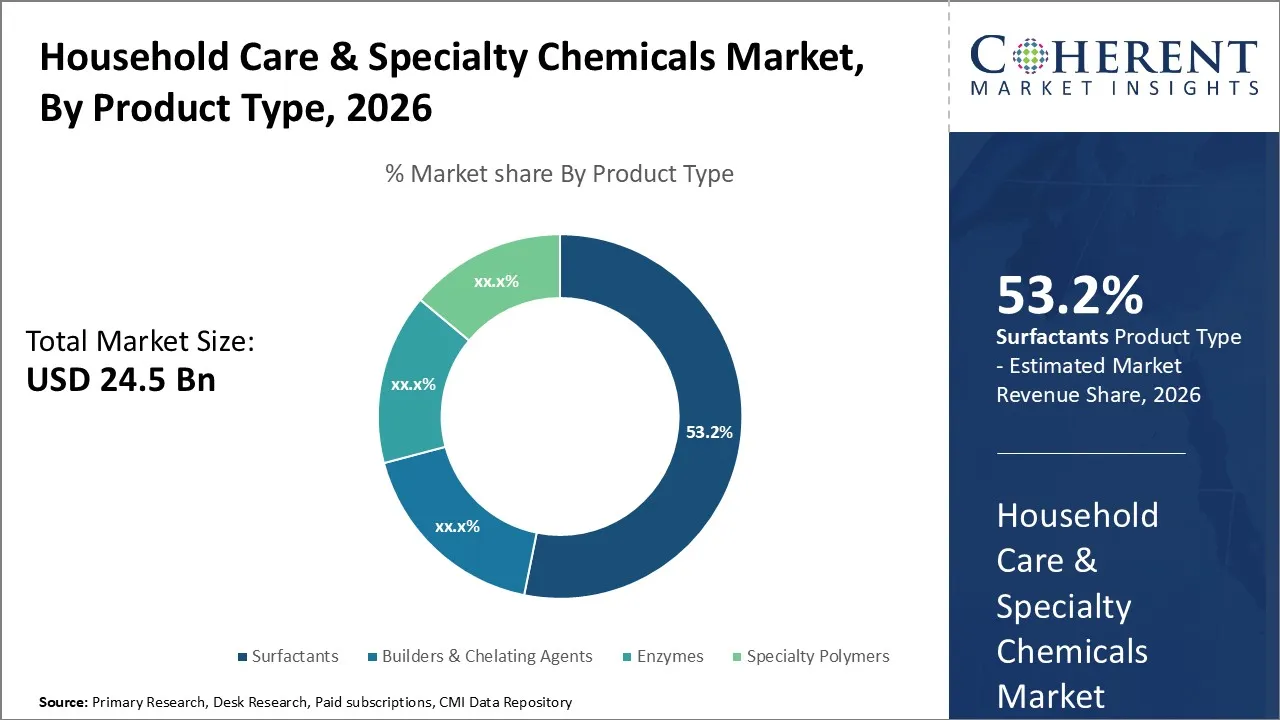
- By product type, the surfactants segment is estimated to lead the global household care & specialty chemicals market with a share of 42.0% in 2026, supported by its extensive use in detergents, dishwashing liquids, fabric care products, and household surface cleaners.
- By application, the laundry care segment is modeled to account for approximately 35.4% of the market in 2026, owing to sustained consumption of detergent ingredients, fabric conditioning agents, stain-removal enzymes, and anti-redeposition polymers.
- By source, the synthetic or petrochemical-derived segment is modeled to capture 67.1% of market revenue in 2026, reflecting established manufacturing infrastructure and the availability of cost-competitive surfactant and functional additive technologies.
- Asia Pacific is poised to dominate the global market with an estimated 39.5% share in 2026, supported by large-scale detergent manufacturing, established chemical supply chains, and expanding household cleaning consumption.
- North America is expected to create significant opportunities through 2033 for suppliers who show invest in specialty cleaning ingredients, biotechnology-enabled formulations, and regional manufacturing capacity.
Segmental Insights
Why Does the Surfactants Segment Dominate the Household Care & Specialty Chemicals Market?
Based on product type, the surfactants segment is expected to account for the largest market share of 42.0% in 2026. Its leading position is primarily anchored to the essential role of anionic, non-ionic, cationic, and amphoteric surfactants as foundational ingredients of laundry detergents, fabric softeners, dishwashing products, and multipurpose cleaning formulations. This can be established by the steady annualized growth rate of 6.78% in the worldwide trade of anionic surface-active agents between 2019 and 2024, as recorded by the Observatory of Economic Complexity (OEC).
Encouraged by such an incremental ingredient demand from broader surfactant usage across household cleaning applications, chemical manufacturers are now concentrating their focus on new developments and pipeline expansion in this category. As evidence, in January 2025, Pilot Chemical Company shared its plans to expand anionic surfactant production at its Middletown, Ohio, manufacturing facility. The investment is designed to more than double the company's alpha olefin sulfonate (AOS) supply to household cleaning, industrial cleaning, and personal care industries.
- Current Industry Events of 2026
- Market Size Estimation
- Regional Breakdown
- Competitive Landscape
- Customer Intelligence
- Segmental Analysis
- Pricing Analysis
- Key Market Drivers, Challenges & Future Trends
- Customized Insights Section
Why Is Laundry Care the Leading Application in the Household Care & Specialty Chemicals Market?
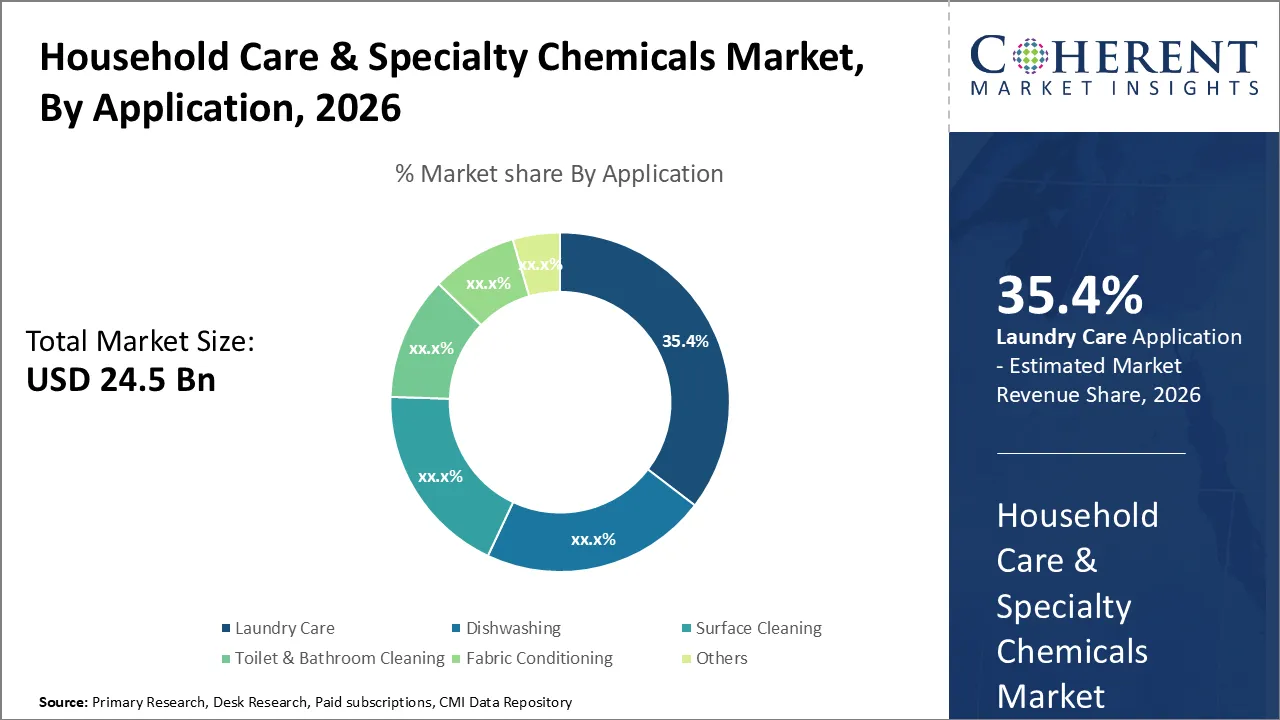
The laundry care segment is predicted to contribute to a dominating 35.4% share in revenue generation from the global household care & specialty chemicals market in 2026. The prominence of laundry applications reflects the recurring use of detergents and the technical requirements associated with multiple fabric types and washing conditions. In this regard, the American Cleaning Institute's survey report, released on April 2026, unveiled that 43% of U.S. households perform 1–3 laundry loads weekly, while another 37% perform 4–6 loads. Additionally, 68% of respondents who wash clothes at home use fabric softeners or dryer sheets, 44% use laundry sanitizers or bleach, and 36% use scent boosters.
This creates opportunities for specialty ingredient suppliers, who can help brands differentiate their detergent products in terms of stain removal, fabric protection, low-temperature performance, and compatibility. To capitalize on the same, in March 2025, Novonesis launched two protease solutions, Progress Beyond and Progress Go, developed for liquid laundry detergents. These enzymes target protein-based stains and are designed to deliver cleaning performance across different washing temperatures and detergent formulations, reflecting the growing emphasis on product differentiation in the detergent chemicals industry.
Why Do Synthetic Chemicals Retain a Leading Position in Household Care Formulations?
On the basis of source, the synthetic or petrochemical-derived chemicals segment is modeled to lead with a 67.1% share in the household care & specialty chemicals market in 2026. The established production processes, reliable ingredient availability, cost efficiencies, and the compatibility of conventional chemicals with widely used cleaning formulation systems are the major growth factors in this category.
Illustrating the economic advantage of conventional feedstock-based production across the chemicals value chain, a peer-reviewed study was published by the National Center for Biotechnology Information (NCBI) May 2024. It found that conventional synthetic/petrochemical-based surfactants have reported prices ranging from USD 1.12–6.7 per kg, compared with USD 11.17–111.73 per kg for the ones derived from renewable resources.
At the same time, the development of alternative chemical platforms is changing competitive dynamics. Portraying this competitive landscape, in June 2025, Econic Technologies introduced Recreaire, a new family of carbonate ethoxylate surfactants manufactured using captured carbon dioxide as an alternative feedstock. The technology incorporates up to 45% CO₂ by weight into surfactant molecules and offers up to a 65% reduction in global warming potential compared with conventional fatty alcohol ethoxylates, based on the company's cited life-cycle assessment.
Current Events and Their Impact on the Household Care & Specialty Chemicals Market
Current Event | Description and its Impact |
EU Detergents and Surfactants Regulatory Reform (February 2026) |
|
U.S. EPA Safer Chemical Ingredients Initiative (July 2025) |
|
Household Care & Specialty Chemicals Market Dynamics
Market Drivers
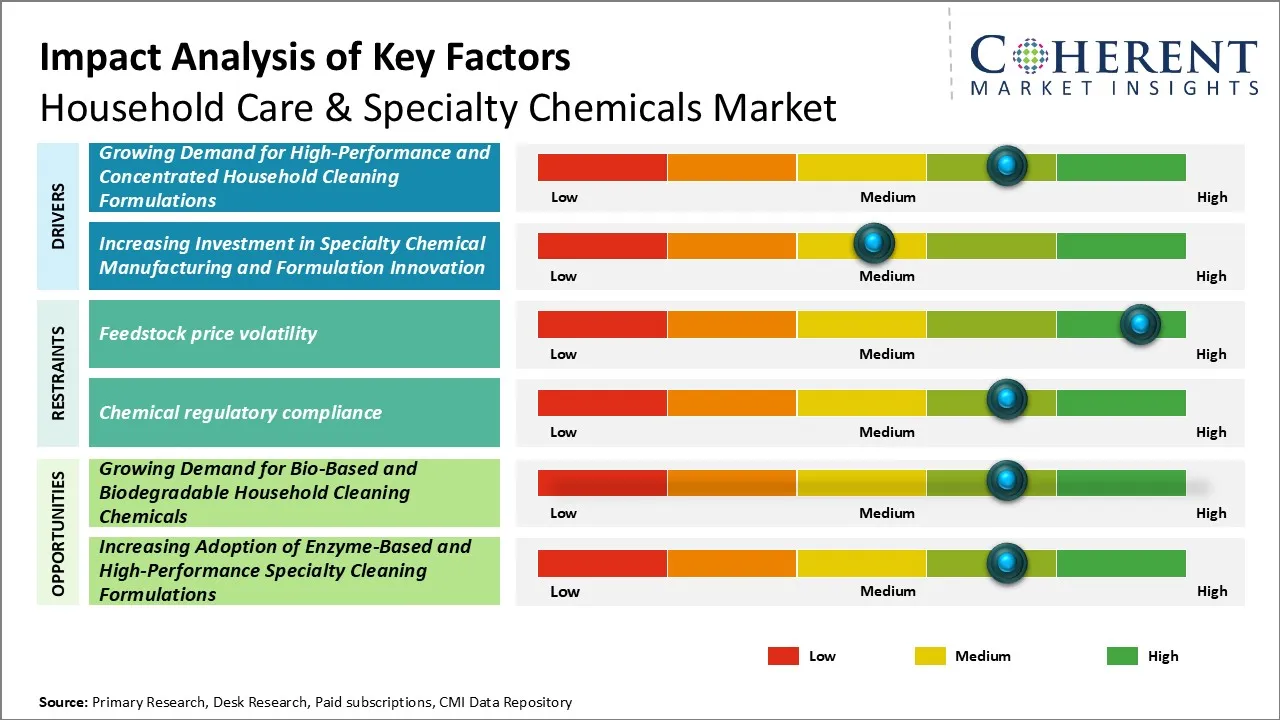
- Growing Demand for High-Performance Formulations: The stable progress of the household care & specialty chemicals market is propelled by the increasing demand for cleaning formulations capable of delivering improved efficacy with optimized ingredient concentrations. This is pushing manufacturers to develop multifunctional surfactant systems, enzyme combinations, chelating agents, and specialty polymers that enhance cleaning performance. These specialized ingredients enable detergent formulators to target different stain categories and fabric care requirements, supporting product differentiation through chemical performance rather than ingredient concentration alone.
- Commercial innovation is further strengthening this opportunity, where BASF expanded its liquid enzyme portfolio for laundry and cleaning applications, incorporating additional lipase, cellulase, and amylase technologies in July 2025.
- Increasing Investment in Manufacturing Expansion & Innovation: As the urge to improve access to differentiated cleaning ingredients escalate, the focus is shifting towards enabling integration with downstream customers. Strategic investments in feedstock processing, functional additive production, and application-specific manufacturing facilities are helping suppliers address this demand base for consistent ingredient quality and specialized formulations. These investments also enable manufacturers to improve technical service, optimize regional supply chains, and strengthen long-term relationships with household care brands.
- Kao Corporation inaugurated a 20,000-ton-per-year tertiary amine production plant in Pasadena, Texas, in August 2025. The facility improves local supply capabilities and illustrates the importance of upstream chemical investments in supporting specialty cleaning ingredient production.
Emerging Trends
- Increasing Adoption of Biodegradable Chelating Agents: These ingredients bind metal ions that can otherwise interfere with surfactant functionality to improve cleaning performance in hard-water conditions while addressing formulation sustainability requirements, diversifying application in laundry and dishwashing products. For instance, in April, 2025, BASF introduced a glutamic acid diacetate (GLDA) chemistry-based chelating agent, Trilon G, to expand its portfolio of cleaning formulation additives and provide manufacturers with an alternative ingredient option.
- Growing Preference for Enzyme-Based Stain Removal Technologies: The market is progressing toward solutions that work under shorter wash cycles, variable temperatures, and concentrated detergent conditions, where Proteases, amylases, lipases, and cellulases are becoming more important in formulation strategies. Following this trend, in August 2025, Lion Corporation launched a new enzyme technology in its NANOX one laundry detergent portfolio that can break down bacteria-derived DNA associated with persistent yellowing and odors on clothing.
- Increasing Importance of Certified and Traceable Chemical Feedstocks: Ingredient manufacturers are adopting renewable-feedstock certification and material traceability systems to support household cleaning brands' environmental procurement requirements. Grasping this opportunity, in January 2025, Nouryon announced ISCC PLUS certification for its green chelates manufacturing facility in Herkenbosch, the Netherlands. The certification covers bio-based and bio-circular feedstocks used to produce biodegradable chelating agents with a renewable carbon index of up to 100%.
Regional Insights
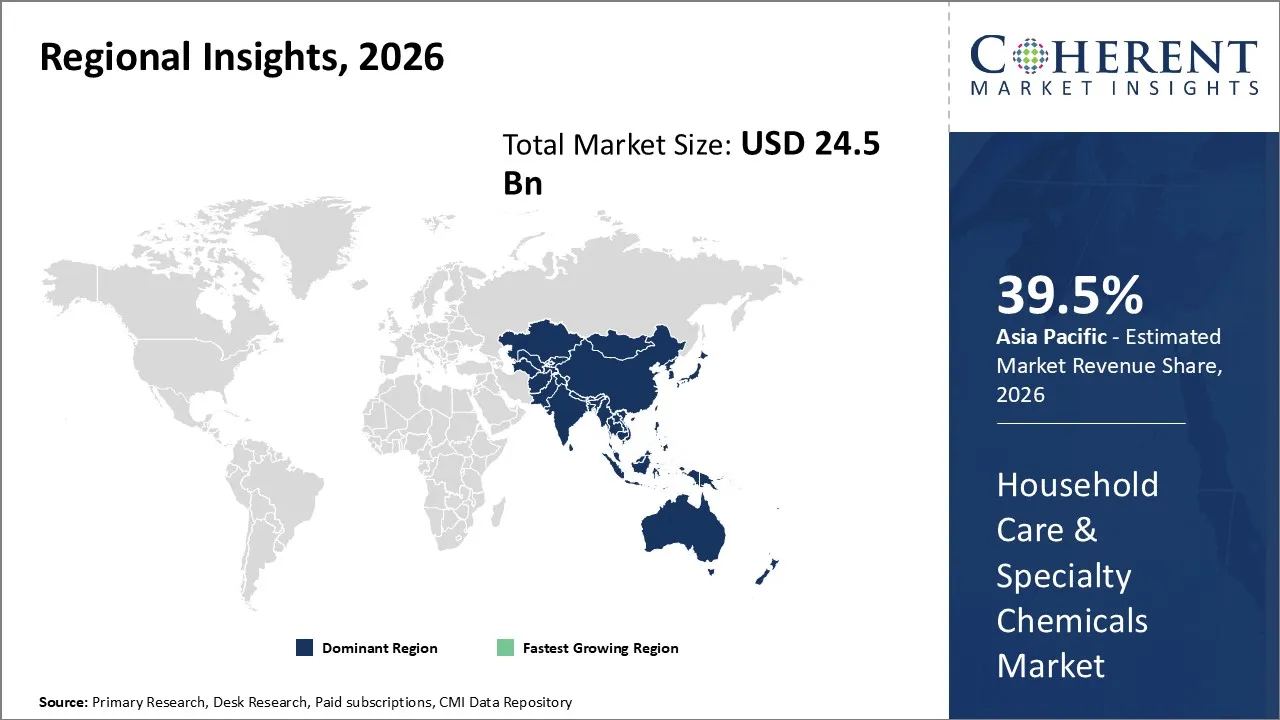
Asia Pacific to Lead the Global Household Care & Specialty Chemicals Market with a 39.5% Share in 2026
With a substantial household cleaning manufacturing base, established regional feedstock processing, and expanding demand for specialized detergent ingredients, APAC is augmenting the market at an accelerated speed. This is also due to China, India, Japan, and Southeast Asian countries being established as important contributors to chemical manufacturing and formulation development.
Thus, the region's significance in this sector is reflected in the broader homecare ingredients industry, where specialty chemicals play a pivotal role in cleaning, washing, and preservation. For instance, China maintained its top position in exporting solid soaps for purposes other than toilet soap across the globe till 2024, with an attractive shipment figure of USD 686 million, according to the OEC findings. Although the broader care chemicals category also includes applications outside household cleaning, this provides an external directional benchmark for the region's importance as a major consumer base and production house.
North America Household Care & Specialty Chemicals Market to Benefit from Advanced Formulation Research
North America is positioned as a safe marketplace for specialty household cleaning chemical manufacturers, owing to its established detergent manufacturing industry and chemical research capabilities. Such a balanced business atmosphere can be portrayed through the U.S. ranking among both the top 2 global exporters of retail-ready washing & cleaning preparations and chemical products till 2024, securing USD 1.52 billion and USD 247 billion worth of shipments, as per the OEC’s industry evaluation.
The region also benefits from supplier innovation in surfactants, enzymes, functional polymers, and chemical solutions that are designed to meet specific performance and ingredient safety requirements. Utilizing such an advantageous positioning of North America in this sector, in April 2026, Kensing introduced its fully upcycled, fermentation-derived biosurfactant platforms, Regenyl and Revolis. The new addition was intended to target household and industrial cleaning applications through its exceptional degreasing, soil removal, and surface-cleaning performance.
Global Household Care & Specialty Chemicals Market Outlook for Key Countries
Advanced Cleaning Ingredient Technologies are Strengthening the U.S. Market
The U.S. household care & specialty chemicals market is shaped by established chemical manufacturers, sophisticated detergent formulation capabilities, and sustained interest in performance-enhancing household cleaning ingredients. This positioning can be justified by the country also ranking among the top 3 importers of retail-ready washing and cleaning preparations in 2024, with an inbound shipment of USD 1.16 billion, as per the OEC survey report.
Moreover, the demand of the U.S. is particularly relevant for surfactants, fabric conditioning chemicals, enzymes, chelating agents, and specialty additives designed for convenience-oriented laundry products. Showcasing similar interest, in October 2025, International Flavors & Fragrances (IFF) and BASF initiated a strategic R&D collaboration to accelerate next-generation enzyme and biobased polymer technologies for fabric care, dishwashing, personal care, and industrial cleaning applications.
Expanding Chemical Manufacturing Capabilities are Supporting Household Care Innovation in China
China is considered a hub of manufacturing and formulating specialty chemicals for both household and industrial use. The nation’s ecosystem in this sector is largely backed by the concentration of integrated chemical production and established surfactant manufacturing facilities. This large-scale manufacturing base can be proven by the country reporting 602,501 metric tons and 518,202 metric tons of anionic and non-ionic surfactant exports worldwide in 2024, valued USD 689.65 million and USD 901.22 million, respectively, as per the World Integrated Trade Solution (WITS).
Such availability of industrial infrastructure supports a wide range of domestic and foreign household product manufacturers, where growth opportunities emerge from specialized polymer systems, renewable-feedstock-based chemicals, and application-specific ingredient development. Exemplifying the same, in November 2025, Zhejiang Jinke Household Chemical Materials commenced operations at its first intelligent manufacturing base in Tianjin's Nangang Industrial Zone against an investment exceeding RMB 1 billion. Its first phase was designed to produce 100,000 metric tons of sodium percarbonate and related functional household chemical materials annually.
Strengthening Specialty Chemical Production is Creating Opportunities in India
India's household care & specialty chemicals market is moving beyond its phase of being just another consumer base. The country is placing a strong foothold in the development of domestic chemical production, formulation sophistication, and specialty chemical value chains. Signaling this shift, nationwide production of selected major chemicals and petrochemicals grew from 45.64 million metric tons to 58.62 million metric tons between FY2016 and FY2025, according to the Ministry of Chemicals and Fertilizers.
This is helping both localized manufacturers and foreign investors gain a favorable position in the global supply of ingredients for detergents, fabric care formulations, cleaning concentrates, and related household products. For instance, in July 2026, Unilever reported double-digit home care underlying sales growth in India during the first half of the year.
Specialized Chemical Innovation is Supporting Household Care Development in Japan
Japan's household care & specialty chemicals market is closely tied to its established formulation research and advanced surface chemistry infrastructure. This promotes in-house development of highly functional cleaning ingredients, which gives domestic manufacturers a significant advantage in commercial expansion and product selection. In this regard, the 2026 Economic Surveys of OECD unveiled that almost 80% of Japan's R&D expenditure was concentrated in the business sector, with manufacturing companies undertaking around 86% of business-sector R&D.
Following this trail of product innovation, in March 2026, Kao introduced an updated Attack ZERO liquid laundry detergent range in Japan using enhanced cleaning technology, including its Bio IOS ingredient system. The new laundry-cleaning technology combines the company’s proprietary Bio IOS anionic surfactant with cationic surfactants to target bacteria within washing-machine biofilms.
Product Premiumization and Formulation Development Are Shaping the U.K. Market
The UK represents an established household care & specialty chemicals market, where the demand base is shaped by cleaning performance, product convenience, formulation differentiation, and evolving chemical compliance criterions. In this regard, a 2025 survey report from the UK Cleaning Products Industry Association (UKCPI) found that 34% of 2,185 investigated adults across the nation were disinfecting frequently touched household surfaces at least once daily, while 30% clean toilets weekly. Additionally, 44% reported changing towels weekly, and 39% changed bed linen weekly.
Manufacturers in this country also serve international markets, contributing to demand for advanced formulation development. A growing trend of emphasizing on fabric cleaning, fabric enhancers, and household hygiene is also noticed among UK-based pioneers in this sector. For instance, in May 2025, Unilever announced an GBP 80 million investment to develop an advanced fragrance research and manufacturing facility at Port Sunlight, UK. The planned facility includes fragrance formulation laboratories, compounding capabilities, and testing infrastructure supported by AI and robotics.
How are Bio-Based Functional Ingredients Creating Growth Opportunities in the Household Care & Specialty Chemicals Market?
The development of bio-based functional ingredients is helping manufacturers in the household care & specialty chemicals market capitalize untapped opportunities lying within the rising urge to combine cleaning efficacy with improved environmental characteristics. Thus, biotechnology-enabled surfactants, renewable-feedstock-derived specialty chemicals, and biodegradable cleaning additives can support product differentiation while helping innovative formulators address ingredient safety, biodegradability, and supply-chain sustainability requirements.
The U.S. Environmental Protection Agency (EPA)'s Safer Choice performance measures reported 1,656 certified products and 982 chemicals on its Safer Chemical Ingredients List in FY2025, highlighting the established ecosystem of evaluated cleaning formulations and ingredient alternatives. The agency also recorded 26 chemical additions to the list during that fiscal year, signaling scope for new entrants offering a strong portfolio of eco-friendly products.
Date | Company | Corporate Development | Relevance to the Household Care & Specialty Chemicals Market |
August 2026 | McBride | Strategic Partnership & Acquisition: McBride announced a long-term contract manufacturing partnership with Vestacy, involving the planned acquisition of two household cleaning manufacturing facilities in Spain and Portugal. The agreement includes approximately GBP 34 million in equipment funding by Vestacy and GBP 17 million in investment by McBride, with annualized revenue of GBP 170 million expected at maturity in H2 FY2028. | The partnership strengthens European household and laundry product manufacturing capacity, potentially increasing downstream demand for specialty surfactants, functional cleaning additives, and advanced detergent ingredients. However, the agreement does not specifically confirm investment in bio-based or biodegradable chemicals. |
February 2026 | Nouryon | Product Launch: Nouryon introduced FinnFix PB MAX, a fully bio-based and biodegradable carboxymethylcellulose ingredient for laundry detergents, with a 100% renewable carbon index. The ingredient is designed to prevent removed soils from redepositing onto fabrics during washing. | Strengthens opportunities for renewable functional polymers in detergent formulations while supporting cleaning performance and reduced reliance on fossil-based ingredients. |
November 2025 | Moeve and Honeywell | Strategic Partnership: Moeve and Honeywell expanded their alliance to scale production technology for renewable linear alkylbenzene (LAB). Moeve's NextLab-R technology will be offered through Honeywell's licensing platform to support more sustainable detergent surfactant manufacturing. | Supports the industrial adoption of renewable feedstocks for linear alkylbenzene sulfonate production, a major ingredient in household detergents. |
November 2025 | Stepan Company and AmphiStar | Distribution Partnership: Stepan and AmphiStar established an exclusive agreement to distribute upcycled, bio-based surfactants across Europe, the Middle East, and Africa, targeting home care and industrial cleaning applications. | Improves market access for fermentation-derived surfactants and supports their incorporation into commercial household cleaning formulations. |
October 2025 | Sasol International Chemicals | Product Launch: Sasol commercialized LIVINEX IO 7, a bio-circular nonionic surfactant manufactured using insect-derived oil. The ingredient is intended as a replacement for traditional oleochemical surfactants in fabric and home care applications. | Creates opportunities to use alternative circular feedstocks in cleaning ingredients while maintaining compatibility with existing formulation and production processes. |
June 2025 | AMSilk | Product Launch: AMSilk entered the consumer care ingredients market with AMSilk4Shine and AMSilk4Care, silk-protein-based ingredients developed for applications including automatic dishwashing rinse aids and surface cleaning formulations. | Introduces biotechnology-derived functional ingredients that can potentially substitute selected petroleum-based polymers in household cleaning products. |
May 2025 | Pilot Chemical and Novvi | Exclusive Partnership: Pilot Chemical partnered with Novvi to commercialize bio-based alpha olefin sulfonates in North America under the CalCare AOS product range, using Novvi's renewable feedstock technology and Pilot's manufacturing capabilities. | Expands the supply of renewable anionic surfactants for household cleaning applications and enables manufacturers to develop alternatives to conventional petroleum-derived ingredients. |
November 2024 | Unilever and Nufarm | Biotechnology Partnership: Unilever partnered with Nufarm to develop enhanced energy cane as a potential source of biomass-derived oils. The initiative aims to supply alternative fatty acid feedstocks for laundry detergents and other consumer products. | Creates longer-term opportunities to diversify renewable chemical feedstocks and reduce reliance on conventional vegetable oils and fossil-derived raw materials. |
Market Players, Key Developments, and Competitive Intelligence
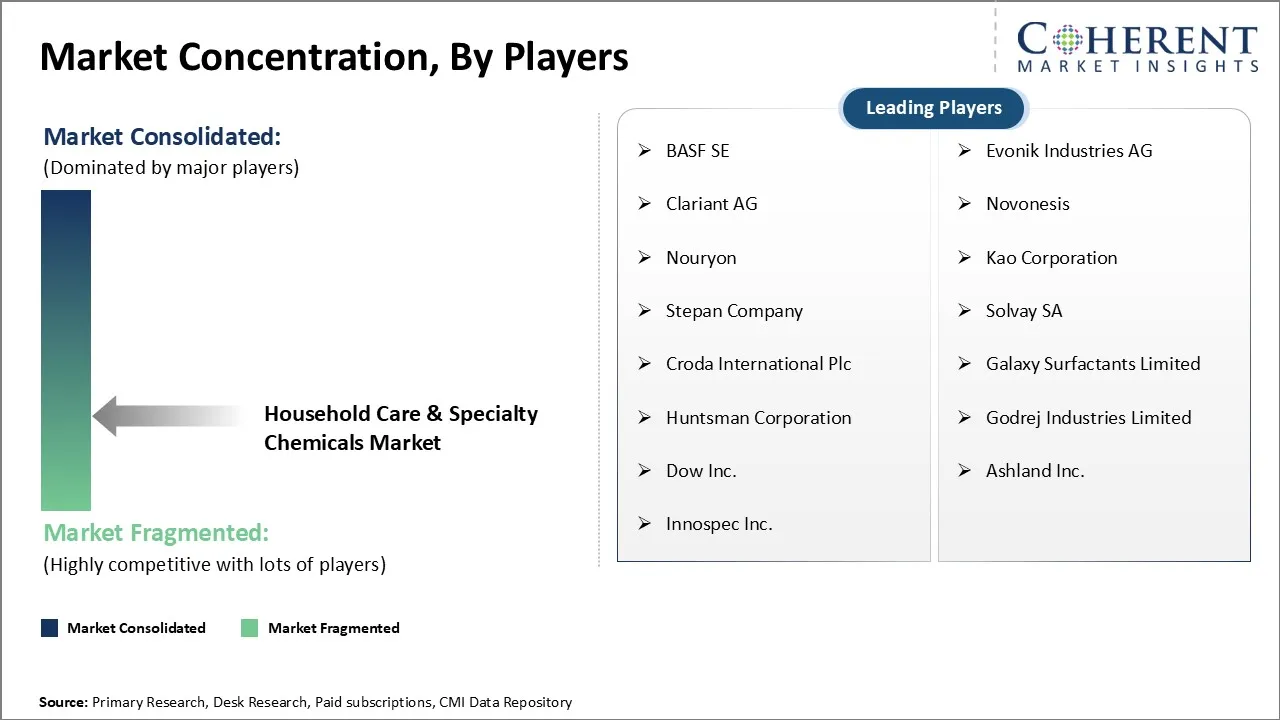
Key Developments
- In November 2026, Unilever announced plans to launch a new Surf Excel Matic Liquid detergent in India, incorporating a breakthrough AI-designed enzyme developed in partnership with Arzeda. The patented enzyme combines three functions, stain removal, fabric care, and long-lasting fragrance, within a single technology, reducing the need for multiple functional ingredients.
- In April 2026, Kao announced the introduction of Magiclean Bath Pitatto, a household bathroom care product designed to help suppress mold and pink slime for approximately six weeks under specified conditions. The launch demonstrates continued innovation in specialized household surface care formulations.
Competitive Landscape
The global household care & specialty chemicals market is characterized by competition among multinational specialty chemical producers, integrated surfactant manufacturers, biotechnology companies, and suppliers of performance additives.
Leading manufacturers are strengthening their positions through diversified ingredient portfolios, application-development capabilities, and regional manufacturing investments. Companies with expertise in surfactants, enzymes, chelating agents, and specialty polymers are increasingly targeting formulation requirements related to cleaning efficiency, ingredient compatibility, and environmental performance.
Mid-sized manufacturers are focusing on differentiated chemical technologies, technical support, and customer-specific formulations. Their strategies include developing specialized surfactants, improving production flexibility, and offering ingredients suitable for concentrated or premium household cleaning products.
Smaller specialty ingredient manufacturers are concentrating on niche technologies, including fermentation-derived surfactants, bio-based additives, and functional polymers. Their competitive potential depends on product differentiation, manufacturing economics, intellectual property, and the ability to meet customer quality requirements.
Leading Manufacturers and Notable Products in the Household Care & Specialty Chemicals Market
Manufacturer | Notable Products / Specialty Chemical Solutions | Strategic Relevance |
BASF SE | Glucopon alkyl polyglucosides, Trilon chelating agents, and laundry enzymes | Broad ingredient portfolio combining surfactant technologies, formulation additives, and enzyme solutions for home care manufacturing. |
Evonik Industries AG | Rhamnolipid biosurfactants | Fermentation-based production technology supports the commercial development of biodegradable surfactant alternatives. |
Clariant AG | TexCare One Terra and TexCare Gemini Terra | Specialty polymer technologies address soil release, fabric whiteness, viscosity management, and concentrated laundry formulation requirements. |
Novonesis | Progress Beyond and Progress Go detergent proteases | Enzyme technologies support protein-stain removal across different washing temperatures and detergent formats. |
Nouryon | Green chelating agents, fatty amines, and quaternary ammonium compounds | Specialized ingredients support water softening, fabric conditioning, and cleaning formulation performance. |
Kao Corporation | Tertiary amine intermediates and proprietary surfactant technologies | Integrated chemical manufacturing and surface chemistry research support differentiated cleaning formulations. |
Solvay SA | Soda ash and sodium bicarbonate | Established inorganic chemical production supports detergent builders and alkalinity management in selected household cleaning formulations. |
Market Report Scope
Global Household Care & Specialty Chemicals Market Report Coverage | |||
Report Coverage | Details | ||
Base Year | 2025 | Market Size in 2026: | USD 24.50 Bn |
Historical Data For: | 2020 To 2024 | Forecast Period: | 2026 To 2033 |
Forecast Period 2026 To 2033 CAGR: | 7.3% | 2033 Value Projection: | USD 40.11 Bn |
Geographies covered: |
| ||
Segments covered: |
| ||
Companies covered: | BASF, Evonik, Clariant, Novonesis, Nouryon, Kao Corporation, Stepan Company, Solvay, Croda International, Galaxy Surfactants, Huntsman Corporation, Godrej Industries, Dow, Ashland, and Innospec | ||
Growth Drivers: |
| ||
Restraints & Challenges: |
| ||
Key Takeaways from Analyst
- Specialty ingredients are becoming increasingly important to household cleaning product differentiation. Manufacturers capable of delivering measurable improvements in stain removal, cleaning efficiency, formulation stability, and compatibility with concentrated products are expected to strengthen their competitive positions.
- Chemical biotechnology and specialized polymer development will influence future product portfolios. Suppliers offering cost-effective bio-based surfactants, functional enzymes, and advanced fabric care polymers may gain opportunities as household cleaning brands update their formulations.
- Regional manufacturing capabilities and regulatory readiness will remain important competitive factors. Companies combining reliable chemical supply, application-specific technical support, transparent ingredient documentation, and manufacturing flexibility are likely to be better positioned to secure long-term contracts with household care manufacturers.
Market Segmentation
- Product Type Insights (Revenue, USD Bn, 2021 - 2033)
- Surfactants
- Anionic Surfactants
- Non-Ionic Surfactants
- Cationic Surfactants
- Amphoteric Surfactants
- Builders & Chelating Agents
- Inorganic Builders
- Organic Chelating Agents
- Enzymes
- Proteases
- Amylases
- Lipases
- Cellulases
- Others
- Specialty Polymers
- Soil-Release Polymers
- Anti-Redeposition Polymers
- Rheology Modifiers
- Others
- Bleaching Agents & Biocides
- Solvents
- Fragrance Ingredients
- Others
- Surfactants
- Application Insights (Revenue, USD Bn, 2021 - 2033)
- Laundry Care
- Dishwashing
- Surface Cleaning
- Toilet & Bathroom Cleaning
- Fabric Conditioning
- Others (Air Care and Specialty Household Cleaning)
- Source Insights (Revenue, USD Bn, 2021 - 2033)
- Synthetic/Petrochemical-Based
- Oleochemical-Based
- Bio-Based/Fermentation-Derived
- Hybrid/Renewable-Attributed
- Regional Insights (Revenue, USD Bn, 2021 - 2033)
- North America
- U.S.
- Canada
- Latin America
- Brazil
- Argentina
- Mexico
- Rest of Latin America
- Europe
- Germany
- U.K.
- Spain
- France
- Italy
- Russia
- Rest of Europe
- Asia Pacific
- China
- India
- Japan
- Australia
- South Korea
- ASEAN
- Rest of Asia Pacific
- Middle East
- GCC Countries
- Israel
- Rest of Middle East
- Africa
- South Africa
- North Africa
- Central Africa
- North America
- Key Players Insights
- BASF SE
- Evonik Industries AG
- Clariant AG
- Novonesis
- Nouryon
- Kao Corporation
- Stepan Company
- Solvay SA
- Croda International Plc
- Galaxy Surfactants Limited
- Huntsman Corporation
- Godrej Industries Limited
- Dow Inc.
- Ashland Inc.
- Innospec Inc.
Sources
Primary Research Interviews
- Household care and specialty chemical manufacturers
- Surfactant and detergent ingredient producers
- Enzyme technology and industrial biotechnology developers
- Specialty polymer and biodegradable chelating agent manufacturers
- Laundry care and dishwashing formulation specialists
- Oleochemical and petrochemical feedstock suppliers
- Household cleaning product manufacturers and private-label producers
- Chemical procurement and supply-chain managers
- Specialty chemical distributors and technical sales professionals
- Chemical regulatory compliance and sustainability specialists
Stakeholders
- Global specialty chemical and surfactant manufacturers
- Household cleaning and detergent manufacturers
- Bio-based and biodegradable ingredient suppliers
- Enzyme and industrial biotechnology companies
- Specialty polymer and functional additive manufacturers
- Contract manufacturers and private-label household care producers
- Oleochemical, petrochemical, and renewable feedstock suppliers
- Chemical distributors and formulation service providers
- Research institutions and specialty chemical technology developers
Application Areas
- Laundry detergents and fabric care formulations
- Dishwashing liquids and automatic dishwashing detergents
- Household surface cleaning and multipurpose cleaners
- Toilet and bathroom cleaning formulations
- Fabric softeners and conditioning products
- Household disinfectants and hygiene formulations
- Air care and specialty household cleaning products
- Bio-based surfactants and biodegradable cleaning ingredients
- Enzyme-based stain removal and fabric protection technologies
- Specialty polymers, chelating agents, and functional cleaning additives
Regulatory and Government Bodies
- U.S. Environmental Protection Agency (EPA)
- European Chemicals Agency (ECHA)
- European Commission
- U.K. Health and Safety Executive (HSE)
- U.K. Department for Environment, Food & Rural Affairs (DEFRA)
- Ministry of Chemicals and Fertilizers, India
- Central Pollution Control Board (CPCB), India
- Ministry of Ecology and Environment, China
- Ministry of Economy, Trade and Industry (METI), Japan
- Organisation for Economic Co-operation and Development (OECD)
Databases
- Observatory of Economic Complexity (OEC)
- World Integrated Trade Solution (WITS)
- UN Comtrade Database
- Eurostat
- U.S. Environmental Protection Agency Safer Chemical Ingredients List (SCIL)
- U.S. Census Bureau
- OECD Data Explorer
- National Center for Biotechnology Information (NCBI)
- PubMed and PubMed Central
- European Chemicals Agency Chemicals Database
- World Intellectual Property Organization (WIPO) PATENTSCOPE
- European Patent Office Espacenet
Magazines and Industry Publications
- Chemical & Engineering News
- ICIS Chemical Business
- Chemical Week
- Household and Personal Care Today
- Happi Magazine
- Chemical Processing
- Speciality Chemicals Magazine
- European Cleaning Journal
- Detergents and Cosmetics
- Chemical Industry Digest
Journals
- Journal of Surfactants and Detergents
- Tenside Surfactants Detergents
- Journal of Cleaner Production
- ACS Sustainable Chemistry & Engineering
- Industrial & Engineering Chemistry Research
- Green Chemistry
- Biotechnology Advances
- Journal of Chemical Technology & Biotechnology
- Environmental Science & Technology
- Sustainable Chemistry and Pharmacy
Associations
- American Cleaning Institute (ACI)
- International Association for Soaps, Detergents and Maintenance Products (A.I.S.E.)
- U.K. Cleaning Products Industry Association (UKCPI)
- European Chemical Industry Council (Cefic)
- Chemical Industries Association (CIA), U.K.
- Indian Chemical Council (ICC)
- Japan Soap and Detergent Association (JSDA)
- Society of Chemical Industry (SCI)
- Society of Cosmetic Chemists (SCC)
- European Biosurfactant Association
Public Domain Sources
- Specialty chemical manufacturers' annual reports and investor presentations
- Official corporate product launches and manufacturing expansion announcements
- BASF, Evonik, Clariant, Novonesis, Nouryon, Kao, and Pilot Chemical corporate publications
- Unilever, McBride, Sasol, Stepan Company, and other household care industry announcements
- Government chemical manufacturing and international trade statistics
- OEC and WITS surfactant and cleaning chemical trade datasets
- American Cleaning Institute household laundry and cleaning behavior surveys
- EPA Safer Choice performance measures and chemical ingredient assessments
- European detergent and surfactant regulatory publications
- Ministry of Chemicals and Fertilizers, India, industry production statistics
- OECD country-level research and development statistics
- Official biotechnology partnerships and renewable chemical feedstock development announcements
- Peer-reviewed research on bio-based surfactants and specialty cleaning chemicals
- Publicly available chemical patents, technical product specifications, and sustainability certifications
Proprietary Elements
- CMI Data Analytics Tool
- Proprietary CMI Existing Repository of Information for the Last 10 Years
Get access to 250+ pages report
Every segment, forecast, competitor profile and data table behind the analysis above — available for instant download.
- ESOMAR Member
- ISO 9001:2015 Certified
- D-U-N-S Registered
- GDPR & CCPA Compliant
Frequently Asked Questions
The global Household Care & Specialty Chemicals Market is provisionally projected to register a CAGR of approximately 7.3% from 2026 to 2033, using the published homecare ingredients benchmark.
Increasing demand for high-performance household cleaning ingredients, advances in specialty chemical technologies, and growing investments in surfactant and enzyme manufacturing are major factors driving the market's growth.
Fluctuating raw material prices, stringent chemical regulations, high development costs for specialized ingredients, and formulation compatibility challenges are key factors potentially restraining market growth.
Surfactants are estimated to lead the market by product type, with a share of approximately 42.0% in 2026, supported by their extensive use in laundry detergents, dishwashing products, and household surface cleaning formulations.
BASF, Evonik, Clariant, Novonesis, Nouryon, Kao Corporation, Stepan Company, Solvay, Croda International, Galaxy Surfactants, Huntsman, Godrej Industries, Dow, Ashland, and Innospec are among the relevant companies operating in the household care specialty chemicals ecosystem.
Asia Pacific is expected to lead the global Household Care & Specialty Chemicals Market, with a preliminary modeled share of 39.5% in 2026, supported by its chemical manufacturing infrastructure and household cleaning ingredient production capabilities.