

Global Industrial Mixers Market Size and Forecast – 2026 To 2033
The global industrial mixers market is expected to grow from USD 3.00 Bn in 2026 to USD 4.60 Bn by 2033, registering a compound annual growth rate (CAGR) of 6.1% from 2026 to 2033. The global industrial mixers market is driven by growth of specialty chemical production. On November 5, 2025, Clariant unveiled its newly expanded state-of-the-art facilities at Daya Bay, China, following the completion of its strategic investment.
Key Takeaways of the Global Industrial Mixers Market
- The Agitators segment is expected to account for 36.0% of the global industrial mixers market share in 2026. Increasing large scale batch processing is driving the growth of the segment. In March 2026, WuXi Biologics reported more than 350 large-scale batches delivered since 2017, during its 2025 operational update. Individual batches ranged from 6,000 liters to 16,000 liters.
- The Up to 50 kW segment is estimated to capture 55.0% of the market share in 2026. Rising manufacturing capacity investments is majorly driving the growth of the segment. In November 2025, BASF started production from its Zhanjiang Verbund site. The new capacities support chemicals and materials production across China and Asia Pacific.
- The Top Mounted segment is estimated to capture 67.0% of the market share in 2026. Growing adoption of automated mixing systems is majorly driving the growth of the segment. On July 8, 2025, Dinnissen introduced its Pegasus Moving Mixer. The system automatically lifts, rotates, connects, mixes, and discharges barrels without manual handling.
- Asia Pacific is expected to dominate the industrial mixers market in 2026 with a market share of 34.0%. Increasing demand for consistent product quality in Asia Pacific is driving the growth of the regional market. On November 19, 2025, BASF inaugurated an expanded Alkyl Polyglucosides production facility in Bangpakong, Thailand. The investment strengthens regional supply for personal care, home care, and industrial customers.
- North America is expected to account for 28.0% share in 2026 and is projected to record the fastest growth over the forecast period. Expansion of water and wastewater treatment in North America is driving the growth of the regional market. On June 17, 2026, PCL Construction announced it has successfully completed the expansion of the ARROW Utilities wastewater treatment plant in Fort Saskatchewan, marking a significant milestone in advancing water infrastructure for Alberta’s Capital Region.
Segmental Insights
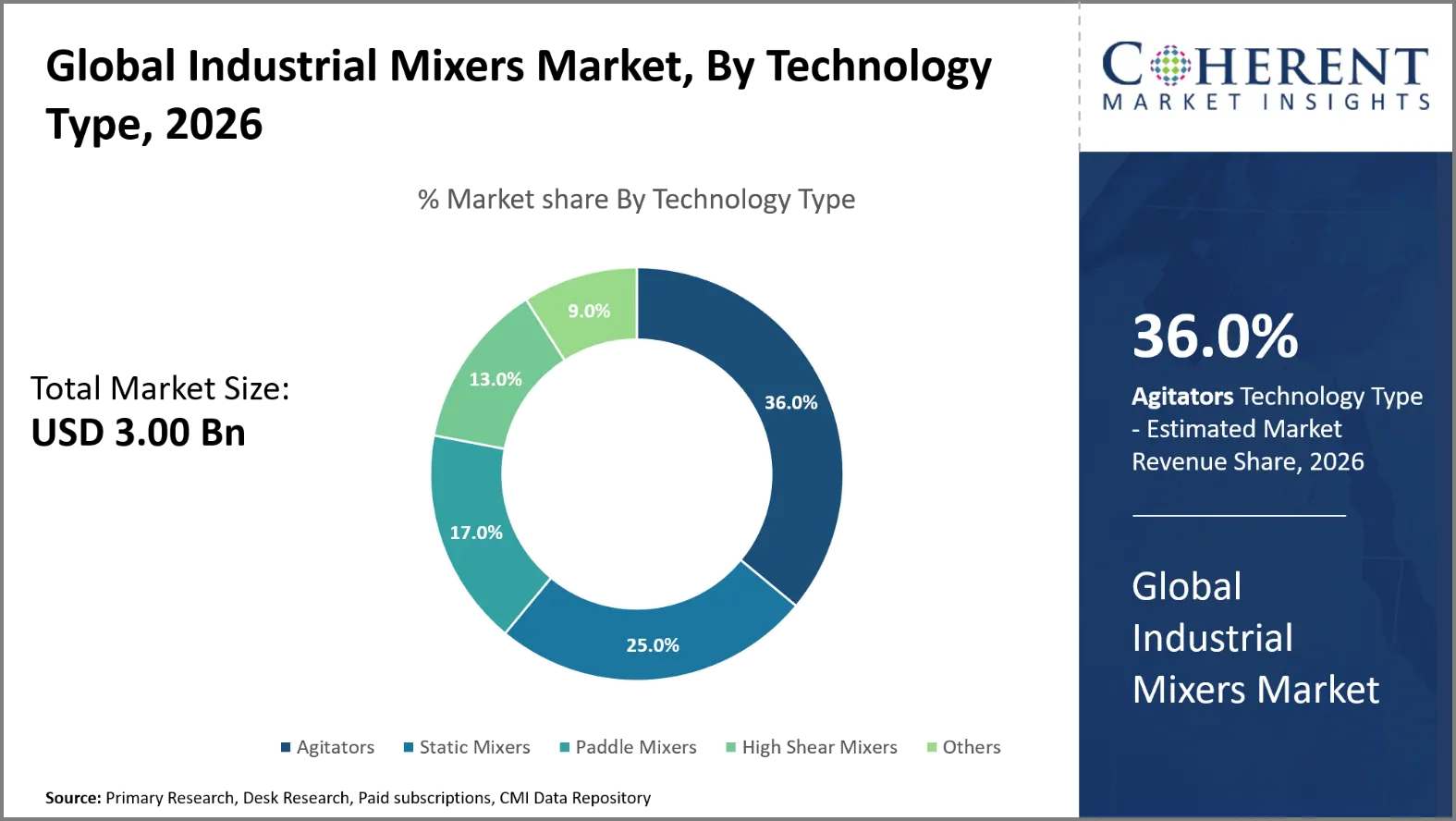
Why Does Agitators Dominate the Global Industrial Mixers Market?
The agitators segment is expected to account for 36.0% of the global industrial mixers market share in 2026. Agitators are dominant as they aid in mixing, suspension, dispersion, heat transmission and reaction processes. They are used for chemical, pharmaceutical, food, beverage, wastewater, mining and biotech applications for their versatility. The top-entry agitator can also perform well in tough situations with varying viscosities, tank sizes and operation parameters. They are offered with scalable configurations for varied shafts, impellers, drives and sealing systems. This adaptability makes the agitators suited for a range of industrial processing applications.
On March 27, 2025, SEW-EURODRIVE introduced new drives in the proven X.e series, the X.e agitator drives. The drives are built for high performance, and can withstand the large forces used within production processes of complex industries like mining.
- Current Industry Events of 2026
- Market Size Estimation
- Regional Breakdown
- Competitive Landscape
- Customer Intelligence
- Segmental Analysis
- Pricing Analysis
- Key Market Drivers, Challenges & Future Trends
- Customized Insights Section
Why is Up to 50 kW the Most Crucial Power Rating?
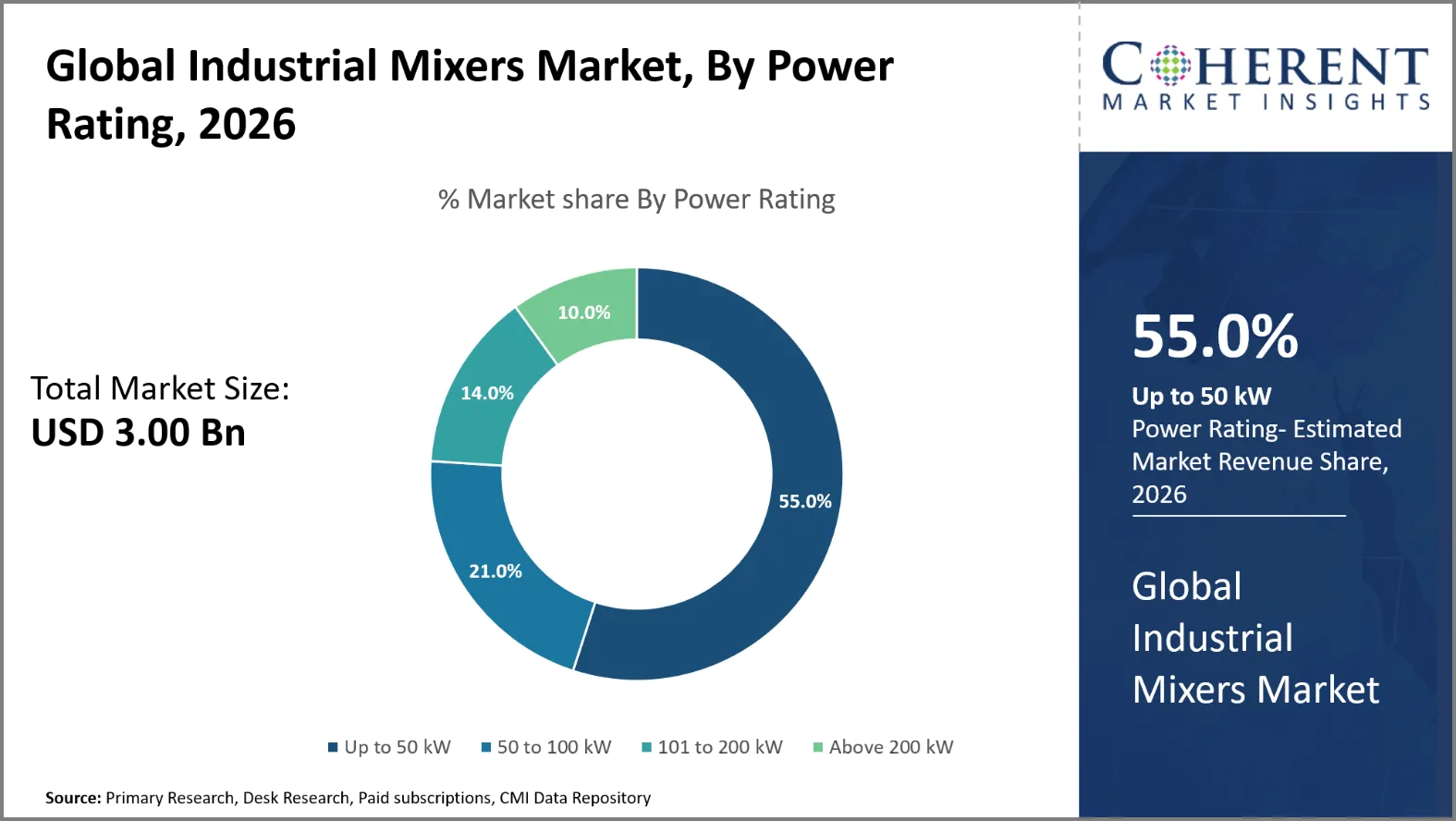
The up to 50 kW segment is expected to account for 55.0% of the global industrial mixers market share in 2026. Power ratings up to 50 kilowatts serve numerous industrial mixing requirements across small and medium processing vessels. These systems are suitable for mixing, suspension, dispersion, homogenization and other routine procedures. Manufacturers offer various motor capabilities to fit tank volume, viscosity and needed mixing intensity. Optimized impeller designs can also cut down on energy consumption whilst still delivering the appropriate pumping performance. This combination of application coverage, manageable energy consumption, and equipment flexibility supports demand for this power range.
On April 8, 2025, Plenty, a part of ITT Flow Technologies’s suite of industrial mixing solutions, introduced an updated version of its proven TM and STM Series Heavy-Duty Side-Entry Mixers. With an enhanced design that offers greater reliability and efficiency, they are built to handle the harshest environments and tasks for some of the most demanding industries, such as crude oil storage, sludge management and other critical mixing applications.
Top Mounted Dominates the Global Industrial Mixers Market
The top mounted segment is expected to account for 67.0% of the global industrial mixers market share in 2026. Top-mounted mixers dominate because their configuration supports diverse vessel designs and industrial processing conditions. They offer installation flexibility for atmospheric, vacuum and pressurized vessels. Top mounted agitators are used in pharmaceutical, chemical, food, beverage, mining, energy and waste water industries. They are modular so users can specify shaft, impeller, drive, seal and other components. The setup also allows for varying tank sizes and mixing requirements. The wide application coverage and the flexible equipment configuration, raise the position of top mounted industrial mixers.
On July 3, 2025, Sulzer launched the Scaba STA vertical agitator in July 2025. The new agitator combines design features from Sulzer’s SALOMIX and Scaba platforms. Its hydraulic design typically reduces power consumption by 20% compared with conventional agitators. The vertical configuration targets demanding industrial mixing applications requiring customized process performance.
Current Events and their Impact
Current Events | Description and its Impact |
European Union Machinery Regulation 2023/1230 |
|
European Union Regulation 2024/2748 |
|
Industrial Mixers Market Dynamics
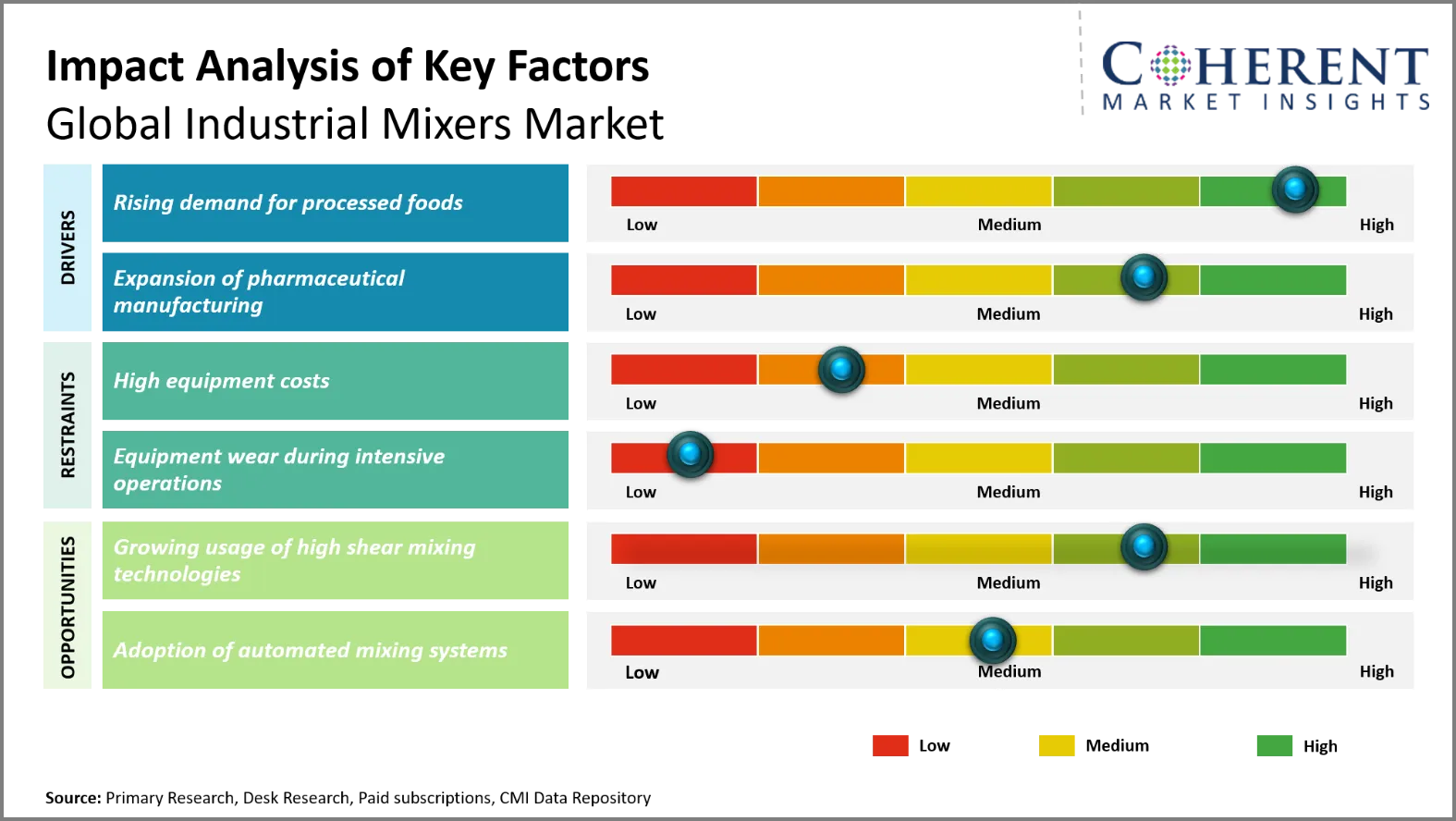
Market Drivers
- Rising demand for processed foods: Growing demand for processed foods is driving investments in automated food processing plants all over the world. Food makers use industrial mixers to mix ingredients, emulsify recipes, prepare sauces and create uniform product textures. This also increases the necessity for mixing equipment for the growing consumption of ready-to-eat meals, bread items, dairy products, drinks and convenience foods. Manufacturers want hygienic mixers that offer accurate process control and are easy to clean. This trend is supporting the demand for efficient industrial mixing systems in large-scale food manufacturing plants.
- On July 20, 2026, Nestle announced a significant capacity investment with a new plant in Mantova, Italy, as the company looks to meet continued demand growth for pet food. The facility will combine a wet pet food mill with a highly efficient logistics infrastructure supplying Purina and other Nestlé brands.
- Expansion of pharmaceutical manufacturing: The growth in pharmaceutical manufacturing is boosting the demand for specialist industrial mixers in drug formulation procedures. Pharmaceutical manufacturers utilize mixers to blend active chemicals, excipients, powders, granules, creams and liquid formulations. Growing manufacturing of generic pharmaceuticals, vaccines, biologics and specialty treatments increases demand for controlled and reproducible mixing methods. More and more manufacturers require equipment with sanitary processing, contamination control, accurate dosing and approved production conditions. Such requirements are driving the introduction of sophisticated mixers in pharmaceutical manufacturing plants.
- On May 6, 2026, Eli Lilly and Company announced a further USD 4.5 billion investment across two of its three Lebanon locations, bringing the company’s total Indiana capital development pledges since 2020 to more than USD 21 billion. This new commitment was driven by Lilly’s expanding pipeline and expected demand for its products.
Emerging Trends
- Smart Mixing Systems: Industrial mixers are incorporating more and more sensors, automation and digital controls for real-time monitoring. These technologies monitor torque, temperature, speed, viscosity and energy consumption for the operators. Connected systems enable predictive maintenance, process optimization and uniform product quality throughout production plants.
- Energy-Efficient Mixing Technologies: Manufacturers are progressively developing mixers with optimized impeller shapes, variable-speed drives and efficient motors. These solutions eliminate wasteful energy use, with the needed mixing performance maintained. Energy-efficient equipment also helps reduce operational costs and sustainability goals for energy-intensive industrial processing applications.
- Hygienic Mixer Designs: Manufacturers in the food, pharmaceutical and biotechnology industries are requiring mixers that are hygienic in design and have better cleanability. Equipment is being redesigned with smoother surfaces, better seals and less contamination spots. These characteristics help meet strict hygiene requirements while improving cleaning efficiency and manufacturing changeover times.
- Advanced High-Shear Mixing: High-shear mixing technologies are increasingly used for emulsification, dispersion, homogenization, and particle size reduction. Manufacturers frequently employ specialized rotor-stator systems in complex compositions. This trend assists pharmaceutical, cosmetic, chemical and food processing industries that require precise and reproducible material qualities.
Regional Insights
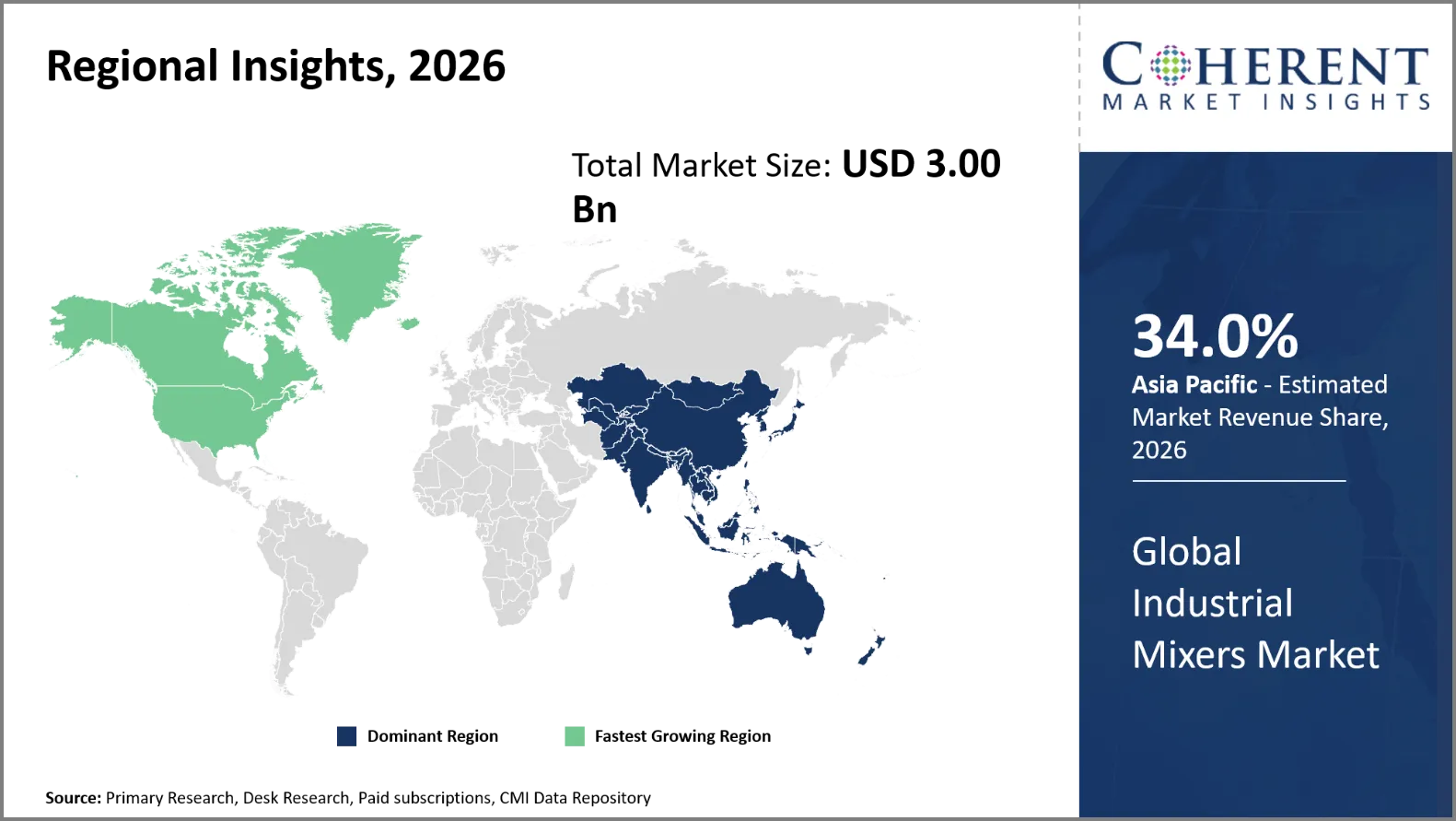
Why is Asia Pacific a Strong Market for Industrial Mixers?
Asia Pacific is expected to account for a market share of 34.0% in 2026. Asia Pacific’s main production economies profit from the growing food, chemical, pharmaceutical and electronics industry. In 2025, the chemical manufacturing in China grew by 7.8%. General-purpose machinery manufacturing also increased 8.0%. India’s food-processing incentive program targets USD 12.50 billion in additional sales. Japan’s production surveys cover chemicals, machinery, plastics and food-related sectors. Southeast Asian producers are also boosting their capacity for packaged foods and specialty chemicals. These advances create needs for batch mixers, high shear systems, homogenizers and hygienic agitators. Equipment demand is particularly supported by automated production lines requiring precise blending and repeatable formulations.
Why Does North America Industrial Mixers Market Exhibit High Growth?
North America is expected to register the fastest growth with a CAGR of 7.3% over the forecast period. It is projected to account for 28.0% of the global industrial mixers market in 2026. North America benefits from established pharmaceutical, food, chemical, and biotechnology manufacturing clusters. In December 2025, there were roughly 355,500 employees in U.S. pharmaceutical manufacturing. The chemical manufacturing industry employed roughly 324,200 persons during the same time. Food manufacture also provided important employment in dairy, bakery, poultry, and animal processing plants. Mexico adds considerable beverage, food, automotive and chemical production capacity across industrial corridors. Valid mixing is required for pharmaceutical growth of active ingredients, excipients, biologics and liquid formulations. Food producers increasingly require hygienic mixers for sauces, dairy products, bakery fillings, and prepared meals.
Global Industrial Mixers Market Outlook for Key Countries
Why is China Emerging as a Major Hub in the Industrial Mixers Market?
China benefits from rapid expansion across chemical processing, machinery, food processing, and specialty manufacturing. Manufacturing value added increased 6.4% during 2025. Food processing based on agricultural products increased 5.6% during the same year. Chemical raw-material and chemical-product manufacturing increased 7.8%. General-purpose machinery manufacturing increased 8.0%. These gains create equipment requirements across chemical blending, food formulation, polymer processing, and industrial material preparation. Domestic manufacturers are also expanding automated production systems requiring programmable mixing controls. Large chemical parks and food-processing clusters support demand for high-capacity agitators, powder mixers, and high-shear equipment.
Is U.S. the Next Growth Engine for the Industrial Mixers Market?
Demand in the U.S. offers considerable benefits for pharmaceutical manufacture, chemical processing and specialist food manufacturing. As of December 2025, the pharmaceutical and medicine manufacturing industry has around 355,500 employees. Pharmaceutical preparation manufacturing accounted for approximately 233,200 workers. Medicinal and biological product manufacturing employed approximately 122,200 workers. Chemical manufacturing employed approximately 324,200 workers during December. Food manufacturing includes substantial dairy, bakery, poultry, seafood, and animal-processing operations. These industries require specialized mixers for formulations, emulsions, suspensions, coatings, sauces, and nutritional products. Pharmaceutical facilities additionally require controlled mixing environments and equipment supporting repeatable batch production.
Germany Industrial Mixers Market Analysis and Trends
Germany benefits from its deeply integrated chemical and pharmaceutical manufacturing ecosystem. Germany’s chemical and pharmaceutical industry generated USD 220 billion in combined sales during 2025. Pharmaceutical sales increased 5.5% during that year. Chemical production decreased 3.3% amid difficult operating conditions. The sector continues to invest in process efficiency, specialist formulations and production technologies. German machinery manufacturers also supply complex equipment for the chemical, food, pharmaceutical and material processing industries. The situation has led to a demand for precision agitators, sanitary mixers, dispersion systems and processing systems made to measure. Research-intensive pharmaceutical manufacturing further increases requirements for controlled and reproducible mixing processes.
Japan Industrial Mixers Market Analysis and Trends
Japan benefits from sophisticated chemical, electronics, machinery, pharmaceutical, and precision manufacturing operations. The Ministry of Economy, Trade and Industry tracks chemical products, general machinery, plastics, pulp, paper, and manufactured goods monthly. Industrial production grew 2.6% in December 2025 compared with the previous year. Chemicals and production machinery were key contributors to monthly changes. Japanese businesses are placing more and more emphasis on small equipment, precision process control, automation and energy efficiency. These priorities enable innovative mixer setups for specialty chemicals, electronic materials, medicinal formulations and culinary ingredients. Demand also benefits from replacement of aging production equipment with digitally controlled mixing systems.
India Industrial Mixers Market Analysis and Trends
India benefits from expanding food processing, pharmaceutical production, chemicals, and domestic manufacturing investments. The Production Linked Incentive Scheme for Food Processing Industries targets USD 12.50 billion in additional sales over six years. The program also targets USD 6.05 billion in cumulative additional investment. It targets approximately 2,47,730 additional jobs by its fifth year. Pharmaceutical manufacturing remains another major equipment-consuming sector. Chemical and food-processing facilities are increasingly using industrial mixers for powders, liquids, emulsions, sauces, formulations and specialty goods. The growth in organized industrial capacity increases the demand for automated mixers, hygienic agitators and energy efficient processing equipment.
Global Industrial Mixers Market - Country-Level Manufacturing Expansion (2025)
Country/Region | Manufacturing Expansion Indicator | Manufacturing Expansion Share |
China | Manufacturing fixed-asset investment growth | 0.6% |
India | Companies planning production-site expansion | 67.4% |
Japan | Companies planning production-site expansion | 35.7% |
U.S. | Companies planning production-site expansion | 42.3% |
Germany | Industrial production change | -1.3% |
South Korea | Companies planning production-site expansion | 20.0% |
ASEAN 5 | Companies planning production-site expansion | 26.7% |
European Union and U.K. | Companies planning production-site expansion | 22.8% |
How is Growing Usage of High Shear Mixing Technologies Creating New Growth Opportunities in the Industrial Mixers Market?
Growing usage of high-shear mixing technologies is creating opportunities because manufacturers increasingly require precise emulsification, dispersion, and particle-size reduction. Pharmaceutical manufacturers employ rotor-stator systems for the production of creams, suspensions, emulsions and nanoparticle formulations when precise droplet properties are required. Food producers utilize high shear processing in mayonnaise, dressings, sauces, dairy products and beverage emulsions. High-shear equipment is widely used by cosmetic manufacturers to make stable creams, lotions and serums. Such methods are utilized by chemical manufacturers for pigments, coatings, adhesives, and custom formulations. Continuous processing is also possible with in-line high-shear mixers which reduces batch handling. These applications motivate equipment providers to produce higher-speed rotors, improved stators, automated controls, and scalable inline arrangements.
On April 29, 2025, Lancaster Products, an industry leader in the specialized mixing and material processing equipment business, revealed it has launched the new K2 High Shear Mixer. This innovative mixing system has been specifically designed for precision, efficiency and versatility in small-batch processing and prototyping.
Market Players, Key Development, and Competitive Intelligence
Key Developments
- On March 17, 2026, Alfa Laval launched the EnSaLine agitator platform for hygienic production. The new EnSaLine agitator platform from Alfa Laval is about to change that, allowing food, dairy, beverage, pharmaceutical and home & personal care manufacturers to save time and operating costs from day one.
- On November 18, 2025, GEA announced it is constructing a large-scale mixing plant for flavor production for Symrise AG at its main site in Holzminden, Lower Saxony, Germany. Symrise is one of the world’s leading suppliers of fragrances and flavors. With GEA’s turnkey process technology, the company is increasing its production capacity, enhancing flexibility and meeting the highest requirements for hygiene and material quality.
Competitive Landscape
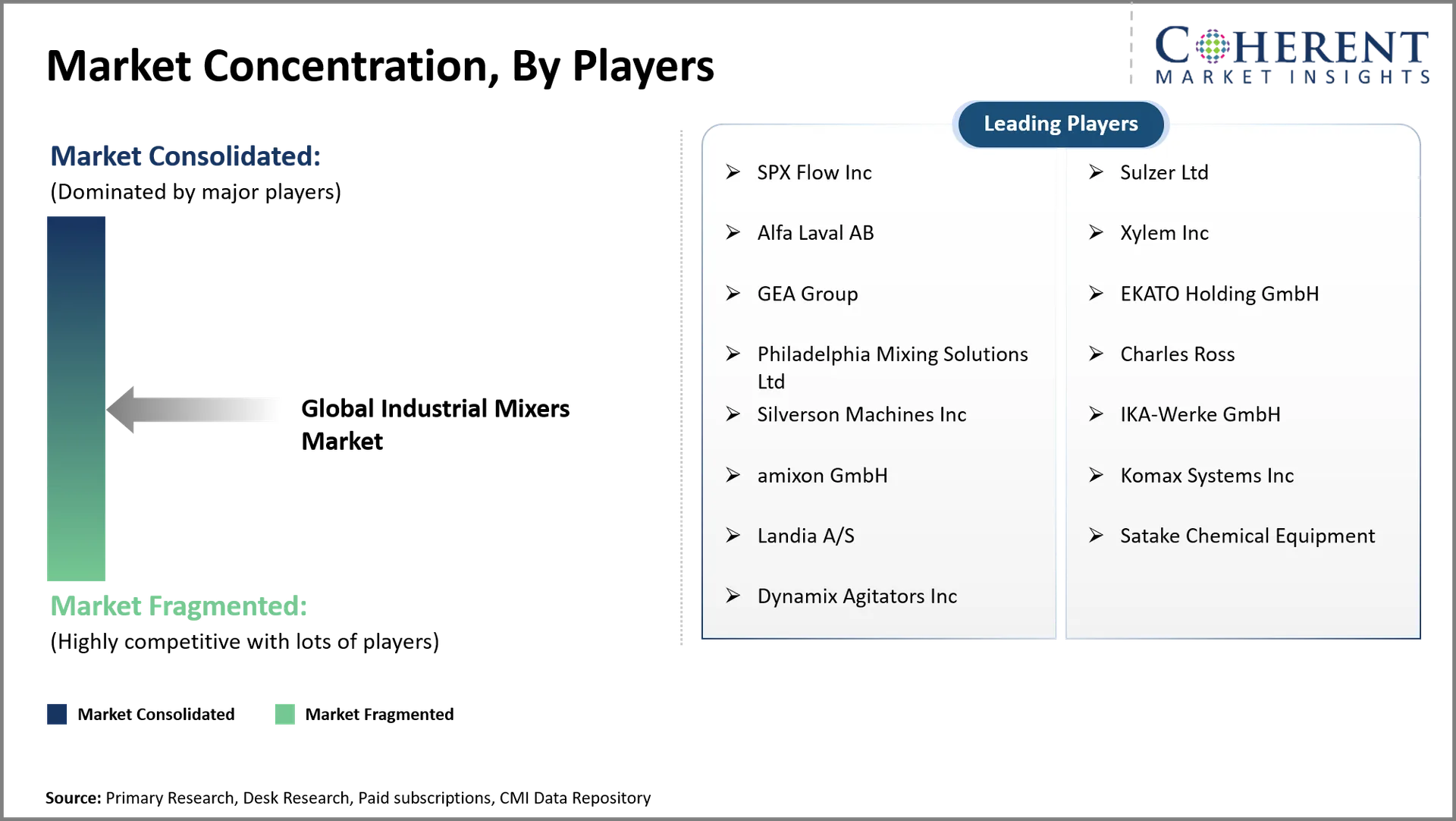
The key companies are improving their positions through application-specific engineering, sanitary design, digital controls and specialized impeller technologies. ITT Flow Technologies applies the Lightnin trademark to chemical, pharmaceutical, mining and wastewater industries. Its approach combines computational fluid dynamics, pilot testing, application engineering, and aftermarket services. The Lightnin 700/800 series covers demanding pharmaceutical fermentation, chemical, minerals, and sludge applications. Alfa Laval’s EnSaLine agitator platform focuses on hygienic mixing, energy economy and simplified maintenance. GEA is dedicated to integrated processing solutions for the food, pharmaceutical and biotechnology industries. Sulzer focuses on customized mixing systems and process engineering for chemicals, water treatment, and energy applications.
Market Report Scope
Global Industrial Mixers Market Report Coverage | |||
Report Coverage | Details | ||
Base Year | 2025 | Market Size in 2026: | USD 3.00 Bn |
Historical Data For: | 2020 To 2024 | Forecast Period: | 2026 To 2033 |
Forecast Period 2026 To 2033 CAGR: | 6.10% | 2033 Value Projection: | USD 4.60 Bn |
Geographies covered: |
| ||
Segments covered: |
| ||
Companies covered: | SPX Flow Inc, Sulzer Ltd, Alfa Laval AB, Xylem Inc, GEA Group, EKATO Holding GmbH, Philadelphia Mixing Solutions Ltd, Charles Ross, Silverson Machines Inc, IKA-Werke GmbH, amixon GmbH, Komax Systems Inc, Landia A/S, Satake Chemical Equipment, Dynamix Agitators Inc | ||
Growth Drivers: |
| ||
Restraints & Challenges: |
| ||
Analyst Opinion (Expert Opinion)
- The future of industrial mixing will increasingly center on intelligent equipment that combines mechanical performance with process monitoring. Demand should shift toward mixers capable of automatically adjusting speed, torque, and operating parameters. High-shear, inline, and sanitary mixing systems should gain particular relevance as manufacturers pursue shorter processing cycles. Equipment capable of supporting continuous production will become increasingly important in chemical, pharmaceutical, food, and specialty-material applications. Energy consumption will also become a stronger equipment-selection criterion as industrial facilities pursue lower operating costs.
- The strongest opportunities should emerge in high-shear mixers, hygienic agitators, inline mixers, and digitally monitored top-entry systems. Pharmaceutical and biotechnology manufacturing should offer particularly attractive applications because formulations require controlled and repeatable mixing conditions. Sanitary mixing equipment supporting sauces, dairy products, drinks and emulsions should remain crucial for food and beverage manufacturing. Manufacturing capacity is rising in chemicals, pharmaceuticals, food processing and specialized materials in China and India, which offers significant equipment potential. The U.S. and Germany should create chances for upgrading, replacement and improved process-control equipment.
- Players looking for an edge should focus on application-specific engineering rather than competing largely on the price of equipment. Manufacturers should be designing impeller shapes that are optimized for challenging viscosities, abrasive slurries and high shear formulas. Digital monitoring should link data on torque, vibration, temperature and speed to maintenance plans. Suppliers also need to improve their pilot testing capabilities since clients want to validate processes before they buy big equipment. Local service capabilities in China and India could shorten response times and build stronger long-term client relationships. Energy-efficient drives, modular components, hygienic construction, and faster maintenance should further differentiate equipment portfolios.
Speak to the analyst
Want personalized insights?
Take the findings above to one of our principal consultants, or have the report rebuilt around the segments, geographies and competitors you actually track.
Market Segmentation
- Technology Type Insights (Revenue, USD Billion, 2021 - 2033)
- Agitators
- Static Mixers
- Paddle Mixers
- High Shear Mixers
- Others
- Power Rating Insights (Revenue, USD Billion, 2021 - 2033)
- Up to 50 kW
- 50 to 100 kW
- 101 to 200 kW
- Above 200 kW
- Type Insights (Revenue, USD Billion, 2021 - 2033)
- Top Mounted
- Side Mounted
- Bottom Mounted
- End User Insights (Revenue, USD Billion, 2021 - 2033)
- Chemicals
- Water and Wastewater
- Food and Beverage
- Petrochemicals
- Pharmaceuticals
- Others
- Regional Insights (Revenue, USD Billion, 2021 - 2033)
- North America
- U.S.
- Canada
- Latin America
- Brazil
- Argentina
- Mexico
- Rest of Latin America
- Europe
- Germany
- U.K.
- Spain
- France
- Italy
- Russia
- Rest of Europe
- Asia Pacific
- China
- India
- Japan
- Australia
- South Korea
- ASEAN
- Rest of Asia Pacific
- Middle East
- GCC Countries
- Israel
- Rest of Middle East
- Africa
- South Africa
- North Africa
- Central Africa
- North America
Sources
Primary Research Interviews
- Industrial Mixer Manufacturers & OEMs
- Raw Material Suppliers & Component Manufacturers
- End-Use Industry Professionals (Food & Beverage, Chemical, Pharmaceutical)
- Industrial Equipment Distributors & Traders
Magazines
- Processing Magazine
- Chemical Engineering Magazine
- Powder & Bulk Solids Magazine
- Mixing & Blending Technology Quarterly
Journals
- Journal of Industrial and Engineering Chemistry
- Chemical Engineering Research and Design (Elsevier)
- Journal of Food Engineering
Associations
- North American Mixing Forum (NAMF)
- European Federation of Chemical Engineering (EFCE)
- Society of Chemical Manufacturers and Affiliates (SOCMA)
- International Society of Pharmaceutical Engineering (ISPE)
Public Domain Sources
- U.S. Census Bureau – Manufacturing & Industrial Equipment Statistics
- European Commission – Industrial Policy & Manufacturing Data
- United Nations Industrial Development Organization (UNIDO)
- World Trade Organization (WTO) – Trade Data on Industrial Equipment
Proprietary Elements
- CMI Data Analytics Tool
- Proprietary CMI Existing Repository of Information for the Last 10 Years
Get access to 250+ pages report
Every segment, forecast, competitor profile and data table behind the analysis above — available for instant download.
- ESOMAR Member
- ISO 9001:2015 Certified
- D-U-N-S Registered
- GDPR & CCPA Compliant
Frequently Asked Questions
The global industrial mixers market is expected to stand at USD 3.00 Bn in 2026 and is expected to reach USD 4.60 Bn by 2033.
The CAGR of the global industrial mixers market is projected to be 6.1% from 2026 to 2033.
Rising demand for processed foods and Expansion of pharmaceutical manufacturing are the major factors driving the growth of the global industrial mixers market.
High equipment costs and Equipment wear during intensive operations are the major factors hampering the growth of the global industrial mixers market.
In terms of technology type, agitators segment is estimated to dominate the market revenue share in 2026.
Industrial mixers blend, disperse, emulsify, homogenize, suspend, and combine materials across industrial processing operations.
Sensors and automated controls enable real-time monitoring of speed, torque, temperature, vibration, and energy consumption.