

Pelvic Floor Electric Stimulator Market Size and Share Analysis- Growth Trends and Forecasts (2026-2033)
The Global Pelvic Floor Electric Stimulator Market is gaining momentum at a 9.5% CAGR, with the value reaching USD 645.1 Mn by 2033, from USD 342.0 Mn in 2026. This augmentation is primarily attributed to the ongoing shift of healthcare providers and consumers toward non-surgical technologies in managing urinary incontinence, pelvic muscle weakness, and related pelvic floor disorders.
Pelvic floor electrical stimulators deliver controlled electrical impulses through internal probes or external electrodes to activate and rehabilitate pelvic floor muscles. Clinical evidence continues to support research into these technologies. As evidence, a 2025 systematic review indexed by the U.S. National Library of Medicine (NLM) recognized intravaginal electrical stimulation as a potential therapeutic technology for improving several urinary and pelvic floor outcomes.
Furthermore, the increasing demand for home-based rehabilitation, rising awareness of postpartum pelvic health, and advancements in portable neuromuscular electrical stimulation (NMES) technology are creating opportunities for device manufacturers in this sector. However, clinical eligibility, regulatory approvals, and patient adherence remain a determinant factor for the pace of adoption.
Key Takeaways of the Global Pelvic Floor Electric Stimulator Market
- By Product Type, portable/mobile stimulators are expected to acquire 58.0% modeled share in 2026. This positioning is largely backed by their alignment with self-administered exercise programs and the practice of treatment outside a clinical setting. Showing the practicality and patient acceptance of device-assisted home rehabilitation, a 2024 NLM study evaluated the use of a prescribed digital health treatment program in supervising pelvic floor muscle training (PFMT) for urinary incontinence (UI) treatment. The results recorded symptom improvement among 74% of the total 947 eligible real-world users, with an impressive mean adherence of 89% over 12 weeks.
- By Application, urinary incontinence is predicted to hold 73.0% market share in 2026, as pelvic floor muscle strengthening becomes an established component of conservative continence care. Presenting evidence for such clinical efficacy, a 2024 NLM study marked significant benefits in treating stress UI among middle-aged and elderly women with a combination of PFMT and electrical simulation (ES). The combined therapy was found superior in all outcome measures than the control group.
- By End User, home care settings are poised to attain a dominating 52.0% revenue share in 2026. This being the largest end-user segment is evidently supported by growing consumer interest in discreet, repeatable training. Testifying to such biased user preference, a 2025 NLM study involving postmenopausal 3,051 women with pelvic floor dysfunctions (PFDs) demonstrated a high completion rate of 77.6% for a fully remote PFMT program, with an average satisfaction score of 8.6 out of 10.
- North America is estimated to lead the global market with a 38.0% regional share in 2026. The region’s dominance is induced by its established continence-care ecosystem and a defined regulatory pathway for non-implantable stimulation devices. Such a favorable business atmosphere can be testified by the U.S. FDA providing 510k clearance for the Levina Pelvic Floor Muscle Stimulator by Zmi Electronics, Ltd. for treating gastroenterological and urological incontinence in March 2025.
- Asia Pacific is anticipated to experience the fastest growth on account of its expanding medical device manufacturing capacity, patient population, and awareness of conservative pelvic rehabilitation. The potential of APAC countries in this category can be portrayed by the deployment of a total Rs. 3,420 crore budgetary outlay for eligible incremental sales in four target medical device segments, including renal-care devices and implants. This was updated by the Indian Government under its Production Linked Incentive (PLI) Scheme in July 2026.
Segmental Insights
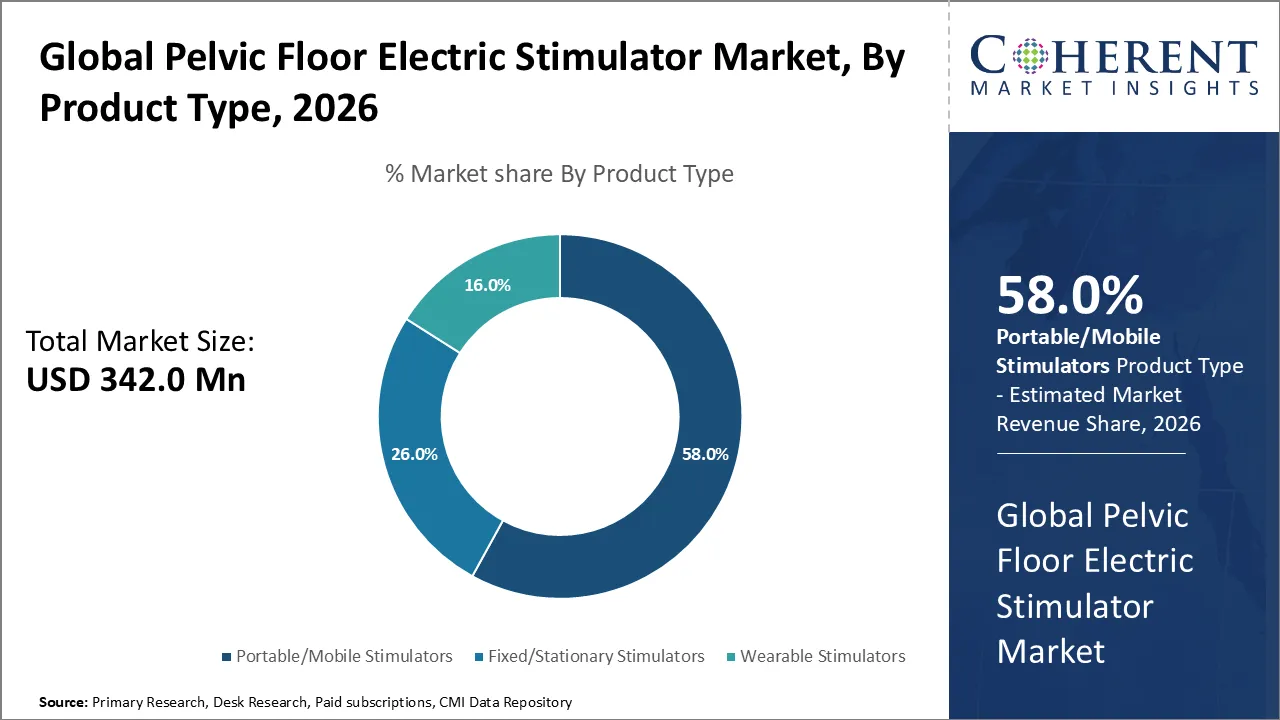
Why Do Portable/Mobile Stimulators Dominate the Global Pelvic Floor Electric Stimulator Market?
Portable/mobile stimulators are expected to capture 58.0% of the global pelvic floor electric stimulator market in the illustrative 2026 model. Their market position is fueled by the growing commercial value of compact electronics, preprogrammed stimulation settings, rechargeable batteries, and compatibility with internal electrodes. Illustrating the amplification of efforts into investigating compact electrode design, a 2026 randomized pilot trial on in 28 PFD-afflicted individuals recognized a mobile, pen-like electrode as a potential alternative to conventional patch electrodes by showing a notable increase in vaginal pressure.
In contrast to stationary therapy equipment, portable devices enable patients to follow prescribed treatment protocols at home without repeatedly visiting rehabilitation facilities. Thus, the sub-segment also benefits from continuous development in remotely controlled product configurations that are designed for different types of incontinence and varying levels of muscle weakness.
- Current Industry Events of 2026
- Market Size Estimation
- Regional Breakdown
- Competitive Landscape
- Customer Intelligence
- Segmental Analysis
- Pricing Analysis
- Key Market Drivers, Challenges & Future Trends
- Customized Insights Section
Why Does Urinary Incontinence Remain the Largest Application?
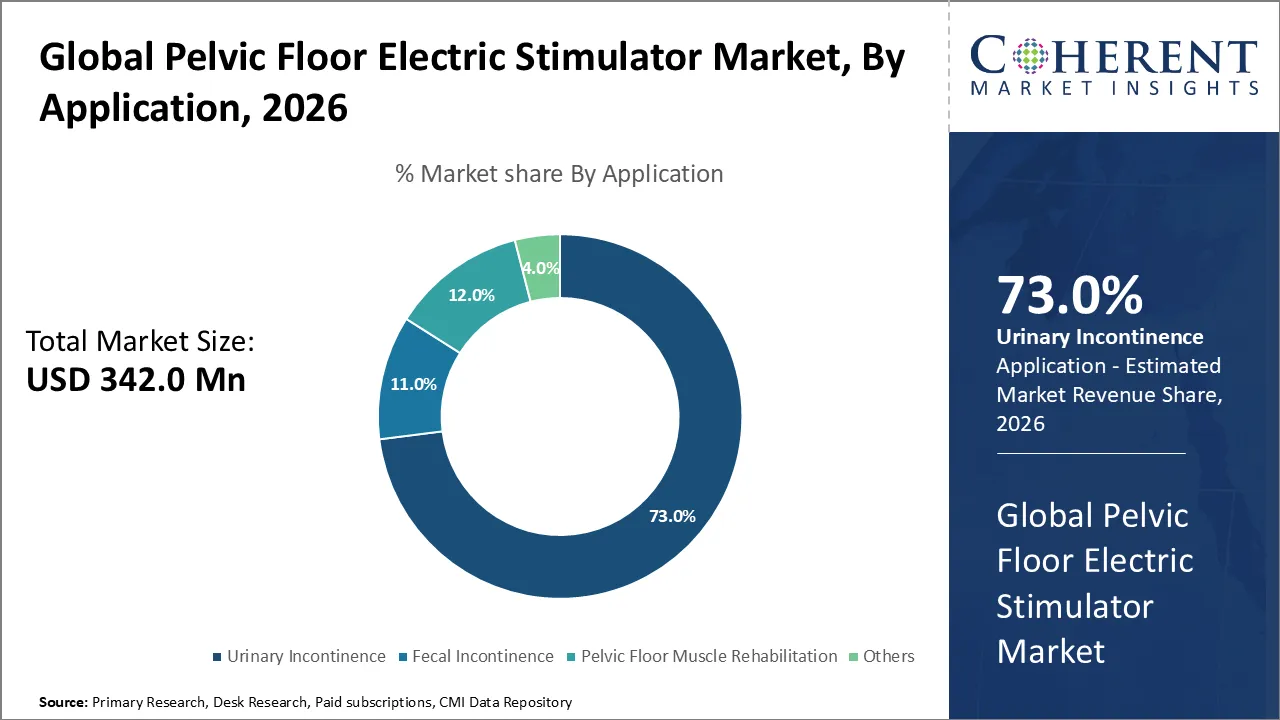
Urinary incontinence is projected to account for the largest share of 73.0% in the global pelvic floor electric stimulator market in 2026 under the provisional allocation. In particular, the use cases of stress UI are gaining traction, as it starts hampering daily activities, when bladder leakage accompanies activities such as coughing, sneezing, or physical exertion. According to the 2024 NLM findings, almost 62% of women worldwide experience some degree of UI, with over 37% of this figure suffering from stress-induced type.
The study further found that the 77% of these women with stress UI were feeling bothered by their bladder leakage problem. Such a predominant proportion of the patient pool belonging to this field of application is direct evidence of this leadership, as it indicates a substantial underlying need for continence management.
Electrical stimulation devices may be incorporated into conservative treatment plans to produce muscle contractions, support neuromuscular re-education, or assist patients who have difficulty identifying and activating their pelvic floor muscles voluntarily. Treatment selection depends on the underlying condition, and these devices are not universally appropriate for all forms of incontinence.
Why Are Home Care Settings Emerging as the Leading End-User Segment?
Home care settings are expected to contribute leading the global pelvic floor electric stimulator market with a 52.0% share in 2026. The increasing availability of personal-use stimulation devices can be considered the most relevant cause of this positioning, as these devices are highly suitable in allowing patients to undertake treatment sessions within their comfort spaces.
Moreover, this approach can reduce travel requirements, provide scheduling flexibility, and encourage continuation of treatment protocols following initial clinical assessment. Thus, a 2025 NLM study marking home-based ES equally effective as outpatient models in treating UI among women reflects the strengthening consumer confidence on products designed to meet requirements of this segment.
Device manufacturers serving this segment are now emphasizing on enabling simplified controls, reusable electrode configurations, portable charging systems, and discreet designs. Furthermore, improvement in the availability of digital instruction materials and patient education can support treatment adherence, while helping new portfolios prepare for extensive professional assessment.
Current Events and Their Impact on the Pelvic Floor Electric Stimulator Market
Current Event | Description and its Impact |
U.K. Renewed Women's Health Strategy (April 2026) |
|
European Union Medical Device Framework Implementation (2025-2026) |
|
Pelvic Floor Electric Stimulator Market Dynamics
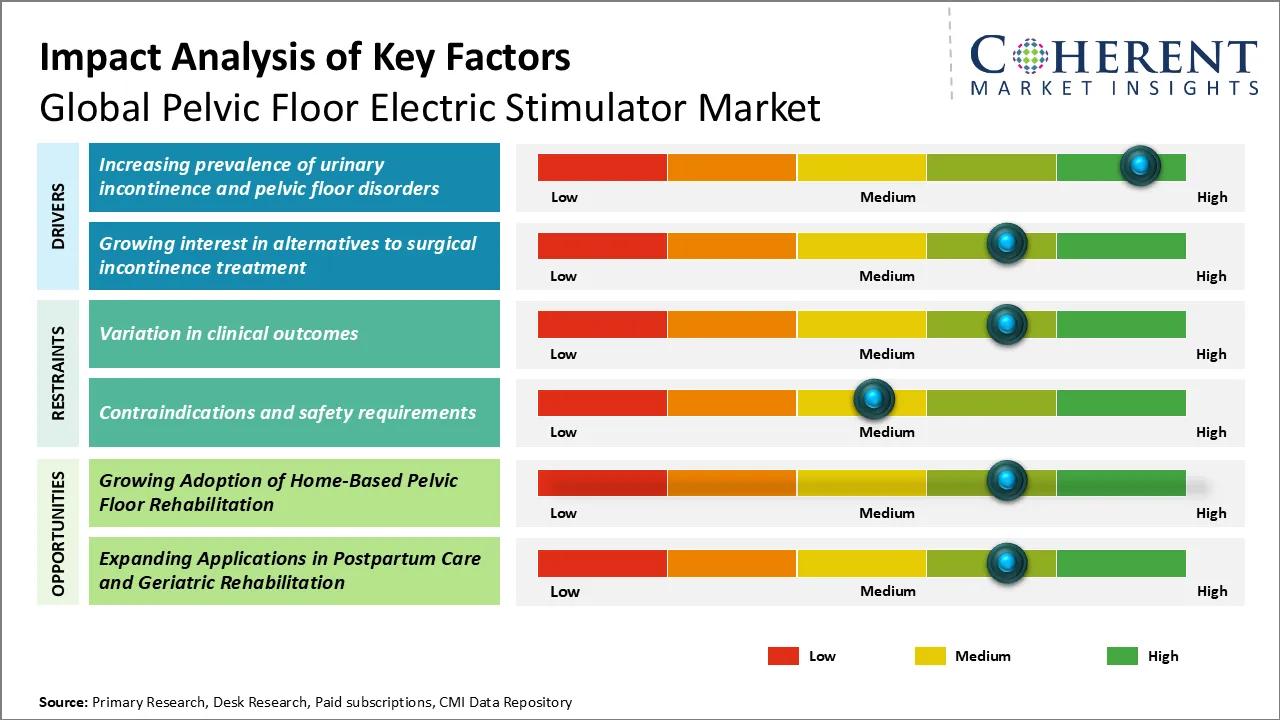
Market Drivers
- Increasing prevalence of UI and PFD: Bladder leakage and related issues can affect mobility, social participation, emotional well-being, and daily activities. Thus, patients experiencing persistent symptoms may require structured pelvic rehabilitation that includes supervised muscle training and, in selected cases, electrical stimulation (ES). Subsequently, the rising burden of bladder-control disorders has become one of the most important demand propellers for the global pelvic floor electric stimulator market.
- A 2025 NLM study reported a concerning UI prevalence of 17.8% among women and 11.1% among men in its analyzed sample of 12,985 German adults aged 50 years and above. The results also found poor subjective health, limited activities of daily living (ADL), and depressive symptoms to be closely associated with UI in the multivariable regression among females aged over 85.
- Growing interest in alternatives to surgical UI treatment: Demand for conservative interventions is encouraging medical professionals to prioritize structured physiotherapy, muscle re-education, behavioral training, and selected stimulation techniques before more invasive procedures. As a result, electrical stimulators, particularly combined training models, are becoming a highly relevant/effective option for UI-afflicted patients, specifically those unable to generate effective voluntary pelvic floor contractions.
- Evidencing the same, a randomized clinical trial on 42 women suffering from stress UI recorded a higher, 65%, clinically meaningful improvement from using PFMT + sEMG-triggered ES, compared to only 18% from PFMT + placebo stimulation, according to a 2026 NLM publication.
Pelvic Floor Electric Stimulator Market Trends
- Development of integrated stimulation and biofeedback platforms: Manufacturers are combining electrical stimulation with electromyographic assessment to give clinicians more information about muscle activation and treatment progression. For instance, in November 2025, Medlander Medical Technology Inc. introduced its multimodal electrotherapy solution at MEDICA 2025 in Düsseldorf, Germany. The solution integrates electrical stimulation, electromyography (EMG), and manometry to support comprehensive and simultaneous pelvic floor assessment and rehabilitation.
- Increasing availability of external electrode configurations: External stimulation approaches are also being investigated to reduce reliance on intravaginal or intrarectal probes in suitable patients, improving acceptance among users uncomfortable with internal devices. Tracing the probably benefiting opportunity, in March 2026, Rohto Pharmaceutical Co., Ltd. debuted in the Chinese market through Mentholatum Limited, while introducing a non-invasive wearable neuromodulation device developed to manage symptoms of overactive bladder in conjunction with an AI app.
- Growing focus on targeted treatment protocols: Manufacturers are differentiating their products through adjustable stimulation frequencies, programmable treatment durations, and specialized electrode arrangements, as they may improve compatibility with individualized rehabilitation programs. Exemplifying this pathway of product innovation, in February 2025, BlueWind Medical announced the publication of two-year results from the pivotal OASIS study on the efficacy and safety of the Revi System in treating 151 adult women with urgency UI. It recorded a durable ≥75% reduction in the disease and 97% patient satisfaction.
Regional Insights
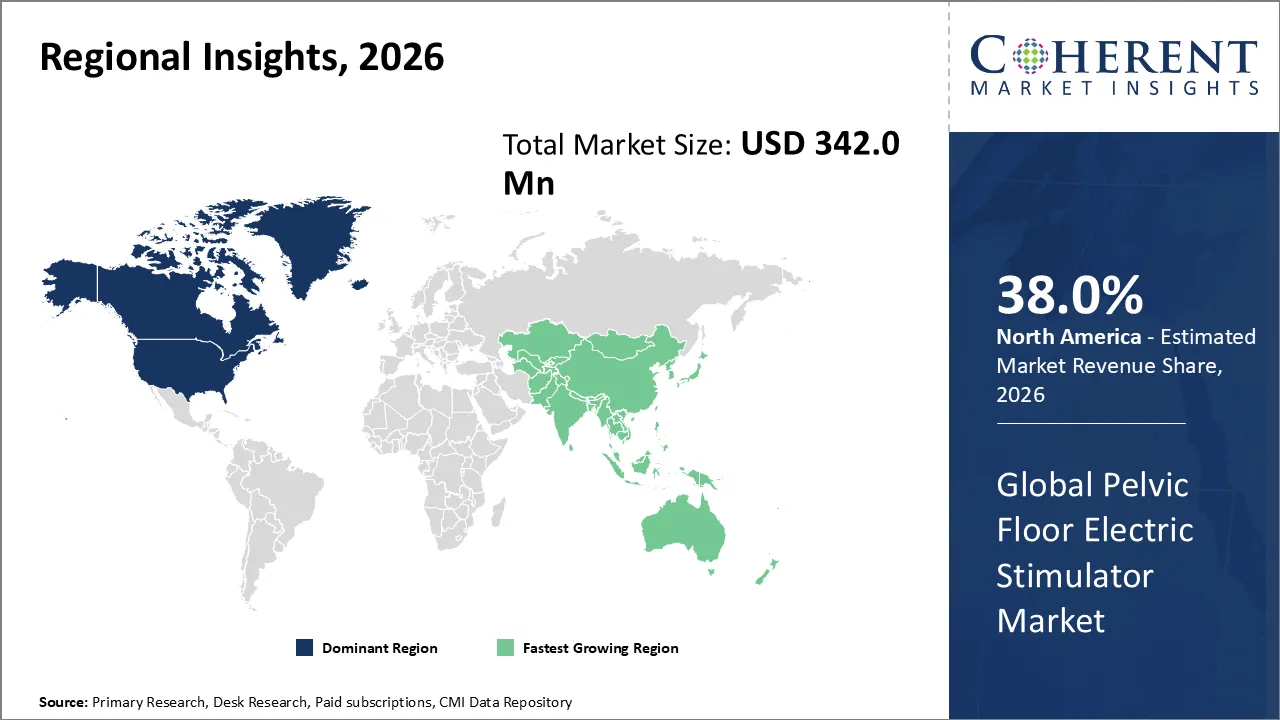
Why Does North America Dominate the Pelvic Floor Electric Stimulator Market?
North America is expected to account for the dominating revenue share of 38.0% in the global pelvic floor electric stimulator market in 2026. This is due to the region having an established network of urogynecology specialists, urologists, physiotherapists, and continence treatment facilities. Testifying to the same, in March 2026, American Urogynecologic Society (AUGS) reported having more than 2,000 members across the U.S., including physicians, physical therapists, nurses, and other pelvic health professionals.
The region also benefits from formal pathways for FDA device clearance and Medicare coverage of certain non-implantable pelvic floor electrical stimulation services. Exemplifying such a favorable regulatory framework of the region, in April 2026, the FDA cleared the PF01 Pelvic Floor Exerciser (510(k) K252748). The device uses a vaginal probe and represents further product activity in the market for non-implantable stimulation systems.
Further regional opportunities are expected lie within extensive outpatient rehabilitation programs that combine professional assessment with patient-directed therapy. Thus, manufacturers supplying prescription or clinically managed devices have the scope to differentiate their offerings through clinician programming, education, and ongoing support.
Why is Asia Pacific Expected to Experience Strong Growth in the Pelvic Floor Electric Stimulator Market?
Asia Pacific is anticipated to register the fastest growth rate in the pelvic floor electric stimulator market during 2026-2033. Pathways of lucrative revenue generation in this sector is closely linked to the expanding healthcare access, regional medical-device manufacturing, and demand base for women's health technologies. As a result, China and other established electronics-manufacturing centers are positioned to lead through their exceptional capabilities in product development, compact electronics production, and international regulatory submissions.
Demonstrating such a manufacturing capacity and a growing base of companies producing higher-risk regulated medical devices, in 2025, China comprised a total of approximately 33,300 domestic medical-device manufacturers, escalating from 32,800 in 2024. Besides, the number of Class III device manufacturers also grew from 3,258 to 3,414 during the same timeline, according to the 2026 updates from the International Medical Device Regulators Forum (IMDRF).
The region's potential is also supported by greater attention to rehabilitation after childbirth and to age-related urinary symptoms. However, awareness, affordability, and the availability of trained pelvic physiotherapists differ considerably between countries, which makes the involvement in training programs a commercial advantage for manufacturers in this landscape.
Global Pelvic Floor Electric Stimulator Market Outlook for Key Countries
Why Is the U.S. a Major Commercial Market for Pelvic Floor Electric Stimulators?
The U.S. pelvic floor electric stimulator market benefits largely from its well-organized system of medical-device distribution, clinician-guided rehabilitation programs, and specialist continence services. Highlighting the presence of a substantial and expanding rehabilitation workforce, between 2024 and 2025, the number of licensed physical therapists and their assistants in the country grew from 312,199 and 132,105 to 322,992 and 134,457, respectively, as unveiled by the Federation of State Boards of Physical Therapy.
The rapid commercialization of different configurations, including surface electrode and internal-probe systems, in the U.S. further allows manufacturers to address clinical settings with varying levels of supervision and treatment complexity. Thus, device availability is influenced by FDA requirements, professional treatment recommendations, insurance coverage, and the suitability of electrical stimulation for individual patients is also propelling adoption in the country.
How Is China Strengthening Its Position in the Pelvic Floor Electric Stimulator Market?
China's market is influenced by the development of domestic electrotherapy devices, regional hospital demand, and manufacturing expertise in rehabilitation electronics. In this regard, a systematic review and meta-analysis from the 2024 NLM article recorded an overall female stress urinary incontinence prevalence of 24.5% in mainland China, with a 95% confidence interval of 22.5%-26.5%.
To address this incremental patient pool, Chinese medical-device companies are developing product lines that include stimulation controllers, electrode assemblies, and patient-operated pelvic muscle trainers. This fosters a highly competitive landscape in China for this sector, where product differentiation through electronic controls, device ergonomics, and patient instructions may improve positioning.
Why Does Germany Remain an Important European Market for Pelvic Floor Electric Stimulators?
Germany's pelvic floor electric stimulator market is supported by widespread physiotherapy services, medical rehabilitation capabilities, established medical-device manufacturing base, and structured healthcare pathways. The substantial physiotherapy workforce capacity of the justifies its importance as a regional leader, where the nationwide density of practicing physiotherapists stood at 24.27 per 10,000 population in 2024. This is higher compared to 13.5 per 10,000 across the European region, according to the World Physiotherapy Member Organization.
The country also serves as a relevant European manufacturing and distribution base for medical electrotherapy equipment, which is backed by frequent regulatory conformity and the clinical positioning of individual products. As of November 2024, Germany's medical technology industry comprised approximately 1,510 companies with more than 20 employees, alongside 12,000 microenterprises, generating approximately €41.4 billion in production. This further influence adoption in hospitals and private rehabilitation practices.
How Is the U.K. Advancing Pelvic Floor Electrical Stimulation Adoption?
The U.K. market is primarily shaped by expanding pelvic health referral pathways, growing recognition of postpartum continence problems, and the presence of consumer-oriented electrical stimulation device brands. Besides, private and home-based device suppliers are now addressing patients seeking treatment outside conventional hospital environments.
On the other hand, NHS services emphasize pelvic floor assessment and conservative treatment, potentially increasing recognition of patients who may benefit from additional rehabilitation techniques. Portraying a similar healthcare service expansion, in September 2025, Tameside and Glossop Integrated Care NHS Foundation Trust launched a Perinatal Pelvic Health Service to support prevention and management of pelvic floor problems during pregnancy and after birth.
How Is India Developing Opportunities in the Pelvic Floor Electric Stimulator Market?
India's pelvic floor electric stimulator market is at an emerging stage of adoption, with opportunities lying across urban maternity, gynecology, urogynecology, and physiotherapy care centers. Indicating the considerable unmet need for pelvic health screening and rehabilitation, a community-based study, published by the NLM in November 2024, involving 700 women in Uttarakhand reported a 56% prevalence of pelvic floor disorders among the surveyed population.
This is specifically due to the differences in specialist availability and rehabilitation awareness causing uneven adoption across urban and non-urban areas. However, government efforts to increase access to specialized women's health services, even in remote locations and underserved communities, may escalate domestic demand for rehabilitation devices that are designed to complement supervised pelvic floor exercise programs.
How Is the Expansion of Home-Based Pelvic Rehabilitation Creating New Growth Opportunities?
The transition toward home-based pelvic rehabilitation is expected to create important opportunities for manufacturers of compact electrical stimulation systems, reusable probes, and clinician-configurable training products. In particular, devices that can support treatment continuity after clinical assessment have greater chances of being relevant for patients who find frequent clinic visits difficult.
However, the market opportunity is not limited to new device purchases. Manufacturers may also generate recurring business value through replacement electrodes, compatible accessories, clinical training, and after-sales support. Describing how the technology can be integrated into a structured treatment pathway, in April 2026, the U.S. Centers for Medicare & Medicaid Services updated its coverage conditions for non-implantable pelvic floor electrical stimulation in certain patients with stress or urge UI. Claim is accepted only after a documented unsuccessful trial of pelvic muscle exercises.
Market Players, Key Development, and Competitive Intelligence
Key Developments
- In August 2026, BlueWind Medical attained FDA acceptance for 510(k) clearance of its next-generation implant, Revi Extend. The newest product has an extended life of fifteen years, showcasing its durable service tenure. The company further shared plans to commercialize Revi in the U.S. by the 4th quarter of the same year.
- In January 2026, Konmed Technology announced the official launch of its intelligent device, KM500Pro Pelvic Muscle Trainer, integrating pneumatic training and electrical stimulation. It delivers an efficient at-home solution for postpartum recovery, incontinence improvement and pelvic floor maintenance.
Competitive Landscape
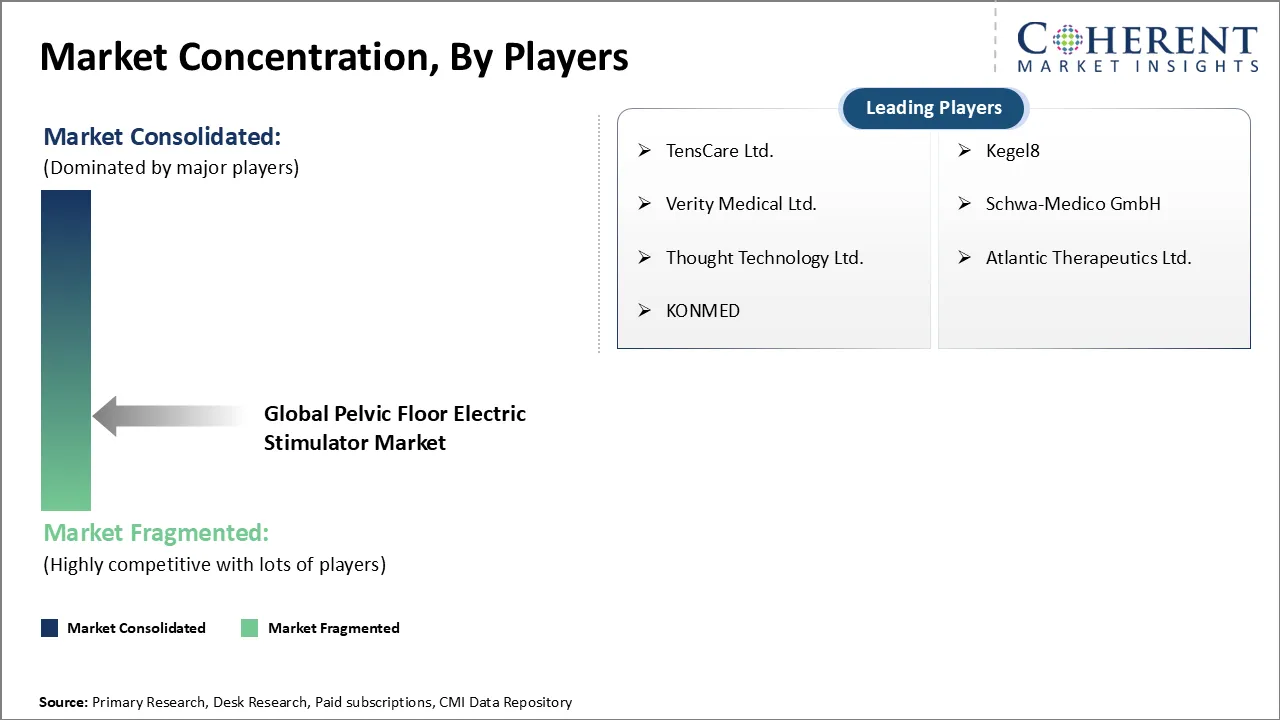
The global pelvic floor electric stimulator market displays strong competition among specialist rehabilitation technology manufacturers and consumer-oriented pelvic health device brands, with differentiation in treatment-program flexibility, electrode design, portability, battery performance, clinical functionality, and distribution networks. These manufacturers have identifiable products relevant to the sector’s expansion needs, where new entrants are also amplifying their efforts to participate.
Exemplifying such an attempt to widen commercialization territory, in November 2026, Stimuli Technology raised a total of €7 million in financing to accelerate its growth in France and internationally. The company’s strategy involved plans to strengthen its clinical investments in developing its transcutaneous tibial nerve stimulation medical device, Tensi+, targeting people with overactive bladder syndrome.
As per individual company profiling, TensCare supplies pelvic floor exercisers such as Elise 2, while Kegel8 targets the personal pelvic toning market with products including Tight & Tone and Ultra 20 V2. On the other hand, Verity Medical supplies the NeuroTrac Continence range, which focuses on programmable electrical stimulation. Whereas Schwa-Medico offers incontinence therapy equipment for pelvic muscle rehabilitation and Thought Technology provides systems combining electrical stimulation with biofeedback.
Top Manufacturers and Notable Products/Solutions in the Pelvic Floor Electric Stimulator Market
Company/Manufacturer | Notable Product/Brand | Key Features |
TensCare Ltd. | Elise 2 | Rechargeable pelvic floor exerciser, stimulation programs for different incontinence conditions |
Kegel8 | Tight & Tone | Electronic pelvic muscle stimulation, home-use training programs, 2026 product design |
Verity Medical Ltd. | NeuroTrac Continence | Dual-channel NMES, programmable stimulation, pelvic muscle rehabilitation |
Schwa-Medico GmbH | URO stim 2 | Rechargeable system, two channels, ten preset and ten user-programmable treatments |
Thought Technology Ltd. | MyOnyx | Electrical stimulation, EMG and pressure-based biofeedback, clinician-oriented rehabilitation |
KONMED | KM500Pro Pelvic Muscle Trainer | Dedicated pelvic muscle training product |
Atlantic Therapeutics Ltd. | INNOVO | External transcutaneous electrical stimulation for stress urinary incontinence |
Market Report Scope
Pelvic Floor Electric Stimulator Market Report Coverage
Report Coverage | Details | ||
Base Year: | 2025 | Market Size in 2026: | USD 342.0 Mn |
Historical Data for: | 2020 to 2024 | Forecast Period: | 2026 to 2033 |
CAGR: | 9.5% | 2033 Value Projection: | USD 645.1 Mn |
Geographies covered: |
| ||
Segments covered: |
| ||
Companies covered: | TensCare Ltd., Kegel8, Verity Medical Ltd., Schwa-Medico GmbH, Thought Technology Ltd., Atlantic Therapeutics Ltd., KONMED. | ||
Growth Drivers: |
| ||
Restraints & Challenges: |
| ||
Analyst Opinion (Expert Opinion)
- The global pelvic floor electric stimulator market is evolving through advances in non-implantable electrical stimulation, personalized treatment programs, and compact device design. Manufacturers with clearly defined clinical indications and practical home-use features may gain commercial traction.
- The strongest commercial opportunities are expected to be found within conservative urinary incontinence management, specialist pelvic rehabilitation, and home-based treatment following appropriate assessment.
- North America is positioned to remain an important revenue-generating region, while selected Asia Pacific markets may benefit from local manufacturing and developing healthcare infrastructure. On the other hand, substantial urinary incontinence-related costs across the European Union are reinforcing the need for more effective continence-care pathways.
- In conclusion, manufacturers are suggested to prioritize device usability, clinical evidence, electrode comfort, treatment adherence, and compliance with medical-device standards. Moreover, companies can differentiate themselves through validated treatment indications, reliable patient support, and integration into professional rehabilitation protocols, instead of competing exclusively on the number of stimulation programs.
Speak to the analyst
Want personalized insights?
Take the findings above to one of our principal consultants, or have the report rebuilt around the segments, geographies and competitors you actually track.
Market Segmentation
- By Products Type (Revenue, USD Mn, 2021-2033)
- Portable/Mobile Stimulators
- Fixed/Stationary Stimulators
- Wearable Stimulators
- By Application (Revenue, USD Mn, 2021-2033)
- Urinary Incontinence
- Stress Urinary Incontinence
- Urge Urinary Incontinence
- Mixed Urinary Incontinence
- Fecal Incontinence
- Pelvic Floor Muscle Rehabilitation
- Others
- Urinary Incontinence
- By End User (Revenue, USD Mn, 2021-2033)
- Home Care Settings
- Specialty Clinics & Rehabilitation Centers
- Hospitals
- By Region (Revenue, USD Mn, 2021-2033)
- North America
- U.S.
- Canada
- Latin America
- Brazil
- Mexico
- Argentina
- Rest of Latin America
- Europe
- Germany
- U.K.
- France
- Italy
- Spain
- Russia
- Rest of Europe
- Asia Pacific
- China
- India
- Japan
- Australia
- South Korea
- ASEAN
- Rest of Asia Pacific
- Middle East
- GCC
- Israel
- Rest of Middle East
- Africa
- South Africa
- Central Africa
- North Africa
- North America
- Key Players
- TensCare Ltd.
- Kegel8
- Verity Medical Ltd.
- Schwa-Medico GmbH
- Thought Technology Ltd.
- Atlantic Therapeutics Ltd.
- KONMED
Sources
Primary Research Interviews
- Pelvic floor electric stimulator manufacturers and medical-device OEMs
- Urologists, urogynecologists, and pelvic floor rehabilitation specialists
- Physiotherapists specializing in urinary incontinence and pelvic floor dysfunction
- Obstetricians and gynecologists involved in postpartum rehabilitation
- Hospital administrators and continence care department heads
- Home healthcare equipment suppliers and medical-device distributors
- Neuromuscular electrical stimulation (NMES) technology specialists
- Medical-device regulatory affairs and reimbursement experts
- Key opinion leaders (KOLs) in pelvic health and conservative incontinence treatment
Databases
- U.S. National Library of Medicine (NLM) – PubMed
- National Center for Biotechnology Information (NCBI)
- U.S. Food and Drug Administration (FDA) – 510(k) Medical Device Database
- U.S. Centers for Medicare & Medicaid Services (CMS)
- ClinicalTrials.gov
- National Institute for Health and Care Excellence (NICE)
- NHS England – Pelvic Health Services and Women's Health Publications
- International Medical Device Regulators Forum (IMDRF)
- World Health Organization (WHO) – Global Health Observatory
- Federation of State Boards of Physical Therapy (FSBPT)
Magazines
- Medical Device Network
- MedTech Dive
- Medical Design & Outsourcing
- European Medical Journal
- Urology Times
- Medical Product Outsourcing
- Healthcare IT News
- FemTech World
Journals
- International Urogynecology Journal
- Neurourology and Urodynamics
- European Urology
- BMC Women's Health
- Journal of Clinical Medicine
- International Journal of Women's Health
- Archives of Physical Medicine and Rehabilitation
- Journal of Women's Health Physical Therapy
- Urology
- Scientific Reports
Newspapers
- Financial Times
- The Guardian
- Reuters
- The Economic Times
- The Times of India
- The Independent
- The Wall Street Journal
Associations
- International Continence Society (ICS)
- International Urogynecological Association (IUGA)
- American Urogynecologic Society (AUGS)
- American Urological Association (AUA)
- European Association of Urology (EAU)
- World Physiotherapy
- Pelvic, Obstetric and Gynaecological Physiotherapy (POGP)
- Association for Pelvic Organ Prolapse Support (APOPS)
- Continence Health Australia
- Federation of State Boards of Physical Therapy (FSBPT)
Public Domain Sources
- U.S. FDA 510(k) clearances for pelvic floor electrical stimulation devices
- U.S. CMS National Coverage Determinations for non-implantable pelvic floor electrical stimulation
- U.K. Government Women's Health Strategy and FemTech funding announcements
- European Commission Medical Device Regulation (MDR) and EUDAMED updates
- NHS Perinatal Pelvic Health Service implementation announcements
- International Medical Device Regulators Forum publications on medical-device manufacturing
- Government and institutional statistics on urinary incontinence and pelvic floor disorders
- Peer-reviewed studies evaluating pelvic floor muscle training and electrical stimulation
- Clinical trials evaluating neuromuscular electrical stimulation and biofeedback-assisted rehabilitation
- Official manufacturer product catalogs, technical specifications, and product-launch announcements
- Medical-device company press releases covering innovation, financing, regulatory approvals, and commercialization
- Publicly available reports on pelvic rehabilitation services, healthcare workforce capacity, and medical-device manufacturing
Proprietary Elements
- CMI Data Analytics Tool
- Proprietary CMI Existing Repository of Information for the Last 10 Years
Get access to 250+ pages report
Every segment, forecast, competitor profile and data table behind the analysis above — available for instant download.
- ESOMAR Member
- ISO 9001:2015 Certified
- D-U-N-S Registered
- GDPR & CCPA Compliant
Frequently Asked Questions
The illustrative market model projects a value of approximately USD 645.1 Mn by 2033, compared with USD 342.0 Mn in 2026.
Relevant manufacturers and brands include TensCare, Kegel8, Verity Medical, Schwa-Medico, Thought Technology, Atlantic Therapeutics, and KONMED.
Growth is expected to be supported by increasing demand for non-surgical urinary incontinence management, greater awareness of pelvic rehabilitation, product miniaturization, and expansion of home-based therapy.
Major challenges include uncertain comparative effectiveness across treatment protocols, clinical contraindications, patient adherence, reimbursement restrictions, and regulatory compliance requirements.
The provisional forecast assumes a CAGR of approximately 9.5% between 2026 and 2033.
North America is assigned the largest share in the provisional model at 38.0% in 2026, followed by Europe at 31.0%.
It is a device that delivers controlled electrical impulses to pelvic floor muscles or related neuromuscular pathways to support muscle activation and rehabilitation.