

Global Pentane Market Size and Forecast – 2026 To 2033
The Global Pentane Market is estimated to be valued at USD 2.43 Bn in 2026 and is expected to reach USD 3.68 Bn by 2033, growing at a compound annual growth rate (CAGR) of 6.10% from 2026 to 2033. Market expansion is supported by pentane’s established use as a blowing agent in expandable polystyrene, as a low-boiling solvent in industrial processing, and in selected cooling and specialty chemical applications.
Demand is also benefiting from greater emphasis on energy-efficient insulation and lower-GWP hydrocarbon blowing systems. In April 2025, Epsilyte highlighted its POLYSOURCE high-performance EPS insulation material for residential and industrial applications; the company’s technical documentation confirms pentane and isopentane are used as blowing agents in its expandable polystyrene materials. This reinforces the continuing commercial link between advanced insulation products and pentane consumption.
Key Takeaways of the Global Pentane Market
- n Pentane is expected to expand at an estimated CAGR of 6.0% and hold 44.6% of the global pentane market in 2026, reflecting its balanced combination of volatility, narrow boiling range, purity, and compatibility with foam, aerosol, and polymerization processes. In January 2026, Shell Chemicals updated its n Pentane offering, confirming minimum 95% purity and industrial supply options spanning truck, rail, and intermodal delivery.
- Blowing Agents are projected to grow at an estimated CAGR of 6.5% and account for 51.3% of the global pentane market in 2026, as pentane remains embedded in expandable polystyrene and other foam systems requiring efficient expansion and thermal performance. In October 2024, BASF announced a 50,000-metric-ton annual expansion of Neopor EPS capacity at Ludwigshafen, with commissioning planned for early 2027; BASF’s Neopor grades contain pentane as blowing agent.
- Construction and Insulation is expected to post an estimated CAGR of 6.6% and capture 25.8% in 2026, supported by building-envelope efficiency requirements and the extensive use of pentane-expanded EPS in roofs, walls, floors, and foundations. In October 2025, BEWI introduced GreenLine Super EPS insulation boards using recycled grey EPS; BEWI’s environmental documentation confirms pentane is used to expand EPS beads for insulation production.
- Asia Pacific is forecast to record an estimated CAGR of 6.4% and represent 38.6% of global pentane market in 2026, underpinned by a broad petrochemical base, large-scale foam manufacturing, construction activity, and regional availability of C5 feedstocks. In August 2025, GAIL’s annual report disclosed cathodic-protection revamping and SCADA integration for pentane pipeline storage in India, indicating continued investment in regional pentane handling and supply infrastructure.
- North America is expected to advance at an estimated CAGR of 6.9% and hold 25.8% of the global pentane market in 2026, making it the fastest-growing region as foam producers adapt to tighter climate-related material rules and seek commercially proven low-GWP blowing options. In January 2025, U.S. EPA restrictions took effect for selected foam products using HFCs above specified GWP thresholds, strengthening the substitution case for hydrocarbon-based alternatives such as pentane.
Segmental Insights
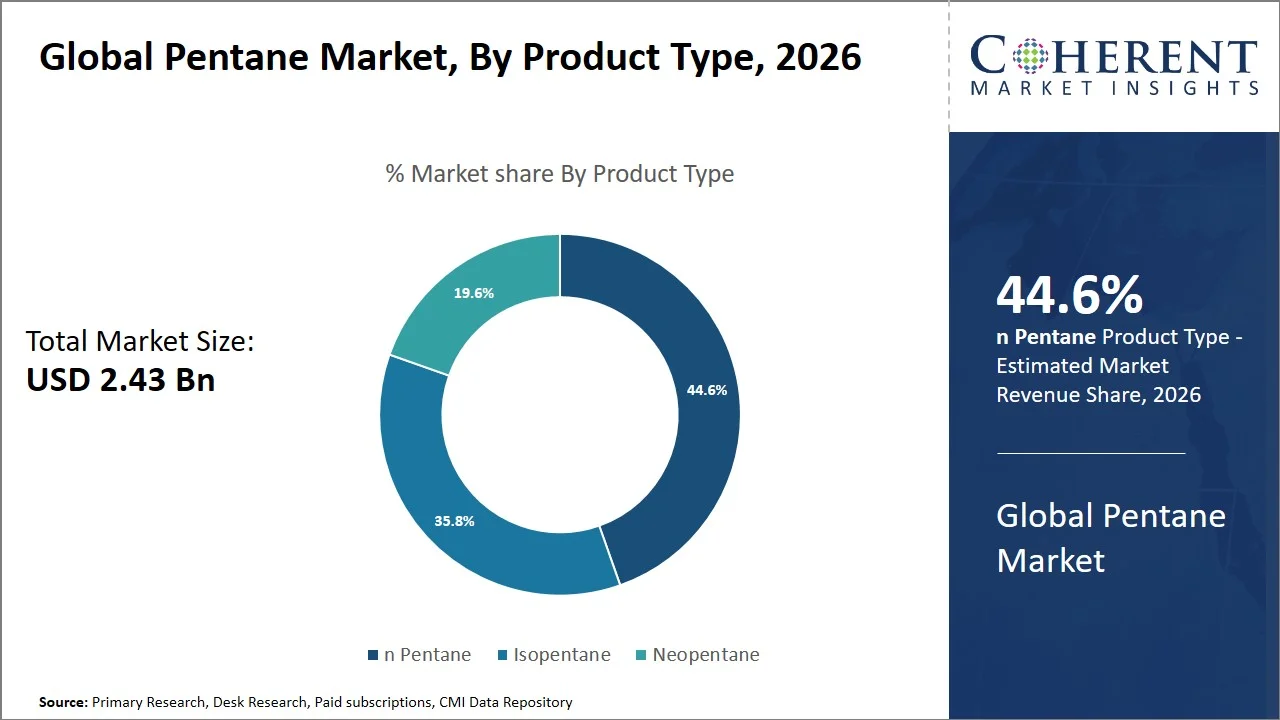
Why Does n Pentane Dominate the Global Pentane Market?
n-Pentane, expected to hold 44.6% of the global pentane market in 2026, leads the product category because its straight-chain C5 structure supports repeatable performance across formulation, separation, and chemical-conversion processes. Demand is diversified across expandable-polystyrene feed formulations, polymer processing, extraction, laboratory analysis, and specialty synthesis, reducing exposure to any single downstream cycle. On the supply side, n Pentane can be fractionated from refinery and natural-gas-liquid C5 streams and marketed as a standalone product or blending component, giving producers greater outlet flexibility. This breadth supports differentiated industrial, process, and analytical grades and widens the addressable customer base for suppliers. In March 2026, According to the American Chemical Society researchers from China University of Petroleum and Qingdao University of Science and Technology published work on ZSM-5 catalyst optimization for n Pentane aromatization, reinforcing its continuing relevance as a defined feed molecule in value-added chemical conversion.
- Current Industry Events of 2026
- Market Size Estimation
- Regional Breakdown
- Competitive Landscape
- Customer Intelligence
- Segmental Analysis
- Pricing Analysis
- Key Market Drivers, Challenges & Future Trends
- Customized Insights Section
Why Do Blowing Agents Represent the Largest Application in the Global Pentane Market?
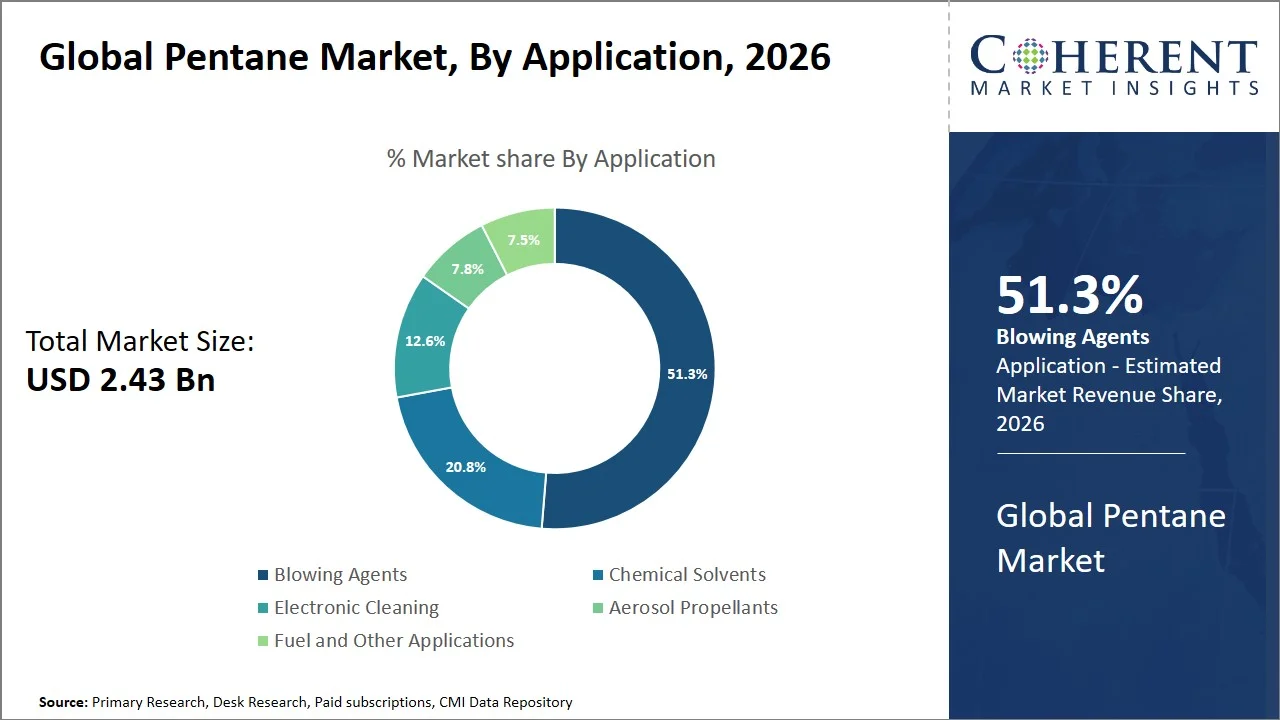
Blowing Agents, expected to represent 51.3% of the global pentane market in 2026, lead the application category because pentane consumption is directly embedded in the manufacture of expandable cellular materials rather than being incidental to the production process. Demand is concentrated in EPS packaging, thermal insulation, appliance protection, cold-chain containers, and molded foam, where controlled bead expansion creates lightweight structures with cushioning and thermal-performance benefits. Supply requirements are also specialized: EPS producers need safe hydrocarbon storage, metered dosing, process control, and consistent pentane specifications, which favors qualified suppliers capable of dependable bulk deliveries. For pentane producers, this creates recurring volume contracts linked to resin output and plant utilization. In April 2026, Supreme Petrochem commissioned a 30,000 MT Phase 2 expansion of expandable polystyrene capacity, materially increasing a downstream production base that uses pentane-containing expandable beads.
Why Do the Construction and Insulation Segment Dominate the End-Use Category of the Global Pentane Market?
Construction and Insulation, expected to account for 25.8% of the global pentane market in 2026, leads the end-use category because pentane demand is tied to the conversion of EPS and other cellular materials into building-envelope products with long service lives. Wall, floor, roof, cavity, and foundation insulation require low-density materials that combine thermal resistance with easy cutting and installation, supporting sustained foam consumption across new construction and retrofit work. The supply model is distinct from many chemical end uses because finished EPS is bulky relative to its weight, encouraging regional molding and insulation production close to construction markets. This creates localized, repeat procurement of expandable resin and associated blowing-agent inputs. In November 2025, Springvale (a subsidiary of the Engineered Foam Products Group (EFP)) commissioned more than USD 1150849.25 of new manufacturing equipment at its Newcastle facility to strengthen production of Beamshield flooring, cavity-wall, and other EPS insulation solutions.
Current Events and their Impact
Current Event | Description and Its Impact |
European Union Regulation (EU) 2024/573 on Fluorinated Greenhouse Gases – February 2024 |
|
South Australia Expands Ban on EPS Consumer Food and Beverage Containers – September 2024 |
|
Western Australia Ban on Moulded Expanded-Plastic Packaging – July 2025 |
|
Global Pentane Market Dynamics
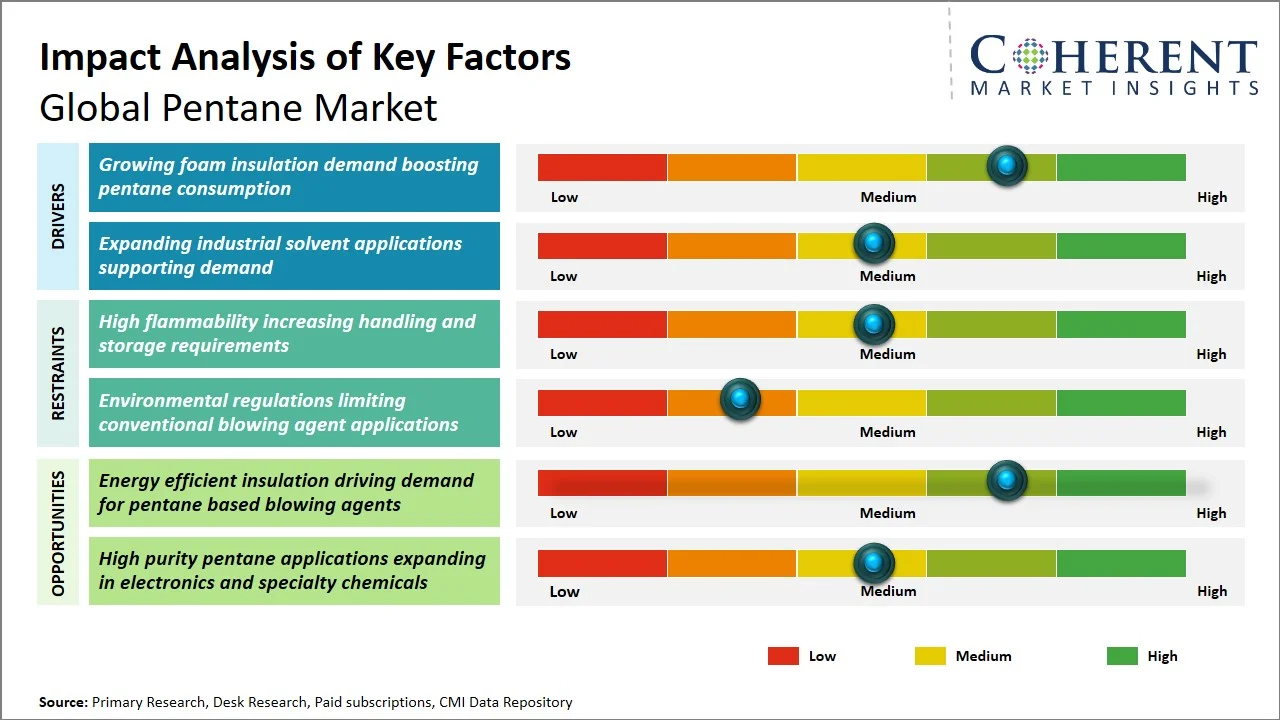
Key Market Drivers
Growing foam insulation demand boosting pentane consumption
Growing foam insulation demand is strengthening pentane’s role as a process input rather than a discretionary additive. EPS insulation producers require pentane to create controlled cellular expansion, so additions to downstream insulation capacity translate into recurring blowing-agent requirements for chemical suppliers, distributors, and bulk-logistics providers. Building-envelope manufacturers also benefit from lightweight materials and scalable molding economics. In December 2024, Carlisle Companies completed its acquisition of Plasti-Fab, adding vertically integrated EPS insulation operations across Canada and the U.S. serving commercial, residential, and infrastructure construction, underscoring continued strategic investment in pentane-consuming foam capacity.
Expanding industrial solvent applications supporting demand
Expanding industrial solvent applications support pentane demand where rapid evaporation, non-polar solvency, low boiling behavior, and tight impurity control are valuable in chemical synthesis, adhesives, polymer processing, and specialized cleaning. This creates room for suppliers to move beyond commodity C5 sales toward higher-purity grades, dedicated logistics, and application-specific specifications, improving margin quality and customer retention. In November 2025, Haltermann Carless and Neste extended the NEXSAT hydrogenation license at Speyer; the technology originally focused on pentanes and now enables broader feedstocks and high-purity products for pharmaceutical synthesis, adhesive formulations, and process solvents.
Emerging Market Trends
Procurement Is Moving Toward Application-Specific Pentane Specifications
Pentane procurement is shifting from nominal purity specifications toward application-specific impurity control. Buyers in polymerization, specialty synthesis, electronics-related processing, and precision cleaning increasingly evaluate moisture, sulfur, unsaturated, boiling range, and cross-contamination risk alongside headline assay. This favors producers with advanced purification, statistical process control, dedicated loading assets, and batch-level traceability. Over the forecast period, qualification processes should become more demanding, encouraging longer supplier relationships while placing commodity distributors without technical documentation or dedicated handling capability under greater pricing and retention pressure.
Pentane Handling Is Becoming Integrated into Foam-Plant Process Design
Pentane handling is becoming part of foam-plant process design rather than a stand-alone chemical purchasing decision. Manufacturers are placing greater emphasis on closed transfer, controlled dosing, vapor capture, ventilation, storage integrity, and recovery because these systems influence material loss, operating safety, emissions management, and foam consistency simultaneously. This trend expands the competitive field beyond molecule suppliers to include process-engineering and vapor-control capabilities. Suppliers that can support safer integration and predictable consumption are likely to gain preference over vendors competing only on delivered hydrocarbon price.
Regional Insights
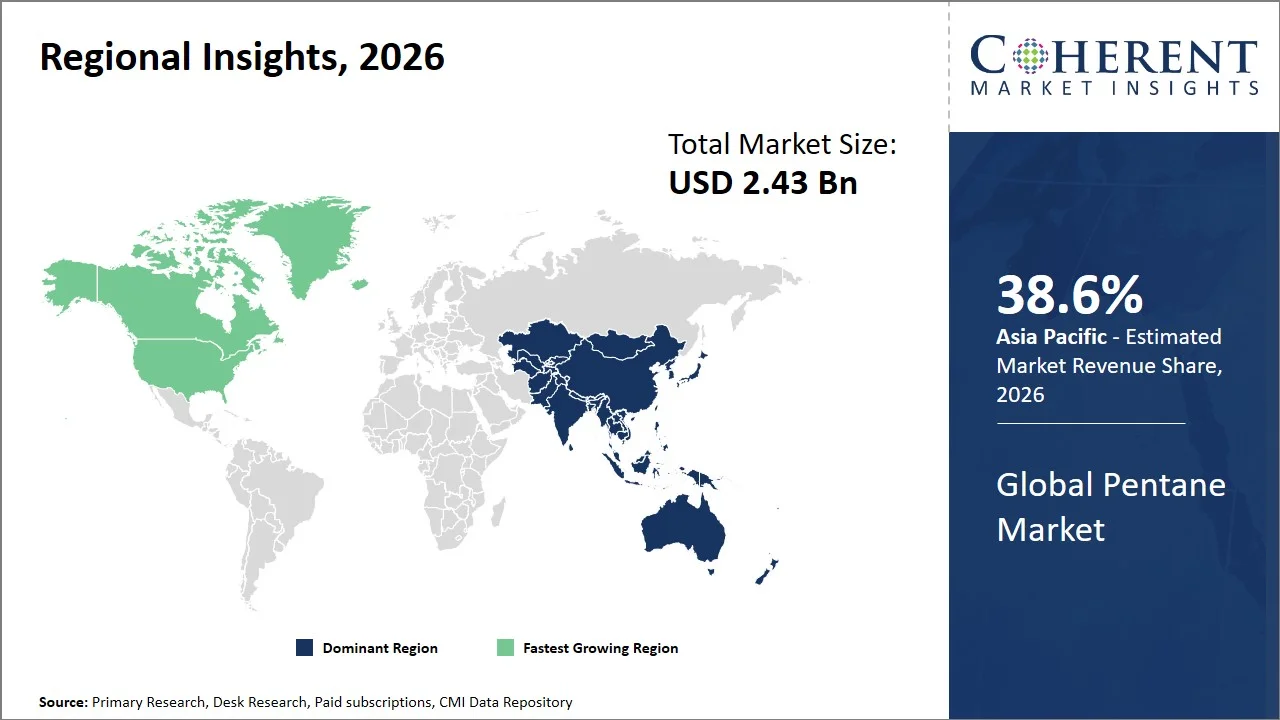
Why Does Asia Pacific Dominate the Global Pentane Market?
Asia Pacific is expected to account for 38.6% of the global pentane market in 2026, supported by the region’s concentration of petrochemical refining, C5 feedstock recovery, expandable polystyrene production, electronics manufacturing, and large construction-material conversion industries. China, India, South Korea, and other Asian manufacturing hubs create demand for pentane as a blowing agent, specialty solvent, process diluent, and hydrocarbon input, while regional refinery and chemical clusters improve supply availability and bulk-logistics economics. The region also benefits from sizeable domestic markets for EPS insulation and protective packaging, reducing dependence on export-led demand alone. In December 2025, China’s national standards authority published GB/T 10801.1-2025 for molded EPS thermal-insulation products, effective July 2026, reinforcing standardized EPS utilization within one of Asia Pacific’s largest construction markets and supporting downstream requirements for pentane-based blowing systems.
Why Is North America Emerging as the Fastest-Growing Region in the Global Pentane Market?
North America is expected to hold 25.8% of the global pentane market in 2026 and emerge as the fastest-growing region, supported by high-value EPS insulation, cold-chain packaging, specialty chemical processing, and established bulk-hydrocarbon distribution. Unlike Asia Pacific’s scale-led model, North American expansion increasingly reflects process efficiency, recycled-content integration, lower-emission production, and performance-oriented foam products. Pentane remains technically important in continuous EPS manufacturing because it is incorporated during processing to create expandable beads used in insulation and protective packaging. In October 2025, Coperion GmbH announced that NexKemia had expanded its EPS production capabilities using ZSK twin-screw extrusion, enabling white, graphite-enhanced, and recycled-content EPS on a single line. Coperion specifically identifies pentane feeding within continuous EPS processing, demonstrating continued regional requirements for controlled-quality pentane in advanced foam production.
Global Pentane Market Outlook for Key Countries
Why Is the U.S. a Key Market for the Global Pentane Market?
The U.S. is a key market for the global pentane market because it combines a substantial construction base, temperature-controlled food distribution, protective packaging requirements, and sophisticated polymer and chemical processing. Pentane consumption is commercially relevant in expandable polystyrene used across insulation, food-protection packaging, and industrial cushioning, giving suppliers exposure to several downstream purchasing groups rather than one concentrated application. Sustainability initiatives are also increasingly focused on maintaining polystyrene utility through improved recovery and recycling infrastructure. In January 2025, INEOS Styrolution America became a founding member of the Polystyrene Recycling Alliance, which was established to expand U.S. recycling access for polystyrene and EPS and develop stronger end markets. Greater circularity can improve the long-term commercial acceptance of EPS applications, thereby protecting an important downstream outlet for pentane used as an EPS blowing agent.
Why Does China Support Growth in the Global Pentane Market?
China supports growth in the global pentane market through its integrated refining and petrochemical base, extensive EPS manufacturing ecosystem, electronics supply chain, and large construction-material industry. Domestic C5 streams provide a platform for pentane separation, while established chemical parks facilitate bulk storage, solvent processing, polymer production, and efficient movement between upstream producers and downstream converters. China’s export-oriented packaging, appliances, electronics, and construction-material industries further create indirect pentane requirements beyond domestic consumption. In September 2025, China’s State Council reported a national plan targeting average annual growth exceeding 5% in petrochemical and chemical industry added value during 2025–2026. The plan also prioritizes high-end supply, electronic chemicals, advanced polyolefins, and higher-quality chemical-industry clusters. This direction strengthens the manufacturing ecosystem surrounding pentane producers, distributors, specialty-solvent users, and foam processors.
Why Is India Important in the Global Pentane Market?
India is important in the global pentane market because domestic requirements span EPS insulation, refrigeration, protective packaging, specialty solvents, and petrochemical processing, while a developing local specialty-hydrocarbon industry limits complete dependence on imported C5 products. The country’s climatic conditions and continued development of refrigeration, buildings, and temperature-controlled logistics create practical requirements for cost-efficient thermal insulation. This enables pentane suppliers to serve both foam processors and specialty chemical customers through different purity and delivery specifications. In June 2025, the Bureau of Indian Standards published its Compendium of Indian Standards on Thermal Insulating Materials, incorporating IS 4671 for expanded polystyrene used primarily in refrigeration and building insulation. The standard addresses thermal conductivity, compressive strength, dimensional stability, moisture absorption, and other performance requirements, providing an organized technical framework for EPS consumption and consequently supporting downstream pentane requirements.
Why Is Germany a Strategic Country in the Global Pentane Market?
Germany is a strategic country in the global pentane market because its demand profile emphasizes technically demanding insulation, specialty chemical processing, and high-specification industrial applications rather than commodity consumption alone. Building-energy performance is particularly relevant for pentane because EPS insulation manufacturing relies on hydrocarbon blowing systems and competes on thermal efficiency, installation economics, and long-term building performance. Germany’s advanced polymer-processing capabilities also favor suppliers offering consistent purity, safe handling, and reliable process behavior. In July 2026, KfW announced continuation of Germany’s Federal Funding for Efficient Buildings framework under revised conditions, with the stated objective of reducing energy consumption and CO₂ emissions in the building sector. Continued policy support for building efficiency sustains investment in improved envelopes and insulation, preserving commercially relevant downstream opportunities for EPS materials and their associated pentane requirements.
Why Is South Korea an Important Growth Market for the Global Pentane Market?
South Korea is an important growth market for the global pentane market because it combines a major petrochemical manufacturing base with dense electronics, appliance, cold-chain, and advanced building-material industries. Pentane has relevance both as a specialty hydrocarbon and as a blowing component in foam production serving thermal insulation and protective packaging. South Korea’s emphasis on building-energy performance creates a differentiated demand route compared with markets where pentane consumption relies more heavily on basic construction volumes. In April 2026, the Korea Energy Agency and Korea Housing Finance Corporation signed an agreement to accelerate adoption of zero-energy buildings. The Korea Energy Agency specifically identifies enhanced insulation and airtightness as measures used to reduce building energy requirements. Broader zero-energy building adoption strengthens the commercial case for high-performance insulation, supporting EPS and other foam systems utilizing hydrocarbon blowing agents such as pentane.
Pentane Supply Chain and Distribution Structure in the Global Market
Supply Chain Stage | Key Activities | Primary Participants | Market Considerations |
Feedstock Sourcing | Recovery of C5 hydrocarbons from refining, natural-gas liquids, steam cracking, and petrochemical processes | Integrated oil companies, refineries, petrochemical producers, and C5 processors | Availability, operating rates, feedstock economics, and regional capacity influence supply and pricing. |
Separation and Purification | Fractionation, distillation, hydrogenation, dehydration, and contaminant removal | Specialty hydrocarbon producers and chemical manufacturers | Purity, isomer composition, yield, and specification control determine application suitability. |
Blending and Storage | Customized n-pentane/isopentane blending, bulk storage, vapor control, and inventory management | Pentane producers, terminals, logistics providers, and distributors | Flammability controls, storage compliance, vapor recovery, and customer proximity affect delivered cost. |
Transportation and Distribution | Movement through tank trucks, railcars, barges, ISO tanks, pipelines, and packaged containers | Hazardous-material carriers, distributors, traders, and third-party logistics providers | Mode selection depends on volume, distance, infrastructure, safety, and delivery schedules. |
Industrial Delivery and Use | Supply to foam plants, chemical manufacturers, laboratories, energy projects, and industrial users | Direct suppliers, distributors, specialty traders, and application-service providers | Customers prioritize reliable delivery, technical documentation, emergency supply, and consistent quality. |
Processing and Recovery | Use in EPS and polyurethane foams, solvents, chemical synthesis, ORC systems, and selected recovery operations | Foam manufacturers, chemical processors, energy operators, and industrial users | Demand depends on construction, chemical production, regulation, safety requirements, and substitution trends. |
How Are Organic Rankine Cycle and Geothermal Working-Fluid Applications Creating New Growth Opportunities in the Global Pentane Market?
Organic Rankine Cycle and geothermal working-fluid applications represent an underdeveloped route for pentane suppliers to diversify beyond foam and conventional solvent demand. n Pentane and isopentane are suited to closed-loop systems that convert low-temperature heat into power, creating potential customers among geothermal developers, industrial waste-heat operators, distributed-energy projects, and ORC equipment manufacturers. Commercial capture will depend less on commodity pricing and more on consistent thermophysical properties, low moisture and impurity levels, safe bulk handling, and reliable replenishment over long operating cycles. Suppliers can differentiate through OEM qualification support, application-specific certificates of analysis, regional hazardous-liquid storage, and closed-loop refill or recovery services. Participation will require technical sales capability, compatibility documentation, disciplined quality control, and logistics designed for flammable working fluids. The opportunity is therefore likely to favor specialty hydrocarbon producers and vertically integrated C5 processors that can combine product assurance with engineering support, while creating a defensible higher-value outlet beyond established pentane applications.
Market Players, Key Development, and Competitive Intelligence
Key Developments
- In June 2026, Styropek presented its X-EPS extrusion initiative, which integrates recovered EPS into high-performance products while retaining thermal-insulation and mechanical properties. The development is relevant to pentane suppliers because recycled-feedstock processing is changing EPS manufacturing economics and creates a need to manage blowing-agent performance across increasingly circular resin formulations.
- In October 2025, Trecora placed its high-purity pentanes, hexanes, and related hydrocarbons under the unified TRECOR trademark. For the global pentane market, the move strengthens specification-led portfolio positioning and signals that branded purity, consistency, dedicated handling, and supply reliability are becoming commercially important differentiators beyond basic molecule availability.
- In March 2025, Versalis opened its Porto Marghera plant producing recycled GPPS and expandable polystyrene from post-consumer EPS feedstock. This matters for the global pentane market because circular EPS manufacturing can alter virgin resin and blowing-agent requirements, pushing pentane suppliers toward formulations and service models compatible with recycled-content foam systems.
Competitive Landscape
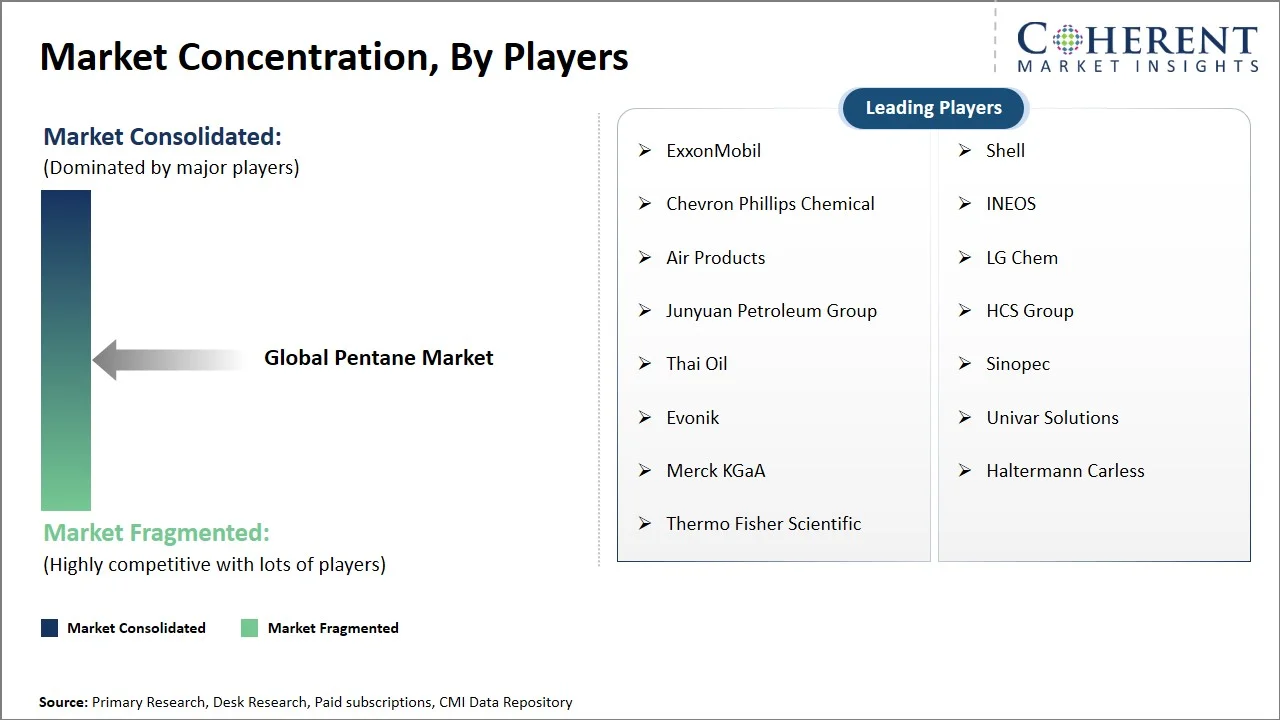
The global pentane market is moderately fragmented, combining integrated refinery and petrochemical producers, specialty C5 processors, regional solvent suppliers, and distributors. Competition extends beyond nominal product price because customers evaluate isomer composition, purity consistency, hazardous-material logistics, delivery security, and process compatibility. Regional specialists remain relevant where storage proximity and flexible lot sizes offset the scale advantages of larger upstream producers. Key focus areas include:
- Purity and isomer consistency: Tight control of n-pentane, isopentane, trace sulfur, moisture, and unsaturated compounds support premium industrial positioning.
- C5 feedstock access: Integrated access to refinery, natural-gas-liquid, or petrochemical C5 streams improves cost control and production flexibility.
- Customized pentane blends: Ability to tailor volatility and isomer ratios helps suppliers address specific EPS and foam-processing conditions.
- Dedicated hazardous-material logistics: Specialized tankers, railcars, ISO tanks, storage systems, and nitrogen-purged handling strengthen product integrity and delivery reliability.
- Supply continuity: Multiple feedstock routes, regional inventories, and contingency arrangements are increasingly important for continuous-process industrial buyers.
- Technical and safety support: Suppliers able to assist with storage design, dosing, ventilation, and handling procedures can build stronger customer relationships.
- Regional distribution reach: Local terminals and qualified distributors improve responsiveness for customers unable to economically receive full bulk shipments.
Market Report Scope
Pentane Market Report Coverage
| Report Coverage | Details | ||
|---|---|---|---|
| Base Year: | 2025 | Market Size in 2026: | USD 2.43 Bn |
| Historical Data for: | 2020 To 2024 | Forecast Period: | 2026 To 2033 |
| Forecast Period 2026 to 2033 CAGR: | 6.10% | 2033 Value Projection: | USD 3.68 Bn |
| Geographies covered: |
| ||
| Segments covered: |
| ||
| Companies covered: | ExxonMobil, Shell, Chevron Phillips Chemical, INEOS, Air Products, LG Chem, Junyuan Petroleum Group, HCS Group, Thai Oil, Sinopec, Evonik, Univar Solutions, Merck KGaA, Haltermann Carless, Thermo Fisher Scientific | ||
| Growth Drivers: |
| ||
| Restraints & Challenges: |
| ||
Analyst Opinion (Expert Opinion)
- The Global Pentane Market leadership is likely to depend increasingly on C5 portfolio optionality rather than production scale alone. Producers capable of redirecting feedstocks among n-pentane, isopentane, customized blends, and adjacent C5 products according to application requirements and margin conditions should have greater resilience. Fixed-grade suppliers may find it harder to protect profitability when individual end-use cycles move in different directions.
- The pentane supply chain could become progressively more regionalized as refinery restructuring, hazardous-material freight economics, and industrial-cluster localization reshape distribution. Instead of relying predominantly on long-distance movement of standardized material, customers may favor nearby purification, blending, storage, and transloading nodes. This would strengthen vertically integrated processors and regional terminal operators while reducing the strategic value of purely transactional trading models.
- Pentane suppliers should prioritize flexible C5 separation assets, high-purity capabilities, secure multi-source feedstock arrangements, and storage close to major foam and chemical-processing clusters. Greater attention should also be directed toward specialty solvents, energy working fluids, and other technically qualified applications that can diversify earnings. Overinvestment in commodity capacity heavily dependent on disposable EPS packaging should be avoided where regulatory substitution risk is structurally increasing.
Speak to the analyst
Want personalized insights?
Take the findings above to one of our principal consultants, or have the report rebuilt around the segments, geographies and competitors you actually track.
Market Segmentation
- Product Type Insights (Revenue, USD Bn, 2021 - 2033)
- n Pentane
- Isopentane
- Neopentane
- Application Insights (Revenue, USD Bn, 2021 - 2033)
- Blowing Agents
- Chemical Solvents
- Electronic Cleaning
- Aerosol Propellants
- Fuel and Other Applications
- End Use Industry Insights (Revenue, USD Bn, 2021 - 2033)
- Construction and Insulation
- Chemicals and Petrochemicals
- Electronics
- Automotive
- Packaging
- Others
- Distribution Channel Insights (Revenue, USD Bn, 2021 - 2033)
- Direct Sales
- Indirect Sales
- Regional Insights (Revenue, USD Bn, 2021 - 2033)
- North America
- U.S.
- Canada
- Latin America
- Brazil
- Argentina
- Mexico
- Rest of Latin America
- Europe
- Germany
- U.K.
- Spain
- France
- Italy
- Russia
- Rest of Europe
- Asia Pacific
- China
- India
- Japan
- Australia
- South Korea
- ASEAN
- Rest of Asia Pacific
- Middle East
- GCC Countries
- Israel
- Rest of Middle East
- Africa
- South Africa
- North Africa
- Central Africa
- North America
Sources
Primary Research Interviews
- Pentane producers, C5 hydrocarbon processors, EPS manufacturers, chemical companies, distributors, traders, and industrial buyers
- Petrochemical experts, process engineers, procurement professionals, foam specialists, and solvent-industry participants
Stakeholders
- n-Pentane, isopentane, and neopentane manufacturers
- Refiners, petrochemical companies, C5 feedstock suppliers, and specialty chemical producers
- EPS/foam manufacturers, chemical processors, distributors, logistics providers, and end users
End-use Sectors
- Construction and insulation
- Chemicals and petrochemicals
- Electronics and automotive
- Packaging and industrial processing
Regulatory and Industry Bodies
- U.S. Environmental Protection Agency
- European Chemicals Agency
- Occupational Safety and Health Administration
- European Commission
- UNEP and national chemical-safety authorities
Databases
- UN Comtrade and ITC Trade Map
- U.S. EIA and Eurostat
- National customs and import-export databases
- Company annual reports, investor presentations, and product portfolios
- Petrochemical and refinery production databases
Magazines and Journals
- Hydrocarbon Processing
- Chemical & Engineering News
- Industrial & Engineering Chemistry Research
- Journal of Chemical & Engineering Data
- Chemical Engineering
Associations
- American Chemistry Council
- Cefic
- EPS Industry Alliance
- Plastics Europe
- Regional petrochemical and chemical industry associations
Public Domain Sources
- Pentane production and capacity announcements
- EPS and insulation industry developments
- Chemical safety and environmental regulations
- Petrochemical, C5 feedstock, solvent, and downstream industry publications
Key Standards and Regulations
- REACH and CLP chemical requirements
- OSHA flammable-liquid handling requirements
- VOC and hydrocarbon-emission regulations
- Dangerous-goods transportation requirements
- Chemical storage, labeling, and workplace-safety standards
Proprietary Elements
- CMI Data Analytics Tool
- Proprietary CMI Existing Repository of information for the last 10 years
Get access to 250+ pages report
Every segment, forecast, competitor profile and data table behind the analysis above — available for instant download.
- ESOMAR Member
- ISO 9001:2015 Certified
- D-U-N-S Registered
- GDPR & CCPA Compliant
Missing comfort of reading report in your local language? Find your preferred language:
Frequently Asked Questions
The CAGR of global pentane market is projected to be 6.10% from 2026 to 2033.
The global pentane market is estimated to be valued at USD 2.43 Bn in 2026 and is expected to reach USD 3.68 Bn by 2033.
The report covers market dynamics, application trends, regional outlook, competitive landscape, supply chain structure, technology developments, and strategic growth opportunities in the global pentane industry.
The report helps manufacturers, suppliers, distributors, investors, and end users evaluate market opportunities, competitive positioning, sourcing strategies, expansion plans, and potential investment areas.
Yes. The report evaluates major market participants, competitive positioning, product offerings, supply capabilities, strategic developments, distribution presence, and key factors influencing competition in the pentane market.
Yes. The report examines pentane feedstock sourcing, purification, storage, transportation, distribution models, supply risks, procurement considerations, and the factors influencing product availability and supplier selection.
Growing foam insulation demand boosting pentane consumption and Expanding industrial solvent applications supporting demand are the major factors driving the growth of global pentane market.