

Global Pet Dental Health Market Size and Forecast – 2026 To 2033
The global pet dental health market is expected to grow from USD 9.18 Bn in 2026 to USD 15.63 Bn by 2033, registering a compound annual growth rate (CAGR) of 7.9% from 2026 to 2033. The market for global pet dental health is poised for significant expansion, fueled by the rising pet ownership and increasing spending on companion-animal care.
According to Euromonitor International, the combined global population of dogs and cats across 47 countries increased from just over 900 million in 2020 to more than 1 billion in 2025 and is projected to exceed 1.1 billion by 2030. The expanding companion-animal population is broadening the addressable base for preventive healthcare, supporting demand for pet dental-care products and services.
Key Takeaways of the Global Pet Dental Health Market
- Dental treats and chews are projected to hold 38.7% of the global pet dental health market share in 2026, making it dominant product type segment across North America due to established acceptance and evaluation of dental products. The Veterinary Oral Health Council (VOHC) maintains an accepted-products program for dental treats and chews that meet its plaque and/or tartar-control standards, supporting the adoption of validated oral-care products.
- Dogs are projected to hold 63.7% of the global pet dental health market share in 2026, making it dominant animal type segment across Europe representing a major market due to its large canine population and established pet-care ecosystem. The European Pet Food Industry Federation (FEDIAF) reported 91 million dogs across Europe in 2024, providing a substantial addressable population for canine dental-care products and veterinary oral-health services.
- Veterinary clinics and hospitals are projected to hold 46.2% of the global pet dental health market share in 2026, making it dominant distribution channel segment, with Europe representing a key market due to established professional dental-care practices. The Federation of Veterinarians of Europe (FVE) supports veterinary-led dental procedures and rejects anesthesia-free dentistry, strengthening demand for professional dental services through veterinary clinics and hospitals.
- North America market maintains dominance with an expected share of 41.3% in 2026, bolstered by its large companion-animal base and established demand for veterinary dental care. For instance, the U.S. dog population reached 89.7 million in 2024, while dog-owning households increased to 59.8 million, providing a substantial addressable base for pet dental products and services.
- Asia Pacific is expected to exhibit the fastest growth in the global pet dental health market, registering an estimated CAGR of 9.4% during 2026–2033, driven by the formalization of veterinary dental practice and expanding professional-care access. For instance, Singapore’s Veterinary Practice Act 2026 explicitly includes dental treatment within the practice of veterinary medicine, requiring such procedures to fall under veterinary professional practice.
Segmental Insights
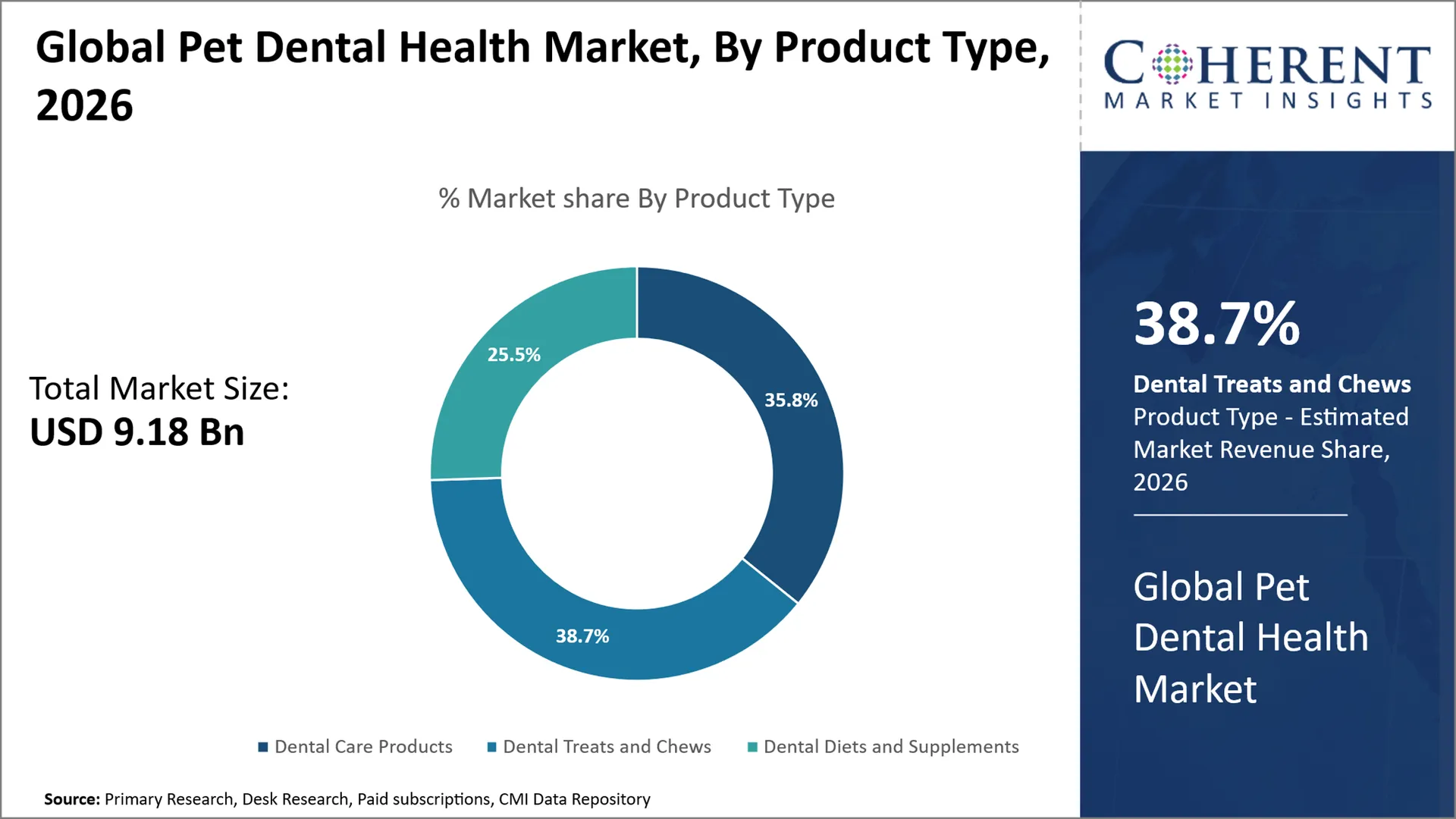
Why Do Dental Treats and Chews Dominate the Global Pet Dental Health Market?
Dental treats and chews are projected to hold the market share of 38.7% in 2026, due to their ease of use and palatability. Since dental treats and chews are generally enjoyed by many pets and are a relatively easy way of adding oral hygiene to the routine, they avoid the challenge of daily brushing. This method of mechanical plaque/ tartar removal and the common 'food reward' situation make them appealing to owners. For instance, in 2025, Blue Buffalo Dental Chews received the Veterinary Oral Health Council (VOHC) Seal of Acceptance for tartar control, helping to increase the number of validated dental chew formats in the market.
- Current Industry Events of 2026
- Market Size Estimation
- Regional Breakdown
- Competitive Landscape
- Customer Intelligence
- Segmental Analysis
- Pricing Analysis
- Key Market Drivers, Challenges & Future Trends
- Customized Insights Section
Why Does Dogs Represent the Largest Animal Type Segment in the Pet Dental Health Market?
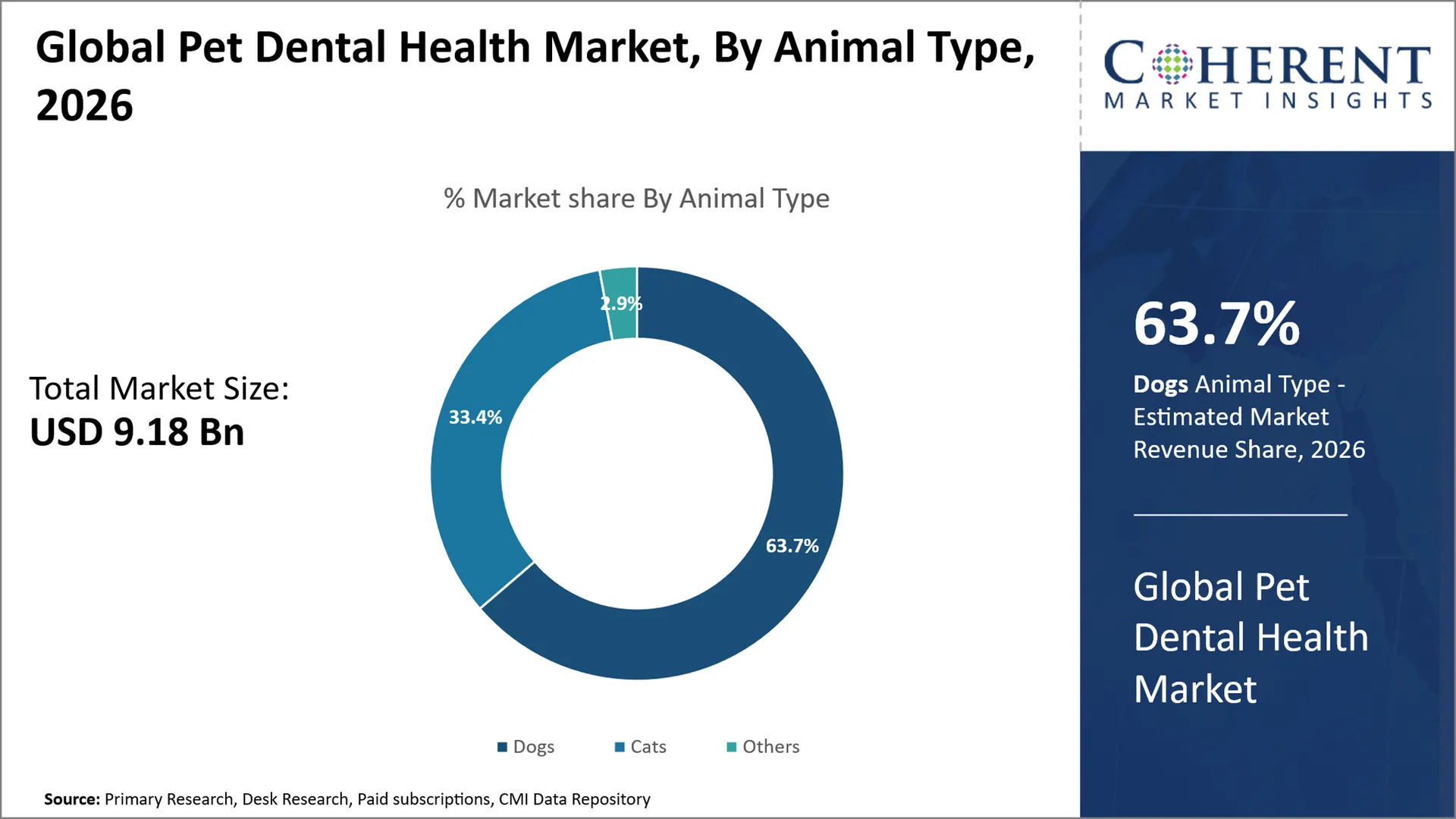
Dogs are projected to hold a market share of 63.7% in 2026, due to high incidence of periodontal disease, frequent consumer of chewy products and a strong desire to have preventive oral-care products available. Variation in size and requirement of different breeds and of teeth care, boost need for different dental treats, dental chews, dental diets and veterinary services for dental care for dogs. For instance, in May 2026, a clinical study published by National Library of Medicine, found periodontal disease in 98.6% of 369 examined dogs, emphasizing a major untapped requirement for products and solutions that enhance the oral care of dogs
Veterinary Clinics and Hospitals Segment Dominates the Global Pet Dental Health Market
The veterinary clinics and hospitals segment is projected to hold a market share of 46.2% in 2026, as professional examination, cleaning, radiography and treatment occur in veterinary practices, therefore dental product sales and recommendations can be performed directly by veterinarians. In November 2024, a study published by National Library of Medicine, from the dental referral clinics of 22 veterinary practices reported periodontal disease in 33.7% of the veterinary patients presenting for dental procedures and stage 4 periodontal disease present in 57.6% of the dogs with the condition: the most common procedures performed were extractions and periodontal treatment.
Currents Events and their Impact
Current Events | Description and its Impact |
World Small Animal Veterinary Association (WSAVA) Global Dental Guidelines Published in Veterinary Journal (September 2026) |
|
Veterinary Oral Health Council Updated Dental Product Acceptance Standards (April 2026) |
|
U.S. FDA Reinforced Pet Food Health-Claim Requirements (February 2026) |
|
Pet Dental Health Market Dynamics
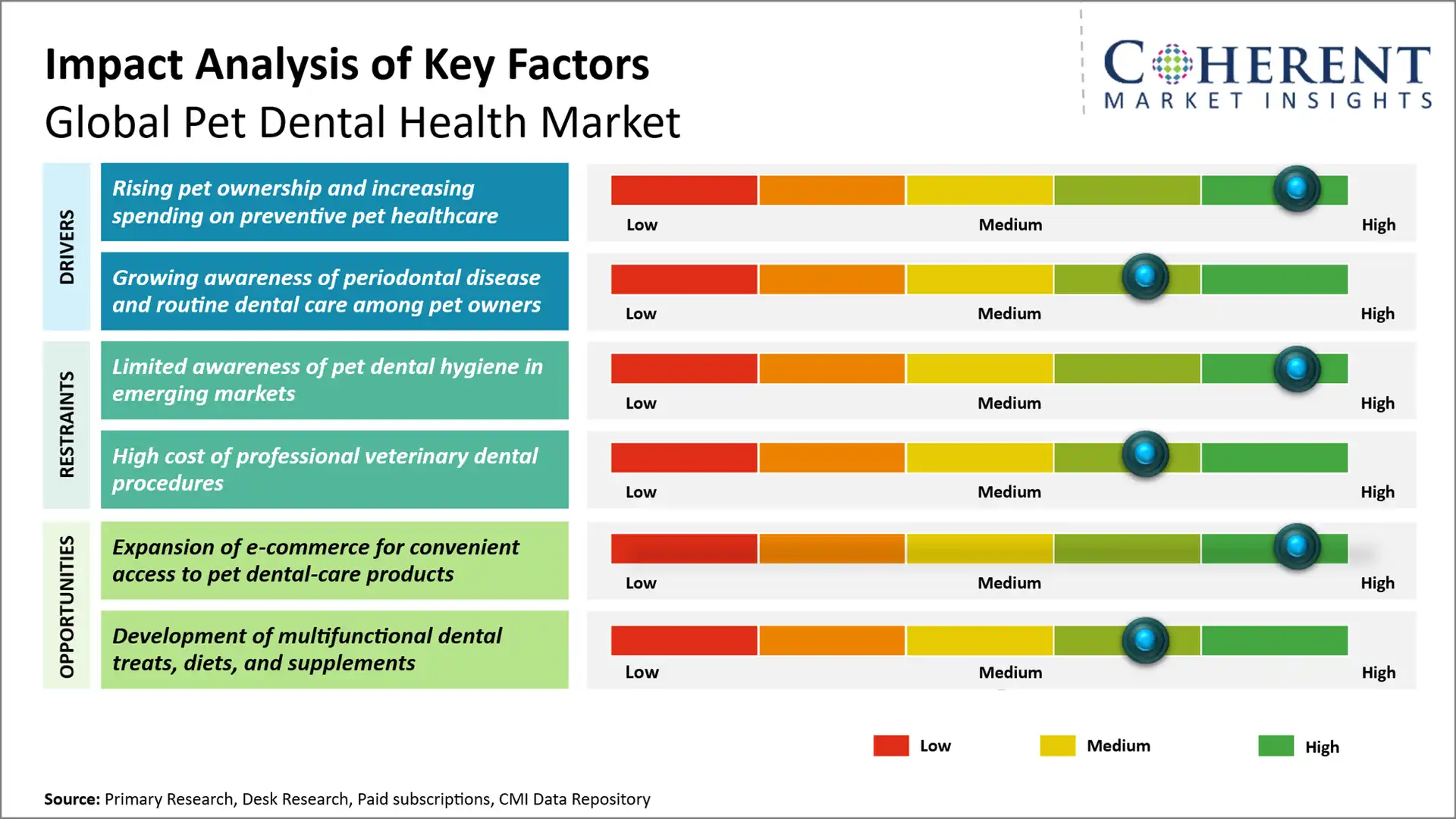
Market Drivers
- Rising pet ownership and increasing spending on preventive pet healthcare: Rising pet ownership is expanding the addressable base for companion-animal healthcare products and services, while greater emphasis on preventive wellness is encouraging owners to spend beyond basic nutrition. This is increasing demand for routine solutions that address common health concerns, including oral and dental care. According to the American Veterinary Medical Association (AVMA), 77.5 million U.S. households owned a pet in 2025, up from 71.5 million in 2016, demonstrating the expanding companion-animal population and associated healthcare demand.
- Growing awareness of periodontal disease and routine dental care among pet owners: Increasing recognition of periodontal disease as a common and preventable condition is encouraging pet owners to prioritize regular dental examinations and at-home oral hygiene. Greater awareness is also supporting demand for dental chews, diets, brushing products, and professional cleaning services. In February 2026, the American Veterinary Medical Association (AVMA) highlighted that periodontal disease affects nearly 80% of dogs and 70% of cats by age three and urged owners to prioritize regular oral care.
- Increasing veterinary emphasis on preventive oral health: Veterinary dentistry is receiving greater attention as periodontal and oral diseases are increasingly recognized as major companion-animal health concerns. This is encouraging earlier diagnosis, preventive management, and integration of dental care into routine veterinary practice. For instance, in September 2026, the World Small Animal Veterinary Association (WSAVA) published updated global dental guidelines identifying oral and dental diseases as the most common conditions seen in small-animal veterinary practice and highlighting untreated disease as an animal-welfare concern.
Emerging Trends
- Shift toward microbiome-focused oral-care formulations: Pet dental products are increasingly incorporating probiotics, postbiotics, and enzyme blends to target oral bacteria, plaque, malodor, and gum health rather than relying solely on mechanical cleaning.
- Expansion of convenient, non-brushing dental formats: Water additives, powders, oral strips, and functional supplements are gaining attention as alternatives for pets that resist tooth brushing, allowing dental care to be integrated into feeding or drinking routines.
- Greater clinical standardization of veterinary dentistry: Updated global veterinary guidance is emphasizing standardized diagnosis, radiography, anesthesia, pain management, and home dental care, strengthening the shift toward evidence-based professional and preventive oral-health management.
Regional Insights
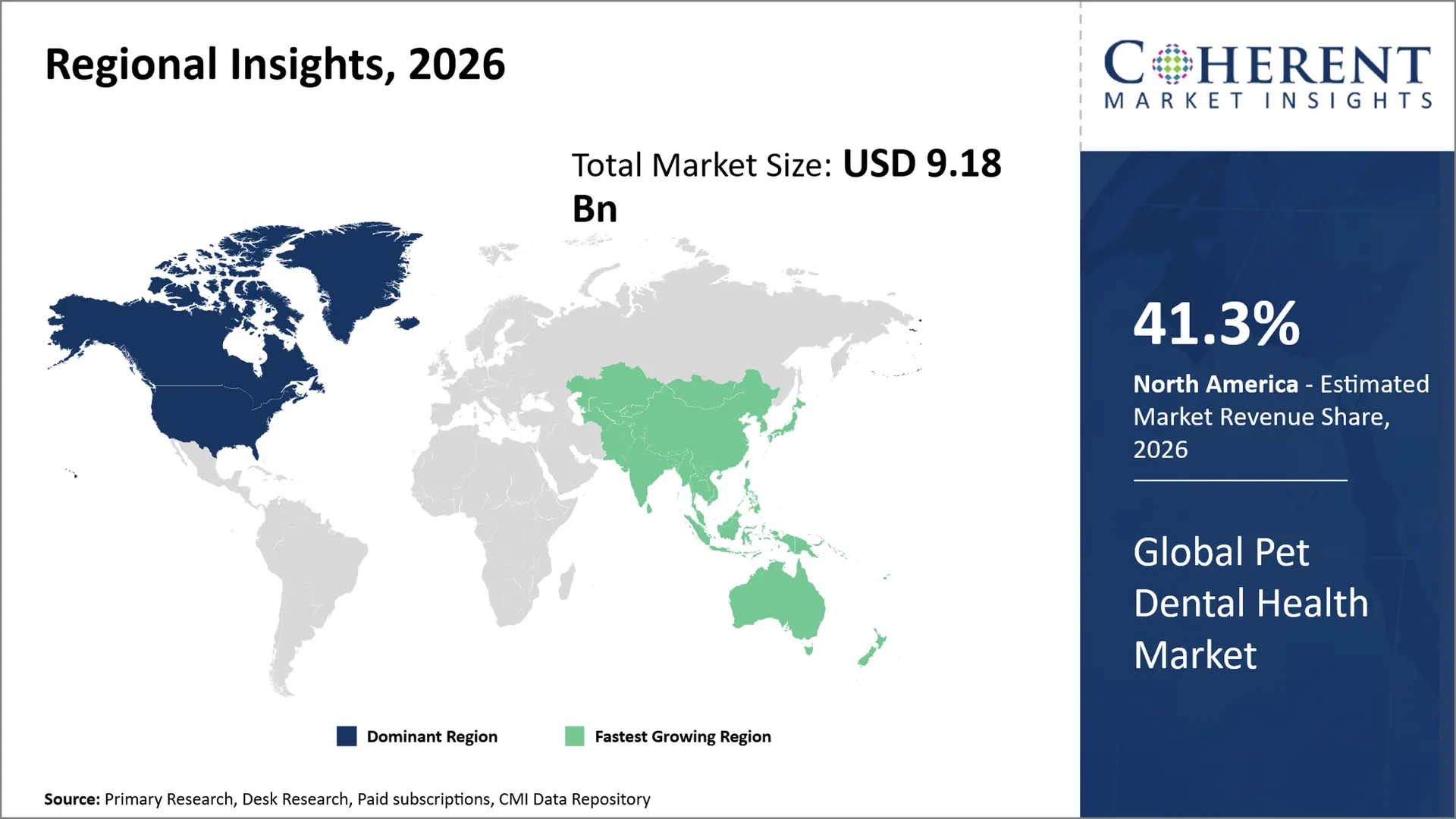
Why is North America a Strong Market for Pet Dental Health?
North America leads the global pet dental health market, accounting for an estimated 41.3% share in 2026, due to high pet healthcare expenditure; advanced infrastructure of veterinary services and easy availability of specialty and digital pet care distribution channels, coupled with increasing knowledge about preventive animal health. Moreover, supportive animal health regulatory policies coupled with pro-active government support to welfare animals also proves to be beneficiary in adoption of professional dental services. For instance, the U.S. Food and Drug Administration's (FDA) "Preventive Controls for Animal Food" rule within Food Safety Modernization Act (FSMA) dictates that applicable pet-food facilities must conduct and implement hazard-based preventive controls and current good manufacturing practices, thus beefing up safety standards for pet care products.
Why Does Asia Pacific Pet Dental Health Market Exhibit High Growth?
Asia Pacific is expected to exhibit the fastest growth in the global pet dental health market, registering an estimated CAGR of 9.4% during 2026–2033. The region is projected to account for approximately 22.1% of the global market in 2026, due to increased pet ownership and disposable incomes, growth of urbanization and increased consciousness toward preventative pet care. A growing middle-class' increased purchasing power is elevating demand for the premium dental chews, oral care product, and veterinary care products.
In addition, expanding supportive government regulations for pet and improved veterinary condition are collectively paving the path for market growth, and growth of an e-commerce will enhance accessibility of pet dental care products across the region. In February 2026, India’s Department of Animal Husbandry and Dairying, came out with a single, harmonized regulatory mechanism including the Empowered Committee on Animal Health-Regulatory to advise on technical aspects pertaining to veterinary vaccines, biologicals and drugs. (Source: Press Information bureau)
Global Pet Dental Health Market Outlook for Key Countries
Why is the U.S. Leading Innovation and Adoption in the Pet Dental Health Market?
The U.S. is at the forefront of innovation and adoption in the pet dental health market because the country offers an advanced level of veterinary-dental facilities, extensive access to a specialized selection of oral care products, and well-established implementation of dental diagnostics in veterinary procedures. AVIC (FDA Animal & Veterinary Innovation Centers) are intended to provide the funding to promote products and technologies designed to answer emerging animal-health problems in the industry. A combination of advanced veterinary science and innovative regulatory policies have helped speed the increase in pet preventative & technology-oriented veterinary dental products.
Is Japan a Favorable Market for Pet Dental Health Market?
Japan has an attractive market for pet dental health driven by the demand for preventative pet health solutions, strong veterinary networks, the developing focus on pet oral health, professional dental services and customized dental products providing significant market potential. Growing adoption of professional dental practices, which is expected to boost the demand for oral care products, has been a major driving factor for the market and the demand for such solutions in Japan.
Is China Emerging as a Key Growth Hub for the Pet Dental Health Market?
China presents itself as a significant growth engine driven by rapid increase in urban pet population, growing consumer expenditure per pet and escalating sales of routine and premium pet-health. Adoption of function products in the pet market along with widening of e-channel distribution contributes to market growth. Furthermore, expanding vet services and growing health focus boost demands on specialized dental products and professional oral treatment.
Why Does Germany Top the European Pet Dental Health Market?
Germany dominates the European Pet Dental Health Market owing to the significant presence of pets in the country, its well-developed network of veterinary practitioners, and substantial expenditure on the pet-care sector as well as high spending on high-value products. Its advanced pet-care market environment along with a mature system of retail and online distribution enables the penetration of niche products like oral care among pet owners. Furthermore, rising focus on preventative veterinary medicine is also a contributing factor toward high demand for veterinary oral-care procedures and products.
Is Pet Dental Health Market Developing in UK?
UK is emerging as a new global market fueled by the established structure of the pet care market along with a solid infrastructure supporting veterinary service provisions. The growing awareness of periodontal disease in the UK is also fueling the increased purchase and use of dental chews and oral care products and dental veterinary care services. The market also benefits from an existing robust pet care market and the availability of new and advanced pet dental solutions.
Pet Insurance Penetration and Dental-Care Coverage in Key Markets, 2025
Country | Pet Insurance Coverage Rate | Active Insurers | Dental-Care Coverage |
Sweden | 91% | 4 | Available under selected policies |
United Kingdom | 25% | 86 | Dental illness and accident coverage available under selected policies |
Finland | 23% | 3-5 | Available under selected policies |
Germany | 20% | 15+ | Dental coverage available under selected policies |
Switzerland | 9% | 6+ | Dental coverage varies by policy |
Australia | 7% | 10+ | Dental coverage generally available as an optional/add-on benefit |
France | 5% | 5+ | Dental coverage varies by policy |
United States | 3.9% | 30 | Dental treatment may be covered under selected accident, illness, or wellness plans |
China | <2% | 20+ | Limited but developing |
How is the expansion of e-commerce for convenient access to pet dental-care products creating new growth opportunities in the pet dental health market?
The rapid growth in e-commerce is increasing access to products for pet dental health, offering easy and efficient delivery of dental chews, oral care products such as pastes and Spritzers, supplements and common at-home treatments. The increase in on-line purchase makes it easier for repeat buying and for owners to compare products thus facilitating increased awareness in pet owners to the usefulness of available treatments. For instance, in March 2025, the American Pet Products Association (APPA) reported that 51% of U.S. pet-product buyers typically shop online in 2025, compared with 47% who shop in-store. This drift into on-line purchasing is opening an expanded distribution opportunity for pet dental care.
Market Players, Key Development, and Competitive Intelligence
Key Developments
- On September 9, 2026, Dr. Tim’s Pet Food launched Dental Dust, a sprinkle-on daily oral nutrition supplement for dogs and cats. The product is formulated with functional proteins, a postbiotic, and North Atlantic kelp to support gum health and help reduce plaque and tartar buildup. The launch expands the dental supplements/powders segment by integrating oral care into pets’ regular feeding routines.
- In July 2026, Oxyfresh launched its Advanced Dental Powder for Cats & Dogs, a daily triple-biotic supplement designed to support oral health, reduce plaque and tartar, and freshen breath. The powder can be mixed directly with pets’ food, providing a convenient alternative to brushing.
- In May 2026, Yuyu Pharma, Inc's U.S. subsidiary, Mervyn’s Petcare, launched Ari’s Purrfect Dental Bites, its first cat dental-care nutritional supplement, on Amazon. The chew is designed to help manage plaque and tartar through mechanical chewing action. The launch marked Mervyn’s Petcare’s entry into the U.S. pet-health market and expanded its direct-to-consumer pet-care portfolio.
- In February 2026, Wellness Pet Company partnered with veterinarians Drs. Ben and Erin Schroeder to promote daily dental-care habits during Pet Dental Health Month. The initiative highlighted the role of routine oral care and promoted Wellness WHIMZEES dental treats for dogs and cats.
Competitive Landscape
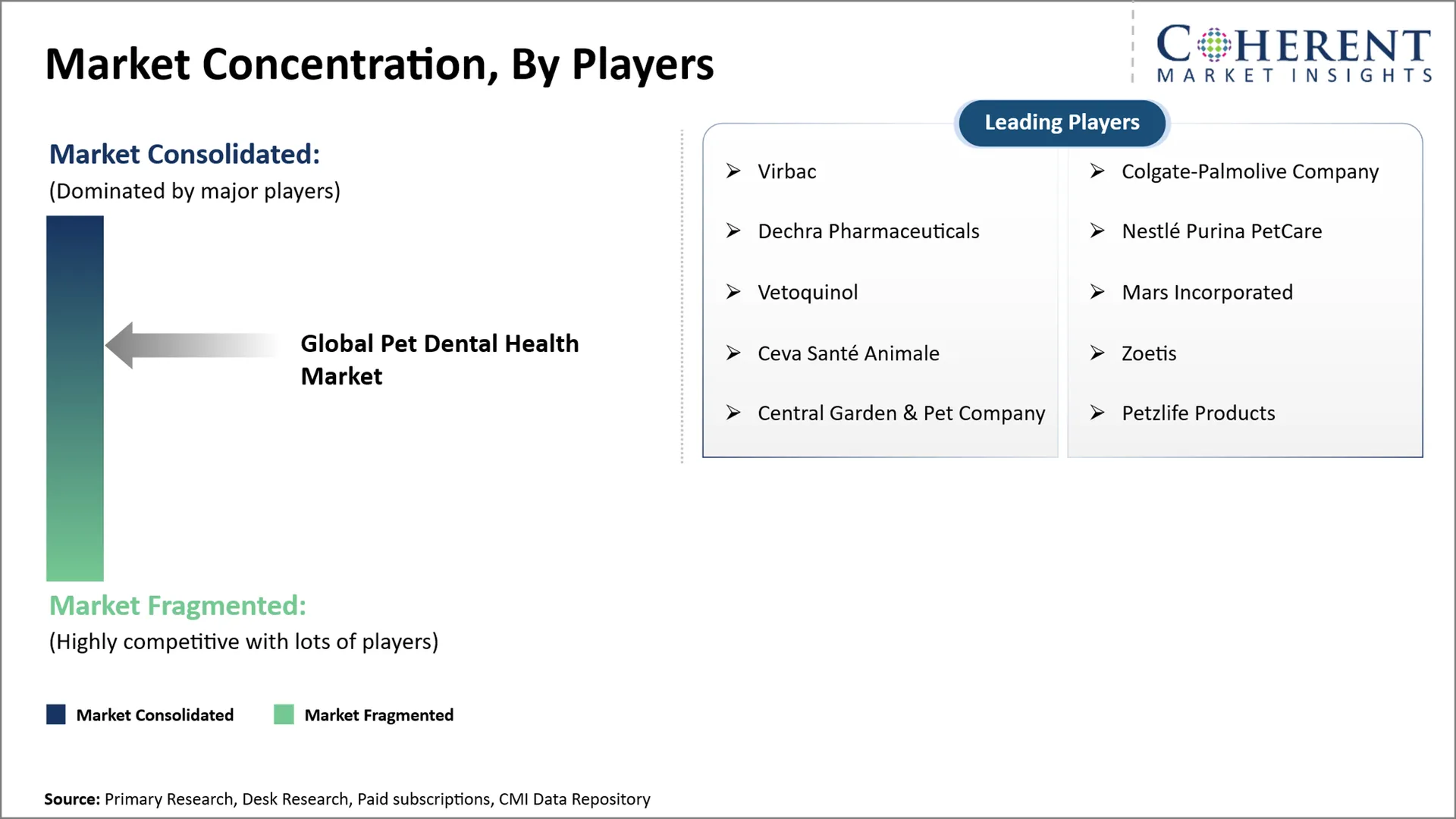
The global pet dental health market is moderately competitive, with competition centered on product efficacy, palatability, veterinary validation, convenience, and distribution reach. Market participants are increasingly focusing on clinically supported dental formulations, multifunctional oral-care solutions, and convenient daily-use formats while expanding veterinary and digital channels to strengthen adoption. Key focus areas include:
- Development of clinically supported dental treats and chews
- Expansion of multifunctional oral-care formulations
- Innovation in convenient non-brushing formats
- Strengthening veterinary validation and professional credibility
- Expansion of omnichannel distribution strategies
Market Report Scope
Global Pet Dental Health Market Report Coverage | |||
Report Coverage | Details | ||
Base Year | 2025 | Market Size in 2026: | USD 9.18 Bn |
Historical Data For: | 2020 To 2024 | Forecast Period: | 2026 To 2033 |
Forecast Period 2026 To 2033 CAGR: | 7.9% | 2033 Value Projection: | USD 15.63 Bn |
Geographies covered: |
| ||
Segments covered: |
| ||
Companies covered: | Virbac, Colgate-Palmolive Company, Dechra Pharmaceuticals, Nestlé Purina PetCare, Vetoquinol, Mars Incorporated, Ceva Santé Animale, Zoetis, Central Garden & Pet Company, Petzlife Products | ||
Growth Drivers: |
| ||
Restraints & Challenges: |
| ||
Analyst Opinion (Expert Opinion)
- In the coming years, the global pet dental health market will shift from episodic professional dental treatment toward continuous, preventive oral care integrated into everyday pet routines. Growth will increasingly come from multifunctional products that combine plaque and tartar control with gum health, breath management, microbiome support, and nutritional benefits. E-commerce and veterinary-led recommendations will also become important in converting dental care from an occasional purchase into a recurring consumption category.
- The maximum opportunities will probably exist within dental treats & chews for plaque & tartar control in India. This combination offers high potential because dental treats provide a convenient, compliance-friendly way to introduce routine oral care, while plaque and tartar control addresses the primary preventive need. India is particularly attractive for scalable growth as pet-care adoption, premiumization, and digital purchasing continue to expand, creating room for affordable products that can transition consumers from basic pet care to preventive dental routines.
- In order to obtain a competitive advantage, market participants should compete beyond basic dental functionality by building clinically credible, highly palatable, convenient, and differentiated product ecosystems. Companies should prioritize multifunctional formulations, pet-size-specific products, non-brushing formats, and strong veterinary engagement while using e-commerce for education, subscriptions, repeat purchases, and targeted recommendations. In emerging markets, localized pricing and accessible product formats will be particularly important for converting awareness into sustained usage.
Speak to the analyst
Want personalized insights?
Take the findings above to one of our principal consultants, or have the report rebuilt around the segments, geographies and competitors you actually track.
Market Segmentation
- Product Type Insights (Revenue, USD Bn, 2021 - 2033)
- Dental Care Products
- Dental Treats and Chews
- Dental Diets and Supplements
- Animal Type Insights (Revenue, USD Bn, 2021 - 2033)
- Dogs
- Cats
- Others
- Distribution Channel Insights (Revenue, USD Bn, 2021 - 2033)
- Veterinary Clinics and Hospitals
- Pet Specialty Stores
- E-commerce
- Others
- Regional Insights (Revenue, USD Bn, 2021 - 2033)
- North America
- U.S.
- Canada
- Latin America
- Brazil
- Argentina
- Mexico
- Rest of Latin America
- Europe
- Germany
- U.K.
- Spain
- France
- Italy
- Russia
- Rest of Europe
- Asia Pacific
- China
- India
- Japan
- Australia
- South Korea
- ASEAN
- Rest of Asia Pacific
- Middle East
- GCC Countries
- Israel
- Rest of Middle East
- Africa
- South Africa
- North Africa
- Central Africa
- North America
Sources
Primary Research Interviews
- Veterinary dentists and veterinary practitioners specializing in companion-animal oral health and periodontal disease
- Veterinary nutritionists developing dental diets, dental treats, and oral-health supplements for dogs and cats
- Product development and R&D professionals involved in pet dental-care products and oral hygiene formulations
- Veterinary clinic and hospital professionals conducting professional dental cleanings, dental radiography, and periodontal treatments
- Pet-care product specialists involved in dental chews, oral gels, water additives, toothpastes, dental wipes, and dental diets
- Regulatory and scientific affairs professionals involved in pet food, animal-health product labeling, dental claims, and product compliance
Stakeholders
- Pet dental health product manufacturers
- Veterinary dental-care product suppliers and distributors
- Dental treat, chew, and dental diet manufacturers
- Veterinary clinics and animal hospitals
- Veterinary dental specialists and veterinary dentists
- Pet specialty retailers and e-commerce platforms
- Pet food and animal nutrition companies
- Veterinary pharmaceutical and animal-health companies
- End-use Sectors
- Veterinary clinics and hospitals
- Veterinary dental practices and specialty centers
- Pet specialty stores
- E-commerce and direct-to-consumer pet-care channels
- Pet owners and household companion-animal caregivers
- Animal shelters and rescue organizations
- Pet boarding, grooming, and daycare facilities
- Regulatory & Health Bodies
- U.S. Food and Drug Administration (FDA)
- Association of American Feed Control Officials (AAFCO)
- Veterinary Oral Health Council (VOHC)
- American Veterinary Medical Association (AVMA)
- European Food Safety Authority (EFSA)
- Federation of Veterinarians of Europe (FVE)
- European Veterinary Dental Forum (EVDF)
- World Small Animal Veterinary Association (WSAVA)
- European Medicines Agency (EMA)
- Ministry of Agriculture, Forestry and Fisheries (MAFF), Japan
- Australian Pesticides and Veterinary Medicines Authority (APVMA)
Databases
- Veterinary Oral Health Council (VOHC) Accepted Products Database
- ClinicalTrials.gov
- FDA Center for Veterinary Medicine (CVM) Animal Food and Feed Resources
- FDA Animal Drugs @ FDA Database
- European Union Veterinary Medicinal Products Database
- European Commission Feed Additives Register
Journals
- Journal of Veterinary Dentistry
- Journal of Small Animal Practice
- Veterinary Clinics of North America: Small Animal Practice
- Journal of Veterinary Medical Science
Associations
- American Veterinary Medical Association (AVMA)
- American Veterinary Dental College (AVDC)
- European Veterinary Dental Society (EVDS)
- World Small Animal Veterinary Association (WSAVA)
- Federation of Veterinarians of Europe (FVE)
- European Pet Food Industry Federation (FEDIAF)
- American Pet Products Association (APPA)
- European Pet Food Industry Federation
- International Association of Veterinary Editors (IAVE)
Public Domain Sources
- U.S. Food and Drug Administration (FDA) – pet food regulation, animal-food labeling, veterinary products, and pet-food claims
- Veterinary Oral Health Council (VOHC) – accepted dental products, plaque/tartar claims, and dental-product acceptance protocols
- World Small Animal Veterinary Association (WSAVA) – global dental guidelines and veterinary oral-health resources
- American Veterinary Medical Association (AVMA) – pet ownership, veterinary care, and companion-animal health resources
- Association of American Feed Control Officials (AAFCO) – pet-food ingredient definitions, labeling, and feed standards
- European Food Safety Authority (EFSA) – animal nutrition, feed additives, and animal-health scientific assessments
Proprietary Elements
- CMI Data Analytics Tool
- Proprietary CMI Existing Repository of information for last 10 years.
Get access to 250+ pages report
Every segment, forecast, competitor profile and data table behind the analysis above — available for instant download.
- ESOMAR Member
- ISO 9001:2015 Certified
- D-U-N-S Registered
- GDPR & CCPA Compliant
Missing comfort of reading report in your local language? Find your preferred language:
Frequently Asked Questions
The global pet dental health market is estimated to be valued at USD 9.18 Bn in 2026 and is expected to reach USD 15.63 Bn by 2033.
Dental treats and chews dominate due to their convenience, high palatability, and ability to integrate dental care into pets’ daily feeding routines.
Pet dental health refers to the prevention and management of oral conditions in pets through at-home dental care, specialized products, and professional veterinary treatments.
The CAGR of global pet dental health market is projected to be 7.9% from 2026 to 2033.
Rising pet ownership and increasing spending on preventive pet healthcare, and growing awareness of periodontal disease and routine dental care among pet owners are the major factors driving the growth of the global pet dental health market.
Limited awareness of pet dental hygiene in emerging markets, and high cost of professional veterinary dental procedures are the major factors hampering the growth of the global pet dental health market.
In terms of distribution channel, veterinary clinics and hospitals are estimated to dominate the market revenue share in 2026.