
Global Polyamide Particle Foams Market Size and Forecast – 2026 To 2033
The Global Polyamide Particle Foams Market is estimated to be valued at USD 18.4 Mn in 2026 and is expected to reach USD 79.7 Mn by 2033, exhibiting a compound annual growth rate (CAGR) of 23.30% during 2026–2033. Rising demand for heat-resistant, high-strength, and lightweight materials in specialized industrial applications, electric vehicle battery protection systems, and automotive structural components is supporting market growth. Advances in foam processing technologies and particle expansion mechanisms are also providing opportunities to improve material efficiency, density control and manufacturing consistency.
In April 2025, Hangzhou Great Star Industrial Co., Ltd., disclosed in its 2024 annual report that it had completed a development project involving the application of polyamide bead foam in vacuum cleaner products to enhance their functionality and performance. This development demonstrates the potential for polyamide particle foams to expand beyond automotive applications into specialized consumer equipment, creating additional opportunities for material suppliers and component manufacturers.
Key Takeaways of the Global Polyamide Particle Foams Market
- PA6-Based Particle Foams are projected to register an estimated CAGR of 22.4% during 2026–2033 and account for 74.6% of the global polyamide particle foams market in 2026. Their thermal resistance, mechanical strength, and compatibility with automotive processing equipment support their use in complex molded components. In May 2025, BASF demonstrated the applicability of the Ultramid Expand polyamide particle foam for lightweight battery assemblies using it for cylindrical EV battery cell holders.
- The 200–400 g/L foam-density segment is expected to account for 56.7% of the global polyamide particle foams market in 2026 and register an estimated CAGR of 23.1% during 2026–2033. This density range is a compromise between mechanical support of structural inserts and load-bearing elements and weight reduction. In June 2024, researchers at TU Braunschweig investigated the use of material in this density range and thus highlighted the engineering relevance of expanded polyamide bead molding and recycling.
- Steam-Chest Molding is projected to account for 75.8% of the global polyamide particle foams market in 2026, registering an estimated CAGR of 21.8% during 2026-2033. Compatibility with existing particle-foam equipment enables the production of complex component geometries while reducing additional capital expenditure. ElringKlinger’s August 2026 patent application for steam-bonded expanded polyamide particles for structural components further highlighted the relevance of conventional steam-based processing.
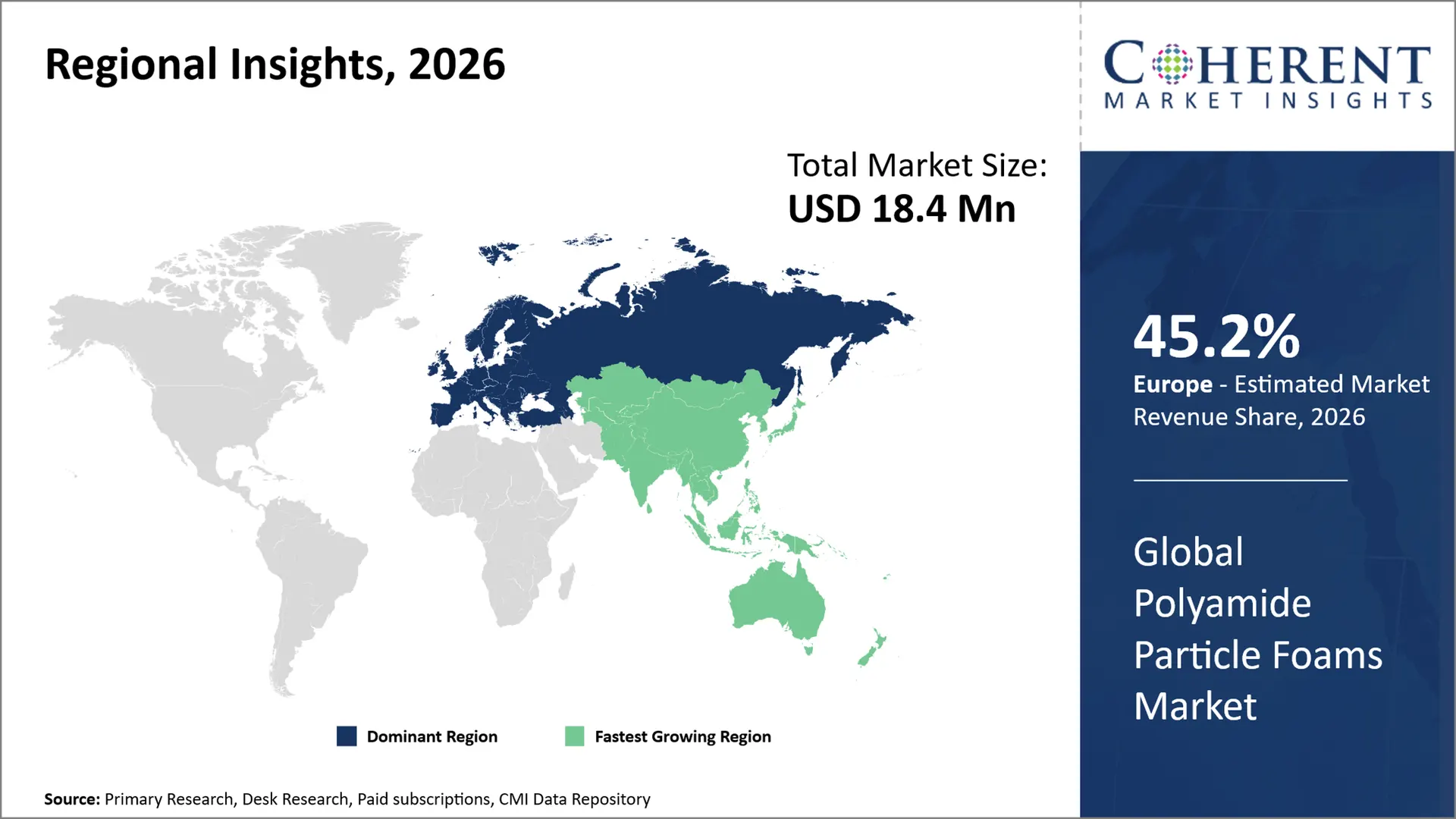
- Europe is expected to register an estimated CAGR of 21.2% during 2026–2033 and account for 45.2% of the global polyamide particle foams market in 2026. Its robust automotive engineering ecosystem and specialized molding capabilities facilitate early material qualification. The region’s know-how in structural applications was also demonstrated in July 2024 when Storopack’s polyamide particle-foam impact absorber for Mercedes-Benz’s VISION EQXX program was awarded by SPE Central Europe.
- Asia Pacific is projected to expand at a compound annual growth rate (CAGR) of 27.8% during the forecast period and to hold a 34.3% share of the global polyamide particle foams market in 2026. Regional manufacturers are now exploring polyamide foam applications that require structural durability and weight reduction. Shanghai Jiang Ju Yuan and Golden Eagle Heavy Engineering jointly brought a polyamide particle-foam railroad container flooring solution to CHINAPLAS in April 2026, demonstrating the solution’s wide applicability.
Segmental Insights
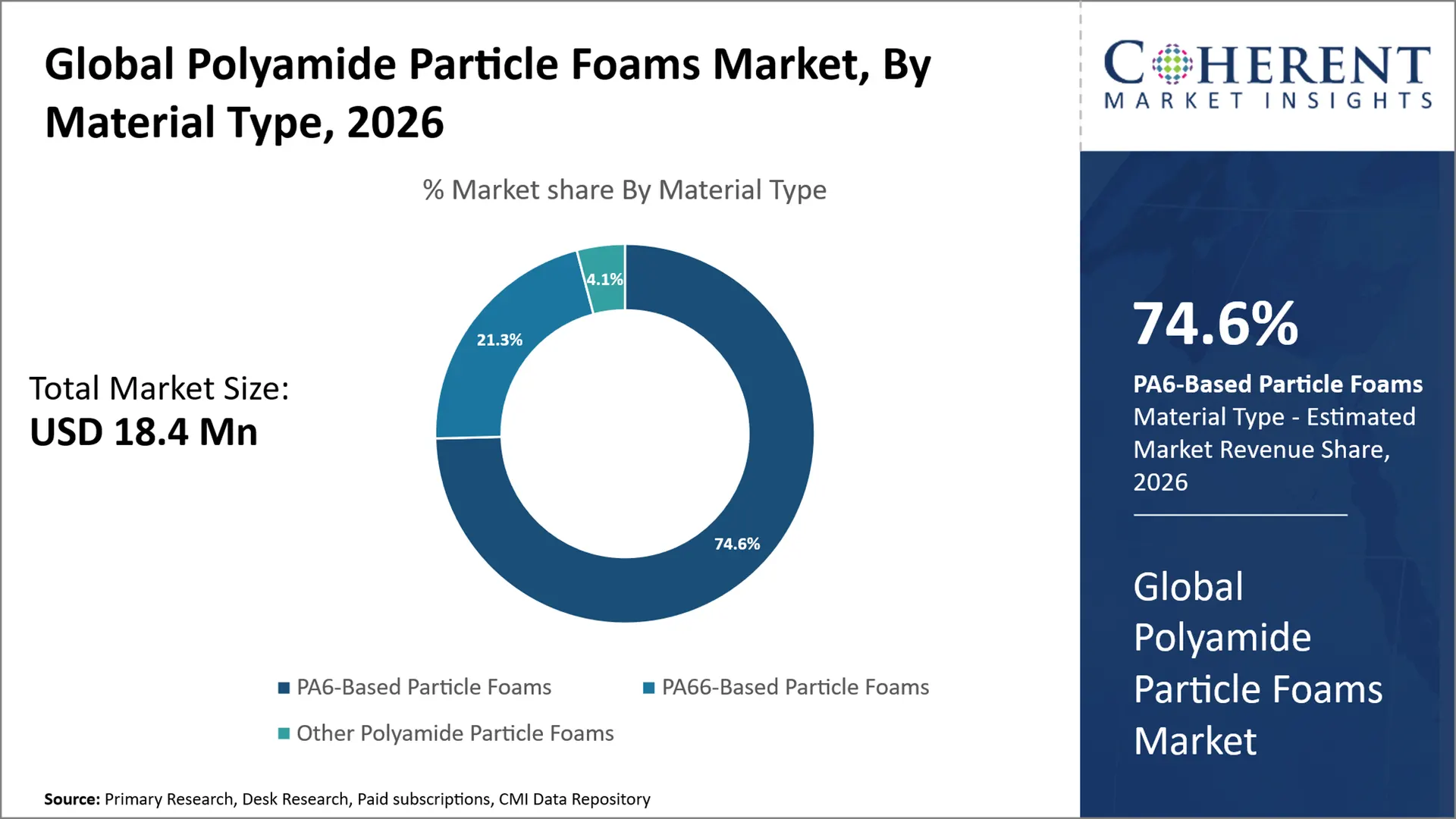
Why Do PA6-Based Particle Foams Dominate the Global Polyamide Particle Foams Market?
PA6-Based Particle Foams are expected to account for 74.6% of the global polyamide particle foams market in 2026. They are compatible with existing particle-foam forming equipment, allowing manufacturers to produce structural parts that are light and at the same time can be processed to control costs. The material’s resistance to mechanical stress and high temperatures is of great benefit to automotive manufacturers. BASF said Ultramid Expand will be showcased at Fakuma 2026 in September 2026. The company will highlight the use of Ultramid Expand for lightweight and crash-resistant automotive parts that need high-temperature performance. Furthermore, the PA6-based material is an example of how advanced particle foams can meet the demanding requirements of automotive engineering. It provides opportunities for material suppliers and converters to produce bespoke, higher-value automotive parts by combining structural performance with existing manufacturing processes.
- Current Industry Events of 2026
- Market Size Estimation
- Regional Breakdown
- Competitive Landscape
- Customer Intelligence
- Segmental Analysis
- Pricing Analysis
- Key Market Drivers, Challenges & Future Trends
- Customized Insights Section
Why Does the 200–400 g/L Segment Represent the Largest Foam Density Category in the Global Polyamide Particle Foams Market?
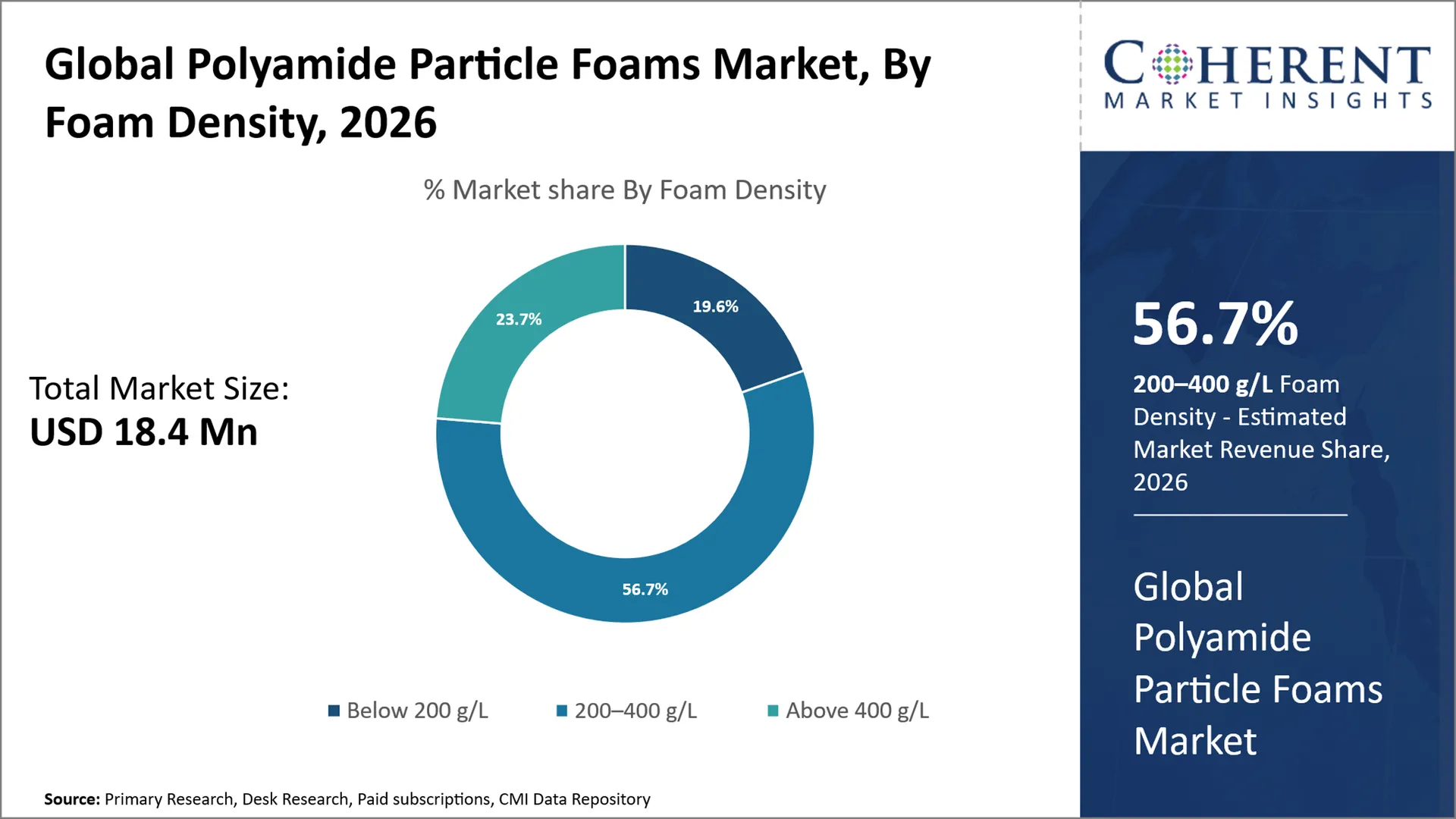
The 200–400 g/L segment is expected to account for 56.7% of the global polyamide particle foams market within the foam-density category in 2026. The range offers component designers a middle ground between lower-mass cushioning structures and denser, material-intensive inserts. Its relevance is strongest where engineers specify deformation resistance, localized support, and consistent dimensional tolerances rather than minimum weight alone. For manufacturers, density selection also determines blowing-agent requirements and the sensitivity of cell formation to temperature and pressure. In August 2026, researchers at the University of Bayreuth reported a PA12 experimental bead-foam density of approximately 260 g/L at a selected processing temperature, demonstrating that polyamide foaming conditions can reach this intermediate band. The laboratory result does not establish commercial market penetration. Suppliers will need reproducible molded-part testing to translate density control into qualified customer programs.
Why Does Steam-Chest Molding Dominate the Processing Method Category of the Global Polyamide Particle Foams Market?
Steam-Chest Molding is expected to hold 75.8% of the processing method category in the global polyamide particle foams market in 2026. Its commercial advantage lies in a familiar sequence of bead filling, thermal fusion, cooling, and demolding that permits production teams to build on established particle-molding expertise. Controlled steam penetration is especially important for polyamides because weak interbead bonding can compromise part strength, whereas excessive heat can damage cellular geometry. In October 2026, a study published in The Journal of Supercritical Fluids examined PA66 bead-foam production and identified energy use and fusion difficulties associated with conventional steam molding while evaluating an integrated alternative. The research establishes the process as a technical reference point rather than evidence of a new commercial installation. Equipment providers that address heat distribution and cycle efficiency can protect the method's established role in industrial production.
Current Events and their Impact
Current Event | Description and Its Impact |
March 2025: China's Revised Electric Vehicle Battery Safety Standard |
|
End-of-Life Vehicle Regulation of the European Union - July 2026 |
|
Global Polyamide Particle Foams Market Dynamics
Key Market Drivers
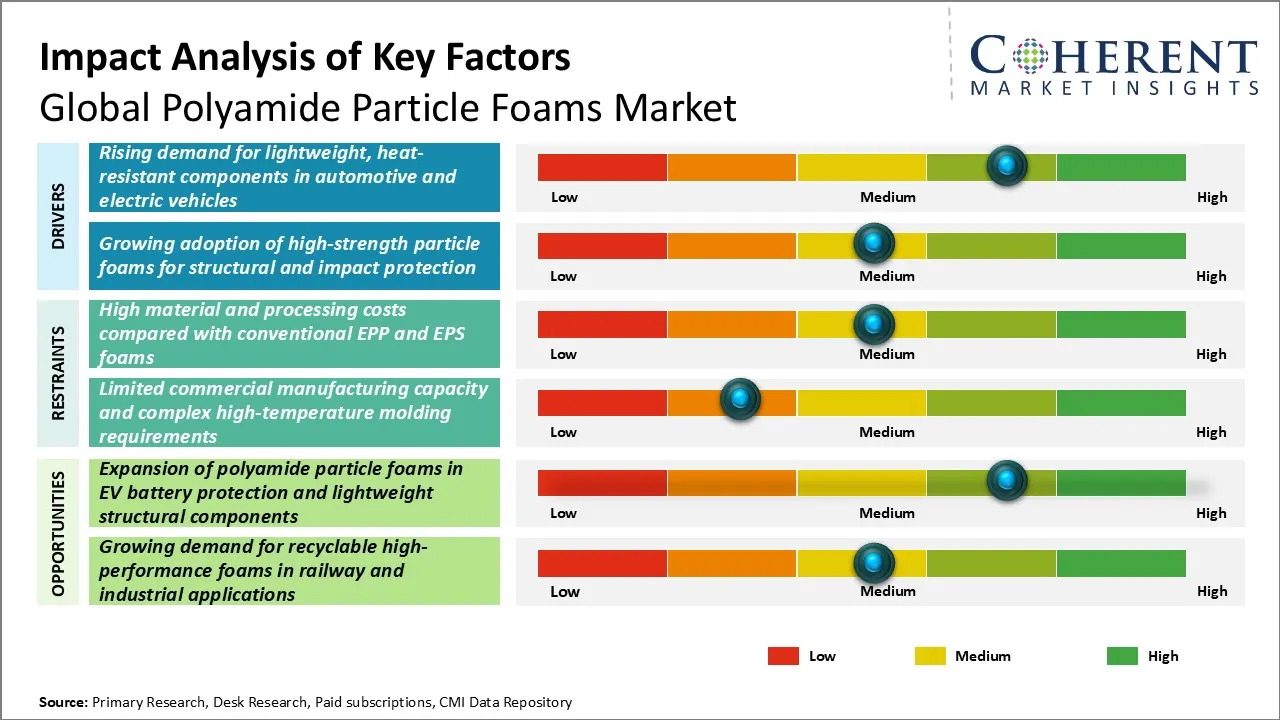
- Rising demand for lightweight, heat-resistant components in automotive and electric vehicles: Automotive manufacturers are evaluating polyamide particle foams for structural reinforcements, impact absorbers, and battery protection components that must withstand mechanical stress and elevated processing temperatures. Their combination of thermal stability, rigidity, and low component weight makes them suitable for engineering applications where conventional particle foams may not meet performance requirements. This creates specialized product qualification opportunities for automotive component manufacturers and material suppliers. In July 2026, Euro NCAP evaluated the BMW iX3 and ZEEKR 7GT under its revised safety protocols, emphasizing the importance of crashworthiness and post-crash protection.
- Growing adoption of high-strength particle foams for structural and impact protection: Polyamide particle foams enable engineers to design lightweight cellular cores that can be combined with reinforced outer structures to increase the stiffness of components without relying solely on solid materials. This offers opportunities for composite manufacturers seeking to improve durability, localize reinforcement and reduce material consumption. They are commercially applicable to mechanically demanding products poorly reinforced by conventional foam structures. In December 2024, JEC Composites named Kape's Vanguard skateboard, featuring a polyamide particle-foam core within a recyclable fiber-reinforced composite structure, a finalist for the JEC Composites Innovation Awards 2025. This recognition demonstrated the potential of polyamide particle foams beyond conventional automotive applications.
Emerging Market Trends
- Integration of Simulation-Driven Material Qualification: The development of the polyamide particle-foam is heading toward simulation-supported component engineering, in which the material behavior can be analyzed before physical tooling decisions are made. Manufacturers are being requested for application specific data on component compression, thermal exposure and deformation.
Impact: Better predictive models can cut down on the number of prototypes runs that are not needed and improve collaboration among resin makers, converters and engineering teams. Suppliers who have already demonstrated simulation capabilities may be given more visibility to early design discussions.
Relevance to Market: Technical documentation and engineering support could be a key purchasing factor for this step, especially for buyers who are designing complex molded components.
- Increasing Focus on Traceable and Recoverable Polyamide Material Systems: Industrial buyers are placing greater emphasis on material traceability, recyclability, and consistent properties after reprocessing. Thus, polyamide particle-foam suppliers may need to show how production scrap and recovered parts can be integrated into material management systems.
Impact: More stringent documentation requirements may be a plus to suppliers who have established recycling partnerships, reliable material identification and controlled formulations. Producers who cannot verify the quality of recovered material may have longer qualification times.
Relevance to Market: The ability to recover materials could be a distinguishing factor in supplier selection for manufacturers of products with longer service lives over the forecast period.
Key Restraining Factors
- High Processing Costs and Limited Production Scale: Polyamide particle foams require specialized resin formulations, controlled expansion conditions, and suitable molding equipment. Traditional polypropylene foams or molded thermoplastics might be able to achieve the performance desired but might be too expensive for some applications because of material and processing costs. Manufacturers have to demonstrate that the premium price provides an actual benefit in the component or lifecycle.
- Complex Material Qualification and Supply Limitations: Commercial adoption may be constrained by moisture sensitivity, a limited number of qualified suppliers, application-specific mechanical testing requirements, and stringent production tolerances. Structural components are normally intended for clients that need constant performance when subjected to thermal and mechanical loads. Longer qualification periods may increase technical development costs and delay purchasing decisions.
Regional Insights
Why Does Europe Dominate the Global Polyamide Particle Foams Market?
Europe is expected to account for 45.2% of the global polyamide particle foams market in 2026, The growth will be aided by the region’s established expertise in engineering polymers, precision foam conversion, and specialized component manufacturing. European suppliers collaborate closely with automotive OEMs and industrial equipment manufacturers to validate materials against demanding mechanical and thermal specifications. Regional research programs are also developing alternative bead-fusion technologies and sustainable polymer formulations. In June 2026, the European Commission reported that its VITAL project had developed Caramid, a bio-based polyamide for particle foaming, and a radio-frequency bead-processing technology. This development demonstrates Europe’s investment in next-generation foam manufacturing, although Caramid is still in the research and development stage.
Why Is Asia Pacific Emerging as the Fastest-Growing Region in the Global Polyamide Particle Foams Market?
Asia Pacific is expected to account for 34.3% of the global polyamide particle foams market in 2026 and register the fastest growth through 2033. The region benefits from increasing polymer research capabilities, local polymer development and advanced bead-foam processing expertise. An improvement in the interbead bonding and molding process may improve the commercial viability of these specially formulated polyamide foams. Researchers of the Sun Yat-sen University (SYSU) in China revealed in June 2025 that an in-mold foaming process with ethylene-vinyl acetate (EVAc) enhanced the bonding between beads of polyether block amide (PEBA) foams. This study demonstrates advancement at the regional level for processing foams based on polyamides, but has not yet confirmed commercial scale implementation.
Global Polyamide Particle Foams Market Outlook for Key Countries
Why Does China Support Growth in the Global Polyamide Particle Foams Market?
China represents an important growth opportunity for the global polyamide particle foams market due to its strong base in engineering plastics manufacturing and concentration of automotive component suppliers. Domestic polymer producers are developing technical capabilities that could provide a foundation for future specialization in advanced foamed materials. In November 2025, Evonik announced the successful trial production of its second polyamide reactor in Shanghai, supporting the planned doubling of its Asian long-chain polyamide capacity. This is an investment in polyamide resins, not particle foams, but it is indicative of the strengthening of China’s specialty polymer supply base. Local foam developers would benefit from better access to engineering materials, formulation expertise and downstream industrial customers. The commercial growth will depend on consistent quality of beads and competitive cost of processing.
Why Is the U.S. a Key Market for the Global Polyamide Particle Foams Market?
The U.S. offers opportunities for global polyamide particle foams market in specialized automotive and industrial applications where material qualification, mechanical reliability, and engineering support influence purchasing decisions. Its polymer compounding network and automotive supply chains are already established and provide the foundation for evaluating advanced foam components. DOMO Chemicals has expanded its capacity for demanding electrical and electronic applications with UL certification of TECHNYL PA6 and PA66 compounds manufactured at the company’s facility in Buford, Georgia in June 2024. Although the certification does not cover polyamide particle foams, it shows the existing capabilities of the country to qualify polymers. Domestic foam suppliers will have to prove their components’ performance, the availability of their materials and the cost benefits over existing lightweight alternatives to gain commercial adoption.
Why Is Germany a Strategic Country in the Global Polyamide Particle Foams Market?
Germany is strategically important in the global polyamide particle foam market because of its strength in industrial manufacturing research, precision tooling and high temperature polymer processing. German technology developers are working on processing limits that could limit the economic production of advanced thermoplastic bead foams. In July 2026, Neue Materialien Bayreuth started the research project 3D RadioTool with the objective of producing additively manufactured radio frequency molding tools. Polyamide was found to be one of the technical particle foams that could profit from the project. The initiative targets improved heating efficiency and processing stability but remains under development. Such capabilities could help German equipment manufacturers and specialist converters differentiate through process efficiency, particularly where conventional molding technologies face high energy requirements and challenging thermal-control conditions.
Product Performance & Commercial Adoption Landscape of Global Polyamide Particle Foams Market
Market Focus Area | Key Market Requirements | Adoption Landscape | Commercial Significance |
Automotive Crash & Structural Components | High compressive strength, controlled energy absorption, dimensional stability, and compatibility with vehicle assembly conditions. | Established commercial applications in selected automotive impact absorbers and structural inserts. | Creates demand for specialized molded parts that reduce weight while achieving crash performance requirements specific to a vehicle. |
Battery Holders & EV Battery Protection | Light weight construction, accurate cell positioning, mechanical protection and resistance to changes in operating temperature. | Proven in automotive battery development programs. Wider adoption subject to OEM qualification. | It encourages possibilities for customized components of battery modules and supports the cooperation of foam suppliers and battery-system makers. |
High-Temperature Industrial Components | Resistance to long term heat exposure, oils, lubricants, mechanical loading and dimensional deformation. | Special applications where the material selection relies on the component operating conditions. | Creates opportunities for premium engineering foam products where thermal or mechanical requirements cannot be met with conventional particle foams. |
Density & Material Grade Selection | Uniform bead density and compressive response, part weight, and mechanical properties based on the intended use. | The grade is chosen to component specifications and is supplied in commercial formulations of intermediate density. | Allows suppliers to stand out through optimized material consumption, performance that is tailored to the application and predictable component costs. |
Automotive OEM & Tier Supplier Certification | Mechanical properties verified, production quality repeatable, component testing and material performance documented. | Qualification-led adoption by material producers, component converters and automotive engineering teams. | Enhances long-term relationships with suppliers, and raises the barriers to entry for manufacturers without application testing and quality assurance capabilities. |
Direct Sales & Customized Supply Agreements | Technical advice Steady supply of material Consistency of specifications Joint development of products. | Direct manufacturer engagement is most relevant for specialized automotive and industrial component programs. | Promotes long-term supply agreements, custom product development and greater supplier involvement in high-value industrial applications. |
How Are High-Temperature Industrial Equipment Applications Creating New Growth Opportunities in the Global Polyamide Particle Foams Market?
A less-developed opportunity for polyamide particle-foam producers is to diversify into high-temperature industrial equipment outside transportation applications. Industrial machinery manufacturers require lightweight components with mechanical stability when subjected to heat, vibration, lubricants and repeated operating cycles.
Polyamide particle foams could be used in equipment housings, structural inserts, protective supports, and some vibration-management components where traditional polymer foams do not meet thermal or mechanical performance needs.
This presents an opportunity for material producers to develop application specific grades, offer standardized test specimens and collaborate with industrial equipment manufacturers on component qualification.
Commercial success will depend on showing long-term compression behavior, dimensional stability, chemical compatibility, and repeatable molding performance. Manufacturers also have to show cost benefits when compared to solid engineering plastics and traditional composite structures.
Initially the biggest winners may be specialist suppliers with formulation know-how and flexible production facilities, while the established producers may benefit from wider customer reach and manufacturing scale.
Market Players, Key Development, and Competitive Intelligence
Key Developments
- In September 2026, BASF SE announced the presentation of Ultramid Expand at Fakuma 2026, highlighting its suitability for lightweight, crash-resistant automotive components. The polyamide particle foam combines high-temperature resistance with structural performance, supporting opportunities for material manufacturers and automotive suppliers developing specialized lightweight vehicle components.
- In August 2024, Kape Skateboards commercially launched The Vanguard, a recyclable composite skateboard incorporating a lightweight foam core and recycled polyamide materials. The development demonstrates the potential of polyamide-based composite structures beyond automotive applications, creating opportunities for specialized manufacturers in durable sporting goods and lightweight structural products.
Competitive Landscape
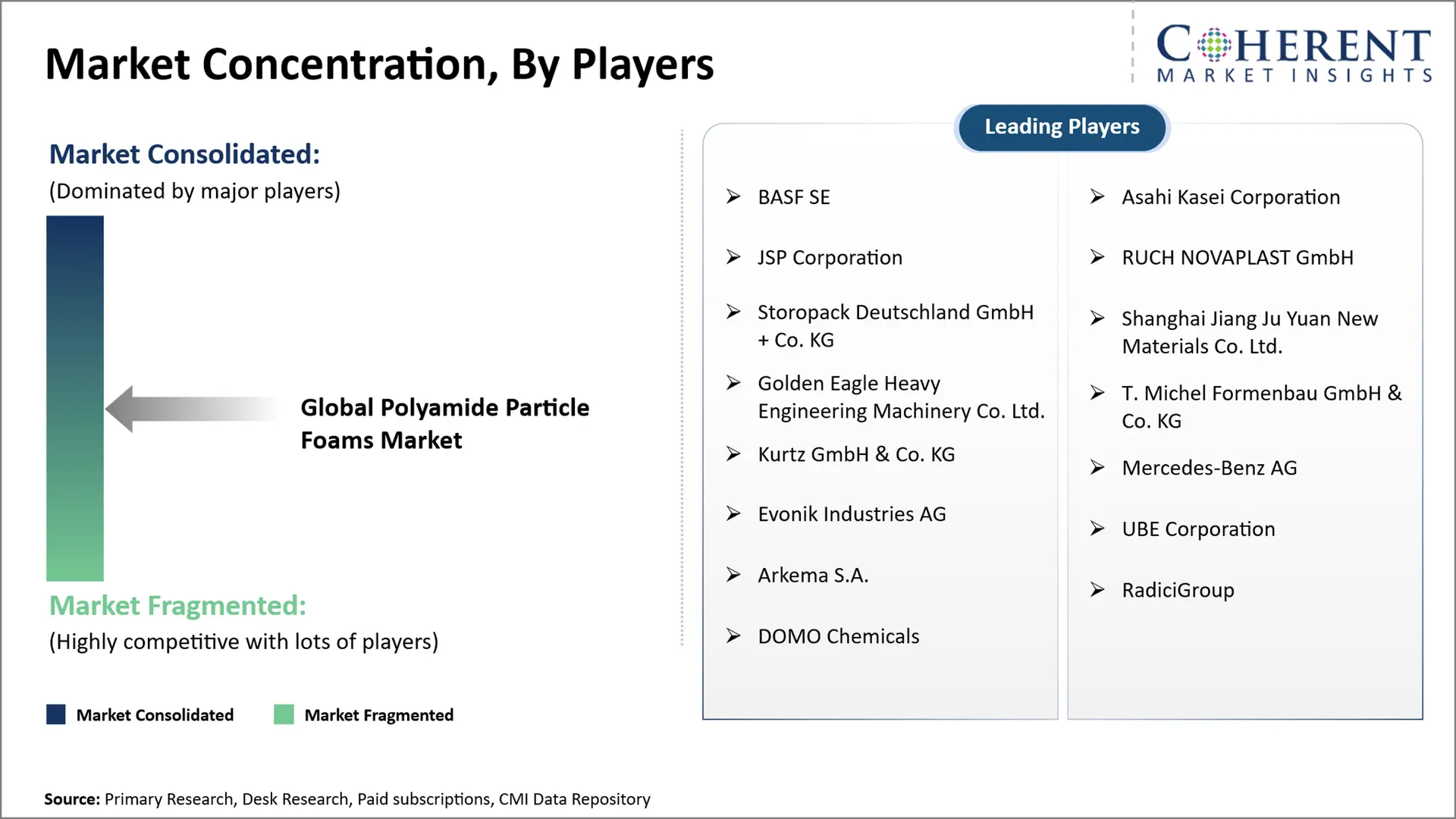
The global market for polyamide particle foams is fairly consolidated, particularly in terms of material development, were specialized polymer expertise and intellectual property present barriers to entry. Resin manufacturers, particle-foam developers, molding technology providers and specialist converters are all in competition. The market position is built on qualified material performance, constancy of production, technical support and reliability of supply. Regional converters are important as customer needs often require customized component development.
Key Focus Areas Include
- Material Performance: Range of controlled compressive strength, thermal stability and chemical resistance.
- Processing Efficiency: better fusion quality, molding cycles and scrap in production.
- Cost competitiveness: Proof of overall component cost advantages compared to other materials.
- Manufacturing Reliability: Consistent finished-part quality and uniform particle properties.
- Microtechnology: Proprietary processes and formulations, as well as molding technologies, for expansion.
- Customer qualification: Good testing skills and documentation of applications.
- Supply Chain Management: Reliable access to suitable polyamide grades and specialized processing inputs.
Market Report Scope
Global Polyamide Particle Foams Market Report Coverage | |||
Report Coverage | Details | ||
Base Year | 2025 | Market Size in 2026: | USD 18.4 Mn |
Historical Data For: | 2020 To 2024 | Forecast Period: | 2026 To 2033 |
Forecast Period 2026 To 2033 CAGR: | 23.30% | 2033 Value Projection: | USD 79.7 Mn |
Geographies covered: |
| ||
Segments covered: |
| ||
Companies covered: | BASF SE, Asahi Kasei Corporation, JSP Corporation, RUCH NOVAPLAST GmbH, Storopack Deutschland GmbH + Co. KG, Shanghai Jiang Ju Yuan New Materials Co. Ltd., Golden Eagle Heavy Engineering Machinery Co. Ltd., T. Michel Formenbau GmbH & Co. KG, Kurtz GmbH & Co. KG, Mercedes-Benz AG, Evonik Industries AG, UBE Corporation, Arkema S.A., RadiciGroup, DOMO Chemicals | ||
Growth Drivers: |
| ||
Restraints & Challenges: |
| ||
Analyst Opinion (Expert Opinion)
- Suppliers in the global polyamide particle foams market are likely to move beyond standalone material sales toward integrated engineering partnerships. Competitive leadership may increasingly depend on the ability to deliver validated component designs, processing recommendations, and application-specific material data. Companies participating earlier in customer design programs could gain more durable commercial relationships than suppliers competing primarily on resin pricing.
- Greater automation of particle-foam production could alter the economics of specialized molded components. Production systems that can accommodate variable bead characteristics, monitor fusion quality, and reduce operator intervention may increase manufacturing flexibility. This transition could place pressure on smaller converters that rely heavily on manual process adjustments and lack the resources to invest in advanced quality-control systems.
- Manufacturers should focus on consistent particle quality, broad application testing, and processing technologies that reduce variability in production. Investment should target customers with clearly defined performance requirements rather than speculative capacity additions. Suppliers must manage resin-cost exposure, qualification delays, and limited alternative sourcing options while developing local conversion partnerships and avoiding premature investment in unproven end-use applications.
Speak to the analyst
Want personalized insights?
Take the findings above to one of our principal consultants, or have the report rebuilt around the segments, geographies and competitors you actually track.
Market Segmentation
- Material Type Insights (Revenue, USD Mn, 2021 - 2033)
- PA6-Based Particle Foams
- PA66-Based Particle Foams
- Other Polyamide Particle Foams
- Foam Density Insights (Revenue, USD Mn, 2021 - 2033)
- Below 200 g/L
- 200–400 g/L
- Above 400 g/L
- Processing Method Insights (Revenue, USD Mn, 2021 - 2033)
- Steam-Chest Molding
- Steam-Free Molding
- Application Insights (Revenue, USD Mn, 2021 - 2033)
- Automotive Crash and Structural Components
- EV Battery Protection and Cell Holders
- Industrial High-Temperature Components
- Railway Components
- Other Applications
- Sales Channel Insights (Revenue, USD Mn, 2021 - 2033)
- Direct Manufacturer Sales
- Specialty Material Distributors and Converters
- Regional Insights (Revenue, USD Mn, 2021 - 2033)
- North America
- U.S.
- Canada
- Latin America
- Brazil
- Argentina
- Mexico
- Rest of Latin America
- Europe
- Germany
- U.K.
- Spain
- France
- Italy
- Russia
- Rest of Europe
- Asia Pacific
- China
- India
- Japan
- Australia
- South Korea
- ASEAN
- Rest of Asia Pacific
- Middle East
- GCC Countries
- Israel
- Rest of Middle East
- Africa
- South Africa
- North Africa
- Central Africa
- North America
- Key Players Insights
- BASF SE
- Asahi Kasei Corporation
- JSP Corporation
- RUCH NOVAPLAST GmbH
- Storopack Deutschland GmbH + Co. KG
- Shanghai Jiang Ju Yuan New Materials Co. Ltd.
- Golden Eagle Heavy Engineering Machinery Co. Ltd.
- T. Michel Formenbau GmbH & Co. KG
- Kurtz GmbH & Co. KG
- Mercedes-Benz AG
- Evonik Industries AG
- UBE Corporation
- Arkema S.A.
- RadiciGroup
- DOMO Chemicals
Sources
Primary Research Interviews
- Polyamide resin manufacturers, particle-foam producers, and specialty foam converters
- Automotive OEMs, EV battery manufacturers, molding equipment suppliers, and industrial component manufacturers
Stakeholders
- PA6, PA66, and specialty polyamide manufacturers
- Automotive Tier-1 suppliers, foam processors, battery system integrators, and technology providers
End-use Sectors
- Automotive, electric vehicles, industrial equipment, and railway
- Crash absorbers, structural components, battery cell holders, and high-temperature components
Regulatory and Industry Bodies
- European Chemicals Agency (ECHA)
- European Commission (EC)
- U.S. Environmental Protection Agency (EPA)
- National Highway Traffic Safety Administration (NHTSA)
Databases
- OICA global automotive production statistics
- UN Comtrade and ITC Trade Map
- Eurostat PRODCOM and national manufacturing statistics
- European Patent Office (EPO) and WIPO PATENTSCOPE
Magazines and Journals
- Journal of Cellular Plastics
- Polymer Engineering & Science
- Journal of Applied Polymer Science
- Polymer
Associations
- Society of Plastics Engineers (SPE)
- PlasticsEurope
- International Organization of Motor Vehicle Manufacturers (OICA)
- German Association of the Automotive Industry (VDA)
Public Domain Sources
- Polyamide particle-foam technical data sheets, product specifications, and manufacturer disclosures
- Automotive lightweighting developments, polymer capacity announcements, and foam-processing research
- Patent publications, material performance studies, and sustainability assessments
Key Standards and Regulations
- EU REACH Regulation (EC) No 1907/2006
- EU CLP Regulation (EC) No 1272/2008
- ISO 845 – Apparent Density of Cellular Plastics and Rubbers
- ISO 844 – Compression Properties of Rigid Cellular Plastics
- ISO 14040/14044 – Life Cycle Assessment
- ISO 4590 – Open- and Closed-Cell Volume Percentage of Rigid Cellular Plastics
Proprietary Elements
- CMI Data Analytics Tool
- Proprietary research repository, supported by primary interviews, polyamide particle-foam demand modeling, automotive and EV application assessments, manufacturing cost analysis, pricing studies, and competitive intelligence.
Get access to 250+ pages report
Every segment, forecast, competitor profile and data table behind the analysis above — available for instant download.
- ESOMAR Member
- ISO 9001:2015 Certified
- D-U-N-S Registered
- GDPR & CCPA Compliant
Frequently Asked Questions
The global polyamide particle foams market is projected to grow at a CAGR of 23.30% from 2026 to 2033.
The global polyamide particle foams market is estimated to be valued at USD 18.4 Mn in 2026 and is expected to reach USD 79.7 Mn by 2033.
Polyamide particle foams are primarily used in automotive crash protection, EV battery cell holders, structural reinforcements, high-temperature industrial components, and specialized railway applications.
Polyamide particle foams generally offer higher heat resistance, mechanical strength, and dimensional stability than conventional EPP and EPS foams, making them suitable for demanding engineering applications.
Major buyers include automotive OEMs, Tier 1 component suppliers, EV battery system manufacturers, industrial equipment manufacturers, and specialized foam converters.
Buyers should assess the report's coverage of material grades, foam density, processing methods, application-level demand, manufacturing capabilities, competitive positioning, and regional supply chains.
Rising demand for lightweight, heat-resistant components in automotive and electric vehicles, along with growing adoption of high-strength particle foams for structural and impact protection, are the major factors supporting growth in the global polyamide particle foams market.