

Global Precision Wellness Market Size and Forecast – 2026 To 2033
The global precision wellness market is expected to grow from USD 58.4 Bn in 2026 to USD 150.7 Bn by 2033, registering a compound annual growth rate (CAGR) of 14.5% from 2026 to 2033. The market for global precision wellness is poised for significant expansion, fueled by the rising burden of lifestyle-related and noncommunicable diseases, which is increasing demand for personalized preventive health management.
According to the World Health Organization (WHO), 2.6 billion adults were overweight in 2024, including approximately 940 million living with obesity. This growing burden is increasing the need for individualized nutrition, physical activity, weight-management, and lifestyle-monitoring solutions
Key Takeaways of the Global Precision Wellness Market
- Personalized wellness platforms are projected to hold 27.4% of the global precision wellness market share in 2026, making it dominant offering segment, across Asia Pacific supported by government initiatives promoting digital health and personalized nutrition research. For instance, Japan’s Ministry of Health, Labour and Welfare supports the Health and Productivity Management initiative, encouraging organizations to invest in employee health promotion and individualized health management.
- Wearable and connected health technologies are projected to hold 25.7% of the global precision wellness market share in 2026, making it dominant technology segment, across North America supported by regulatory recognition of wearable and sensor-based health monitoring. For instance, in March 2026, the U.S. Food and Drug Administration updated its searchable lists of authorized digital health devices, including sensor-based technologies capable of monitoring individual health parameters.
- Personalized nutrition and dietary management are projected to hold 24.8% of the global precision wellness market share in 2026, making it dominant application segment, with Europe presenting opportunities for growth through public-health initiatives focused on nutrition and the prevention of diet-related conditions. For instance, the European Commission’s Farm to Fork Strategy promotes healthier, more sustainable food systems and improved consumer access to nutrition information, supporting the broader environment for personalized dietary management.
- North America market maintains dominance with an expected share of 36.8% in 2026, bolstered by high consumer awareness of preventive health, established personalized nutrition services, and growing demand for data-driven lifestyle management. For instance, the U.S. Department of Health and Human Services’ Healthy People 2030 initiative establishes national objectives for improving health and well-being, including nutrition, physical activity, and chronic disease prevention, reinforcing the region’s focus on proactive health management.
- Asia Pacific is expected to exhibit the fastest growth in the global precision wellness market, registering an estimated CAGR of 14.2% during 2026–2033, driven by expanding digital health adoption, rising healthcare expenditure, and increasing government efforts to strengthen population health management. For instance, India’s Ayushman Bharat Digital Mission, implemented by the National Health Authority, is developing interoperable digital health infrastructure through health records and digital health IDs, creating a supportive ecosystem for personalized and data-enabled wellness services.
Segmental Insights
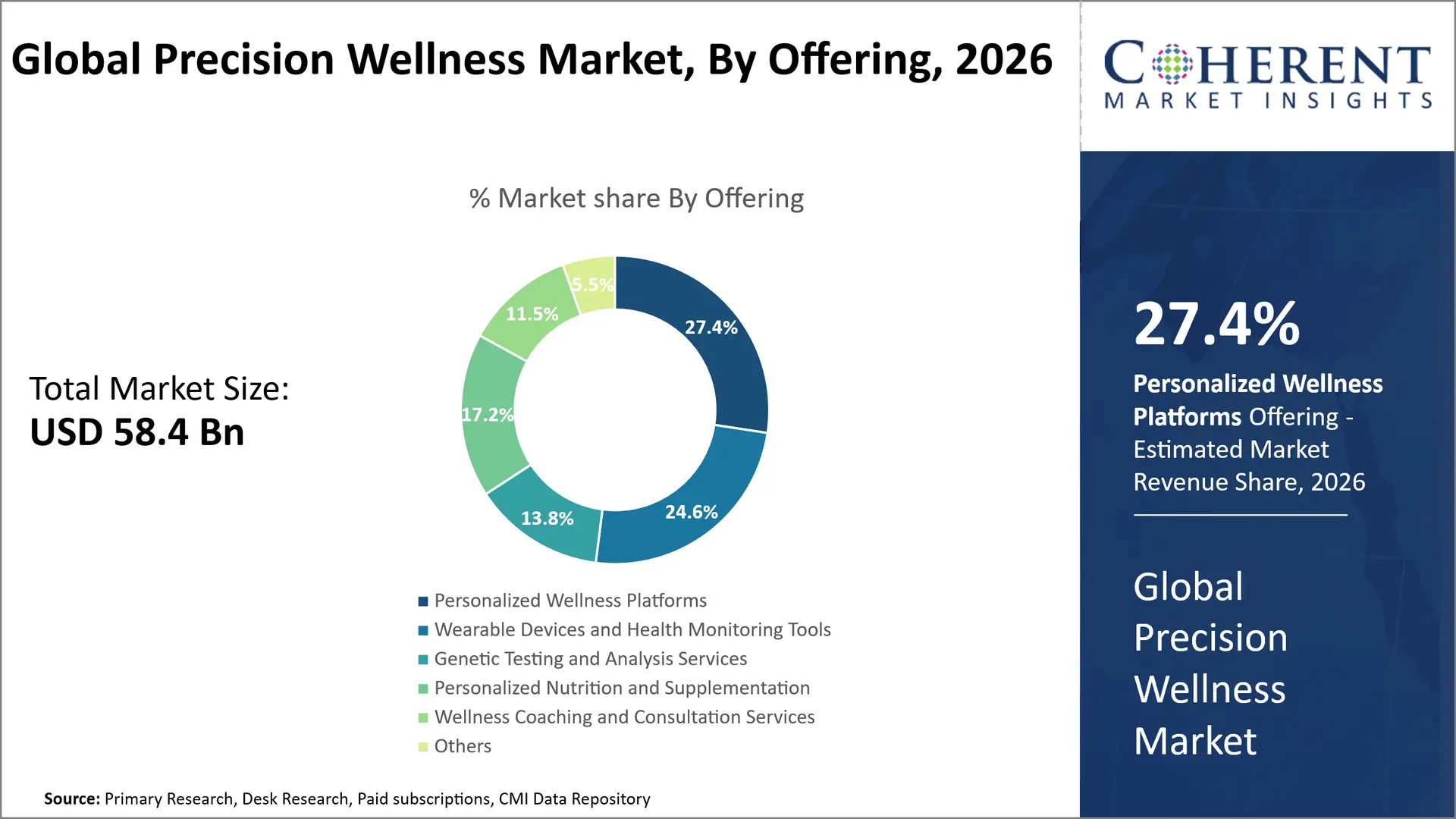
Why Do Personalized Wellness Platforms Dominate the Global Precision Wellness Market?
Personalized wellness platforms are projected to hold the market share of 27.4% in 2026, driven by the demand for integrated digital health platforms that help in tracking fitness, nutrition, and lifestyle, as well as offering targeted recommendation for wellness. These platforms can be used to provide insights based on personal health data and behaviors. For instance, Singapore’s Health Promotion Board offers the Healthy 365 app that tracks sleeping patterns, counts activity, plans meals and recommends wellness activities based on user’s lifestyle data, illustrating the increasing importance of personalized digital platforms in preventative health care.
- Current Industry Events of 2026
- Market Size Estimation
- Regional Breakdown
- Competitive Landscape
- Customer Intelligence
- Segmental Analysis
- Pricing Analysis
- Key Market Drivers, Challenges & Future Trends
- Customized Insights Section
Why Does Wearable and Connected Health Technologies Represent the Largest Technology Segment in the Precision Wellness Market?
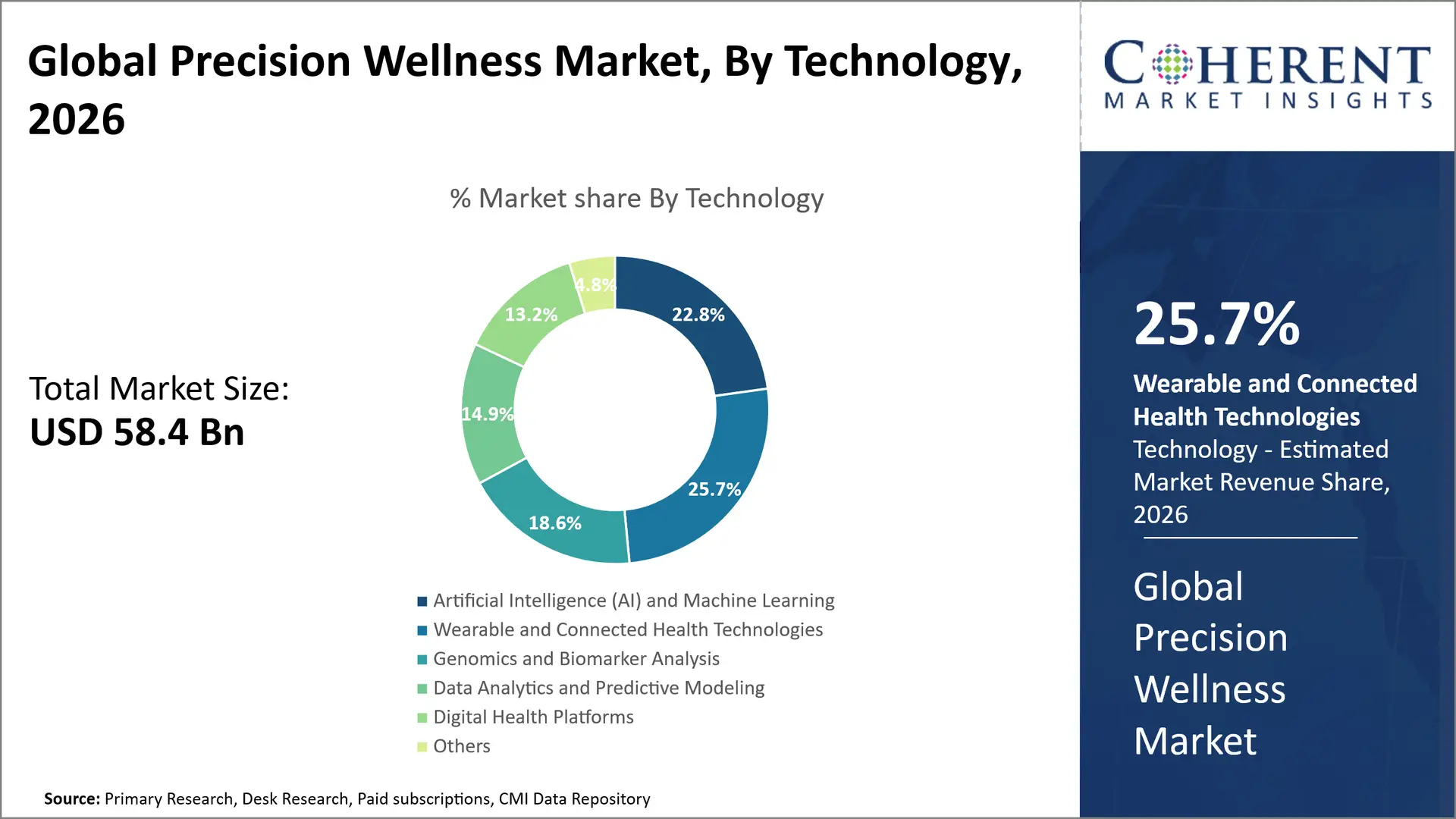
Wearable and connected health technologies are projected to hold a market share of 25.7% in 2026, driven by the growing adoption for real time health monitoring and data-based health tips, report. These wearable technologies allow consumers to keep tabs on their health metrics and lifestyle patterns to devise custom fitness, sleep, and routine activity schedules. For instance, the All of Us Research Program, an initiative supported by the U.S. National Institutes of Health, uses wearable devices in selected research activities. The program is designed to collect real-world health data and help researchers better understand how individual behavior and health choices impact health.
Personalized Nutrition and Dietary Management Segment Dominates the Global Precision Wellness Market
The personalized nutrition and dietary management segment are projected to hold a market share of 24.8% in 2026, attributed to the rising demand for personalized dietary recommendations based on individual biological health conditions, metabolic needs, and life style goals of consumers. Moreover, development in biomarker analytics, microbiome, and apps for digital monitoring is expected to accelerate more customized nutrition solution for weight management and long-term well-being. For instance, the U.S. National Institutes of Health (NIH) is conducting the Nutrition for Precision Health program to develop AI-based algorithms that predict individual responses to foods and dietary patterns by examining factors such as genetics, metabolism, and the gut microbiome.
Current Events and their Impact
Current Events | Description and its Impact |
NIH Launches NOURISH Digital Health Challenge for Personalized Nutrition (October 2026) |
|
FDA and NIH Establish Joint Nutrition Regulatory Science Program (May 2025) |
|
India Launches Mission SEHAT to Integrate Nutrition and Health Research (May 2026) |
|
Precision Wellness Market Dynamics
Market Drivers
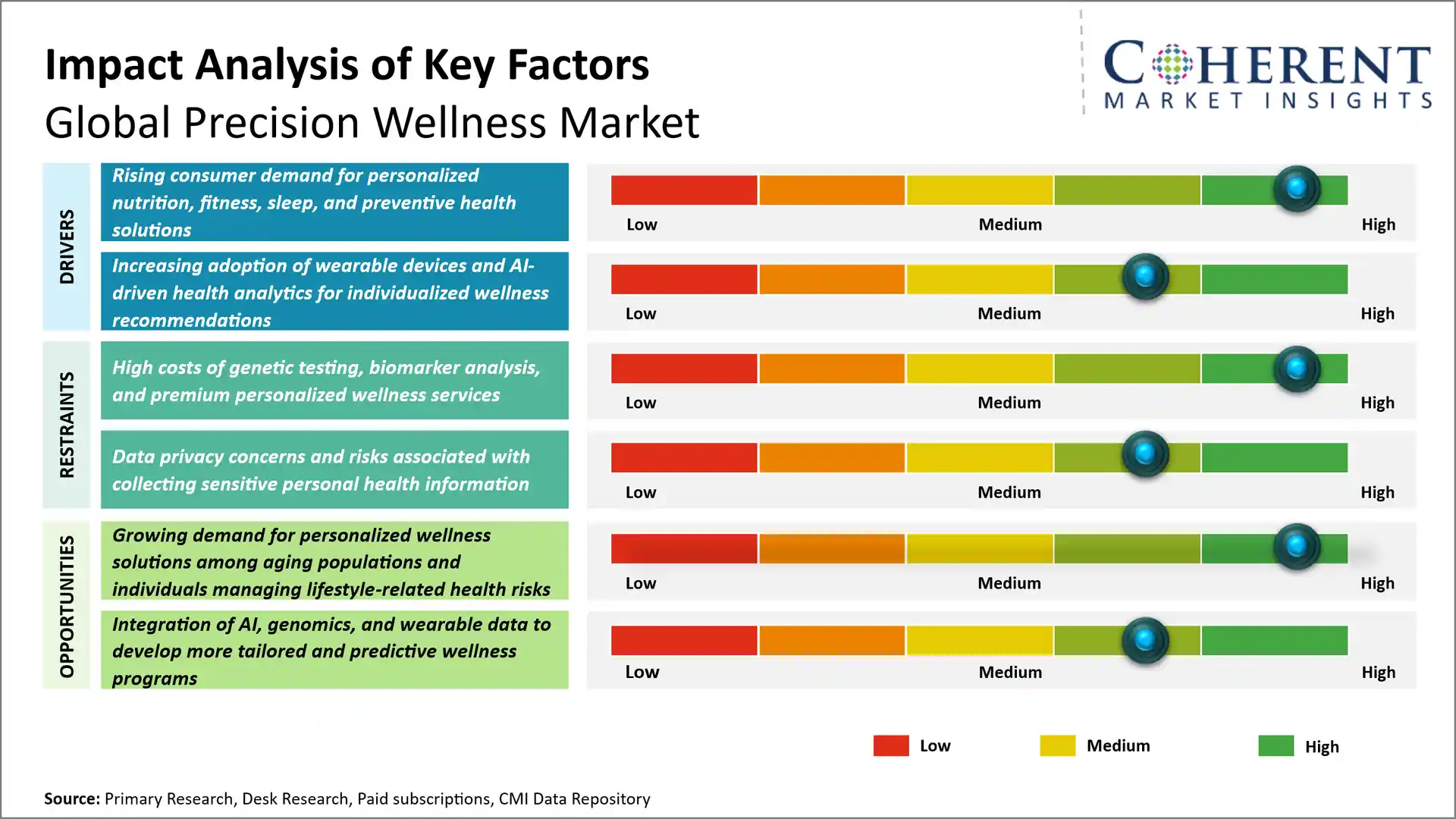
- Rising consumer demand for personalized nutrition, fitness, sleep, and preventive health solutions: Rising consumer awareness of preventive healthcare and the benefits of individualized lifestyle management is driving demand for personalized nutrition, fitness, sleep, and wellness solutions. Consumers are increasingly seeking structured programs that adapt to their health risks, daily habits, and wellness goals. For instance, the U.S. Centers for Disease Control and Prevention (CDC) reports that its National Diabetes Prevention Program’s lifestyle-change intervention can reduce the risk of developing type 2 diabetes by 58% among high-risk adults, highlighting the value of tailored nutrition and physical activity support.
- Increasing adoption of wearable devices and AI-driven health analytics for individualized wellness recommendations: The increasing adoption of wearable devices and AI-driven health analytics is driving the precision wellness market by enabling continuous health monitoring and personalized wellness recommendations. These technologies help individuals track physical activity, sleep patterns, and vital signs to optimize their health and lifestyle choices. For instance, in May 2026, Google announced its Google Health Coach, powered by Gemini, which integrates data from Fitbit and Pixel Watch devices to provide personalized fitness plans, sleep guidance, and health insights tailored to individual goals.
- Growing adoption of microbiome-based personalized nutrition: As consumers increasingly seek dietary recommendations tailored to their individual metabolic responses and gut health profiles. This is encouraging companies to combine biological testing with data analytics to deliver individualized food choices and nutrition guidance. For instance, ZOE combines its gut microbiome testing with an AI-powered nutrition app to provide personalized food recommendations based on individual health information and predicted metabolic responses.
Emerging Trends
- Integration of multi-omics for personalized wellness: The integration of genomic, microbiome, metabolomic, and biomarker data is emerging as a key trend in precision wellness. These insights enable more individualized nutrition, supplementation, and lifestyle recommendations based on personal biological characteristics.
- AI-Driven predictive wellness and continuous monitoring: Artificial intelligence is increasingly being combined with wearable devices and digital health platforms to analyze real-time biometric and behavioral data. This trend supports adaptive wellness recommendations for sleep, physical activity, stress management, and early identification of potential health risks.
- Growth of personalized healthy aging solutions: Rising demand for healthy aging is encouraging the development of tailored wellness programs focused on maintaining mobility, metabolic health, cognitive well-being, and overall vitality. Companies are increasingly exploring data-driven nutrition, fitness, and lifestyle interventions designed to address the changing needs of older adults.
Regional Insights
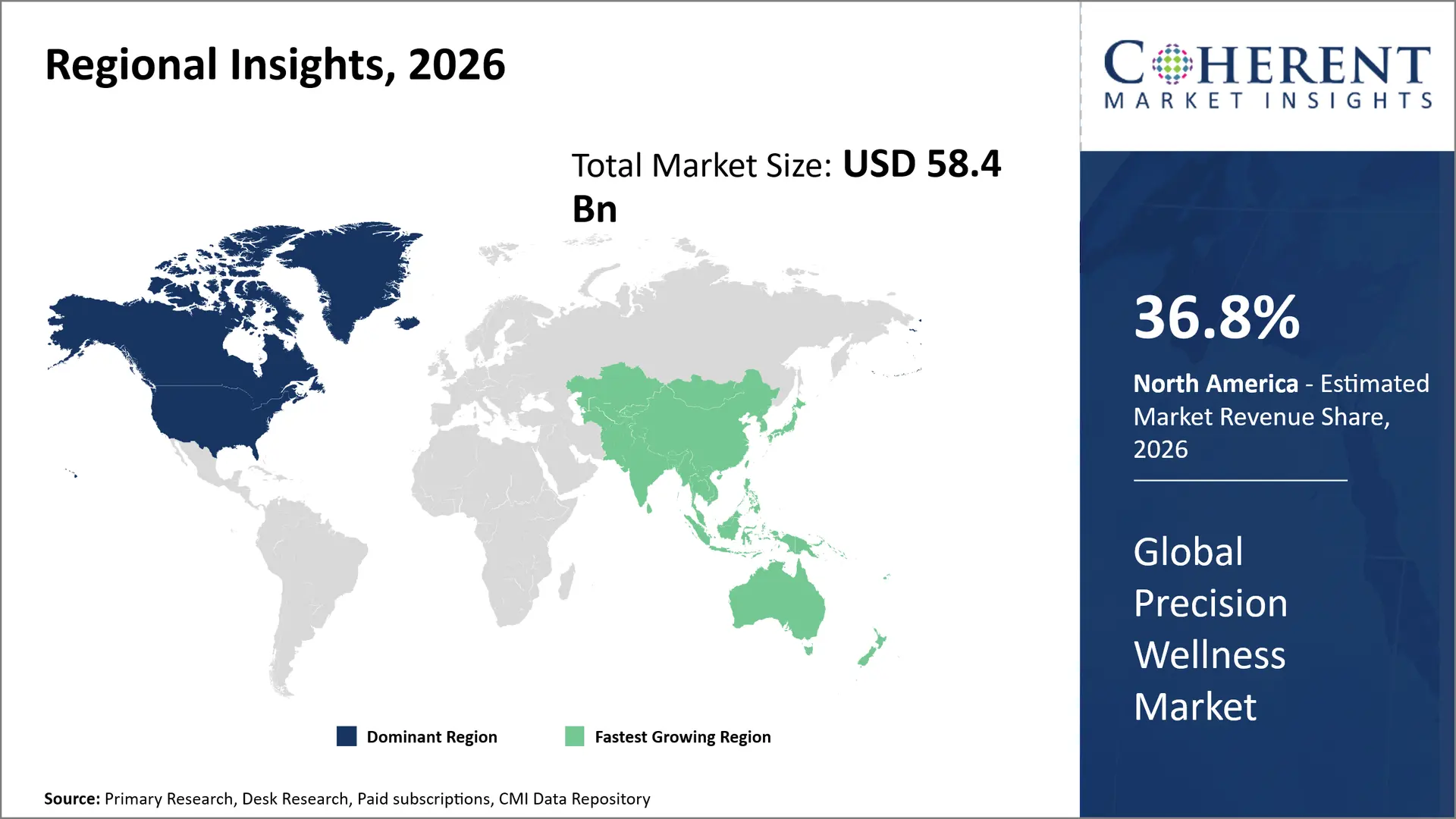
Why is North America a Strong Market for Precision Wellness?
North America leads the global precision wellness market, accounting for an estimated 36.8% share in 2026, owing to its significant digital health ecosystem, well-developed healthcare infrastructure, and the regulatory landscape that favors innovative health technology. Investments in health data analytics and artificial intelligence are contributing to a range of targeted wellness ecosystems, from personalized health products and algorithms to predictive health markers, and customized workout and food regimens.
For instance, in July 2026, the U.S. Government announced more than USD 5 billion in federal money for expanding the Genesis Mission, a national effort that uses artificial intelligence, advanced computing and scientific datasets to address big research challenges, such as finding the root causes of chronic diseases. Moreover, the region has been home to successful genomics research, wearable devices adoption, and rising consumer trends for preventative healthcare.
Why Does Asia Pacific Precision Wellness Market Exhibit High Growth?
Asia Pacific is expected to exhibit the fastest growth in the global precision wellness market, registering an estimated CAGR of 14.2% during 2026–2033. The region is projected to account for 25.4% of the global market in 2026, attributed to the growing healthcare infrastructure, increasing awareness among consumers about preventive health and growing utilization of wellness digital tools. Additionally, favorable government policies on digital health transformational projects along with increasing disposable income levels and growing middle-class population further amplifies the need for personalized fitness, nutrition and data-driven wellness solutions.
For instance, South Korea's 6th National Plan for Health Promotion, Health Plan 2030 (2026-2030) was approved by the Ministry of Health and Welfare in March 2026. The plan includes priority for prevention of chronic disease and unhealthy lifestyles through nutrition and physical activity, together with the use of modern information technology to improve the health of the population. Alongside, significant investments in artificial intelligence, health-data analytics and genomics research augurs well for the region to focus on customized or personalized health and lifestyle solutions.
Global Precision Wellness Market Outlook for Key Countries
Why is the U.S. Leading Innovation and Adoption in the Precision Wellness Market?
The U.S. is a market leader in Innovation within precision wellness owing to the advancements in a blend of nutritional sciences, genomics and Al-powered healthcare diagnostics. The NIH launched 'Nutrition for Precision Health' (NPH), a research study that leverages artificial intelligence models based on genome, metabolism, gut microbiome to predict responses in food of every individual. Additionally, U.S. government initiatives to support research around precision and personal nutrition are propelling data-led wellness and health models.
Is China a Favorable Market for Precision Wellness Market?
China is a strong emerging market for precision wellness driven by rapidly growing digital health infrastructure and governments' push to bring technology into healthcare. The National Health Commission's Healthy China 2030 program focus on health promotion, disease prevention and improvement of health of the entire population creating an enabling policy environment for personalized health and wellness (nutrition, lifestyle management). As well as a growing adoption of connected health solutions and AI-enabled services further strengthens its market potential.
Is Japan Emerging as a Key Growth Hub for the Precision Wellness Market?
Japan is being considered as a potential market for growth in the precision wellness owing to aging population and increased consciousness toward healthy longevity and prevention of health issues. Japan's Ministry of Health, Labour and Welfare supports health and productivity management and creates incentives for organizations to focus on increasing investment into health and wellness for their employees. Furthermore, country’s advances in health data utilization and personalized nutrition research lead to more individualized dietary recommendations, lifestyle monitoring, and targeted wellness solutions for different age groups.
Why Does Germany Top the European Precision Wellness Market?
Germany leads the European precision wellness market driven by strong healthcare system, an existing health-related research ecosystem, and increased attention to prevention and a strong focus on primary healthcare. The Digitalization Strategy for Health and Care of the German Federal Ministry of Health encourages innovations in digital health, including health data offers plenty of scope for more personalized ways of health monitoring and data-based wellness solutions. Moreover, evidence-based care model opens up new possibilities for the manufacturers.
Is Precision Wellness Market Developing in UK?
The market for precision wellness in the UK is growing attributed to increase in health consciousness, rising importance of wellness and preventative healthcare, increased consumer preference for personalized diet and health management. NHS England's NHS App digital health platform allows people to access their health data and manage aspects of their care digitally, helping to set the stage for more integrated wellness services. In addition, Genomics England's research infrastructure enables exploration of the use of genomic data for personalized disease prevention and health management.
Global Population Ageing Trends and Their Implications for the Precision Wellness Market
Indicator | Data | Relevance to Precision Wellness |
Global population aged 60+ in 2020 | 1.0 billion | Establishes the existing addressable population for age-focused wellness solutions. |
Projected population aged 60+ by 2030 | 1.4 billion | Supports demand for personalized nutrition, fitness, and healthy-aging programs. |
Projected population aged 60+ by 2050 | 2.1 billion | Indicates long-term potential for individualized preventive wellness services. |
Projected population aged 80+ by 2050 | 426 million | Highlights opportunities for tailored mobility, sleep, and healthy-aging support. |
Global population aged 60+ by 2030 | 1 in 6 people | Demonstrates the growing importance of age-responsive wellness solutions. |
How is the growing demand for personalized wellness solutions among aging populations and individuals managing lifestyle-related health risks creating new growth opportunities in the precision wellness market?
The global precision wellness market is expected to witness significant growth owing to the rising demand for personalized wellness management solutions among aging population and individuals affected by lifestyle diseases. Development in wearable technologies, biometric sensors and analytics enabled by AI indicates personalized fitness, nutrition, sleep, and preventive wellness recommendations. For instance, the World Health Organization’s UN Decade of Healthy Ageing (2021–2030) promotes person-centered, integrated health and care services to improve well-being in later life, supporting the broader need for tailored wellness solutions.
Market Players, Key Development, and Competitive Landscape
Key Developments
- In September 2026, The Precision Peptide Company launched a U.S. wholesale channel for its non-prescription needle-free patches and supplements, targeting gyms, longevity clinics, med spas, physiotherapy practices, and specialty retailers. The initiative expands its business-to-business distribution network and creates additional access points for wellness products. This development highlights the growing role of specialized distribution channels in the Precision Wellness Market.
- In August 2026, Keyspan launched a new mobile app that converts blood biomarker results, wearable data, and other personal health inputs into personalized daily wellness plans. The platform combines AI-guided recommendations with human health coaching, personalized supplements, and progress tracking to support proactive health management. This development highlights the growing integration of AI, biomarker analysis, and personalized coaching in the Precision Wellness Market.
- In June 2026, The Precision Peptide Company signed an agreement with a U.S.-based 503A sterile compounding pharmacy to support prescription-based preparation and fulfillment of peptide products, including BPC-157. The agreement provides access to fulfillment capacity of approximately 25,000 prescriptions per day and stipulates that the peptides supplied under the agreement will be compounded entirely in the United States. This development is relevant to the Precision Wellness Market through the expansion of specialized peptide-based wellness offerings and prescription fulfillment infrastructure.
Competitive Landscape
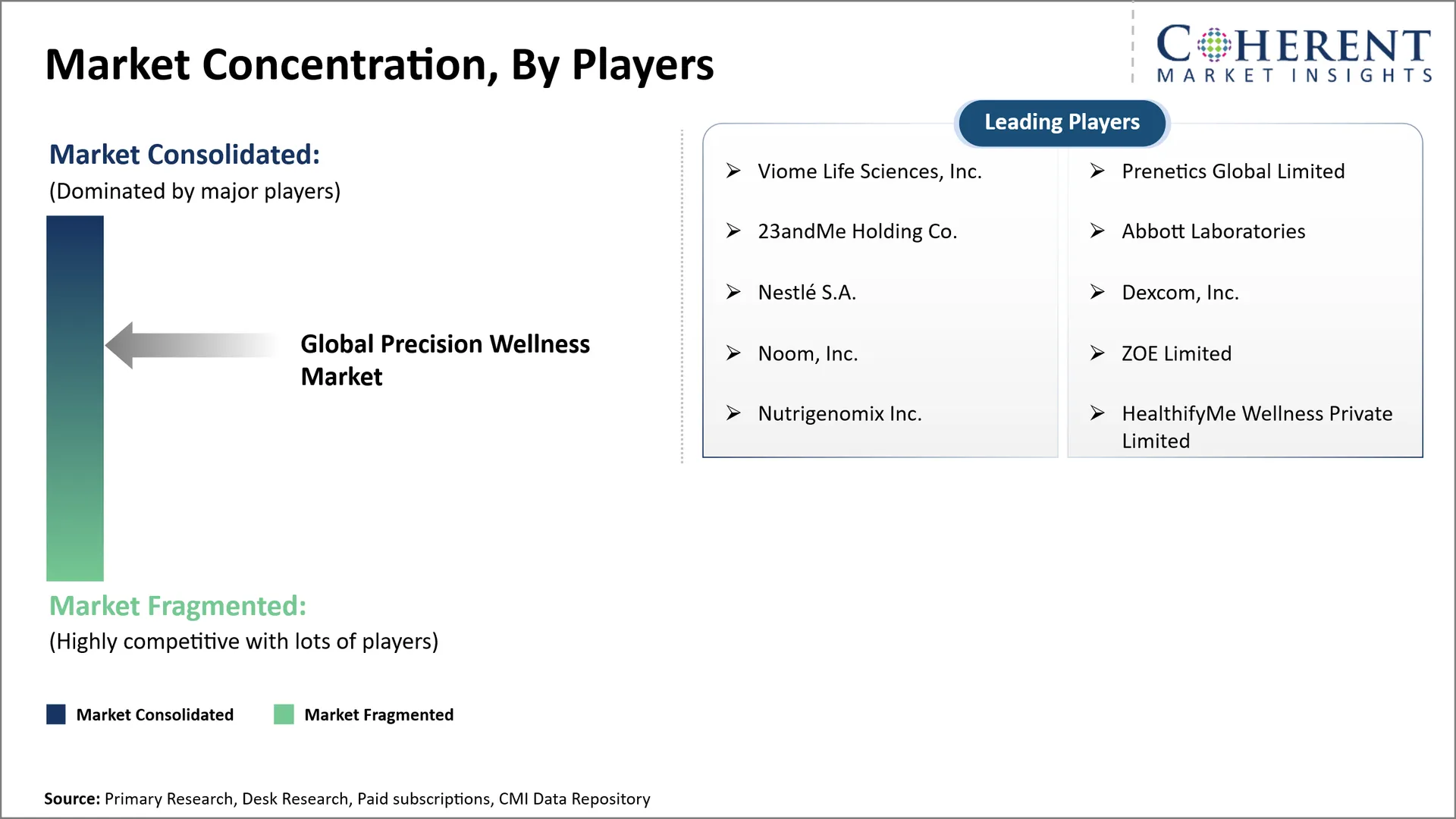
The global precision wellness market is evolving rapidly, with competition centered on personalized wellness recommendations, AI-driven health analytics, biomarker-based assessments, wearable health monitoring, and individualized nutrition and lifestyle optimization. Market participants are increasingly strengthening capabilities that integrate personal health data, wellness planning, and continuous progress monitoring to deliver tailored preventive health solutions. Key focus areas include:
- AI-powered wellness platforms for personalized health recommendations, nutrition planning, fitness optimization, and lifestyle management
- Integration of genomic, biomarker, microbiome, wearable, and behavioral data to develop individualized wellness strategies
- Predictive health analytics for early identification of potential health risks and optimization of preventive wellness interventions
- Personalized nutrition, supplements, and wellness programs tailored to individual physiological needs and health goals
- Integration of wearable devices, mobile health applications, and connected platforms for continuous health tracking and real-time feedback
- Digital wellness coaching and data-driven behavioral interventions to improve user engagement, adherence, and long-term health outcomes
Market Report Scope
Precision Wellness Market Report Coverage | |||
Report Coverage | Details | ||
Base Year | 2025 | Market Size in 2026: | USD 58.4 Bn |
Historical Data For: | 2020 To 2024 | Forecast Period: | 2026 To 2033 |
Forecast Period 2026 To 2033 CAGR: | 14.5% | 2033 Value Projection: | USD 150.7 Bn |
Geographies covered: |
| ||
Segments covered: |
| ||
Companies covered: | Viome Life Sciences, Inc., Prenetics Global Limited, 23andMe Holding Co, Abbott Laboratories, Nestlé S.A., Dexcom, Inc., Noom, Inc., ZOE Limited, Nutrigenomix Inc., HealthifyMe Wellness Private Limited | ||
Growth Drivers: |
| ||
Restraints & Challenges: |
| ||
Analyst Opinion (Expert Opinion)
- In the coming years, global precision wellness market will be shaped by the transition from generalized wellness programs toward data-driven, individualized health optimization. Advancements in AI, wearable technologies, biomarker analysis, and personalized nutrition are expected to enable more continuous and adaptive wellness experiences. Over time, platforms that integrate multiple sources of personal health data into practical, easy-to-follow recommendations are likely to gain a competitive advantage. However, long-term success will depend on demonstrating measurable wellness benefits, maintaining consumer trust, and making personalized solutions affordable and accessible.
- The maximum opportunities are foreseen within AI-enabled personalized nutrition and preventive wellness applications in the U.S. and India. In the U.S., premium wellness platforms combining biomarker testing, wearable data, nutrition planning, and digital coaching offer potential for higher-value consumer subscriptions. In India, mobile-first wellness platforms focused on personalized nutrition, metabolic health, fitness, and lifestyle management could benefit from a large consumer base and growing digital health engagement. Corporate wellness programs and partnerships with fitness centers, wellness clinics, and healthcare providers also offer opportunities to expand adoption beyond direct-to-consumer channels.
- In order to gain a competitive advantage market players should prioritize integrated wellness platforms that combine wearable, behavioral, and biomarker data while translating complex information into clear, actionable recommendations. Companies should invest in scientifically supported personalization, transparent data-governance practices, and measurable outcomes to strengthen consumer confidence and retention. Flexible subscription models, localized nutrition and lifestyle recommendations, and partnerships with employers, diagnostic providers, and fitness networks can improve accessibility and distribution. Players that balance personalization, scientific credibility, affordability, and user engagement are likely to be better positioned for sustainable growth.
Speak to the analyst
Want personalized insights?
Take the findings above to one of our principal consultants, or have the report rebuilt around the segments, geographies and competitors you actually track.
Market Segmentation
- Offering Insights (Revenue, USD Bn, 2021 - 2033)
- Personalized Wellness Platforms
- Wearable Devices and Health Monitoring Tools
- Genetic Testing and Analysis Services
- Personalized Nutrition and Supplementation
- Wellness Coaching and Consultation Services
- Others
- Technology Insights (Revenue, USD Bn, 2021 - 2033)
- Artificial Intelligence (AI) and Machine Learning
- Wearable and Connected Health Technologies
- Genomics and Biomarker Analysis
- Data Analytics and Predictive Modeling
- Digital Health Platforms
- Others
- Application Insights (Revenue, USD Bn, 2021 - 2033)
- Personalized Nutrition and Dietary Management
- Fitness and Physical Activity Optimization
- Sleep Monitoring and Optimization
- Stress Management and Mental Wellness
- Preventive Health and Risk Assessment
- Healthy Aging and Longevity
- Hormonal and Metabolic Health Management
- Others
- End User Insights (Revenue, USD Bn, 2021 - 2033)
- Individual Consumers
- Corporate Wellness Programs
- Healthcare Providers and Wellness Clinics
- Fitness Centers and Wellness Studios
- Employers and Organizations
- Others
- Distribution Channel Insights (Revenue, USD Bn, 2021 - 2033)
- Online Platforms and Mobile Applications
- Direct Sales
- Retail Stores and Specialty Wellness Centers
- Healthcare and Wellness Practitioners
- Others
- Regional Insights (Revenue, USD Bn, 2021 - 2033)
- North America
- U.S.
- Canada
- Latin America
- Brazil
- Argentina
- Mexico
- Rest of Latin America
- Europe
- Germany
- U.K.
- Spain
- France
- Italy
- Russia
- Rest of Europe
- Asia Pacific
- China
- India
- Japan
- Australia
- South Korea
- ASEAN
- Rest of Asia Pacific
- Middle East
- GCC Countries
- Israel
- Rest of Middle East
- Africa
- South Africa
- North Africa
- Central Africa
- North America
- Key Players Insights
- Viome Life Sciences, Inc.
- Prenetics Global Limited
- 23andMe Holding Co.
- Abbott Laboratories
- Nestlé S.A.
- Dexcom, Inc.
- Noom, Inc.
- ZOE Limited
- Nutrigenomix Inc.
- HealthifyMe Wellness Private Limited
Sources
Primary Research Interviews
- Precision Wellness Platform Executives and Product Leaders developing personalized wellness platforms, AI-driven recommendations, health-data integration, and individualized wellness services.
- Personalized Nutritionists and Wellness Practitioners designing tailored dietary plans, fitness programs, lifestyle interventions, and preventive wellness strategies.
- Genomics, Biomarker, and Microbiome Specialists interpreting genetic profiles, biological markers, and microbiome data for personalized wellness applications.
- AI/ML and Data Science Specialists developing predictive analytics, personalized recommendation engines, and AI-powered wellness applications.
- Wearable Technology and Digital Health Professionals developing connected health devices, biometric monitoring tools, mobile health applications, and real-time wellness tracking systems.
- Healthcare IT and Data Privacy Professionals managing health-data integration, interoperability, cybersecurity, and responsible use of personal health information.
Stakeholders
- Personalized Wellness Platform Providers delivering AI-powered health assessments, customized wellness plans, digital coaching, and individual progress tracking.
- Wearable Device and Consumer Health Technology Companies providing smartwatches, connected sensors, and biometric monitoring solutions.
- Genetic Testing and Diagnostic Laboratories offering genetic profiling, biomarker testing, and microbiome analysis relevant to personalized wellness.
- Nutrition, Supplement, and Personalized Diet Companies developing individualized nutrition plans and products based on consumer health needs and lifestyle goals.
- Corporate Wellness Providers and Employers implementing personalized employee wellness programs, health assessments, and digital lifestyle management solutions.
- Healthcare Providers, Wellness Clinics, and Fitness Centers incorporating personalized health assessments, nutrition guidance, and wellness monitoring into their services.
- End-use Sectors
- Individual Consumers
- Corporate Wellness Programs and Employers
- Healthcare Providers and Wellness Clinics
- Fitness Centers and Wellness Studios
- Diagnostic Laboratories and Genetic Testing Providers
- Nutrition and Supplementation Services
- Regulatory & Health Bodies
- U.S. Food and Drug Administration (FDA), U.S. — digital health technologies, general wellness products, medical-device oversight, and relevant regulatory guidance.
- Centers for Disease Control and Prevention (CDC), U.S. — precision health, disease prevention, health promotion, and genomic health resources.
- National Institutes of Health (NIH), U.S. — precision nutrition research, biomedical data, AI-enabled health research, and personalized health initiatives.
- Office of the National Coordinator for Health Information Technology (ONC), U.S. — health information technology, interoperability, and electronic health information exchange.
- European Medicines Agency (EMA), Europe — regulatory guidance for medicines and relevant digital-health developments where wellness technologies overlap with regulated medical products.
- World Health Organization (WHO) — digital health interventions, health-system implementation, and public-health guidance.
Databases
- ClinicalTrials.gov — clinical study registrations and results relevant to personalized nutrition, digital health interventions, wearables, and preventive health research.
- National Center for Biotechnology Information (NCBI) — genomic, molecular biology, microbiome, and biomedical research databases.
- CDC Genomics and Precision Health Database Resources — public-health genomics and precision-health information.
- FDA Digital Health Resources — regulatory information on digital health technologies, software, and relevant medical devices.
Associations
- Personalized Nutrition Association (PNA) — personalized nutrition, nutrition technology, and individualized dietary approaches.
- American Nutrition Association (ANA) — nutrition science, personalized nutrition, and nutrition-based health optimization.
- Consumer Technology Association (CTA) — consumer health technology, connected devices, digital health, and wearable technologies.
- Digital Therapeutics Alliance (DTA) — evidence-based digital health interventions and technology-enabled health management.
- American College of Lifestyle Medicine (ACLM) — evidence-based lifestyle interventions involving nutrition, physical activity, sleep, and behavioral health.
- HIMSS (Healthcare Information and Management Systems Society) — digital health, health information technology, interoperability, and healthcare data management.
Public Domain Sources
- U.S. Food and Drug Administration (FDA) — Digital Health Technologies.
- National Institutes of Health (NIH) — Nutrition for Precision Health.
- Centers for Disease Control and Prevention (CDC) — Precision Health: Predict and Prevent Disease.
- National Institute of Biomedical Imaging and Bioengineering (NIBIB) — Digital Health.
- World Health Organization (WHO) — Classification of Digital Interventions, Services and Applications in Health.
Proprietary Elements
- CMI Data Analytics Tool, Proprietary CMI Existing Repository of information for last 10 years.
Get access to 250+ pages report
Every segment, forecast, competitor profile and data table behind the analysis above — available for instant download.
- ESOMAR Member
- ISO 9001:2015 Certified
- D-U-N-S Registered
- GDPR & CCPA Compliant
Frequently Asked Questions
The global precision wellness market is estimated to be valued at USD 58.4 Bn in 2026 and is expected to reach USD 150.7 Bn by 2033.
Personalized wellness platforms dominate due to their ability to integrate individual health data and deliver tailored nutrition, fitness, and preventive wellness recommendations.
Precision wellness uses individual health data, biomarkers, genetics, and lifestyle insights to develop personalized strategies for optimizing health and preventing disease.
The CAGR of global precision wellness market is projected to be 14.5% from 2026 to 2033.
Rising consumer demand for personalized nutrition, fitness, sleep, and preventive health solutions, and increasing adoption of wearable devices and AI-driven health analytics for individualized wellness recommendations are the major factors driving the growth of the global precision wellness market.
High costs of genetic testing, biomarker analysis, and premium personalized wellness services, and data privacy concerns and risks associated with collecting sensitive personal health information are the major factors hampering the growth of the global precision wellness market.
In terms of technology, wearable and connected health technologies are estimated to dominate the market revenue share in 2026.