

Global Radiopharmaceuticals Market Size and Forecast – 2026 To 2033
The global radiopharmaceuticals market is expected to grow from USD 9,150.0 Mn in 2026 to USD 19,842.7 Mn by 2033, registering a compound annual growth rate (CAGR) of 11.7% from 2026 to 2033. The market for global radiopharmaceuticals is poised for significant expansion, fueled by the growing use of nuclear medicine for cancer diagnosis and targeted treatment, particularly through PET/SPECT imaging and radionuclide therapy.
According to the International Atomic Energy Agency (IAEA), technetium-99m is involved in approximately 85% of nuclear medicine diagnostic procedures worldwide, corresponding to around 50 million procedures annually. This extensive clinical utilization of radiopharmaceuticals for diagnostic imaging, particularly SPECT, supports sustained demand for nuclear medicine and contributes to market expansion.
Key Takeaways of the Global Radiopharmaceuticals Market
- Diagnostic radiopharmaceuticals are projected to hold 63.7% of the global radiopharmaceuticals market share in 2026, making it dominant type segment across Europe due to ongoing efforts to harmonize regulatory requirements for PET and other diagnostic radiopharmaceuticals. For instance, the European Medicines Agency (EMA) initiated revision of its radiopharmaceutical quality guideline in 2025, addressing quality, manufacturing, and control requirements for diagnostic radiopharmaceuticals across EU markets.
- Technetium-99m is projected to hold 33.8% of the global radiopharmaceuticals market share in 2026, making it dominant radioisotope segment across Asia Pacific due to the established regulatory framework governing nuclear medicine facilities and Tc-99m use. For instance, India's Atomic Energy Regulatory Board (AERB) specifically identifies Tc-99m among commonly used diagnostic radioisotopes and requires nuclear medicine facilities to obtain regulatory consent and comply with radiation-safety requirements.
- Oncology is projected to hold 51.8% of the global radiopharmaceuticals market share in 2026, making it dominant application segment across North America due to regulatory initiatives aimed at streamlining the use of radioactive materials in cancer diagnosis and treatment. For instance, in May 2026, the U.S. Nuclear Regulatory Commission (NRC) proposed updates to medical radioactive-material regulations, including streamlined licensing for cancer diagnostics and medical imaging while maintaining radiation-safety requirements.
- North America market maintains dominance with an expected share of 43.8% in 2026, bolstered by its mature regulatory infrastructure and established medical use of radioactive materials. For instance, in August 2026, the U.S. NRC held a public meeting on reducing barriers to medical-use licensing, reflecting ongoing regulatory efforts to facilitate nuclear medicine applications while maintaining radiation-safety requirements.
- Asia Pacific is expected to exhibit the fastest growth in the global radiopharmaceuticals market, registering an estimated CAGR of 16.8% during 2026–2033, driven by expanding regulatory capacity and radiopharmaceutical production capabilities. For instance, the IAEA's active Asia-Pacific technical-cooperation projects include strengthening radiation-safety infrastructure and improving the production and quality control of Tc-99m generators, Tc-99m kits, and I-131 radiopharmaceuticals.
Segmental Insights
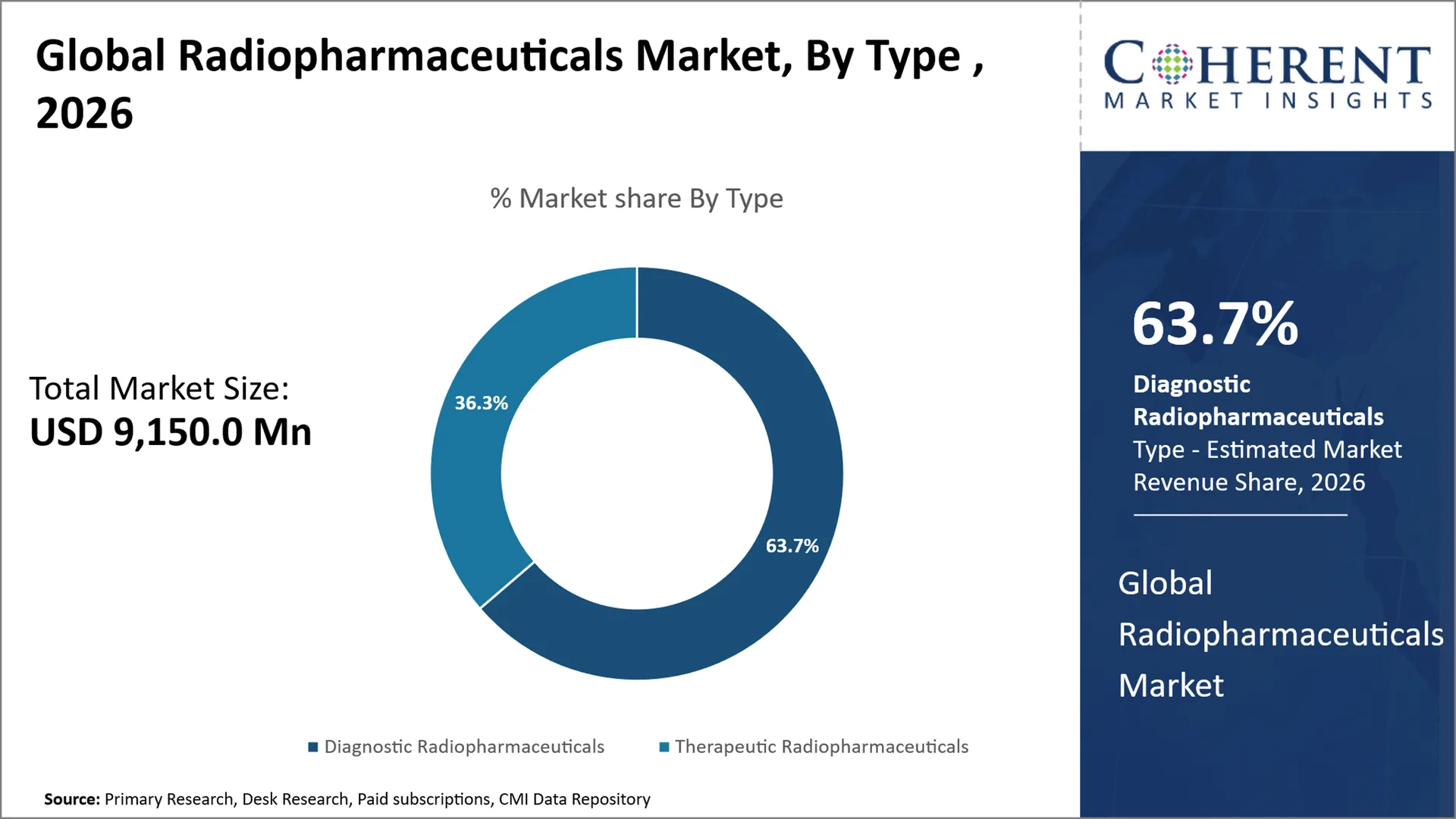
Why Do Diagnostic Radiopharmaceuticals Dominate the Global Radiopharmaceuticals Market?
Diagnostic radiopharmaceuticals are projected to hold the market share of 63.7% in 2026, attributed to rising awareness about noninvasive functional imaging, such as, positron emission tomography (PET) and single photon emission tomography (SPECT) for early disease detection, staging, and monitoring of treatment. Increasing incidence of cancer, cardiovascular, and neurological diseases, increased nuclear medicine facilities, and progress in specificity of radiotracer are expected to boost the market. For instance, in June 2026, the World Health Organization (WHO) and the International Atomic Energy Agency (IAEA) provided new guidance on "best practices for quality control during the preparation of in-house radiopharmaceuticals." The guidance updated practices for starting materials, finished products and radionuclides and improved quality-control procedures essential for the safe and reliable use of diagnostic radiopharmaceuticals in nuclear medicine.
- Current Industry Events of 2026
- Market Size Estimation
- Regional Breakdown
- Competitive Landscape
- Customer Intelligence
- Segmental Analysis
- Pricing Analysis
- Key Market Drivers, Challenges & Future Trends
- Customized Insights Section
Why Does Technetium-99m Represent the Largest Radioisotope Segment in the Radiopharmaceuticals Market?
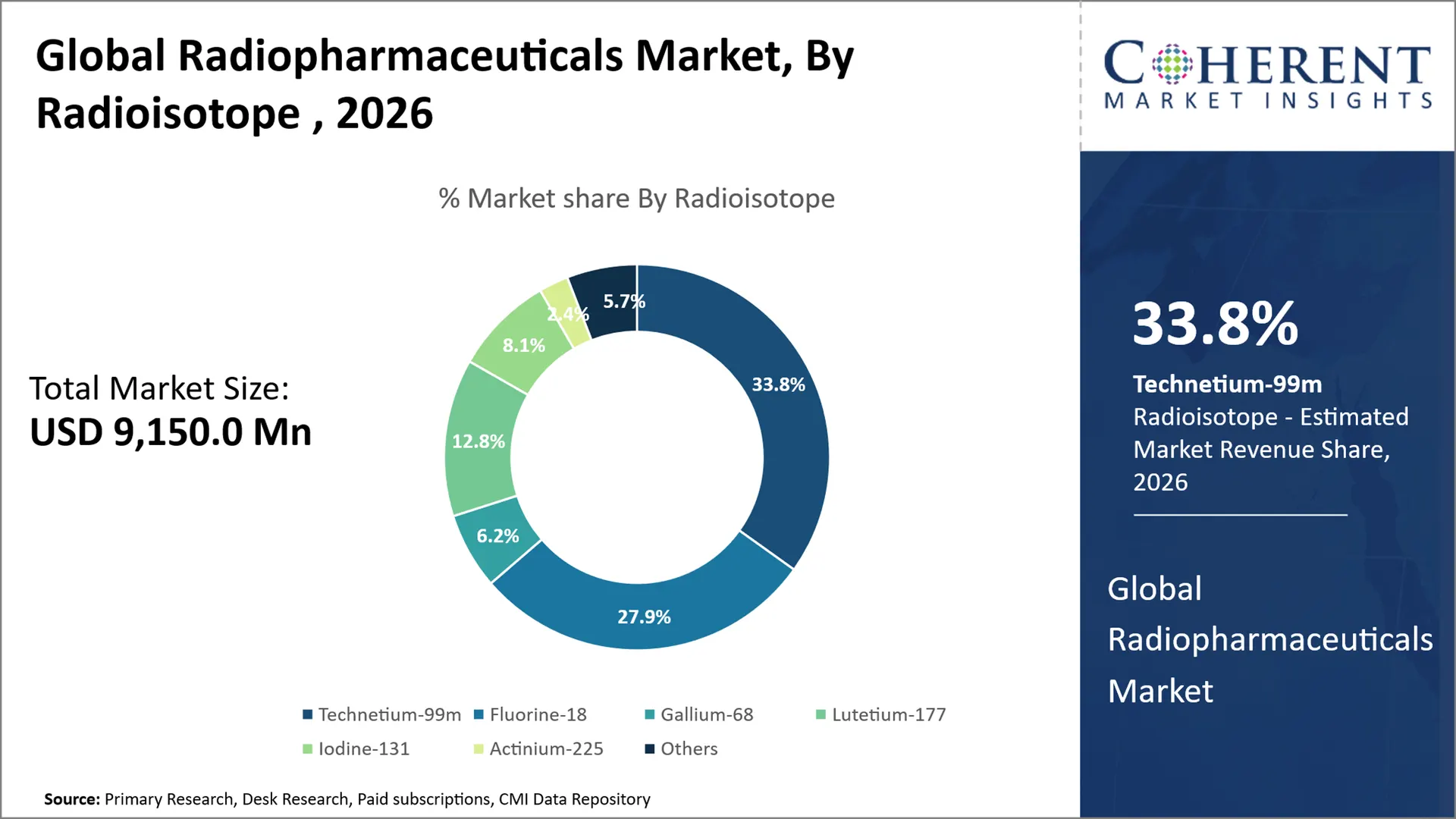
Technetium-99m is projected to hold a market share of 33.8% in 2026, because of its -half life, optimal imaging properties, its flexibility in diagnostic procedures and its mature Mo-99 and 99mTc generator facilities. Furthermore, the widespread use of 99mo in cardiac, bone, renal and many other SPECT scans will continue to lead the market. For instance, according to International Atomic Energy Agency (IAEA), Technetium-99m is the most common diagnostic radioisotope, accounting for almost 80 percent of all nuclear medicine procedures in the world and over 30 million procedures each year. This widespread clinical use of Tc-99m underscores its importance in diagnostic nuclear medicine.
Oncology Segment Dominates the Global Radiopharmaceuticals Market
The oncology segment is projected to hold a market share of 51.8% in 2026, owing to the rising number of cancer cases and growing use of radiopharmaceuticals in tumor imaging, staging, target selection, and targeted radionuclide therapy. The growing adoption of molecular imaging along with targeted oncology is expected to boost the demand for cancer-specific radiopharmaceuticals. For instance, according to the International Agency for Research on Cancer (IARC), global cancer incidence is anticipated to rise from 20.6 million new cases in 2024 to 34.4 million by 2050, a 67% increase, illustrating the expanding need for advanced oncology diagnostics and targeted radiopharmaceutical therapies.
Current Events and their Impact
Current Events | Description and its Impact |
U.K. Assesses Radiopharmaceutical Transport Amid Rising Nuclear Medicine Demand (September 2026) |
|
India Advances Domestic Production of Medical Radioisotopes (May 2026) |
|
U.K. Government Reviews Regulatory Framework for Medical Radioisotope Supply (April 2026) |
|
Radiopharmaceuticals Market Dynamics
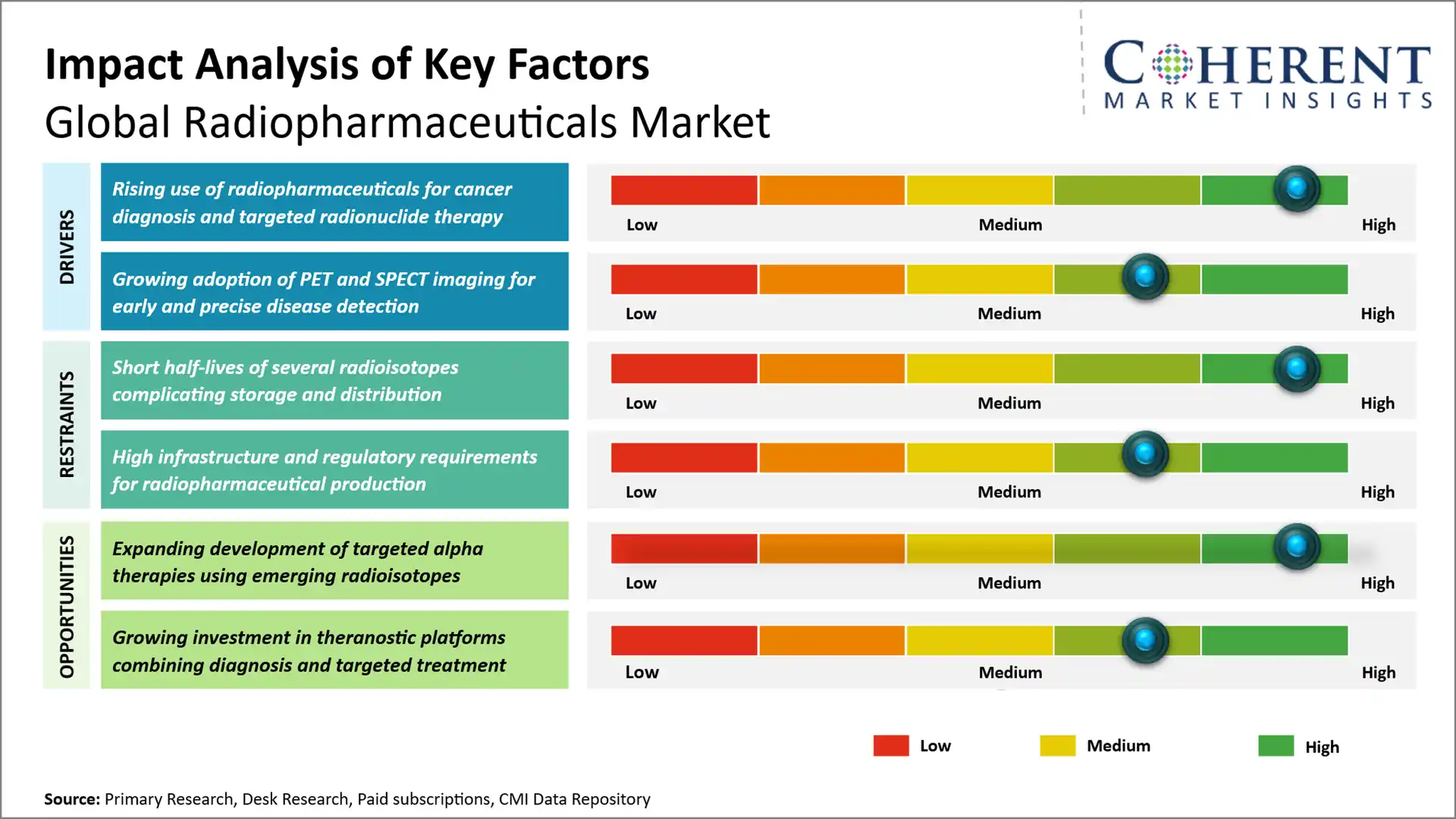
Market Drivers
- Rising use of radiopharmaceuticals for cancer diagnosis and targeted radionuclide therapy: The increasing use of radiopharmaceuticals in oncology is driven by their dual role in tumor visualization and targeted treatment, supporting more precise cancer management. PET-based radiopharmaceuticals enable identification of molecular targets, while therapeutic radionuclides can deliver radiation directly to cancer cells. Regulatory and clinical development activity is further strengthening adoption of radiopharmaceutical therapies. For instance, in March 2025, the U.S. FDA expanded the approved use of Pluvicto (lutetium-177) for certain patients with PSMA-positive metastatic castration-resistant prostate cancer. The decision further supports the integration of molecular imaging with targeted radionuclide therapy in oncology.
- Growing adoption of PET and SPECT imaging for early and precise disease detection: The growing adoption of PET and SPECT imaging is being supported by advances in disease-specific radiotracers that enable functional and molecular abnormalities to be identified more precisely than anatomical imaging alone. Their expanding use in oncology, cardiology, and neurology is strengthening the role of nuclear imaging in early diagnosis, disease staging, and treatment planning. For instance, in November 2025, the U.S. FDA cleared the PennPET Explorer Positron Emission Tomography, supporting continued deployment of advanced PET imaging systems for clinical applications.
- Expansion of emerging radionuclides for radiopharmaceutical development: The development of emerging radionuclides such as copper-67, scandium-47, and copper-64 is broadening the radiopharmaceutical pipeline beyond established isotopes. These radionuclides are being investigated for diagnostic, therapeutic, and theranostic applications, supporting the development of more targeted nuclear medicine approaches. For instance, the International Atomic Energy Agency (IAEA) has advanced research on emerging theranostic radionuclides, including copper-67 (Cu-67), rhenium-186 (Re-186), and scandium-47 (Sc-47), focusing on their production, quality control, and potential radiopharmaceutical applications.
Emerging Trends
- Growing adoption of theranostics: Theranostic radiopharmaceuticals are increasingly combining molecular imaging with targeted radionuclide therapy, enabling patient selection, treatment planning, and response assessment within integrated care pathways.
- Expansion of targeted alpha therapy: Development of alpha-emitting radioisotopes such as Actinium-225, Astatine-211, and Lead-212 is gaining momentum for precision cancer treatment due to their high-energy, localized radiation effects.
- Increasing use of personalized dosimetry: Imaging-based and patient-specific dosimetry is becoming increasingly important for optimizing administered activity and tailoring radiopharmaceutical therapy to individual patients, particularly in targeted radionuclide treatments.
Regional Insights
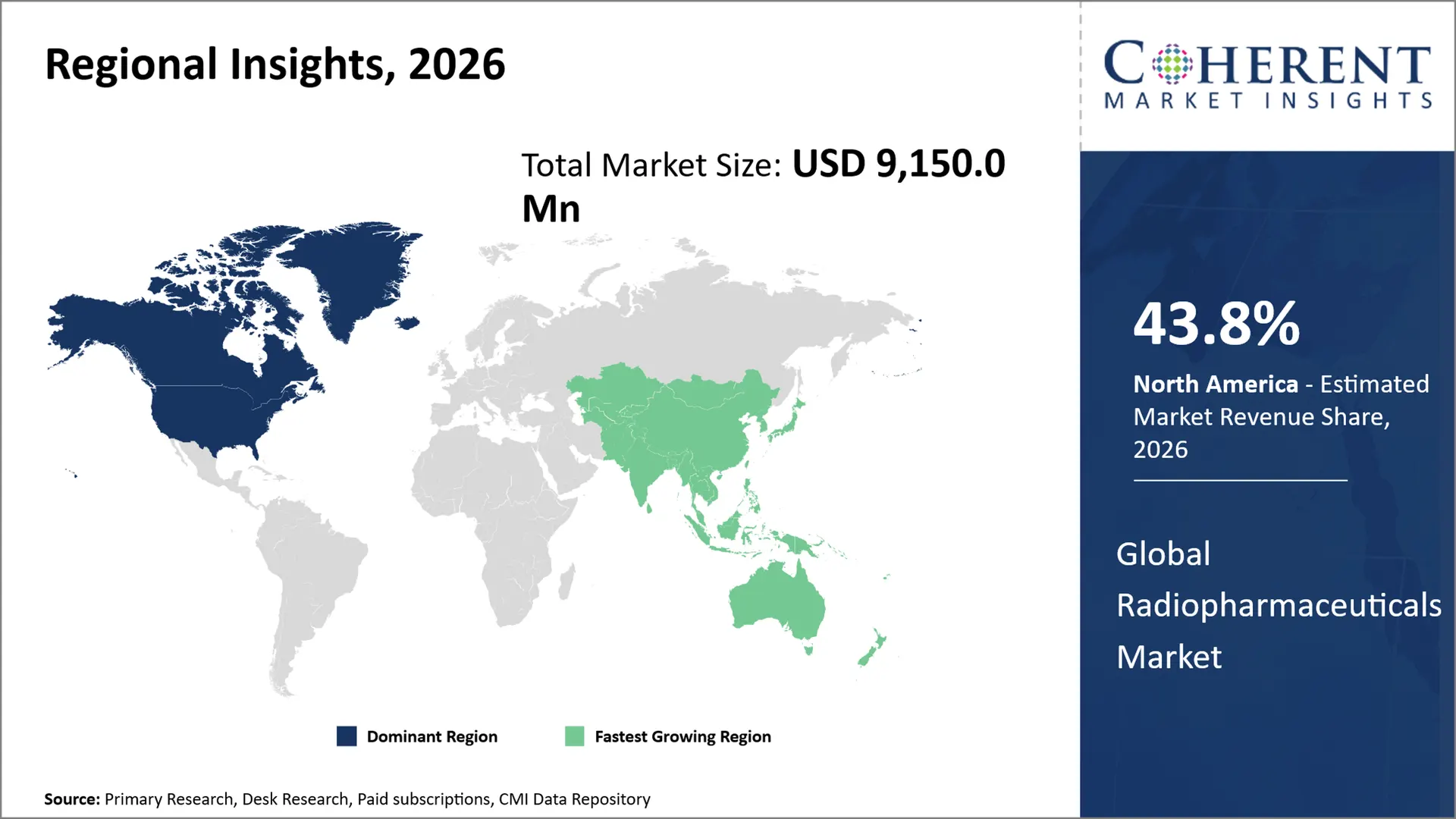
Why is North America a Strong Market for Radiopharmaceuticals?
North America leads the global radiopharmaceuticals market, accounting for an estimated 43.8% share in 2026, attributed to the well-established healthcare infrastructure, wide range of nuclear medicine applications, and high R&D capabilities. Besides, conducive government policies, substantial funding for nuclear medicine research, and the streamlined regulatory policies followed by the US Food and Drug Administration (FDA) seem to have worked in favor of the radiopharmaceutical development and clinical adoption.
For instance, the U.S government's implementation of the American Medical Isotopes Production Act of 2012 offers encouragement for the domestic production of key isotopes like Mo-99, while encouraging the transition away from producing isotopes by using highly enriched uranium. (Source: U.S. Department of Energy) Moreover, the collaboration among research centers, hospitals & healthcare organizations, and commercial players is presumed to further propel the market.
Why Does Asia Pacific Radiopharmaceuticals Market Exhibit High Growth?
Asia Pacific is expected to exhibit the fastest growth in the global radiopharmaceuticals market, registering an estimated CAGR of 16.8% during 2026–2033. The region is projected to account for approximately 21.4% of the global market in 2026, owing to the rising healthcare awareness, the growing nuclear medicine infrastructure, and government initiatives towards augmenting the diagnostic imaging infrastructure. For instance, on September 3, 2026, the Government of India inaugurated PET-CT and SPECT-CT at Vardhman Mahavir Medical College (VMMC) and Safdarjung Hospital, widening the availability of advanced nuclear medicine imaging for cancer, cardiovascular and neurological diseases. (Source: Press Information Bureau)
Furthermore, the increasing investments in the radiopharmaceutical production facilities, cyclotron centers, and nuclear medicine pet/SPECT services may be strengthening the market in the region. Moreover, the high incidences of oncological and cardiovascular diseases and the rising adoption of personalized medicine are expected to create a greater demand for radiopharmaceuticals.
Global Radiopharmaceuticals Market Outlook for Key Countries
Why is the U.S. Leading Innovation and Adoption in the Radiopharmaceuticals Market?
The U.S. radiopharmaceuticals market is likely to be advantageous due to the established positron emission tomography (PET) radiotracer manufacturing infrastructure and Food and Drug Administration (FDA) regulations for PET drug manufacturing. Additionally, federal isotope research initiatives seem to accelerate the development of emerging therapeutic radionuclides including actinium-225, and the domestic molybdenum-99 (Mo-99) programs seek to increase availability of Tc-99m for diagnostic imaging. The synergy between nuclear pharmacies, specialty manufacturing facilities and clinical research sites indicate an environment for the development and utilization of diagnostic and therapeutic radiopharmaceuticals.
Is Japan a Favorable Market for Radiopharmaceuticals Market?
Japan market is promising for radiopharmaceuticals with established nuclear medicine capability as government is giving importance to improving local supply of medical isotopes and country is in early stage of development for theranostics. PMDA has given specific clinical development guidance document for PSMA-PET and therapeutic radiopharmaceuticals. Japan's project on development of domestic Mo-99/Tc-99m production will certainly facilitate long term market development.
Is China Emerging as a Key Growth Hub for the Radiopharmaceuticals Market?
China is becoming a potential growth center for radiopharmaceuticals with rapid growth of nuclear medicine, and the government’s roadmap for medical isotope/radiopharmaceutical development. Additionally, radiopharmaceuticals have been selected as a drug class for priority review by NMPA, which is expected to provide a more accommodating regulatory pathway for innovation.
Why Does Germany Top the European Radiopharmaceuticals Market?
Germany's strong radiopharmaceuticals market is probably underpinned by a well-developed nuclear medicine infrastructure and high concentration of radionuclide-production capabilities. Germany has 32 medical cyclotrons for nuclear medicine and radio pharmacy, the highest number among European countries, allowing for the domestic production of PET radionuclides and radiotracers. Furthermore, country's academic and clinical radiopharmaceutical research programs enable new tracers to become a part of standard nuclear medicine.
Is Radiopharmaceuticals Market Developing in France?
France is emerging as a strong market for radiopharmaceuticals, owing to its expanding domestic radionuclide infrastructure and nuclear medicine industry. According to global data for 2024, France had 34 cyclotrons, 27 of which could produce radiopharmaceuticals for in vivo diagnosis, with other sites being licensed. The country is further expanding its strength of emerging radionuclides such as copper-64 and zirconium-89 which could provide opportunities for clinical research and for the next-generation radiopharmaceuticals.
Key Radionuclides Used in Radiopharmaceuticals by Radiation Type and Clinical Application
Radiation Type | Key Radionuclides | Typical Production Method | Major Clinical Application |
PET / β+ emitters | F-18, Ga-68, C-11, N-13, Cu-64 | Cyclotron / Generator | PET imaging, oncology, neurology, cardiology |
SPECT / γ emitters | Tc-99m, I-123, In-111, Ga-67 | Reactor / Generator | Diagnostic imaging |
β− emitters | Lu-177, Y-90, I-131, Sr-89 | Reactor / Generator | Targeted radionuclide therapy |
α emitters | Ac-225, Ra-223, At-211, Th-227 | Reactor / Accelerator / Generator | Targeted alpha therapy |
Theranostic radionuclides | Ga-68/Lu-177, Cu-64/Cu-67 | Cyclotron / Reactor / Generator | Diagnosis + targeted therapy |
How is the expanding development of targeted alpha therapies using emerging radioisotopes creating new growth opportunities in the radiopharmaceuticals market?
Targeted alpha therapies (TATs) are strengthening the radiopharmaceuticals pipeline by employing the combination of potent alpha-emitting radionuclides with targeted molecules. Actinium-225 (Ac-225) is garnering substantial interest because it targets radiation to cancer cells in a highly localized fashion and spares those receiving the treatment from a high exposure to radiation. Clinical trials are also broadening the use of Ac-225 to treat solid tumors and hematological cancers beyond prostate cancer. For instance, in November 2025, a multicenter Phase 1b trial began testing [Ac]Ac-A9-3408, a targeted alpha therapy for unresectable or metastatic melanoma. The trial was focused on safety and tumours burden reduction, reflecting the first ever application of Ac-225 therapy into solid tumours. (Source: National Library of Medicine)
Market Players, Key Development, and Competitive Landscape
Key Developments
- On September 9, 2026, Ratio Therapeutics and RayzeBio entered into a research collaboration and license agreement to advance a novel radiopharmaceutical program targeting two undisclosed cancer targets. The collaboration combines discovery, translational, and radiopharmaceutical expertise to develop and optimize a next-generation therapeutic candidate, supporting innovation in targeted radiopharmaceutical treatments.
- In August 2026, Curium and Lantheus entered into a definitive agreement to merge, combining Curium’s theranostics portfolio and global manufacturing platform with Lantheus’ U.S. radio diagnostics business. The transaction is expected to create a radiopharmaceutical company spanning isotope production, manufacturing, diagnostic imaging, and targeted radionuclide therapy across multiple therapeutic areas.
- In August 2026, Moffitt Cancer Center and Speros launched the Moffitt Radiopharmaceutical Program to accelerate radiopharmaceutical research, clinical translation, clinical trials, and manufacturing. The initiative will support theranostics, radioisotope production, and strategic partnerships, strengthening infrastructure for next-generation radiopharmaceutical development.
- In March 2026, Aptamer Group launched a targeted radiopharmaceutical program with Radiopharmium to develop radioligand therapies against selected therapeutic targets. The program includes radioligand development, preclinical validation, and plans to advance multiple radiotherapy assets, supporting innovation in targeted radiopharmaceutical treatments.
Competitive Landscape
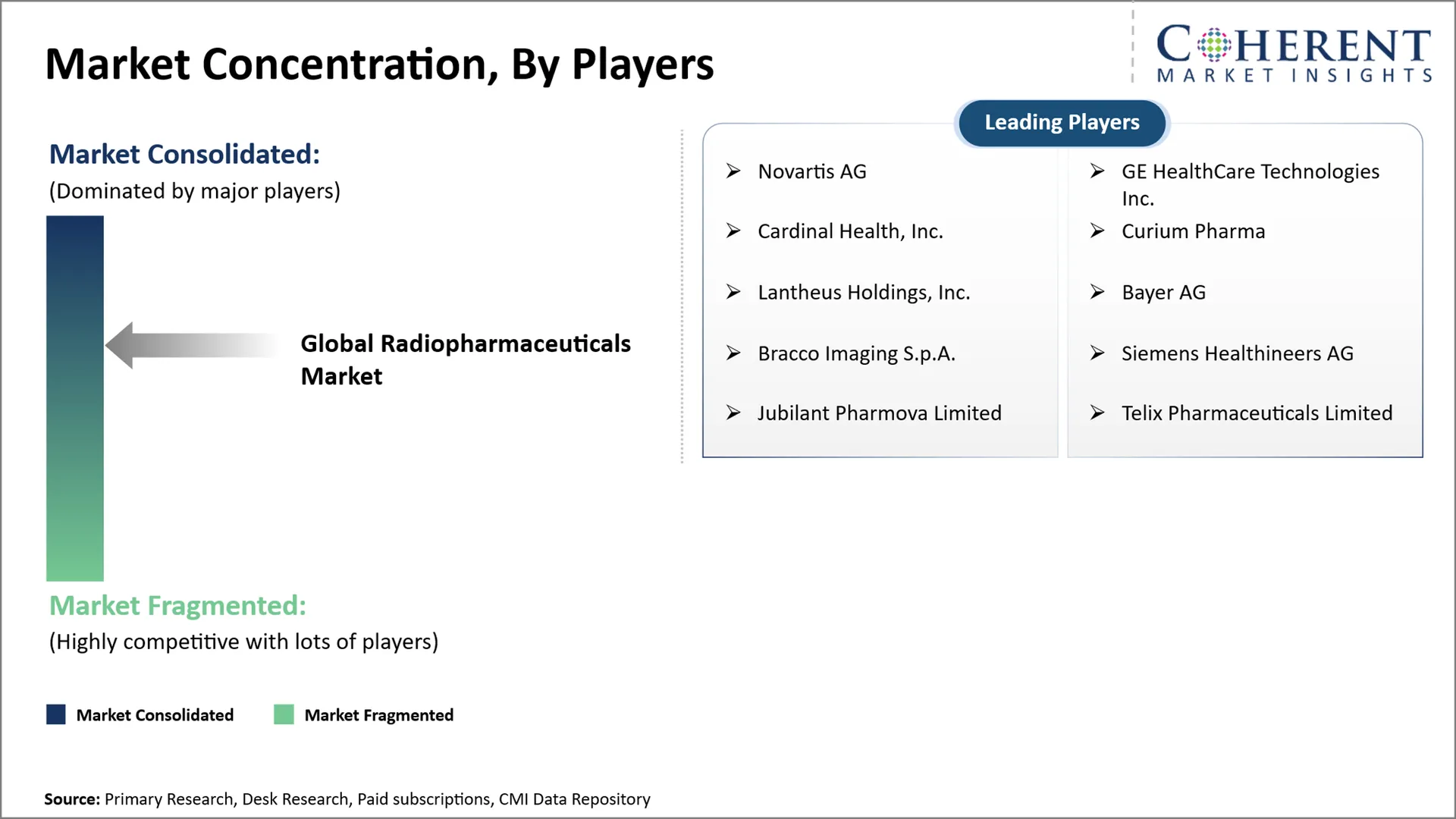
The global radiopharmaceuticals market is moderately competitive, with market dynamics shaped by advances in targeted radionuclide therapy, theranostics, radioisotope production, and radiopharmaceutical manufacturing capabilities. Market participants are increasingly focusing on expanding therapeutic pipelines, securing reliable isotope supplies, strengthening clinical development capabilities, and establishing integrated production and distribution networks. Key focus areas include:
- Development of next-generation radiopharmaceuticals for targeted radionuclide therapy and theranostic applications
- Expansion of radiopharmaceutical manufacturing and radioisotope production capabilities to strengthen supply reliability
- Advancement of alpha- and beta-emitting radiopharmaceuticals for targeted treatment of cancer
- Integration of diagnostic and therapeutic radiopharmaceutical platforms to enable personalized theranostic treatment pathways
- Strategic collaborations, licensing agreements, and acquisitions to accelerate radiopharmaceutical development, clinical translation, and commercial expansion
Market Report Scope
Radiopharmaceuticals Market Report Coverage | |||
Report Coverage | Details | ||
Base Year | 2025 | Market Size in 2026: | USD 9,150.0 Mn |
Historical Data For: | 2020 To 2024 | Forecast Period: | 2026 To 2033 |
Forecast Period 2026 To 2033 CAGR: | 11.7% | 2033 Value Projection: | USD 19,842.7 Mn |
Geographies covered: |
| ||
Segments covered: |
| ||
Companies covered: | Novartis AG, GE HealthCare Technologies Inc., Cardinal Health, Inc., Curium Pharma, Lantheus Holdings, Inc., Bayer AG, Bracco Imaging S.p.A., Siemens Healthineers AG, Jubilant Pharmova Limited, Telix Pharmaceuticals Limited | ||
Growth Drivers: |
| ||
Restraints & Challenges: |
| ||
Analyst Opinion (Expert Opinion)
- In the coming years, global radiopharmaceuticals market is expected to move from conventional diagnostic applications toward integrated theranostic platforms that combine patient selection, molecular imaging, and targeted radionuclide therapy. Greater use of emerging alpha- and beta-emitting isotopes, improved radioligand design, and localized manufacturing capabilities is expected to expand treatment options and strengthen the role of radiopharmaceuticals in precision oncology.
- The maximum opportunities are foreseen within therapeutic radiopharmaceuticals for oncology in the U.S., where demand for targeted cancer treatments can support continued development of radioligand therapies, theranostic approaches, and next-generation radioisotopes. The opportunity extends across both development and commercialization as the therapeutic pipeline becomes broader and more diversified
- In order to gain a competitive advantage market players should prioritize secure isotope supply, scalable manufacturing, and differentiated therapeutic pipelines rather than relying solely on individual products. Building capabilities across radioisotope sourcing, radioligand development, clinical translation, and distribution can improve operational resilience. Strategic partnerships can also help companies accelerate development while expanding access to specialized infrastructure and technical expertise.
Speak to the analyst
Want personalized insights?
Take the findings above to one of our principal consultants, or have the report rebuilt around the segments, geographies and competitors you actually track.
Market Segmentation
- Type Insights (Revenue, USD Mn, 2021 - 2033)
- Diagnostic Radiopharmaceuticals
- Therapeutic Radiopharmaceuticals
- Radioisotope Insights (Revenue, USD Mn, 2021 - 2033)
- Technetium-99m
- Fluorine-18
- Gallium-68
- Lutetium-177
- Iodine-131
- Actinium-225
- Others
- Application Technique Insights (Revenue, USD Mn, 2021 - 2033)
- Oncology
- Cardiology
- Neurology
- Others
- End User Insights (Revenue, USD Mn, 2021 - 2033)
- Hospitals and Clinics
- Diagnostic Imaging Centers
- Nuclear Medicine Centers
- Academic and Research Institutes
- Others
- Regional Insights (Revenue, USD Mn, 2021 - 2033)
- North America
- U.S.
- Canada
- Latin America
- Brazil
- Argentina
- Mexico
- Rest of Latin America
- Europe
- Germany
- U.K.
- Spain
- France
- Italy
- Russia
- Rest of Europe
- Asia Pacific
- China
- India
- Japan
- Australia
- South Korea
- ASEAN
- Rest of Asia Pacific
- Middle East
- GCC Countries
- Israel
- Rest of Middle East
- Africa
- South Africa
- North Africa
- Central Africa
- North America
- Key Players Insights
- Novartis AG
- GE HealthCare Technologies Inc.
- Cardinal Health, Inc.
- Curium Pharma
- Lantheus Holdings, Inc.
- Bayer AG
- Bracco Imaging S.p.A.
- Siemens Healthineers AG
- Jubilant Pharmova Limited
- Telix Pharmaceuticals Limited
Sources
Primary Research Interviews
- Nuclear medicine physicians specializing in diagnostic imaging and targeted radionuclide therapy
- Nuclear medicine department heads and radio pharmacy decision-makers
- Radio pharmacists and medical physicists involved in radiopharmaceutical preparation and administration
- Radiochemists and isotope-production specialists involved in radioisotope development and radiopharmaceutical manufacturing
- Clinical research and drug-development specialists involved in radiopharmaceutical trials and theranostic applications
Stakeholders
- Radiopharmaceutical manufacturers and radioligand therapy developers
- Radioisotope producers, cyclotron operators, and nuclear reactor facilities
- Radio pharmacy and radiopharmaceutical distribution providers
- Hospitals, nuclear medicine centers, and diagnostic imaging facilities
- Contract development and manufacturing organizations supporting radiopharmaceutical production
- End-use Sectors
- Hospitals and Clinics
- Diagnostic Imaging Centers
- Nuclear Medicine Centers
- Academic and Research Institutes
- Specialty Oncology Centers
- Other Healthcare Facilities
- Regulatory & Health Bodies
- U.S. Food and Drug Administration (FDA) – radiopharmaceutical approvals, quality and manufacturing requirements
- European Medicines Agency (EMA) – radiopharmaceutical development, quality, and marketing authorization guidance
- International Atomic Energy Agency (IAEA) – nuclear medicine, radiopharmacy, radioisotope production, and radiation safety
- World Health Organization (WHO) – radiopharmaceutical quality, safety, and pharmaceutical standards
- Nuclear Regulatory Commission (NRC), U.S. – radioactive materials licensing and radiation safety
- Medicines and Healthcare products Regulatory Agency (MHRA), UK – medicines regulation and radiopharmaceutical requirements
Databases
- IAEA Nuclear Medicine Database (NUMDAB) – nuclear medicine facilities, equipment, personnel, isotopes, and radiopharmaceutical use
- IAEA IMAGINE Database – global medical imaging and nuclear medicine resources
- FDA Drugs@FDA – approved radiopharmaceutical products and regulatory information
- ClinicalTrials.gov – clinical trials involving radiopharmaceuticals and targeted radionuclide therapies
- EU Clinical Trials Information System (CTIS) – European clinical-trial information
- WHO Medicines and Health Products Databases – pharmaceutical and health-product information
Journals
- Journal of Nuclear Medicine
- European Journal of Nuclear Medicine and Molecular Imaging
- Nuclear Medicine and Biology
- Journal of Nuclear Medicine Technology
- EJNMMI Radiopharmacy and Chemistry
- Theranostics
Associations
- Society of Nuclear Medicine and Molecular Imaging (SNMMI)
- European Association of Nuclear Medicine (EANM)
- World Federation of Nuclear Medicine and Biology (WFNMB)
- American College of Nuclear Physicians (ACNP)
- International Organization for Medical Physics (IOMP)
Public Domain Sources
- U.S. Food and Drug Administration (FDA) – radiopharmaceutical approvals, safety, and regulatory guidance
- International Atomic Energy Agency (IAEA) – nuclear medicine, radiopharmacy, radioisotope production, and supply information
- World Health Organization (WHO) – radiopharmaceutical quality and pharmaceutical standards
- European Medicines Agency (EMA) – radiopharmaceutical guidelines and regulatory information
- U.S. Nuclear Regulatory Commission (NRC) – radioactive materials licensing and radiation-safety information
- National Institutes of Health (NIH) – nuclear medicine and radiopharmaceutical research information
- ClinicalTrials.gov – radiopharmaceutical clinical-trial records
- U.S. Department of Energy (DOE) – medical radioisotope production and supply information
Proprietary Elements
- CMI Data Analytics Tool, Proprietary CMI Existing Repository of information for last 10 years.
Get access to 250+ pages report
Every segment, forecast, competitor profile and data table behind the analysis above — available for instant download.
- ESOMAR Member
- ISO 9001:2015 Certified
- D-U-N-S Registered
- GDPR & CCPA Compliant
Missing comfort of reading report in your local language? Find your preferred language:
Frequently Asked Questions
The global radiopharmaceuticals market is estimated to be valued at USD 9,150.0 Mn in 2026 and is expected to reach USD 19,842.7 Mn by 2033.
Diagnostic radiopharmaceuticals dominate due to their widespread use in PET and SPECT imaging for disease detection, diagnosis, and treatment planning.
Radiopharmaceuticals are radioactive medicinal compounds used to visualize biological processes or deliver targeted radiation to diseased tissues for diagnosis and treatment
The CAGR of global radiopharmaceuticals market is projected to be 11.7% from 2026 to 2033.
Rising use of radiopharmaceuticals for cancer diagnosis and targeted radionuclide therapy, and growing adoption of PET and SPECT imaging for early and precise disease detection are the major factors driving the growth of the global radiopharmaceuticals market.
Short half-lives of several radioisotopes complicating storage and distribution, and high infrastructure and regulatory requirements for radiopharmaceutical production are the major factors hampering the growth of the global radiopharmaceuticals market.
In terms of end user, hospitals and clinics are estimated to dominate the market revenue share in 2026.