

Sickle Cell Anemia Testing and Screening Market Size and Forecast — 2026-2033
The global sickle cell anemia testing and screening market is estimated to be valued at USD 586.7 Mn in 2026 and is expected to reach USD 1,183.1 Mn by 2033, exhibiting a compound annual growth rate (CAGR) of 12.4% from 2026 to 2033.
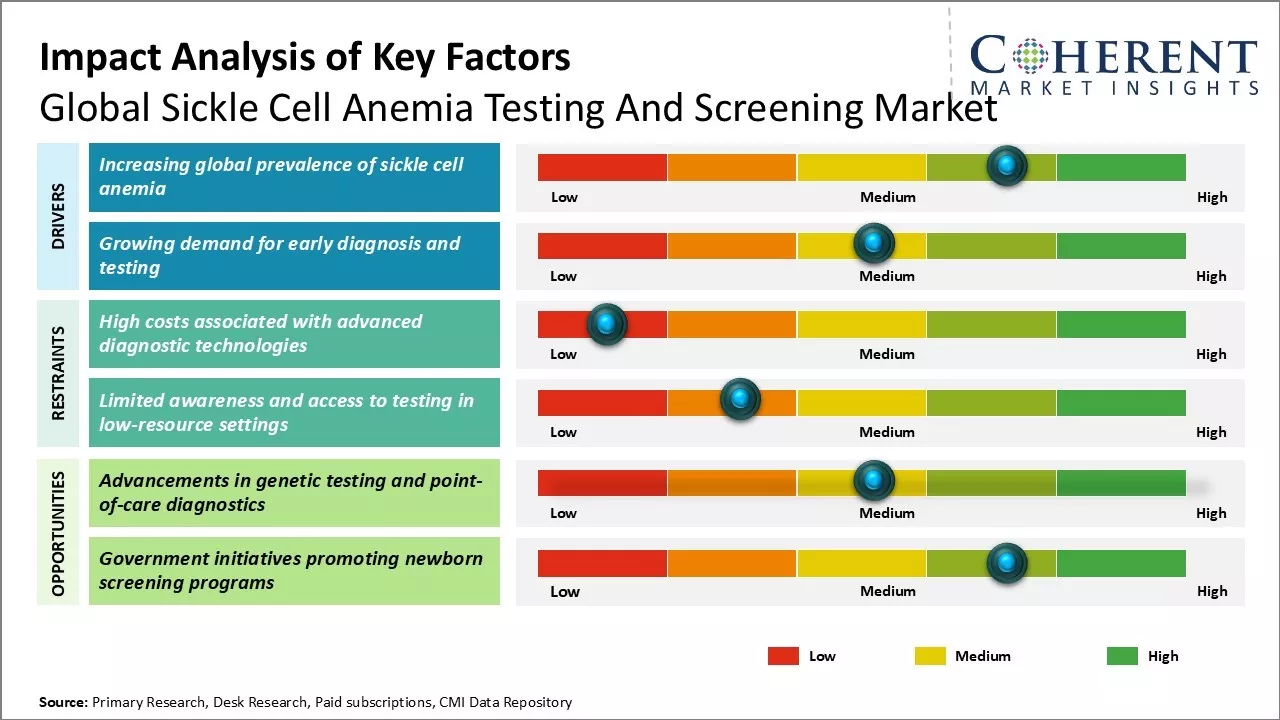
The increasing prevalence of sickle cell anemia globally primarily drives the market growth. Various players in the market like PerkinElmer, Inc. are focusing on new product launches, especially Point-of-Care (POC) testing kits for sickle cell screening. This is expected to boost the market growth over the forecast period.
Insights by Testing Method
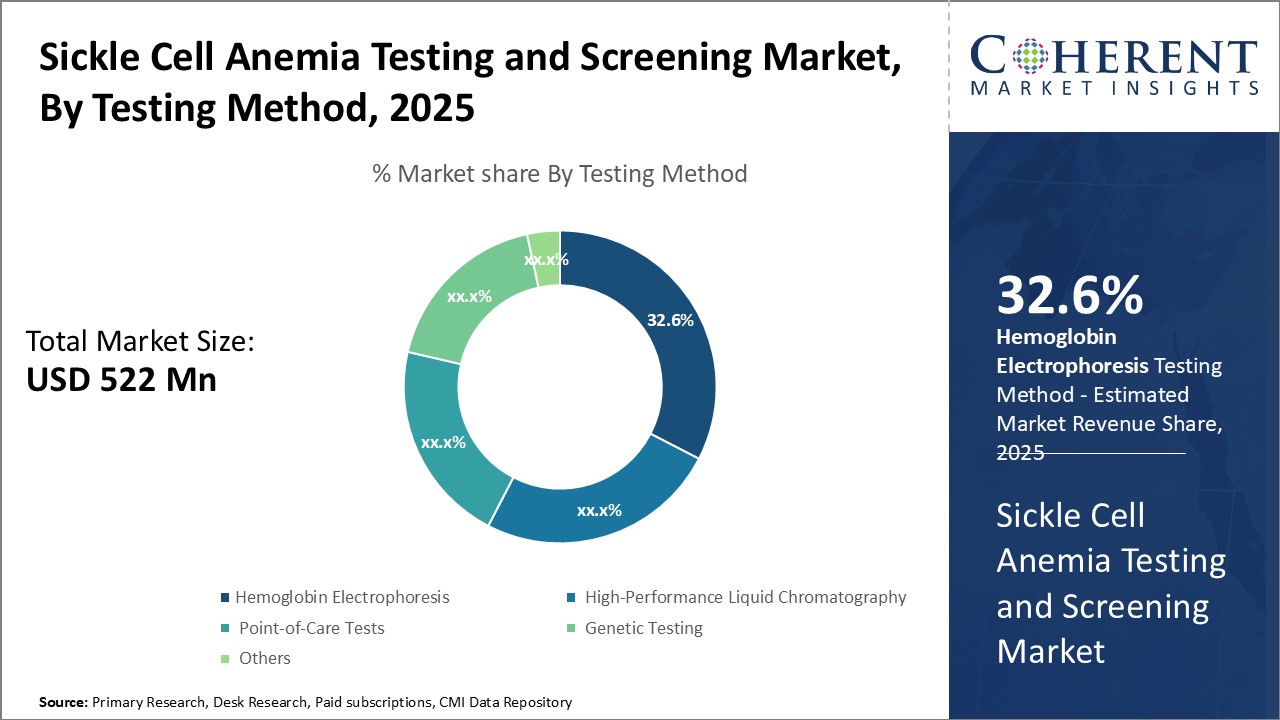
Insights by Testing Method : Hemoglobin electrophoresis segment dominates due to its high accuracy
Hemoglobin electrophoresis segment is expected to lead the market with a share of 33.6% in 2026 due to its high accuracy in identifying hemoglobin variants like S, C, and D. This method separates hemoglobin based on charge and size, allowing precise detection of sickle cell disease and other hemoglobinopathies. Its clear electrophoretic patterns facilitate easy interpretation, making it the gold standard for sickle cell screening and diagnosis globally.
Insights by Age Group:
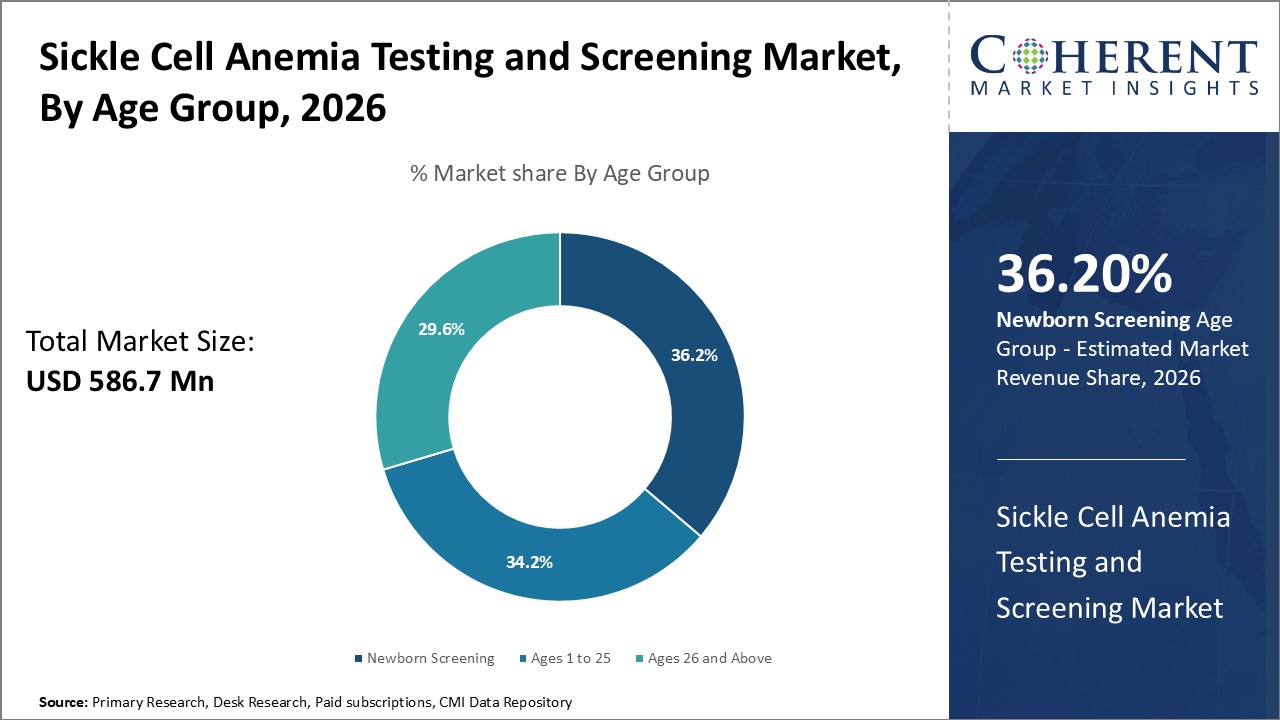
Insights by Age Group: Emphasis on early diagnosis boosts the newborn screening segment growth
Newborn screening segment is expected to hold the largest market share of 36.20% in 2026, emphasizing early detection of sickle cell disease before symptoms emerge. Identifying the condition in the first days of life enables timely intervention, improving health outcomes, and reducing mortality rates. Parental awareness and state-mandated screening policies further drive the adoption of newborn screening programs worldwide.
Insights by Sector:
Insights by Sector: Mass screening boosts the government labs’ segment growth
Government labs segment is expected to dominate with a market share of 42% in 2026, driven by public health initiatives and regulations prioritizing population-wide sickle cell screening. These labs provide free or low-cost services, especially for low-income households, ensuring uniform quality and coverage. Their widespread presence and centralized efforts make them the backbone of global sickle cell screening programs.
Regional Insights
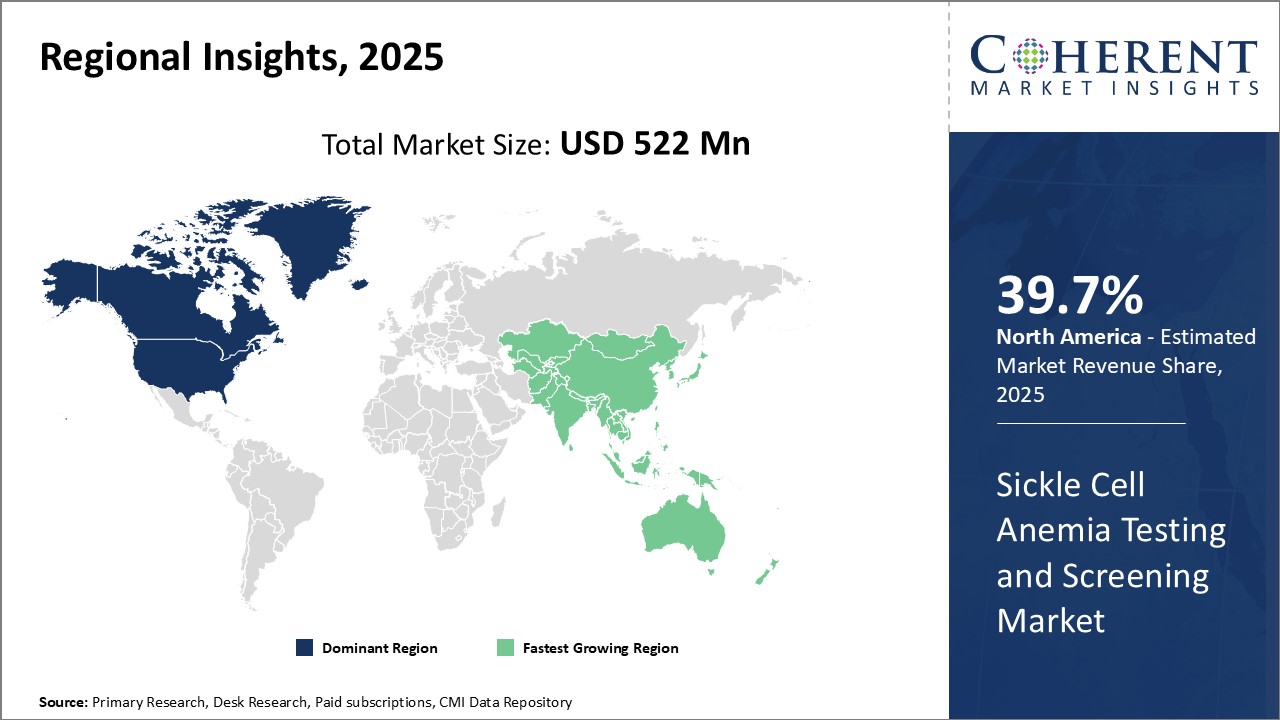
Dominating Region: North America
North America dominates the sickle cell anemia testing and screening market with a share of 39.7% in 2026. This can be attributed to the strong presence of leading diagnostic companies and advanced healthcare infrastructure. Government initiatives to spread awareness about sickle cell disease and promote early detection have boosted the market growth.
Fastest-Growing Region: Asia Pacific
The Asia Pacific region exhibits the fastest growth due to large patient population and rising healthcare expenditure. Developing economies are increasingly investing in healthcare facilities and empowering local diagnostic startups through collaborations and funding.
Sickle Cell Anemia Testing And Screening Market Outlook for Key Regions
Pioneering Sickle Cell Screening Initiatives in the U.S.
The U.S. leads in sickle cell anemia testing due to robust healthcare infrastructure and mandatory newborn screening programs. For instance, in March 2026, the Centers for Disease Control and Prevention (CDC) reported that over 90.5% of newborns are screened for sickle cell disease, significantly improving early diagnosis and management.
Expanding Access to Testing in Canada
Canada sickle cell testing market is growing, driven by increased awareness and government support for screening programs. In 2020, the Canadian Hematology Society noted a rise in sickle cell disease awareness campaigns, enhancing access to diagnostic services. For instance, in September 2023, approximately 1 in 2,500 to 1 in 5,000 individuals in Canada are affected by sickle cell disease, with a higher prevalence among individuals of African, the Caribbean, and Middle Eastern descent.
Rising Prevalence of Sickle Cell Disease in Japan Amid Globalization
Globalization and increased migration have introduced greater genetic diversity, leading to a rise in sickle cell anemia cases. According to the National Institutes of Health Report, as of May 2024, the prevalence of sickle cell disease in Japan remains relatively low compared to other countries but is increasing due to these factors. This report suggests that approximately 1,000 individuals are living with sickle cell disease in Japan.
Rapid Growth in Screening Programs in China
China's expanding healthcare infrastructure supports the growth of the sickle cell anemia testing and screening market, with increased government funding for genetic research noted in recent years. The prevalence of sickle cell disease is rising, necessitating improved screening methods.
Targeting High-Prevalence Areas in India
India's sickle cell anemia testing and screening market growth is driven by government initiatives targeting sickle cell disease in tribal populations. For instance, according to Press Information Bureau, the Government of India's National Sickle Cell Anaemia Elimination Mission, launched in July 2023, aims to eradicate sickle cell disease (SCD) as a public health issue by 2047. The initiative focuses on screening approximately 70 million individuals aged 0 to 40 years across 278 districts in 17 states, including Maharashtra, over three years.
Market Players, Key Development, and Competitive Intelligence
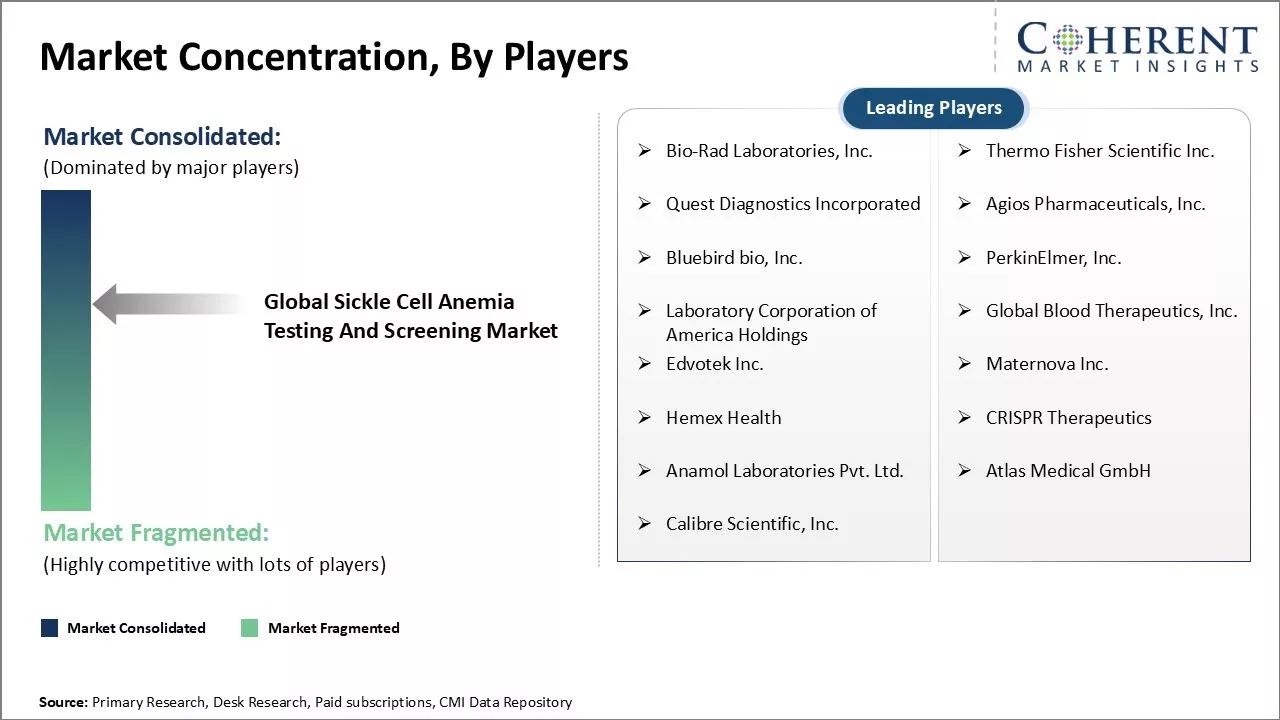
Top Strategies followed by Sickle Cell Anemia Testing and Screening Market
- Established Players: Leading companies in the global sickle cell anemia testing and screening market extensively focus on research and development to innovate high-performance products. For instance, Abbott Laboratories invested over US$ 1 billion in R&D last year to launch cutting-edge diagnostics tools and tests with improved accuracy and faster turnaround times. Thermo Fisher Scientific similarly spends 8-9% of its annual revenue on R&D and acquired advanced genetic testing startup New England Biolabs to expand its product portfolio.
- Mid-Level Players: Medium sized companies in the market aim to provide quality and cost-effective testing kits and solutions to target price-sensitive consumers globally. For example, PerkinElmer offers affordable point-of-care screening tests priced 10-15% lower than leading brands to boost access in developing nations. Luminex Corporation partners with local diagnostic product manufacturers in Asia Pacific and Latin America to jointly develop low-cost flow cytometers for disease screening.
- Small-Scale Players: New entrants focus on developing specialized products for niche customer groups and diseases. Blueprint Genetics is concentrating on generating genetic sequencing data for rare childhood illnesses. Cergentis focuses only on preimplantation genetic testing for infertility clinics. These strategies help smaller players target unmet needs and gradually build market share.
Emerging Startups in the Global Sickle Cell Anemia Testing And Screening Market
Innovative Technologies: Emerging startups are introducing advanced technologies to disrupt the industry. For example, Hemosure is developing a non-invasive, handheld diagnostic device using electrochemical smart sensors and microfluidics to detect sickle cell disease from a single drop of blood. Genome Diagnostics uses AI and machine learning algorithms to analyze genomic data and clinically interpret complex mutations with 95% accuracy. Such innovative technologies can transform sickle cell screening processes and make them more affordable and accessible worldwide.
Market Contribution: Startups also address specific market needs not met by larger players. SickleCell–Tec focuses on developing prenatal screening kits for sickle cell disorder tailored for African communities in the U.K. Another startup OneBlood is launching a direct-to-consumer genetic screening service compatible with ethnic diets to encourage testing uptake in the Middle East.
- Current Industry Events of 2026
- Market Size Estimation
- Regional Breakdown
- Competitive Landscape
- Customer Intelligence
- Segmental Analysis
- Pricing Analysis
- Key Market Drivers, Challenges & Future Trends
- Customized Insights Section
Market Report Scope
Sickle Cell Anemia Testing and Screening Market Report Coverage
| Report Coverage | Details | ||
|---|---|---|---|
| Base Year: | 2025 | Market Size in 2026: | USD 586.7 Mn |
| Historical Data for: | 2020 To 2024 | Forecast Period: | 2026 To 2033 |
| Forecast Period 2026 to 2033 CAGR: | 12.4% | 2033 Value Projection: | USD 1,183.1 Mn |
| Geographies covered: |
| ||
| Segments covered: |
| ||
| Companies covered: | Bio-Rad Laboratories, Inc., Thermo Fisher Scientific Inc., Quest Diagnostics Incorporated, Agios Pharmaceuticals, Inc., Bluebird bio, Inc., PerkinElmer, Inc., Laboratory Corporation of America Holdings, Global Blood Therapeutics, Inc., Edvotek Inc., Maternova Inc., Hemex Health, CRISPR Therapeutics, Anamol Laboratories Pvt. Ltd., Atlas Medical GmbH, and Calibre Scientific, Inc. | ||
| Growth Drivers: |
| ||
| Restraints & Challenges: |
| ||
Market Dynamics
Market Driver - Increasing global prevalence of sickle cell anemia
Sickle cell anemia, an inherited blood disorder, predominantly affects regions with a history of malaria, including sub-Saharan Africa, the Middle East, Mediterranean countries, and India. For instance, according to the World Health Organization, in August 2023, every year around 300,000 infants worldwide are born with severe sickle cell disease. While in the past it was primarily seen in African, Mediterranean, Middle Eastern and Indian populations, a rise in global migration has led to a wider worldwide dispersion of sickle cell disease.
Market Challenge - High costs associated with advanced diagnostic technologies
One of the major challenges faced by the global sickle cell anemia testing and screening market is the high costs associated with advanced diagnostic technologies. The gold standard tests for confirming sickle cell anemia diagnosis such as high-performance liquid chromatography and electrophoresis require expensive equipment and reagents. Moreover, these tests need to be performed in well-equipped centralized diagnostic laboratories which makes them unsuitable for point-of-care applications. The high cost of testing hinders the widespread adoption of sickle cell disease screening, particularly in low- and middle-income countries like Nigeria and India where the disease burden is greatest.
Market Opportunity - Advancements in genetic testing and point-of-care diagnostics
One of the major opportunities in the global sickle cell anemia testing and screening market is the advancements in genetic testing and point-of-care diagnostics. Many Researchers are working on developing reliable and affordable genetic testing approaches using polymerase chain reaction and isothermal amplification methods. This helps enable simple molecular analysis directly from whole blood samples removing the need for complex extraction and purification procedures. Innovative technologies like lateral flow assays and microfluidic paper-based devices are enabling the development of affordable point-of-care test kits for sickle cell anemia, enhancing diagnostic capabilities in low-resource primary care settings.
Analyst Opinion (Expert Opinion)
Key Takeaways from Analyst
The global sickle cell anemia testing and screening market is expected to witness steady growth over the forecast period driven by rising prevalence of the disease across major geographic regions. Developing countries in Asia Pacific and Africa are likely to dominate market growth due to higher disease burden and government initiatives to screen newborns. Furthermore, growing awareness about early diagnosis and treatment of sickle cell anemia through public-private partnership programs will further aid early detection rates.
However, limited funding for sickle cell disease management especially in low and middle-income nations may negatively impact market revenues. Additional restraint includes lack of skilled healthcare professionals for counseling and testing in remote locations.
Nevertheless, development of advanced rapid screening tests with high sensitivity and specificity coupled with point-of-care testing support near patient screening. This offers opportunities for wider geographical reach in resource poor settings. In addition, personalized medicine approach leveraging big data could help customize treatment plans considering individual patient genotypes.
Speak to the analyst
Want personalized insights?
Take the findings above to one of our principal consultants, or have the report rebuilt around the segments, geographies and competitors you actually track.
Market Segmentation
- By Testing Method Insights (Revenue, USD Mn, 2021 - 2033)
- Hemoglobin Electrophoresis
- High-Performance Liquid Chromatography (HPLC)
- Point-of-Care Tests
- Genetic Testing
- Others
- By Age Group Insights (Revenue, USD Mn, 2021 - 2033)
- Newborn Screening
- Ages 1 to 25
- Ages 26 and Above
- By Sector Insights (Revenue, USD Mn, 2021 - 2033)
- Government Labs
- Private Labs
- Corporate Labs
- PPP (Public Private Partnerships)
- Regional Insights (Revenue, USD Mn, 2021 - 2033)
- North America
- U.S.
- Canada
- Latin America
- Brazil
- Argentina
- Mexico
- Rest of Latin America
- Europe
- Germany
- U.K.
- Spain
- France
- Italy
- Russia
- Rest of Europe
- Asia Pacific
- China
- India
- Japan
- Australia
- South Korea
- ASEAN
- Rest of Asia Pacific
- Middle East
- GCC Countries
- Israel
- Rest of Middle East
- Africa
- South Africa
- North Africa
- Central Africa
- North America
- Key Players Insights
- Bio-Rad Laboratories, Inc.
- Thermo Fisher Scientific Inc.
- Quest Diagnostics Incorporated
- Agios Pharmaceuticals, Inc.
- Bluebird bio, Inc.
- PerkinElmer, Inc.
- Laboratory Corporation of America Holdings
- Global Blood Therapeutics, Inc.
- Edvotek Inc.
- Maternova Inc.
- Hemex Health
- CRISPR Therapeutics
- Anamol Laboratories Pvt. Ltd.
- Atlas Medical GmbH
- Calibre Scientific, Inc.
Get access to 250+ pages report
Every segment, forecast, competitor profile and data table behind the analysis above — available for instant download.
- ESOMAR Member
- ISO 9001:2015 Certified
- D-U-N-S Registered
- GDPR & CCPA Compliant
Missing comfort of reading report in your local language? Find your preferred language:
Transform your Strategy with Exclusive Trending Reports
Frequently Asked Questions
The Sickle Cell Anemia Testing and Screening Market is estimated to be valued at USD 586.7 Mn in 2026, and is expected to reach USD 1,183.1 Mn by 2033.
The CAGR of the Sickle Cell Anemia Testing and Screening Market is projected to be 12.4% from 2026 to 2033.
Increasing global prevalence of sickle cell anemia and growing demand for early diagnosis and testing are the major factors driving the growth of the global sickle cell anemia testing and screening market.
High costs associated with advanced diagnostic technologies and limited awareness and access to testing in low-resource settings are the major factors hampering the growth of the global sickle cell anemia testing and screening market.
In terms of testing method, the hemoglobin electrophoresis segment is estimated to dominate the market revenue share in 2026.
Bio-Rad Laboratories, Inc., Thermo Fisher Scientific Inc., Quest Diagnostics Incorporated, Agios Pharmaceuticals, Inc., Bluebird bio, Inc., PerkinElmer, Inc., Laboratory Corporation of America Holdings, Global Blood Therapeutics, Inc., Edvotek Inc., Maternova Inc., Hemex Health, CRISPR Therapeutics, Anamol Laboratories Pvt. Ltd., Atlas Medical GmbH, and Calibre Scientific, Inc. are the major players.
North America is expected to lead the global sickle cell anemia testing and screening market in 2026.