

Visual Impairment Market Size and Forecast — 2026-2033
The global visual impairment market is estimated to be valued at USD 5.72 Bn in 2026 and is expected to reach USD 10.60 Bn by 2033, exhibiting a compound annual growth rate (CAGR) of 9.2% from 2026 to 2033.
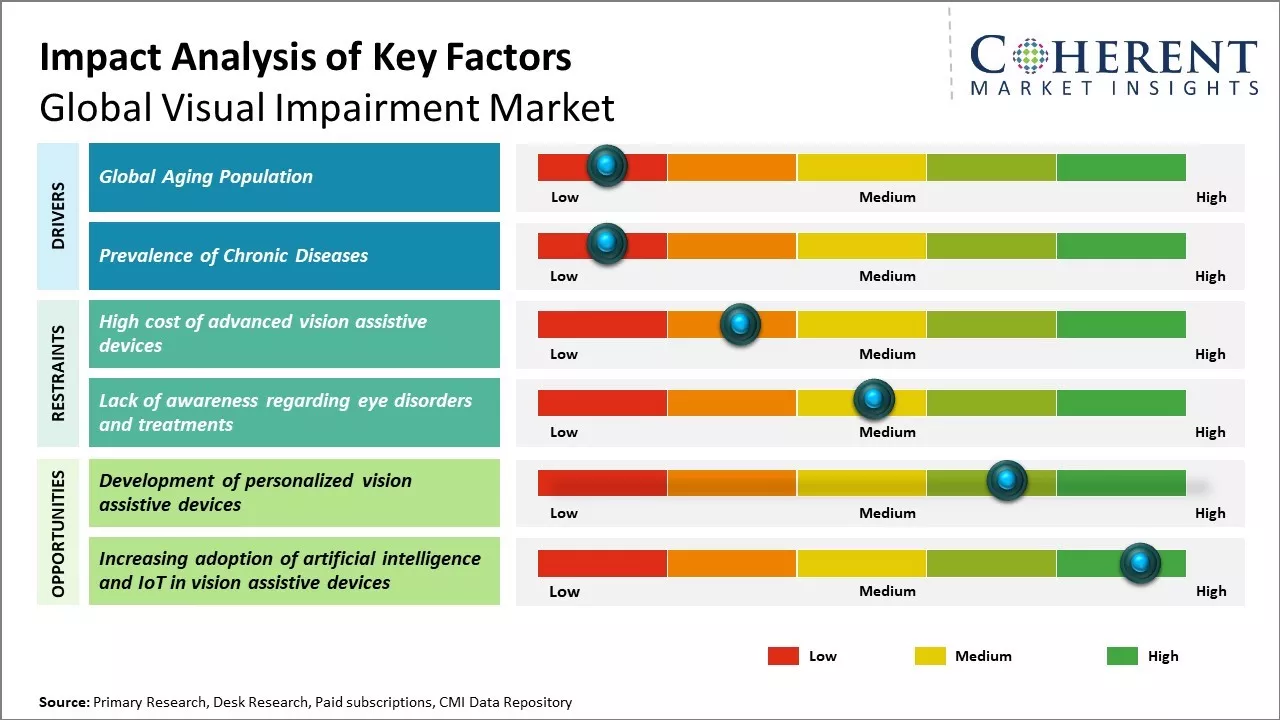
The market is expected to witness a positive growth trend over the forecast period. The rising incidence of eye disorders such as glaucoma, cataract, and retinopathies due to increasing geriatric population are the major factors augmenting the demand for therapies and the management of visual impairment. Advancements in retinal prostheses, stem cell therapy, and gene therapy are also driving the market growth. Growing awareness regarding eye care and regular checkups have further contributed to the market expansion. However, the high cost of gene and stem cell therapies along with the lack of awareness in underdeveloped regions may hamper the market growth during the analysis period.
Global Aging Population
As life expectancy around the world continues to increase steadily, the global population of older individuals is growing at an unprecedented rate. The number of people aged 65 years and over is projected to grow from an estimated 524 million in 2010 to nearly 1.5 billion in 2050 according to the United Nations. With advanced age comes an increased risk of various chronic health conditions, including those that can cause impairment or loss of vision. Age-related eye diseases such as cataracts, glaucoma, diabetic retinopathy, and age-related macular degeneration become more common and are the leading causes of vision loss among the elderly. As the worldwide population of seniors is expected to rise considerably over the coming decades, the burden of age-related visual impairment is expected to rise substantially as well. More healthcare resources will need to be dedicated to prevention, early detection, treatment and rehabilitation services for visual disorders prevalent in aging populations. This demographic shift presents significant opportunities for growth within the visual impairment product and service markets worldwide. For instance, according to the National Institute on Aging, aging is linked with conditions such as dry eyes, age-related macular degeneration, diabetic retinopathy, cataracts, and glaucoma. A study published in JAMA Ophthalmology in 2022 reported that more than 1.5 million individuals aged 40 and older are living with advanced age-related macular degeneration. The World Health Organization (WHO) states that the global population aged 60 and above currently stands at 1 billion, projected to reach 1.4 billion by 2030. Market participants have introduced innovative solutions for assistive devices aimed at aiding the visually impaired.
By Product Type
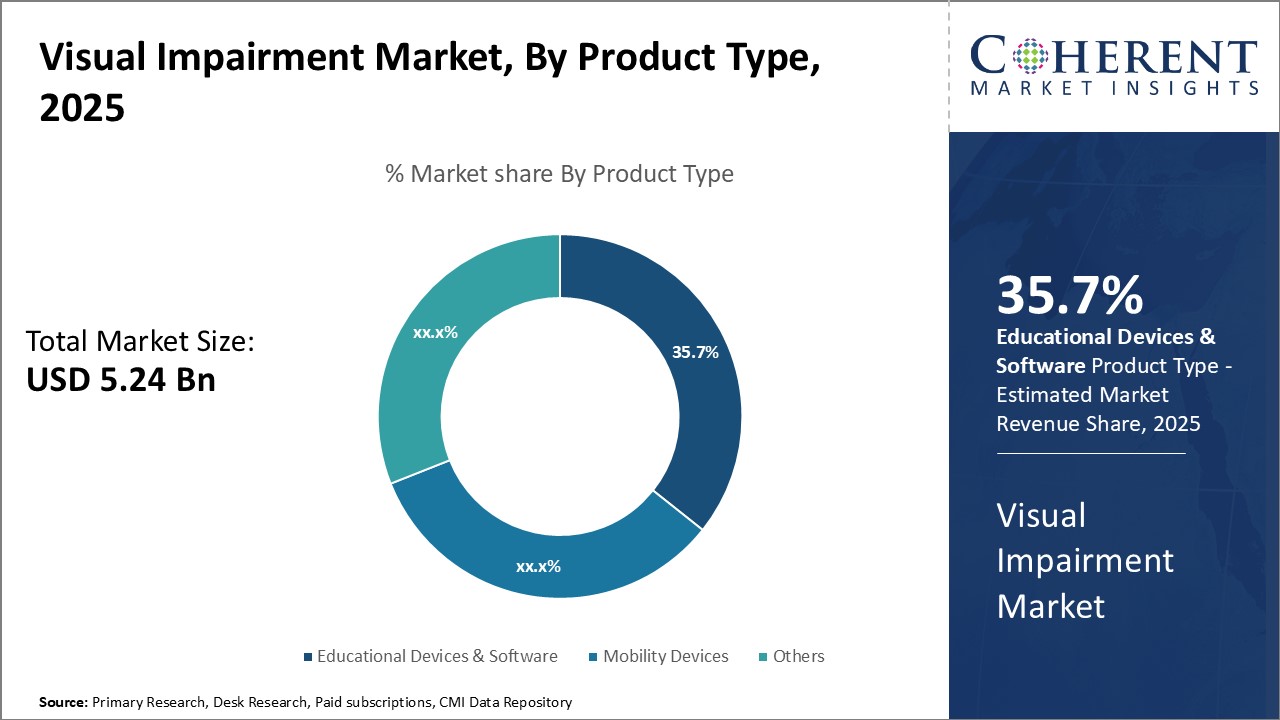
By Product Type - Educational advancement opportunities
In terms of product type, educational devices & software is expected to contribute the highest share of the market, accounting for 36.7% of the market share in 2026. This is due to the constant demand for assistive technologies that help improve learning opportunities for visually impaired students. Educational devices such as Braille printers and embossers, screen magnification software, and note-taking devices have allowed easy access to curriculums and independent learning. State and national initiatives focusing on inclusive education have further boosted investments in tools that can bridge the learning gap for blind/low-vision children in regular classroom settings. Technology progress has enabled the development of more affordable and user-friendly educational aids. Meanwhile, advanced software solutions mimicking auditory and tactile feedback are revolutionizing e-learning for visually challenged individuals. The growing emphasis on lifelong skills development has widened the customer base beyond institutional set-ups.
By End User
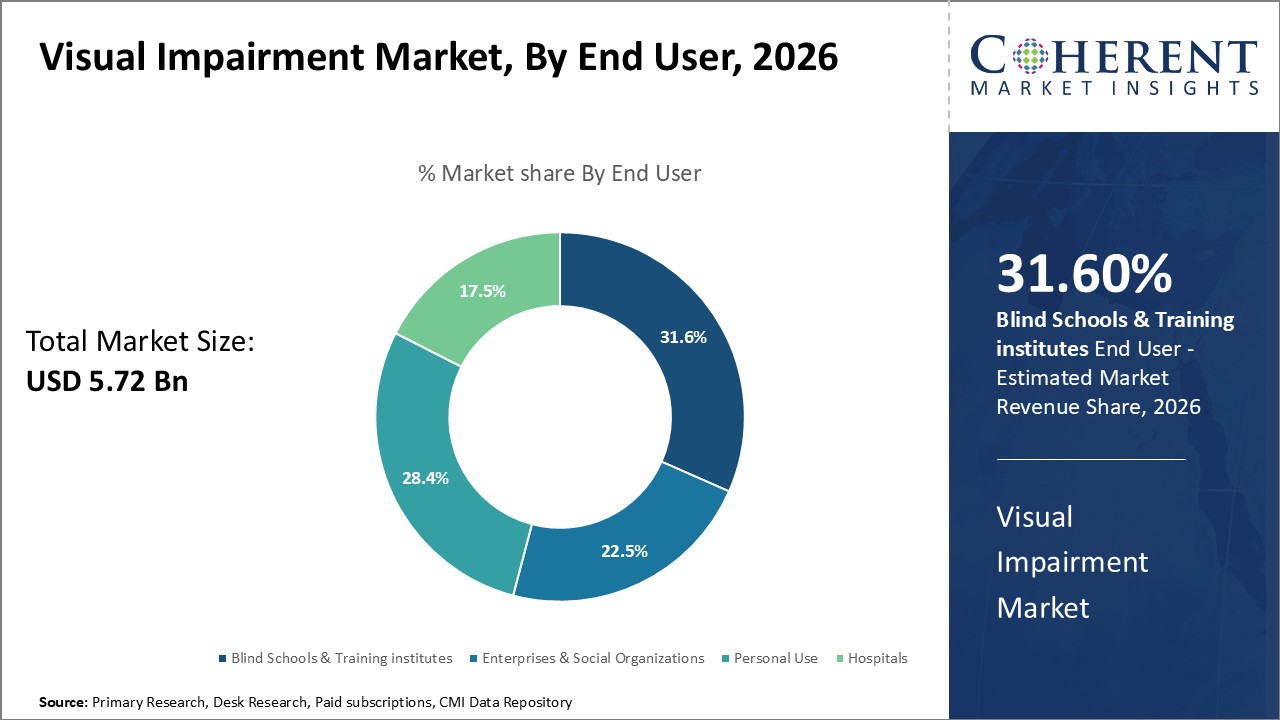
By End User - Independence and community integration
In terms of end user, blind schools & training institutes is expected to contribute the highest share of the market, accounting for 31.62% of the market share in 2026. This is due to the crucial role they play in empowering individuals with vision loss. A majority of mobility and low vision aids are designed to facilitate independent living through sensory alternatives and navigation support. This addresses the overarching goal of rehabilitation centers and special schools - to equip their students with skills that allow smoother community integration post education. Mobility devices such as white canes and guide dogs continue to be mainstream offerings in this segment. However, the integration of GPS and other smart technologies have enhanced performance and user experience. With assistive solutions promoting self-reliance, blind schools are able to improve rehabilitation outcomes and boost student confidence. Their procurement requirements continue even as more customers opt for personalized products and home-based training resources.
Regional Insights
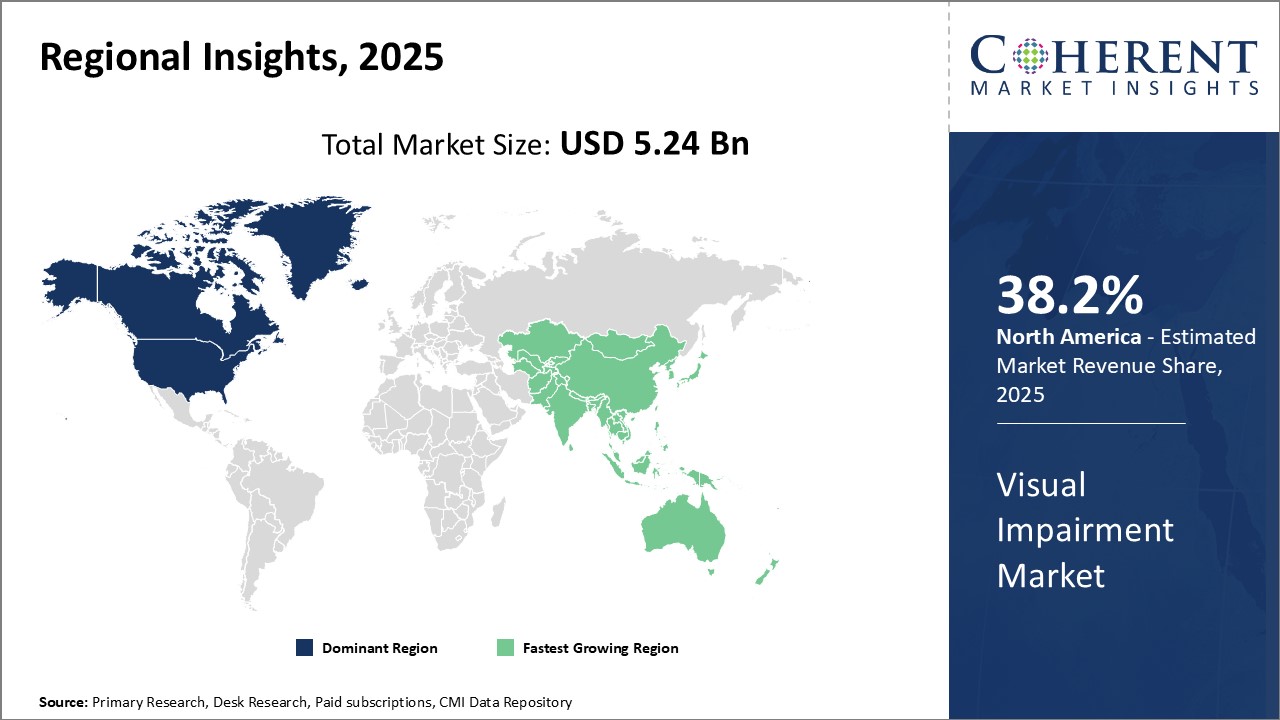
North America has established itself as the dominant region in the global visual impairment market. The region is expected to hold 38.2% of the market share in 2026. The presence of key market players and advanced healthcare infrastructure have propelled the industry in the region. The U.S. accounts for the largest share due to sizeable patient population and high healthcare expenditure. Favorable reimbursement policies for low vision aids and eye care services have increased product affordability. Additionally, strong focus on the research and development of innovative visual aids is driving the regional market.
Asia Pacific is considered the fastest growing regional market for visual impairment treatment and management. Rapid economic development and rising disposable incomes have boosted healthcare investments across developing nations. India and China accommodate the bulk of the visually impaired population globally due to the growing geriatric demography. This vast untapped consumer base is attracting western brands to establish local manufacturing plants through joint ventures or mergers. Brands can leverage the low production costs to price their products competitively without compromising on quality standards.
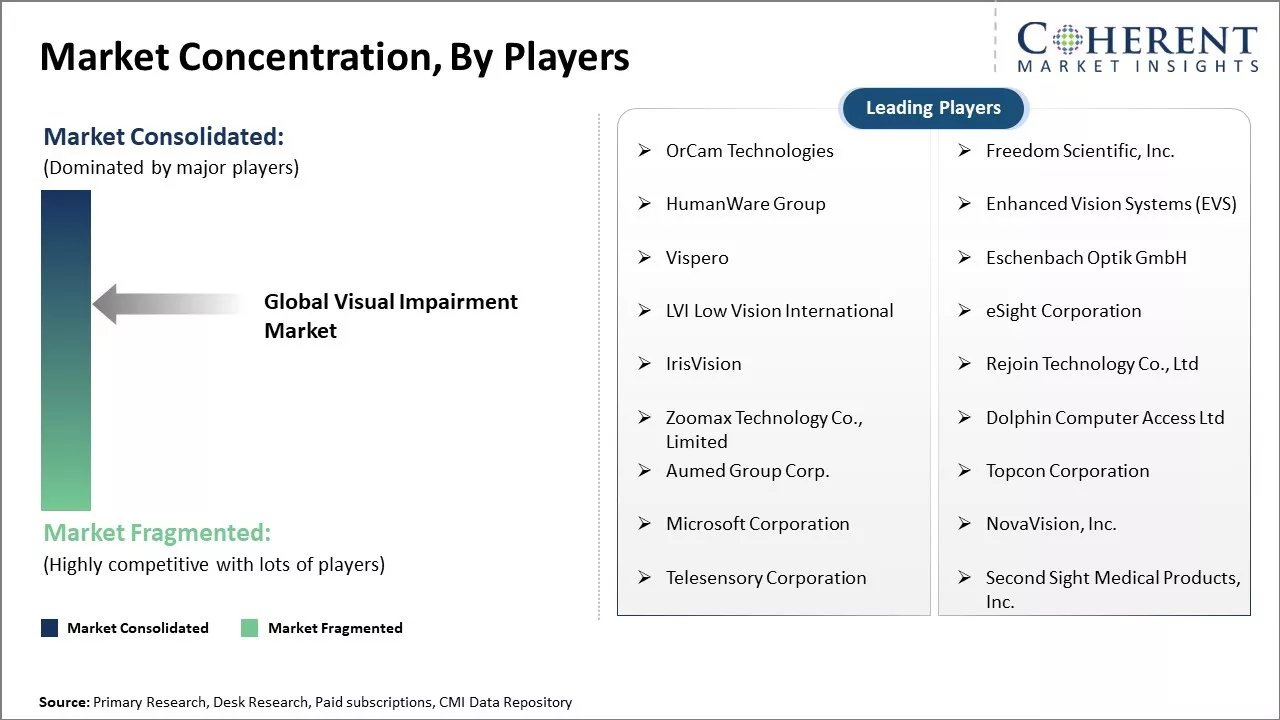
Market Players, Key Development, and Competitive Intelligence
Prevalence of Chronic Diseases
Rising levels of obesity, physical inactivity, and unhealthy dietary patterns have contributed to escalating rates of chronic medical conditions globally. Of particular importance for vision health are the increasing diagnoses of diabetes and hypertension. Diabetes, currently affecting over 400 million adults worldwide, is a leading cause of blindness when it damages the tiny blood vessels inside the eyes. Increased blood sugar levels over time can cause diabetic retinopathy, glaucoma, and cataracts. High blood pressure, which impacts over 1 billion people, is also strongly associated with impaired vision through similar microvascular damage in the eyes leading to related disorders. As developing countries undergo rapid economic changes that bring shifting lifestyles and risk factors, chronic diseases are spreading dramatically even in populations once less affected. The alarming worldwide rise in cases of diabetes, hypertension, and their resultant visual complications constitutes a key driver propelling the visual impairment market as needs grow for treatments, assistive devices, and low vision aids. Multi-pronged public health strategies will be crucial to help curb this driver of growing demand over the long run.
- Current Industry Events of 2026
- Market Size Estimation
- Regional Breakdown
- Competitive Landscape
- Customer Intelligence
- Segmental Analysis
- Pricing Analysis
- Key Market Drivers, Challenges & Future Trends
- Customized Insights Section
Market Report Scope
Visual Impairment Market Report Coverage
| Report Coverage | Details | ||
|---|---|---|---|
| Base Year: | 2025 | Market Size in 2026: | USD 5.72 Bn |
| Historical Data for: | 2020 To 2024 | Forecast Period: | 2026 To 2033 |
| Forecast Period 2026 to 2033 CAGR: | 9.2% | 2033 Value Projection: | USD 10.60 Bn |
| Geographies covered: |
| ||
| Segments covered: |
| ||
| Companies covered: | OrCam Technologies, Freedom Scientific, Inc., HumanWare Group, Enhanced Vision Systems (EVS), Vispero, Eschenbach Optik GmbH, LVI Low Vision International, eSight Corporation, IrisVision, Rejoin Technology Co., Ltd, Zoomax Technology Co., Limited, Dolphin Computer Access Ltd, Aumed Group Corp., Topcon Corporation, Microsoft Corporation, NovaVision, Inc., Telesensory Corporation, and Second Sight Medical Products, Inc. | ||
| Growth Drivers: |
| ||
| Restraints & Challenges: |
| ||
Analyst Opinion (Expert Opinion)
Key Takeaways from Analyst:
[The global visual impairment market is poised to grow steadily over the next decade driven by the rising prevalence of eye diseases and disorders worldwide. The increasing geriatric population who are more susceptible to eye conditions like macular degeneration and cataract is a major growth driver. Genetic factors and lifestyle changes such as increased screen time are also contributing to the rising incidence of visual impairment. Rapid advancements in ophthalmic treatment technologies for conditions like diabetic retinopathy and glaucoma will have a positive impact on market growth.
However, the market growth can be restrained by the high cost of ophthalmic devices and treatments in many developing regions. Lack of awareness about eye care and visual impairment in rural and underdeveloped areas also poses a challenge. The Asia Pacific region currently dominates the global market aided by large patient pools and improving access to healthcare in countries like China and India. The North American market is also sizable due to new product approvals and high consumer spending on eye care.
Opportunities lie in expanding eye care access in rural areas through public-private partnerships. Developing affordable diagnostic devices and drugs can further stimulate market growth in price-sensitive regions.]
Market Challenges: High cost of advanced vision assistive devices
The high cost of advanced vision assistive devices is significantly restraining the growth of the global visual impairment market. Many innovative and technologically advanced vision assistable products that can enhance the quality of life of visually impaired individuals are highly priced. Even though these devices have capabilities like HD cameras, object identification, sensor-based navigation aids, and smartphone connectivity, many people with moderate to severe visual impairments around the world cannot afford them due to their expensive price tags. For example, according to the World Health Organization (WHO) report published in 2021, the average cost of a basic smartphone mounted video magnifier ranges between $1,000 and $1,500 whereas a fully loaded device with advanced AI and AR capabilities can cost over $3,000. Such premium pricing not only restricts these products to high income groups but also limits their volume sales in developing nations which account for nearly 90% of the global visually impaired population. As a result, a large visually impaired patient base has to rely on conventional and basic low-vision aids like magnifying glasses, braille displays, screen readers, etc. which have limited capabilities.
Market Opportunities: Development of personalized vision assistive devices
The global visual impairment market has seen steady growth over the past decade, driven primarily by the aging population and rising incidence of eye diseases. However, existing vision assistive devices and technologies tend to be one-size-fits-all solutions that do not adequately address the unique needs of each visually impaired individual. The development of personalized vision assistive devices promises to revolutionize this market by offering highly customized solutions tailored to individual levels and types of visual impairment. Unlike prevailing devices, personalized technologies would leverage extensive data on an individual's vision capabilities, lifestyle needs, and preferences to deliver unparalleled visibility assistance. This level of customization could significantly expand the addressable market by making assistive solutions relevant for a far broader range of impairments. It may also improve engagement and adherence rates by optimizing user experience. Personalization allows blending multiple assistive modalities into seamless, personalized vision "ecosystems" that seamlessly augment individuals' natural vision based on their daily routines and environments. This could change the paradigm of vision assistance from one-time device purchases to ongoing subscription models—opening up a sustained revenue stream. Younger demographics may also find personalized technologies more socially acceptable alternatives to outdated low-vision aids.
Speak to the analyst
Want personalized insights?
Take the findings above to one of our principal consultants, or have the report rebuilt around the segments, geographies and competitors you actually track.
Market Segmentation
- Product Type Insights (Revenue, USD Bn, 2021 - 2033)
- Educational Devices & Software
- Braille Duplicators and Writers
- Braille Computers
- Mathematical & Science Devices
- Reading Machines
- Others
- Mobility Devices
- Canes
- Others
- Low Vision Devices
- Smart Glasses
- VTS Link
- Magnifying Lenses
- Others
- Others
- Educational Devices & Software
- End User Insights (Revenue, USD Bn, 2021 - 2033)
- Blind Schools & Training institutes
- Enterprises & Social Organizations
- Personal Use
- Hospitals
- Others
- Regional Insights (Revenue, USD Bn, 2021 - 2033)
- North America
- U.S.
- Canada
- Latin America
- Brazil
- Argentina
- Mexico
- Rest of Latin America
- Europe
- Germany
- U.K.
- Spain
- France
- Italy
- Russia
- Rest of Europe
- Asia Pacific
- China
- India
- Japan
- Australia
- South Korea
- ASEAN
- Rest of Asia Pacific
- Middle East
- GCC Countries
- Israel
- Rest of Middle East
- Africa
- South Africa
- North Africa
- Central Africa
- North America
- Key Players Insights
- OrCam Technologies
- Freedom Scientific, Inc.
- HumanWare Group
- Enhanced Vision Systems (EVS)
- Vispero
- Eschenbach Optik GmbH
- LVI Low Vision International
- eSight Corporation
- IrisVision
- Rejoin Technology Co., Ltd
- Zoomax Technology Co., Limited
- Dolphin Computer Access Ltd
- Aumed Group Corp.
- Topcon Corporation
- Microsoft Corporation
- NovaVision, Inc.
- Telesensory Corporation
- Second Sight Medical Products, Inc.
Get access to 250+ pages report
Every segment, forecast, competitor profile and data table behind the analysis above — available for instant download.
- ESOMAR Member
- ISO 9001:2015 Certified
- D-U-N-S Registered
- GDPR & CCPA Compliant
Missing comfort of reading report in your local language? Find your preferred language:
Transform your Strategy with Exclusive Trending Reports
Frequently Asked Questions
The Visual Impairment Market is estimated to be valued at USD 5.72 Bn in 2026, and is expected to reach USD 10.60 Bn by 2033.
The CAGR of the Visual Impairment Market is projected to be 9.2% from 2026 to 2033.
Global Aging Population and Prevalence of Chronic Diseases are the major factors driving the growth of the global visual impairment market.
High cost of advanced vision assistive devices and lack of awareness regarding eye disorders and treatments are the major factors hampering the growth of the global visual impairment market.
In terms of product type, educational devices & software is estimated to dominate the market revenue share in 2026.
OrCam Technologies, Freedom Scientific, Inc., HumanWare Group, Enhanced Vision Systems (EVS), Vispero, Eschenbach Optik GmbH, LVI Low Vision International, eSight Corporation, IrisVision, Rejoin Technology Co., Ltd, Zoomax Technology Co., Limited, Dolphin Computer Access Ltd, Aumed Group Corp., Topcon Corporation, Microsoft Corporation, NovaVision, Inc., Telesensory Corporation, and Second Sight Medical Products, Inc. are the major players.
North America is expected to lead the global visual impairment market.