

Global Adhesive Bandages Market Size and Forecast – 2026 To 2033
The global adhesive bandages market is expected to grow from USD 4.18 Bn in 2026 to USD 6.37 Bn by 2033, registering a compound annual growth rate (CAGR) of 6.2% from 2026 to 2033. The market for adhesive bandages is poised for significant expansion, fueled by the soaring burden of minor injuries and wounds related to rising participation in sports and physical activities.
According to the U.S. Centers for Disease Control and Prevention (CDC), unintentional injuries caused an estimated 26.2 million emergency room visits across the U.S, indicating a considerable demand for first-aid and wound care products, like adhesive bandages.
(Source: Centers for Disease Control and Prevention)
Key Takeaways of the Global Adhesive Bandages Market
- Fabric bandages are projected to hold 34.2 % of the global adhesive bandages market share in 2026, making it the dominant product type segment across North America due to robust consumer awareness regarding first-aid provision, high consumption of over-the-counter wound care products and extensive participation in sports and leisure activities in the region. The region's high incidence of minor injuries and widespread adoption of self-care products continue to support segment growth. For instance, according to the U.S. Centers for Disease Control and Prevention (CDC), U.S. emergency departments record approximately 43.5 million injury-related visits annually. (Source: Centers for Disease Control and Prevention) The high volume of minor injuries supports sustained demand for fabric adhesive bandages owing to their flexibility, comfort, and breathability.
- Wound management is projected to hold 58.9 % of the global adhesive bandages market share in 2026, making it the dominant application segment across Europe due to the soaring burden of wounds associated with an aging population. Elderly individuals are more susceptible to skin injuries and often require routine wound care interventions. For instance, according to Eurostat, on January 1, 2025, the EU population was estimated at 450.6 million people and more than one-fifth (22.0%) of it was aged 65 years and over. (Source: Eurostat) The rising aging population increases susceptibility to wounds and skin injuries, supporting the use of adhesive bandages for routine wound management.
- Hospitals and clinics are projected to hold 32.5 % of the global adhesive bandages market share in 2026, making it the dominant end user segment across Asia Pacific due to ongoing investments in healthcare infrastructure and increasing patient volumes. The expansion of healthcare facilities across emerging economies continues to boost the procurement of essential wound care products. For instance, according to the India Brand Equity Foundation (IBEF), India had 13,88,185 registered allopathic doctors and approximately 3.94 million (39.4 lakh) nursing personnel as of February 2026, supported by around 818 medical colleges nationwide. (Source: India Brand Equity Foundation) These developments are strengthening healthcare infrastructure and increasing demand for essential wound care products, including adhesive bandages, across hospitals and clinics.
- North America maintains its dominance with an expected share of 36.8 % in 2026, bolstered by high healthcare spending, strong penetration of first-aid products, and well-established retail and healthcare distribution networks. The region also benefits from substantial healthcare expenditure, which supports the adoption of advanced and specialty wound care products. For instance, according to the Centers for Medicare & Medicaid Services (CMS), U.S. healthcare spending grew by 7.5% to reach US$ 4.9 trillion in 2023, accounting for 17.6% of the nation's GDP. (Source: American Hospital Association) The robust healthcare ecosystem continues to support the demand for adhesive bandages across clinical and consumer settings.
- Asia Pacific is expected to exhibit the fastest growth with an estimated contribution of 24.7 % share in 2026, propelled by rapid urbanization, improving healthcare accessibility, and increasing investments in healthcare infrastructure across emerging economies. Rising healthcare capacity is expanding access to wound care products among a larger patient population. For instance, according to official data from China, the number of hospitals in the country exceeded 38,000 in 2023, while public hospitals accounted for 83.5% of total patient visits nationwide. (Source: National Health Commission of the People's Republic of China) The expanded healthcare network and patient footfall are expected to fuel consumption of adhesive bandages across hospitals and clinics.
- Growing Demand for Advanced Antimicrobial and Hydrocolloid Bandages: A growing emphasis on infection control and the acceleration of wound healing is creating strong demand for sophisticated adhesive bandages featuring antimicrobials, hydrocolloid, and moisture-balancing technologies. Consumers and clinicians will appreciate enhanced infection protection, improved comfort and improved wound healing associated with these sophisticated adhesive bandages. Product lines are broadening in the higher-priced end by manufacturers to keep pace with consumer demand for proven clinical performance in both institutional and retail settings.
- Increasing Preference for Infection-Protection Adhesive Bandages: Heightened consumer consciousness of wound hygiene and infection control has boosted the sales of adhesive bandages featuring improved antimicrobial and barrier functions. In response to this consumer trend, bandage producers are developing and introducing new wound-contact materials and infection barrier systems that have minimized the risk of contamination, and promote accelerated healing. This trend is observed among parents, aged people and those who heal themselves from minor wound at home, thus providing an opportunity to introduce premium and value-added bandages.
Segmental Insights
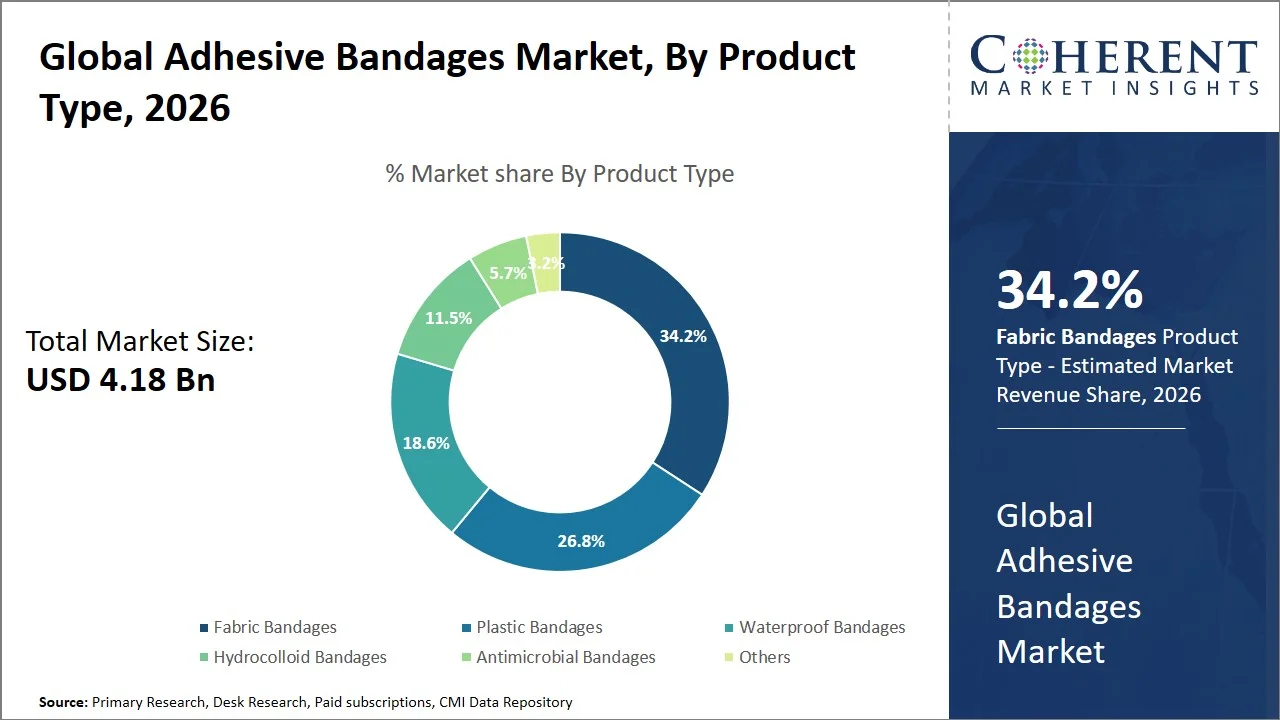
Why Do Fabric Bandages Dominate the Global Adhesive Bandages Market?
Fabric bandages are projected to hold a market share of 34.2% in 2026, due to their breathability, flexibility and comfort, making them ideal for daily care and areas of high body movement. They conform to the body and permit air flow which is essential for efficient wound healing and comfort for the wearer. They are becoming widely used for both healthcare and consumer application due to increasing availability of antimicrobial, medicated and skin friendly fabric bandages. For instance, in September 2024, SUGAMA introduced the unique Elastic Adhesive Bandage (EAB), a breathable, elastic adhesive bandage with excellent adhesive strength and versatility. The Elastic Adhesive Bandage (EAB) can be used on sports injuries, wounds and surgical sites. (Source: SUGAMA) Such product innovations continue to enhance the acceptance and usage of fabric-based adhesive bandages in both consumer and healthcare arenas.
- Current Industry Events of 2026
- Market Size Estimation
- Regional Breakdown
- Competitive Landscape
- Customer Intelligence
- Segmental Analysis
- Pricing Analysis
- Key Market Drivers, Challenges & Future Trends
- Customized Insights Section
Why Does Wound Management Represent the Largest Application Segment in the Adhesive Bandages Market?
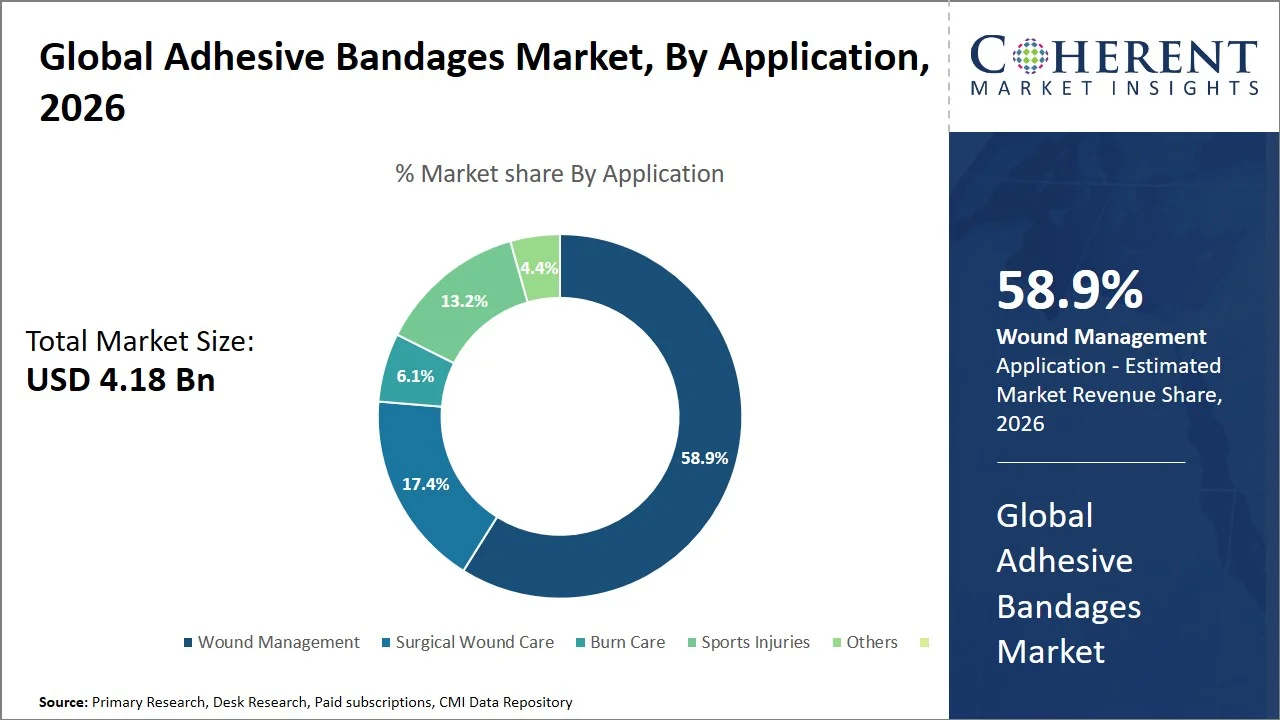
Wound management is projected to hold a market share of 58.9% in 2026, attributed to the increasing number of chronic wounds, rise in the number of surgical procedures and growing demand for effective anti-infection solutions. Adhesive bandages protect wounds and facilitate in providing a proper healing environment and post-operative wound recovery. Continuous innovation of wound care materials is driving the treatment of acute as well as chronic wounds. For instance, Mölnlycke Health Care introduced Mepilex Up, an exuding wound foam dressing with a new foam construction to facilitate the spread of exudate. This product's novel foam structure has a patented design intended to allow uniform dispersion of fluid across the surface. (Source: Mölnlycke Health Care) These developments are further promoting the adoption of sophisticated wound care solutions in various health environments.
Hospitals and Clinics Segment Dominates the Global Adhesive Bandages Market
The hospitals and clinics segment is projected to hold a market share of 32.5% in 2026, owing to the constant requirement of sterile and trusted wound care product that can be utilized for emergency, surgical and out-patient scenarios. Large numbers of patients admitted to hospitals, ever-rising trend of surgical procedures, strict guidelines regarding infection control among the healthcare providers lead to sustained demand for medical-grade adhesive bandages. These specialized bandages are also preferred by health providers because they ensure improved patient comfort and aid in the effective healing process of wounds. For instance, Apollo Hospitals intends to augment its patient care capability in India by about 3,500+ beds through new hospitals and expansion plans across the country by FY26. (Source: Elets Technomedia Pvt Ltd) These expansions are projected to drive the use of adhesive bandages and related wound care items across clinical and hospital settings.
Currents Events and their Impact
Current Events | Description and its Impact |
Industry Response to FDA Reclassification of Antimicrobial Wound Dressings (April 2025) |
|
Modernization of FDA Guidance for Chronic Wound Clinical Trials (September 2025) |
|
(Source: Alliance of Wound Care Stakeholders, Wound Care Collaborative Community)
Adhesive Bandages Market Dynamics
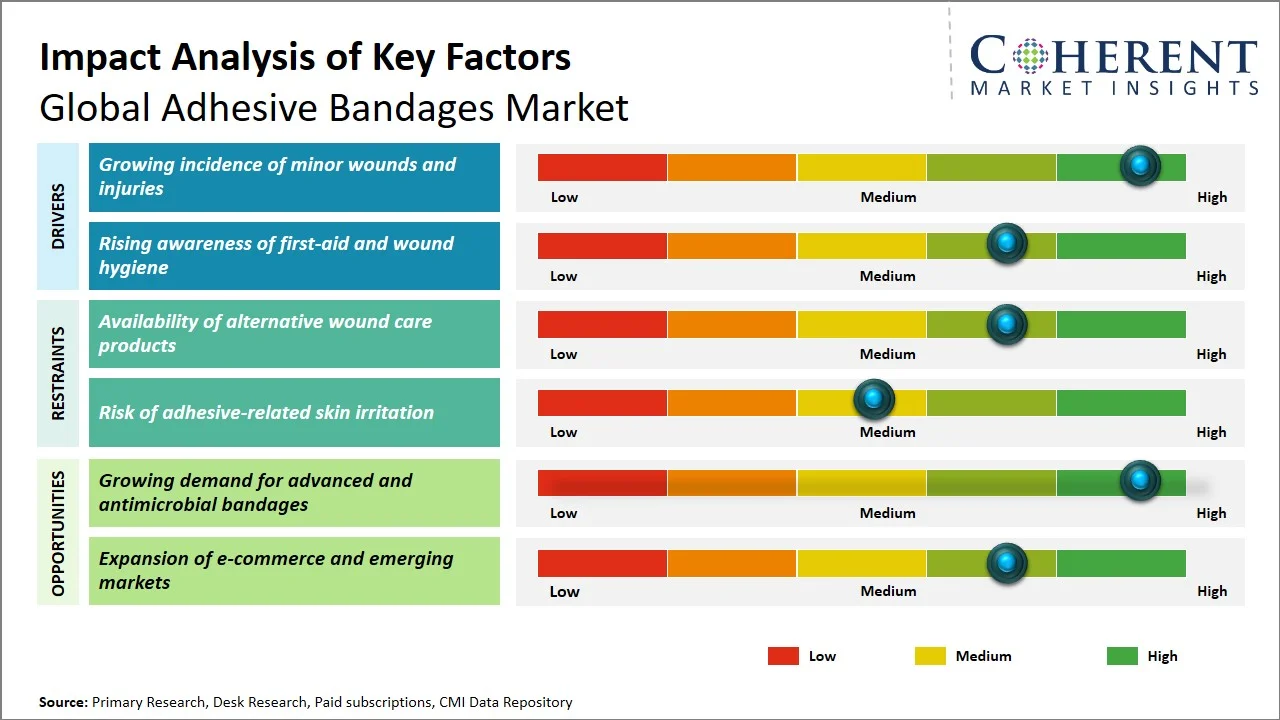
Market Drivers
- Growing incidence of minor wounds and injuries: With the increase in common injuries like cuts, scratches, abrasions and minor hurts across the globe, the demand for adhesive bandages remains quite high. Rising awareness about first aid and increasing involvement of the consumer in recreation and outdoor activities have prompted people to take quick action of covering the wounds to avoid infections and promote quick recovery. The consumer's need of affordable, easy to access wound protection products for their homes, schools and offices adds to the increasing demand for this product. For instance, according to National Safety Council, in 2024, 4.4 million people were treated in emergency departments for injuries involving sports and recreational equipment. (Source: National Safety Council) These incidents have led to continued application of adhesive bandages as primary wound dressing.
- Rising awareness of first-aid and wound hygiene: The rising popularity of home healthcare and proactive healthcare is facilitating the growing use of adhesive bandages at home and community level. Consumers are becoming more proactive about their health by keeping an inventory of first aid kits and promptly attending to minor wounds to prevent infection and complications. The proliferation of educational content, offering knowledge about wound care and first aid management is encouraging the use of rudimentary wound care products. For instance, American Red Cross during National Preparedness Month emphasized the significance of emergency preparedness, suggesting people and families have emergency kits with basic medical supplies in the event of emergencies. (Source: American Red Cross) The initiatives serve to increase awareness about the importance of first aid preparedness and the use of adhesive bandages as an indispensable health product.
Emerging Trends
- Increasing Popularity of Waterproof and Active-Lifestyle Bandages: The companies are offering water-resistant and sweat-proof adhesive bandages, specifically catering to athletes, outdoor workers and generally active individuals. This newer product offering delivers better durability, enhanced protection and longer wear times than previously available traditional bandages, and has become quite popular among active people.
- Expansion of Child-Friendly and Customized Bandage Designs: The market has experienced an increasing demand for character-themed adhesive bandages, brightly colored patterns and for skin-friendly formulas that are specifically designed for children. Companies have implemented product personalization and designs aimed at pleasing the consumer in order to increase the comfort for children, and for increased child adherence, and as a differentiator in the market place.
Regional Insights
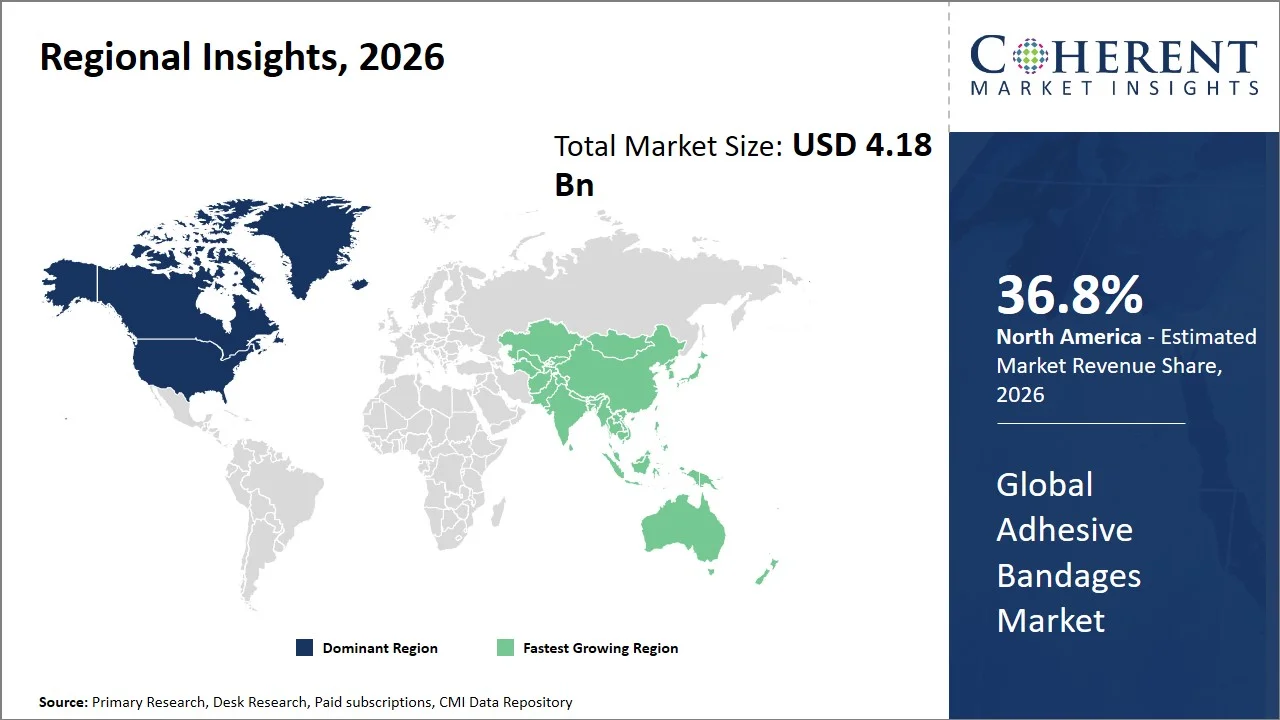
Why is North America a Strong Market for Adhesive Bandages?
North America leads the global adhesive bandages market, accounting for an estimated 36.8% share in 2026, due to the presence of well-established healthcare system, presence of prominent industry players and supportive government policies encouraging innovation and quality in the healthcare sector. For instance, the U.S. Food and Drug Administration (FDA) implemented the Medical Device User Fee Amendments (MDUFA) program, which assists in an efficient regulatory review process and medical device regulation, including wound care devices. (Source: Food and Drug Administration)
Moreover, the region has extensive research and development capabilities which enable the top market players to develop new and innovative solutions for adhesive bandages with specific features, such as antibacterial, waterproof and hypoallergenic adhesive bandages. In addition, an established retail and distribution network, including retail stores and pharmacies, hospitals and online sales, has strengthened the market penetration of adhesive bandages in the region.
Why Does the Asia Pacific Adhesive Bandages Market Exhibit High Growth?
The Asia Pacific adhesive bandages market is expected to exhibit the fastest growth with an estimated contribution of a 24.7% share to the global market in 2026, due to rising health expenses, first aid product awareness, better availability of health services due to rising number of people getting health access in developing nations. The government programs toward infrastructure enhancement of public health and insurance coverage have made products accessible throughout the region. For instance, India's Ayushman Bharat scheme continues to increase the reach of healthcare services and has boosted the primary healthcare delivery through health and wellness centers across the nation. It has enhanced the access to required health care services and also the availability of common medical and first-aid items in areas with need for improved basic healthcare, bolstering demand for wound care products such as adhesive bandages. (Source: National Health Authority) These initiatives would result in increased accessibility and readiness to perform first aid services among developing countries, and this will create appropriate environment for long-term development of the adhesive bandages market in Asia Pacific.
Global Adhesive Bandages Market Outlook for Key Countries
Why is the U.S. Leading Innovation and Adoption in the Adhesive Bandages Market?
The U.S. holds the largest market share for innovation and adoption in adhesive bandages market driven by the strong market presence of leading wound care manufacturers (such as Johnson & Johnson, 3M, Smith & Nephew, and Medline Industries), a well-developed retail healthcare network, and quick commercialization of advanced wound management solutions. A high rate of adoption for high-end wound care products, including antimicrobial, hydrocolloid and silicone wound care dressings is observed across both professional and consumer environments. Furthermore, manufacturers often launch next-generation wound care products in the U.S. due to its well-established distribution networks via pharmacy, hospitals and e-commerce.
The country is further aided by a well-developed ecosystem of academic research and biomedical innovation, which can further develop the next-generation of wound care technologies. For instance, in May 2026, scientists at Rice University engineered "living bandages" that provide therapeutic proteins to a wound at a controlled rate and also speed up wound healing of various types of wounds in animals and improve them with faster healing. This new technology can be applied to creating novel bioactive and regenerative wound-care products. (Source: Rice University)
Is Japan a Favorable Market for Adhesive Bandages?
Japan serves as an attractive market for adhesive bandages due to demonstrated preference for effective and skin-safe health products and high usage of premium wound care products. Consumers are willing to pay more to make comfort, breathability and low-irritation more central concerns which in turn leads to increasing use of fabric, hydrocolloid, and silicone-based bandages. The country also benefits from a stable presence of health and consumer health brands (such as Nichiban's CARELEAVES series, Kobayashi Pharmaceutical's Kizu Care hydrocolloid bandages, and Johnson & Johnson's BAND-AID rang) which continue to develop novel, over-the-counter wound care products for active people and everyday situations.
Is China Emerging as a Key Growth Hub for the Adhesive Bandages Market?
China is becoming an important growth area in the adhesive bandages market due to rapid healthcare infrastructure development, higher expenditure on personal healthcare goods and increased health consciousness. The growth in the market is fueled by the growing requirement of easy-to-use over-the-counter (OTC) first aid products and increase in reach of modernized retail channels as well as e-commerce. Furthermore, high number of domestic manufactures (such as Yunnan Baiyao, Winner Medical, Zhende Medical, Jiangsu Nanfang Medical, Allmed Medical Products) and global manufacturers (such as Johnson & Johnson, 3M, Smith & Nephew, Medline Industries) as well as wound care brands in China is expected to promote availability and innovation in the premium and high-end adhesive bandage segment.
Why Does Germany Top the European Adhesive Bandages Market?
Germany stands at the top of the European adhesive bandages market due to strong healthcare products sector and robust existence of wound care and medical dressing manufacturers, as well as the easy availability of superior first aid products across the network of pharmacies and stores. The country holds the presence of top wound care brands (such as Beiersdorf (Hansaplast), Paul Hartmann and BSN Medical) that constantly seek to widen their portfolio in advanced wound care sector. Additionally, the country holds consumers who have a strong preference for the quality, clinical proof-based products, which results in stable sales of the premium adhesive bandages.
Is the Adhesive Bandages Market Developing in India?
India represents a growth opportunity for adhesive bandages because of increasing availability of healthcare products, growing awareness about first-aid and the rising demand for convenient wound care solutions. The market is expected to gain increasing penetration through pharmacies, supermarkets and e-commerce outlets, thereby providing a higher accessibility of adhesive bandages in semi urban and urban parts of the country. The growth in availability of adhesive bandages has been supported by the increased prevalence of domestic brands (such as Cipla Health, Mankind Pharma, Healthium Medtech) alongside multinational companies (such as Johnson & Johnson, 3M) in the wound care segment.
Evolution of Adhesive Bandages: From Basic Protection to Advanced Wound Care
Development Phase | Product Evolution | Key Clinical Need Addressed | Typical End Users |
Traditional Bandages
| Fabric and plastic adhesive strips | Basic wound coverage and protection | Households, clinics |
Comfort-Oriented Bandages
| Flexible, breathable, and hypoallergenic designs | Improved comfort and skin compatibility | Children, elderly patients, active users |
Performance-Oriented Bandages
| Waterproof and long-wear bandages | Enhanced durability and moisture protection | Athletes, outdoor workers |
Advanced Wound Care Bandages
| Antimicrobial and hydrocolloid bandages | Infection prevention and accelerated healing | Hospitals, wound care centers |
Next-Generation Solutions | Smart and bioactive bandages | Real-time monitoring and personalized wound management | Specialty healthcare settings |
How are the growing demand for advanced and antimicrobial bandages creating new growth opportunities in the adhesive bandages market?
Increasing demand in high-tech wound care for an effective alternative creates ample opportunities for adhesive bandage manufacturers to expand their advanced product portfolios. Growing awareness among consumers and healthcare professionals regarding infection prevention, effective fluid management, and accelerated wound healing is driving demand for advanced adhesive bandages. Additionally, the incorporation of antibacterial agents, hydrogels, and bioactive materials has enhanced product performance, improving wound protection, moisture balance, and clinical effectiveness. For instance, in June 2024, the University of North Carolina scientists developed a next-generation medical bandage, an adhesive patch, that can break down in the human body and is flexible enough to allow the delivery of therapies to wounds. It provides more adherence than standard bandages and also moves with the dynamic parts of the human body to promote healing. (Source: The University of North Carolina) These developments further emphasize industry's increasing attention to sophisticated wound care products and transition to higher-end therapeutic solutions.
Market Players, Key Development, and Competitive Intelligence
Key Developments
- In March 2026, Smith+Nephew launched its new ALLEVYN COMPLETE CARE Foam Dressing for wound management and pressure ulcer prevention. The new dressing is effective at managing wound exudate, ensures security during wear, and optimizes the healing environment, resulting in increased wound care and pressure injury management. The launch further strengthens Smith+Nephew's ability to grow its advanced wound care business and continue meeting the needs of an expanding wound care market.
- In September 2025, the researchers at the University of Nebraska Medical Center (UNMC) developed a smart bandage which speeds up wound healing by using built in sensing and therapeutics. Developments such as these show a clear movement from the traditional adhesive bandages, towards solutions for wound care that can effectively measure a wound's environment and help to enhance rapid healing. These advancements should drive demand for next-generation adhesive bandages especially in chronic wound and home healthcare environments.
Competitive Landscape
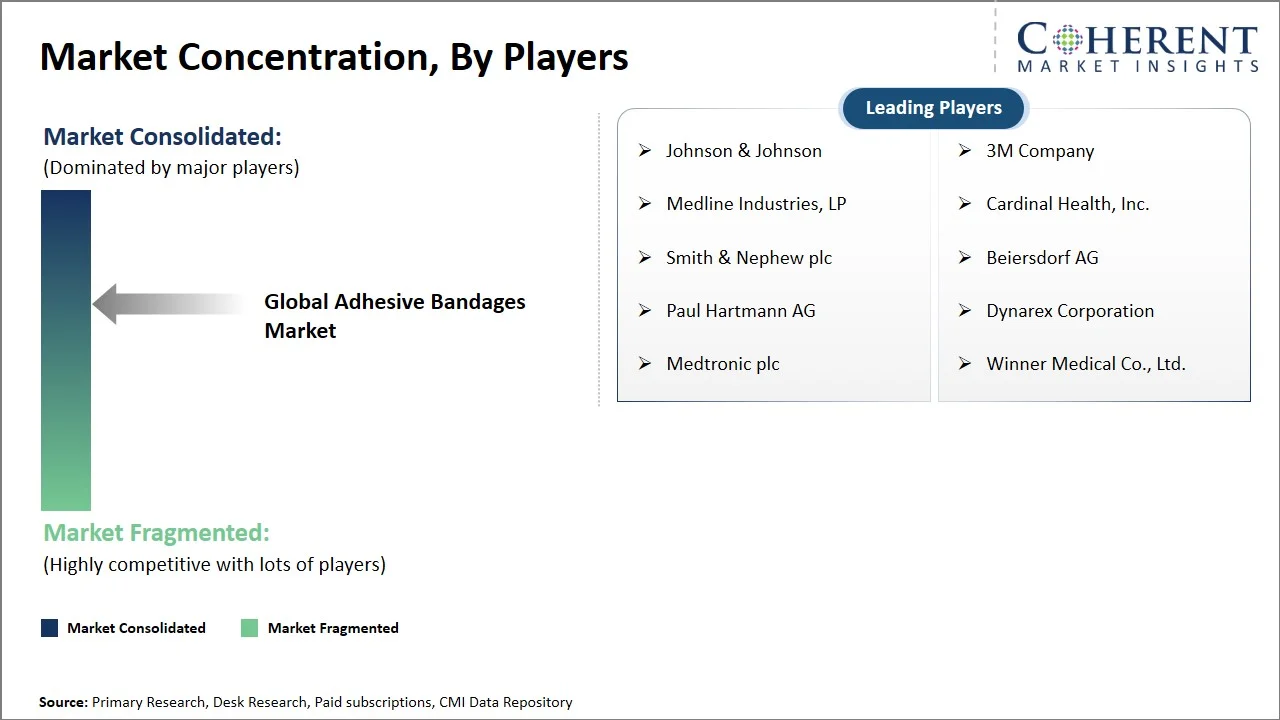
The global adhesive bandages market is moderately consolidated, with competitive rivalry focused on product innovation, material performance, skin compatibility and efficacy in wound healing. Manufacturers in the market strive to improve their competitive edge by developing products with better adhesion technology, antimicrobial agents, and more patient-friendly designs. Strategic product launches, product line extensions, and investment in state-of-the-art wound care technologies is the current trend in the competitive landscape. Key focus areas include:
- Development of advanced antimicrobial, hydrocolloid, and moisture-balancing adhesive bandages
- Enhancement of skin-friendly, hypoallergenic, and long-wear adhesive technologies
- Expansion of specialized bandages for sports injuries, chronic wounds, and post-operative wound care
- Integration of smart wound monitoring and next-generation wound healing technologies into adhesive bandage products
Market Report Scope
Adhesive Bandages Market Report Coverage
| Report Coverage | Details | ||
|---|---|---|---|
| Base Year: | 2025 | Market Size in 2026: | USD 4.18 Bn |
| Historical Data for: | 2020 To 2024 | Forecast Period: | 2026 To 2033 |
| Forecast Period 2026 to 2033 CAGR: | 6.2% | 2033 Value Projection: | USD 6.37 Bn |
| Geographies covered: |
| ||
| Segments covered: |
| ||
| Companies covered: | Johnson & Johnson, 3M Company, Medline Industries, LP, Cardinal Health, Inc., Smith & Nephew plc, Beiersdorf AG, Paul Hartmann AG, Dynarex Corporation, Medtronic plc, and Winner Medical Co., Ltd. | ||
| Growth Drivers: |
| ||
| Restraints & Challenges: |
| ||
Analyst Opinion (Expert Opinion)
- In the coming years, the adhesive bandages market will be driven by the gradual move away from standard wound coverages toward sophisticated wound care products with greater healing, antibacterial and comfort qualities. Increased medical attention and a higher prevalence of chronic wounds along with demand for user-friendly products for self-care will result in continuous market growth, while product advancements with anti-microbial features, hydrocolloids and smart monitoring devices will re-shape market dynamics.
- The maximum opportunities are foreseen in advanced adhesive bandages for wound care application in North America and Asia Pacific. North America exhibits robust demand due to a higher rate of health expenditure and adoption of higher-priced wound care products whereas the developing and emerging countries of Asia Pacific provide an opportunity to expand business in view of the expanding healthcare infrastructure, growing patient bases and an increasing reach of healthcare services. Hospitals, clinic and home-care sector are expected to embrace advanced antimicrobial and hydrocolloid bandages.
- In order to gain a competitive advantage market players should invest in innovative products with advanced wound healing, skin friendly adhesives and moisture control functions. Investment in sophisticated wound care technologies and extension of distribution channels and forming alliances with medical experts would also strengthen the market position of firms. Firms that successfully strike a balance between innovative products, low cost and regulatory compliance would capitalize the current emerging market opportunities and increase their market share.
Speak to the analyst
Want personalized insights?
Take the findings above to one of our principal consultants, or have the report rebuilt around the segments, geographies and competitors you actually track.
Market Segmentation
- Product Type Insights (Revenue, USD Bn, 2021 - 2033)
- Fabric Bandages
- Plastic Bandages
- Waterproof Bandages
- Hydrocolloid Bandages
- Antimicrobial Bandages
- Others
- Application Insights (Revenue, USD Bn, 2021 - 2033)
- Wound Management
- Surgical Wound Care
- Burn Care
- Sports Injuries
- Others
- End User Insights (Revenue, USD Bn, 2021 - 2033)
- Hospitals and Clinics
- Ambulatory Surgical Centers
- Home Healthcare
- Sports and Fitness Centers
- Others
- Distribution Channel Insights (Revenue, USD Bn, 2021 - 2033)
- Hospital Pharmacies
- Retail Pharmacies
- Online Pharmacies and E-commerce
- Others
- Regional Insights (Revenue, USD Bn, 2021 - 2033)
- North America
- U.S.
- Canada
- Latin America
- Brazil
- Argentina
- Mexico
- Rest of Latin America
- Europe
- Germany
- U.K.
- Spain
- France
- Italy
- Russia
- Rest of Europe
- Asia Pacific
- China
- India
- Japan
- Australia
- South Korea
- ASEAN
- Rest of Asia Pacific
- Middle East
- GCC Countries
- Israel
- Rest of Middle East
- Africa
- South Africa
- North Africa
- Central Africa
- North America
- Key Players Insights
- Johnson & Johnson
- 3M Company
- Medline Industries, LP
- Cardinal Health, Inc.
- Smith & Nephew plc
- Beiersdorf AG
- Paul Hartmann AG
- Dynarex Corporation
- Medtronic plc
- Winner Medical Co., Ltd.
Sources
Primary Research Interviews
- Wound care specialists and dermatologists involved in acute and chronic wound management
- Hospital procurement managers and infection control professionals
- Emergency care physicians and outpatient wound treatment specialists
- Adhesive bandage manufacturers and advanced wound care product developers
- Biomedical material scientists and wound dressing technology experts
- Healthcare researchers and clinical wound care consultants
Stakeholders
- Adhesive bandage manufacturers and wound care solution providers
- End-use Sectors
- Hospitals and ambulatory surgical centers (ASCs)
- Outpatient clinics and primary healthcare centers
- Home healthcare and long-term care facilities
- Sports medicine and rehabilitation centers
- Pharmacies, retail healthcare outlets, and e-commerce channels
- Regulatory & Health Bodies
- U.S. Food and Drug Administration (FDA)
- European Medicines Agency (EMA)
- European Commission Medical Device Regulation (EU MDR)
- Pharmaceuticals and Medical Devices Agency (PMDA), Japan
- National Medical Products Administration (NMPA), China
- Central Drugs Standard Control Organization (CDSCO), India
Databases
- World Health Organization (WHO) Global Health Observatory – injury and healthcare statistics
- Centers for Disease Control and Prevention (CDC) – wound care and injury surveillance data
- National Institutes of Health (NIH) RePORTER – wound healing and biomaterials research funding
- OECD Health Statistics – healthcare expenditure and treatment indicators
- Eurostat Healthcare Database – healthcare infrastructure and demographic indicators
Magazines
- Wounds International
- Advanced Wound Care News
- Medical Design & Outsourcing
- Medical Device Network
- MedTech Dive
Journals
- International Wound Journal
- Journal of Wound Care
Newspapers
- The Wall Street Journal – healthcare and medical device industry developments
- Financial Times – healthcare investments, M&A activity, and industry trends
- The Economic Times – healthcare investments, hospital expansion, and medical device industry developments
- Business Standard – healthcare policy, pharmaceutical sector updates, and industry trends
Associations
- Wound Healing Society (WHS)
- European Wound Management Association (EWMA)
- Association for the Advancement of Wound Care (AAWC)
- Wound, Ostomy and Continence Nurses Society (WOCN)
- International Skin Tear Advisory Panel (ISTAP)
Public Domain Sources
- World Health Organization (WHO) – injury prevention and wound care statistics
- Centers for Disease Control and Prevention (CDC) – injury surveillance and first-aid data
- U.S. Food and Drug Administration (FDA) – wound care product approvals and guidance documents
- National Institutes of Health (NIH) – wound healing, biomaterials, and tissue repair research
- European Commission – medical device regulations and healthcare policy initiatives
Proprietary Elements
- CMI Data Analytics Tool, Proprietary CMI Existing Repository of information for last 10 years.
Get access to 250+ pages report
Every segment, forecast, competitor profile and data table behind the analysis above — available for instant download.
- ESOMAR Member
- ISO 9001:2015 Certified
- D-U-N-S Registered
- GDPR & CCPA Compliant
Missing comfort of reading report in your local language? Find your preferred language:
Transform your Strategy with Exclusive Trending Reports
Frequently Asked Questions
The global adhesive bandages market is estimated to be valued at USD 4.18 Bn in 2026 and is expected to reach USD 6.37 Bn by 2033.
Fabric bandages dominate due to their superior breathability, flexibility, comfort, and ability to conform to body contours, making them suitable for a wide range of wound care applications.
Adhesive bandages are medical dressings consisting of an absorbent pad attached to an adhesive backing, used to protect minor wounds and support the healing process.
The CAGR of global adhesive bandages market is projected to be 6.2% from 2026 to 2033.
Antimicrobial adhesive bandages contain agents that inhibit bacterial growth, helping reduce infection risk and promote safer wound healing.
Hydrocolloid bandages maintain a moist wound environment, which supports faster healing and protects wounds from external contaminants.
In terms of application, wound management is estimated to dominate the market revenue share in 2026.