

Wound Care Market Size and Trends - 2026 to 2033
The global wound care market is estimated to be valued at USD 26,136.7 Mn in 2026 and is expected to reach USD 38,020.5 Mn in 2033, exhibiting a compound annual growth rate (CAGR) of 5.5% from 2026 to 2033.
Key Takeaways
- By Product Type, Advanced Wound Management Products is forecasted to grow as the leading segment in the worldwide market for wound care in 2026, accounting for approximately 36% market share, driven mainly due to the extensive usage of advanced wound dressings like foam dressing, hydrocolloid dressing, alginate dressing, and antimicrobial dressing.
- On the basis of Wound Type, the Chronic Wounds segment is expected to lead with 66% in 2026 due to the surge in prevalence of diabetic foot ulcers, pressure ulcers, venous ulcers, and with the increasing geriatric population.
- By End User, the Hospitals segment is anticipated to hold the largest share at 51% in 2026, owing to high patient inflow, availability of advanced wound care technologies, and a large volume of surgical and chronic wound treatments.
- Regionally, North America is set to lead the global wound care market with 34.8% share in 2026. While, Asia Pacific is anticipated to be the fastest growing region.
Market Overview
The wound care industry is growing progressively with the increasing cases of chronic wounds such as foot ulcers in diabetic patients, pressure ulcers, and venous leg ulcers, primarily attributed to the growing geriatric population and an increasing number of diabetics worldwide. The growing number of surgical procedures and cases of trauma is also boosting the demand for proficient wound care management solutions in the industry. Advanced wound care products like foam, hydrocolloid, alginate, and antimicrobial dressing types are gaining popularity in the industry due to their efficiency in promoting rapid healing, avoiding infection, and ensuring better patient recovery rates.
Current Events and Its Impacts on the Wound Care Market
Current Events | Description and its impact |
Global Supply Chain Disruptions and Raw Material Shortages |
|
Demographic Shifts and Rising Healthcare Demands |
|
Advanced Technologies in Wound Care Market
Advanced technologies are transforming the wound care market in 2025 by integrating innovation, functionality, and patient-centered solutions to meet the growing demands of healthcare providers and patients.
Advanced technologies in wound care include NPWT systems, bioactive dressings, electrical stimulation devices, and smart dressings with integrated sensors that monitor the stages of healing and infection. Such solutions further enhance treatment efficacy while reducing recovery time and enhancing patient outcomes.
Increasing rates of chronic diseases, surgical procedures, and home healthcare adoption accelerate this uptake in advanced wound care technologies. Innovations in biomaterials, such as collagen-based and antimicrobial dressings, are driving this market toward effective and sustainable options. All these changes come through vast regulatory support and increased awareness about the need for early wound management that boost adoption.
For instance, in July 2025 Convatec announced that the next‑generation Aquacel™ ConvaFiber™ dressing received both U.S. and European regulatory clearances. This Hydrofiber dressing is designed for a wide range of wound types including venous leg ulcers, diabetic foot ulcers, pressure injuries, surgical wounds, and partial‑thickness burns.
- Current Industry Events of 2026
- Market Size Estimation
- Regional Breakdown
- Competitive Landscape
- Customer Intelligence
- Segmental Analysis
- Pricing Analysis
- Key Market Drivers, Challenges & Future Trends
- Customized Insights Section
Segmental Insights
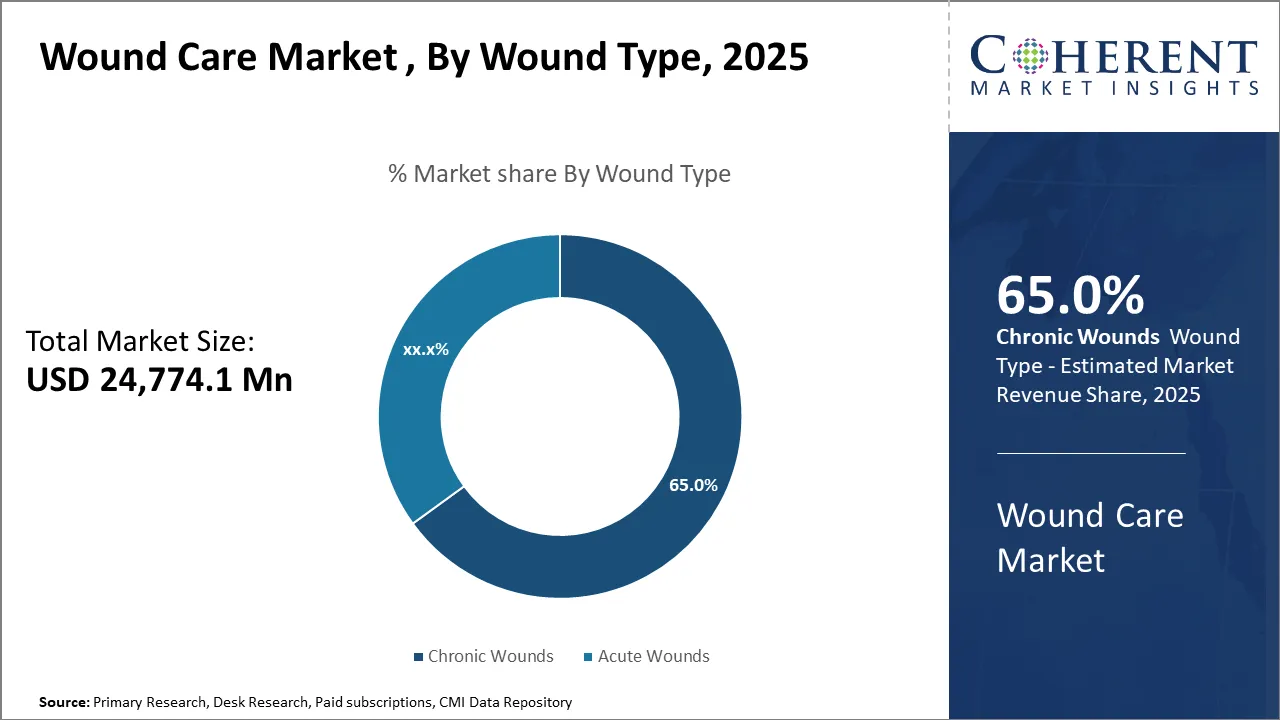
Wound Care Market Insights, By Wound Type: Chronic Wounds Dominate Due to Rising Disease Prevalence and Aging Population
In terms of wound type, the Chronic Wounds segment contributes 66% of the market share in 2026, driven by increasing prevalence of diabetic foot ulcers, pressure ulcers, and venous ulcers. The aging global population, rising incidence of diabetes, and higher risk of immobility-related wounds are major factors fueling this growth.
Chronic wounds demand prolonged care and sophisticated treatment solutions, which drive the demand for advanced solutions in the market. The increased focus by the medical community on early intervention and continuous care has strengthened the demand for innovative dressings and NPWT devices.
For instance, in July 2025, Convatec secured U.S. and European regulatory clearance for its Aquacel™ ConvaFiber™ advanced dressing, designed for managing chronic wounds including diabetic foot ulcers and pressure injuries, reflecting the focus on addressing complex, long-term wounds.
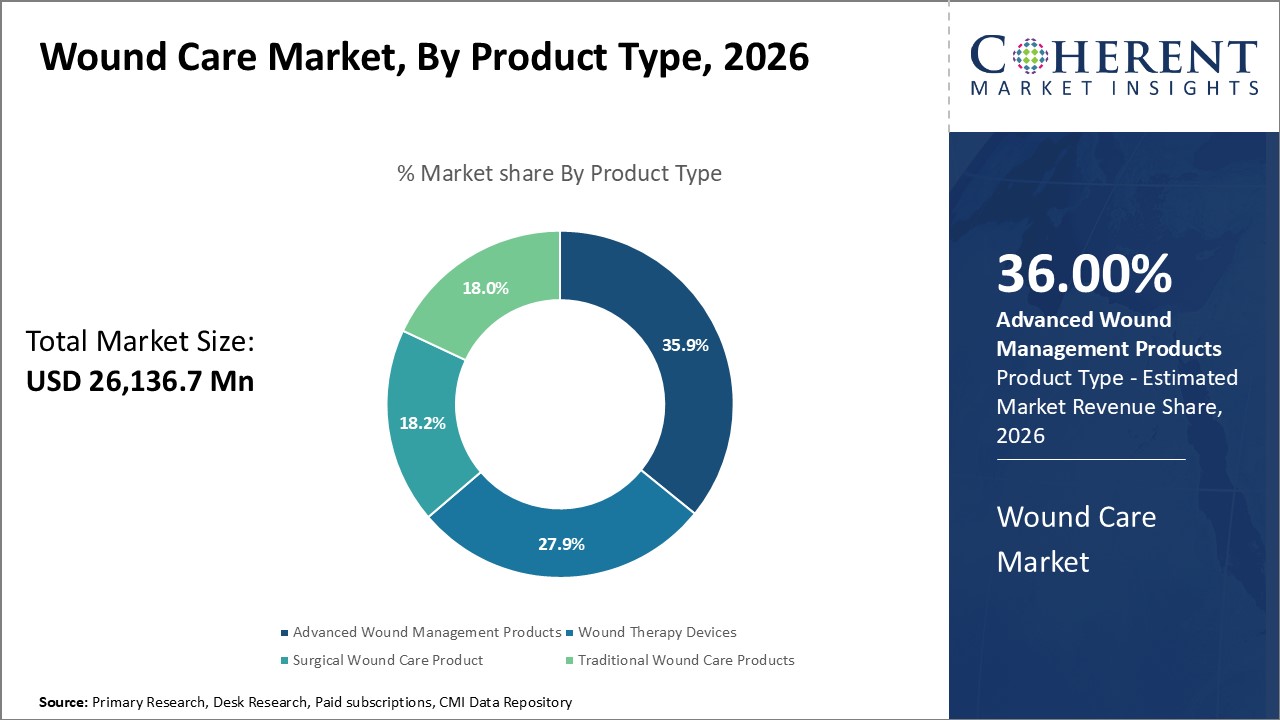
Wound Care Market Insights, By Product Type: Advanced Wound Management Products Lead Due to Faster Healing and Clinical Outcomes
By product type, the Advanced Wound Management Products category accounts for 36% of the overall share of the global wound care industry in 2026. This can be attributed to the widespread adoption of advanced types of dressings like foam dressings, hydrocolloid dressings, alginates, and antimicrobial dressings that help in faster healing. These types of dressings provide enhanced features of moisture management, infection protection, and flexibility compared to other types of dressings.
The use of advanced wound care solutions has become common in hospitals, clinics, and home healthcare settings because they help in faster recovery and prevent complications. Advances in the field include bioactive dressing solutions, sensor-equipped smart dressing solutions, and negative pressure wound therapy systems.
For instance, in September 2025, Smith+Nephew launched the CENTRIO Platelet-Rich-Plasma (PRP) System in the U.S., a biologic wound care solution designed to support natural healing in chronic wounds, demonstrating the trend toward advanced, technology-driven wound care products.
Wound Care Market Insights, By End User: Hospitals Lead Due to High Patient Inflow and Access to Advanced Technologies
In terms of end user, hospitals are expected to hold 51% of the market share in 2026, owing to high patient inflow, availability of advanced wound care technologies, and a large volume of surgical and chronic wound treatments. Hospitals are the primary settings for acute and complex wound management, where advanced dressings, NPWT systems, and bioactive therapies are most extensively utilized.
Hospitals are also propelling the adoption of innovations because of clinical trials and research agreements. As the need to improve patient outcomes and shorten the duration of stays in hospitals continues to grow, demand for an effective way to address wounds also increases.
For instance, in October 2025, Smith+Nephew published clinical results for its PICO Single-Use NPWT System, demonstrating reduced wound dehiscence and faster recovery in surgical patients, highlighting hospitals’ pivotal role in deploying advanced wound management technologies.
Regional Insights
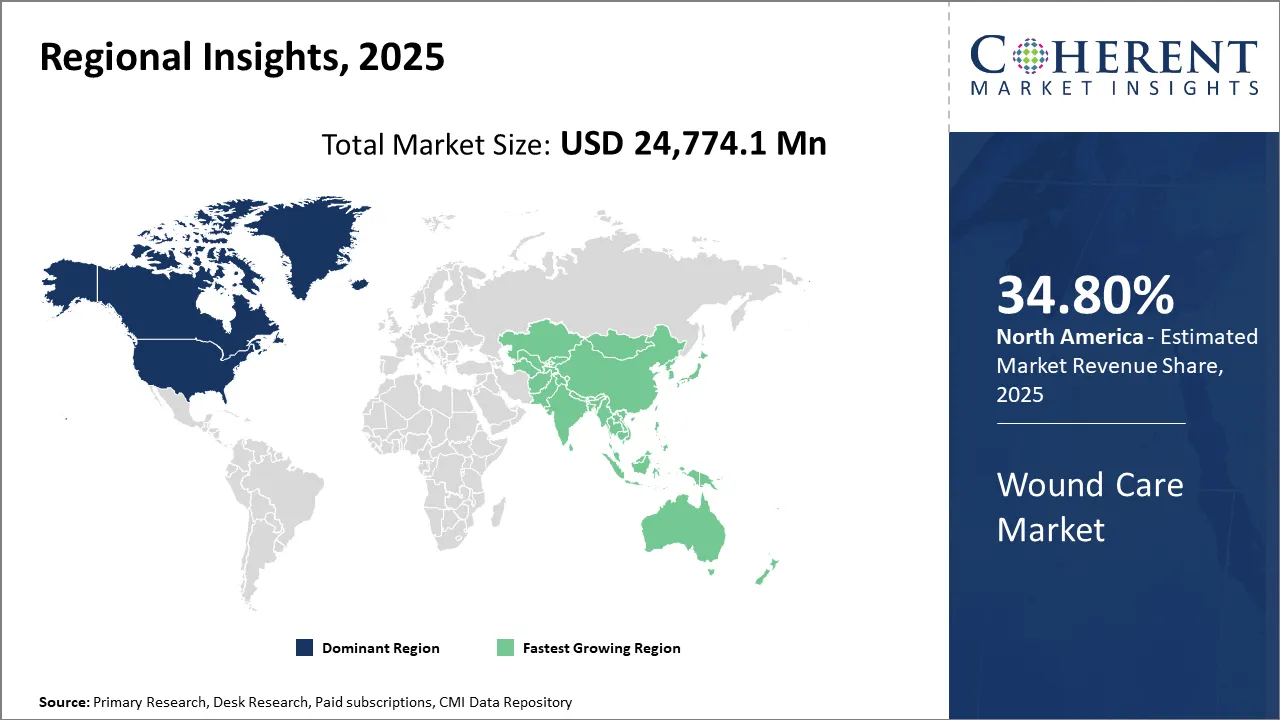
North America Wound Care Market Analysis & Trends
North America is set to lead the global wound care market with 34.8% share in 2026, driven by high prevalence of chronic and surgical wounds, advanced healthcare infrastructure, and widespread adoption of technologically advanced wound care products. The US would lead the North American market as a result of the widespread availability of superior hospital and clinic infrastructures and advanced NPWT devices. In addition to that, an increase in awareness regarding the management of early wounds and expenditure on healthcare and the large number of surgery procedures would accelerate the acceptance of advanced wound care technology.
For instance, in October 2026, Sonoma Pharmaceuticals announced the launch of a new hypochlorous acid (HOCl) wound cleanser, manufactured by Sonoma and distributed by Medline into hospital systems, home healthcare, and other U.S. healthcare channels.
Asia Pacific Wound Care Market Analysis & Trends
The Asia Pacific market is expected to be the leading in terms of growth in the year 2026. Urbanization, rising expenditure on healthcare, rising cases of diabetes and chronic conditions, and the older demographic trend in countries such as China, India, Japan, and Australia have led to the increased demand for solutions related to wound care. Hospitals, specialty and primary care clinics, as well as home healthcare options, offer better access to technologically advanced products in the field of wound care, and increased production capacity by domestic producers has helped satisfy the increased demand.
For instance, in July 2026, Convatec secured regulatory clearance for its Aquacel™ ConvaFiber™ dressing in key Asia Pacific markets, targeting chronic wounds such as diabetic foot ulcers and pressure injuries. This launch highlights the region’s growing adoption of advanced, effective, and technology-driven wound care solutions.
Wound Care Market Outlook Country-Wise
U.S. Wound Care Market Trends
The U.S. wound care market continues to grow in 2026 due to rising demand for advanced wound management solutions, increased prevalence of chronic and surgical wounds, and expanding use of digital and remote monitoring technologies in clinical care. The advanced healthcare system and the high expenditure on healthcare in the United States are some factors that boost the market.
For instance, in February 2026, 3M Health Care launched an intelligent Negative Pressure Wound Therapy (NPWT) system with remote monitoring capabilities targeting home‑based wound care delivery. This new system enhances wound management by enabling clinicians to monitor healing progress remotely and tailor therapy more effectively for chronic wound patients in the U.S. market.
China Wound Care Market Trends
China’s wound care market is advancing in 2026 as healthcare infrastructure expands, chronic disease prevalence rises, and awareness of modern wound care approaches grows among healthcare professionals and patients. There is an awareness among the healthcare professionals and patients regarding the latest techniques and technology used in the management and treatment of wounds.
For example, in October 2026, 3M announced the launch of a new line of advanced wound dressings tailored for the Chinese market, specifically designed to address local healthcare needs and improve clinical outcomes in chronic and complex wound care.
Market Report Scope
Wound Care Market Report Coverage
| Report Coverage | Details | ||
|---|---|---|---|
| Base Year: | 2025 | Market Size in 2026: | USD 26,136.7 Mn |
| Historical Data for: | 2020 To 2024 | Forecast Period: | 2026 To 2033 |
| Forecast Period 2026 to 2033 CAGR: | 5.5% | 2033 Value Projection: | USD 38,020.5 Mn |
| Geographies covered: |
| ||
| Segments covered: |
| ||
| Companies covered: | 3M, Baxter, Coloplast A/S, Acelity L.P. Inc., Integra LifeSciences, Johnson & Johnson Services, Inc., Axio Biosolutions Pvt Ltd., Omeza, Smith & Nephew Plc., Cardinal Health, Schulke & Mayr GmbH, Bactiguard AB, Wound Care Advantage, LLC, Noventure, EO2 Concepts, Essity, Hydrofera, Advance Medical, Inc., CutisCare, Convatec Group PLC, and Organogenesis Inc. | ||
| Growth Drivers: |
| ||
| Restraints & Challenges: |
| ||
Wound Care Market Driver
Increasing number of product approvals by regulatory authorities
Government authorities are taking initatives to introduce new products for better wound care management. Thus, increasing number of product approvals is expected to drive the growth of market over the forecast period. For instance, in September 2021, Omeza, a healthcare company, announced it had received an approval from the U.S. Food and Drug Administration for Omeza collagen matrix, a wound care matrix comprised of hydrolyzed fish collagen for the management of chronic wound care including partial and full-thickness wounds, diabetic ulcers, chronic vascular ulcers, surgical wounds, and draining wounds.
Wound Care Market Opportunities
Increasing prevalence of chronic diseases
The rising cases of diabetes, pressure ulcers, and venous ulcers are fueling the need for sophisticated wound care products in the global market. Chronic wounds need specific care, opening opportunities in the markets of advanced dressings, NPWT, and bioactive products.
Growing geriatric population
The rising elderly population globally has led to an increased risk of chronic and acute wounds, thus creating a growing need for solutions for wound management. This has opened an immense market for hospital-based and home healthcare wound care products.
Analyst Opinion (Expert Opinion)
The wound care industry is witnessing a paradigm shift due to technological innovation and the increasing need for clinical evidence. Highly advanced therapies like negative pressure wound therapy (NPWT) and bioactive dressings are no longer a luxury but are rapidly becoming the norm, especially for chronic wounds where conventional dressings prove ineffective.
At the same time, smart and sensor-enabled wound dressings are now transforming the ways in which healthcare practitioners perform their tasks. Sensor-enabled wound dressings, which can track levels of pH, moisture, and infection bio-markers, enable practitioners to access data in real time, thereby decreasing their dependence on clinical estimations for wound assessment. Research has already revealed that sensor-enabled wound dresses can lower treatment delay levels by a substantial 25%. Those players in the industry who opt for highly advanced technologies will gain a competitive edge in acute hospital segments, whereas players offering basic wound dresses will become obsolete in high-end treatment facilities.
Apart from this, the competitive frontier in wound care is now dictated by measurable clinical impact and integration of digital intelligence. Firms that combine advanced biomaterials, smart monitoring, and clinician-focused support will redefine standards of care and capture the majority of high-value market segments, while incumbents relying on traditional solutions face systemic displacement.
Speak to the analyst
Want personalized insights?
Take the findings above to one of our principal consultants, or have the report rebuilt around the segments, geographies and competitors you actually track.
Wound Care Industry News
- In July 2025 Bactiguard AB, Published Clean to Heal consensus report on advanced wound care practice.
- In September 2025, Smith+Nephew officially announced the U.S. launch of the CENTRIO PRP System designed to support healing in chronic wounds including
- In July 2025, Convatec announced that its next‑generation Hydrofiber® dressing, Aquacel™ ConvaFiber™, achieved regulatory clearance in the U.S., UK, EU and Australia.
Market Segmentation
- Product Type Insights (Revenue, USD Mn & KT, 2026 - 2033)
- Wound Dressings
- Foam Dressings
- Hydrocolloid Dressings
- Film Dressings
- Anti-Infective Dressings
- Alginate Dressings
- Collagen Dressings
- Wound Therapy Devices
- Pressure Relief Devices
- Negative Pressure Wound Therapy Systems
- Hyperbaric Oxygen Equipment
- Electrical Stimulation Devices
- Active Wound Care
- Surgical Wound Care Products
- Sutures and Staples
- Tissue Adhesives, Sealants, and Glues
- Traditional Wound Care Products
- Medical Tapes
- Dressings
- Cleansing Agents
- Wound Dressings
- Wound Type Insights (Revenue, USD Mn & KT, 2026 - 2033)
- Chronic Wounds
- Pressure Ulcers
- Diabetic Foot Ulcers
- Venous Ulcers
- Other Chronic Wounds
- Acute Wounds
- Surgical and Traumatic Wounds
- Burns
- Chronic Wounds
- Application Insights (Revenue, USD Mn & KT, 2026 - 2033)
- Hospitals
- Clinics
- Ambulatory Surgical Centers
- Others (Home Care Settings, etc.)
- Regional Insights (Revenue, USD Mn & KT, 2026 - 2033)
- North America
- U.S.
- Canada
- Latin America
- Brazil
- Argentina
- Mexico
- Rest of Latin America
- Europe
- Germany
- U.K.
- Spain
- France
- Italy
- Russia
- Rest of Europe
- Asia Pacific
- China
- India
- Japan
- Australia
- South Korea
- ASEAN
- Rest of Asia Pacific
- Middle East & Africa
- GCC Countries
- Israel
- Rest of Middle East & Africa
- North America
- Key Players Insights (Revenue, USD Mn, 2021 - 2033)
- 3M
- Baxter
- Coloplast A/S
- Acelity L.P. Inc.
- Integra LifeSciences
- Johnson & Johnson Services, Inc.
- Axio Biosolutions Pvt Ltd.
- Omeza
- Smith & Nephew Plc.
- Cardinal Health
- Schulke & Mayr GmbH
- Bactiguard AB
- Wound Care Advantage, LLC
- Noventure
- EO2 Concepts
- Essity, Hydrofera
- Advance Medical, Inc.
- CutisCare
- Convatec Group PLC
- Organogenesis Inc.
Sources
Primary Research Interviews from the following stakeholders
Stakeholders
- Interviews with hospital procurement heads, wound care specialists, clinical researchers, home healthcare providers, and medical device distributors across major regional markets.
Specific stakeholders
- Chief Medical Officers and R&D heads at leading wound care and healthcare companies (e.g., Smith+Nephew, 3M, Convatec, Coloplast, Baxter)
- Procurement and sourcing managers at hospitals, clinics, and surgical centers
- Operations and production managers at wound care device manufacturers and medical dressing converters
- Home healthcare service providers and nursing managers responsible for chronic wound management
- Regulatory and quality control specialists in wound care and medical device approvals
- Sales and marketing heads at wound care distributors and supply chain partners
- Clinical trial coordinators and research scientists focusing on advanced wound therapies
Databases
- U.S. Food & Drug Administration (FDA) – Medical Device & Wound Care Approvals
- China National Medical Products Administration (NMPA) – Device & Dressing Registration Data
- European Medicines Agency (EMA) – Wound Care Device Registrations
- World Health Organization (WHO) – Global Health Statistics on Chronic Wounds
- National Health Service (NHS) Digital – Wound Care Utilization Data
- Centers for Disease Control and Prevention (CDC) – Diabetes & Pressure Ulcer Statistics
- Ministry of Health, China – Chronic Wound Care Guidelines and Reports
- U.S. Census Bureau – Hospital & Healthcare Facility Data
Magazines
- Wound Care Advisor
- Wounds International
- Advances in Skin & Wound Care
- Ostomy Wound Management
- Wound Healing Southern Africa
- Wound Source
- Clinical Wound Care & Infection Control
- MedTech Insight – Wound Care Section
- Modern Healthcare – Medical Devices Section
Journals
- Journal of Wound Care
- International Wound Journal
- Advances in Skin & Wound Care
- Wound Repair and Regeneration
- Journal of Tissue Viability
- Burns & Trauma Journal
- Journal of Diabetes Science and Technology – Wound Care Section
- Plastic and Reconstructive Surgery – Wound Management Section
Newspapers
- The Wall Street Journal – Healthcare & Medical Devices
- The Economic Times – Pharmaceuticals & Medical Devices
- Business Standard – Healthcare & Surgical Supplies
- Financial Times – Medical Technology & Innovation
- Nikkei Asia – Healthcare & Medical Devices
- The Hindu Business Line – Healthcare Equipment & Services
- South China Morning Post – Medical Devices & Healthcare Market
- The Guardian – Health Technology & Patient Care
Associations
- Wound Healing Society (WHS)
- European Wound Management Association (EWMA)
- American Professional Wound Care Association (APWCA)
- Association for the Advancement of Wound Care (AAWC)
- Canadian Association for Wound Care (CAWC)
- International Alliance of Wound Care Stakeholders (IAWCS)
- National Pressure Injury Advisory Panel (NPIAP)
- Australian Wound Management Association (AWMA)
- Indian Association of Wound Care Professionals (IAWCP)
Public Domain Sources
- Centers for Disease Control and Prevention (CDC) – Chronic Wound & Pressure Ulcer Reports
- World Health Organization (WHO) – Global Chronic Disease & Wound Statistics
- National Health Service (NHS) – Wound Care Guidelines and Reports
- U.S. Food & Drug Administration (FDA) – Device Approvals & Recalls
- China National Health Commission – Chronic Disease and Wound Care Statistics
- European Medicines Agency (EMA) – Medical Device Registrations
- OECD – Health Statistics on Chronic Diseases & Wound Burden
- Ministry of Health, India – Wound Care & Home Healthcare Reports
- United Nations Public Health Publications – Global Health and Wound Care Data
Proprietary Elements
- CMI Data Analytics Tool
- Proprietary CMI Existing Repository of information for last 8 years
Get access to 250+ pages report
Every segment, forecast, competitor profile and data table behind the analysis above — available for instant download.
- ESOMAR Member
- ISO 9001:2015 Certified
- D-U-N-S Registered
- GDPR & CCPA Compliant
Missing comfort of reading report in your local language? Find your preferred language:
Transform your Strategy with Exclusive Trending Reports
Frequently Asked Questions
The Wound Care Market is estimated to be valued at USD 26,136.7 Mn in 2026, and is expected to reach USD 38,020.5 Mn by 2033.
The CAGR of the Wound Care Market is projected to be 5.5% from 2026 to 2033.
Increasing number of product approvals by regulatory authorities, such as the U.S. Food and Drug Administration, is expected to drive the market.
Chronic wounds is the leading wound type segment in the market.
The key factor hampers the market includes increasing number of product recalls by regulatory authorities such as the U.S. Food and Drug Administration.
Major players operating in the market 3M, Baxter, Coloplast A/S, Acelity L.P. Inc., Integra LifeSciences, Johnson & Johnson Services, Inc., Axio Biosolutions Pvt Ltd., Omeza, Smith & Nephew Plc., Cardinal Health, Schulke & Mayr GmbH, Bactiguard AB, Wound Care Advantage, LLC, Noventure, EO2 Concepts, Essity, Hydrofera, Advance Medical, Inc., CutisCare, Convatec Group PLC, and Organogenesis Inc.