

Advanced Wound Care Management Market Size and Trends
Global advanced wound care management market is estimated to be valued at USD 13.02 Bn in 2026 and is expected to reach USD 18.94 Bn by 2033, exhibiting a compound annual growth rate (CAGR) of 5.5% from 2026 to 2033.
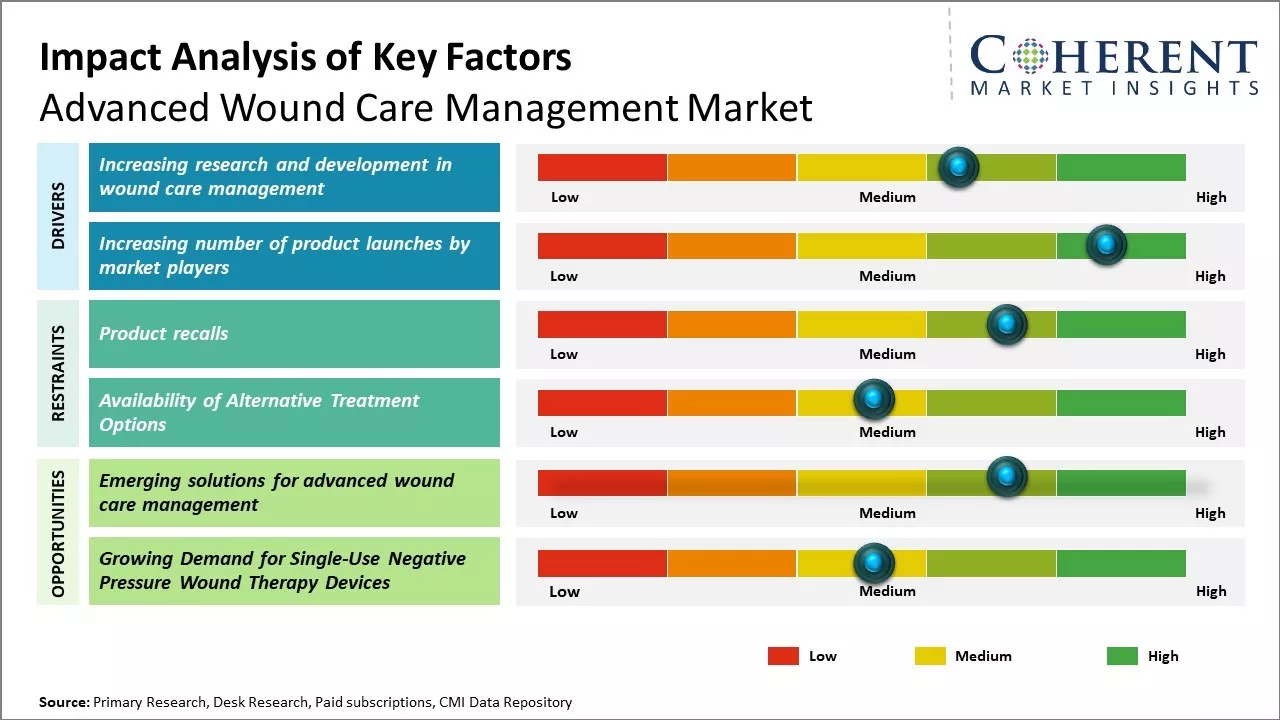
Key Takeaways
- Based on Product Type, the Moist Wound Dressings segment is holing an estimated share of 52.2 % in the market in 2026, driven by their healing benefits, pain relief, and ongoing product innovations.
- Based on Type, the Absorbent segment leads the market with 88.7 % share in 2026, driven by their superior exudate control, healing comfort, and support from leading manufacturers.
- Based on Wound Type, the Ulcer segment expected to contribute 48.8 % share of the market in 2026, driven by chronic wound care needs and rising geriatric cases linked to diabetes and vascular conditions.
- Based on End User, the Hospitals segment is projected to capture the largest share of the market in 2026, due to their ability to handle complex and chronic wound cases with specialized therapies and equipment.
- Based on Region, North America is expected to lead the market, holding a share of 40.8 % in 2026. While, Asia Pacific is anticipated to be the fastest-growing region.
Market Overview
Global advanced wound care management market is expected to witness significant growth over the forecast period. Key factors such as increasing prevalence of chronic wounds worldwide due to rising geriatric population, growing incidence of diabetes and associated complications are expected to boost demand for advanced wound care products. Furthermore, technological advancements in wound care products along with rising medical expenditures is also anticipated to propel the market growth.
Current Events and Its Impact
Current Events | Description and its Impact |
Regulatory and Policy Transformations |
|
Healthcare Infrastructure and Delivery Model Transformation |
|
Role of Artificial Intelligence (AI) in the Advanced Wound Care Management Market
Artificial intelligence is reshaping advanced wound care by enabling faster, more accurate diagnosis, personalized treatment plans, and remote monitoring. AI-powered tools analyze wound images, track healing progress, and predict complications, reducing hospital visits and improving outcomes. This tech-driven shift supports clinicians with data-backed decisions and empowers patients through accessible, real-time care.
For instance, in September 2025, A*STAR’s CareCam is transforming wound care through AI-powered image analysis and remote monitoring. Designed to assist healthcare professionals, the system enables accurate wound assessment and tracking via mobile devices. This innovation supports faster, data-driven decisions, improving patient outcomes and advancing digital healthcare in Singapore’s clinical settings.
- Current Industry Events of 2026
- Market Size Estimation
- Regional Breakdown
- Competitive Landscape
- Customer Intelligence
- Segmental Analysis
- Pricing Analysis
- Key Market Drivers, Challenges & Future Trends
- Customized Insights Section
Segmental Insights
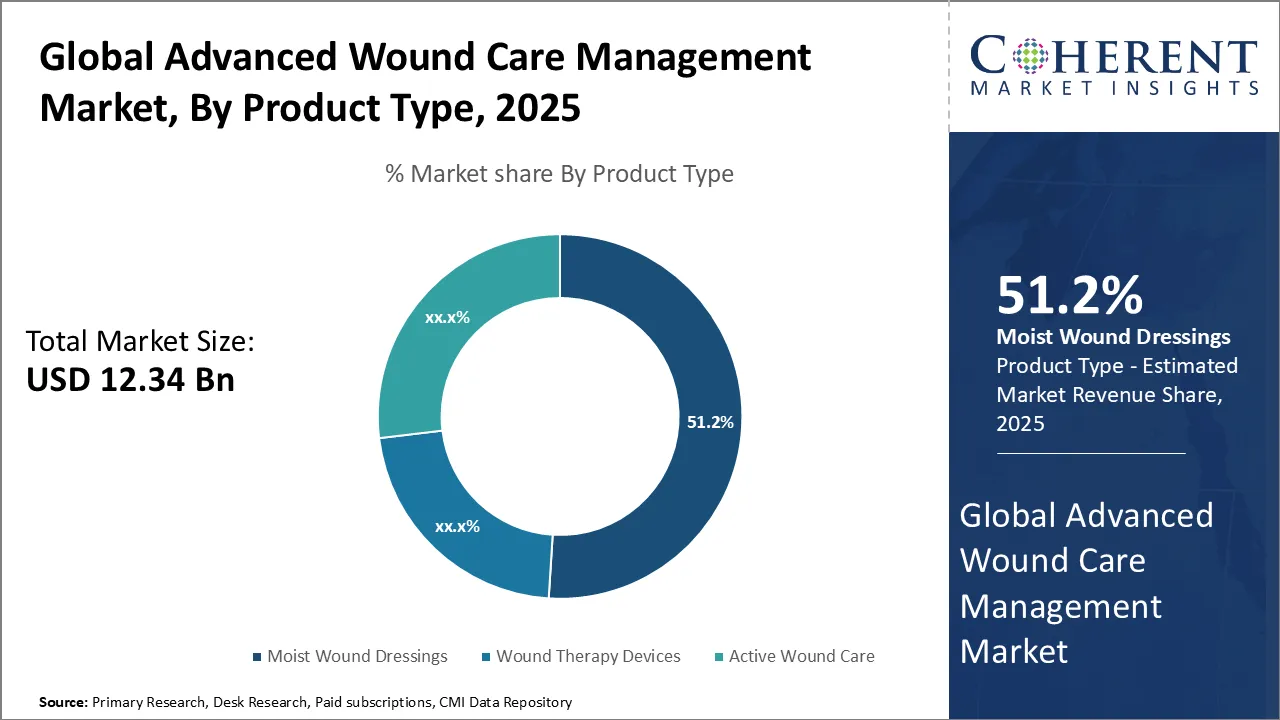
Advanced Wound Care Management Market Insights, By Product Type - Moist Wound Dressing Dominates Driven by Their Healing Benefits, Pain Relief, And Ongoing Product Innovations
In terms of product type, the moist wound dressings segment is estimated to hold 52.2% share of the market in 2026. Moist wound dressings absorb excess exudate from wounds while maintaining a moist environment which prevents wounds from drying out and cracking. This moist wound environment promotes angiogenesis and re-epithelialization which are critical steps in wound healing. Moist wound dressings also relieve pain by keeping wounds moist which allows for fewer dressing changes. Increasing advancements in the product by key market players is expected to boost the segment growth over the forecast period.
For instance, in January 2025, Beiersdorf launched the next generation of plasters designed to support moist wound healing, a proven method for faster recovery. These advanced dressings combine skin-friendly materials with enhanced adhesion and breathability, aligning with modern wound care standards. The innovation reflects Beiersdorf’s commitment to elevating everyday healthcare solutions.
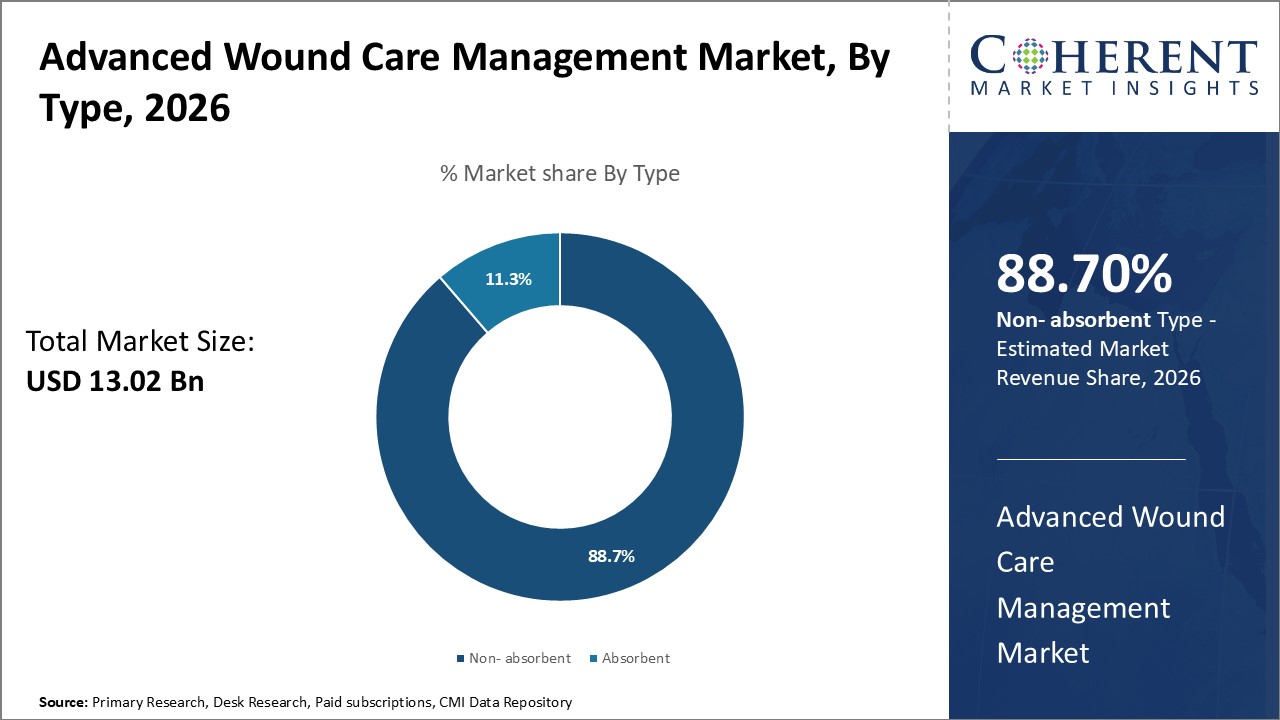
Advanced Wound Care Management Market Insights, By Type - Absorbent is Leading Driven by Their Superior Exudate Control, Healing Comfort, And Support from Leading Manufacturers
In terms of Type, the absorbent segment is expected to hold 88.7% of the market share in 2026. Absorbent dressings are highly effective at wicking away excess exudate from wounds to prevent maceration of surrounding healthy tissue. Their absorbent properties help to establish a moist wound environment ideal for healing while protecting peri-wound skin. Various cellulose and superabsorbent polymer-based materials provide these dressings high absorptive capacities without requiring frequent changes. This absorbency allows for a comfortable healing experience, reducing pain and risk of infection from frequent dressing changes.
For instance, in April 2024, MPM Medical introduced a new line of advanced absorbent wound care products, paired with refreshed branding. Designed to enhance healing and comfort, these high-performance dressings offer superior exudate control. The launch reflects MPM’s commitment to innovation and quality in the evolving wound care landscape.
Advanced Wound Care Management Market Insights, By Wound Type - Ulcer Surge is Driven by Chronic Wound Care Needs and Rising Geriatric Cases Linked to Diabetes and Vascular Conditions
In terms of wound type, the ulcers segment is expected to hold 48.8% of the market share in 2026. Chronic wounds like venous leg ulcers and diabetic foot ulcers often require long term and repeated application of advanced wound dressings and therapies. Their chronic nature means ulcers have frequent dressing changes and treatments as part of an ongoing care regimen. This sustained treatment demand from chronic ulcer cases is a major driver of the market share for this segment compared to more acute wound types. Increasing geriatric population who are more susceptible to chronic wounds due to chronic diseases such as diabetes is expected to drive the segment growth.
For instance, in April 2025, Gruppo San Donato introduced a new Wound Care Network to enhance chronic wound management, with a focus on ulcers such as diabetic foot and venous leg ulcers. This integrated care model combines clinical expertise, technology, and personalized treatment pathways to improve healing outcomes and streamline patient support across Italy.
Advanced Wound Care Management Market Insights, By End User - Hospitals Lead Due To Their Capacity to Manage Complex Cases with Specialized Therapies and Integrated Clinical Support
In terms of end user, the hospital segment is expected to hold the dominating share of the market in 2026, due to their ability to handle complex and chronic wound cases with specialized therapies and equipment. High patient volumes, particularly among the elderly and those with diabetes, drive demand for absorbent and moist wound dressings, negative pressure systems, and other advanced solutions. Hospitals offer integrated care through multidisciplinary teams, ensuring consistent monitoring and faster healing outcomes. Their access to cutting-edge technologies and strict infection control protocols makes them the preferred setting for effective wound management, reinforcing their leading role in the market.
Regional Insights
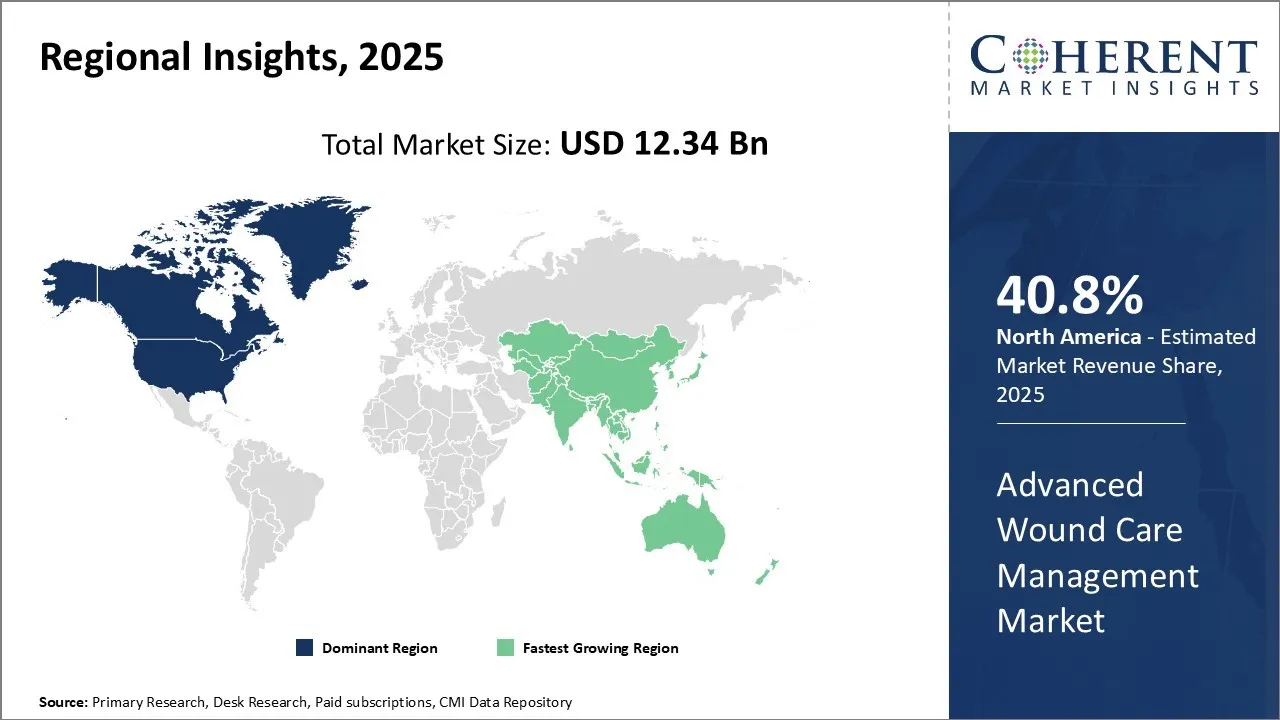
North America Advanced Wound Care Management Market Analysis & Trends
North America is the dominant region in the global advanced wound care management market and is anticipated to hold 40.8% of the market share in 2026. The presence of major industry players and their strong distribution networks across the region have made North America the innovation hub for new and improved wound care solutions. Players located in North America invest significantly in R&D activities, driving the development and introduction of novel and technologically advanced products in this market. Moreover, increasing launches of negative pressure wound therapy (NPWT) devices by key market players is expected drive the market growth during the forecast period.
For instance, in September 2026, Mölnlycke Health Care launched a USD 135 million expansion of its U.S. wound care facility in Brunswick, Georgia. The project aims to boost production of advanced wound dressings to meet rising demand. This strategic investment underscores Mölnlycke’s commitment to innovation and strengthening its footprint in the global wound care market.
Asia Pacific Advanced Wound Care Management Market Analysis & Trends
Asia Pacific has emerged as the fastest growing regional market for advanced wound care management due to expanding medical capabilities and a rapidly developing private healthcare sector across developing nations. Countries like India, China, Singapore and South Korea are witnessing massive investments in building healthcare capacities to meet the needs of their growing populations. Rising medical tourism and foreign collaborations have raised clinical standards in these markets. Asia Pacific houses nearly two-thirds of the global diabetic population, presenting a huge patient base for wound care products. Joint ventures between local manufacturers and international players are enabling technology transfers and skills development. This is helping domestic firms increase their competitiveness. With rising disposable incomes, favorable policy support and growing medical requirements, the Asia Pacific region is expected to witness continued strong growth in the advanced wound care management industry in the near future.
For instance, in June 2026, Covestro launched localized production of medical-grade thermoplastic polyurethane (TPU) in the Asia-Pacific region to meet rising regional demand. This strategic move enhances supply chain resilience and supports advanced healthcare applications, including wound care, by offering high-performance materials tailored for medical device manufacturing.
Advanced Wound Care Management Market Outlook Country-wise
The U.S. Advanced Wound Care Management Market Trends
In 2026, the U.S. advanced wound care management market is witnessing strong demand due to a rising prevalence of chronic conditions such as diabetes, obesity, and cardiovascular diseases, which contribute to slow-healing wounds like diabetic foot ulcers and pressure injuries. The country’s aging population further amplifies the need for specialized wound care solutions. Hospitals and outpatient centers are increasingly adopting advanced therapies, including moist and absorbent dressings, negative pressure wound therapy, and bioengineered skin substitutes to improve healing outcomes and reduce complications. Additionally, strong healthcare infrastructure, reimbursement support, and ongoing innovation by key market players continue to drive growth across the U.S. wound care landscape.
For instance, in May 2026, Summit Products Group launched with a mission to transform surgical and regenerative wound care. The company aims to deliver innovative solutions that enhance healing outcomes through advanced technologies and biologics. This strategic entry marks a significant step in reshaping the future of wound management and patient recovery.
India Advanced Wound Care Management Market Trends
India’s advanced wound care market is growing rapidly in 2026 due to rising chronic conditions like diabetes and vascular diseases, which lead to ulcers and slow-healing wounds. An aging population, increased surgical procedures, and expanding healthcare access, especially through homecare and transitional models are fueling demand. Innovations and awareness around absorbent and moist dressings further accelerate market growth.
For instance, in September 2024, HCAH partnered with Aroa Biosurgery to introduce a specialized wound care initiative across India, focusing on chronic wounds like ulcers. The collaboration aims to deliver advanced wound management solutions through homecare and transitional care services, enhancing healing outcomes and accessibility for patients nationwide.
Market Report Scope
Advanced Wound Care Management Market Report Coverage
| Report Coverage | Details | ||
|---|---|---|---|
| Base Year: | 2025 | Market Size in 2026: | USD 13.02 Bn |
| Historical Data for: | 2020 To 2024 | Forecast Period: | 2026 To 2033 |
| Forecast Period 2026 to 2033 CAGR: | 5.5% | 2033 Value Projection: | USD 18.94 Bn |
| Geographies covered: |
| ||
| Segments covered: |
| ||
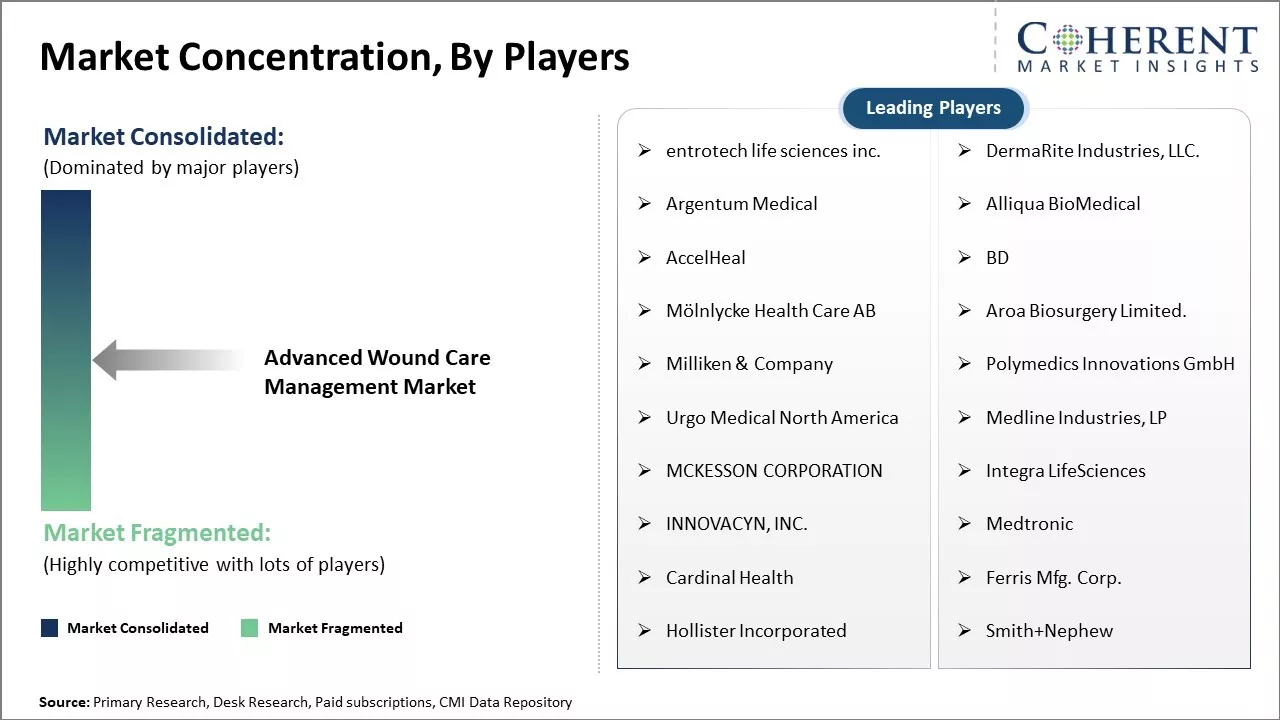
| Companies covered: | entrotech life sciences inc., DermaRite Industries, LLC., Argentum Medical, Alliqua BioMedical, AccelHeal, BD, Mölnlycke Health Care AB, Aroa Biosurgery Limited., Milliken & Company, Polymedics Innovations GmbH, Urgo Medical North America, Medline Industries, LP, MCKESSON CORPORATION, Integra LifeSciences, INNOVACYN, INC., Medtronic, Cardinal Health, Ferris Mfg. Corp., Hollister Incorporated, Smith+Nephew | ||
| Growth Drivers: |
| ||
| Restraints & Challenges: |
| ||
Advanced Wound Care Management Market Driver
Increasing Research and Development in Wound Care Management
Rising investments in research and development are driving innovation in the Advanced Wound Care Management Market. Breakthroughs in bioactive dressings, smart wound technologies, and regenerative therapies are enhancing treatment outcomes. These advancements are expected to significantly boost the Advanced Wound Care Management Market share by addressing complex wounds and improving patient recovery rates. For instance, in March 2025, a new study by Mölnlycke demonstrates that improving dressing regimes can significantly enhance value-based chronic wound care. The findings show better healing outcomes, reduced treatment costs, and improved patient experiences. This research supports the adoption of advanced wound care strategies to optimize clinical and economic results in chronic wound management.
Increasing Number of Product Launches by Market Players
Market players are focused on growth strategies such as product launches, and this is expected to boost the growth of global advanced wound care management market. For instance, in March 2023, Bactiguard AB, a medical device company, announced the launch of its wound care offering in the U.K. and Ireland, in collaboration with Quintess Medical, a product distributor, and, GS Medical, its partner, full-service medical sales and distribution firm. The collaboration will not only bring Bactiguard’s Wound Care product range to even more patients and end users, but also further strengthen Bactiguard’s position in the advanced wound care management market. In January 2023, Convatec, a global medical products and technologies company, announced the U.S. launch of ConvaFoam, a family of advanced foam dressings designed to address the needs of healthcare providers and their patients. ConvaFoam can be used on a spectrum of wound types at any stage of the wound journey, making it the simple dressing choice for wound management and skin protection.
Advanced Wound Care Management Market Opportunities
Emerging Solutions for Advanced Wound Care Management
Emerging solutions such as bioengineered skin substitutes, antimicrobial dressings, and AI-powered wound monitoring are revolutionizing treatment protocols in the Advanced Wound Care Management Market. These innovations are expected to accelerate healing and reduce complications, driving growth. According to the Advanced Wound Care Management Market Forecast, such advancements will significantly expand market reach and adoption across healthcare settings.
Market Concentration and Competitive Landscape
Analyst Opinion (Expert Opinion)
The Advanced Wound Care Management market is at an inflection point where clinical need, digital sensing, and commercial strategy are colliding. The next five years will be defined less by broad market growth stories and more by which technologies clear three practical gates: (a) demonstrable clinical benefit in real-world settings, (b) predictable reimbursement/clinical-pathway integration, and (c) supply-chain and procurement readiness for scale. Several concrete themes and their implications follow.
There is accelerating academic and early-commercial evidence for moisture, pH, temperature, enzyme and bacterial-metabolite sensors embedded into dressings and bandages (multiple peer-reviewed demonstrations and prototype clearances exist). Examples include moisture sensors that showed more than 40% of dressing changes occurred prematurely in study settings (highlighting clear waste and care-optimization opportunity) and several licensed real-time moisture sensors now in product use. Leading digital platforms (AI-driven imaging and wound-tracking solutions) are entering clinics and wound centres as decision-support tools. These technologies address a genuine need — reducing unnecessary dressing changes and enabling earlier therapeutic escalation but they remain constrained by validation, workflow integration, and regulatory/ reimbursement complexity. Clinical-app reliability and independent outcome data remain the gating items for rapid substitution of clinician judgement.
Tissue-engineered and biological skin substitutes are trending toward routine use for hard-to-heal ulcers and full-thickness wounds in specialized centres. Adoption is strongest in hospital systems with multidisciplinary wound teams, and the device/service economics favour centres that can centralize application (operating room or day-case facilities). This is reflected by robust segment growth in specialist reporting and by product launches targeting post-surgical and diabetic foot indications. The commercial implication is that suppliers of skin substitutes must partner closely with centres of excellence and payers to create bundled evidence (healing outcomes + avoided downstream costs) rather than rely on unit pricing alone.
Multiple studies and systematic reviews show that many digital wound assessment apps and sensor systems lack consistent, high-quality, evidence demonstrating outcome improvement in routine practice. Evaluations of AI and mobile apps highlight reliability gaps and the absence of standardized validation frameworks. Payers and hospital procurement teams therefore default to established product classes (NPWT, advanced dressings, engineered tissues) unless a new solution offers robust cost-offset data. Consequently, vendors that invest in multi-centre, pragmatic outcome trials will obtain disproportionate access to integrated supply agreements.
Speak to the analyst
Want personalized insights?
Take the findings above to one of our principal consultants, or have the report rebuilt around the segments, geographies and competitors you actually track.
Advanced Wound Care Management Industry News
- In November 2024, Geistlich Pharma announced an exclusive distribution partnership for its wound care portfolio in the United States. This strategic collaboration aims to expand access to Geistlich’s advanced wound healing products, enhancing treatment options for chronic and surgical wounds across the U.S. healthcare market.
- In May 2023, Smith+Nephew, a global medical technology company, announced that its PICO Single Use Negative Pressure Wound Therapy Systems had received an Innovative Technology contract from Vizient, Inc., a health care performance improvement company. The contract was awarded based on the recommendation of the PICO Single Use Negative Pressure Wound Therapy Systems by hospital experts who serve on one of Vizient's member-led councils.
- In April 2023, 3M, a multinational conglomerate company, announced that it had received approval from U.S. Food and Drug Administration for 3M Veraflo Therapy, with both 3M Veraflo Cleanse Choice Complete Dressing and 3M V.A.C. Veraflo is a hydromechanical removal of infectious materials, non-viable tissue and wound debris which reduces the number of surgical debridements required, while promoting granulation tissue formation, creating an environment that promotes wound healing.
- In April 2023, InfuSystem Holdings, Inc., a leading national healthcare service provider, announced a national distribution agreement with Genadyne Biotechnologies Inc., developer and manufacturer of negative pressure wound therapy systems for its negative pressure wound therapy (“NPWT”) systems and supplies. InfuSystem will offer Genadyne’s complete line of wound care products, including its most advanced XLR8 Plus NPWT Pump, which delivers advanced variable pressure capabilities with a gradual wave, in conjunction with Genadyne’s proprietary XLR8 Dressing Kit with Silver, an antimicrobial contact layer to protect the wound.
Market Segmentation
- Product Type Insights (Revenue, USD Bn, 2026 - 2033)
- Moist Wound Dressings
- Foam Dressings
- Hydrocolloid Dressings
- Film Dressings
- Alginate Dressings
- Hydrogel Dressings
- Collagen Dressings
- Antibacterial Dressings
- Antimicrobial Dressings
- Others
- Wound Therapy Devices
- Pressure Relief Devices
- Negative Pressure Wound Therapy Systems
- Hyperbaric Oxygen Equipment
- Electrical Stimulation Devices
- Active Wound Care
- Artificial Skin and Substitutes
- Topical Agent
- Type Insights (Revenue, USD Bn, 2026 - 2033)
- Non- absorbent
- Absorbent
- Wound Type Insights (Revenue, USD Bn, 2026 - 2033)
- Surgical Wounds
- Ulcers
- Pressure Ulcers
- Diabetic Foot Ulcers
- Venous Ulcers
- Traumatic Wounds
- Burns
- Others
- End User Insights (Revenue, USD Bn, 2026 - 2033)
- Hospitals
- Clinics
- Homecare Settings
- Regional Insights (Revenue, USD Bn, 2026 - 2033)
- North America
- U.S.
- Canada
- Latin America
- Brazil
- Argentina
- Mexico
- Rest of Latin America
- Europe
- Germany
- U.K.
- Spain
- France
- Italy
- Russia
- Rest of Europe
- Asia Pacific
- China
- India
- Japan
- Australia
- South Korea
- ASEAN
- Rest of Asia Pacific
- Middle East
- GCC Countries
- Israel
- Rest of Middle East
- Africa
- South Africa
- North Africa
- Central Africa
- Key Players Insights (Revenue, USD Bn, 2021 - 2033)
- entrotech life sciences inc.
- DermaRite Industries, LLC.
- Argentum Medical
- Alliqua BioMedical
- AccelHeal
- BD
- Molnlycke Health Care AB
- Aroa Biosurgery Limited.
- Milliken & Company
- Polymedics Innovations GmbH
- Urgo Medical North America
- Medline Industries, LP
- MCKESSON CORPORATION
- Integra LifeSciences
- INNOVACYN, INC.
- Medtronic
- Cardinal Health
- Ferris Mfg. Corp.
- Hollister Incorporated
- Smith+Nephew
Sources
Primary Research
Interviews from the following stakeholders
Stakeholders
- Interviews with wound care product manufacturers, hospital procurement heads, clinicians, wound care specialists, nursing staff, insurance payers, and distributors across leading global markets.
Specific stakeholders
- Chief medical officers and wound care specialists at leading hospitals and healthcare systems (e.g., Mayo Clinic, Apollo Hospitals, NHS Trusts)
- Procurement and supply chain managers at hospital groups and clinics
- Product managers and R&D leads at wound dressing and device OEMs (e.g., hydrocolloid, alginate, foam, and antimicrobial dressings)
- Nursing directors and clinical wound management teams in long-term care facilities and home healthcare agencies
- Reimbursement managers and claims heads at insurance providers and public health payers (e.g., Medicare, NHS England, Ayushman Bharat)
- Distribution partners and wholesalers in medical supplies
- Biomedical engineers and regulatory affairs specialists involved in wound care device compliance
Databases
- World Health Organization (WHO) – Global Health Observatory (GHO) Data
- World Trade Organization (WTO) Trade Statistics
- UN Comtrade Database
- Centers for Medicare & Medicaid Services (CMS)
- Eurostat – Healthcare Expenditure & Medical Device Imports
- U.S. Food and Drug Administration (FDA) Database
- Pharmaceuticals and Medical Devices Agency (PMDA), Japan
- National Health Services (NHS) Digital Data, UK
- Directorate General of Commercial Intelligence and Statistics (DGCIS), India
- Global Health Data Exchange (GHDx)
Magazines
- Wounds International
- Journal of Wound Care (JWC) – Industry Updates Section
- Wound Management & Prevention
- Medical Device Network Magazine
- Healthcare Purchasing News
- MedTech Dive
- DeviceMed
- Hospital Management Magazine
Journals
- Advances in Wound Care (Mary Ann Liebert)
- International Wound Journal
- Journal of Tissue Viability
- Wound Repair and Regeneration
- Journal of Clinical Nursing – Wound Care Section
- International Journal of Lower Extremity Wounds
- Biomedical Materials (IOP Publishing)
Newspapers
- The Wall Street Journal – Healthcare & Life Sciences
- The Economic Times – Health & Pharmaceuticals
- The Hindu Business Line – Healthcare Industry
- Financial Times – MedTech & Devices Coverage
- Nikkei Asia – Medical Technology Supply Chain
- South China Morning Post – Healthcare Technology
Associations
- World Union of Wound Healing Societies (WUWHS)
- European Wound Management Association (EWMA)
- Wound Healing Society (U.S.)
- International Society for Cellular Therapy (ISCT) – Tissue Engineering & Regenerative Medicine
- American Nurses Association (ANA) – Wound Care Specialty Group
- Association for the Advancement of Wound Care (AAWC)
- International Diabetes Federation (IDF) – Diabetic Foot Ulcer Care Focus
- Confederation of Indian Industry (CII) – Healthcare Device Council
Public Domain Sources
- U.S. National Institutes of Health (NIH)
- National Institute for Health and Care Excellence (NICE), UK
- Ministry of Health and Family Welfare (MoHFW), India
- Centers for Disease Control and Prevention (CDC), U.S.
- Ministry of Health, Labour and Welfare (MHLW), Japan
- European Medicines Agency (EMA)
- NITI Aayog – Healthcare and Medical Devices Reports
- Reserve Bank of India (RBI) – Healthcare Spending Trends
- OECD Health Statistics
Proprietary Elements
- CMI Data Analytics Tool, and Proprietary CMI Existing Repository of information for last 8 years
*Definition: Advanced Wound Care Management Market involves products that aid in treating chronic and hard-to-heal wounds. This includes moisture therapy dressings, wound cleansers, debriding agents, antimicrobial dressings, wound assessment products, growth factors, and negative pressure wound therapy devices. As the aging population grows globally, the incidences of diabetes and other conditions that delay wound healing are increasing.
Get access to 250+ pages report
Every segment, forecast, competitor profile and data table behind the analysis above — available for instant download.
- ESOMAR Member
- ISO 9001:2015 Certified
- D-U-N-S Registered
- GDPR & CCPA Compliant
Missing comfort of reading report in your local language? Find your preferred language:
Transform your Strategy with Exclusive Trending Reports
Frequently Asked Questions
The Advanced Wound Care Management Market is estimated to be valued at USD 13.02 Bn in 2026, and is expected to reach USD 18.94 Bn by 2033.
The CAGR of the Advanced Wound Care Management Market is projected to be 5.5% from 2026 to 2033.
Increasing research and development in wound care management and increasing number of product launches by market players are the major factor driving the growth of global advanced wound care management market.
Product recalls and availability of alternative treatment options are the major factor hampering the growth of global advanced wound care management market.
In terms of product type, moist wound dressings segment is estimated to dominate the market in 2026.
entrotech life sciences inc., DermaRite Industries, LLC., Argentum Medical, Alliqua BioMedical, AccelHeal, BD, Mölnlycke Health Care AB, Aroa Biosurgery Limited., Milliken & Company, Polymedics Innovations GmbH, Urgo Medical North America, Medline Industries, LP, MCKESSON CORPORATION, Integra LifeSciences, INNOVACYN, INC., Medtronic, Cardinal Health, Ferris Mfg. Corp., Hollister Incorporated, Smith+Nephew are the major players.
North America is expected to lead the of global advanced wound care management market.