

AI-Based Surgical Navigation Market Size and Share Analysis – 2026 To 2033
The global AI-Based Surgical Navigation Market is anticipated to expand at a CAGR of 16.3% to USD 2.24 Bn in 2026 and is projected to reach USD 6.45 Bn by 2033. Some of the key growth drivers include increasing adoption of AI-assisted surgical technologies, growing demand for minimally invasive and robot-assisted surgical procedures, increasing focus on surgical precision and patient safety, and advancements in real-time imaging, computer vision, and AI-powered intraoperative navigation. A 2025 study in the Journal of Clinical Medicine found that the integration of artificial intelligence, fluorescence-guided imaging and extended reality is advancing real-time surgical visualization and clinical decision support, creating opportunities in neurosurgery, orthopedic surgery and other complex surgical procedures.
Key Takeaways of the Global AI-Based Surgical Navigation Market (2026–2033)
- The Optical Navigation Systems segment is expected to capture 43.0% share of the global AI-Based Surgical Navigation Market by the year 2026. Demand for high precision optical tracking and real-time visualization is supporting segment growth. Brainlab announced on Sep. 18, 2025 the U.S. FDA 510(k) clearance and U.S. launch of its Spine Mixed Reality Navigation system that combines optical navigation and mixed-reality visualization to help place pedicle screws during minimally invasive spine surgery.
- The Neurosurgery segment is projected to account for 38.0% of the market in 2026. The segment is expected to expand due to the rising demand for AI-enabled brain mapping, precise instrument guidance, and minimally invasive cranial procedures. Zeta Surgical announced May 1, 2026, it received FDA 510(k) clearance for its Zeta Navigation System and navigated instruments providing computer vision and AI-assisted navigation for brain biopsies and procedures for hydrocephalus and trigeminal neuralgia.
- North America is projected to dominate the global AI-Based Surgical Navigation Market in 2026, accounting for 39.0% share. Established surgical technology manufacturers, sophisticated operating room infrastructure and increasing regulatory clearances are supporting adoption in the region. Medtronic announced on March 27, 2026, it received FDA clearance for its Stealth AXiS Surgical System for cranial and ENT procedures, adding to the system’s previously cleared spine applications. The platform integrates AI-driven planning, navigation and robotic guidance.
- Asia Pacific is expected to account for 24.0% of the global market in 2026 and will be the fastest growing region between 2026 and 2033. Increasing investments in healthcare, growth in neurosurgical infrastructure and commercialization of advanced navigation technologies are supporting market growth. Taiwan-based Brain Navi Biotechnology said on March 11 that its NaoTrac neurosurgical navigation robot had been approved by India's Central Drugs Standard Control Organization (CDSCO), helping the company enter the Indian market.
Segmental Insights
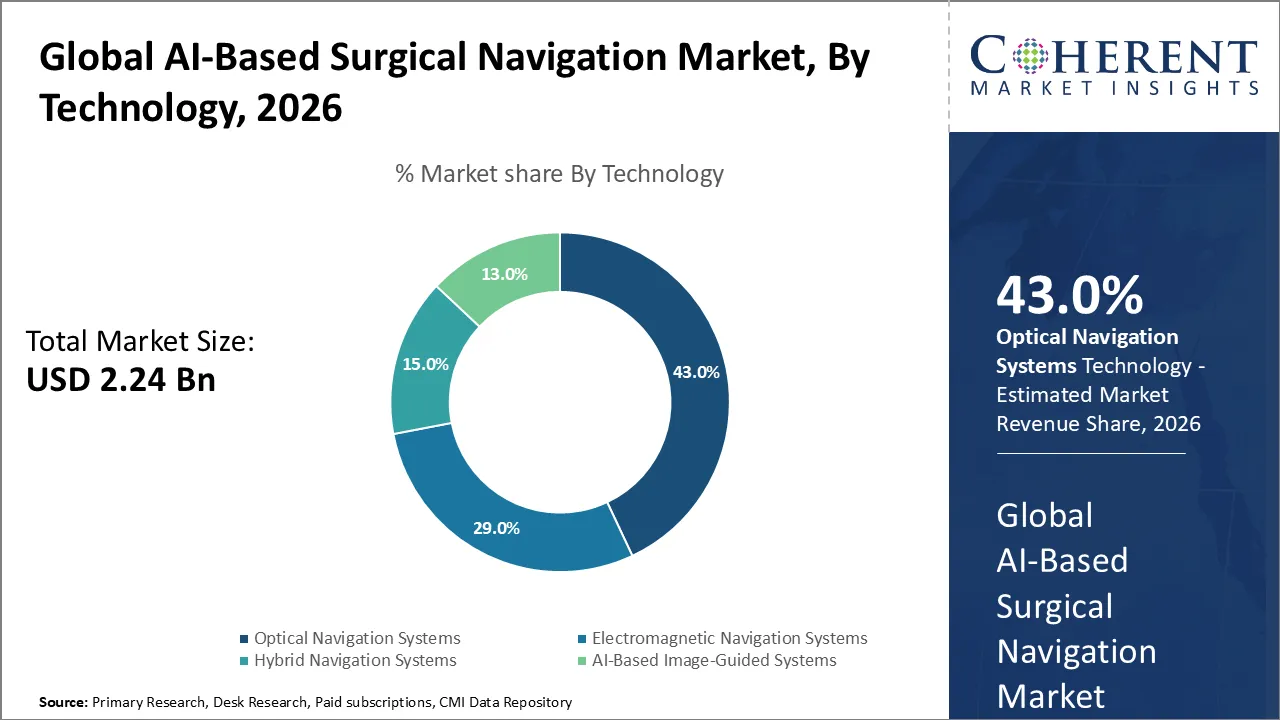
Why Do Optical Navigation Systems Dominate the Global AI-Based Surgical Navigation Market?
The Optical Navigation Systems segment is expected to hold 43.0% share of the global AI-Based Surgical Navigation Market by 2026. The segment’s leadership is credited to the increasing incorporation of infrared cameras, optical tracking sensors, and AI-enabled surgical planning technologies. Optical navigation systems allow for real-time tracking of instruments as well as accurate anatomic localization. This helps surgeons increase the accuracy of procedures in complex neurosurgical, orthopedic and spinal procedures. Compatibility with 3-D imaging, augmented reality and robotic-assisted surgical platforms also supports adoption.
On July 29, 2026, Smith+Nephew announced that its TESSA Spatial Surgery System received FDA De Novo classification. It is a system that uses artificial intelligence, augmented reality, advanced imaging, navigation and real-time tracking to provide personalized arthroscopic surgery. Its AI-driven software generates patient-specific 3D anatomical models from pre-operative MRI or CT scans, highlighting the growing adoption of intelligent navigation tools in surgical procedures.
- Current Industry Events of 2026
- Market Size Estimation
- Regional Breakdown
- Competitive Landscape
- Customer Intelligence
- Segmental Analysis
- Pricing Analysis
- Key Market Drivers, Challenges & Future Trends
- Customized Insights Section
Neurosurgery Dominates the Global AI-Based Surgical Navigation Market
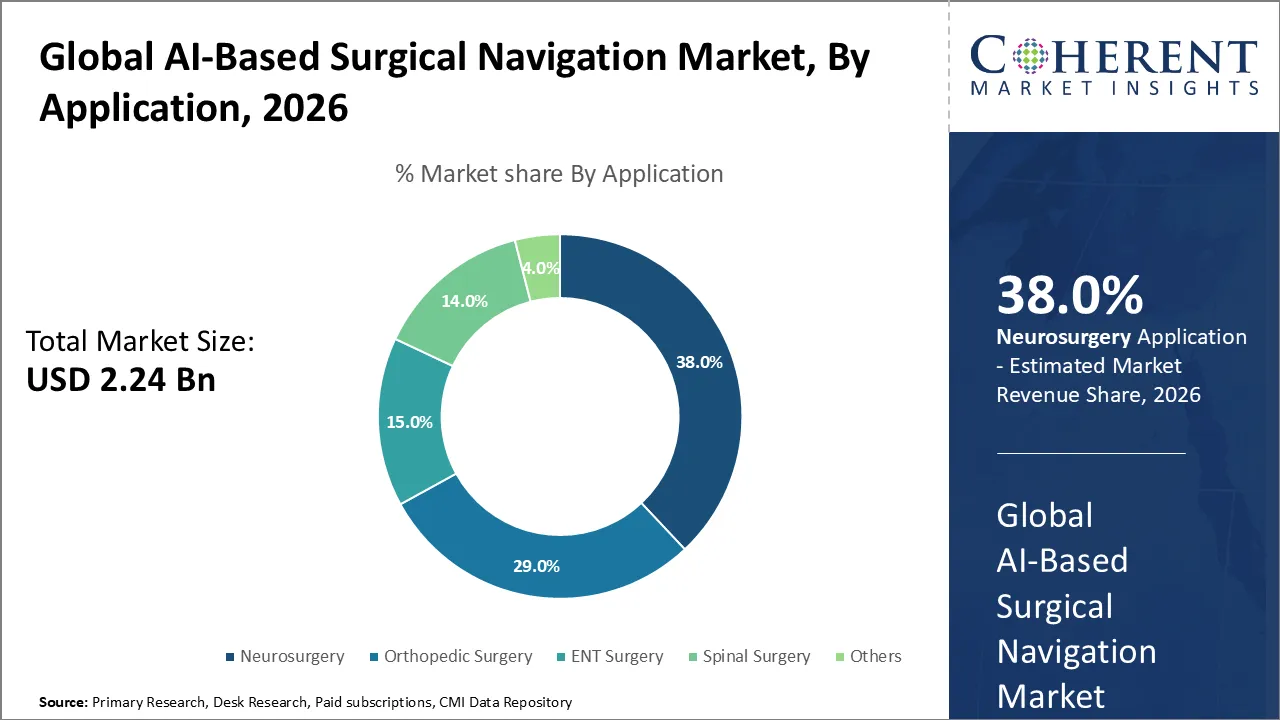
The Neurosurgery segment is projected to account for a share of 38.0% of the Global AI-Based Surgical Navigation Market by 2026. Growing demand for accurate tumor localization, brain mapping and real-time anatomical guidance is supporting its leading position. Surgeons can use AI-driven navigation systems that match pre-operative MRI and CT imaging with intra-operative tracking to improve visualization of important neurological structures and assist in complicated cranial procedures. Moreover, the increasing usage of image-guided brain biopsies, tumor resections and minimally invasive neurosurgical techniques are also contributing to the adoption of the market.
On December 16, 2025, Medivis announced that it had received FDA 510(k) clearance for its Cranial Navigation platform, an augmented-reality-based system that provides intraoperative guidance for cranial neurosurgery. The platform spatially fuses patient imaging to the operative field, giving surgeons a real-time view of anatomical structures and planned surgical trajectories. The development underscores the growing commercialization of advanced visualization and navigation technologies for complex brain procedures.
Current Events and Their Impact on the AI-Based Surgical Navigation Market
Current Event | Description and its Impact |
U.S. FDA Implements New Quality Management System Regulation for Medical Devices (February 2026) |
|
U.S. FDA Finalizes Regulatory Guidance for Predetermined AI Software Modifications (August 2025) |
|
AI-Based Surgical Navigation Market Dynamics
Market Drivers
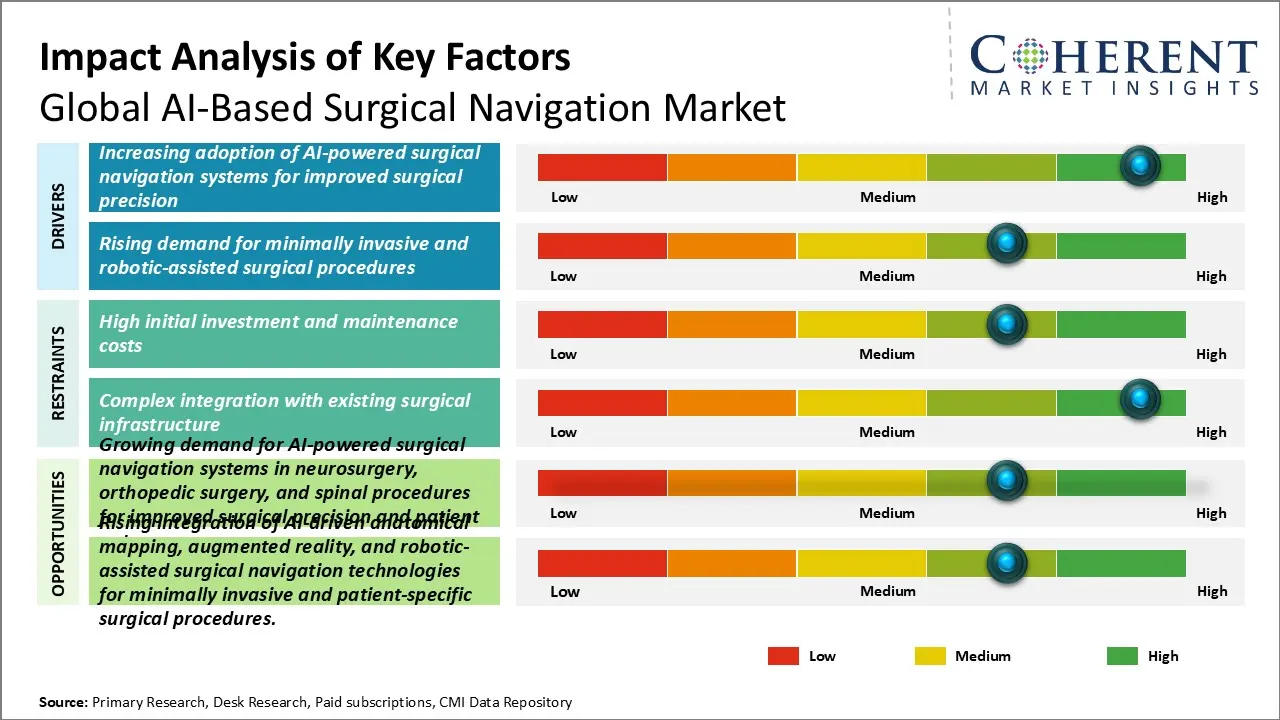
- Growing Demand for higher accuracy in surgery and fewer complications during operations: Demand for accurate anatomical localization and improved surgical outcomes are driving the growth of the global AI-Based Surgical Navigation Market. Accurate instrument positioning is critical in complex neurosurgical, orthopedic and spinal procedures to decrease the risk of neurological injury, implant malposition and revision surgery. Navigation systems, driven by AI, integrate real-time imaging, anatomical maps, and predictive algorithms to assist in surgical planning and decision-making during operations. Such technologies can help surgeons to identify key anatomic structures, optimize the surgical trajectory, and improve the consistency of the procedure. Hospitals are investing in advanced image-guided navigation platforms, as the focus on patient safety and reduction of avoidable surgical complications increases.
- On January 9, 2026, EFORT Open Reviews published a systematic umbrella review of 38 meta-analyses that included 414 primary studies. Researchers observed that robot-assisted pedicle screw placement had significantly higher odds of acceptable placement compared with freehand techniques (OR 2.74) and conventional navigation (OR 2.36). The results show the clinical value of advanced guidance technologies, but they do not distinguish the benefits of artificial intelligence algorithms.
- Increasing integration of artificial intelligence with robotic-assisted and image-guided surgical platforms: The growing integration of artificial intelligence, computer vision, and robotic-assisted technologies is accelerating demand for intelligent surgical navigation systems. Healthcare providers are increasingly adopting platforms that combine preoperative imaging, automated anatomical segmentation, real-time instrument tracking, and intraoperative guidance. AI algorithms can assist surgeons in identifying anatomical landmarks, developing patient-specific surgical plans, and adapting navigation workflows to complex anatomical conditions. Integration with robotic surgical platforms further supports reproducible instrument positioning and precision during minimally invasive procedures. These developments are encouraging medical technology manufacturers to introduce advanced navigation platforms with integrated planning, visualization, and robotic guidance capabilities.
- On September 10, 2026, Medtronic announced the first European clinical procedures using its Stealth AXiS Surgical System, reporting more than 23 procedures across seven clinical sites in Germany, the United Kingdom, Italy, and Spain. The platform integrates AI-driven surgical planning, real-time navigation, and robotic-assisted execution, demonstrating early international clinical deployment of integrated surgical navigation technologies.
AI-Based Surgical Navigation Market Trends
- The increasing convergence of artificial intelligence with augmented reality (AR) and mixed reality (MR) is transforming surgical navigation by providing real-time visualization of patient anatomy, surgical trajectories and instrument positioning. On May 29, 2026, SKIA announced U.S. FDA 510(k) clearance for its SKIA HEAD system, a tablet-based AR platform that projects three-dimensional anatomical reconstructions on patients during surgery.
- The increasing development of AI-powered surgical navigation for patient-specific anatomical mapping is helping to personalize surgical procedures. Increasingly, surgeons are employing sophisticated algorithms to make three-dimensional models from preoperative CT and MRI scans to assist with anatomical identification and procedural planning. Smith+Nephew’s TESSA Spatial Surgery System, combining AI-powered anatomical modeling, augmented reality and real-time tracking for arthroscopic procedures, was granted FDA De Novo clearance in July 2026.
- The growing demand for portable and compact surgical navigation solutions is driving manufacturers to develop systems that are smaller, easier to set-up and require less infrastructure. This trend is especially important for ambulatory surgical centers and smaller hospitals looking for alternatives to large navigation platforms. In June 3, 2026 OrthAlign announced that its Lantern ASC system, a handheld orthopedic navigation solution that provides real-time guidance for knee arthroplasty without the capital requirements of robotic systems, received FDA 510(k) clearance. The product shows the movement toward easily usable navigation technology but it is not established as AI based system.
Regional Insights
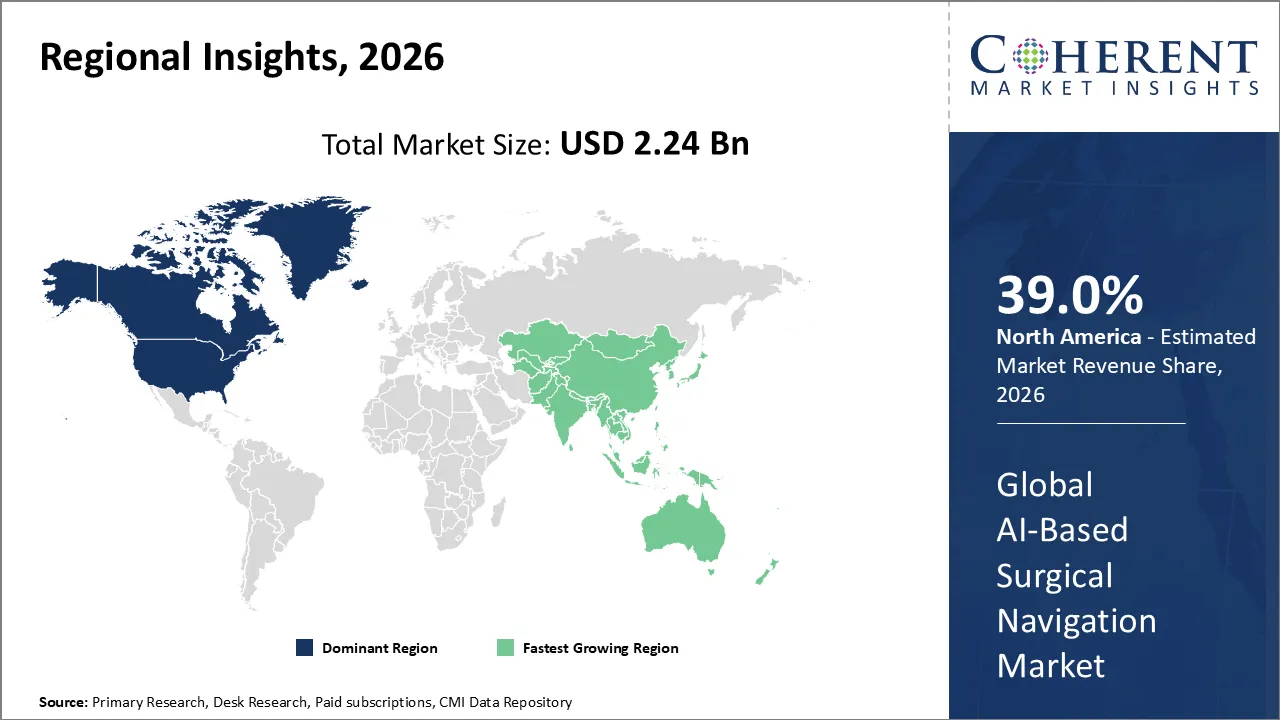
Why Does North America Dominate the Global AI-Based Surgical Navigation Market?
North America is expected to hold the highest share of the global AI-Based Surgical Navigation Market with a market share of 39.0% in 2026. The regional leadership is backed by a growing adoption of image-guided surgical procedures, a well-established healthcare infrastructure, and investments in advanced neurosurgical and orthopedic technologies. Navigation-assisted spinal procedures are on the rise in the United States as hospitals integrate anatomical mapping, real-time imaging and intelligent surgical guidance into their operating room workflows. The region also enjoys specialized surgical centers, established medical device development capabilities and ongoing clinical research into navigation accuracy and workflow efficiency. A September 18, 2026, study in the Journal of Craniovertebral Junction and Spine found that Medicare-allowed services for navigation-assisted spine surgery in the U.S. rose 917.4%, from 3,447 in 2011 to 35,070 in 2024. This significant growth illustrates the rising clinical application of surgical navigation technologies and lays a good basis for further integration of AI.
Why Does Asia Pacific Exhibit the Fastest Growth in the Global AI-Based Surgical Navigation Market?
The Asia Pacific is expected to be the fastest growing region from 2026-2033, with a projected share of 24.0% of the total global market in 2026. Investments in digitally enabled operating rooms, growing surgical procedure volumes and advancements in AI-based anatomical recognition are creating opportunities across China, Japan, South Korea and India. Healthcare institutions are looking to deep learning, automated CT segmentation and electromagnetic navigation to improve surgical planning and intraoperative accuracy. Regional medical device innovation and the increasing clinical validation of intelligent navigation platforms are also driving the market’s development. In a study published October 24, 2026 in the Journal of Orthopedic Surgery and Research, researchers evaluated an artificial intelligence-integrated electromagnetic surgical navigation system in 568 CT scans and a prospective clinical evaluation of 42 patients undergoing knee replacement. The system achieved 100% accuracy in femoral and tibial implant sizing in the navigation group and reduced the mean postoperative alignment deviation to 0.64° compared to 1.28° in the conventional surgery group. These findings highlight the clinical potential of AI-assisted navigational technologies currently being developed in the Asia Pacific.
Global AI-Based Surgical Navigation Market Outlook for Key Countries (2026–2033)
Why is the U.S. a Major Hub in the AI-Based Surgical Navigation Market?
The U.S. AI-Based Surgical Navigation Market is driven by the increasing adoption of intelligent neurosurgical guidance systems, expanding applications of computer vision and established regulatory framework for advanced surgical devices. Now, hospitals are turning to AI-enabled anatomical mapping, automated image registration and real-time instrument tracking to improve the precision of surgery in complex cranial and spinal procedures. Specialized surgical centers, innovators in medical technology and regulatory pathways for software-integrated medical devices are available to allow commercialization of AI navigation platforms. An example of the transition of AI-integrated navigation technologies into regulated clinical applications is Medtronic’s Stealth AXiS Surgical System with Spine Clinical Application, cleared by the U.S. FDA on February 12, 2026 and included in the U.S. FDA’s 2026 AI-enabled medical device database. These authorizations help with product availability and open up opportunities for hospital adoption, clinical training, and software-based navigation upgrades.
Is China Emerging as a Growth Engine for the AI-Based Surgical Navigation Market?
China’s AI-Driven Surgical Navigation Market is driven by domestic innovation in medical devices, increasing acceptance of image-guided interventions, and increasing regulatory approvals for AI-integrated surgical technologies. Chinese medical tech firms are developing platforms integrating AI-driven CT segmentation, electromagnetic tracking, and automated puncture-path planning to boost procedural accuracy and reduce reliance on manual anatomical localization. The country’s focus on smart medical equipment and home-grown surgical solutions is driving commercialization across interventional and minimally invasive procedures. Infervision’s Dragon puncture surgical navigation device has been reportedly approved as a Class III medical device by the National Medical Products Administration of China on January 23, 2026. The company’s published performance specifications claim the AI-enabled electromagnetic navigation system achieves targeting errors under 1 mm and reduces procedure time by 62% in tested applications. The numbers reported by the manufacturers demonstrate the potential efficiency benefits of AI-assisted navigation, but should not be taken as independently verified clinical results.
Germany AI-Based Surgical Navigation Market Analysis and Trends
The AI-Based Surgical Navigation Market in Germany is driven by established medical technology research, advanced university hospitals and growing clinical evaluation of AI-assisted intraoperative anatomical recognition systems. Computer vision and real-time surgical imaging are being explored by German healthcare institutions to improve the identification of critical anatomical structures in minimally invasive procedures. Clinical investigation of AI-assisted visualization is also contributing to the development of systems tailored to European patient populations and surgical workflows. A clinical investigation of the EUREKA AI system for surgical anatomical recognition is listed in the German Clinical Trials Register at University Hospital Ulm, with a target enrollment of 150 patients. Study Start Date, November 6, 2025 Study Registration Update Date, May 20, 2026 (Recruiting) It includes procedures in the fields of colorectal, liver, pancreatic and upper gastrointestinal surgery, demonstrating the increasing importance of Germany for the clinical validation of AI-based navigation systems.
U.K. AI-Based Surgical Navigation Market Analysis and Trends
The U.K. AI-based surgical navigation market is benefiting from government-backed medical AI research, growing collaboration between universities and NHS hospitals, and rising demand for precision-guided neurosurgical procedures. Healthcare institutions are developing computer vision systems that can understand live surgical video and recognize key anatomical features without the need for preoperative scans. These developments are laying the groundwork for AI-assisted navigation in brain tumor surgery and other complex operations. On August 26, 2026, University College London announced the first clinical use of its real-time AI-assisted navigation technology in pituitary tumor surgery at the National Hospital for Neurology and Neurosurgery. The system was built on hundreds of annotated surgical videos and helped surgeons to identify critical structures when removing a brain tumor of about 11 mm. In this case, the procedure preserved the patient’s vision, demonstrating the technology’s clinical feasibility, but larger trials are needed to prove its safety and efficacy.
Japan AI-Based Surgical Navigation Market Analysis and Trends
Japan's AI-based surgical navigation market is driven by advanced medical imaging capabilities, ongoing innovation in surgical robotics and clinical research into AI-powered anatomical recognition technologies. Japanese research institutions are increasingly developing deep-learning systems to identify blood vessels, nerves and other critical structures during minimally invasive procedures. These systems could improve surgical decision making by providing real-time visual guidance and reducing reliance on manual anatomical identification. The AI-US randomized controlled trial to evaluate an AI-based adaptive three-dimensional navigation system for intraoperative ultrasonography in minimally invasive liver resection was registered with Japan’s University Hospital Medical Information Network in March 2026. The study aims at enhancing anatomical interpretation and surgical decision support, highlighting Japan’s continued investment in the clinical assessment of AI-enabled navigation technologies.
How is the Growing Adoption of AI-Powered Surgical Navigation Creating New Growth Opportunities in the AI-Based Surgical Navigation Market?
Growth opportunities for growth in the Global AI Based Surgical Navigation Artificial intelligence, computer vision and real-time image-guided technologies are increasingly being integrated into complex surgical procedures, driving the market. Hospitals are increasingly using AI-assisted navigation platforms to enhance anatomical localization, surgical trajectory planning, and instrument positioning for neurosurgical, orthopedic, and spinal procedures. These systems allow the surgeon to merge preoperative CT and MRI scans with intra-operative imaging, automated anatomical segmentation and patient-specific three-dimensional models. Increasing demand for minimally invasive surgery, improved procedural accuracy and simpler operating room workflows are creating opportunities for manufacturers developing AI-integrated navigation systems. Companies with interoperable solutions that integrate with existing surgical imaging and robotic platforms will be at a competitive advantage.
For instance, in June 2026, Johnson & Johnson MedTech announced the U.S. commercial launch of VELYS Hip Navigation with AI Assistance, which incorporates artificial intelligence to automate the identification of anatomical landmarks during total hip arthroplasty. The company found that its landmark identification workflow was 57% faster than manual workflows, dropping from 5.33 minutes to 2.27 minutes in its evaluation.
Market Players, Key Development, and Competitive Intelligence

Key Developments
- In October 2026, Medtronic received U.S. FDA 510(k) clearance for ApexCut EM Navigated Blades to connect powered sinus surgical instruments to its Stealth AXiS ENT navigation system. The development expands its integrated ENT surgical navigation portfolio.
- In September 2026, Stryker announced the first clinical procedure using SportSuite Vision on Apple Vision Pro at Duke Health. The platform received FDA De Novo authorization in July 2026 and integrates arthroscopic video, imaging, and surgical planning information into a spatial computing environment.
Competitive Landscape
The global AI-Based Surgical Navigation Market is highly competitive with major medical technology companies focusing on AI-based surgical planning, real-time navigation and robotic-assisted procedures. Medtronic is developing AI-enabled navigation with its Stealth AXiS Surgical System and Brainlab is focusing on anatomical segmentation and patient-specific planning. Stryker is providing advanced surgical guidance with its Q Guidance System, and Johnson & Johnson MedTech is extending AI-assisted orthopedic navigation with VELYS Hip Navigation. Siemens Healthineers and Smith+Nephew are adding image-guided and AI-enabled surgical technologies to their portfolios. Meanwhile, Zimmer Biomet, GE HealthCare, Philips and Medacta International are ramping up their digital surgery capabilities. Navigation accuracy, AI integration, clinical validation and OR efficiency are increasingly the basis for competition.
Top Manufacturers and Notable Products/Solutions in the AI-Based Surgical Navigation Market
Company/Manufacturer | Notable Product/Brand | Key Features |
Medtronic plc | Stealth AXiS Surgical System | AI-powered surgical planning, real-time anatomical navigation, robotic-assisted instrument guidance, optical and electromagnetic tracking, intraoperative imaging integration, patient-specific surgical trajectories. |
Stryker Corporation | Q Guidance System | Hybrid optical tracking, advanced surgical planning, real-time instrument localization, cranial and spinal navigation, active/passive tracking, advanced image-registration algorithms |
Brainlab | Curve Navigation / Elements Spine Planning | AI-assisted anatomical segmentation, patient-specific spinal planning, three-dimensional visualization, optical instrument tracking, image registration, cranial and spinal surgical navigation |
Siemens Healthineers AG | Cios Spin with Vuze2 Guidance Software | Trackerless spinal navigation, CT/CBCT and X-ray image fusion, real-time instrument guidance, pedicle screw trajectory visualization, integration with mobile C-arm imaging |
GE HealthCare Technologies Inc | bkActiv Intraoperative Ultrasound with Stealth AXiS Integration | Real-time intraoperative ultrasound, anatomical visualization, integration with surgical navigation, image-guided cranial procedures, enhanced visualization of surgical targets. |
Johnson & Johnson (DePuy Synthes) | VELYS Hip Navigation with AI Assistance | AI-powered anatomical landmark identification, automated image interpretation, real-time leg length and offset assessment, patient-specific implant positioning, hip arthroplasty guidance. |
Zimmer Biomet Holdings, Inc. | ROSA Knee System | Image-based and imageless surgical planning options, real-time anatomical tracking, robotic-assisted bone resection, implant alignment guidance, intraoperative data-driven decision support. |
Philips Healthcare | EchoNavigator R5.0 with DeviceGuide | AI-assisted device tracking, real-time ultrasound and fluoroscopy fusion, three-dimensional anatomical visualization, image-guided cardiovascular interventions. |
Smith & Nephew plc | TESSA Spatial Surgery System | AI-based patient-specific anatomical modeling, augmented reality visualization, real-time tracking, arthroscopic navigation, preoperative CT/MRI integration, surgical trajectory planning. |
Market Report Scope
AI-Based Surgical Navigation Market Report Coverage
Report Coverage | Details | ||
Base Year: | 2025 | Market Size in 2026: | USD 2.24 Bn |
Historical Data for: | 2020 to 2024 | Forecast Period: | 2026 to 2033 |
CAGR: | 16.3% | 2033 Value Projection: | USD 6.45 Bn |
Geographies covered: |
| ||
Segments covered: |
| ||
Companies covered: | Medtronic plc, Stryker Corporation, Brainlab AG, Siemens Healthineers AG, GE HealthCare Technologies Inc., Johnson & Johnson, Zimmer Biomet Holdings Inc., Philips Healthcare, Smith & Nephew plc, Karl Storz SE & Co. KG, Zimmer MedizinSysteme GmbH, Orthofix Medical Inc., NuVasive Inc., Scopis GmbH, ClaroNav Inc., Surgical Theater, Medacta International, B. Braun SE, Anke High-Tech Co. Ltd., Renishaw plc. | ||
Growth Drivers: |
| ||
Restraints & Challenges: |
| ||
Analyst Opinion (Expert Opinion)
- The future of the global AI-Based Surgical Navigation Market will increasingly focus on intelligent, real-time surgical guidance rather than conventional image-based navigation alone. Artificial intelligence, computer vision, and automated anatomical registration will enable surgeons to identify critical structures, optimize surgical trajectories, and adapt to intraoperative anatomical changes. However, surgeon supervision will remain essential for high-risk procedures. A 2026 study published in the European Journal of Surgical Oncology evaluated an AI-guided navigation system using 37 robot-assisted surgical procedures, achieving 96.8% specificity in external validation for identifying surgical dissection boundaries. These findings demonstrate the potential of AI-assisted navigation while emphasizing the need for larger prospective studies.
- The strongest growth opportunities are expected in neurosurgery, orthopedic surgery, spinal procedures, and AI-assisted minimally invasive interventions. North America is likely to remain a leading commercialization market, supported by advanced surgical infrastructure and medical technology innovation, while Asia Pacific offers significant opportunities through expanding surgical capacity and growing development of cost-efficient navigation platforms. Emerging AI-enabled solutions integrating augmented reality, patient-specific anatomical modeling, and robotic tracking could improve accessibility across hospitals and specialized surgical centers. A study published in IEEE Robotics and Automation Letters in July 2026 demonstrated that an AI-driven robotic navigation assistant achieved a target registration error of 3.4 ± 1.4 mm, compared with 11.3 ± 7.0 mm using conventional rigid registration in patient-specific breast surgery phantom experiments. This indicates the potential of AI-based image registration for improving navigation accuracy, although clinical validation remains necessary.
- Market participants should prioritize demonstrated clinical performance, workflow efficiency, affordability, and integration with existing surgical infrastructure rather than relying solely on advanced AI features. Manufacturers should provide measurable evidence of improvements in navigation accuracy, procedure duration, intraoperative complications, and surgeon usability. Regulatory compliance, algorithm transparency, cybersecurity, and human oversight will also become important competitive differentiators. A 2026 prospective observational study published in npj Digital Surgery evaluated spatial computing deployment across 174 surgical and procedural cases involving 35 users. The study reported no headset-attributable intraoperative complications or adverse events, while headset removal was required in only 2.6% of uses. Although this was a surgical visualization study rather than an AI-navigation efficacy trial, it demonstrates the feasibility of integrating advanced visualization technologies into clinical workflows.
Speak to the analyst
Want personalized insights?
Take the findings above to one of our principal consultants, or have the report rebuilt around the segments, geographies and competitors you actually track.
Market Segmentation
- By Technology (Revenue, USD Bn, 2021-2033)
- Optical Navigation Systems
- Electromagnetic Navigation Systems
- Hybrid Navigation Systems
- AI-Based Image-Guided Systems
- By Application (Revenue, USD Bn, 2021-2033)
- Neurosurgery
- Orthopedic Surgery
- ENT Surgery
- Spinal Surgery
- Others
- By Region (Revenue, USD Bn, 2021-2033)
- North America
- U.S.
- Canada
- Latin America
- Brazil
- Mexico
- Argentina
- Rest of Latin America
- Europe
- Germany
- U.K.
- France
- Italy
- Spain
- Russia
- Rest of Europe
- Asia Pacific
- China
- India
- Japan
- Australia
- South Korea
- ASEAN
- Rest of Asia Pacific
- Middle East
- GCC
- Israel
- Rest of Middle East
- Africa
- South Africa
- Central Africa
- North Africa
- North America
- Key Players
- Medtronic plc
- Stryker Corporation
- Brainlab AG
- Siemens Healthineers AG
- GE HealthCare Technologies Inc.
- Johnson & Johnson
- Zimmer Biomet Holdings Inc.
- Philips Healthcare
- Smith & Nephew plc
- Karl Storz SE & Co. KG
- Zimmer MedizinSysteme GmbH
- Orthofix Medical Inc.
- NuVasive Inc.
- Scopis GmbH
- ClaroNav Inc.
- Surgical Theater
- Medacta International
- B. Braun SE
- Anke High-Tech Co. Ltd.
- Renishaw plc.
Sources
Primary Research Interviews
- Neurosurgeons and orthopedic surgeons
- Spine surgeons and ENT surgical specialists
- AI-based surgical navigation system developers
- Medical imaging and computer vision engineers
- Surgical robotics and image-guided surgery experts
- R&D heads from surgical navigation equipment manufacturers
- Hospital procurement managers and operating room directors
- Clinical application specialists and surgical navigation technicians
- Regulatory affairs and medical device compliance experts
- Key opinion leaders (KOLs) in AI-assisted surgery and surgical navigation
Databases
- U.S. Food and Drug Administration (FDA) – Medical Device Databases
- National Institutes of Health (NIH) – PubMed
- ClinicalTrials.gov
- World Health Organization (WHO) – Global Health Observatory
- Organisation for Economic Co-operation and Development (OECD)
- Centers for Medicare & Medicaid Services (CMS)
- European Commission – EUDAMED
- U.S. National Science Foundation (NSF)
- World Bank – Health and Healthcare Infrastructure Data
Magazines
- Medical Device Network
- MedTech Dive
- Medical Design & Outsourcing
- Healthcare IT News
- Imaging Technology News
- Medical Product Outsourcing
- The Robot Report
- Healthcare Innovation
Journals
- International Journal of Computer Assisted Radiology and Surgery
- IEEE Transactions on Medical Robotics and Bionics
- Journal of Robotic Surgery
- Journal of Neurosurgery
- Spine
- Journal of Medical Imaging
- IEEE Transactions on Medical Imaging
- npj Digital Medicine
- npj Digital Surgery
- Computer Methods and Programs in Biomedicine
Newspapers
- The New York Times
- The Wall Street Journal
- Financial Times
- Reuters
- The Guardian
- The Economic Times
- Nikkei Asia
Associations
- Society for Medical Innovation and Technology (SMIT)
- International Society for Computer Assisted Surgery (ISCAS)
- Society of Robotic Surgery (SRS)
- American Association of Neurological Surgeons (AANS)
- Congress of Neurological Surgeons (CNS)
- North American Spine Society (NASS)
- American Academy of Orthopaedic Surgeons (AAOS)
- International Society for Medical Robotics (ISMR)
- Association for the Advancement of Medical Instrumentation (AAMI)
- International Society for Optics and Photonics (SPIE)
Public Domain Sources
- Company Annual Reports and Investor Presentations
- Surgical Navigation Equipment Manufacturer Product Catalogs and Technical Specifications
- FDA 510(k) Clearances, De Novo Authorizations, and Medical Device Approval Records
- European Commission Medical Device Regulation (EU MDR) Publications
- Government Healthcare Expenditure and Hospital Infrastructure Reports
- University Hospital Clinical Research and Surgical Technology Publications
- Clinical Trial Registries and Peer-Reviewed Surgical Navigation Studies
- Patent Databases such as WIPO, USPTO, and Google Patents
- Publicly Available Surgical Robotics and AI-Based Navigation Research Reports
- Government Publications on AI-Enabled Medical Devices and Healthcare Digitalization
- Hospital Technology Procurement and Surgical Equipment Tender Publications
Proprietary Elements
- CMI Data Analytics Tool
- Proprietary CMI Existing Repository of Information for the Last 10 Years
Get access to 250+ pages report
Every segment, forecast, competitor profile and data table behind the analysis above — available for instant download.
- ESOMAR Member
- ISO 9001:2015 Certified
- D-U-N-S Registered
- GDPR & CCPA Compliant
Frequently Asked Questions
The global AI-Based Surgical Navigation Market is expected to reach USD 6.45 Bn by 2033, compared to USD 2.24 Bn in 2026.
Major players operating in the global AI-Based Surgical Navigation Market include Medtronic plc, Stryker Corporation, Brainlab AG, Siemens Healthineers AG, GE HealthCare Technologies Inc., Johnson & Johnson, Zimmer Biomet Holdings Inc., Philips Healthcare, Smith & Nephew plc, KARL STORZ SE & Co. KG, Orthofix Medical Inc., ClaroNav Inc., Surgical Theater, Medacta International, B. Braun SE, and Renishaw plc.
High initial investment and maintenance costs, complex integration with existing surgical infrastructure, stringent regulatory requirements, and shortages of skilled professionals are the major factors hampering market growth.
Increasing adoption of AI-powered surgical navigation systems, rising demand for minimally invasive and robotic-assisted procedures, advancements in real-time anatomical imaging, and growing emphasis on surgical precision and patient safety are driving market growth.
The global AI-Based Surgical Navigation Market is anticipated to grow at a CAGR of approximately 16.3% between 2026 and 2033.
North America is expected to dominate the global AI-Based Surgical Navigation Market, with an estimated 39.0% market share in 2026, supported by advanced healthcare infrastructure and increasing adoption of AI-integrated surgical technologies.
AI-based surgical navigation systems are advanced medical technologies that integrate artificial intelligence, medical imaging, and real-time tracking to assist surgeons in anatomical localization, surgical planning, and precise instrument guidance during complex procedures.