

Global Digital Surgical Navigation Market Size and Forecast – 2026 To 2033
The global digital surgical navigation market is expected to grow from USD 2.48 Bn in 2026 to USD 5.72 Bn by 2033, registering a compound annual growth rate (CAGR) of 12.7% from 2026 to 2033. The market for global digital surgical navigation is poised for significant expansion, fueled by the rising prevalence of musculoskeletal and neurological disorders that require precise surgical interventions.
According to the World Health Organization (WHO), approximately 1.71 billion people worldwide live with musculoskeletal conditions, while more than 3 billion people were living with neurological conditions in 2021, increasing the need for effective diagnosis and surgical treatment. These growing healthcare needs are expected to support demand for precision-guided surgical technologies
Key Takeaways of the Global Digital Surgical Navigation Market
- Hardware is projected to hold 52.6% of the global digital surgical navigation market share in 2026, making it dominant component segment, particularly across North America, due to increasing demand for navigation cameras, tracking systems, and specialized surgical instruments. For instance, the U.S. Food and Drug Administration (FDA) identifies computer-assisted orthopedic surgical systems as a distinct medical device category, reflecting the role of digital technologies in supporting surgical procedures.
- Optical navigation is projected to hold 38.7% of the global digital surgical navigation market share in 2026, making it dominant navigation technology segment, across Europe, driven by the adoption of advanced visualization and image-guided surgical technologies. For instance, the European Commission’s Horizon Europe-funded FLUAR project developed an augmented-reality headset that displays fluorescence imaging directly in the surgeon’s field of view, illustrating ongoing European innovation in surgical visualization.
- Orthopedic and spine surgery are projected to hold 34.2% of the global digital surgical navigation market share in 2026, making it dominant application segment, across Asia Pacific, supported by expanding surgical capacity and increasing demand for precision-guided procedures. For instance, India’s Economic Survey documented growth in procedures delivered under the public health insurance system, including orthopedic procedures, reflecting the importance of surgical care within the country’s healthcare infrastructure.
- North America market maintains dominance with an expected share of 40.8% in 2026, bolstered by advanced surgical infrastructure, strong adoption of computer-assisted surgical technologies, and continued innovation in image-guided procedures. For instance, in November 2025, the U.S. Advanced Research Projects Agency for Health (ARPA-H) launched its Autonomous Interventions and Robotics (AIR) program to advance robotic interventions and expand access to specialized surgical procedures, reflecting continued federal investment in next-generation surgical technologies.
- Asia Pacific is expected to exhibit the fastest growth in the global digital surgical navigation market, registering an estimated CAGR of 14.5% during 2026–2033, driven by expanding robotic-surgery infrastructure and government investment in advanced healthcare technologies. For instance, in July 2026, Indonesia’s Ministry of Health announced plans to procure 40 surgical robots for government hospitals, alongside initiatives to develop AI capabilities and train clinicians, supporting the region’s adoption of technology-assisted surgical care.
Segmental Insights
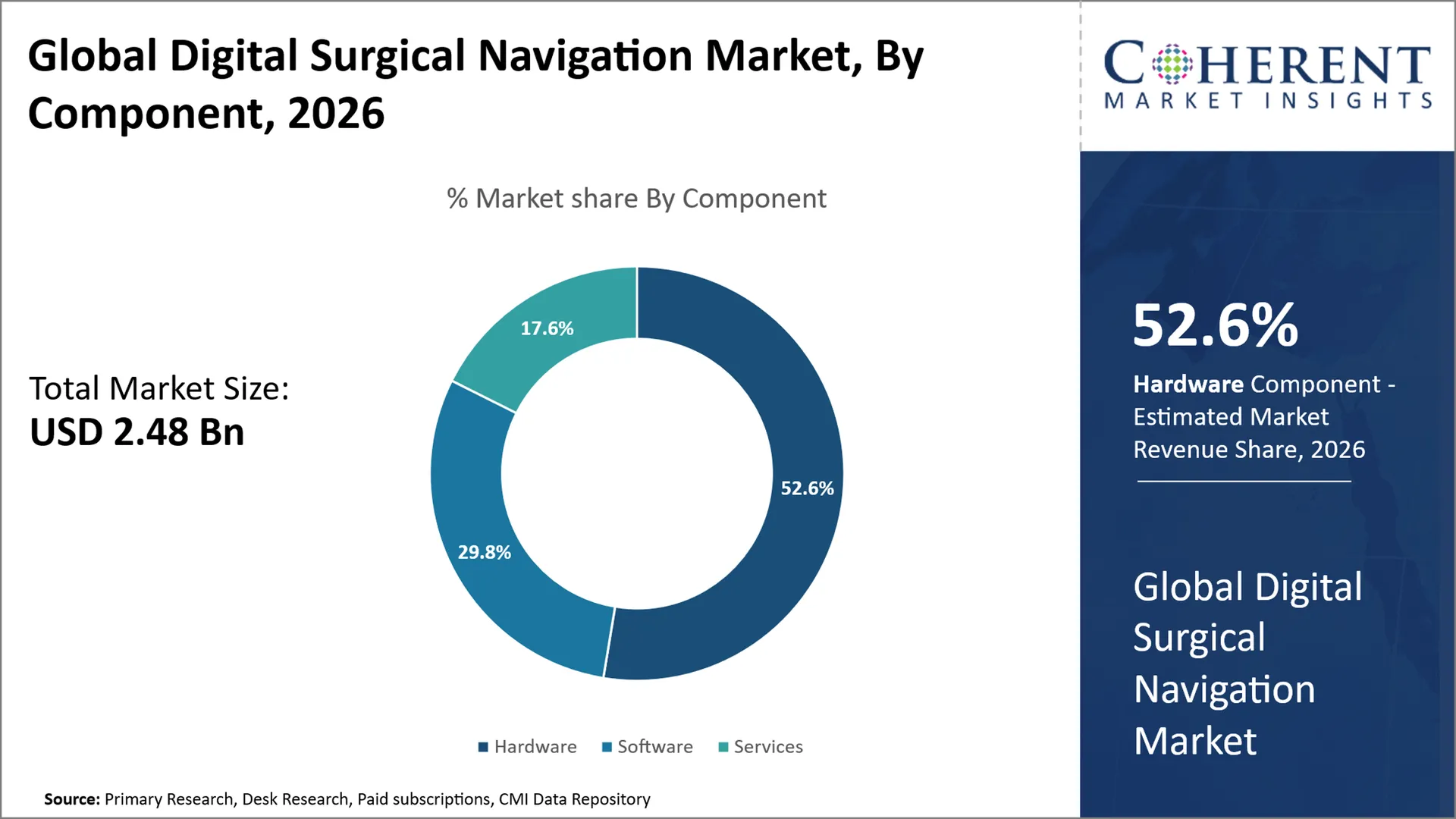
Why Do Hardware Dominate the Global Digital Surgical Navigation Market?
Hardware is projected to hold the market share of 52.6% in 2026, as it includes cameras, optical trackers, sensors, computing units, and display systems for real-time localization of surgical instruments and anatomical structures. Advancements in tracking accuracy, imaging integration, and 3D display improve the precision guidance of surgical instruments during intricate and minimally invasive procedures. The demand for the segment is also expected to increase as hospitals acquire dependable navigation equipment. For instance, Medtronic's Stealth Station S8 Navigation Platform is a combination of optical and electromagnetic tracking and intraoperative imaging, providing real-time navigation of the surgical instruments, to help guide surgeons through neurosurgical and spinal procedures.
- Current Industry Events of 2026
- Market Size Estimation
- Regional Breakdown
- Competitive Landscape
- Customer Intelligence
- Segmental Analysis
- Pricing Analysis
- Key Market Drivers, Challenges & Future Trends
- Customized Insights Section
Why Do Optical Navigation Represent the Largest Navigation Technology Segment in the Digital Surgical Navigation Market?
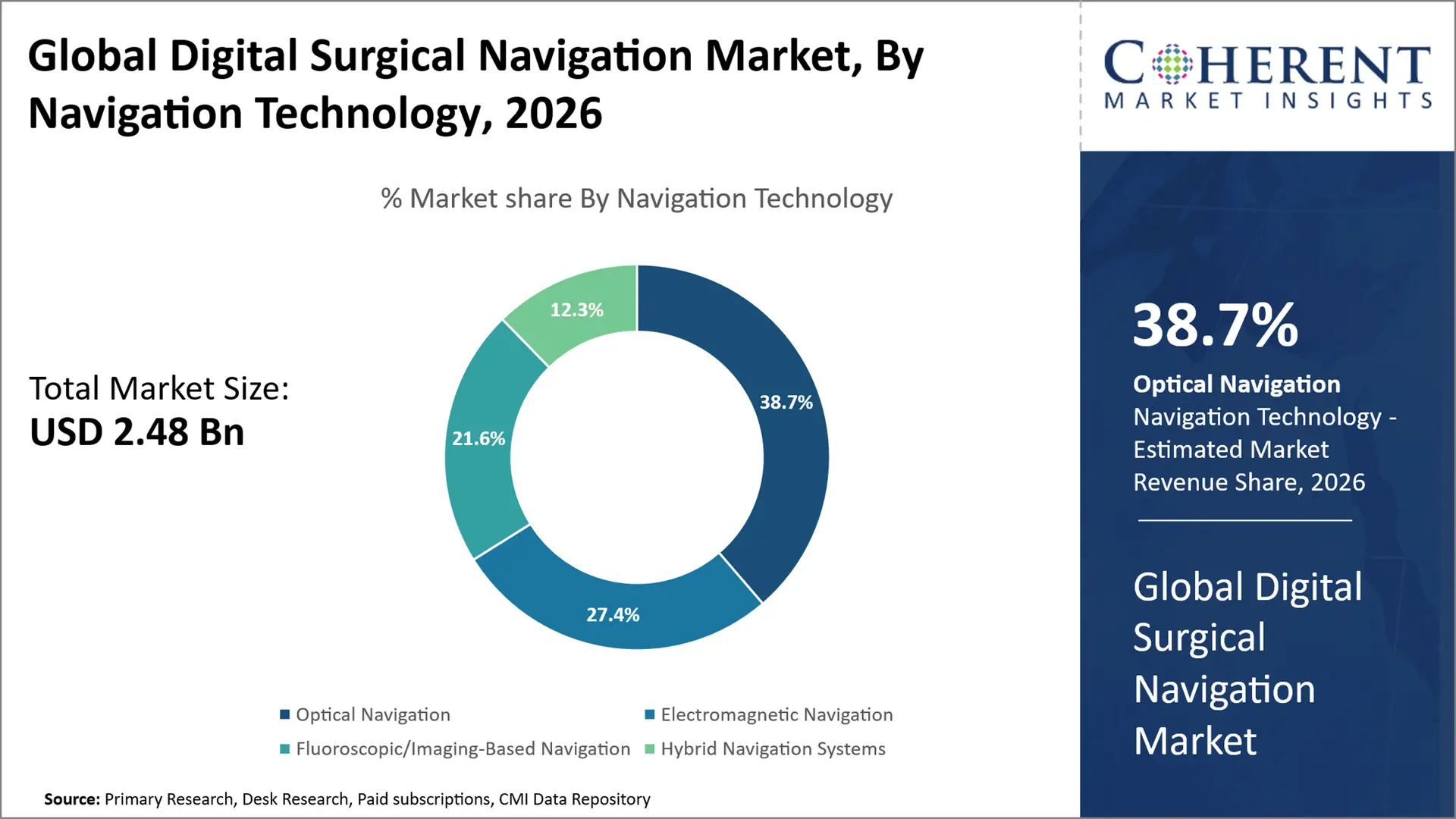
Optical navigation is projected to hold a market share of 38.7% in 2026, because of its high tracking precision, contactless operation, and wide applicability for orthopedic, neurosurgical, and spinal surgeries. It uses infrared cameras to track reflective markers on surgical instruments which provides real-time localization and alignment with patient imaging. It can also guide the surgical instruments with its high precision. For instance, Brainlab's Curve Navigation system employs a motorized camera for optical tracking and provides constant updates of the position of surgical instruments on preoperative or intraoperative images for image-guided procedures.
Orthopedic and Spine Surgery Segment Dominates the Global Digital Surgical Navigation Market
The orthopedic and spine surgery segment is projected to hold a market share of 34.2% in 2026, propelled by the high demand for precise screw placement, perfect implant alignment, and real-time clinical assistance in complex procedures. Navigation systems are used to help surgeons locate instruments and avoid important anatomy during spinal fusion, deformity correction, and joint replacement procedures. The use of surgical navigation in robotic-assisted surgeries is augmenting the demand for these navigation systems. For instance, Medtronic’s O-arm imaging system combined with StealthStation navigation provides real-time 3D imaging and instrument tracking to support spinal procedures, including pedicle screw placement and minimally invasive spine surgery.
Current Events and their Impact
Current Events | Description and its Impact |
NHS England Introduces New Procurement Guidance for Robotic-Assisted Surgery (September 2026) |
|
U.S. Government Funds Autonomous Image-Guided Robotic Surgery (August 2026) |
|
UK Government Expands Robotic-Assisted Surgery Across the NHS (June 2025) |
|
Digital Surgical Navigation Market Dynamics
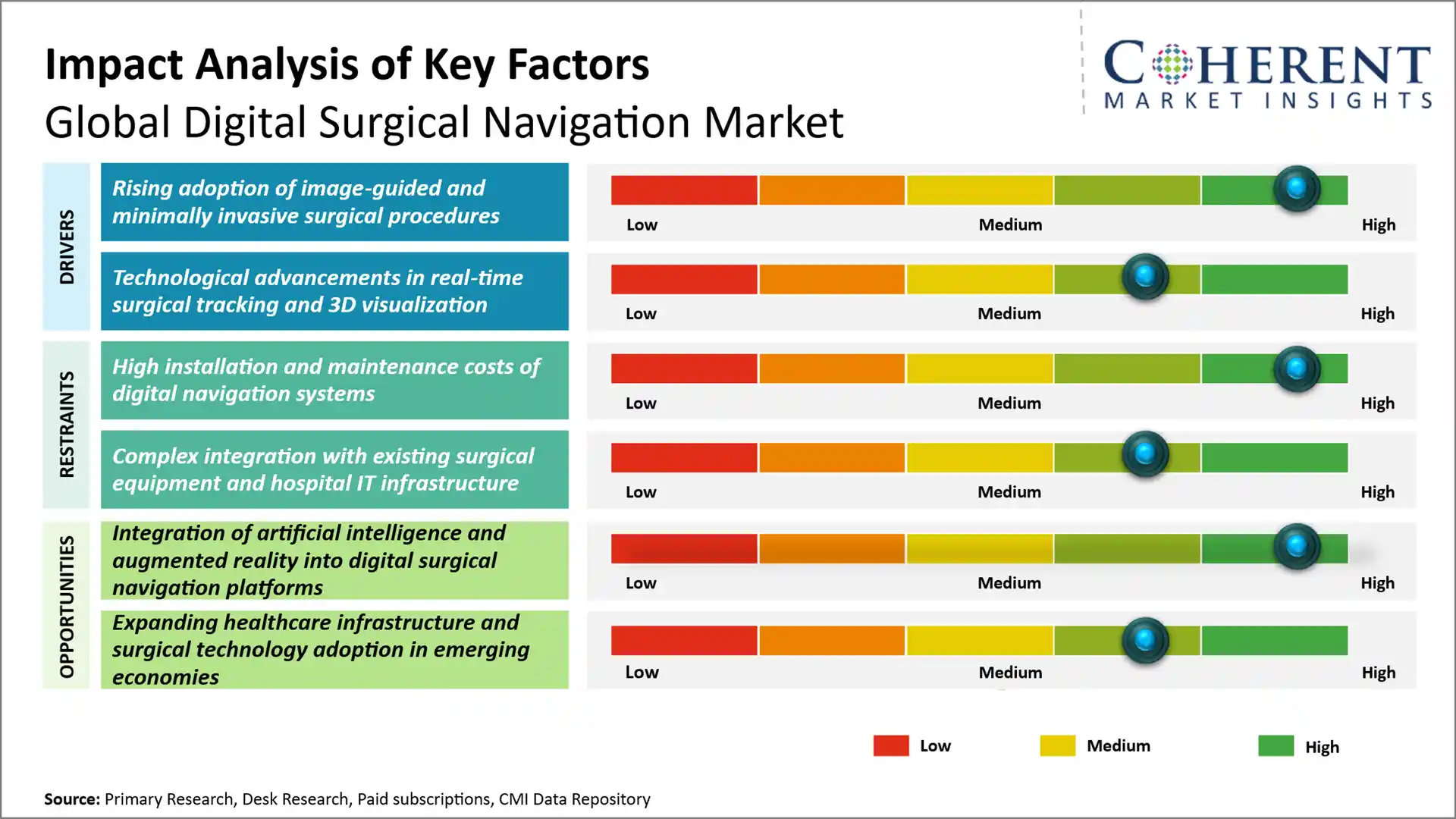
Market Drivers
- Rising adoption of image-guided and minimally invasive surgical procedures: Rising adoption of image-guided and minimally invasive surgical procedures is driving demand for digital surgical navigation systems, which help surgeons visualize anatomical structures and track instruments during complex interventions. These technologies support precise surgical planning while minimizing disruption to surrounding tissues. For instance, in January 2026, India’s AIIMS Mangalagiri issued a tender for an image-guided navigation system for its ENT department, reflecting healthcare providers’ investment in navigation-assisted surgical capabilities.
- Technological advancements in real-time surgical tracking and 3D visualization: Technological advancements in real-time surgical tracking and 3D visualization are driving the digital surgical navigation market by enabling surgeons to view patient-specific anatomical structures and monitor instrument positions during procedures. Integration of advanced imaging, spatial tracking, and interactive 3D models can improve intraoperative orientation and support precision in complex surgeries. For instance, in March 2026, a study published in PLOS ONE presented a reproducible mixed-reality navigation workflow using 3D Slicer, highlighting advances in spatial visualization and navigation for neurosurgical applications.
- Growing demand for precision and improved surgical outcomes: Growing demand for precision and improved surgical outcomes is driving the adoption of digital surgical navigation systems, which provide real-time anatomical guidance and help surgeons accurately position instruments during complex procedures. These capabilities are particularly valuable in spine and neurosurgery, where small placement errors can affect clinical outcomes. For instance, in October 2024, a systematic review and meta-analysis published in the National Library of Medicine evaluated 30 studies involving 17,911 patients and found that navigated thoracolumbar pedicle screw placement achieved 96.2% clinically acceptable positioning, compared with 94.2% using conventional techniques, highlighting the potential of navigation to improve surgical precision.
Emerging Trends
- Integration of artificial intelligence and augmented reality: Digital surgical navigation systems are increasingly integrating artificial intelligence (AI), augmented reality (AR), and three-dimensional visualization to improve anatomical identification and intraoperative guidance. These capabilities support more precise surgical planning and real-time decision-making, particularly in complex spinal and orthopedic procedures.
- Convergence of surgical navigation and robotics: The integration of digital navigation with robotic-assisted surgical platforms is emerging as a key trend, enabling surgeons to plan procedures, track instruments, and execute complex movements with greater precision. This convergence is particularly relevant to spine surgery, where accurate screw placement and alignment are critical.
- Expansion of radiation-free navigation technologies: Growing interest in reducing intraoperative radiation exposure is encouraging the development and adoption of optical and electromagnetic navigation technologies that can track instruments without continuous fluoroscopic imaging. These systems may help reduce radiation exposure for surgical teams and patients while supporting real-time procedural guidance.
Regional Insights
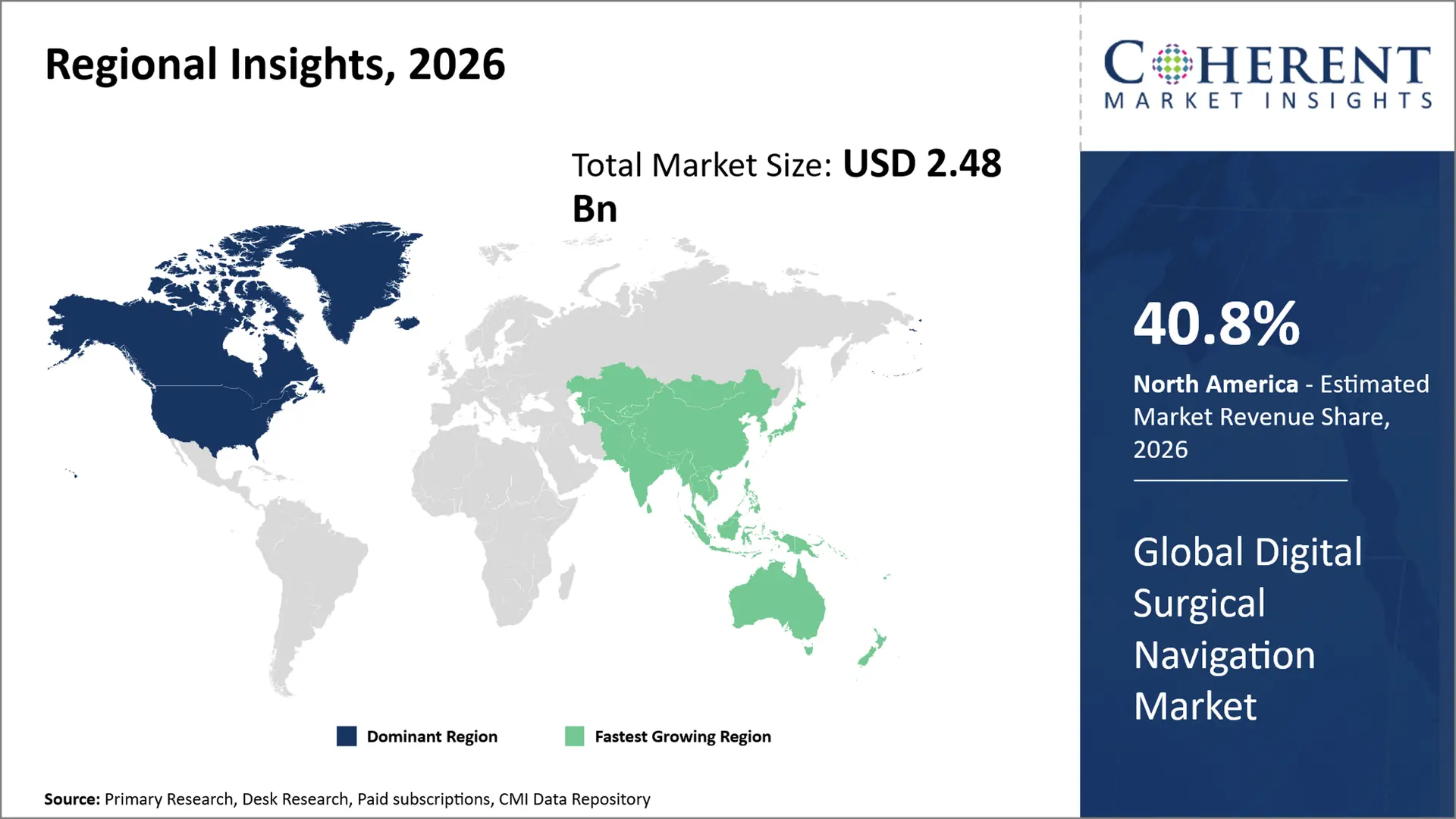
Why is North America a Strong Market for Digital Surgical Navigation?
North America leads the global digital surgical navigation market, accounting for an estimated 40.8% share in 2026, owing to its well-developed healthcare infrastructure, strong R&D capabilities, and a mature medical device ecosystem. Favorable government policies, reimbursement policies, and large capital investments in the healthcare industry are expected to drive high penetration of the digital surgical navigation market in this region.
For instance, the U.S. National Institutes of Health (NIH) funds advanced medical device research through the Blueprint Medtech program, an initiative that funds the development and clinical translation of new medical devices. Furthermore, collaboration of the FDA with researchers and funding for advanced surgical technology development are helping to promote its clinical use in the region.
Why Does Asia Pacific Digital Surgical Navigation Market Exhibit High Growth?
Asia Pacific is expected to exhibit the fastest growth in the global digital surgical navigation market, registering an estimated CAGR of 14.5% during 2026–2033. The region is projected to account for 23.4% of the global market in 2026, driven by growing investments in healthcare, increasing surgical infrastructure, and rising adoption of minimally invasive surgeries. The government of countries such as China, India, and Japan are actively promoting the digital health transformation by adopting various policies and programs to ease the adoption of advanced medical technologies.
For instance, the MAHA Med Tech Mission launched in October 2025 by the Anusandhan National Research Foundation (ANRF) in collaboration with the Indian Council of Medical Research (ICMR) seeks to foster and accelerate the commercial readiness of cutting-edge medical devices and platforms such as surgical tools, robotics, and artificial intelligence-based solutions. (Source: Press Information Bureau) Furthermore, growing healthcare access, rising local medical device capabilities, and increased need for accurate surgical procedures further propels the regional growth.
Global Digital Surgical Navigation Market Outlook for Key Countries
Why is the U.S. Leading Innovation and Adoption in the Digital Surgical Navigation Market?
The United States is expected to remain the pioneer in innovation and deployment of digital surgical navigation because of its mature community of computer-assisted surgery developers, surgical robotics, and image-guided neurosurgical and orthopedic surgery. Facilitated by integration with intraoperative imaging, instrument-tracking systems, and robotic systems, digital surgical navigation is used to support ever more specific and accurate navigation workflows.
Is Japan a Favorable Market for Digital Surgical Navigation Market?
Japan is an attractive market for digital surgical navigation based on its growing healthcare system and experienced medical technology industry. Japan's focus on precision in surgery and the transition to using imaging technology with surgical devices will drive the development of navigation platform applications for orthopedic, spine and neurosurgery. The healthcare market is also looking for new innovations to improve workflows and enhanced minimally invasive surgery.
Is China Emerging as a Key Growth Hub for the Digital Surgical Navigation Market?
China is emerging as a major growth market for the digital surgical navigation market attributed to rising innovation in medical devices, the increase in hospital infrastructure, and rising adoption of advanced surgical technology. Furthermore, rising investments in robotic-assisted and image-guided surgery are expected to create opportunities for navigation in neurosurgery, orthopedics, and spine surgery. The advancement of this domestic capacity will further propel the adoption of affordable navigation technology.
Why Does Germany Top the European Digital Surgical Navigation Market?
Germany leads the European digital surgical navigation market driven by extensive hospital infrastructure coupled with a strong research and development network for medical devices in the country. Germany has a wide spectrum of university hospitals and specialized research institutions that support the development and clinical integration of image-guided surgery, intraoperative imaging and navigation technology.
Is Digital Surgical Navigation Market Developing in UK?
The emergence of the surgical navigation market in the UK is probably facilitated by the NHS' efforts to expand robotic-assisted surgery and improve access to advanced surgical systems. Formal national guidance on implementation of robotic-assisted surgery (issued by NHS England in 2025) on procurement, commissioning, training and evaluation is opening up opportunities for compatible navigation and image-guidance systems.
Key AI and AR Applications in Digital Surgical Navigation
Technology | Application in Surgical Navigation | Potential Market Impact |
AI-based anatomical recognition | Identifies and segments anatomical structures in medical images | Improves visualization and supports precise instrument guidance |
AI-assisted surgical planning | Analyzes patient imaging to support procedure-specific planning | Enhances planning efficiency and personalization |
AR-based 3D visualization | Overlays 3D anatomical models onto the surgical field | Supports spatial orientation and complex surgical procedures |
Real-time navigation guidance | Combines tracking data with digital anatomical information | Helps surgeons monitor instrument position during procedures |
AI–AR integration | Combines intelligent image analysis with immersive visual guidance | Creates opportunities for more intuitive and workflow-efficient navigation systems |
How is the integration of artificial intelligence and augmented reality into digital surgical navigation platforms creating new growth opportunities in the digital surgical navigation market?
The application of digital surgical navigation which involves the use of computer-generated systems to acquire, analyze, and implement surgical data aims to improve the accuracy of surgery, offers more comprehensive visualization of the anatomy, and provides an improved means of decision making. Digital navigation encompasses auto-identification of the anatomy, customized image guidance, and optimal throughput of minimally invasive techniques that can lead to fewer errors in the OR and shorter operative times. For instance, the European Commission’s ARGUS AI project focuses on developing AI-enabled mixed-reality surgical navigation using CT/MRI scans and 3D anatomical overlays to support image-guided neurosurgery.
Market Players, Key Development, and Competitive Landscape
Key Developments
- In September 2026, Enovis announced a binding offer to acquire eCential Robotics for an upfront enterprise value of USD 173.6 million (€155 million), expanding its portfolio with surgical robotics and computer-assisted navigation technologies. The proposed acquisition aims to improve surgical precision and streamline operating-room workflows, strengthening innovation in digital surgical navigation.
- In May 2026, DePuy Synthes announced an agreement to acquire rights to Gemtrack miniature radiofrequency tracking technology for navigation and robotic applications across its joint reconstruction portfolio. The technology aims to reduce reliance on infrared cameras and line-of-sight tracking, potentially improving navigation flexibility and precision in orthopedic surgery.
- In February 2026, Medtronic received U.S. FDA clearance for its Stealth AXiS surgical system, integrating surgical planning, navigation, and robotics for spine surgery. The platform features real-time anatomical tracking to support surgical precision and streamline intraoperative workflows, highlighting advances in digital surgical navigation.
Competitive Landscape
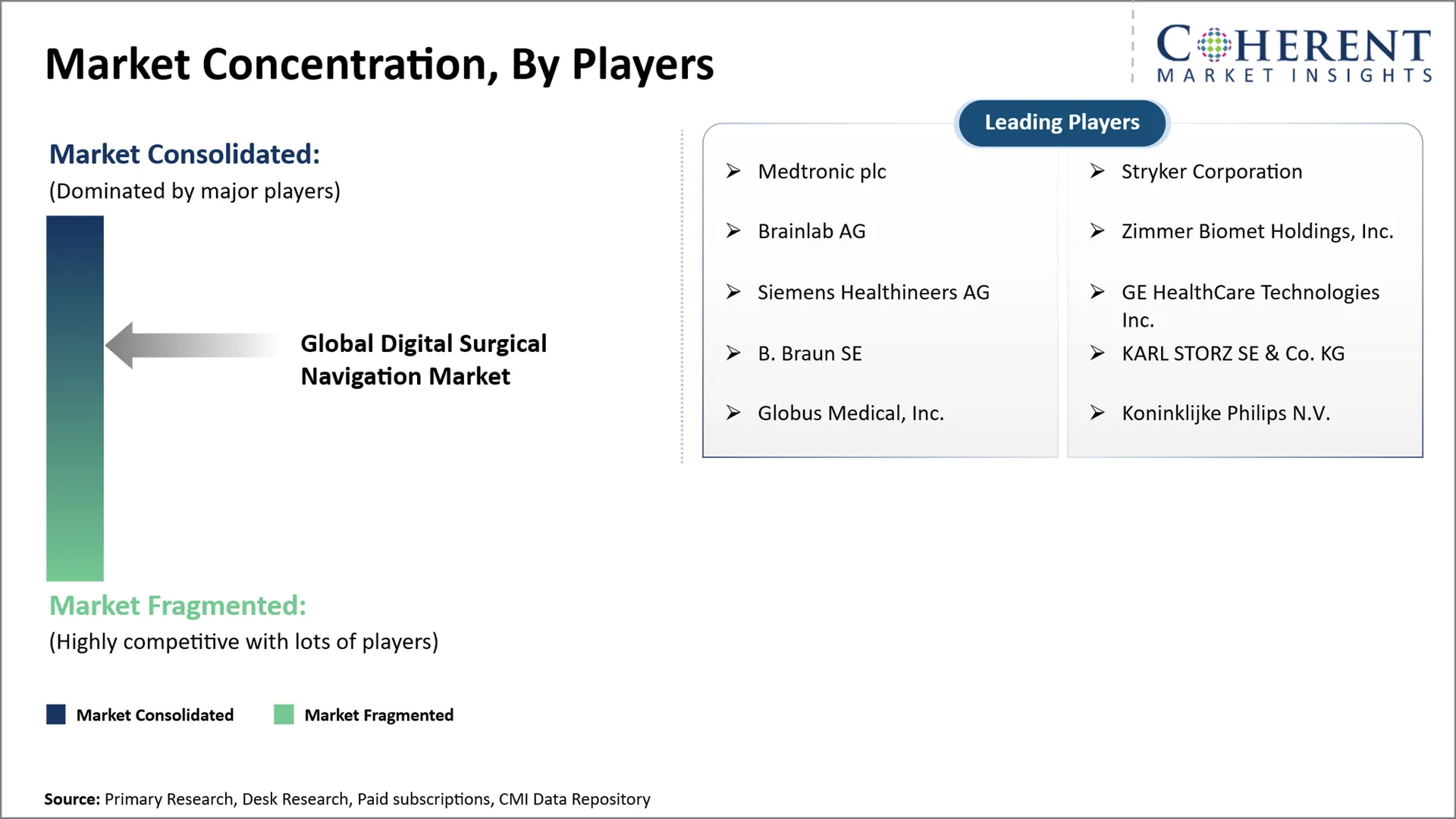
The global digital surgical navigation market is evolving through advancements in real-time instrument tracking, three-dimensional anatomical visualization, artificial intelligence (AI), and integration with robotic-assisted surgery. Market participants are increasingly focusing on improving navigation accuracy, enhancing surgical workflow efficiency, and expanding applications across neurosurgery, orthopedic and spine surgery, ENT, and other specialties. Key focus areas include:
- Development of AI-enabled surgical navigation systems
- Integration of optical and electromagnetic tracking technologies
- Advancement of three-dimensional visualization and augmented reality capabilities
- Integration of digital surgical navigation with robotic-assisted platforms
- Enhancement of system interoperability, navigation accuracy, workflow integration, and data security across digital operating-room environments
Market Report Scope
Digital Surgical Navigation Market Report Coverage | |||
Report Coverage | Details | ||
Base Year | 2025 | Market Size in 2026: | USD 2.48 Bn |
Historical Data For: | 2020 To 2024 | Forecast Period: | 2026 To 2033 |
Forecast Period 2026 To 2033 CAGR: | 12.7% | 2033 Value Projection: | USD 5.72 Bn |
Geographies covered: |
| ||
Segments covered: |
| ||
Companies covered: | Medtronic plc, Stryker Corporation, Brainlab AG, Zimmer Biomet Holdings, Inc., Siemens Healthineers AG, GE HealthCare Technologies Inc., B. Braun SE, KARL STORZ SE & Co. KG, Globus Medical, Inc., Koninklijke Philips N.V. | ||
Growth Drivers: |
| ||
Restraints & Challenges: |
| ||
Analyst Opinion (Expert Opinion)
- In the coming years, global digital surgical navigation market is expected to be shaped by the convergence of artificial intelligence, advanced imaging, augmented reality, and robotic-assisted surgery. As healthcare providers increasingly prioritize surgical precision and workflow efficiency, navigation systems are likely to evolve from standalone guidance platforms into integrated solutions that support preoperative planning, real-time intraoperative tracking, and postoperative assessment. The strongest long-term opportunities are expected in procedures requiring high anatomical precision, particularly spine surgery, neurosurgery, and minimally invasive interventions.
- The maximum opportunities are foreseen within optical navigation systems for orthopedic and spine surgery in the U.S., where advanced surgical infrastructure and demand for precision-guided procedures offer a compelling opportunity for premium navigation platforms. A complementary growth opportunity lies in electromagnetic navigation systems for ENT surgery in China, where providers can target procedures requiring instrument guidance in anatomically complex areas while adapting pricing and service models to local hospital requirements.
- In order to gain a competitive advantage, market players should focus on developing systems that integrate seamlessly with existing imaging equipment and robotic platforms, while improving tracking accuracy, usability, and operating-room workflow efficiency. Players should also invest in modular and upgradeable solutions, specialty-specific software, clinician training, and reliable technical support. Demonstrating tangible clinical and economic value including shorter procedure times, fewer navigation-related errors, and efficient resource utilization will be essential to strengthening adoption and differentiation in an increasingly technology-driven market.
Speak to the analyst
Want personalized insights?
Take the findings above to one of our principal consultants, or have the report rebuilt around the segments, geographies and competitors you actually track.
Market Segmentation
- Component Insights (Revenue, USD Mn, 2021 - 2033)
- Hardware
- Software
- Services
- Navigation Technology Insights (Revenue, USD Mn, 2021 - 2033)
- Optical Navigation
- Electromagnetic Navigation
- Fluoroscopic/Imaging-Based Navigation
- Hybrid Navigation Systems
- Application Insights (Revenue, USD Mn, 2021 - 2033)
- Neurosurgery
- Orthopedic and Spine Surgery
- ENT Surgery
- Dental and Maxillofacial Surgery
- Others
- End User Insights (Revenue, USD Mn, 2021 - 2033)
- Hospitals
- Ambulatory Surgical Centers
- Specialty Clinics
- Others
- Regional Insights (Revenue, USD Mn, 2021 - 2033)
- North America
- U.S.
- Canada
- Latin America
- Brazil
- Argentina
- Mexico
- Rest of Latin America
- Europe
- Germany
- U.K.
- Spain
- France
- Italy
- Russia
- Rest of Europe
- Asia Pacific
- China
- India
- Japan
- Australia
- South Korea
- ASEAN
- Rest of Asia Pacific
- Middle East
- GCC Countries
- Israel
- Rest of Middle East
- Africa
- South Africa
- North Africa
- Central Africa
- North America
- Key Players Insights
- Medtronic plc
- Stryker Corporation
- Brainlab AG
- Zimmer Biomet Holdings, Inc.
- Siemens Healthineers AG
- GE HealthCare Technologies Inc.
- B. Braun SE
- KARL STORZ SE & Co. KG
- Globus Medical, Inc.
- Koninklijke Philips N.V.
Sources
Primary Research Interviews
- Neurosurgeons, orthopedic surgeons, spine surgeons, and ENT specialists using digital surgical navigation systems.
- Hospital administrators, operating-room directors, and procurement managers responsible for acquiring surgical navigation equipment.
- Biomedical engineers and clinical engineering specialists managing navigation hardware, software, and operating-room integration.
- Surgical technology specialists working on optical tracking, electromagnetic navigation, augmented reality, and 3D surgical visualization.
- Healthcare technology consultants and clinical researchers evaluating navigation accuracy, procedural efficiency, and surgical workflow integration.
Stakeholders
- Surgical navigation system manufacturers and developers of computer-assisted surgical platforms.
- Medical imaging, optical tracking, and electromagnetic sensor technology providers.
- Surgical robotics and augmented-reality navigation technology developers.
- Surgical planning software, 3D visualization, and image-guidance software developers.
- Medical device integration, interoperability, and operating-room technology providers.
- End-use Sectors
- Hospitals and multispecialty healthcare providers.
- Neurosurgery and spine surgery centers.
- Orthopedic and trauma surgery centers.
- ENT and skull-base surgery departments.
- Dental and maxillofacial surgery centers.
- Ambulatory surgical centers and specialty clinics.
- Academic medical centers and surgical training institutions.
- Regulatory & Health Bodies
- U.S. Food and Drug Administration (FDA) — medical device classification, premarket submissions, and computer-assisted surgical systems.
- European Commission — Medical Device Regulation (MDR) and regulatory framework for medical devices in the European Union.
- Medicines and Healthcare products Regulatory Agency (MHRA), UK — regulation of medical devices and software used in healthcare.
- Pharmaceuticals and Medical Devices Agency (PMDA), Japan — review and regulation of medical devices, including advanced surgical technologies.
- National Medical Products Administration (NMPA), China — registration, classification, and supervision of medical devices.
- Central Drugs Standard Control Organisation (CDSCO), India — regulation and registration of medical devices in India.
Databases
- FDA 510(k) Premarket Notification Database — searchable records of medical device clearances, including surgical navigation systems.
- FDA Product Classification Database — medical device classifications, product codes, and regulatory pathways.
- ClinicalTrials.gov — clinical studies involving surgical navigation, image-guided surgery, robotic-assisted procedures, and related technologies.
- WHO International Clinical Trials Registry Platform (ICTRP) — international clinical trial records relevant to surgical navigation and image-guided interventions.
- EU Clinical Trials Information System (CTIS) — clinical trial information and records for the European Union and European Economic Area.
- Clinical Trials Registry–India (CTRI) — registration of clinical studies conducted in India.
Associations
- American Association of Neurological Surgeons (AANS) — neurosurgical practice, education, and surgical technology.
- Congress of Neurological Surgeons (CNS) — neurosurgical research, education, and clinical practice.
- North American Spine Society (NASS) — spine care, surgical practice, and clinical education.
- American Academy of Orthopaedic Surgeons (AAOS) — orthopedic surgery practice, education, and research.
- American Academy of Otolaryngology–Head and Neck Surgery (AAO-HNS) — ENT and head-and-neck surgical practice.
- Radiological Society of North America (RSNA) — medical imaging, image-guided procedures, and radiological research.
- Association for the Advancement of Medical Instrumentation (AAMI) — medical device safety, healthcare technology, and technical standards.
Public Domain Sources
- National Institutes of Health (NIH) — publicly funded biomedical research and surgical technology research.
- National Library of Medicine (NLM) — biomedical literature, clinical information, and medical research resources.
- National Center for Biotechnology Information (NCBI) — biomedical publications and scientific literature on surgical navigation and image-guided procedures.
- U.S. Food and Drug Administration (FDA) — public medical device clearances, classification records, safety communications, and regulatory guidance.
- European Commission — Medical Devices Sector — public information on European medical device regulation and compliance requirements.
- World Health Organization (WHO) — global health statistics, health technology guidance, and healthcare system information.
- Organisation for Economic Co-operation and Development (OECD) — comparative healthcare expenditure, health system indicators, and health technology statistics.
- U.S. National Science Foundation (NSF) — publicly funded research in engineering, robotics, imaging, and advanced technology.
Proprietary Elements
- CMI Data Analytics Tool, Proprietary CMI Existing Repository of information for last 10 years.
Get access to 250+ pages report
Every segment, forecast, competitor profile and data table behind the analysis above — available for instant download.
- ESOMAR Member
- ISO 9001:2015 Certified
- D-U-N-S Registered
- GDPR & CCPA Compliant
Frequently Asked Questions
The global digital surgical navigation market is estimated to be valued at USD 2.48 Bn in 2026 and is expected to reach USD 5.72 Bn by 2033.
Hardware dominates due to the essential role of tracking cameras, navigation workstations, sensors, and specialized instruments in enabling real-time surgical guidance and accurate instrument localization.
Digital surgical navigation refers to computer-assisted technology that combines medical imaging, tracking systems, and specialized software to provide real-time visualization of anatomical structures and surgical instrument positions, helping surgeons perform complex procedures with greater precision.
The CAGR of global digital surgical navigation market is projected to be 12.7% from 2026 to 2033.
Rising adoption of image-guided and minimally invasive surgical procedures, and technological advancements in real-time surgical tracking and 3D visualization are the major factors driving the growth of the global digital surgical navigation market.
High installation and maintenance costs of digital navigation systems, and complex integration with existing surgical equipment and hospital IT infrastructure are the major factors hampering the growth of the global digital surgical navigation market.
In terms of navigation technology, optical navigation is estimated to dominate the market revenue share in 2026.