

Global AI Medical Device Predetermined Change Control Plan Solutions Market Forecast – 2026 To 2033
The global AI medical device predetermined change control plan solutions market is expected to grow from USD 286.4 Mn in 2026 to USD 748.6 Mn by 2033, registering a compound annual growth rate (CAGR) of 14.7% from 2026 to 2033. The global AI medical device predetermined change control plan solutions market is expected to grow due to increasing adoption of AI-enabled medical devices and the need for organized life cycle modification management.
As of September 2026, the U.S. Food and Drug Administration (FDA) had approved more than 1,600 AI-enabled medical devices for marketing in the U.S., expanding the potential need for predefined modification protocols, algorithm validation, and risk assessment to manage future device updates.
Key Takeaways of the Global AI Medical Device Predetermined Change Control Plan Solutions Market
- PCCP development and documentation solutions are projected to hold 34.7% of the global AI medical device predetermined change control plan solutions market share in 2026, making it dominant solution type, across Asia Pacific mainly attributed to the demand for up-gradation of software and ML-enabled medical devices. For instance, Singapore's Health Sciences Authority (HSA) initiated the Software as a Medical Device Change Management Program that allows manufacturers to deploy predefined software upgrades using a robust regulatory mechanism.
- AI-enabled diagnostic devices are projected to hold 39.8% of the global AI medical device predetermined change control plan solutions market share in 2026, making it dominant device type segment, across Europe mature medical device tech ecosystem and the increasing regulatory emphasis on AI lifecycle monitoring leading to demand for planning of structured modification and performance monitoring. For instance, the UK Medicines and Healthcare products Regulatory Agency (MHRA) launched an AI Airlock programme to solve the regulation challenges of AI enabled medical devices for use in a closed testing environment.
- Cloud-based solutions are projected to hold 61.7% of the global AI medical device predetermined change control plan solutions market share in 2026, making it dominant deployment mode segment, across North America owing to its established ecosystem for AI development as well as digital-enabled infrastructure enabling scalable documentation, risk analysis, validation and monitoring of AI use cases across distributed development teams. For instance, NIST's AI Risk Management Framework provides organizations with a flexible, practical approach to identify and manage AI risks during system design, development, deployment and evaluation.
- North America market maintains dominance with an expected share of 45.6% in 2026, driven by the existence of favorable medical device regulations, AI innovator ecosystem and emphasis on ML-enabled device lifecycle management. For instance, in April 2026, Health Canada released their Pre-market Guidance for Machine Learning-Enabled Medical Devices and announced the method of managing pre-planned change by introducing predetermined change control plans (PCCPs) as a way to ensure that planned changes to the machine learning systems do not diminish the safety and effectiveness of the device.
- Asia Pacific is expected to exhibit the fastest growth in the global AI medical device predetermined change control plan solutions market, registering an estimated CAGR of 19.2% during 2026–2033, due to the changes in the regulations and a rise in the use of software-enabled medical devices. For instance, the Therapeutic Goods Administration (TGA) of Australia introduced a public consultation in 2026 focused on TGA's proposed guidance for the premarket approval of planned changes to medical device software, such as AI and ML-enabled device's applications that are subject to periodic updates or retraining of models.
Segmental Insights
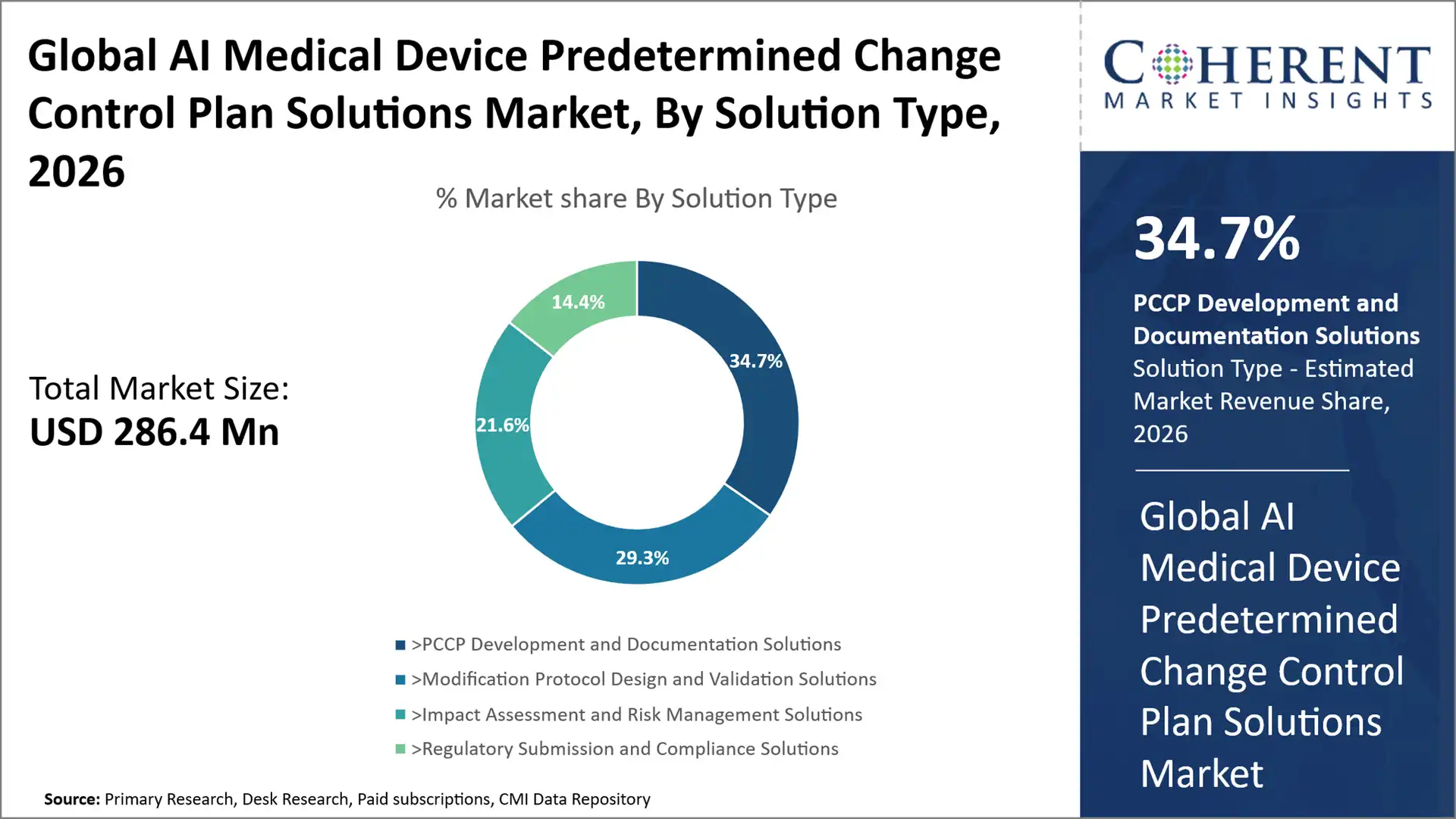
Why Do PCCP Development and Documentation Solutions Dominate the Global AI Medical Device Predetermined Change Control Plan Solutions Market?
PCCP development and documentation solutions are projected to hold the market share of 34.7% in 2026, due to its role in enabling the development of structured modification procedures, ensuring traceability to regulators and evidencing throughout the lifecycle of AI medical devices. Additionally, PCCP help manufacturers in documenting foreseen modifications, validation and risk assessment procedures. For instance, in December 2025, the Health Sciences Authority of Singapore updated its Regulatory Guidelines for Software Medical Devices. It emphasizes life cycle management, which involves four elements: software verification, software validation, rigorous change control and traceability.
- Current Industry Events of 2026
- Market Size Estimation
- Regional Breakdown
- Competitive Landscape
- Customer Intelligence
- Segmental Analysis
- Pricing Analysis
- Key Market Drivers, Challenges & Future Trends
- Customized Insights Section
Why Does AI-Enabled Diagnostic Devices Represent the Largest Device Type Segment in the AI Medical Device Predetermined Change Control Plan Solutions Market?
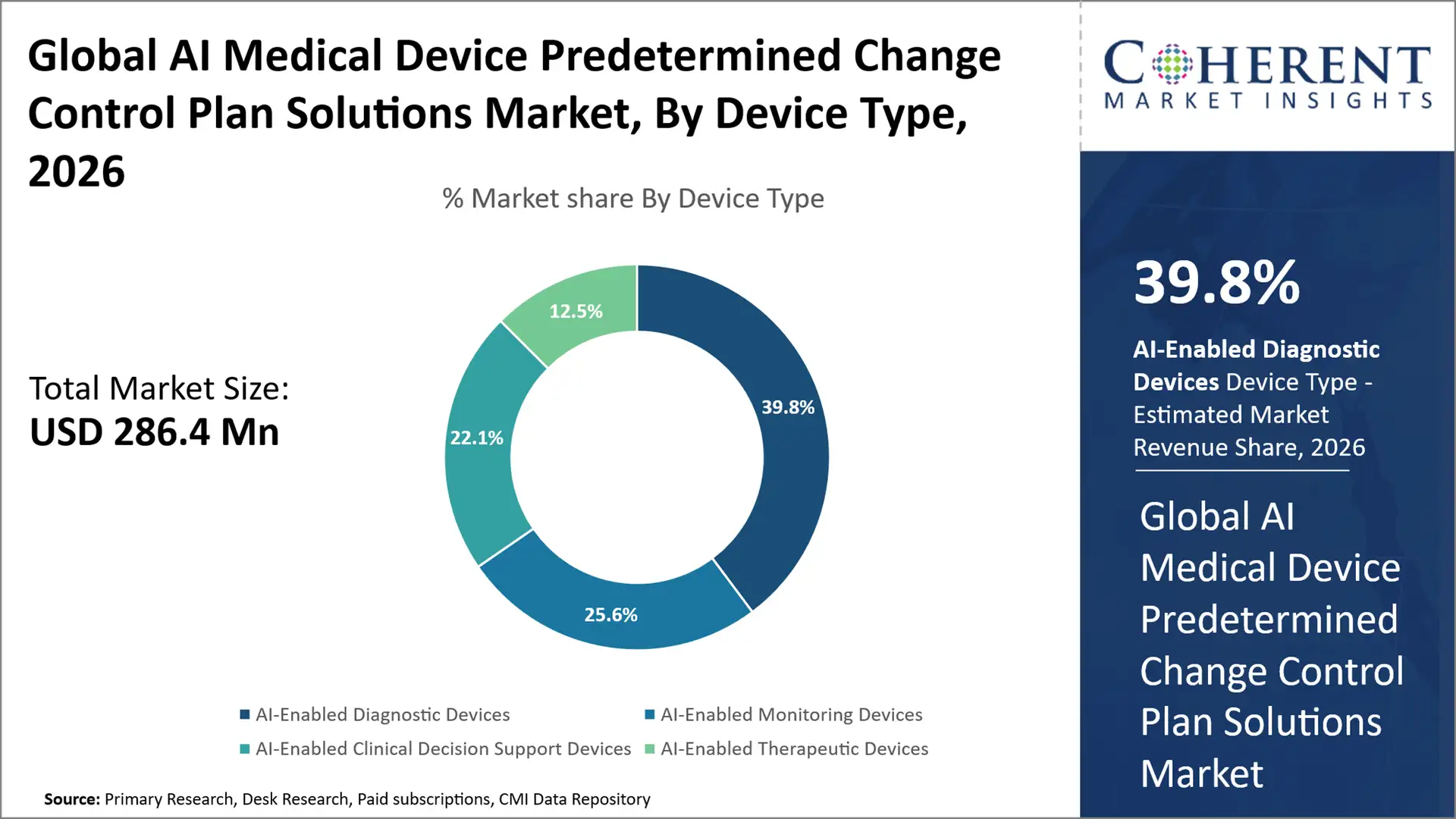
AI-enabled diagnostic devices are anticipated to contribute a share of 39.8% in 2026, driven by their growing utilization in medical imaging, disease diagnosis, and clinical decision support. This may necessitate validated workflows, modification protocols, and lifecycle risk management for continuous algorithms refinement and performance improvement. For instance, in June 2026, the UK Department of Health and Social Care announced a USD 26.78 million (£20 million) funding that will enable the uptake of AI enabled chest X-ray diagnostic solutions throughout all National Health Service trusts in England by 2029. This will require enhanced post-market monitoring of device performance and cautious software changes.
Cloud-Based Solutions Segment Dominates the Global AI Medical Device Predetermined Change Control Plan Solutions Market
The cloud-based solutions segment is projected to hold a market share of 61.7% in 2026, due to their ability to scale, be remotely accessed, and their suitability for data-heavy AI model updates, validation and regulatory documentation. They also support collaboration between distributed development teams, and can reduce the need for large amounts of infrastructure on site. For instance, The Ministry of Health and Family Welfare launched Unified Health Interface (UHI) in June, 2026 under the Ayushman Bharat Digital Mission. The main aim is to enable interoperable digital infrastructure in the country that links the patients with the healthcare providers. (Source: Press Information Bureau)
Current Events and their Impact
Current Events | Description and its Impact |
UK government accepts recommendations to create a predetermined change control plan framework for ai medical devices (October 2026) |
|
South Korea introduces review guidelines for change management plans in AI-based digital medical devices (June 2026) |
|
AI Medical Device Predetermined Change Control Plan Solutions Market Dynamics
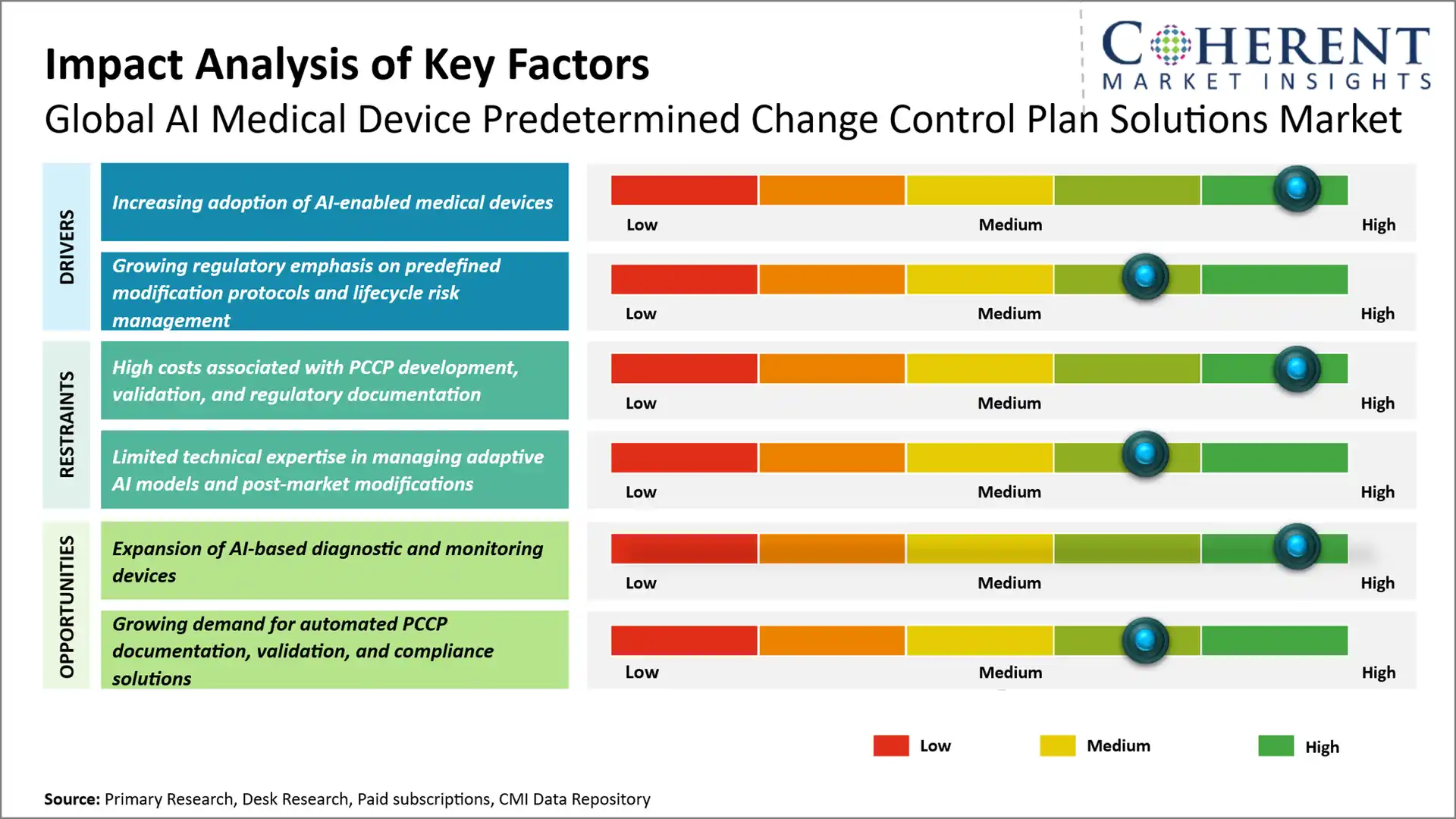
Market Drivers
- Increasing adoption of AI-enabled medical devices: There is increasing demand for solutions that support planned algorithm changes, testing for performance and lifecycle compliance, driven by the growing use of AI in diagnostic, monitoring and clinical decision support devices. For instance, in March 2026, the Ministry of Health and Family Welfare, India, has launched a Strategy for Artificial Intelligence in Healthcare (SAHI), and the Benchmarking Open Data Platform for Health AI (BODH), to foster safe use and evaluation of health AI solutions.
- Growing regulatory emphasis on predefined modification protocols and lifecycle risk management: An increased regulatory focus on predefined modification procedures, manufacturers are creating well-documented, data-driven procedures for modifying, testing and ongoing risk monitoring for their AI models. For instance, Health Canada's Pre-market Guidance for Machine Learning-Enabled Medical Devices describes a set of PCCP (pre-market criteria for changing processes) that include modification procedures, impacts, performance monitoring and corrective measures
- Strengthening regulatory requirements for AI medical device lifecycle monitoring: The increasing regulatory emphasis towards AI traceability, technical documentation, and post-market surveillance indicates that manufacturers will be required to have streamlined procedures in place to manage device changes. For instance, the AI Act proposed by the European Union requires post-market monitoring in Article 72, where it requires high-risk AI providers to continuously monitor and evaluate the performance of their systems.
Emerging Trends
- Growing use of automated AI model validation and change monitoring: Medical device manufacturers are exploring automated methods for adding model validation and performance tracking as well as documenting changes to a device's AI system over its lifespan.
- Impact: Automation reduces the human labor needed to review changes in an algorithm, and to maintain documentation on validation. It also improves consistency with which potential changes are identified, and potential safety issues are evaluated.
- Market Relevance: This trend is driving an increased demand for holistic PCCP solutions that combine modification programs, automated testing and impact assessment. The providers that use AI to validate and monitor will be more competitive.
- Increasing adoption of PCCPs in AI medical device lifecycle management: PCCPs are increasingly being considered as part of broader AI medical device development and lifecycle strategies rather than as standalone regulatory documentation requirements.
- Impact: The advancement provides manufacturers a framework for updating algorithms, evolving datasets, and optimizing performance within the constraints of defined modifications. It also promotes better interaction between regulatory, software development, quality, and post market teams.
- Market Relevance: This trend is driving opportunities for full PCCP solutions including the overall development, validation, risk management and regulatory documentation of a product. Demand is expected to increase for platforms that integrate the PCCP workflows with quality management and regulatory compliance systems.
Regional Insights
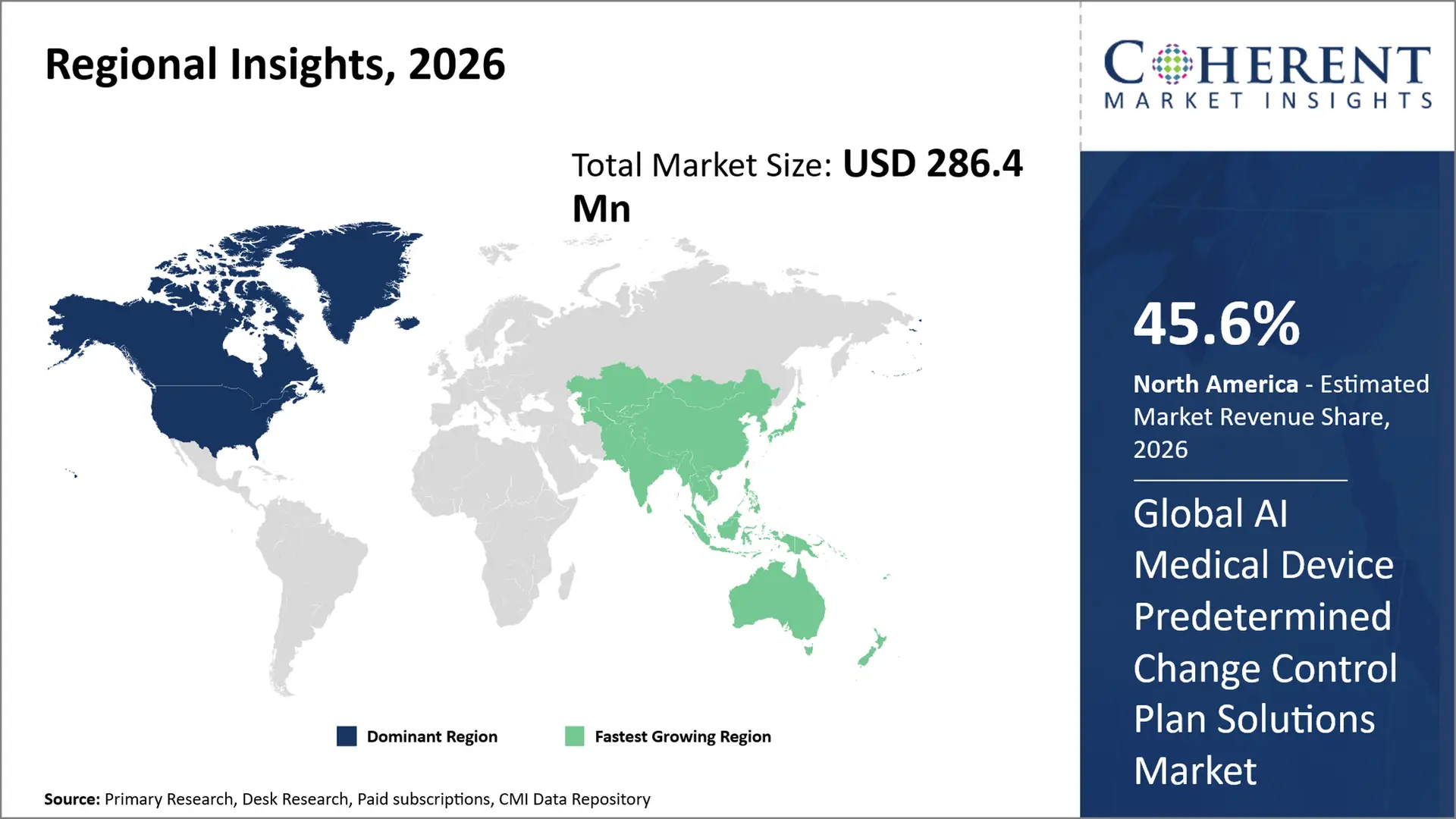
Why is North America a Strong Market for AI Medical Device Predetermined Change Control Plan Solutions?
North America leads the global AI medical device predetermined change control plan solutions market, accounting for an estimated 45.6% share in 2026, due to the strong healthcare infrastructure, an established healthcare ecosystem for AI, and medical device industry. The U.S. FDA has established predefined pathways for the medical device incorporation of AI and predetermined change control plans (PCCPs) to promote market confidence and increased uptake of AI devices.
For instance, August 2025, guidance from the U.S. Food and Drug Administration allows device makers to include defined modifications to artificial intelligence (AI) devices, and the validation procedures and impact analyses for each modification, within a 510(k) or De Novo or Premarket Approval application. Once permitted, device makers can carry out modifications covered by the PCCP without a marketing submission. Additionally, rising investments in research & development activities, collaborations of healthcare providers with device developers to increase the efficiency of the AI devices, and increase competence in AI device validation, device modification management, and regulatory compliance is further propelling the regional growth.
Why Does Asia Pacific AI Medical Device Predetermined Change Control Plan Solutions Market Exhibit High Growth?
Asia Pacific is expected to exhibit the fastest growth in the global AI medical device predetermined change control plan solutions market, registering an estimated CAGR of 19.2% during 2026–2033. The region is projected to account for 19.8% of the global market in 2026, owing to increasing deployment of healthcare services, surge in government initiatives and advancements in standards for futuristic medical devices. The Asia Pacific market is witnessing faster adoption in this industry owing to increasing investments in the AI-enabled diagnostics and monitoring devices, as well as intensifying collaborations in the region's healthcare technology ecosystem.
Furthermore, government initiatives encouraging digital health technologies and large medical device manufacturing and export capabilities continue to help expand this market. For instance, India’s Department of Commerce had reported in March 2026 that exports of medical devices crossed USD 4 billion during FY 2024-25. The department outlined measures to strengthen the medical device export ecosystem in India and aid the domestic manufacturing capacity and global Med Tech expansion. (Source: Press Information Bureau)
Global AI Medical Device Predetermined Change Control Plan Solutions Market Outlook for Key Countries
Why is the U.S. Leading Innovation and Adoption in the AI Medical Device Predetermined Change Control Plan Solutions Market?
The U.S. is expected to be a pioneer country in the development and adoption of the AI medical device predetermined change control plan solutions market owing to developed regulation ecosystem for AI medical devices and structured processes for control of planned software modifications. Development of dedicated PCCP infrastructure for planned modifications of AI medical devices would create an investor friendly environment for solutions focused on modification planning, validation of new algorithm, impact assessment, and regulatory documentation. Furthermore, U.S. developed AI medical devices ecosystem will also drive the need for integrated PCCP capabilities in the device over the lifecycle.
Is Japan a Favorable Market for AI Medical Device Predetermined Change Control Plan Solutions Market?
Japan has a strong potential emerging market for AI medical device predetermined change control plan solutions driven by its well-established regulatory pathway for software-based medical devices and the IDATEN framework for planned post-market change management. Growing use of AI for imaging, diagnostics and clinical decision support augurs well for PCCP-related documentation, validation, and lifecycle management solutions. However, Japan's framework is quite distinct with its own opportunities for providers willing to tailor solutions to match local regulatory and change-management standards.
Is China Emerging as a Key Growth Hub for the AI Medical Device Predetermined Change Control Plan Solutions Market?
China is being identified as a high potential growth market for AI medical device predetermined change control plan solutions due to the increased adoption of AI-enabled diagnostic and imaging devices. The increasing regulatory focus on software change control and lifecycle management is creating demand for specialized solutions covering algorithm validation, change record keeping, risk management and performance monitoring solutions.
Why Does Germany Top the European AI Medical Device Predetermined Change Control Plan Solutions Market?
Germany holds the largest share in the European AI medical device predetermined change control plan solutions market, due to the presence of advanced research ecosystems for medical artificial intelligence, a sophisticated medical device industry, and a focus on the integration of artificial intelligence needs with the medical device regulations in the country. The increasing focus on AI validation, regulatory certainty, and lifecycle risk management creates demand for documentation and modification planning and compliance services for PCCP.
Is AI Medical Device Predetermined Change Control Plan Solutions Market Developing in UK?
UK is an emerging market for AI medical device predetermined change control plan solutions, supported by the Medicines and Healthcare products Regulatory Agency efforts in improving the regulation of AI medical device life-cycles. Predetermined change control plans, adaptive AI model management and post-market surveillance are gaining popularity, creating demand for niche documentation, validation and risk management solutions. Furthermore, UK’s regulatory development projects are expected to lead to increased adoption of PCCP-related solutions in the country by AI medical device companies.
Global Regulatory Frameworks for AI Medical Device PCCP Solutions Market
Country/Region | Regulatory authority | Relevant framework | Key focus |
United States | U.S. Food and Drug Administration | PCCP Guidance for AI-Enabled Device Software Functions | Predefined AI model modifications, validation, and impact assessment |
Canada | Health Canada | PCCP Guiding Principles and MLMD guidance | Planned modifications and lifecycle risk management |
UK | Medicines and Healthcare products Regulatory Agency | Software and AI as a Medical Device Change Programme | AI device modifications and regulatory oversight |
China | National Medical Products Administration | AI Medical Device Technical Review Guidelines | Technical evaluation and regulatory oversight of AI-enabled medical devices |
Japan | Pharmaceuticals and Medical Devices Agency / Ministry of Health, Labour and Welfare | IDATEN Framework | Timely regulatory evaluation of planned improvements to medical devices |
How is the expansion of AI-based diagnostic and monitoring devices creating new growth opportunities in the AI medical device predetermined change control plan solutions market?
The market is expected to benefit from the adoption of diagnostic and monitoring devices powered by artificial intelligence. With growing adoption of such devices, the need for device intelligence software that manages algorithm updates, performance validation, and regulatory compliance throughout the device life cycle will grow. The growing applications in cancer screening, medical imaging, and continuous patient monitoring will fuel this opportunity. For instance, in March 2026, the Government of India launched the Cancer AI & Technology Challenge (CATCH) Grant Program. CATCH provides a route for the development, piloting and validation of artificial intelligence-based solutions for cancer screening and diagnosis and unlocks related PCCP development and validation services. (Source: Press Information Bureau)
Market Players, Key Development, and Competitive Intelligence
Key Developments
- In October 2026, AdvaMed urged the U.S Food and Drug Administration (FDA) to apply existing, risk-based regulatory pathways for medical devices powered by generative AI instead of putting in place separate regulatory requirements. The trade body called for greater use of Predetermined Change Control Plans to track the expected device changes, and focused on post-market monitoring as appropriate for the risks.
- In June 2026, GE HealthCare received FDA 510(k) clearance for MIM Contour ProtégéAI+ 2.0, an AI-enabled auto-contouring software designed to support radiation therapy treatment planning. It includes a Pre-Determined Change Control Plan (PCCP) to allow for future changes and improvements to the model under the existing regulation.
Competitive Landscape
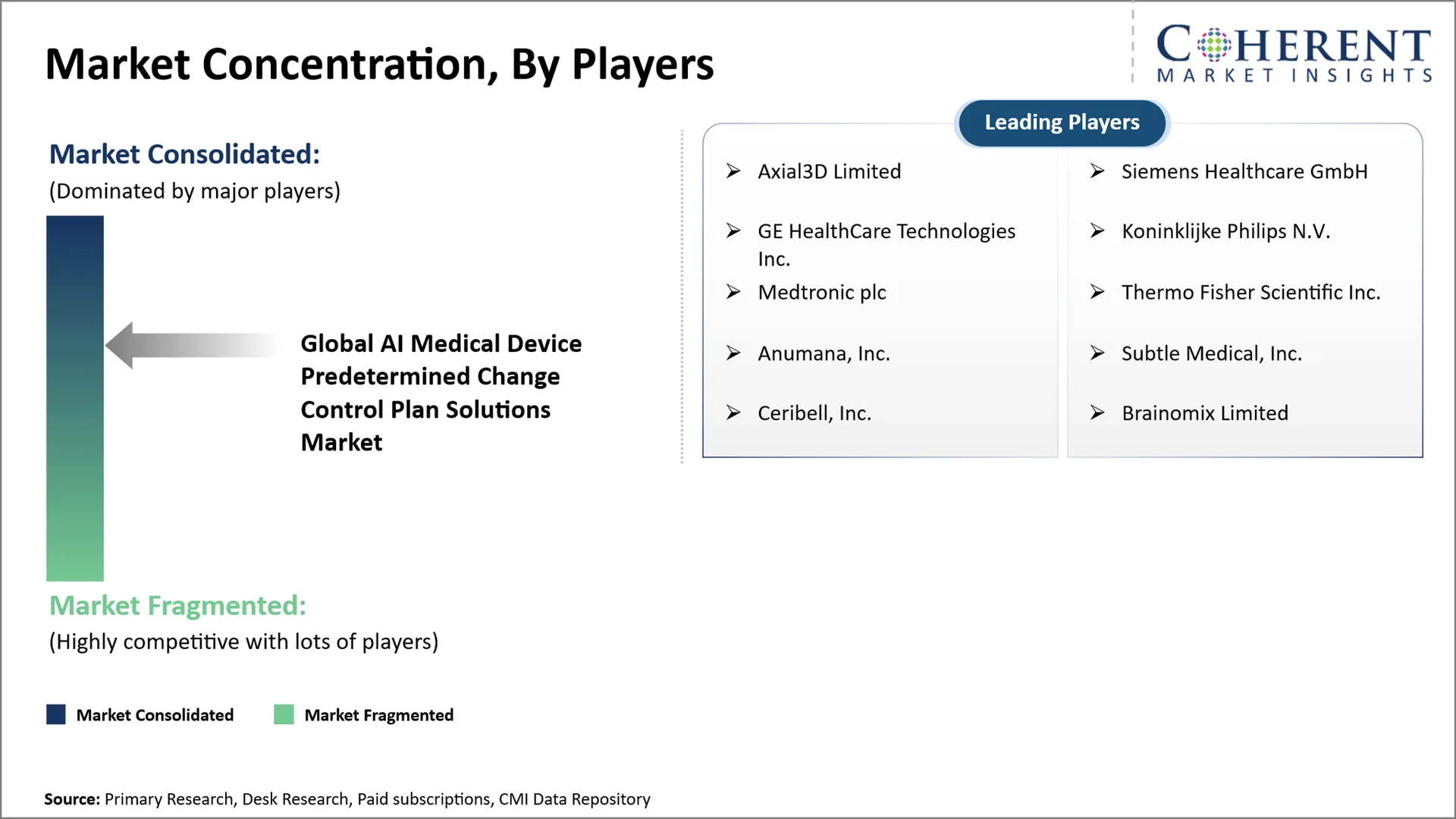
The global AI medical device predetermined change control plan solutions market is evolving as medical device manufacturers grow more focused on the management of planned modifications to their AI and ML models and the impact of these changes on device safety, performance, and regulatory compliance. Solution providers are furthering their PCCP capabilities, and their ability to design modification protocols, validate algorithms, conduct impact analyses, and manage the risk of the device throughout its lifecycle. As the market for AI-enabled diagnostic, monitoring, and clinical decision-support devices continues to grow.
Key focus areas include
- Standardized documentation for PCCP and modification guidelines
- Automated verification and evaluation of model updates for artificial intelligence
- Combining risk management and monitoring of post-market performance
- Alignment with evolving global regulatory requirements
Market Report Scope
Global AI Medical Device Predetermined Change Control Plan Solutions Market Report Coverage | |||
Report Coverage | Details | ||
Base Year | 2025 | Market Size in 2026: | USD 286.4 Mn |
Historical Data For: | 2020 To 2024 | Forecast Period: | 2026 To 2033 |
Forecast Period 2026 To 2033 CAGR: | 14.7% | 2033 Value Projection: | USD 748.6 Mn |
Geographies covered: |
| ||
Segments covered: |
| ||
Companies covered: | Axial3D Limited, Siemens Healthcare GmbH, GE HealthCare Technologies Inc., Koninklijke Philips N.V., Medtronic plc, Thermo Fisher Scientific Inc., Anumana, Inc., Subtle Medical, Inc., Ceribell, Inc., Brainomix Limited | ||
Growth Drivers: |
| ||
Restraints & Challenges: |
| ||
Analyst Opinion (Expert Opinion)
- In the coming years, global AI medical device predetermined change control plan solutions market is expected to move away from the submission-centric approach to document the PCCP, towards the ongoing management of the AI lifecycle. With further penetration of adaptive AI medical devices, modification processes will need to be pre-determined, model validation and performance monitoring. Integrated PCCP packages consisting of clinical, risk and algorithm validation are likely to take a greater role.
- The strongest potential opportunity exists in diagnostic devices equipped with AI, particularly for medical imaging and radiology applications in the U.S. Updates of algorithms, data, and optimization of performance drives the need for a system that provides structured modification procedures and validation solutions.
- The market players should focus on their existing strengths and develop a wider product scope including PCCP documentation, modification planning, algorithm validation, and the risk assessment instead of just delivering regulatory support. For better positioning, they should nurture building up the expertise in the areas of medical imaging, machine learning and clinical performance testing and establish synergies with device makers and AI solution providers.
Speak to the analyst
Want personalized insights?
Take the findings above to one of our principal consultants, or have the report rebuilt around the segments, geographies and competitors you actually track.
Market Segmentation
- Solution Type Insights (Revenue, USD Mn, 2021 - 2033)
- PCCP Development and Documentation Solutions
- Modification Protocol Design and Validation Solutions
- Impact Assessment and Risk Management Solutions
- Regulatory Submission and Compliance Solutions
- Device Type Insights (Revenue, USD Mn, 2021 - 2033)
- AI-Enabled Diagnostic Devices
- AI-Enabled Monitoring Devices
- AI-Enabled Clinical Decision Support Devices
- AI-Enabled Therapeutic Devices
- Deployment Mode Insights (Revenue, USD Mn, 2021 - 2033)
- Cloud-Based Solutions
- On-Premises Solutions
- Application Insights (Revenue, USD Mn, 2021 - 2033)
- Algorithm and Model Updates
- Performance Optimization and Model Retraining
- Expansion of Intended Use and Clinical Applications
- Data and Feature Updates
- Others
- End User Insights (Revenue, USD Mn, 2021 - 2033)
- Medical Device Manufacturers
- Healthcare Technology Companies
- Contract Research Organizations (CROs)
- Regulatory Affairs and Consulting Firms
- Others
- Regional Insights (Revenue, USD Mn, 2021 - 2033)
- North America
- U.S.
- Canada
- Latin America
- Brazil
- Argentina
- Mexico
- Rest of Latin America
- Europe
- Germany
- U.K.
- Spain
- France
- Italy
- Russia
- Rest of Europe
- Asia Pacific
- China
- India
- Japan
- Australia
- South Korea
- ASEAN
- Rest of Asia Pacific
- Middle East
- GCC Countries
- Israel
- Rest of Middle East
- Africa
- South Africa
- North Africa
- Central Africa
- North America
- Key Players Insights
- Axial3D Limited
- Siemens Healthcare GmbH
- GE HealthCare Technologies Inc.
- Koninklijke Philips N.V.
- Medtronic plc
- Thermo Fisher Scientific Inc.
- Anumana, Inc.
- Subtle Medical, Inc.
- Ceribell, Inc.
- Brainomix Limited
Sources
Primary Research Interviews
- PCCP development and regulatory strategy specialists
- AI/ML medical device software developers and validation experts
- Medical device regulatory affairs and quality assurance professionals
- Clinical AI performance assessment and risk management specialists
Stakeholders
- AI-enabled medical device manufacturers
- Medical device software and technology companies
- Regulatory consulting and compliance service providers
- Contract research and clinical validation organizations (CROs)
- End-use Sectors
- AI-Based Diagnostic and Medical Imaging
- AI-Enabled Patient Monitoring
- Clinical Decision Support Systems
- AI-Enabled Therapeutic and Surgical Devices
- Regulatory & Health Bodies
- U.S. Food and Drug Administration (FDA)
- European Medicines Agency (EMA)
- Health Canada
- Medicines and Healthcare products Regulatory Agency (MHRA), UK
Databases
- FDA AI-Enabled Medical Devices Database
- FDA 510(k) Premarket Notification Database
- FDA De Novo Classification Database
- EUDAMED – European Database on Medical Devices
Associations
- Advanced Medical Technology Association (AdvaMed)
- MedTech Europe
- Medical Device Innovation Consortium (MDIC)
- Association for the Advancement of Medical Instrumentation (AAMI)
Public Domain Sources
- International Medical Device Regulators Forum (IMDRF)
- National Institute of Standards and Technology (NIST)
- World Health Organization (WHO)
- Organisation for Economic Co-operation and Development (OECD)
Proprietary Elements
- CMI Data Analytics Tool
- Proprietary CMI Existing Repository of information for last 10 years.
Get access to 250+ pages report
Every segment, forecast, competitor profile and data table behind the analysis above — available for instant download.
- ESOMAR Member
- ISO 9001:2015 Certified
- D-U-N-S Registered
- GDPR & CCPA Compliant
Frequently Asked Questions
The global AI medical device predetermined change control plan solutions market is estimated to be valued at USD 286.4 Mn in 2026 and is expected to reach USD 748.6 Mn by 2033.
PCCP development and documentation solutions dominate as manufacturers need documented change management plans, validated change control procedures, and comprehensive regulatory documentation to guide changes to AI-enabled devices.
AI medical device predetermined change control plan solutions include software and services that help manufacturers plan, document, validate and implement predefined modifications to AI-enabled medical devices to ensure safety and efficacy.
The CAGR of global AI medical device predetermined change control plan solutions market is projected to be 14.7% from 2026 to 2033.
Increasing adoption of AI-enabled medical devices, and growing regulatory emphasis on predefined modification protocols and lifecycle risk management are the major factors driving the growth of the global AI medical device predetermined change control plan solutions market.
High costs associated with PCCP development, validation, and regulatory documentation, and limited technical expertise in managing adaptive AI models and post-market modifications are the major factors hampering the growth of the global AI medical device predetermined change control plan solutions market.
In terms of device type, AI-enabled diagnostic devices are estimated to dominate the market revenue share in 2026.