

Global AI-Powered Clinical Decision Support Systems Market Size and Forecast – 2026 To 2033
The global AI-powered clinical decision support systems market is expected to grow from USD 1.68 Bn in 2026 to USD 5.10 Bn by 2033, registering a compound annual growth rate (CAGR) of 17.2% from 2026 to 2033. The global market for AI-powered clinical decision support systems is poised to grow rapidly in the foreseeable future owing to the increasing adoption of the predictive AI in the hospital workflows.
In 2024, the U.S. Assistant Secretary for Technology Policy (ASTP) reported that 71% of U.S. hospitals used predictive AI linked with electronic health records, up from 66% in 2023, to predict patient risk, spot disease early and suggest treatments.
Key Takeaways of the Global AI-Powered Clinical Decision Support Systems Market
- Software is projected to hold 67.8% of the global AI-powered clinical decision support systems market share in 2026, making it dominant component segment. North America, especially Canada, is pushing forward the integration of AI-powered predictive tools into the clinical workflow of hospital environments. Canada’s National Artificial Intelligence Strategy mentioned the rollout of a system called CHARTWatch at St. Michael’s Hospital in Toronto, an AI tool that tracks patient data and alerts doctors to potential patient deterioration. Its use has been linked with a 26% drop in unexpected death on the ward.
- Machine learning is projected to hold 38.6% of the global AI-powered clinical decision support systems market share in 2026, making it dominant technology segment. Asia Pacific with emerging economies like India is driving the adoption of practical AI-based clinical decision support system in public health. India’s Ministry of Health and Family Welfare reported that AI-enabled CDSS used via eSanjeevani enabled 282 million teleconsultations using uniform data capture from April 2023 to November 2025.
- Cloud-based is projected to hold 48.6% of the global AI-powered clinical decision support systems market share in 2026, making it dominant deployment mode segment. Europe is upgrading the infrastructure for cross-border digital health data so that different clinical software can develop and receive interoperable clinical software. The European Health Data Space Regulation, a set of rules for exchange and sharing of electronic health data between EU member states, came into force March 2025.
- North America is projected to lead the market throughout the forecast period with 54.2% share in 2026 due to its robust hospital data infrastructure and rising investments in healthcare AI. The Government of Canada announced a funding plan of USD 100 million for the VITAL health data platform in June 2026, for integrating hospital data across 160 healthcare organizations and for supporting other AI based applications such as sepsis and diagnosis of heart disease.
- Asia Pacific region is expected to witness highest growth in the global AI-powered clinical decision support systems market, with a projected CAGR of 19.2% during 2026-2033, due to government funded research to improve clinical AI models. In July 2026, Singapore launched the SIMFONI national AI research program sponsored by the Ministry of Health to develop locally developed AI models such as decision support AI for the management of diabetes, hypertension and hyperlipidemia in primary care clinics.
Segmental Insights
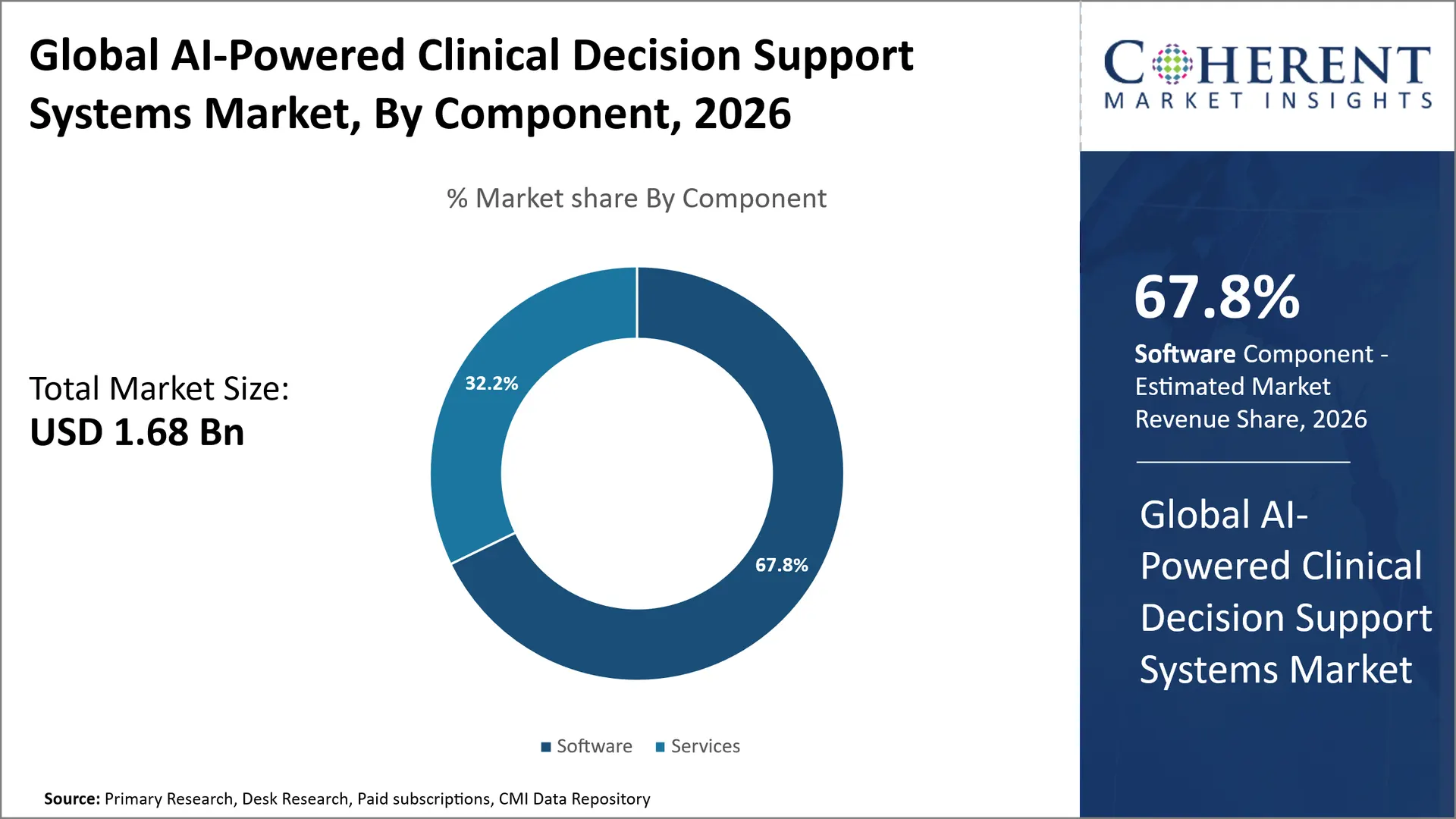
Why Do Software Dominate the Global AI-Powered Clinical Decision Support Systems Market?
Software is projected to hold the market share of 67.8% in 2026, owing to its ability to convert acquired patient data into the output, clinical advisory, and clinical data modification as well as its ability to support real-time clinical decision-making in the IT services. For instance, in June 2026, the India’s Ministry of Health and Family Welfare, launched e-Sushrut@Clinic, a Cloud Based Clinical Software driven by Software Tools for All Clinicals, created by the Centre for Development of Advanced Computing (C-DAC). The software is integrated with a Clinical Decision Support System (CDSS) for outpatient clinics. (Source: Press Information Bureau)
- Current Industry Events of 2026
- Market Size Estimation
- Regional Breakdown
- Competitive Landscape
- Customer Intelligence
- Segmental Analysis
- Pricing Analysis
- Key Market Drivers, Challenges & Future Trends
- Customized Insights Section
Why Do Machine Learning Represent the Largest Technology Segment in the AI-Powered Clinical Decision Support Systems Market?
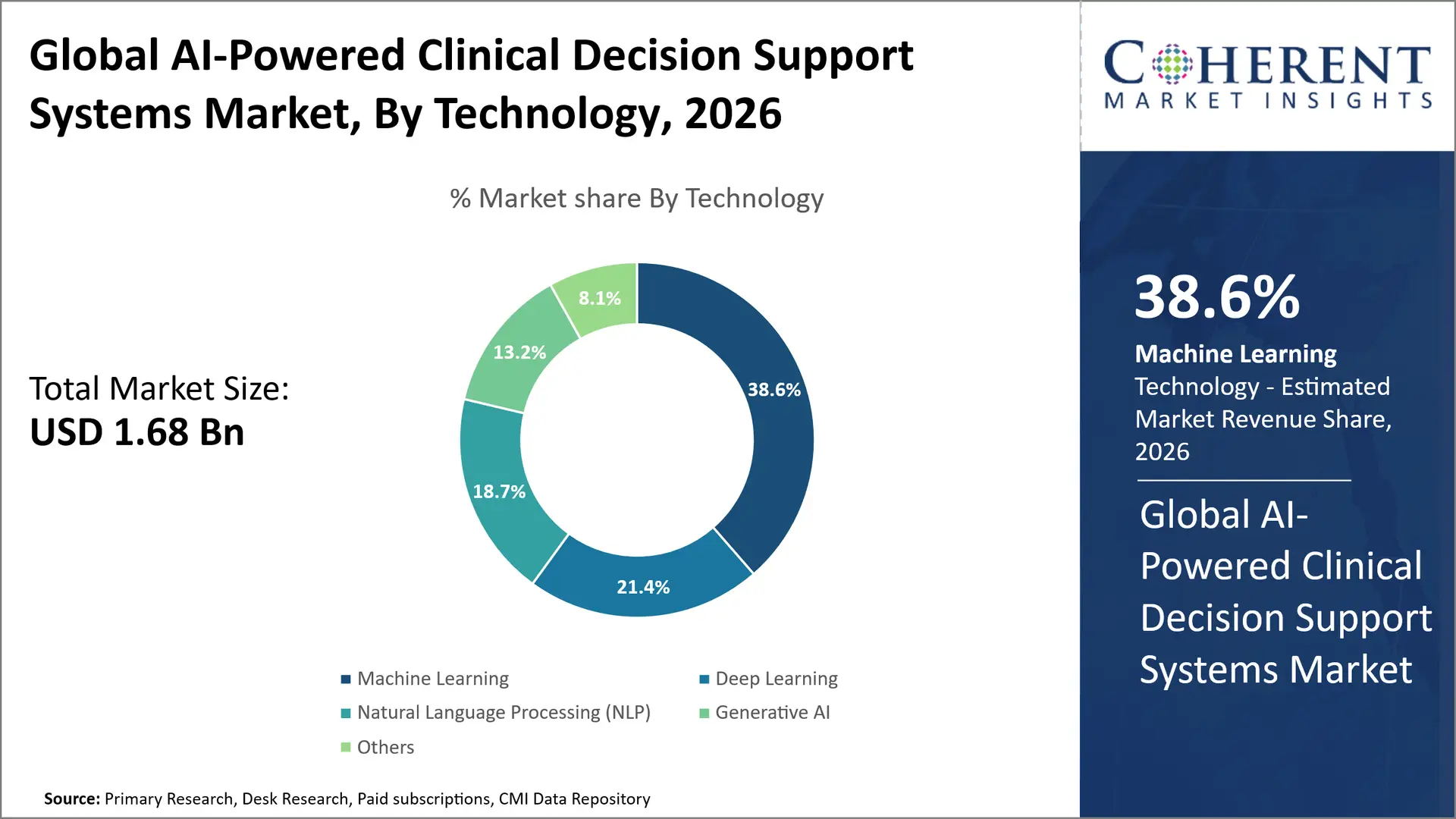
Machine learning is projected to hold a market share of 38.6% in 2026, due to its ability to decipher complex clinical data, detect patterns of disease, and leverage it to anticipate diagnoses and treatments. In addition, machine learning is used in several clinical fields to analyze data determine patient risks and care. For instance, the U.S. National Institutes of Health (NIH) has been supporting the Bridge2AI program, which aims to create quality biomedical datasets and AI-ready tools to provide more opportunities for machine learning in research and clinical practice.
Cloud-Based Segment Dominates the Global AI-Powered Clinical Decision Support Systems Market
The cloud-based segment is projected to hold a market share of 48.6% in 2026, owing to its scalability and ability to be accessed remotely, while at the same time bridging the clinical data obtained across healthcare facilities. For instance, National Informatics Centre (NIC) under Government of India created NextGen eHospital-a cloud-based hospital management platform with AI-enabled clinical decision support and tele-radiology. It has been implemented in 68 healthcare facilities in India, highlighting the ability to use cloud-based platform for delivering AI-enabled clinical services in hospitals.
Current Events and their Impact
Current Events | Description and its Impact |
UK Government Accepts 44 Recommendations for AI Healthcare Regulation (October 2026) |
|
India Launches SAHI and BODH Initiatives to Strengthen Responsible Healthcare AI (February 2026) |
|
AI-Powered Clinical Decision Support Systems Market Dynamics
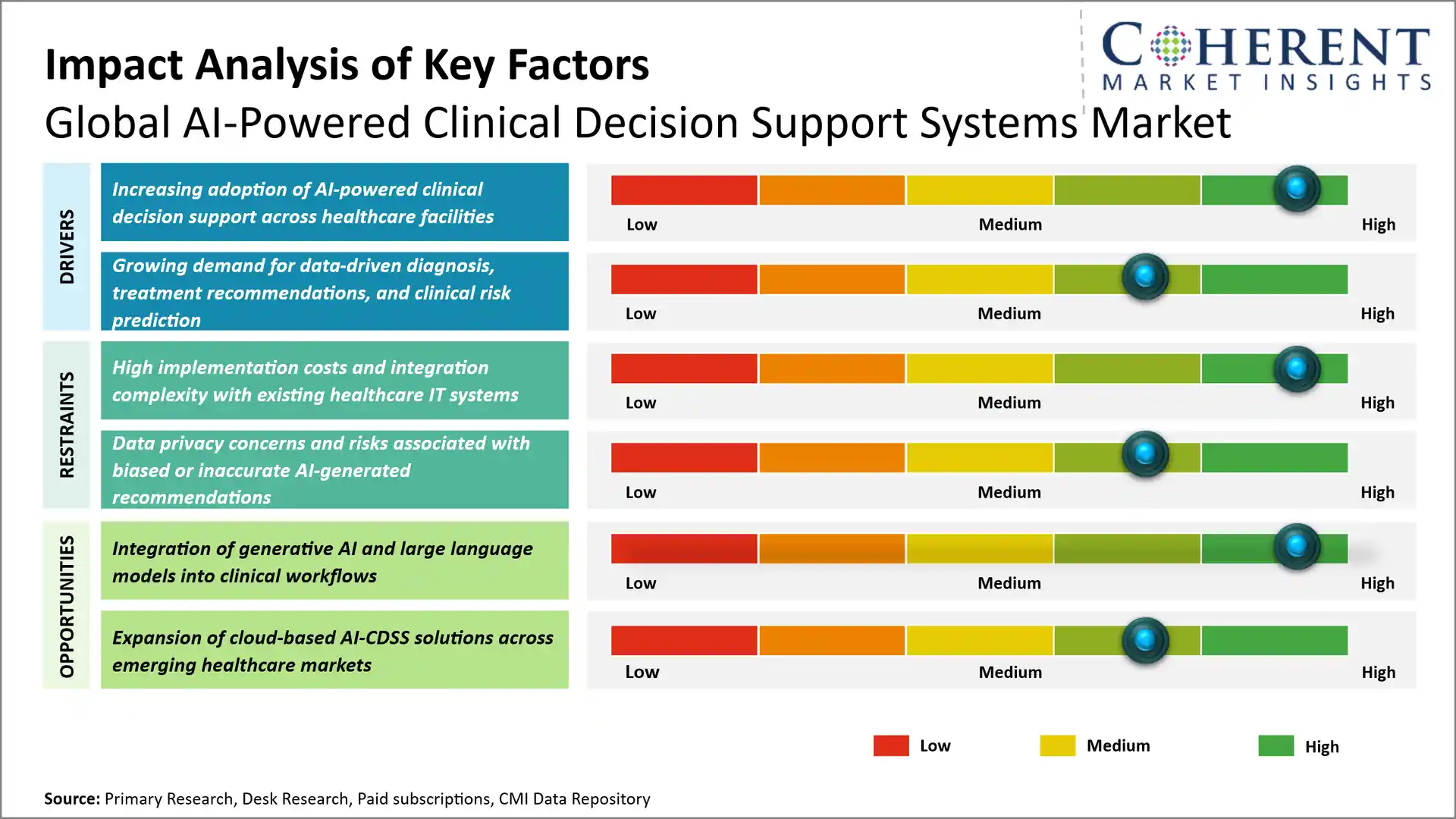
Market Drivers
- Increasing adoption of AI-powered clinical decision support across healthcare facilities: The growing utilization of artificial intelligence driven clinical decision support system in the hospitals is expected to support market expansion by providing clinical doctors with rapid clinical evaluations and evidence-based diagnosis. In India, the Ministry of Health and Family Welfare launched the AI-powered clinical decision support system in association with eSanjeevani, which successfully handled 59 million teleconsultations in the Tamil Nadu state between March 2023 and February 2026.
- Growing demand for data-driven diagnosis, treatment recommendations, and clinical risk prediction: With the rising need for data-powered diagnosis & treatment suggestions and clinical risk estimation, the application of artificial intelligence as a clinical decision support system (CDSS) solution is on the rise. In multicentre research in South Korea across 3 secondary hospitals (which included a total of 164,761 patient admissions), it was shown that the use of an AI-based CDSS predicting in-hospital cardiac arrest was associated with a 21% decrease in all-cause cardiac arrest and a 15% decrease in all-cause in-hospital death.
- Rising prevalence of chronic diseases and multiple comorbidities: The rising prevalence of chronic diseases has contributed to the increasing needs for clinical decision support systems relying on artificial intelligence to help with complex diagnosis, risk evaluation, and treatment planning. The U.S. Centers for Disease Control and Prevention (CDC) predicts around 194 million U.S. citizens were living with one or more of these diseases in 2023. As a result, data-based clinical management and decision support tools are more in demand.
Emerging Trends
- Integrating Generative AI and Large Language Models in Clinical Decision Support: Medical records are being interpreted by clinical large language models and generative AI by their healthcare providers in order to provide summarized patient medical histories, provide evidence-based clinical guidance.
- Impact: These innovations improve access to information, help to make clinical documentation more streamlined, and promote more rapid decisions.
- Market Relevance: This seems like generative AI is augmenting AI assisted Clinical Decision Support Systems (CDSS), providing not just predictive analytics but also interactive clinical support.
- Growing use of predictive analytics in clinical intervention during early stages: AI-powered clinical decision support systems (CDSS) are leveraging machine learning to detect warning signs, anticipate progression and monitor deterioration of the disease.
- Impact: These types of prediction may assist earlier intervention in clinical practice, allow for better patient risk stratification, and lead to more proactive management strategies.
- Market Relevance: The continued rise in demand for preventive care and real-time patient risk assessment will likely help drive the adoption of predictive clinical decision support based on AI.
Regional Insights
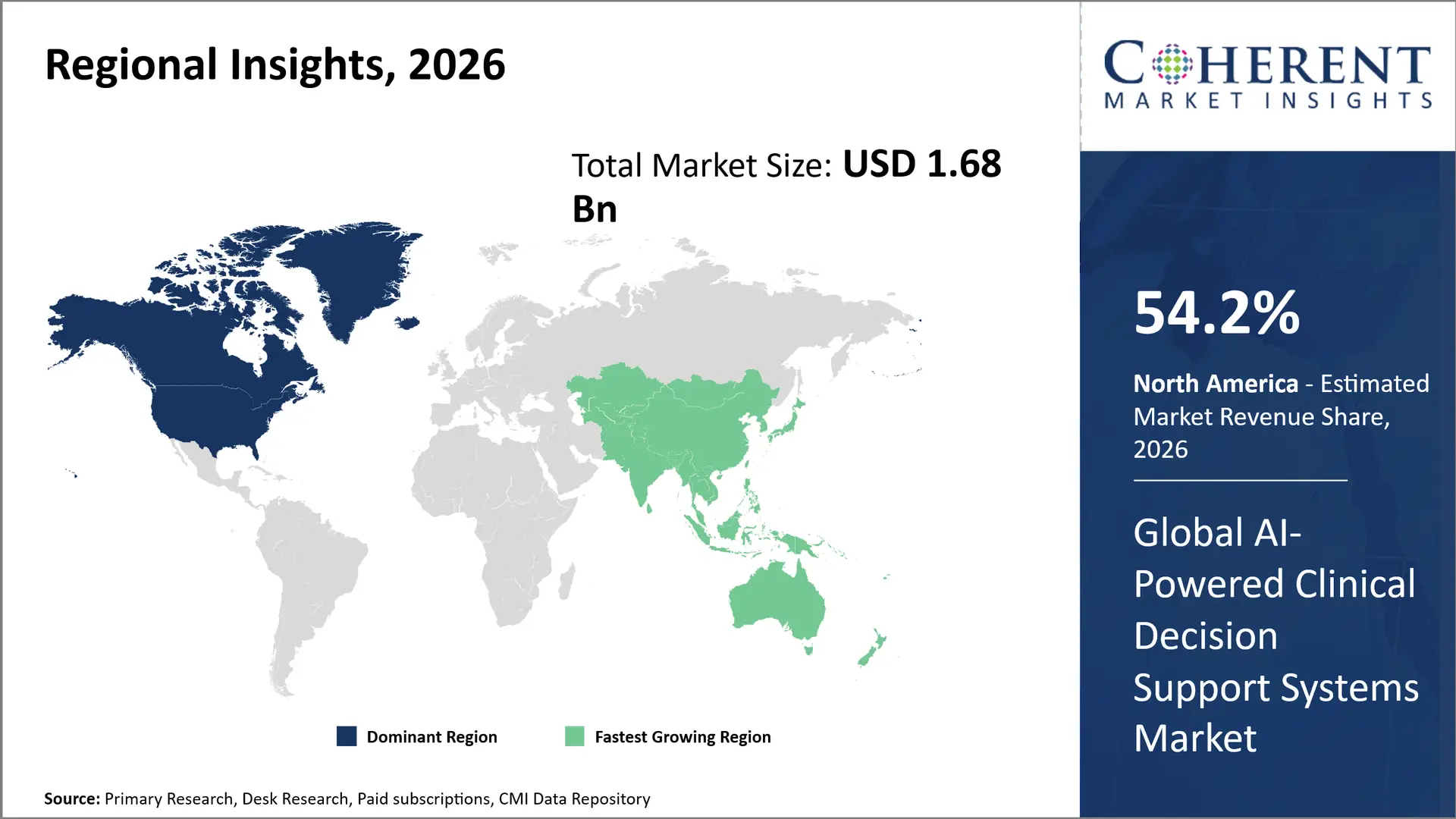
Why is North America a Strong Market for AI-Powered Clinical Decision Support Systems?
North America leads the global AI-powered clinical decision support systems market, accounting for an estimated 54.2% share in 2026, attributed to its developed healthcare infrastructure, investments in healthcare IT, and a strong network for the development of AI in the region. Additionally, regulatory policies by the U.S. Food and Drug Administration for use of AI-enabled medical devices, rise in precision medicine, and wide application scope of AI for diagnostic assistance, therapy planning, and clinical risk identification are helping develop an early-stage ecosystem for use of AI-based decision support.
For instance, On January 29, 2026, the U.S. Food and Drug Administration published its final guidance on Clinical Decision Support Software. The guidance differentiates between certain software functions that do not, and certain software functions that do, qualify as a medical device. This delineation offers regulatory certainty to developers of artificial intelligence enabled clinical decision support products and expedites the development of such devices for diagnosis and treatment.
Why Does Asia Pacific AI-Powered Clinical Decision Support Systems Market Exhibit High Growth?
Asia Pacific is expected to exhibit the fastest growth in the global AI-powered clinical decision support systems market, registering an estimated CAGR of 19.2% during 2026–2033. The region is projected to account for 18.1% of the global market in 2026, driven by the proliferation of healthcare infrastructure, rapid digitalization, and growing adoption for efficient clinical workflows. Government efforts to improve healthcare infrastructure and digital health adoption in China, India, Japan and South Korea are helping to enable the use of artificial intelligence in clinical settings. This is further evidenced by growing investment in regional AI solutions that are used to support diagnosis, treatment and prediction of patient risk.
For instance, in August 2026, South Korea’s Ministry of Health and Welfare announced its AI Basic Healthcare Strategy, which includes nationwide diffusion of AI-based clinical support tools and pilot projects deploying AI across emergency and public healthcare services. The initiative aims to improve clinical decision-making and to bridge gaps in regional health care delivery
Global AI-Powered Clinical Decision Support Systems Market Outlook for Key Countries
Why is the U.S. Leading Innovation and Adoption in the AI-Powered Clinical Decision Support Systems Market?
The U.S. is ahead with a proven track record of AI clinical software integrated with electronic health records in predictive risk modelling, diagnostics and patient management. An active open ecosystem of machine learning (ML) models in niche subspecialties, such as oncology, critical care and cardiology, further complement the U.S. advantage in this sector. Furthermore, mature clinical dataset resources and digital health infrastructure enable smooth commercialization of such niche cutting-edge clinical decision support solutions.
Is China a Favorable Market for AI-Powered Clinical Decision Support Systems Market?
China is taking remarkable steps toward the adoption of AI in hospitals that bring together several corporate-led initiatives around smart health, AI-powered diagnosis, medical imaging analysis and clinical data. As AI is rolled out in the form of diagnostic and treatment support applications in public healthcare facilities, there are ample opportunities for providers of clinical software for diagnostic decision support and patients' risk prediction.
Is Japan Emerging as a Key Growth Hub for the AI-Powered Clinical Decision Support Systems Market?
Japan is becoming one of the largest future growth markets in AI-powered clinical decision support systems, mainly in the applications of image recognition, diagnostic decision support and predictive patient monitoring. With the digitalization of Japan's healthcare system, the incorporation of artificial intelligence into hospital workflow and the alleviation of clinical resource constraints, there is a demand for AI-enabled diagnostic and treatment applications.
Why Does Germany Top the European AI-Powered Clinical Decision Support Systems Market?
Germany is the leading market for the European AI-powered clinical decision support systems due to its mature hospital landscape, thriving medical technology environment and ongoing digitalization of healthcare. The trend of digitalization in hospitals and the investment in CDSS in particular are being pushed by the Hospital Future Act (Krankenhauszukunftsgesetz). In the meantime, digital health applications (DiGA) can be integrated into the treatment process via the DiGA pathway. This opens the door for AI-based diagnostic support, treatment planning and clinical risk prediction.
Is AI-Powered Clinical Decision Support Systems Market Developing in UK?
The UK market for AI-powered clinical decision support systems is still in its infancy and is currently focused on the diagnostic, clinical risk assessment and decision support services provided by AI. Opportunities are becoming available for specialty-specific applications, such as radiology, oncology and acute care, where the application of AI can support clinical interpretation and prioritization of findings. Furthermore, the market is moving away from standalone AI applications towards incorporation of such tools into the existing clinical workflow.
Global AI Applications Relevant to Clinical Decision Support Systems
Clinical application | AI functionality | Clinical decision supported |
Diagnostic imaging | Image recognition and abnormality detection | Disease identification and diagnostic prioritization |
Clinical risk prediction | Predictive analytics and machine learning | Patient deterioration and complication risk assessment |
Treatment planning | Patient-specific data analysis | Therapy selection and treatment recommendations |
Patient monitoring | Real-time physiological data analysis | Early warning and clinical intervention |
Medication management | Drug interaction and prescribing analysis | Prescription safety and dosage optimization |
Clinical documentation | NLP and generative AI | Patient history summarization and clinical record preparation |
How is the integration of generative AI and large language models into clinical workflows creating new growth opportunities in the AI-powered clinical decision support systems market?
Combining generative AI and large language models (LLMs) into the clinical workflow opens new possibilities for providing more intelligent and contextual clinical decision support. They have the potential to interpret historical patient data, digest medical content, create diagnosis proposals and help decide on treatment methods. In addition, they can help automate mundane documentation tasks and contribute to alleviating the administrative burden on clinicians. For instance, in June 2026, a study published by the Springer Nature Limited, evaluated a clinical decision support tool augmented by a large language model (LLM), with 9,691 patients across 16 primary care clinics in Kenya. This large language model found a role in the clinical documentation, diagnosis, and treatment process.
Market Players, Key Development, and Competitive Landscape
Key Developments
- On November 12, 2026, TytoCare Ltd. unveiled its AI Care Enablement Platform and introduced the Tyto Health Hub, an AI-powered home-care platform that combines remote medical exams, clinical AI, patient check-ins, and AI-powered patient prioritization. The platform offers clinical support to clinicians in the management of high-risk patients and those in need of clinical intervention.
- On November 3, 2026, Mayo Clinic Platform announced the launch of an AI-enabled clinical decision support (CDS) tool that integrates evidence-based knowledge, specialty-specific AI chat for over 35 medical specialties and clinical calculators into existing workflows. This tool is primarily designed to support informed clinical decision-making and enable a more personalized approach to patients.
Competitive Landscape
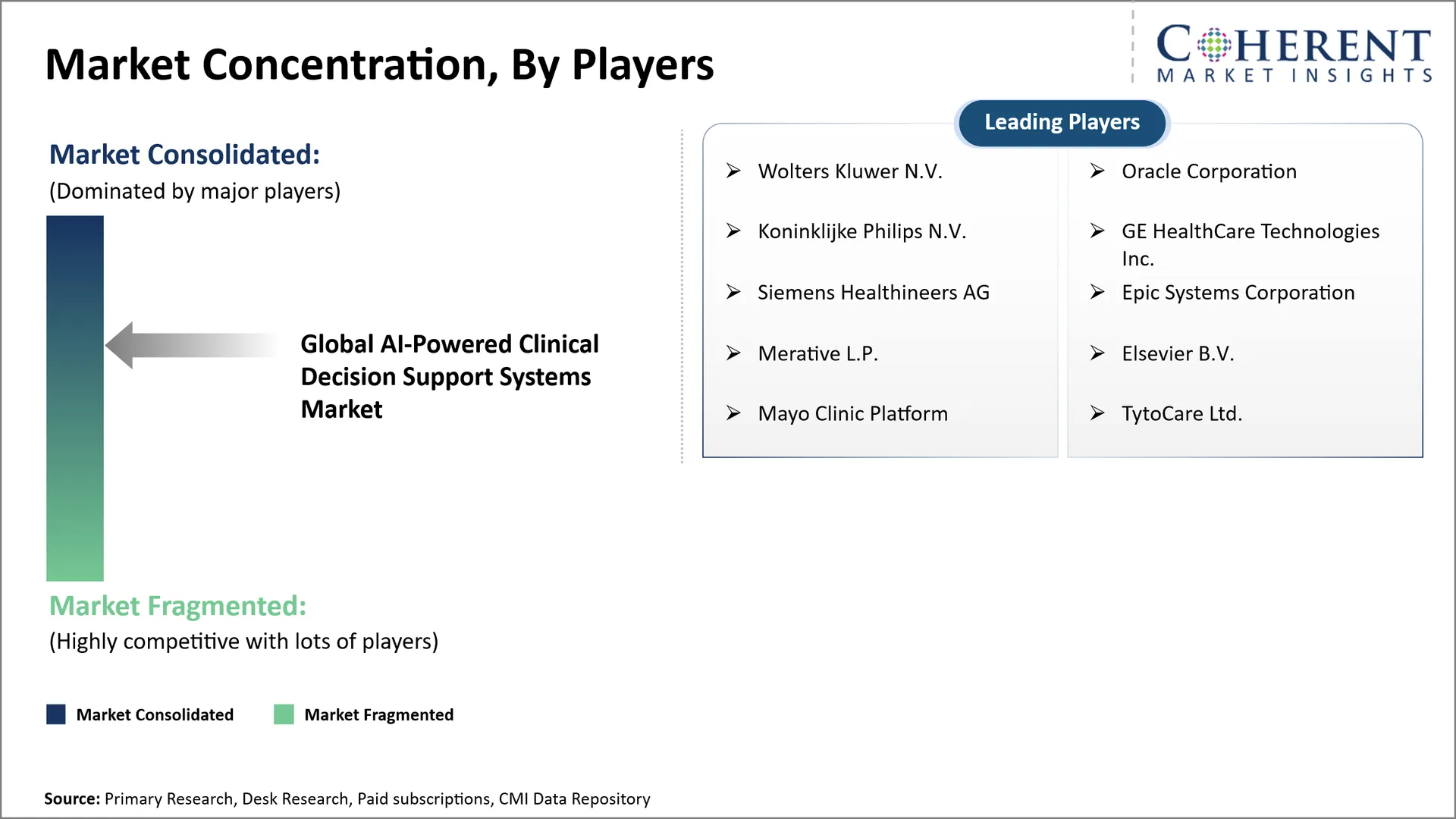
The AI-powered clinical decision support systems market is characterized by moderate fragmentation, with competition ranging from traditional healthcare technology companies to niche AI solution providers. Competition is expected to become intensified with the development of robust clinical algorithms, improving prediction accuracy, enabling interoperability, and ability to address multiple applications. The presence of traditional participants in the healthcare ecosystem provides better infrastructure and adoption to a certain extent, whereas specialized developers contribute toward more innovation. Key focus areas include:
- AI-powered software to provide real-time diagnosis and treatment recommendations along with patient-specific clinical decision support.
- Enhancement of machine learning models for disease prognostication, clinical risk prediction and early detection of deterioration.
- Generation of templates using generative AI and large language models for documentation, retrieval of medical information and contextual decision support.
- Enhanced functionalities for medication management: identify potential drug interactions, evaluate dosages, and ensure prescription safety.
- Enhancement of the interoperability, data processing, and sharing of secure information through the entire healthcare system.
- Clinical decision support applications tailored to the specialty areas in oncology, cardiology, neurology, and other therapies.
Market Report Scope
AI-Powered Clinical Decision Support Systems Market | |||
Report Coverage | Details | ||
Base Year | 2025 | Market Size in 2026: | USD 1.68 Bn |
Historical Data For: | 2020 To 2024 | Forecast Period: | 2026 To 2033 |
Forecast Period 2026 To 2033 CAGR: | 17.2% | 2033 Value Projection: | USD 5.10 Bn |
Geographies covered: |
| ||
Segments covered: |
| ||
Companies covered: | Wolters Kluwer N.V., Oracle Corporation, Koninklijke Philips N.V., GE HealthCare Technologies Inc., Siemens Healthineers AG, Epic Systems Corporation, Merative L.P., Elsevier B.V., Mayo Clinic Platform, TytoCare Ltd. | ||
Growth Drivers: |
| ||
Restraints & Challenges: |
| ||
Analyst Opinion (Expert Opinion)
- In the coming years, global AI-powered clinical decision support systems market will shift from traditional rule-based clinical decision support applications to adaptive, artificial intelligence-driven clinical intelligence. It is expected that generative AI and large language models will play a key role in supporting clinical documentation, guiding diagnosis, and providing individualized treatment. In addition, predictive analytics will become ever more valuable for the early detection of diseases and predicting patient deterioration. The extent of integration of artificial intelligence into clinical workflows will determine the rate of long-term industry growth.
- The largest opportunity is expected to be in generative AI for the diagnostic decision support and treatment planning segments within the U.S. market. Providers will benefit greatly from AI tools that can interpret complex patient histories, aid differential diagnosis, and offer personalized treatment plans. Innovators should produce specialty-specific solutions in high-potential treatment areas such as oncology, cardiology and neurology, where clinical decisions involve integrating complex patient data. The maturity of the U.S. healthcare technology ecosystem provides an attractive opportunity to commercialize leading clinical AI solutions.
- In order to gain a competitive advantage market players should focus on clinically validated models that can deliver accurate, interpretable recommendations reliably across patient populations. Working seamlessly with electronic health records and hospital workflows will be critical for local adoption, while investments in privacy, interoperability and next-generation algorithm monitoring will help build clinical trust in their AI. Specialty-specific offerings and flexible, cloud-based deployment models will also be important differentiators.
Speak to the analyst
Want personalized insights?
Take the findings above to one of our principal consultants, or have the report rebuilt around the segments, geographies and competitors you actually track.
Market Segmentation
- Component Insights (Revenue, USD Bn, 2021 - 2033)
- Software
- Services
- Technology Insights (Revenue, USD Bn, 2021 - 2033)
- Machine Learning
- Deep Learning
- Natural Language Processing (NLP)
- Generative AI
- Others
- Deployment Mode Insights (Revenue, USD Bn, 2021 - 2033)
- Cloud-Based
- On-Premises
- Hybrid
- Application Insights (Revenue, USD Bn, 2021 - 2033)
- Diagnostic Decision Support
- Treatment Planning and Recommendations
- Medication Management
- Clinical Risk Prediction and Early Warning
- Patient Monitoring
- End User Insights (Revenue, USD Bn, 2021 - 2033)
- Hospitals
- Clinics and Physician Practices
- Diagnostic Centers
- Academic and Research Institutes
- Others
- Regional Insights (Revenue, USD Bn, 2021 - 2033)
- North America
- U.S.
- Canada
- Latin America
- Brazil
- Argentina
- Mexico
- Rest of Latin America
- Europe
- Germany
- U.K.
- Spain
- France
- Italy
- Russia
- Rest of Europe
- Asia Pacific
- China
- India
- Japan
- Australia
- South Korea
- ASEAN
- Rest of Asia Pacific
- Middle East
- GCC Countries
- Israel
- Rest of Middle East
- Africa
- South Africa
- North Africa
- Central Africa
- North America
- Key Players Insights
- Wolters Kluwer N.V.
- Oracle Corporation
- Koninklijke Philips N.V.
- GE HealthCare Technologies Inc.
- Siemens Healthineers AG
- Epic Systems Corporation
- Merative L.P.
- Elsevier B.V.
- Mayo Clinic Platform
- TytoCare Ltd.
Sources
Primary Research Interviews
- Clinical Decision Support System Specialists
- Hospital IT and Digital Health Administrators
- Healthcare AI and Machine Learning Specialists
- Clinical Informatics and Medical Data Experts
Stakeholders
- Hospitals and Multispecialty Healthcare Systems
- Clinical Decision Support System Software Providers
- Healthcare IT and Electronic Health Record (EHR) Providers
- Healthcare AI Research and Development Institutions
- End-use Sectors
- Hospitals and Multispecialty Healthcare Systems
- Clinics and Physician Practices
- Diagnostic and Imaging Centers
- Telehealth and Virtual Healthcare Providers
- Regulatory & Health Bodies
- U.S. Food and Drug Administration (FDA)
- Medicines and Healthcare products Regulatory Agency (MHRA), UK
- Central Drugs Standard Control Organisation (CDSCO), India
- World Health Organization (WHO)
Databases
- ASTP Health IT Data
- ClinicalTrials.gov
- WHO Global Health Observatory
- OECD Health Statistics
Associations
- Healthcare Information and Management Systems Society (HIMSS)
- American Medical Informatics Association (AMIA)
- International Medical Informatics Association (IMIA)
- European Federation for Medical Informatics (EFMI)
Public Domain Sources
- Press Information Bureau, Government of India
- Centre for Development of Advanced Computing (C-DAC)
- National Informatics Centre (NIC)
- UK Government Publications
Proprietary Elements
- CMI Data Analytics Tool, Proprietary CMI Existing Repository of information for last 10 years.
Get access to 250+ pages report
Every segment, forecast, competitor profile and data table behind the analysis above — available for instant download.
- ESOMAR Member
- ISO 9001:2015 Certified
- D-U-N-S Registered
- GDPR & CCPA Compliant
Frequently Asked Questions
The global AI-powered clinical decision support systems market is estimated to be valued at USD 1.68 Bn in 2026 and is expected to reach USD 5.10 Bn by 2033.
Software dominates primarily due to its ability to consolidate clinical data, provide real-time advice, and support as a diagnostic and therapeutic tool.
AI-powered clinical decision support systems use artificial intelligence to analyze patient data and provide predictive insights, diagnostic help and evidence-based care.
The CAGR of global AI-powered clinical decision support systems market is projected to be 17.2% from 2026 to 2033.
Increasing adoption of AI-powered clinical decision support across healthcare facilities, and growing demand for data-driven diagnosis, treatment recommendations, and clinical risk prediction are the major factors driving the growth of the global AI-powered clinical decision support systems market.
High implementation costs and integration complexity with existing healthcare IT systems, and data privacy concerns and risks associated with biased or inaccurate AI-generated recommendations are the major factors hampering the growth of the global AI-powered clinical decision support systems market.
In terms of technology, machine learning is estimated to dominate the market revenue share in 2026.