

Global AI Precision Surgery Market Size and Forecast – 2026 To 2033
The global AI precision surgery market is expected to grow from USD 9,180.0 Mn in 2026 to USD 29,767.1 Mn by 2033, registering a compound annual growth rate (CAGR) of 18.3% from 2026 to 2033. The market for global AI precision surgery is poised for significant expansion, fueled by the growing volume of surgical procedures and the need to improve surgical precision and patient safety.
The World Health Organization (WHO) reports that more than 300 million surgical procedures are performed globally each year, while surgical settings account for 10% of preventable patient harm. This growing procedural burden and focus on reducing surgical errors are supporting demand for AI-enabled navigation, computer vision, and robotic technologies that can provide greater intraoperative precision and decision support.
Key Takeaways of the Global AI Precision Surgery Market
- Intraoperative guidance is projected to hold 48.7% of the global AI precision surgery market share in 2026, making it dominant surgical phase segment across North America due to its established regulatory pathway for computer-assisted and robotic surgery. For instance, in September 2026, the U.S. FDA issued draft guidance for robotically assisted surgical devices, covering clinical data, non-clinical testing, and labeling requirements to support consistent regulatory review.
- AI-based surgical robotics is projected to hold 36.4% of the global AI precision surgery market share in 2026, making it dominant technology segment, with Japan emerging as a key Asia Pacific market due to its established regulatory framework for robotic surgery and accelerating development of AI-enabled medical-device software. For instance, in July 2026, Japan’s PMDA released draft review points specifically for medical-device software used for recognition support from intraoperative images, while its existing framework classifies surgical robot-navigation units as Class III medical devices.
- Orthopedic surgery is projected to hold 28.6% of the global AI precision surgery market share in 2026, making it dominant application segment across Europe due to strengthening regulatory infrastructure for AI-enabled medical devices and digital surgical technologies. For instance, in May 2026, the European Commission made the first four EUDAMED modules mandatory, covering device registration, certificates, notified bodies, and market surveillance, creating greater regulatory traceability for medical devices placed on the European market.
- North America market maintains dominance with an expected share of 41.8% in 2026, bolstered by an established regulatory framework for AI-enabled medical devices, strong clinical validation requirements, and early integration of AI into advanced surgical technologies. For instance, in April 2026, Health Canada issued dedicated pre-market guidance for machine-learning-enabled medical devices, covering clinical validation, transparency, performance monitoring, and predetermined change-control plans, strengthening the regulatory pathway for AI-based surgical technologies.
- Asia Pacific is expected to exhibit the fastest growth in the global AI precision surgery market, registering an estimated CAGR of 17.2% during 2026–2033, driven by expanding regulatory support for AI-enabled medical software and increasing readiness for digital surgical technologies. For instance, Singapore's Health Sciences Authority (HSA) updated its regulatory framework in 2025 for software medical devices, including machine-learning-enabled devices, while its 2026 digital-health framework continues to support safe AI deployment and innovation.
Segmental Insights
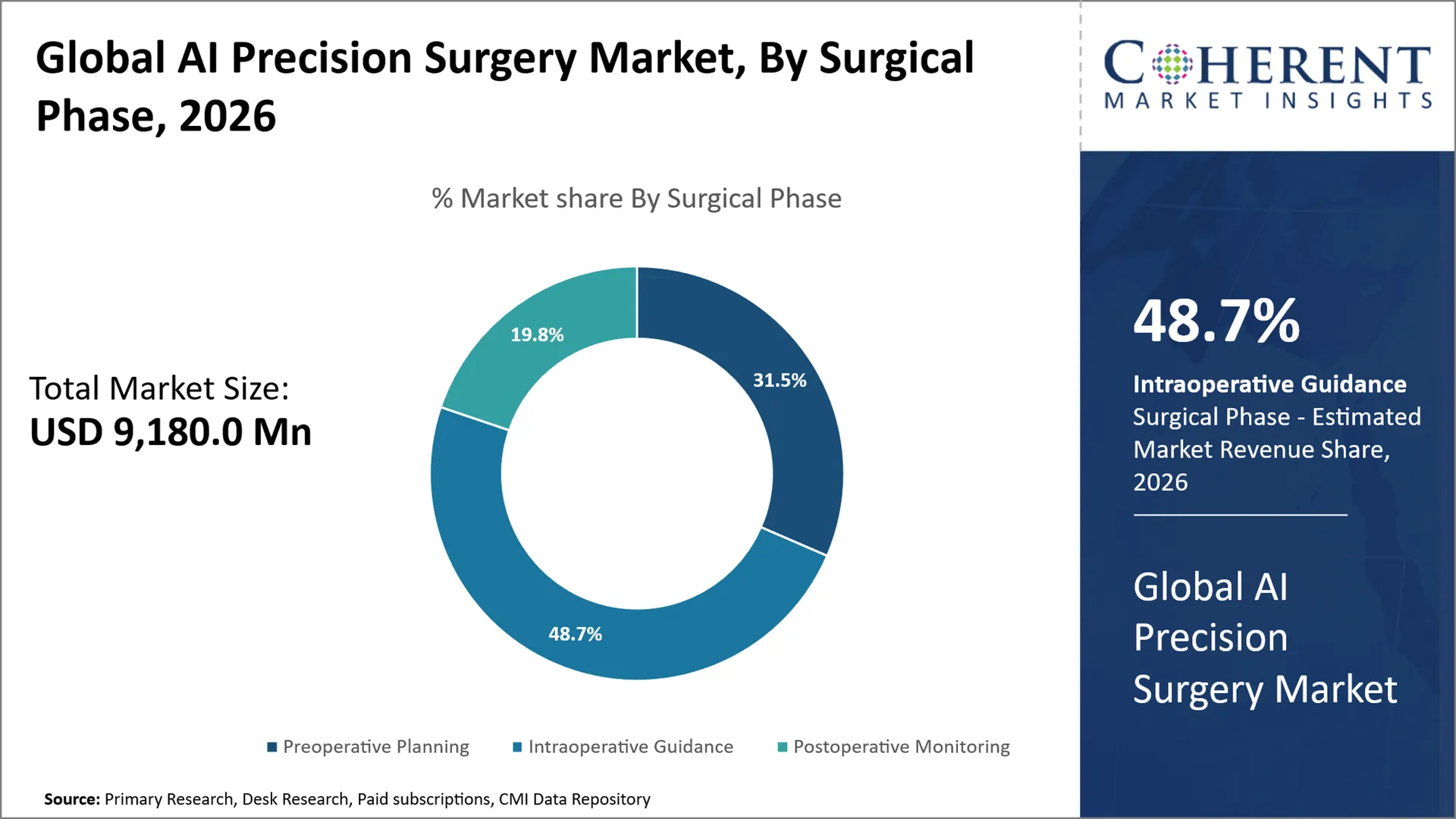
Why Do AI Intraoperative Guidance Dominate the Global AI Precision Surgery Market?
Intraoperative guidance is projected to hold the market share of 48.7% in 2026, owing to its ability to provide surgical navigation, real-time anatomical visualization, and instrument positioning support during the procedure. Computer-assisted navigational and image-guided surgery tools are expected to improve precision in complex surgeries. For instance, in July 2026, the U.S. Food and Drug Administration (FDA) granted De Novo designation to the TESSA Spatial Surgery System, an intra-articular orthopedic stereotaxic navigation system designed to enhance instrument targeting accuracy, demonstrating the rising clinical and regulatory acceptance of intraoperative navigation technologies.
- Current Industry Events of 2026
- Market Size Estimation
- Regional Breakdown
- Competitive Landscape
- Customer Intelligence
- Segmental Analysis
- Pricing Analysis
- Key Market Drivers, Challenges & Future Trends
- Customized Insights Section
Why Do AI-Based Surgical Robotics Represent the Largest Technology Segment in the AI Precision Surgery Market?
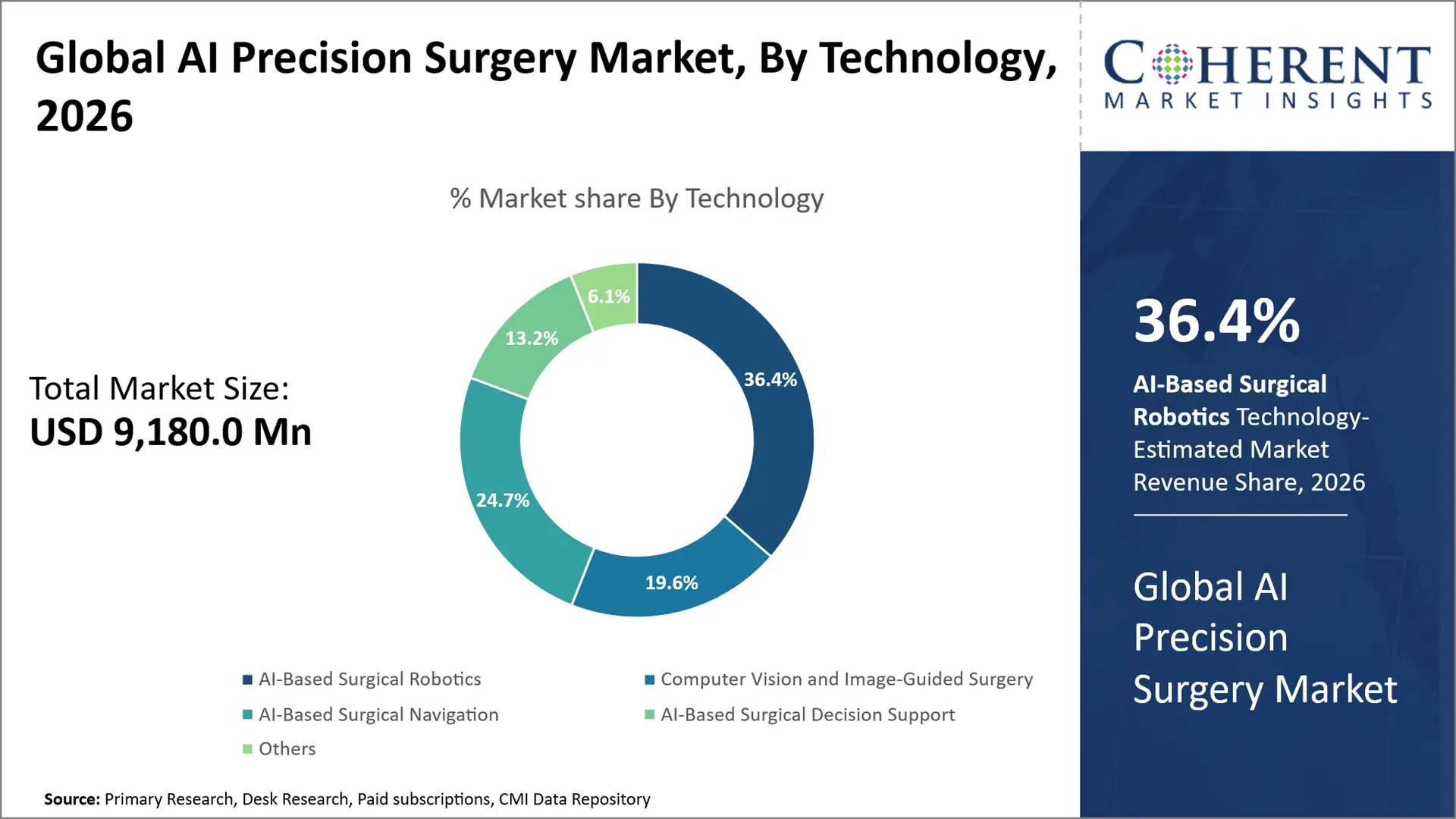
AI-based surgical robotics is projected to hold a market share of 36.4% in 2026, attributed to the growing adoption of computer-assisted control, intelligent visualization, navigation, and automated functions. These systems offer improved accuracy, movement control and intraoperative decision support for instruments particularly in minimally invasive and difficult surgeries. For instance, in September 2026, the U.S. Food and Drug Administration (FDA) announced a public workshop on robotic medical devices with autonomous and remote-teleoperation capabilities, illustrating a rising regulatory interest in the next generation of intelligent surgical robotics.
Orthopedic Surgery Segment Dominates the Global AI Precision Surgery Market
The orthopedic surgery segment is projected to hold a market share of 28.6% in 2026, due to the rising utilization of AI solutions in patient-specific planning, anatomical segmentation, component positioning, and computer-assisted execution of the procedure. Additionally, use of AI-enabled orthopedic systems is favorable for joint-replacement surgeries that demand precise positioning and alignment. For instance, in June 2026, the U.S. Food and Drug Administration (FDA) approved the Materialise Shoulder System, including the Surgi Case Shoulder Planner, which uses AI for orthopaedic shoulder arthroplasty, demonstrating persistent regulatory adoption of AI-assisted orthopedic surgical planning.
Current Events and their Impact
Current Events | Description and its Impact |
U.S. FDA Issues Draft Guidance for Robotically-Assisted Surgical Devices (September 2026) |
|
China Strengthens Regulatory Framework for AI-Powered Medical Devices and Surgical Robots (October 2025) |
|
UK Government Advances National Adoption of Surgical Robotics Under 10-Year Health Plan (July 2025) |
|
AI Precision Surgery Market Dynamics
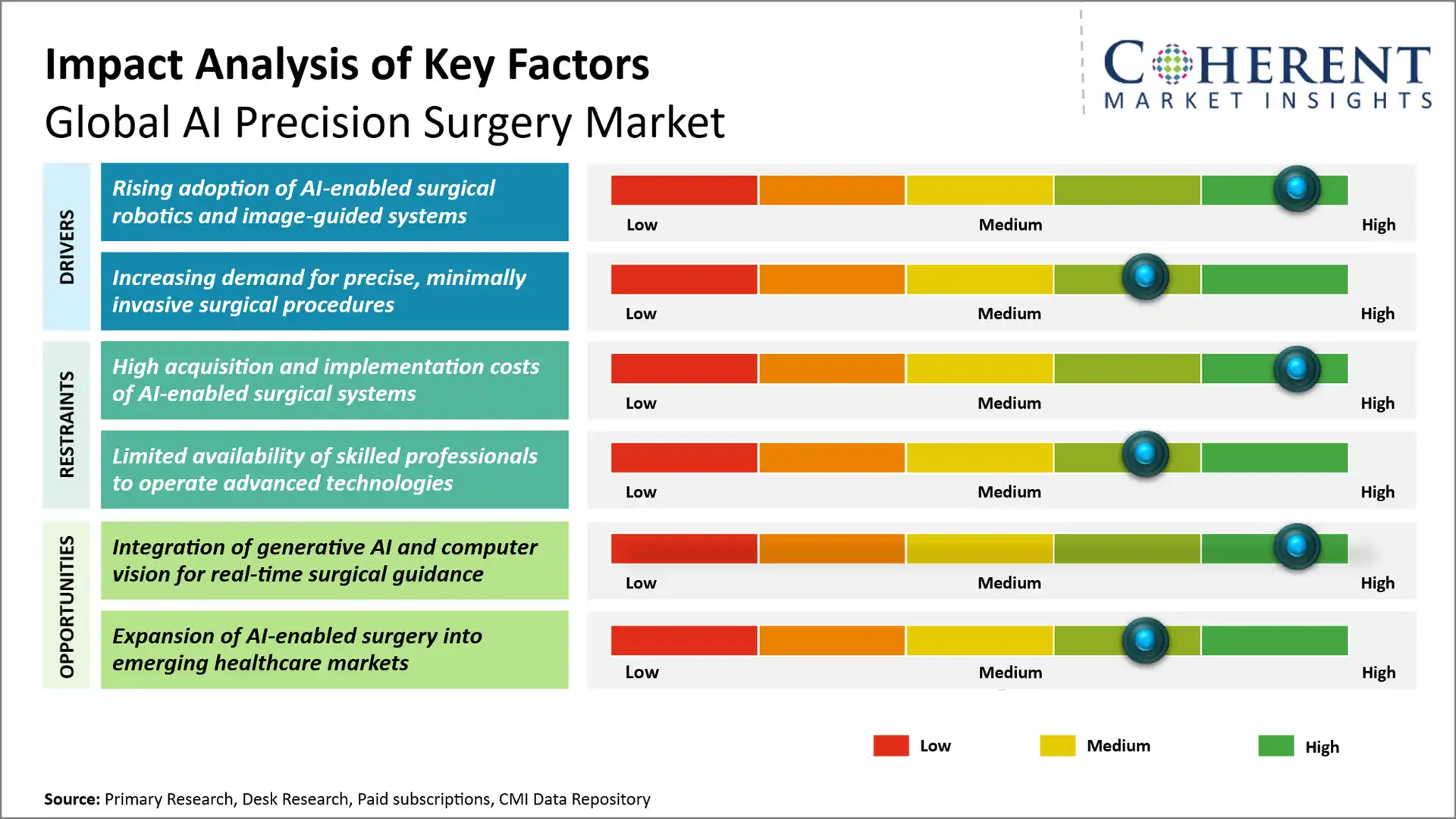
Market Drivers
- Rising adoption of AI-enabled surgical robotics and image-guided systems: The adoption of AI-enabled surgical robotics and image-guided systems is increasing as healthcare providers seek greater precision, visualization, and real-time intraoperative support. For instance, in July 2026, Medtronic introduced Touch Surgery Aide, an AI-native surgical computing platform combining computer vision and multimodal AI for real-time decision support during robotic procedures.
- Increasing demand for precise, minimally invasive surgical procedures: The growing preference for minimally invasive procedures is driving demand for technologies that improve surgical precision, visualization, dexterity, and control while limiting tissue trauma. For instance, in May 2026, Mayo Clinic in Florida performed its first single-port robotic lung resection, using an FDA-approved robotic system to enable minimally invasive surgery with enhanced precision.
- Growing adoption of AI-based surgical planning and navigation: The increasing use of AI for patient-specific surgical planning, anatomical segmentation, and navigation is enabling surgeons to improve procedure planning and intraoperative accuracy. For instance, in January 2026, Precision AI received FDA 510(k) clearance for its Precision AI Surgical Planning System, which uses AI to support patient-specific planning for shoulder arthroplasty procedures.
Emerging Trends
- Integration of AI with surgical robotics: Surgical robots are increasingly integrating AI-based planning, computer vision, and real-time data analytics to support more precise and adaptive surgical procedures. This is shifting robotic platforms from mechanical assistance toward intelligent surgical systems.
- Real-time computer vision for intraoperative guidance: AI-powered computer vision is increasingly being used to identify anatomical structures, recognize surgical steps, and interpret live surgical video. This enables real-time guidance and supports surgeons during complex procedures.
- Development of multimodal AI surgical platforms: Leading technology developers are combining medical imaging, surgical video, patient data, navigation, and robotic systems within unified AI platforms. These multimodal systems are expected to support decision-making across preoperative planning and intraoperative execution.
Regional Insights
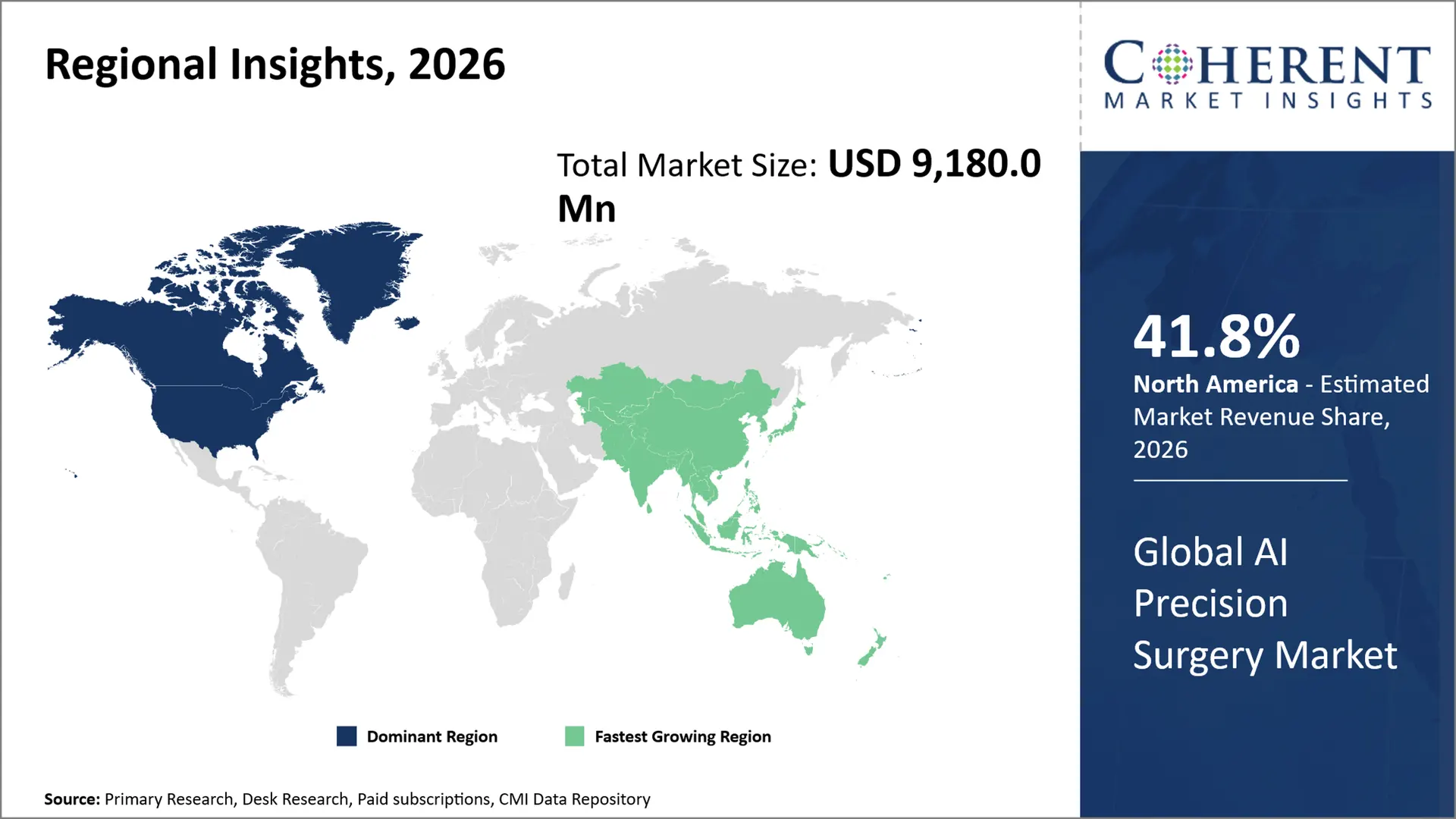
Why is North America a Strong Market for AI Precision Surgery?
North America leads the global AI precision surgery market, accounting for an estimated 41.8% share in 2026, owing to the presence of well-established medical infrastructure, high digital readiness and adoption, and rising research and development investments. The implementation of favorable government policies such as large investments in AI research, digitization of healthcare, and R&D related to futuristic medical devices is predicted to foster growth.
For instance, in June 2026, the U.S. National Institutes of Health (NIH) opened up funding opportunities through its PRIMED-AI programme aimed at the development and validation of AI that utilize clinical imaging and multimodal health data. The programmes contain pathways for validation of AI, model-to-clinic translation and academia-industry partnerships, supporting the transfer of advanced AI towards precision surgical planning and decision making. Furthermore, the region has a huge number of advanced hospitals, research centers, and technology providers that allow the clinical validation and integration of surgical AI. Along with this, the existing regulatory policies for medical devices facilitate new technological developments in a safer clinical environment.
Why Does Asia Pacific AI Precision Surgery Market Exhibit High Growth?
Asia Pacific is expected to exhibit the fastest growth in the global AI precision surgery market, registering an estimated CAGR of 17.2% during 2026–2033. The region is projected to account for 22.8% of the global market in 2026, owing to the growing healthcare expenditure, rising awareness about advanced technology, surging demand for minimally invasive surgeries, and growing usage of the AI based advanced surgical systems. The government of China, India, Japan, and South Korea are fostering health care modernization through various initiatives providing the platform for the adoption of AI and digital health and to advance medical devices.
For instance, China’s National Medical Products Administration (NMPA) identified medical robots and AI-powered medical devices as priority areas in 2025, while strengthening regulatory standards and classification frameworks for these technologies. Furthermore, the increase in smart-hospital infrastructure, improving clinical competencies, and patient awareness, is driving the adoption of AI technology in the hospitals and clinics at the national level.
Global AI Precision Surgery Market Outlook for Key Countries
Why is the U.S. Leading Innovation and Adoption in the AI Precision Surgery Market?
The U.S. is likely to hold the highest share in the AI precision surgery market owing to the presence of advanced ecosystem of surgical navigation, computer-assisted surgery, robot-assisted surgical procedure, AI-enhanced imaging technologies, and existing AI-enabled surgical systems. Additionally, convergence of existing surgical technologies and AI-enabled platforms indicates faster commercialization and clinical uptake through its mature ecosystem of hospitals, and surgical device manufacturers.
Is Japan a Favorable Market for AI Precision Surgery Market?
Japan is one of the largest markets for AI precision surgery owing to the country’s well-developed health infrastructure, a high adoption rate for robotic and computer-assisted surgical procedures, and a mature medical-device ecosystem with a focus on AI, imaging, navigation and robotics. The aging population and the prevalence of minimally-invasive surgeries further support market expansion.
Is China Emerging as a Key Growth Hub for the AI Precision Surgery Market?
China is gradually emerging as the newest growth driver for the AI precision surgery market driven by a burgeoning domestic surgical robotics, medical imaging, and healthcare offerings augmented with AI technology market, which is developing at a fast pace. The substantial entry of advanced surgical infrastructure and AI find immense space for its adoption with robotic and image-based combinations. Furthermore, healthcare system expansion and the need for advanced surgeries further support market growth.
Why Does Germany Top the European AI Precision Surgery Market?
Germany leads the European AI precision surgery market due to the presence of a strong manufacturing base for medical-devices and mature adoption of robotic surgery, surgical navigation, medical imaging, and computer aided-diagnosis technology. Additionally, the presence of a mature hospital infrastructure coupled with the engineering-clinical research interface indicates favorable conditions for adoption of precision-surgery.
Is AI Precision Surgery Market Developing in UK?
The UK AI precision surgery market growth is driven by the rising adoption of AI-enabled imaging, robotic-assisted surgery, digital operating-room platform and surgical navigation technologies. The presence of an established NHS surgical infrastructure and a rising adoption of artificial intelligence in clinical workflows are expected to provide scope for a promising future for the advanced precision-surgery solutions. Moreover, the ongoing trend for less invasive procedures and technology-enabled surgical capacity is expected to positively impact the market.
Product-Based Differentiation of Leading AI Precision Surgery Platforms, 2026
Company | Product / Platform | Primary Surgical Focus | AI / Intelligent Capability | Surgical Phase | Key Differentiating Capability |
Intuitive Surgical, Inc. | da Vinci 5 | General surgery, urology, gynecology and other minimally invasive procedures | Advanced data analytics, integrated software, real-time data and enhanced surgical vision | Intraoperative | Multiport robotic platform combining enhanced visualization, force feedback, computing power and data-driven surgical insights |
Medtronic plc | AiBLE / Stealth AXiS | Spine and cranial surgery | AI-driven preoperative planning, navigation, robotics, imaging and postoperative analytics | Preoperative, intraoperative & postoperative | Integrated ecosystem connecting AI-based planning with navigation, robotic execution, imaging and postoperative insights |
Stryker Corporation | Mako 4 SmartRobotics | Orthopedic surgery—hip, knee, spine and shoulder | 3D CT-based planning, haptic technology, intraoperative guidance and data analytics | Preoperative & intraoperative | Patient-specific planning combined with robotic-arm assistance and haptic boundaries for precise execution |
Johnson & Johnson | OTTAVA Robotic Surgical System | Soft-tissue and general surgery | Automated robotic functions, digital ecosystem and data-driven surgical insights | Intraoperative & postoperative | Four robotic arms integrated into the operating table, with automated positioning and connection to the Polyphonic™ digital ecosystem |
Zimmer Biomet Holdings, Inc. | ROSA Robotics | Knee, hip, shoulder and neurosurgery | Intelligent surgical planning, real-time insights, tracking and data analytics | Preoperative & intraoperative | Multi-application robotic platform combining personalized planning, robotic assistance and data-driven surgical insights |
How is the integration of generative AI and computer vision for real-time surgical guidance creating new growth opportunities in the AI precision surgery market?
The integration of generative artificial intelligence and computer vision might offer potential for real-time surgical intelligence, where systems would decode surgical video, identify organs and support intraoperative decision making. Preliminary studies indicate that systems that combine these technologies are bound to result in improved accuracy, offering a more personalized, and adaptable surgical experience. For instance, in August 2026, scientist at University College London and UCLH used AI to analyze live surgical video in real time of brain tumor operations, highlighting the key anatomy to allow more accurate intraoperative decision making.
Market Players, Key Development, and Competitive Landscape
Key Developments
- On October 7, 2026, Elsevier and the JAMA Network signed a strategic content agreement to integrate full-text content and visuals from 13 JAMA Network journals, including JAMA Surgery, into ClinicalKey AI. The agreement strengthens AI-supported access to evidence for clinical decision-making, including surgical care.
- In February 2026, Quantum Surgical acquired NeuWave Medical to expand robotic-assisted tumor ablation and precision cancer treatment. Quantum Surgical’s AI-powered Epione robotic platform combines robotics with image-guided procedures, while the combined group is also developing remote-intervention capabilities.
- In November 2025, IMPLANET signed a partnership with 8i Robotics to clinically evaluate a surgeon-supervised multi-arm robotic system for spine surgery and pursue European regulatory compliance. The system integrates electromagnetic navigation, digital microscopy, and robotic assistance to enable precise implant placement and intraoperative guidance
- In November 2025, FluidAI Medical acquired Emmetros Limited to strengthen Stream Inara, an AI-powered patient education and engagement platform within its surgical-care portfolio. The platform supports data-driven postoperative management and extends AI-enabled surgical care beyond the hospital.
Competitive Landscape
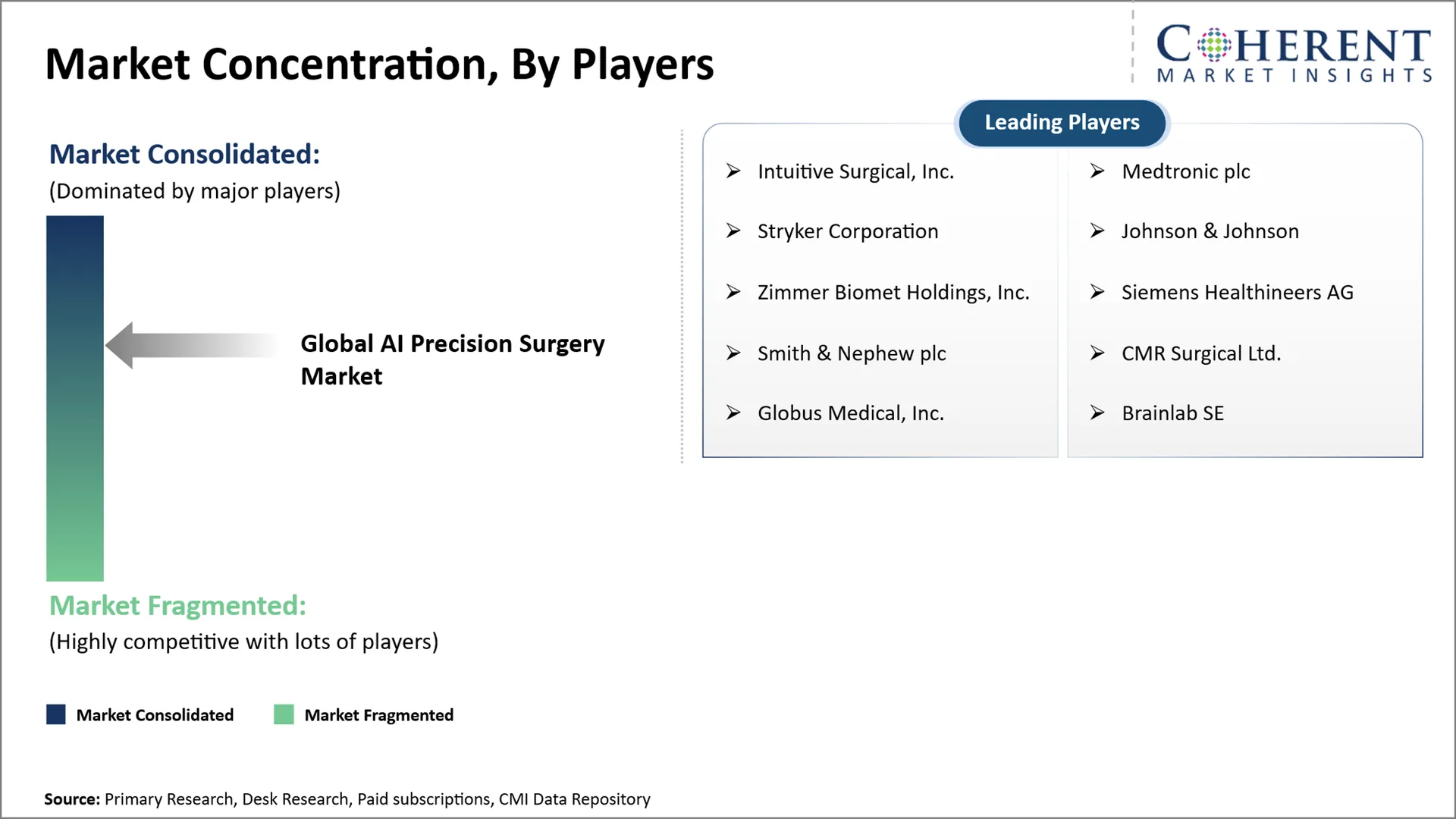
The global AI precision surgery market is moderately competitive, with market dynamics shaped by advances in AI-powered surgical robotics, computer vision, surgical navigation, predictive analytics, and intelligent surgical systems. Market participants are increasingly focusing on improving surgical precision, enhancing clinical decision support, and expanding AI applications across complex and minimally invasive procedures. Key focus areas include:
- Development of AI-enabled robotic and autonomous surgical systems
- Advancement of computer vision and real-time intraoperative guidance
- Integration of AI with surgical navigation and medical imaging
- Development of AI-driven preoperative planning and surgical decision-support solutions
- Enhancement of clinical validation, interoperability, and surgical workflow integration
Market Report Scope
AI Precision Surgery Market Report Coverage | |||
Report Coverage | Details | ||
Base Year | 2025 | Market Size in 2026: | USD 9,180.0 Mn |
Historical Data For: | 2020 To 2024 | Forecast Period: | 2026 To 2033 |
Forecast Period 2026 To 2033 CAGR: | 18.3% | 2033 Value Projection: | USD 29,767.1 Mn |
Geographies covered: |
| ||
Segments covered: |
| ||
Companies covered: | Intuitive Surgical, Inc., Medtronic plc, Stryker Corporation, Johnson & Johnson, Zimmer Biomet Holdings, Inc., Siemens Healthineers AG, Smith & Nephew plc, CMR Surgical Ltd., Globus Medical, Inc., Brainlab SE | ||
Growth Drivers: |
| ||
Restraints & Challenges: |
| ||
Analyst Opinion (Expert Opinion)
- In the coming years, global AI precision surgery market is expected to evolve toward integrated, intelligent surgical ecosystems combining robotics, computer vision, medical imaging, navigation, and real-time decision support. AI is likely to move beyond assisting individual surgical tasks toward procedure-specific, adaptive systems that support surgeons throughout preoperative planning and intraoperative decision-making.
- The maximum opportunities are foreseen within AI-based surgical robotics for orthopedic surgery in China, where robotic-assisted procedures can address high-volume surgical needs while enabling greater procedural precision. Solutions combining AI-based planning, navigation, and robotic assistance are likely to offer the greatest commercial potential.
- In order to gain a competitive advantage market players should focus on developing clinically reliable, interoperable, and cost-efficient AI surgical platforms rather than standalone AI tools. Building partnerships with hospitals, integrating systems with existing imaging and surgical workflows, expanding surgeon-training programs, and demonstrating measurable improvements in procedural accuracy and efficiency can strengthen competitive positioning.
Speak to the analyst
Want personalized insights?
Take the findings above to one of our principal consultants, or have the report rebuilt around the segments, geographies and competitors you actually track.
Market Segmentation
- Surgical Phase Insights (Revenue, USD Mn, 2021 - 2033)
- Preoperative Planning
- Intraoperative Guidance
- Postoperative Monitoring
- Technology Insights (Revenue, USD Mn, 2021 - 2033)
- AI-Based Surgical Robotics
- Computer Vision and Image-Guided Surgery
- AI-Based Surgical Navigation
- AI-Based Surgical Decision Support
- Others
- Application Insights (Revenue, USD Mn, 2021 - 2033)
- Orthopedic Surgery
- Neurosurgery
- Urological Surgery
- Gynecological Surgery
- General and Gastrointestinal Surgery
- Others
- End User Insights (Revenue, USD Mn, 2021 - 2033)
- Hospitals
- Ambulatory Surgical Centers
- Specialty Surgical Clinics
- Others
- Regional Insights (Revenue, USD Mn, 2021 - 2033)
- North America
- U.S.
- Canada
- Latin America
- Brazil
- Argentina
- Mexico
- Rest of Latin America
- Europe
- Germany
- U.K.
- Spain
- France
- Italy
- Russia
- Rest of Europe
- Asia Pacific
- China
- India
- Japan
- Australia
- South Korea
- ASEAN
- Rest of Asia Pacific
- Middle East
- GCC Countries
- Israel
- Rest of Middle East
- Africa
- South Africa
- North Africa
- Central Africa
- North America
- Key Players Insights
- Intuitive Surgical, Inc.
- Medtronic plc
- Stryker Corporation
- Johnson & Johnson
- Zimmer Biomet Holdings, Inc.
- Siemens Healthineers AG
- Smith & Nephew plc
- CMR Surgical Ltd.
- Globus Medical, Inc.
- Brainlab SE
Sources
Primary Research Interviews
- General and specialized surgeons using AI-assisted surgical technologies
- Robotic surgery and surgical-navigation specialists
- Clinical researchers specializing in AI, computer vision, and surgical robotics
- Hospital and operating-room decision-makers responsible for surgical technology procurement
- Medical-device engineers and AI specialists developing surgical platforms
Stakeholders
- AI-based surgical robotics developers
- Surgical navigation and image-guided technology providers
- Computer vision and AI software developers for surgery
- Medical imaging and intelligent surgical-instrument manufacturers
- Surgical technology distributors and system integrators
- Hospitals, ambulatory surgical centers, and specialty surgical facilities
- End-use Sectors
- Hospitals & Medical Centers
- Ambulatory Surgical Centers
- Specialty Surgical Centers
- Academic Medical Centers & Teaching Hospitals
- Research & Academic Institutions
- Other Healthcare Facilities
- Regulatory & Health Bodies
- U.S. Food and Drug Administration (FDA) – AI-enabled surgical devices, robotic systems, and medical-device software
- European Medicines Agency (EMA) – medical-device and AI-related healthcare regulatory framework
- Medicines and Healthcare products Regulatory Agency (MHRA), UK – medical devices and software-based medical technologies
- Pharmaceuticals and Medical Devices Agency (PMDA), Japan – medical devices and software as a medical device
- National Medical Products Administration (NMPA), China – medical devices, surgical robots, and AI-enabled technologies
- Central Drugs Standard Control Organisation (CDSCO), India – medical devices and digital healthcare technologies
Databases
- FDA 510(k) Premarket Notification Database – cleared surgical robots, navigation systems, and AI-enabled medical devices
- FDA De Novo Database – novel AI-enabled and robotic surgical devices
- FDA Artificial Intelligence-Enabled Medical Devices List – AI-enabled medical-device information
- ClinicalTrials.gov – clinical studies involving AI, robotic, image-guided, and minimally invasive surgery
- WHO International Clinical Trials Registry Platform (ICTRP) – global clinical-trial information
- EU Clinical Trials Information System (CTIS) – clinical-trial information across the European Union
Journals
- JAMA Surgery
- Annals of Surgery
- British Journal of Surgery
- Surgical Endoscopy
- Journal of Robotic Surgery
Associations
- American College of Surgeons (ACS)
- Society of American Gastrointestinal and Endoscopic Surgeons (SAGES)
- American Association for the Advancement of Science (AAAS)
- Association for Surgical Education (ASE)
- European Association for Endoscopic Surgery (EAES)
- European Society of Surgery (ESS)
- International Society for Computer Assisted Orthopaedic Surgery (CAOS)
- Society for Medical Innovation and Technology (SMIT)
Public Domain Sources
- U.S. Food and Drug Administration (FDA) – surgical robots, AI-enabled medical devices, and regulatory information
- National Institutes of Health (NIH) – biomedical research and AI/robotics research funding
- National Institute of Biomedical Imaging and Bioengineering (NIBIB) – medical imaging, surgical technologies, and biomedical engineering research
- National Center for Biotechnology Information (NCBI) – scientific literature and biomedical databases
- World Health Organization (WHO) – global health and surgical-care information
- European Commission – medical-device and artificial-intelligence regulatory information
- National Medical Products Administration (NMPA), China – medical-device regulatory information
- Central Drugs Standard Control Organisation (CDSCO), India – medical-device and healthcare regulatory information
Proprietary Elements
- CMI Data Analytics Tool, Proprietary CMI Existing Repository of information for last 10 years.
Get access to 250+ pages report
Every segment, forecast, competitor profile and data table behind the analysis above — available for instant download.
- ESOMAR Member
- ISO 9001:2015 Certified
- D-U-N-S Registered
- GDPR & CCPA Compliant
Frequently Asked Questions
The global AI precision surgery market is estimated to be valued at USD 9,180.0 Mn in 2026 and is expected to reach USD 29,767.1 Mn by 2033.
AI-based surgical robotics dominate due to their ability to enhance surgical precision, dexterity, real-time guidance, and minimally invasive procedures.
AI precision surgery uses AI, robotics, imaging, and real-time data analytics to improve surgical planning, guidance, precision, and patient outcomes.
The CAGR of global AI precision surgery market is projected to be 18.3% from 2026 to 2033.
Rising adoption of AI-enabled surgical robotics and image-guided systems, and increasing demand for precise, minimally invasive surgical procedures are the major factors driving the growth of the global AI precision surgery market.
High acquisition and implementation costs of AI-enabled surgical systems, and limited availability of skilled professionals to operate advanced technologies are the major factors hampering the growth of the global AI precision surgery market.
In terms of application, orthopedic surgery is estimated to dominate the market revenue share in 2026.