

Global AI Radiology Workflow Market Size and Forecast – 2026 To 2033
The global AI radiology workflow market is expected to grow from USD 1.28 Bn in 2026 to USD 5.96 Bn by 2033, registering a compound annual growth rate (CAGR) of 24.6% from 2026 to 2033. The market for global AI radiology workflow is poised for significant expansion, fueled by the increasing demand for efficient diagnostic imaging and AI-enabled workflow automation amid radiology workforce shortages.
Health New Zealand’s workforce analysis identifies a current shortage of 90 radiologists, equivalent to 13.6% of current workforce requirements, and projects a further shortfall of 90 radiologists by 2033 beyond the current workforce pipeline, equivalent to 13.9%. These persistent workforce gaps may accelerate the adoption of AI-assisted reporting, case prioritization, and workflow automation, helping radiology departments manage growing workloads and improve operational efficiency.
Key Takeaways of the Global AI Radiology Workflow Market
- Software is projected to hold 72.6% of the global AI radiology workflow market share in 2026, making it dominant component segment, particularly in North America, where healthcare digitization and interoperability initiatives support software integration. For instance, in January 2026, the U.S. Office of the National Coordinator for Health Information Technology (ONC) issued a request for information on diagnostic imaging interoperability standards and certification, seeking input on improving the access, exchange, and use of imaging data across healthcare settings. This initiative highlights the importance of interoperable software platforms for connected radiology workflows.
- Computed Tomography (CT) is projected to hold 31.8% of the global AI radiology workflow market share in 2026, making it dominant imaging modality segment, with strong adoption potential in North America due to the need to manage complex imaging workflows and improve access to diagnostic scans. For instance, the ONC’s January 2026 initiative specifically addresses the exchange and use of diagnostic images, including CT scans, across healthcare settings. Improved access to imaging data can support the integration of AI-based image analysis and case-prioritization tools into clinical workflows.
- Cloud-based is projected to hold 38.7% of the global AI radiology workflow market share in 2026, making it dominant deployment mode segment, particularly in Europe, where regulatory frameworks are being developed to support trustworthy medical AI. For instance, in June 2025, the European Commission’s Medical Device Coordination Group published guidance clarifying the interaction between the EU Medical Device Regulations and the Artificial Intelligence Act. These requirements address the safe development and deployment of medical AI software, providing a regulatory framework relevant to cloud-hosted radiology AI solutions.
- North America market maintains dominance with an expected share of 42.6% in 2026, bolstered by established healthcare IT infrastructure, digital health adoption, and regulatory oversight of AI-enabled medical technologies. For instance, the U.S. Office of the National Coordinator for Health Information Technology (ONC) promotes nationwide health information exchange through its interoperability initiatives, supporting the integration of radiology software with broader healthcare information system.
- Asia Pacific is expected to exhibit the fastest growth in the global AI radiology workflow market, registering an estimated CAGR of 29.2% during 2026–2033, driven by expanding healthcare digitization, government-backed AI initiatives, and rising demand for efficient diagnostic services. For instance, in February 2026, India introduced the Strategy for AI in Healthcare in India (SAHI) and the Benchmarking Open Data Platform for Health AI (BODH) to encourage responsible AI adoption and validation in healthcare, creating a supportive environment for broader adoption of AI-assisted imaging technologies.
Segmental Insights
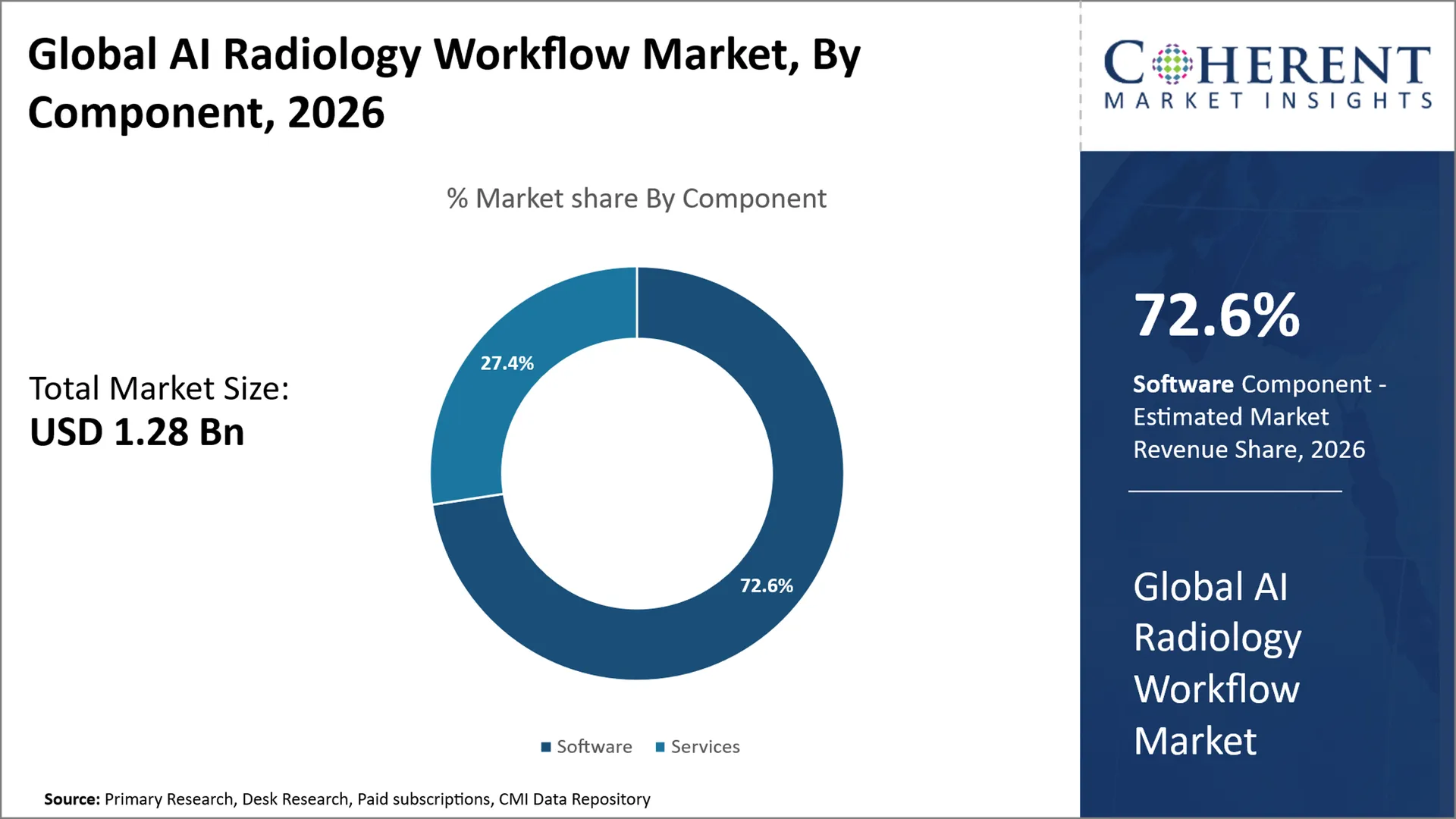
Why Do Software Dominate the Global AI Radiology Workflow Market?
Software is projected to hold the market share of 72.6% in 2026, attributed to the development of deep learning, automated image interpretation, reporting support and intelligent image comparison techniques. In addition, the software-based solutions provide scalability and can be integrated with existing clinical workflows to reduce manual workload and enable faster decision-making processes. For instance, in January 2026, the U.S. Food and Drug Administration (FDA) approved an artificial intelligent radiological image-processing software by Siemens Healthcare GmbH, the AI-Rad Companion Brain MR, via the 510(k) process, highlighting expanding role of software in AI-enabled radiology workflows.
- Current Industry Events of 2026
- Market Size Estimation
- Regional Breakdown
- Competitive Landscape
- Customer Intelligence
- Segmental Analysis
- Pricing Analysis
- Key Market Drivers, Challenges & Future Trends
- Customized Insights Section
Why Does Computed Tomography (CT) Represent the Largest Imaging Modality Segment in the AI Radiology Workflow Market?
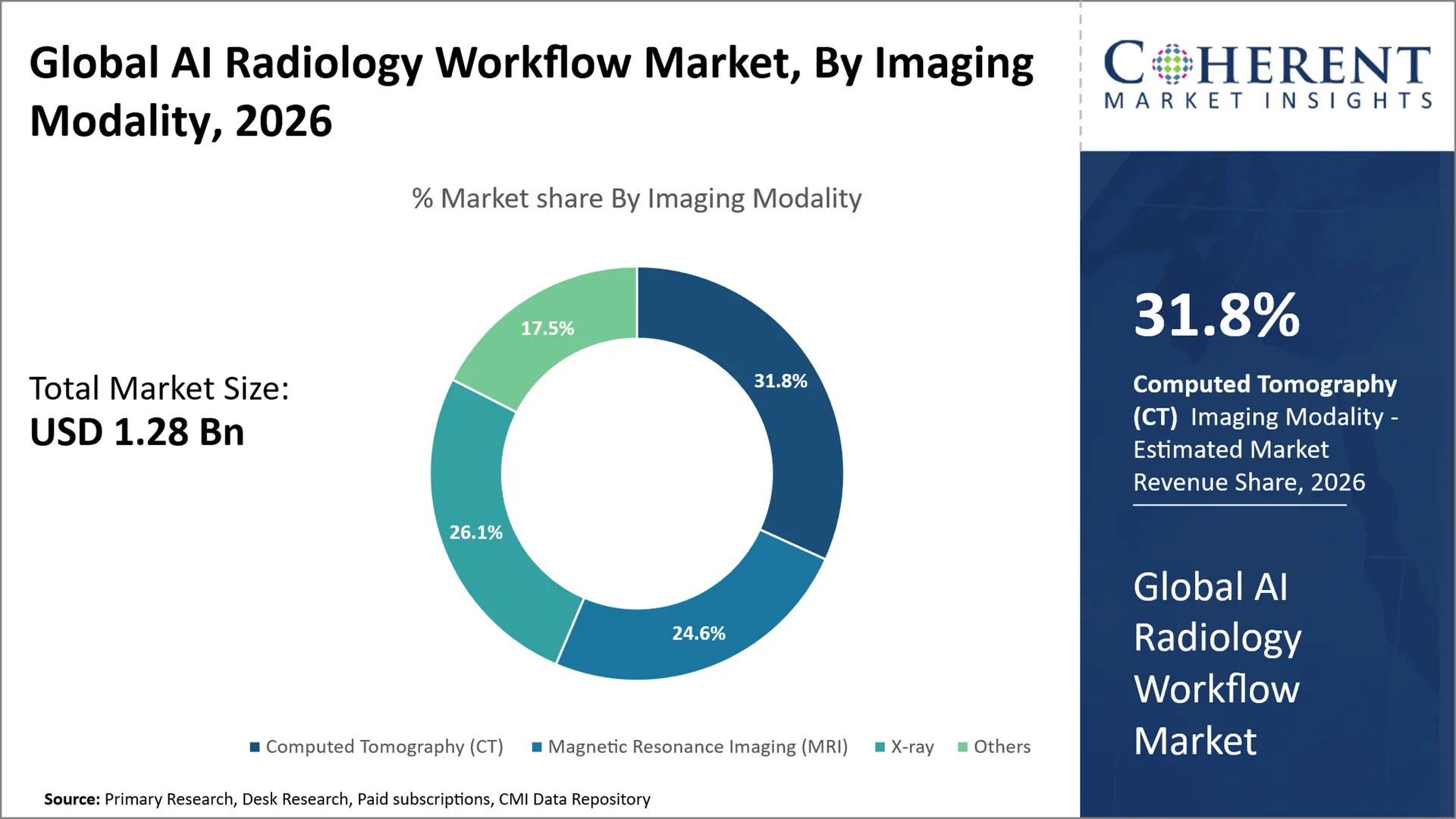
Computed Tomography (CT) is projected to hold a market share of 31.8% in 2026, due to the widespread use of CT scans in emergency care, cancer and neurological diagnosis, together with the potential of artificial intelligence to detect anomalies and flag urgent scans. The large data set and complex images in a CT scan make AI-assisted reading and workflow triage particularly helpful in reducing reporting delays and radiology workloads. For instance, in May 2026, the U.S. Food and Drug Administration (FDA) granted 510(k) clearance to Synapse Lung Nodule AI by FUJIFILM Healthcare Americas Corporation, a computer aided detection (CAD) software designed for lung CT scans, supporting the clinical implementation of computer-aided detection of AI on CT.
Cloud-Based Segment Dominates the Global AI Radiology Workflow Market
The cloud-based segment is projected to hold a market share of 38.7% in 2026, due to its ability to provide scalable computing power, centralized data access, and easy remote cooperation among healthcare providers. For instance, India’s National Informatics Centre (NIC) developed NextGen eHospital, a cloud-based hospital management platform incorporating a Radiology Information System and AI-enabled teleradiology capabilities for visualizing and interpreting radiological images. The platform has been deployed in government healthcare facilities, demonstrating the relevance of cloud-based infrastructure for connected radiology workflows.
Current Events and their Impact
Current Events | Description and its Impact |
UK Government Expands AI-Powered Cancer Diagnostics Across the NHS (June 2026) |
|
European Commission Funds Large-Scale AI and Generative AI Medical Imaging Pilots (February 2026) |
|
NHS England Develops a Unified Cloud Platform for AI Screening Trials (September 2025) |
|
AI Radiology Workflow Market Dynamics
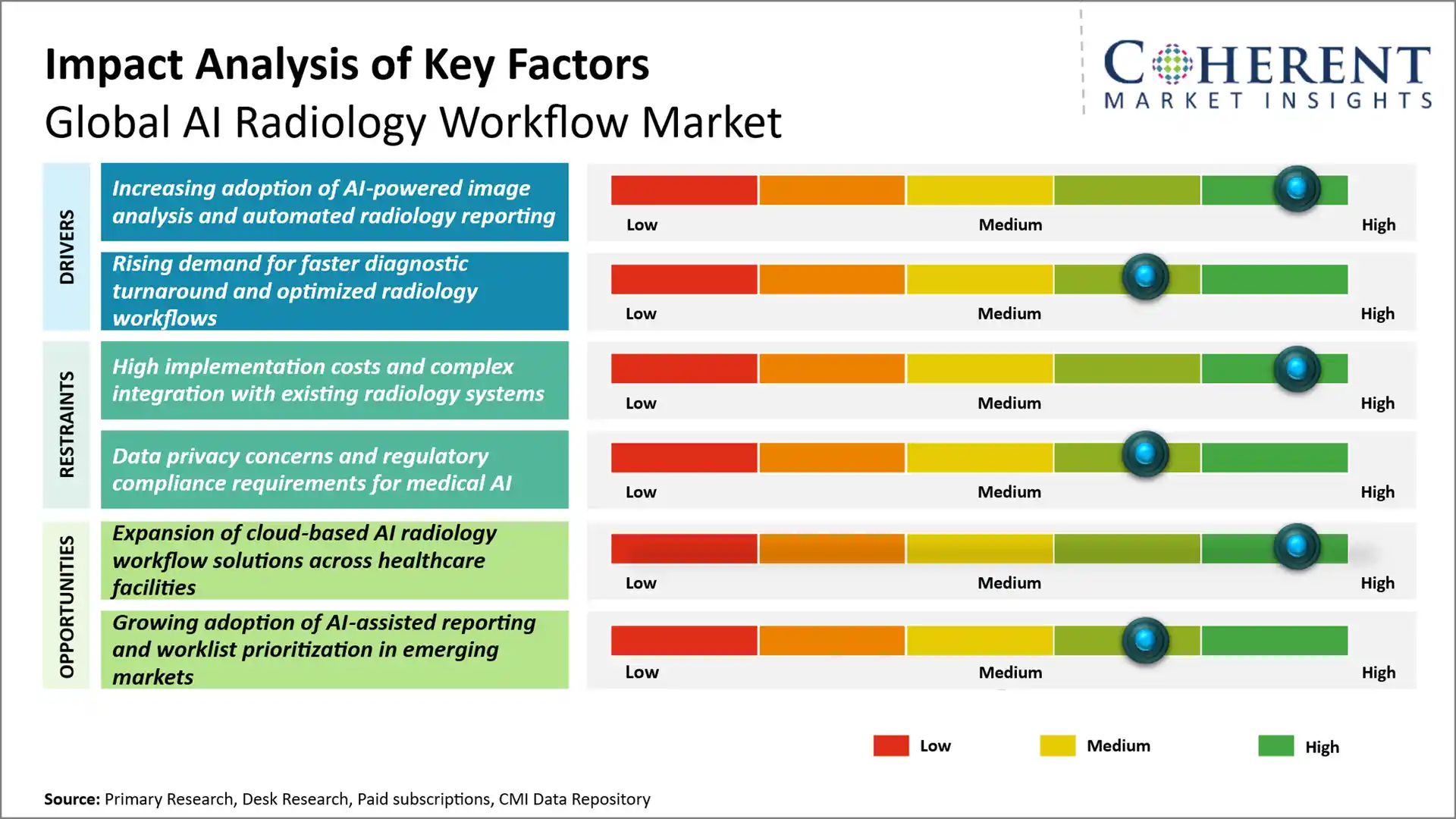
Market Drivers
- Increasing adoption of AI-powered image analysis and automated radiology reporting: The increasing adoption of AI-powered image analysis and automated radiology reporting is a key driver of the global AI radiology workflow market, as healthcare providers seek to streamline image interpretation, reduce manual documentation, and improve reporting efficiency. AI tools can identify clinically relevant findings, generate draft reports, and support radiologists in managing growing imaging workloads. For instance, in June 2026, DeepHealth launched Reporting Pro, integrating speech recognition, AI-generated findings and impressions, measurements, and quality assurance into a unified radiology reporting workflow.
- Rising demand for faster diagnostic turnaround and optimized radiology workflows: The rising demand for faster diagnostic turnaround and optimized radiology workflows is encouraging healthcare providers to adopt AI solutions that prioritize urgent examinations, streamline case distribution, and reduce reporting delays. These capabilities help radiology departments manage increasing imaging volumes and improve operational efficiency. For instance, in November 2025, Siemens Healthineers introduced AI-enabled radiology services designed to support the imaging workflow from scheduling and image acquisition to reporting, including automated summaries of clinically relevant observations.
- Growing adoption of AI-based radiology worklist prioritization: The growing need to identify critical findings promptly is encouraging healthcare providers to integrate AI-powered triage into radiology workflows. These solutions automatically flag potentially urgent abnormalities and prioritize examinations for radiologist review, helping reduce delays in critical diagnosis and improve patient management. For instance, in March 2025, Philips highlighted its Radiology Workflow Orchestrator, which uses intelligent case distribution to match imaging examinations with radiologists based on urgency and expertise, helping improve workflow management and timely reporting.
Emerging Trends
- Generative AI-Powered Radiology Reporting: Generative AI is emerging as a key trend in radiology workflows, enabling automated draft reports, clinical summarization, and extraction of relevant findings from imaging data. These capabilities can reduce documentation workloads and support faster report turnaround while retaining radiologist oversight.
- AI-Driven Workflow Orchestration: Healthcare providers are increasingly adopting AI platforms that prioritize urgent cases, automate worklist management, and coordinate tasks across imaging departments. This shift from standalone AI tools to integrated workflow orchestration solutions is expected to improve operational efficiency and streamline radiology processes.
- Cloud-Native and Interoperable AI Platforms: The development of cloud-native AI radiology platforms is enabling scalable deployment, remote access, and integration across PACS, RIS, and hospital information systems. Greater emphasis on interoperability and flexible deployment is supporting adoption across multi-site healthcare networks and diagnostic imaging centers.
Regional Insights
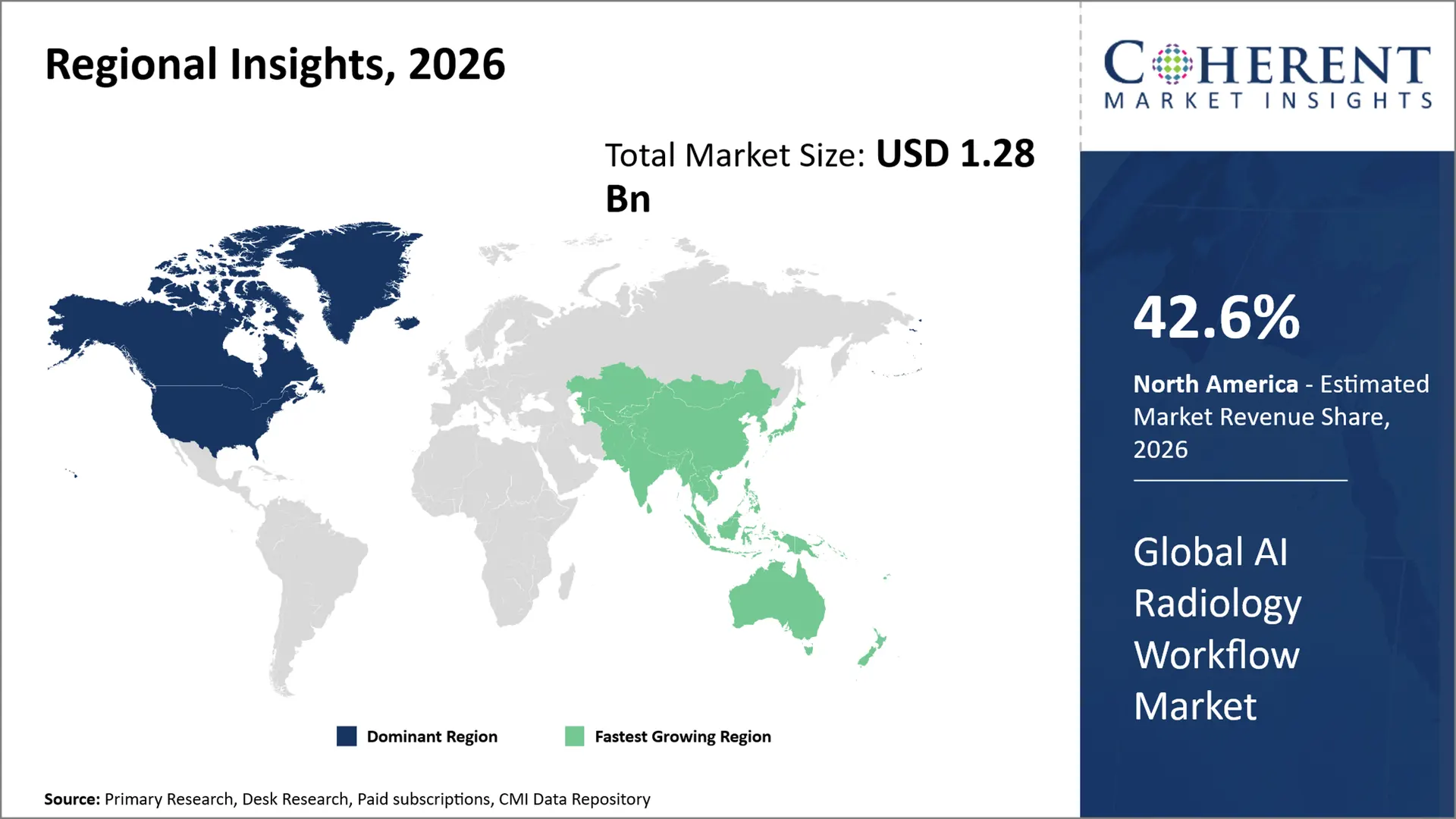
Why is North America a Strong Market for AI Radiology Workflow?
North America leads the global AI radiology workflow market, accounting for an estimated 42.6% share in 2026, due to the presence of well- established healthcare infrastructure, technological advancements, and high spendings on AI and digital health technologies. Sizable research & development efforts and collaborative ventures among technology vendors and healthcare providers, support the deployment of AI solutions in radiology workflows.
Furthermore, supportive government regulations promote medical device innovation & early adoption of AI technology in radiology. This is further supported by the increasing demand for automated reporting, image prioritization, and clinical workflows in the region for improved efficiency. For instance, in April 2026, Health Canada published its Pre-market Guidance for Machine Learning-Enabled Medical Devices The guidance specifies the expectations of the regulation for the safety, effectiveness, clinical evidence and monitoring of AI-based medical devices, to help enable the responsible development and uptake of new medical technologies.
Why Does Asia Pacific AI Radiology Workflow Market Exhibit High Growth?
Asia Pacific is expected to exhibit the fastest growth in the global AI radiology workflow market, registering an estimated CAGR of 29.2% during 2026–2033. The region is projected to account for 22.4% of the global market in 2026, owing to higher healthcare spending, high radiology infrastructure, and adoption of digital health technologies. Local governments in Asia Pacific advocate the digital health industry through enabling policies and schemes which can help to address patients' diagnostic needs. For instance, National Health Commission of China released "the 2025 policy on the promotion and regulation of 'AI + Healthcare' Applications", which promoted artificial intelligence assisted medical image diagnosis and automated report generation for higher diagnostic efficiency.
Additionally, the surging demand for automatic reporting and image prioritization, internet-based and cloud imaging, and telemedicine are anticipated to propel the market growth. Increasing investment in digital health and artificial intelligence healthcare solutions is further expected to foster regional market growth.
Global AI Radiology Workflow Market Outlook for Key Countries
Why is the U.S. Leading Innovation and Adoption in the AI Radiology Workflow Market?
The U.S. is leading innovation and adoption in the AI radiology workflow market, owing to the development of AI-enabled image triage, automated reporting and clinical decision-support software embedded in radiology workflows. Its pre-existing network of medical imaging device manufacturers, AI software developers and healthcare information technology companies makes it easier to turn AI into use cases. The adoption is further supported by the clear regulatory pathways available for the Food and Drug Administration's approval of AI-enabled medical devices for use in the healthcare setting.
Is China a Favorable Market for AI Radiology Workflow Market?
China is a promising market for AI radiology workflow, attributed to growing investment in medical imaging infrastructure, a need for diagnostic efficiency and government backing for the application of AI in healthcare. Opportunities exist in large hospitals for automated reporting, AI-assisted diagnosis and worklist prioritization. However, the market is dependent on validation of clinical benefits, hospitals' information systems connectivity and strict application of China's medical-device and medical-data policies.
Is Japan Emerging as a Key Growth Hub for the AI Radiology Workflow Market?
Japan has emerged as a promising growth market for AI radiology workflow attributed to the aging population, highly developed healthcare infrastructure and a surging need for high productivity and precision in reporting. Japan is expected to see an increase in the use of artificial intelligence assisted image analysis, assisted reporting and triage of urgent cases, reducing a radiologist's workload, as well as "massive digitalization projects" driven by government schemes, although clinical validation, regulation and implementation are essential.
Why Does Germany Top the European AI Radiology Workflow Market?
Germany dominates the European AI radiology workflow market because of its modern healthcare infrastructure, imaging capability, and adoption of artificial intelligence within the healthcare processes. Strong medical technology sector along with increased attention on healthcare digitalization offers conducive surroundings to promote usage of artificially- intelligent augmented medical image analysis, reporting and automated prioritizing worklist.
Is AI Radiology Workflow Market Developing in UK?
The market for AI precision treatment platforms in the UK is growing driven by a rise in demand for faster diagnoses, radiologists' workload challenges, and the NHS adopting more AI enabled imaging applications. Government-backed programs to increase AI enabled X-ray analysis and diagnoses to expedite diagnosis are helping to create a market for automated reporting, image prioritization, and workflow optimization. However, NHS integration, clinical validation and regulatory compliance remain a challenge.
Key Benefits of Cloud-Based AI Radiology Workflow Solutions
Benefit area | Impact on radiology workflows | Market relevance |
Scalability | Supports increasing imaging volumes without equivalent investment in local infrastructure | Encourages adoption across expanding healthcare networks |
Remote accessibility | Enables authorized access to imaging workflows across multiple locations | Supports teleradiology and geographically distributed care |
System integration | Connects AI applications with PACS, RIS, and hospital information systems | Facilitates workflow automation and interoperability |
Cost efficiency | Reduces the need for extensive on-site hardware and infrastructure maintenance | Improves accessibility for smaller imaging providers |
AI deployment and updates | Simplifies software deployment, maintenance, and model updates | Supports faster integration of new AI capabilities |
Data security and governance | Requires robust access controls, encryption, and regulatory compliance | Influences provider confidence and purchasing decisions |
How is the expansion of cloud-based AI radiology workflow solutions across healthcare facilities creating new growth opportunities in the AI radiology workflow market?
The growing adoption of cloud-based artificial intelligence in radiology workflow solutions presents a promising opportunity by enabling scalable imaging data management and remote data access, as well as integration with existing Picture Archiving and Communication Systems (PACS) and hospital systems, to lower infrastructure and maintenance costs. For instance, in November 2025, GE Healthcare unveiled Genesis Radiology Workspace, a cloud-first platform to advance workflows and enable anywhere, anytime access to diagnostic images. The launch highlights the enabling role of cloud platforms in advancing workflow flexibility and driving the accelerated adoption of AI in radiology.
Market Players, Key Development, and Competitive Landscape
Key Developments
- In September 2026, Merge launched MergeIQ, an AI layer embedded in its Workflow Orchestrator platform. Its initial applications, RelevancyIQ and NaviIQ, identify relevant prior radiology reports and surface historical findings within the radiologist’s workflow, reducing the need to search across separate systems.
- In September 2026, Cognita Imaging received a USD 1.29 million contract from the U.S. Food and Drug Administration (FDA) to develop and test a framework using multiple large language models (LLMs) to evaluate AI-generated radiology reports. The project will assess approximately one million patient examinations, helping investigate the reliability of generative AI reporting and identify cases requiring radiologist review.
- In June 2026, Mosaic Clinical Technologies launched Mosaic Reporting, an AI-native reporting platform designed specifically for radiology workflows. The platform aims to streamline report creation and integrate AI-assisted reporting into radiologists’ daily processes, supporting greater workflow efficiency and reduced documentation burden.
- In June 2026, HOPPR launched Presto, an AI-powered draft-reporting solution that integrates AI-generated findings into existing radiology reporting systems, including PowerScribe 360 and PowerScribe One. The solution aims to reduce manual documentation and streamline radiology workflows without requiring platform migration.
Competitive Landscape
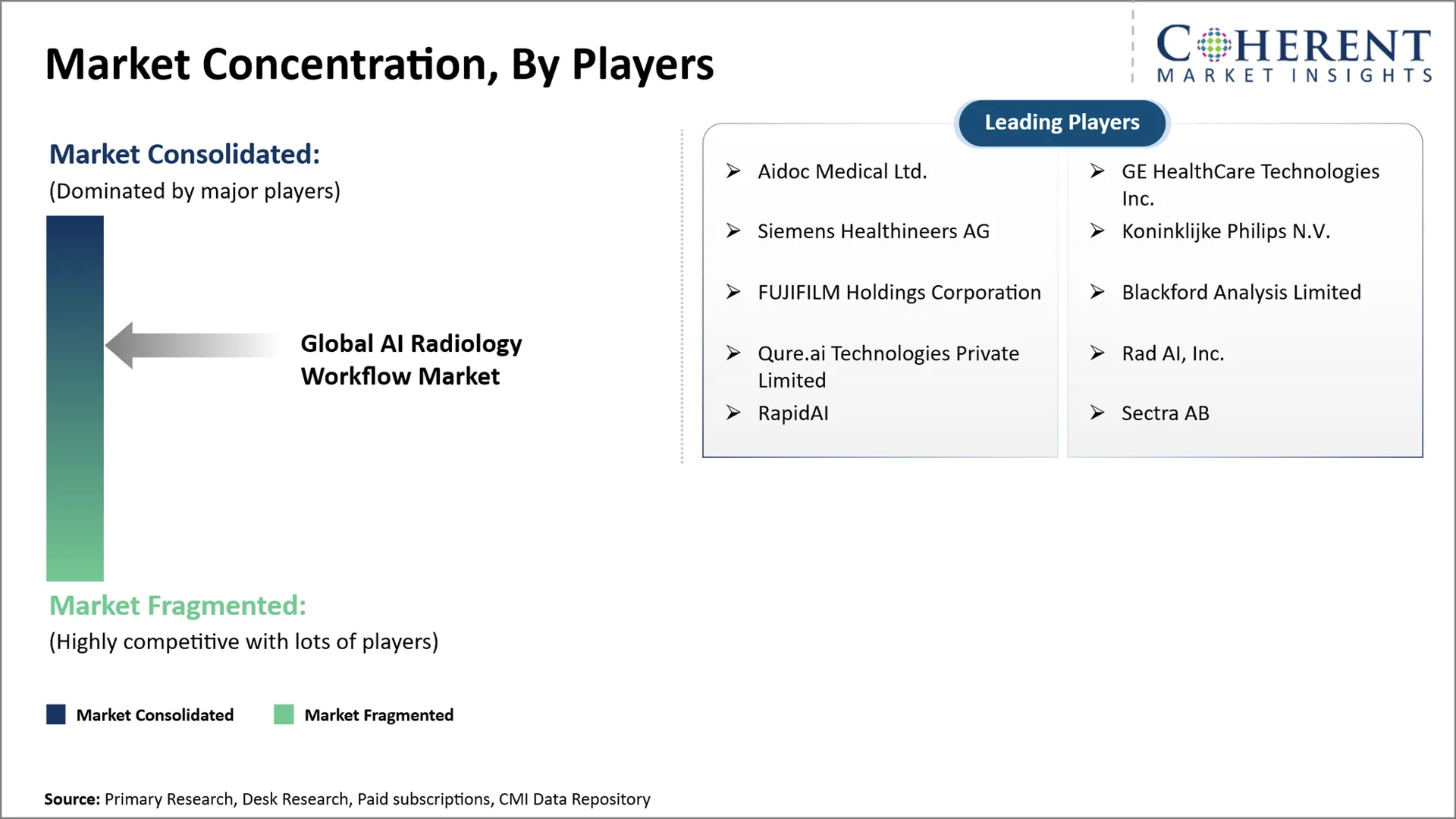
The global AI radiology workflow market is moderately competitive, with participants focusing on AI-powered image analysis, automated reporting, worklist prioritization, and radiology workflow orchestration. Market players are strengthening their capabilities to reduce reporting delays, streamline imaging operations, and integrate AI into existing radiology information systems. Key focus areas include:
- AI-powered image analysis, abnormality detection, and case prioritization
- Automated radiology reporting and natural-language report generation
- Workflow orchestration and intelligent radiology worklist management
- Integration with picture archiving and communication systems (PACS), radiology information systems (RIS), and electronic health records (EHRs)
- Cloud-based deployment and interoperability across imaging platforms
- Clinical validation, data security, and reliable AI performance to support radiologist confidence and adoption
Market Report Scope
AI Radiology Workflow Market Report Coverage | |||
Report Coverage | Details | ||
Base Year | 2025 | Market Size in 2026: | USD 1.28 Bn |
Historical Data For: | 2020 To 2024 | Forecast Period: | 2026 To 2033 |
Forecast Period 2026 To 2033 CAGR: | 24.6% | 2033 Value Projection: | USD 5.96 Bn |
Geographies covered: |
| ||
Segments covered: |
| ||
Companies covered: | Aidoc Medical Ltd., GE HealthCare Technologies Inc., Siemens Healthineers AG, Koninklijke Philips N.V., FUJIFILM Holdings Corporation, Blackford Analysis Limited, Qure.ai Technologies Private Limited, Rad AI, Inc., RapidAI, Sectra AB | ||
Growth Drivers: |
| ||
Restraints & Challenges: |
| ||
Analyst Opinion (Expert Opinion)
- In the coming years, global AI radiology workflow market will be shaped by the transition from standalone AI imaging tools toward integrated platforms that automate multiple stages of the radiology workflow, including image prioritization, interpretation, reporting, and follow-up coordination. As imaging volumes increase, solutions that reduce reporting turnaround times, improve workflow efficiency, and integrate seamlessly with existing hospital systems are expected to gain greater adoption.
- The maximum opportunities are foreseen within AI-assisted reporting and workflow orchestration in the U.S., where healthcare providers can benefit from solutions that streamline high-volume imaging operations. Additional opportunities exist in AI-powered image triage and reporting automation in China and India, where expanding diagnostic infrastructure and rising demand for efficient imaging services create scope for broader deployment
- In order to gain a competitive advantage market players should prioritize modality-specific solutions, seamless PACS and RIS integration, clinically reliable outputs, and flexible deployment models. Demonstrating measurable improvements in reporting efficiency, maintaining robust data security, and designing tools that complement radiologists’ expertise rather than replace clinical judgment will be essential to gaining a competitive edge.
Speak to the analyst
Want personalized insights?
Take the findings above to one of our principal consultants, or have the report rebuilt around the segments, geographies and competitors you actually track.
Market Segmentation
- Component Insights (Revenue, USD Bn, 2021 - 2033)
- Software
- Services
- Imaging Modality Insights (Revenue, USD Bn, 2021 - 2033)
- Computed Tomography (CT)
- Magnetic Resonance Imaging (MRI)
- X-ray
- Others
- Deployment Mode Insights (Revenue, USD Bn, 2021 - 2033)
- Cloud-Based
- On-Premise
- Hybrid
- Application Insights (Revenue, USD Bn, 2021 - 2033)
- Image Triage and Prioritization
- Image Analysis and Abnormality Detection
- Structured Reporting and Report Generation
- Worklist Optimization and Workflow Automation
- Clinical Decision Support
- End User Insights (Revenue, USD Bn, 2021 - 2033)
- Hospitals
- Diagnostic Imaging Centers
- Specialty Clinics
- Academic and Research Institutions
- Others
- Regional Insights (Revenue, USD Bn, 2021 - 2033)
- North America
- U.S.
- Canada
- Latin America
- Brazil
- Argentina
- Mexico
- Rest of Latin America
- Europe
- Germany
- U.K.
- Spain
- France
- Italy
- Russia
- Rest of Europe
- Asia Pacific
- China
- India
- Japan
- Australia
- South Korea
- ASEAN
- Rest of Asia Pacific
- Middle East
- GCC Countries
- Israel
- Rest of Middle East
- Africa
- South Africa
- North Africa
- Central Africa
- North America
Sources
Primary Research Interviews
- AI Radiology Workflow and Product Leaders overseeing AI orchestration, image triage, automated reporting, PACS/RIS integration, and platform development.
- Radiologists and Radiology Department Heads evaluating AI-assisted image interpretation, reporting turnaround time, clinical usability, and workflow efficiency.
- Radiology IT and Imaging Informatics Specialists managing PACS, RIS, DICOM interoperability, system integration, and AI deployment.
- AI/ML and Medical Imaging Engineers developing computer vision, natural-language reporting, image analysis, and workflow automation applications.
- Hospital Procurement and Digital Transformation Leaders assessing implementation costs, scalability, clinical value, and vendor selection.
Stakeholders
- Hospitals and Radiology Departments adopting AI for worklist prioritization, reporting automation, and imaging workflow optimization.
- Diagnostic Imaging Centers using AI to improve examination throughput and reporting efficiency.
- Medical Imaging Equipment and Software Providers integrating AI into imaging, reporting, and workflow management systems.
- Radiology AI Software Developers supplying image analysis, triage, reporting, and workflow orchestration tools.
- Healthcare IT and Cloud Service Providers supporting data exchange, infrastructure, cybersecurity, and deployment.
- Academic and Research Institutions developing and validating AI models for medical imaging and radiology workflows.
- End-use Sectors
- Hospitals
- Diagnostic Imaging Centers
- Specialty Clinics
- Academic and Research Institutes
- Other Healthcare Facilities
- Regulatory & Health Bodies
- U.S. Food and Drug Administration (FDA), U.S. — regulation of AI-enabled medical devices, radiology software, and clinical safety.
- National Institute of Standards and Technology (NIST), U.S. — AI risk management, trustworthy AI, and technical standards.
- Office of the National Coordinator for Health Information Technology (ONC), U.S. — health IT interoperability and electronic health information exchange.
- European Commission, European Union — AI regulation, medical-device policy, and digital health governance.
- European Medicines Agency (EMA), Europe — regulatory guidance on AI use in medicines development and related clinical research.
- National Health Service (NHS) England, U.K. — digital health implementation and AI adoption across healthcare services.
Databases
- FDA 510(k) and De Novo Databases — regulatory records for cleared or authorized AI-enabled radiology and medical imaging devices.
- FDA Artificial Intelligence-Enabled Medical Devices List — information on AI-enabled medical devices authorized for marketing in the U.S.
- ClinicalTrials.gov — registered clinical studies evaluating AI tools used in medical imaging and radiology.
- RSNA Medical Imaging Resource for AI (MIRA) — curated, de-identified medical imaging datasets for AI research and model evaluation.
- RSNA ATLAS — searchable model and dataset cards for medical imaging AI systems.
Associations
- Radiological Society of North America (RSNA) — radiology research, AI datasets, imaging informatics, and workflow integration.
- American College of Radiology (ACR) — clinical practice guidance, imaging AI assessment, and quality monitoring.
- Society for Imaging Informatics in Medicine (SIIM) — imaging informatics, enterprise imaging, AI integration, and interoperability.
- European Society of Radiology (ESR) — radiology practice, medical imaging innovation, and AI implementation in Europe.
- Integrating the Healthcare Enterprise (IHE) — interoperability profiles for radiology information systems and AI workflow integration.
- Digital Imaging and Communications in Medicine (DICOM) Standards Committee — standards for medical imaging data exchange and interoperability.
Public Domain Sources
- U.S. Food and Drug Administration (FDA) — regulatory information on AI-enabled medical devices, software functions, and medical imaging tools.
- National Institute of Standards and Technology (NIST) — AI risk management frameworks and technical guidance for trustworthy AI.
- Office of the National Coordinator for Health Information Technology (ONC) — health IT interoperability and information-sharing standards.
- European Commission — European AI regulation, medical-device requirements, and digital health policies.
- National Health Service (NHS) England — public information on AI adoption, digital transformation, and imaging service modernization.
- Radiological Society of North America (RSNA) — public research resources, AI datasets, imaging standards, and workflow integration guidance.
- American College of Radiology (ACR) — public guidance on clinical implementation, monitoring, and quality assessment of imaging AI.
Proprietary Elements
- CMI Data Analytics Tool, Proprietary CMI Existing Repository of information for last 10 years.
Get access to 250+ pages report
Every segment, forecast, competitor profile and data table behind the analysis above — available for instant download.
- ESOMAR Member
- ISO 9001:2015 Certified
- D-U-N-S Registered
- GDPR & CCPA Compliant
Frequently Asked Questions
The global AI radiology workflow market is estimated to be valued at USD 1.28 Bn in 2026 and is expected to reach USD 5.96 Bn by 2033.
Software dominates due to its ability to automate image analysis, reporting, worklist prioritization, and workflow coordination while integrating with existing radiology systems.
AI radiology workflow refers to the use of artificial intelligence to streamline medical imaging processes, from image analysis and case prioritization to report generation and clinical coordination.
The CAGR of global AI radiology workflow market is projected to be 24.6% from 2026 to 2033.
Increasing adoption of AI-powered image analysis and automated radiology reporting, and rising demand for faster diagnostic turnaround and optimized radiology workflows are the major factors driving the growth of the global AI radiology workflow market.
High implementation costs and complex integration with existing radiology systems, and data privacy concerns and regulatory compliance requirements for medical AI are the major factors hampering the growth of the global AI radiology workflow market.
In terms of deployment model, cloud-based is estimated to dominate the market revenue share in 2026.