

Global AI Radiology Intelligence Market Size and Forecast – 2026 To 2033
The global AI radiology intelligence market is expected to grow from USD 2.86 Bn in 2026 to USD 17.94 Bn by 2033, registering a compound annual growth rate (CAGR) of 30.0 % from 2026 to 2033. The market for global AI radiology intelligence is poised for significant expansion, fueled by the rising demand for faster and more accessible diagnostic imaging amid shortages of trained radiology professionals.
In May 2026, the World Health Assembly adopted a resolution calling for stronger integration of diagnostic imaging and teleradiology into national health systems, including investment in digital technologies to expand access to imaging services. The initiative reinforces the need for technology-enabled radiology workflows as imaging demand grows. (Source: World Health Organization)
Key Takeaways of the Global AI Radiology Intelligence Market
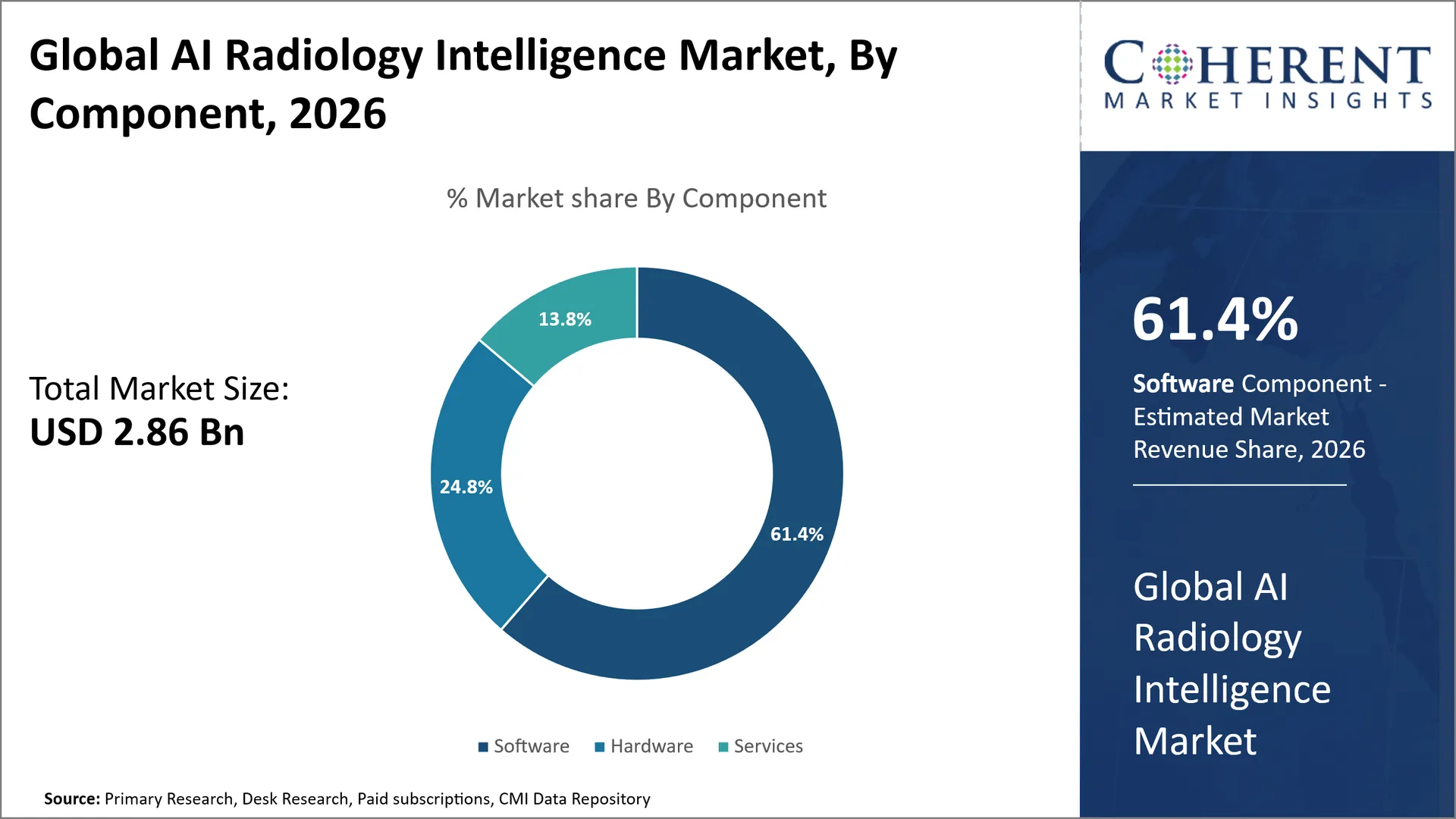
- Software is projected to hold 61.4% of the global AI radiology intelligence market share in 2026, making it dominant component segment, across Europe, where governments are actively embedding AI software into radiology workflows. For instance, in June 2026, the UK Government committed £20 million to deploy AI-powered X-ray tools across every NHS trust in England by 2029. The programme has already supported faster lung-cancer diagnosis for more than 4 million patients, demonstrating the expanding role of software-based AI in routine radiology.
- Deep learning is projected to hold 41.2% of the global AI radiology intelligence market share in 2026, making it dominant technology segment, particularly across Asia-Pacific, where governments are supporting intelligent medical-imaging research. For instance, in August 2026, China’s Ministry of Science and Technology issued the Guidelines for Ethics of Artificial Intelligence Medical Imaging Research, establishing requirements for responsible AI medical-imaging research and development. The guidelines specifically support the safe advancement of intelligent imaging technologies while addressing ethical and clinical considerations.
- Computed Tomography (CT) is projected to hold 32.6% of the global AI radiology intelligence market share in 2026, making it dominant imaging modality segment, across Asia-Pacific, supported by government-led integration of AI with advanced imaging infrastructure. For instance, in May 2026, Singapore’s Health Sciences Authority highlighted the integration of AI with PET/CT and other advanced imaging technologies under the country's healthcare AI strategy, while Singapore's 2026 healthcare AI mission specifically targets integration of advanced tools into clinical workflows.
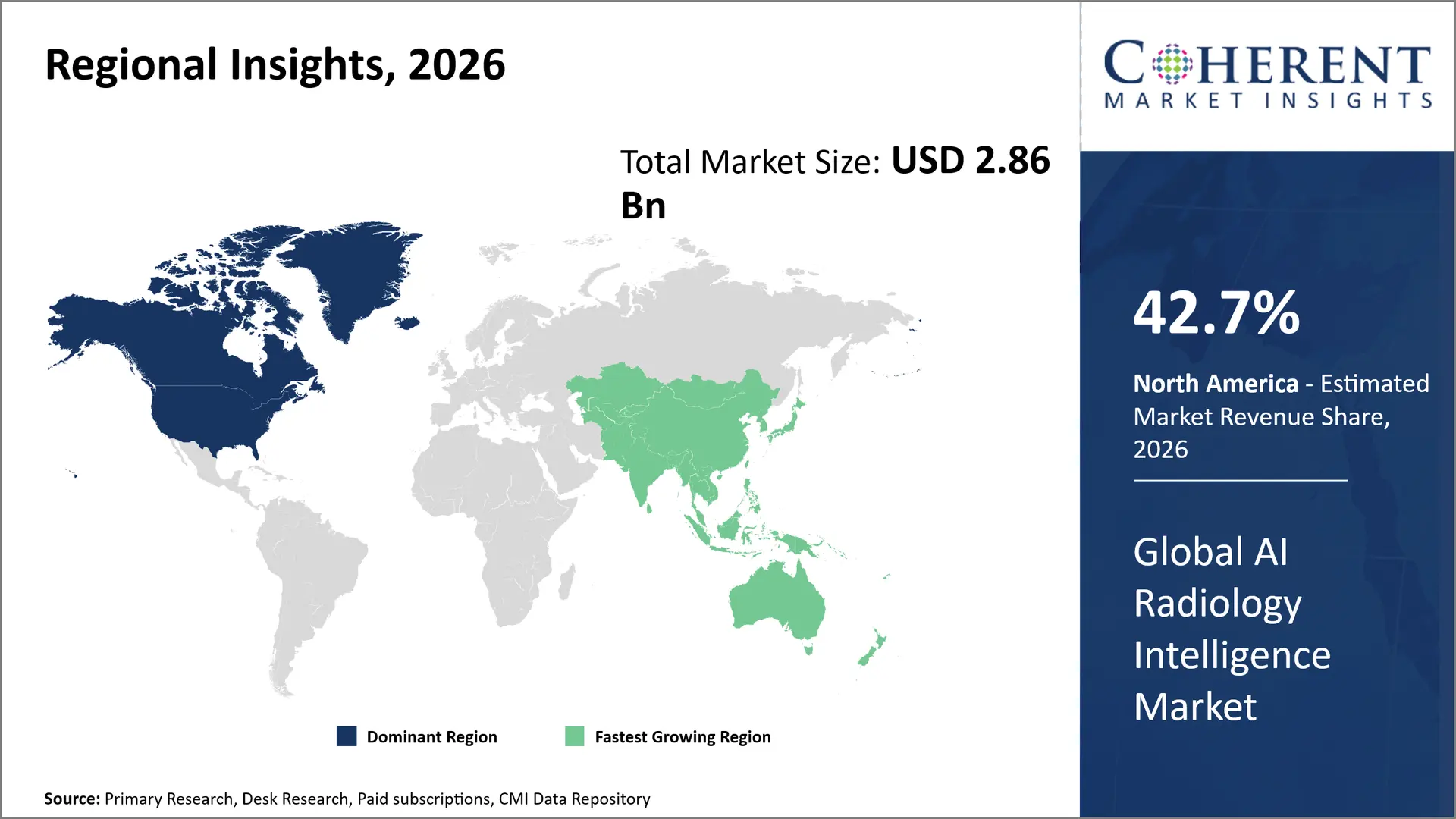
- North America market maintains dominance with an expected share of 42.7% in 2026, bolstered by an established regulatory pathway for AI-enabled radiology software and quantitative imaging applications. For instance, in June 2026, the U.S. FDA classified radiological machine-learning-based quantitative imaging software with a predetermined change-control plan as a Class II medical device, establishing specific controls for its continued modification and clinical use.
- Asia Pacific is expected to exhibit the fastest growth in the global AI radiology intelligence market, registering an estimated CAGR of 18.9% during 2026–2033, driven by government-led integration of AI into medical imaging and clinical workflows. For instance, Singapore’s Ministry of Health announced that imaging AI would become a national capability in public healthcare by the end of 2026, alongside AI deployment across healthcare services, creating a strong institutional pathway for radiology AI adoption.
Segmental Insights
Why Do Software Dominate the Global AI Radiology Intelligence Market?
Software is projected to hold the market share of 61.4% in 2026, owing to its scalability in terms of imaging interpretation, abnormalities identification, workflow prioritization and report generation. From the search studies, the large language model(s) can be integrated with PACS, RIS, and hospital IT systems, and support multiple modalities without much hardware changes. In addition, constant model updates and the cloud deployment are expected to improve the scalable scalability at hospitals and diagnostic imaging centers. For instance, in June 2026, the UK Government committed USD 26.5 million (£20 million) to rollout the AI-ML software X-ray in all NHS trusts in England by 2029, demonstrating the steady institutional adoption of software-based AI tools within the radiology workflow.
- Current Industry Events of 2026
- Market Size Estimation
- Regional Breakdown
- Competitive Landscape
- Customer Intelligence
- Segmental Analysis
- Pricing Analysis
- Key Market Drivers, Challenges & Future Trends
- Customized Insights Section
Why Does Deep Learning Represent the Largest Technology Segment in the AI Radiology Intelligence Market?
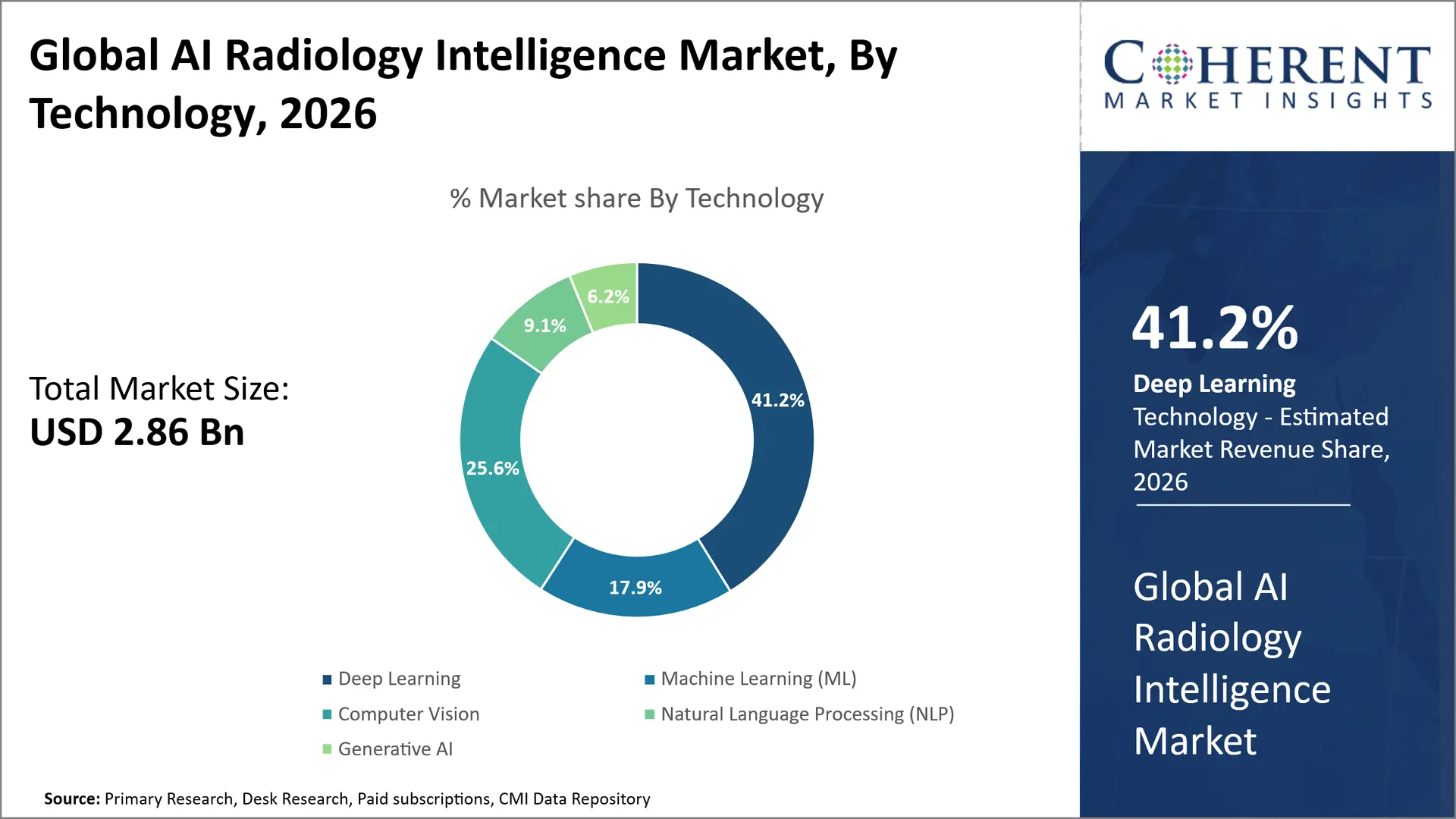
Deep learning is projected to hold a market share of 41.2% in 2026, as it contains complex multilayered neural networks that can learn features directly from high-dimensioned medical data, such as CT, MRI among others. Deep learning can detect small anomalies, perform image classification and segmentation, and improve diagnostics accuracy for complex image interpretation. The deep learning along with computer vision and other technologies of artificial intelligence may also extend its application for diagnostic and workflows. For instance, in June 2026, the U.S. Food and Drug Administration (FDA) established a special category for radiology machine-learning software with quantitative imaging. This class of AI, addresses image segmentation, landmarking and quantitative analysis, and allows for the modification of AI and machine learning radiology software in a regulated manner.
Computed Tomography (CT) Segment Dominates the Global AI Radiology Intelligence Market
The computed tomography (CT) segment is projected to hold a market share of 32.6% in 2026, owing to the generation of large-volume data, cross-sectional images which are well-suited for AI detection, segmentation, quantification, and workflow prioritization. AI will also be used for dose optimization and interpretation time reduction, which will further make CT even more relevant in oncology, emergency, and cardiovascular imaging. For instance, in June 2026, the UK Government revealed that one of its AIl research assets enabled the development of lung cancer diagnosis and radiotherapy planning tools. The tools use three-dimensional deep-learning models that have been built and trained on large datasets of computed tomography images.
Current Events and their Impact
Current Events | Description and its Impact |
U.S. FDA Seeks Public Input on Generative AI-Enabled Medical Devices (August 2026) |
|
China Issues Ethical Guidelines for AI Medical Imaging Research (August 2026) |
|
UK Announces £20 Million AI Rollout for NHS Radiology and Cancer Diagnosis (June 2026) |
|
AI Radiology Intelligence Market Dynamics
Market Drivers
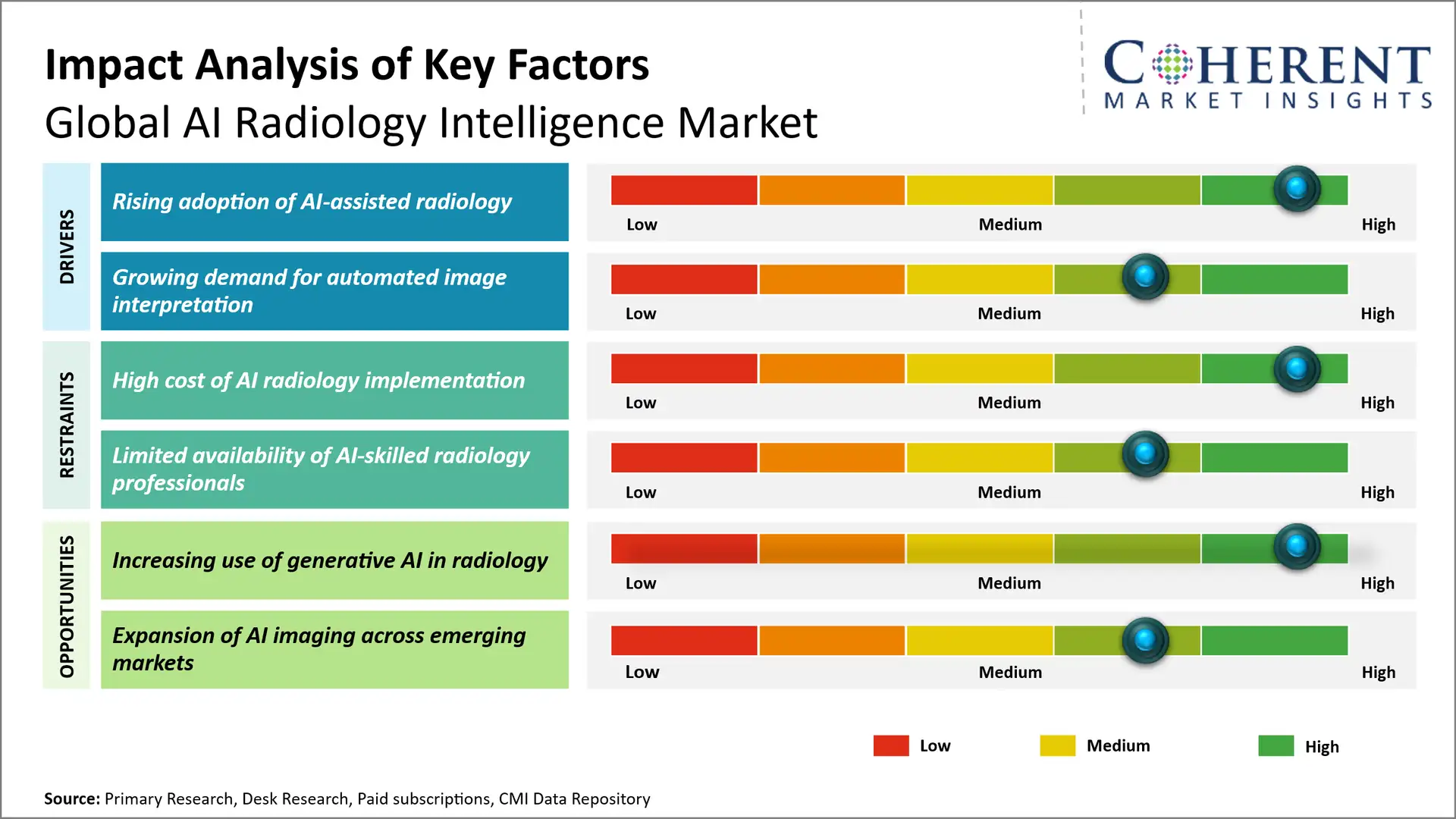
- Rising adoption of AI-assisted radiology: The increasing volume and complexity of medical imaging is accelerating demand for AI-assisted radiology tools that can support image interpretation, case prioritization, and diagnostic workflows. AI is increasingly moving from research settings into clinical radiology, with growing regulatory authorization of AI-enabled imaging solutions. This expanding clinical adoption is strengthening the market for AI-based diagnostic and workflow technologies. For instance, in September 2026, the U.S. FDA reported that more than 1,600 AI-enabled medical devices had been authorized for marketing, reflecting the expanding clinical use of AI technologies across healthcare, including radiology and medical imaging.
- Growing demand for automated image interpretation: The growing volume of medical imaging is increasing demand for AI systems that can automatically detect abnormalities, classify findings, and support image interpretation. Automated analysis can help radiologists prioritize clinically significant cases while improving consistency and reducing interpretation workload. The expansion of FDA-authorized AI-enabled radiology devices further supports adoption of automated image-processing solutions. For instance, in August 2026, the U.S. FDA cleared Lower Limb AI (LLAI) from AI Planning Logic, Inc. as an automated radiological image-processing software, demonstrating continued regulatory adoption of AI-based image analysis in radiology.
- Increasing integration of AI with radiology workflows: The integration of AI with PACS, RIS, and other radiology information systems is enabling automated case prioritization, image analysis, reporting support, and workflow coordination. This integration allows AI outputs to be incorporated directly into existing clinical workflows, reducing manual steps and improving radiologist productivity. For instance, in June 2026, Siemens Healthineers expanded its AI-enabled radiology workflow capabilities through solutions designed to integrate AI-supported image analysis and clinical information into radiology operations, supporting more efficient image interpretation and reporting.
Emerging Trends
- Generative AI-Powered Radiology Reporting: Generative AI is increasingly being integrated into radiology workflows to draft reports, summarize findings, and convert imaging observations into structured clinical documentation. This is shifting AI applications beyond image detection toward end-to-end reporting support.
- Multimodal AI for Integrated Clinical Interpretation: AI platforms are increasingly combining medical images with patient history, laboratory results, and clinical notes to provide more comprehensive diagnostic insights. Multimodal models are expected to strengthen personalized diagnosis and treatment planning.
- AI-Driven Radiology Workflow Automation: AI is expanding from diagnostic assistance into workflow orchestration, including automated triage, case prioritization, image routing, and follow-up monitoring. This enables radiology departments to manage higher imaging volumes with less manual intervention.
Regional Insights
Why is North America a Strong Market for AI Radiology Intelligence?
North America leads the global AI radiology intelligence market, accounting for an estimated 42.7% share in 2026, owing to the presence of a mature healthcare ecosystem, an abundance of healthcare imaging infrastructure, and extensive adoption of AI-based integrated AI in clinical radiology workflows. Additionally, the region is heavily investing in digital imaging technology and healthcare AI to further foster innovation and its adoption by hospitals and diagnostic imaging centers.
For instance, in June 2026, 278 projects were chosen by the U.S. Department of Energy as part of its Genesis Mission to accelerate AI-powered scientific discovery. The projects encompass AI infrastructure and automating research capabilities and demonstrate federal support for the AI-enabled healthcare and scientific computing ecosystem. Furthermore, the official approval of AI-enabled radiology market solutions by regulatory authorities, such as the US FDA's new draft regulation on AI-based medical devices, is aiding in the market's progressive advancement.
Why Does Asia Pacific AI Radiology Intelligence Market Exhibit High Growth?
Asia Pacific is expected to exhibit the fastest growth in the global AI radiology intelligence market, registering an estimated CAGR of 18.9% during 2026–2033. The region is projected to account for 22.1% of the global market in 2026, attributed to the rising adoption of AI-enabled clinical imaging and the increasing diagnostic imaging infrastructure coupled with the advancements in healthcare infrastructure. The countries such as China, India, Japan, and South Korea are increasingly enhancing the use of AI for assisting in image reading, screening, and workflow automation. In addition, the support from governments through their national digital health initiatives and other AI-focused healthcare programs, policies, and AI healthcare regulations is expected to support AI integration in the healthcare sector.
For instance, in March 2026, China's National Healthcare Security Administration (NHSA) launched the National Medical Insurance Imaging AI Recognition Competition, including AI for disease detection in CT, MRI, mammography, ultrasound, and X-ray. This is expected to promote the development and clinical application of AI-assisted medical imaging. Moreover, increasing imaging infrastructure and the need for faster diagnostic workflows may contribute to the growth of the region.
Global AI Radiology Intelligence Market Outlook for Key Countries
Why is the U.S. Leading Innovation and Adoption in the AI Radiology Intelligence Market?
The U.S. is probably the most advanced market with the highest concentration of advanced developers of radiology AI, imaging companies and hospitals using AI for clinical workflows. The market is apparently more advanced in AI-based image interpretation, automated triage, quantitative imaging, and generative AI-assisted reporting. In addition, its more mature installation base of AI software packages integrated into PACS / RIS environments may help accelerate deployment in radiology environments.
Is Japan a Favorable Market for AI Radiology Intelligence Market?
Japan is an attractive market owing to its infrastructure in state-of-the-art medical imaging, strong precision-engineering capabilities and existing applications of artificial intelligence in diagnostic imaging. The market has tremendous opportunities for AI use in areas of computed tomography, magnetic resonance imaging, image reconstruction and detection automation where accuracy and workflow improvement are critical.
Is China Emerging as a Key Growth Hub for the AI Radiology Intelligence Market?
China is increasingly being identified as a key hub for growth in the AI radiology intelligence market due to the rising adoption of AI-enabled medical imaging, large healthcare infrastructure, and in-house AI capabilities. The market is significantly present in the imaging analysis through CT, automated detection, and quantitative imaging segments, which could see growing integration of AI solutions in clinics for radiology workflow.
Why Does Germany Top the European AI Radiology Intelligence Market?
Germany leads the European AI radiology intelligence market due to its extensive medical imaging cluster, advanced hospital system, and deeply rooted proficiency in medical AI and radiology informatics. The country is replete with optimistic prospects for digital image analysis, workflow automation, and image reconstruction, with high CT and MRI AI usage potential, strengthening the country’s position in the market.
Is AI Radiology Intelligence Market Developing in South Korea?
South Korea is becoming an increasingly important market for AI Radiology Intelligence driven by its well-equipped digital healthcare system along with the strong AI & Medical techniques. The market is having a lot of scope for radiology image interpretation AI-assisted, CT/MRI analysis, automated screening, and radiology workflow automation especially in high-tech hospitals.
Key AI Application Areas and Functional Roles in the AI Radiology Intelligence Market
AI Application Area | Primary Function | Key Radiology Use Case | Expected Market Impact |
Image Interpretation & Detection | Identifies abnormalities and lesions | Tumor, fracture, nodule, and stroke detection | Improves diagnostic support |
Image Reconstruction & Enhancement | Improves image quality and reduces artifacts | Low-dose CT and accelerated MRI | Enhances image quality and workflow efficiency |
Workflow Optimization & Triage | Prioritizes time-sensitive cases | Stroke, pulmonary embolism, and intracranial hemorrhage triage | Reduces reporting delays |
Quantitative Imaging & Biomarkers | Extracts measurable imaging features | Tumor volume, organ measurements, and disease progression | Supports precision diagnostics |
Automated Reporting | Generates and structures radiology reports | Drafting findings and clinical summaries | Reduces reporting workload |
Treatment Planning & Monitoring | Supports therapy planning and response assessment | Radiation therapy planning and treatment-response tracking | Strengthens clinical decision support |
How is the increasing use of generative AI in radiology creating new growth opportunities in the AI radiology intelligence market?
Generative artificial intelligence is expected to introduce new potential for the AI Radiology Intelligence market by enabling possibilities for automated reporting, image improving, clinical summarization, and multi-modal analysis. The ability of generative AI to interpret and analyze imaging along with clinical data can also allow wider interpretation and tailor treatment plans to individual patients. Furthermore, generative AI adoption into radiology workflow is expected to deepen the market expansion away from image detection. For instance, in September 2026, GE HealthCare collaborated with Mass General Brigham to develop and test a generative AI tool that combines data from clinicians, images and treatment to more personalize cancer treatment. The initiative highlights the growing adoption of generative AI to integrate imaging with the overall clinical workflow and promote quicker & better decisions.
Market Players, Key Development, and Competitive Intelligence
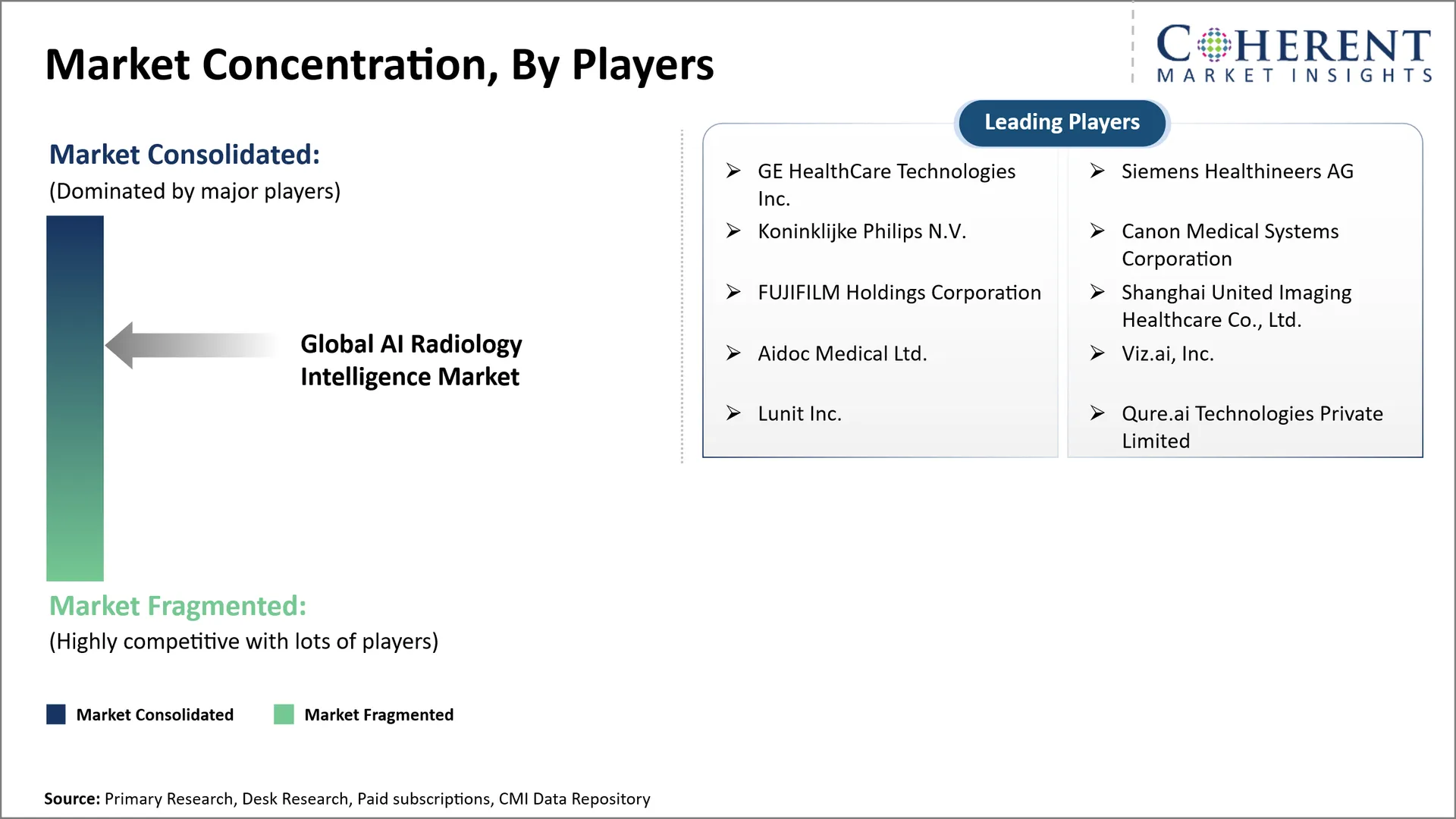
Key Developments
- In September 2026, Epsilon Health raised USD 27.6 million to develop its AI-native radiology practice, integrating AI directly into radiologists’ workflows to support faster medical-image interpretation. The company reported processing more than 2,500 imaging studies daily, demonstrating growing deployment of AI-enabled radiology intelligence at clinical scale.
- In September 2026, Cognita Imaging received a USD 1.29 million research contract from the U.S. FDA to develop and test an AI-based “LLM jury” approach for evaluating AI-generated radiology reports. The 18-month project will assess approximately 1 million patient exams, with radiologists reviewing clinically significant discrepancies. The initiative demonstrates increasing regulatory focus on validating generative AI systems used for radiology reporting.
- In November 2025, Siemens Healthineers introduced AI-enabled radiology services spanning scheduling, image acquisition, and reporting, including AI tools that identify and summarize clinically relevant observations. Its ActExcell Operational Twin also uses AI-powered simulation to evaluate complex hospital scenarios and recommend operational improvements. Pilot projects showed up to 25% faster annotation of chest CT images while maintaining clinical accuracy.
- In February 2025, DeepHealth introduced AI-powered radiology informatics and population screening solutions at ECR 2025, including its cloud-native Diagnostic Suite, which integrates worklists, reporting, image viewing, visualization, and AI orchestration. It also introduced updates to AI-powered mammography and lung, prostate, and brain screening solutions, demonstrating the expansion of AI intelligence across radiology workflows and disease screening.
Competitive Landscape
The global AI radiology intelligence market is highly competitive, with participants focusing on AI diagnostic accuracy, multimodal imaging capabilities, workflow integration, regulatory clearance, and deployment scalability. Market participants are advancing deep learning, computer vision, natural language processing, and generative AI solutions across X-ray, CT, MRI, ultrasound, mammography, and other imaging modalities to improve detection, diagnosis, reporting, and radiology workflow efficiency. Key focus areas include:
- Development of AI-powered image interpretation, detection, segmentation, and quantitative analysis across major imaging modalities
- Integration of generative AI and NLP for automated radiology reporting, clinical summarization, and decision support
- Advancement of AI-based workflow optimization, triage, prioritization, and emergency finding detection
- Expansion of multimodal AI platforms combining imaging data with clinical and patient information for disease diagnosis and treatment planning
- Strategic collaborations, regulatory clearances, healthcare-system integrations, and deployment of AI solutions across hospitals and diagnostic imaging centers
Market Report Scope
Global AI Radiology Intelligence Market Report Coverage | |||
Report Coverage | Details | ||
Base Year | 2025 | Market Size in 2026: | USD 2.86 Bn |
Historical Data For: | 2020 To 2024 | Forecast Period: | 2026 To 2033 |
Forecast Period 2026 To 2033 CAGR: | 30.0% | 2033 Value Projection: | USD 17.94 Bn |
Geographies covered: |
| ||
Segments covered: |
| ||
Companies covered: | GE HealthCare Technologies Inc., Siemens Healthineers AG, Koninklijke Philips N.V., Canon Medical Systems Corporation, FUJIFILM Holdings Corporation, Shanghai United Imaging Healthcare Co., Ltd., Aidoc Medical Ltd., Viz.ai, Inc., Lunit Inc., Qure.ai Technologies Private Limited | ||
Growth Drivers: | Rising adoption of AI-assisted radiology Growing demand for automated image interpretation | ||
Restraints & Challenges: | High cost of AI radiology implementation Limited availability of AI-skilled radiology professionals | ||
Analyst Opinion (Expert Opinion)
- In the coming years, global AI radiology intelligence market will move from standalone image-analysis tools toward integrated AI platforms that support the complete radiology workflow. AI is expected to increasingly combine image interpretation, triage, reporting, quantitative analysis, and clinical decision support, while multimodal and generative AI capabilities reduce manual intervention and improve workflow efficiency.
- The maximum opportunities are foreseen within Generative AI for radiology reporting in the U.S., where solutions can automate report drafting, summarize imaging findings, and support radiologists in clinical documentation. Platforms that combine generative AI with validated image analysis and existing radiology workflows are likely to offer the greatest commercial potential.
- In order to gain a competitive advantage market players should move beyond single-purpose detection algorithms and build integrated, modality-agnostic AI platforms covering interpretation, workflow prioritization, reporting, and decision support. Developing interoperable solutions, strengthening multimodal and generative AI capabilities, and demonstrating consistent performance across diverse clinical datasets can provide a stronger competitive edge.
Speak to the analyst
Want personalized insights?
Take the findings above to one of our principal consultants, or have the report rebuilt around the segments, geographies and competitors you actually track.
Market Segmentation
- Component Insights (Revenue, USD Bn, 2021 - 2033)
- Software
- Hardware
- Services
- Technology Insights (Revenue, USD Bn, 2021 - 2033)
- Deep Learning
- Machine Learning (ML)
- Computer Vision
- Natural Language Processing (NLP)
- Generative AI
- Imaging Modality Insights (Revenue, USD Bn, 2021 - 2033)
- X-ray
- Computed Tomography (CT)
- Magnetic Resonance Imaging (MRI)
- Ultrasound
- Mammography
- Positron Emission Tomography (PET)
- Single-Photon Emission Computed Tomography (SPECT)
- Others
- Disease Area Insights (Revenue, USD Bn, 2021 - 2033)
- Oncology
- Neurology
- Cardiology
- Musculoskeletal Disorders
- Pulmonary Diseases
- Gastrointestinal Diseases
- Others
- Application Insights (Revenue, USD Bn, 2021 - 2033)
- Image Interpretation and Detection
- Image Reconstruction and Enhancement
- Disease Diagnosis and Classification
- Quantitative Imaging and Biomarker Analysis
- Workflow Optimization and Triage
- Treatment Planning and Monitoring
- Others
- End User Insights (Revenue, USD Bn, 2021 - 2033)
- Hospitals
- Diagnostic Imaging Centers
- Specialty Clinics
- Academic and Research Institutions
- Pharmaceutical and Biotechnology Companies
- Others
- Regional Insights (Revenue, USD Bn, 2021 - 2033)
- North America
- U.S.
- Canada
- Latin America
- Brazil
- Argentina
- Mexico
- Rest of Latin America
- Europe
- Germany
- U.K.
- Spain
- France
- Italy
- Russia
- Rest of Europe
- Asia Pacific
- China
- India
- Japan
- Australia
- South Korea
- ASEAN
- Rest of Asia Pacific
- Middle East
- GCC Countries
- Israel
- Rest of Middle East
- Africa
- South Africa
- North Africa
- Central Africa
- North America
Sources
Primary Research Interviews
- Radiology AI developers – AI algorithms, product pipelines, model development, validation, and commercialization
- Medical imaging equipment manufacturers – AI-enabled imaging systems, modality integration, and product development
- Hospitals and diagnostic imaging centers – AI adoption, workflow integration, clinical use, and implementation requirements
- Radiologists and imaging specialists – diagnostic workflows, AI-assisted interpretation, reporting, and clinical decision support
- Healthcare IT and radiology informatics providers – PACS/RIS integration, interoperability, data management, and workflow automation
Stakeholders
- AI radiology solution providers
- Medical imaging equipment manufacturers
- Hospitals and diagnostic imaging centers
- Radiologists and clinical imaging specialists
- Healthcare IT and radiology informatics companies
- Pharmaceutical and biotechnology companies
- Academic and research institutions
- End-use Sectors
- Hospitals
- Diagnostic Imaging Centers
- Specialty Clinics
- Academic and Research Institutions
- Pharmaceutical and Biotechnology Companies
- Regulatory & Health Bodies
- U.S. Food and Drug Administration (FDA) – AI-enabled medical device clearances, regulatory requirements, safety, and clinical validation
- European Medicines Agency (EMA) – AI and digital health regulatory guidance and medical product oversight
- Medicines and Healthcare products Regulatory Agency (MHRA) – AI-enabled medical device regulation and safety requirements in the UK
- Pharmaceuticals and Medical Devices Agency (PMDA) – medical device review, safety, and regulatory requirements in Japan
- National Medical Products Administration (NMPA) – AI-enabled medical device approvals and regulatory requirements in China
Databases
- FDA AI-Enabled Medical Devices Database – authorized AI-enabled medical devices and product information
- ClinicalTrials.gov – clinical studies involving AI-assisted medical imaging and radiology
- WHO Global Health Observatory (GHO) – health-system, disease-burden, and healthcare statistics
- EU Clinical Trials Information System (CTIS) – clinical trial information relevant to AI-enabled healthcare technologies
Associations
- Radiological Society of North America (RSNA) – radiology research, AI resources, education, and clinical innovation
- American College of Radiology (ACR) – radiology practice, AI adoption, clinical standards, and professional resources
- European Society of Radiology (ESR) – European radiology research, education, and AI-related initiatives
- European Society of Medical Imaging Informatics (EuSoMII) – medical imaging informatics, AI, and digital radiology resources
- Society for Imaging Informatics in Medicine (SIIM) – imaging informatics, AI, interoperability, and healthcare technology
Public Domain Sources
- World Health Organization (WHO) – global health, disease burden, healthcare systems, and digital health information
- U.S. Food and Drug Administration (FDA) – AI-enabled medical device authorizations, regulatory guidance, and safety information
- Centers for Disease Control and Prevention (CDC) – disease prevalence, healthcare, and diagnostic-related public health data
- National Institutes of Health (NIH) – biomedical research, medical imaging, and AI research resources
- National Cancer Institute (NCI) – cancer imaging, diagnosis, screening, and AI-related research information
Proprietary Elements
- CMI Data Analytics Tool
- Proprietary CMI Existing Repository of information for last 10 years.
Get access to 250+ pages report
Every segment, forecast, competitor profile and data table behind the analysis above — available for instant download.
- ESOMAR Member
- ISO 9001:2015 Certified
- D-U-N-S Registered
- GDPR & CCPA Compliant
Frequently Asked Questions
The global AI radiology intelligence market is estimated to be valued at USD 2.86 Bn in 2026 and is expected to reach USD 17.94 Bn by 2033.
Software dominates due to the widespread adoption of AI-powered image analysis, diagnostic support, workflow optimization, and automated reporting solutions.
AI Radiology Intelligence uses AI technologies to analyze medical images and support radiologists in diagnosis, interpretation, and workflow management.
The CAGR of global AI radiology intelligence market is projected to be 30.0% from 2026 to 2033.
Rising adoption of AI-assisted radiology, and growing demand for automated image interpretation are the major factors driving the growth of the global AI radiology intelligence market.
High cost of AI radiology implementation, and limited availability of AI-skilled radiology professionals are the major factors hampering the growth of the global AI radiology intelligence market.
In terms of technology, deep learning is estimated to dominate the market revenue share in 2026.