

AI In Medical Imaging Market Size and Forecast – 2026 to 2033
Global AI in medical imaging market is estimated to be valued at USD 2.20 Bn in 2026 and is expected to reach USD 17.77 Bn by 2033, exhibiting a compound annual growth rate (CAGR) of 34.8% from 2026 to 2033.
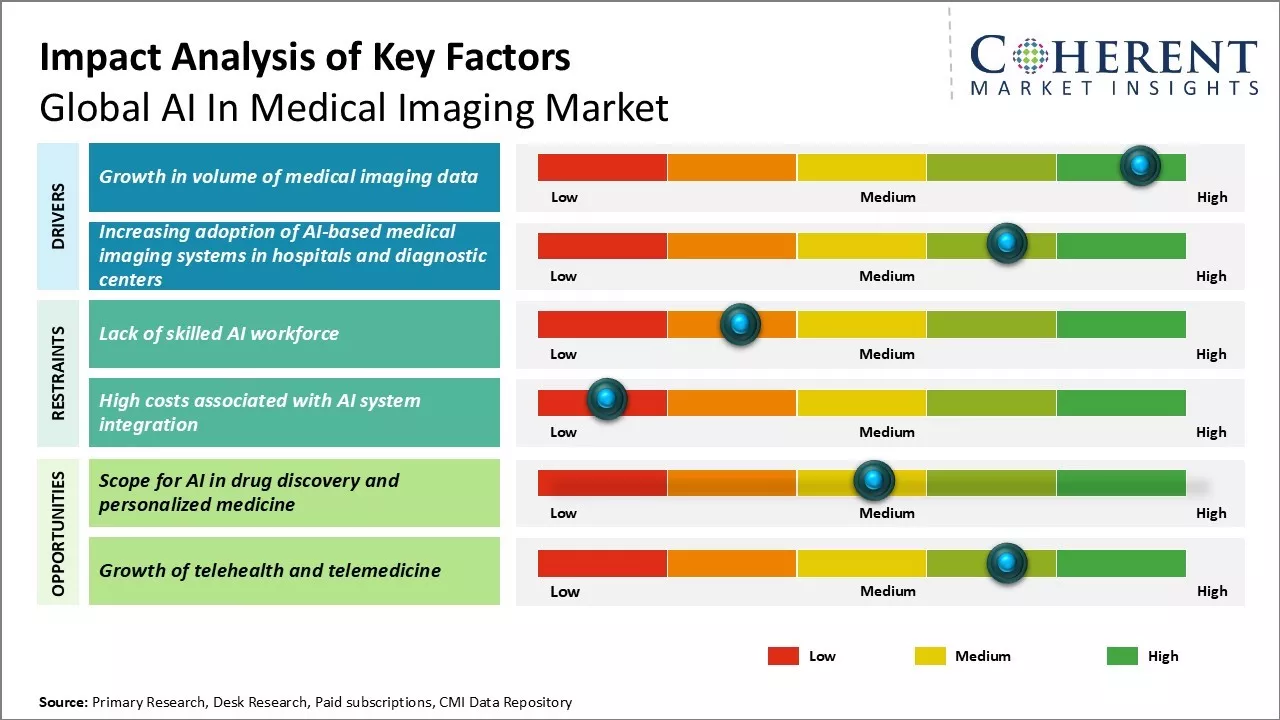
Key Takeaways
- Based on Imaging Modality, the Computed Tomography (CT) segment is expected to hold 41.6 % of the market in 2026, owing to its widespread adoption and integration with AI technologies
- Based on Application, the Neurology segment is projected to capture the largest share of the market in 2026, due to its critical need for precision and early diagnosis.
- Based on Deployment, the Cloud-based segment is expected to account for 44.7 % share in 2026, driven by the unmatched accessibility and cost-efficiency.
- Based on End User, the Hospital and Diagnostic centers segment is projected to account for the highest share of the market in 2026, dominate by leveraging high data volumes to enhance diagnostic speed, accuracy, and workflow efficiency.
- Based on Region, North America is expected to lead the market, holding a share of 40.8 % in 2026. While, Asia Pacific is anticipated to be the fastest growing region during forecast period.
Market Overview
The global AI in medical imaging market is expected to witness significant growth during the forecast period. Growing applications of AI in medical imaging for various disease diagnosis and image analysis is expected to drive the market. AI assistance in medical imaging helps in faster and more accurate diagnosis by analyzing large amounts of patient data. Adoption of AI tools like deep learning and machine learning for medical image analysis is gaining traction among healthcare providers.
Current Events and Its Impact
Current Event | Description and its Impact |
Geopolitical Developments |
|
Technological Advances |
|
Economic and Investment Trends |
|
Operational Efficiency
AI-driven solutions are transforming operational workflows in medical imaging by reducing scan times, automating repetitive tasks, and minimizing the need for retakes. For example, AI algorithms can automatically adjust image acquisition parameters, improve clarity and reduce radiation exposure in CT and X-ray scans. Automated reporting tools streamline documentation, allowing radiologists to focus on critical analysis instead of clerical tasks.
Hospitals and imaging centers also benefit from optimized equipment utilization, as AI predicts patient volumes and manages scheduling to reduce bottlenecks. By cutting down interpretation delays and unnecessary imaging, AI enhances patient throughput, lowers operational costs, and improves overall healthcare efficiency.
- Current Industry Events of 2026
- Market Size Estimation
- Regional Breakdown
- Competitive Landscape
- Customer Intelligence
- Segmental Analysis
- Pricing Analysis
- Key Market Drivers, Challenges & Future Trends
- Customized Insights Section
Segmental Insights
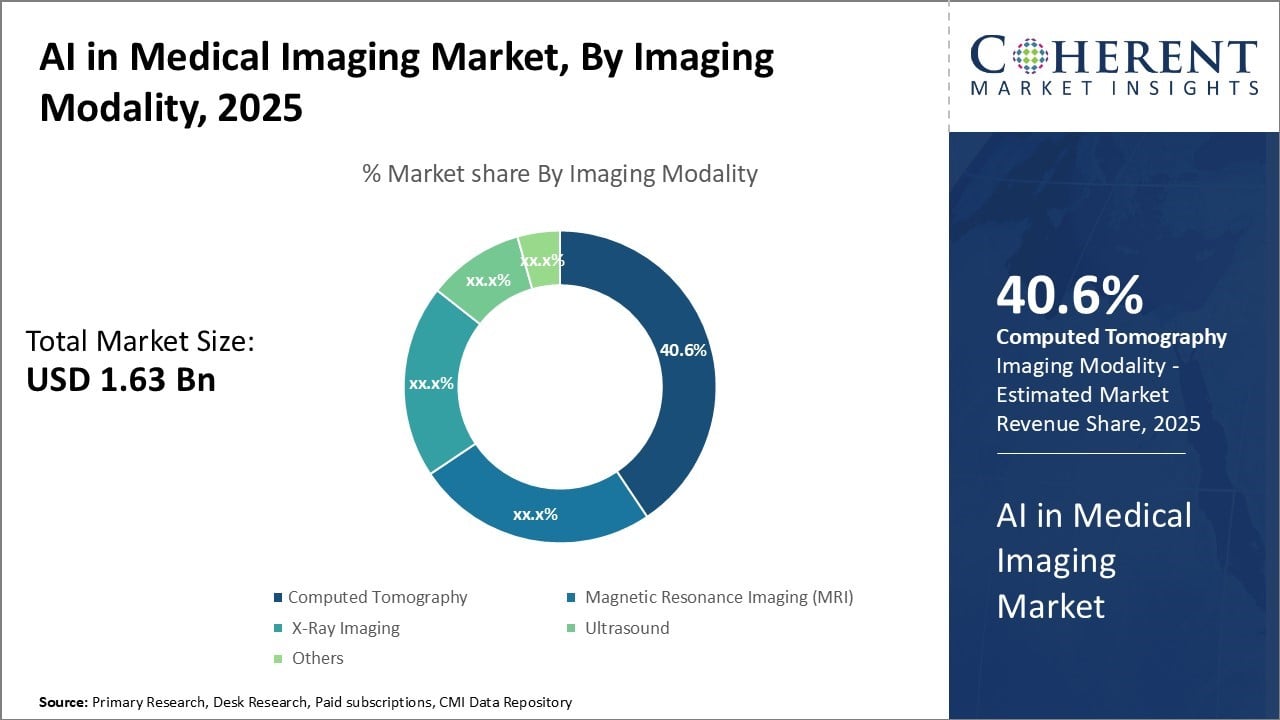
AI in Medical Imaging Market Insights, By Imaging Modality - CT imaging dominates due to its improved diagnostic accuracy
In terms of imaging modality, computed tomography (CT) segment is estimated to contribute the highest market share of 41.6% in 2026, owing to its widespread adoption and integration with AI technologies. AI enhances CT’s diagnostic accuracy by detecting subtle abnormalities like pulmonary embolisms and brain injuries, enabling faster treatment. It also streamlines workflows through automated segmentation and reduces variability among radiologists.
CT’s advanced capabilities, such as 3D modeling and multi-planar reconstruction—support personalized treatment planning and therapy monitoring. Growing affordability and AI-ready platforms are expanding access, especially via teleradiology in underserved regions. These factors solidify CT’s role as the standard imaging modality in modern healthcare.
For instance, in August 2025, Samsung India, in collaboration with NeuroLogica, launched a next-generation mobile CT imaging portfolio aimed at enhancing patient-centric care. The new systems, including CereTom® Elite and OmniTom® Elite, integrate AI-assisted imaging and mobility to bring diagnostics directly to patients, reducing transfers and enabling faster interventions. This initiative seeks to strengthen healthcare infrastructure and improve patient outcomes across India.
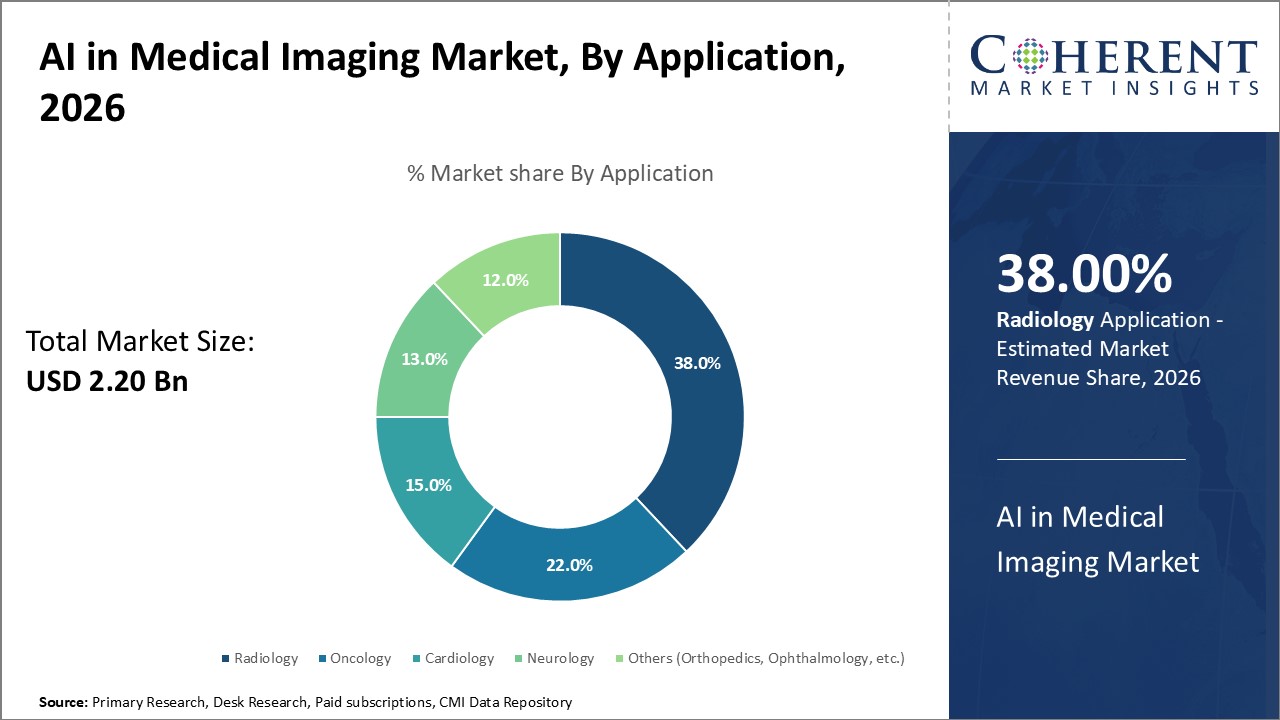
AI in Medical Imaging Market Insights, By Application - Neurology leads the market by enabling early, precise detection of complex brain disorders like Alzheimer’s, stroke, and tumors
In terms of application, the neurology segment is expected to dominate the market with the largest share in 2026, due to its critical need for precision and early diagnosis. Neurological conditions such as Alzheimer’s disease, stroke, and brain tumors often present subtle and complex changes in brain anatomy that can be challenging to detect through conventional methods. AI algorithms enhance diagnostic accuracy by identifying these minute anomalies in CT and MRI scans, enabling earlier intervention and improved patient outcomes. In acute care settings, AI tools can even predict stroke risk before symptoms manifest, supporting faster clinical decision-making.
Additionally, AI streamlines radiology workflows by automating segmentation and classification of brain regions, reducing variability between readers and ensuring consistent interpretations. These capabilities also support personalized treatment planning for chronic neurological disorders like epilepsy and multiple sclerosis, as well as longitudinal tracking of disease progression. Cloud-based AI platforms further democratize access to advanced neurological imaging, allowing remote facilities to benefit from expert-level reads and consultations. This expanded accessibility helps bridge gaps in care and ensures that life-saving diagnostics reach patients regardless of geographic or resource limitations, further enhancing the AI in medical imaging market demand.
For instance, in September 2025, GE HealthCare acquired Icometrix, a Belgian company specializing in AI-powered brain imaging analysis. The acquisition aims to enhance GE HealthCare's neurology portfolio, particularly in monitoring Alzheimer's treatments. Icometrix's icobrain platform, including the FDA-cleared icobrain aria module, assists in detecting and quantifying side effects from anti-amyloid therapies. The deal is subject to regulatory approvals and is expected to integrate seamlessly with GE's MRI systems.
AI in Medical Imaging Market Insights, By Deployment - Cloud based deployment acquires the largest share
In terms of deployment, cloud-based segment is estimated to contribute the highest market share of 44.7% in 2026, driven by the unmatched accessibility and cost-efficiency. Healthcare providers benefit from reduced infrastructure and licensing costs, making AI feasible even for smaller or public facilities. Vendors gain scalable performance, centralized data management, and faster innovation through aggregated imaging data.
Clinicians access advanced AI tools via web and mobile apps, improving diagnostic consistency and enabling remote specialty reads, even in low-resource settings. Patients benefit from broader access to life-saving diagnostics, regardless of geography. This transformative accessibility positions cloud deployment as the key enabler of AI’s impact in medical imaging.
For instance, in February 2025, at the European Congress of Radiology (ECR) 2025 in Vienna, DeepHealth introduced its next-generation AI-driven radiology informatics and population screening solutions. Powered by DeepHealth OS, the cloud-native operating system, the offerings include the Diagnostic Suite™, a unified workspace for modern radiology and SmartMammo™, an AI-powered diagnostic SaaS solution for mammography. The company also showcased updates to its clinical AI solutions for lung, prostate, and brain health. Strategic collaborations with TeraRecon and CARPL.ai aim to extend and scale these solutions.
AI in Medical Imaging Market Insights, By End User - Hospital and Diagnostic Center Dominate by Leveraging High Data Volumes to Enhance Diagnostic Speed, Accuracy, And Workflow Efficiency
In terms of end user, the hospital and diagnostic center segment is projected to hold the highest share of the market in 2026, due to their high imaging volumes and need for faster, more accurate diagnostics. AI streamlines workflows by automating tasks like image segmentation and anomaly detection, reducing radiologist workload and improving consistency. Cloud-based platforms also enable remote consultations and teleradiology, expanding access to expert reads and enhancing care delivery across diverse settings, further accelerating the AI in medical imaging market revenue.
For instance, in May 2025, the Rajalakshmi Advanced Diagnostics and Applied Radiomics (RADAR) Centre inaugurated, at Rajalakshmi Medical College Hospital in Chennai. The AI-powered facility, housed within the Department of Radiology and Imaging Sciences, features an advanced MRI system and aims to enhance precision diagnostics and foster interdisciplinary research in medicine and engineering.
Regional Insights
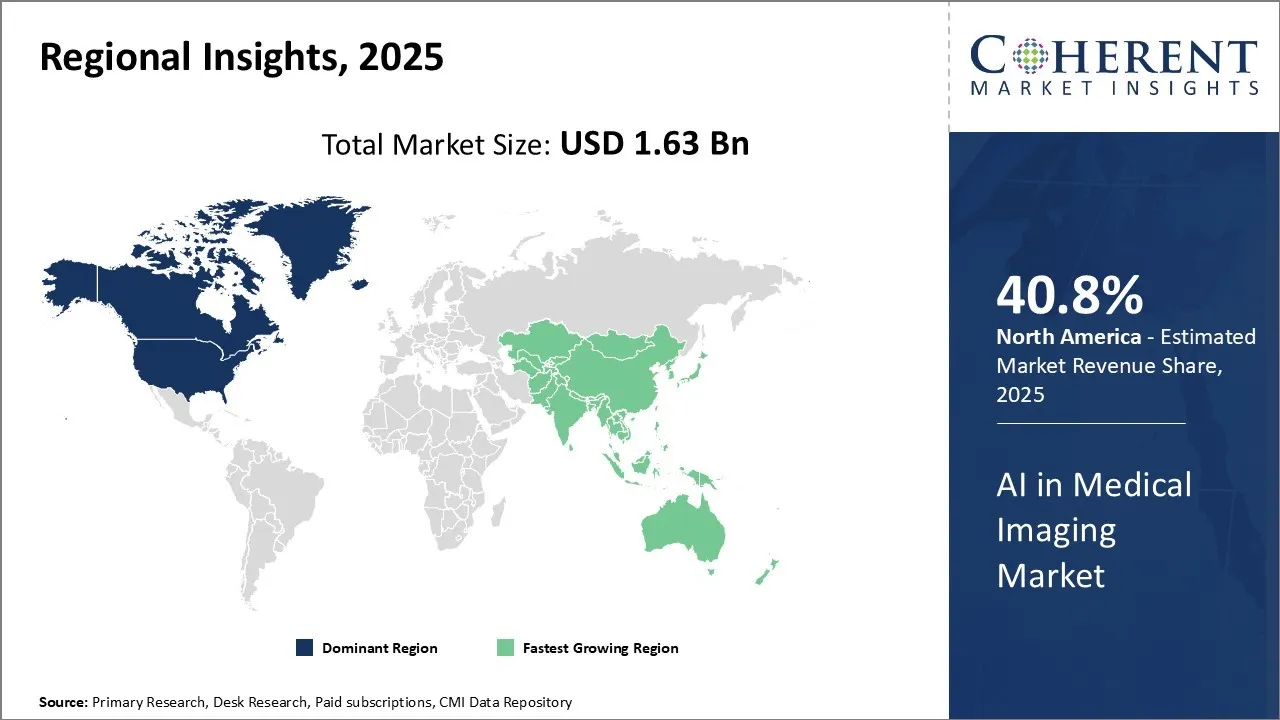
North America AI in Medical Imaging Market Analysis & Trends
North America has established itself as the dominant region for AI in medical imaging market with an estimated market share of 40.8% in 2026, due to region's strong economic conditions and high healthcare expenditure that enables widespread adoption of new medical technologies. The U.S. has a large number of leading AI companies and startups focusing on medical imaging applications. For example, several major tech giants like IBM, Microsoft and Intel have made sizeable investments in developing AI-powered imaging solutions.
The region also has a supportive regulatory environment that encourages innovation. The U.S. FDA has streamlined its clearance process for certain AI medical devices to help new products to market faster. This provides incentives for local businesses to develop AI imaging tools. North American hospitals and healthcare providers are increasingly open to integrating such advanced technologies into their clinical workflows. This early integration helps build experience that further drives the development and refinement of AI imaging tools.
For instance, in December 2024, At RSNA 2024, Philips introduced the CT 5300, an AI-enhanced imaging system designed to streamline radiology workflows. Equipped with the NanoPanel Precise detector and AI-powered Smart Workflow solutions, the CT 5300 aims to improve diagnostic accuracy and reduce radiation exposure. The system integrates with Philips’ Advanced Visualization Workspace, enhancing post-processing capabilities. This innovation underscores Philips' commitment to advancing medical imaging through artificial intelligence.
Asia Pacific AI in Medical Imaging Market Analysis & Trends
Asia Pacific has emerged as the fastest growing regional market for AI in medical imaging. China is accelerating at a rapid pace due to strong government support for the healthcare AI sector. The Chinese government has identified medical AI as a strategic priority and offers funding and tax incentives to develop domestic expertise and commercialize new products. This is reflected in rising number of Chinese AI companies entering the medical imaging space. Large patient population and growing medical infrastructure spending creates a massive potential market for AI tools.
Other Asian countries like Japan, South Korea and India are also contributing to the regional growth. For example, both Japan and South Korea have universal healthcare systems and a demand for solutions that help overcome challenges like physician shortages in rural areas. This has prompted aggressive funding of AI initiatives by public and private entities. Significant investments are being made in areas such as radiology, pathology and ophthalmology. The region's strong IT expertise and low manufacturing costs further enhance its competitiveness in supplying the global AI in medical imaging market.
For instance, in September 2026, a consortium of leading healthcare technology firms has launched a groundbreaking AI diagnostic imaging system in Asian hospitals. Utilizing deep learning algorithms, the system analyzes X-rays, CT scans, and MRIs to automatically detect anomalies, enhancing radiologists' workflow. This advancement aims to reduce diagnostic time, improve accuracy, and address staffing shortages, ultimately leading to faster patient treatment in critical care settings.
AI in Medical Imaging Market Outlook Country-Wise
The U.S. AI in Medical Imaging Market Trends
The United States is at the forefront of demand for AI in medical imaging, driven by its advanced healthcare infrastructure, high imaging volumes, and strong emphasis on innovation. Hospitals and diagnostic centers across the country are rapidly integrating AI tools to enhance diagnostic accuracy, reduce radiologist workload, and streamline clinical workflows. The growing need for early detection of complex conditions, such as cancer, neurological disorders, and cardiovascular diseases has accelerated the adoption of AI-powered imaging solutions.
Additionally, federal initiatives and collaborations between tech companies and healthcare providers are fostering the development and deployment of cutting-edge AI applications. The U.S. also benefits from a well-established ecosystem of academic research, clinical trials, and regulatory support, making it a fertile ground for AI breakthroughs in radiology, pathology, and beyond. With increasing interest in precision medicine and personalized care, AI in medical imaging is becoming a cornerstone of modern diagnostics across the country.
For instance, in March 2026, GE HealthCare and NVIDIA expanded their collaboration to develop autonomous diagnostic imaging systems, focusing on X-ray and ultrasound technologies. Utilizing NVIDIA's Isaac for Healthcare platform, which includes pretrained models and physics-based simulations, the partnership aims to automate complex workflows such as patient placement, image scanning, and quality checking. This initiative seeks to address staffing shortages and enhance access to medical imaging globally.
India AI in Medical Imaging Market Trends
India is rapidly becoming a key market for AI in medical imaging, driven by rising healthcare demands, a shortage of radiologists, and strong digital innovation. Government initiatives like Ayushman Bharat and NDHM are boosting AI adoption, especially in rural areas through cloud-based and telemedicine platforms. Health-tech startups such as Qure.ai and Niramai are developing affordable, locally tailored AI solutions. While challenges like cost and infrastructure remain, India’s push for early diagnosis and accessible care is positioning it as a major player in the global AI imaging landscape.
For instance, July 2026, Delhi inaugurated India's first AI-powered ultra-fast MRI scanner, the Excel 3T, at Mahajan Imaging & Labs' new centre in Dwarka. Unveiled by Lieutenant Governor Vinai Kumar Saxena, the facility integrates advanced diagnostics like cardiac, neuro, and musculoskeletal imaging. The Excel 3T offers enhanced image quality and reduced scan times, exemplifying a significant leap in medical technology.
Market Report Scope
AI In Medical Imaging Market Report Coverage
| Report Coverage | Details | ||
|---|---|---|---|
| Base Year: | 2025 | Market Size in 2026: | USD 2.20 Bn |
| Historical Data for: | 2020 To 2024 | Forecast Period: | 2026 To 2033 |
| Forecast Period 2026 to 2033 CAGR: | 34.8% | 2033 Value Projection: | USD 17.77 Bn |
| Geographies covered: |
| ||
| Segments covered: |
| ||
| Companies covered: | GE Healthcare, Siemens Healthineers, Canon Medical Systems, Philips, Aidoc, Fujifilm Holdings Corporation, Imagia Cybernetics, Lunit, Enlitic, iCAD Inc., ContextVision, Subtle Medical, CancerCenter.ai, Viz.ai, Zebra Medical Vision, Qure.ai, Zebra Medical Vision, PathAI, Tempus, Dascena | ||
| Growth Drivers: |
| ||
| Restraints & Challenges: |
| ||
Market Dynamics
AI in Medical Imaging Market Driver
Growth in volume of medical imaging data
Modern medical imaging procedures have exploded in the past few years due to development and widespread adoption of technologies like CT, MRI, ultrasound, and others. These advanced imaging tools have enabled doctors to peek inside human body in great detail to detect diseases. However, rising number of imaging procedures can lead to increase in volume of medical images being generated every day. A large hospital may easily generate terabytes of imaging data on daily basis from various modalities. Moreover, recent advancements have enabled higher resolution images taking up more storage. Managing and analyzing this huge imaging data is a monumental task for healthcare providers.
According to research, single CT scan can generate over 500 images totaling around 50 MB data size. With millions of scans taken yearly across hospitals and diagnostic centers, accumulating imaging archives have swelled to petabytes of data. MRI scan generates multiple sequences of images totaling 100s of MB data per patient. Top academic medical centers with level 1 trauma facilities may have 50+ CT and MRI scanners that continuously add to imaging archives. Furthermore, rising lifestyle diseases and aging population can lead to increase in number of scans in the near future.
Increasing adoption of AI-based medical imaging systems in hospitals and diagnostic centers
Due to proven success of AI in medical imaging applications, there has been rise in adoption across hospitals and diagnostic centers. AI demonstrates the ability to augment and enhance radiologists' expertise through capabilities like automatic analysis, prioritization and quantification of images. Early adopters have reported improved efficiency, reduced workload pressures and better consistency in reporting. AI excels in analysis of huge volume of previous scans that can beyond human capabilities.
For cash-strapped public hospitals grappling with radiologist shortages, AI brings timely interventions at lower costs as compared to hiring additional specialists. AI eliminates the need or delays in seeking expert opinion from other facilities or cities. Even large private healthcare networks are recognizing AI as strategic necessity rather than just an option to boost their brand differentiation.
For instance, in March 2024, Philips and Synthetic MR announced collaboration in the field of medical diagnostics by launching an AI-powered quantitative brain imaging system. This innovative technology, called Smart Quant Neuro 3D, aims to revolutionize the diagnosis and analysis of neurological disorders, including dementia, traumatic brain injuries (TBI), and multiple sclerosis (MS).
AI in Medical Imaging Market Opportunity
Scope for AI in drug discovery and personalized medicine
AI has huge potential in accelerating drug discovery process and enabling personalized healthcare through medical imaging. AI algorithms can analyze huge volumes of medical images, clinical trials data and research literature to better understand disease pathology, identify new drug targets and biomarker. This helps researchers to design and test new drug compounds more efficiently. With the help of patient's medical images and genetic profile, AI can predict best treatment options and generate customized treatment plans for individuals. It also helps in close monitoring of drug efficacy on personalized level. As disease detection and treatment becomes more specific to each patient's needs, AI play a vital role in growth of personalized medicine. With more investment in developing advanced AI applications, the future of healthcare is promising with possibilities of delivering right treatment to right patient at right time.
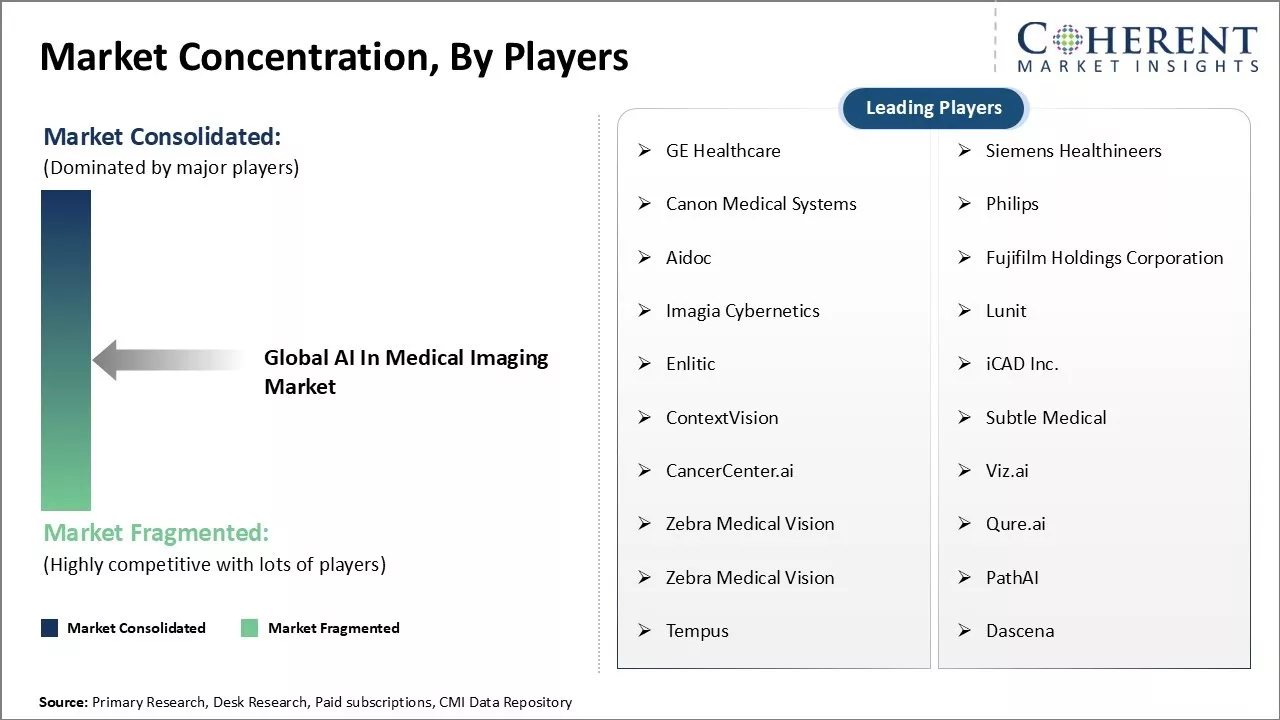
Market Concentration and Competitive Landscape
Analyst Opinion (Expert Opinion)
The integration of artificial intelligence (AI) into medical imaging is not merely a technological advancement; it represents a paradigm shift in diagnostic precision, clinical efficiency, and healthcare accessibility. While the sector is experiencing rapid growth, it is imperative to critically assess the tangible impacts and challenges associated with this transformation.
AI's application in medical imaging has demonstrated significant improvements in diagnostic accuracy and early disease detection. For instance, AI-powered tools have been instrumental in identifying lung cancer at earlier stages, leading to improved patient outcomes. Similarly, the "C the Signs" AI tool in England has enhanced cancer detection rates in general practice settings, identifying over 50 different types of cancer and ensuring faster and earlier diagnosis.
In India, King George's Medical University in Lucknow has employed AI-enhanced MRI scans for the early detection of Alzheimer's disease, analyzing subtle changes in the hippocampus and brain wiring years before symptoms manifest. Additionally, the EchoNext AI tool developed by Columbia University and NewYork-Presbyterian has significantly improved the detection of structural heart disease, outperforming cardiologists in identifying asymptomatic conditions.
AI's role extends beyond diagnostics to enhancing operational efficiency within healthcare facilities. For example, Gold Coast University Hospital in Queensland adopted AI to address a backlog of 54,000 X-ray scans, reducing the delay in diagnoses of potential cancers and other life-threatening conditions to zero. Similarly, AI-assisted technology is being piloted in Tamil Nadu's government hospitals to diagnose diseases such as tuberculosis, cataracts, and cancers, aiming to improve diagnostic efficiency and affordability in underserved areas.
Speak to the analyst
Want personalized insights?
Take the findings above to one of our principal consultants, or have the report rebuilt around the segments, geographies and competitors you actually track.
AI in Medical Imaging Industry News
- In February 2025, Philips unveiled SmartSpeed Precise, a next-generation MRI system powered by dual-AI engines, along with the MR Workspace R12 software, aimed at accelerating scan times, improving image quality, and enhancing diagnostic accuracy. Available across its 1.5T and 3.0T scanners, including the helium-free BlueSeal wide-bore model, the innovations seek to reduce patient wait times and boost throughput.
- In November 2023, GE HealthCare unveiled its AI suite, MyBreastAI, at the RSNA 2023 conference. This advanced product is designed to streamline radiologists' workflows by providing sophisticated tools to detect and diagnose breast cancer at earlier stages, ultimately improving patient outcomes.
- In September 2023, COTA, a company specializing in real-world oncology data and analytics, launched Vista, an extensive automated EHR dataset designed to accelerate cancer research and implement reliable generative artificial intelligence in cancer care. Vista leverages automated data abstraction, machine learning algorithms, and medical expert oversight to extract clinically relevant information from electronic medical records, providing biopharmaceutical companies with timely insights to expedite the development of life-saving therapies.
Market Segmentation
- Imaging Modality Insights (Revenue, USD Bn, 2026 - 2033)
- Computed Tomography (CT)
- Magnetic Resonance Imaging (MRI)
- X-Ray Imaging
- Ultrasound
- Others (PET, SPECT, etc.)
- Application Insights (Revenue, USD Bn, 2026 - 2033)
- Radiology
- Oncology
- Cardiology
- Neurology
- Others (Orthopedics, Ophthalmology, etc.)
- Deployment Insights (Revenue, USD Bn, 2026 - 2033)
- Cloud-based
- On-premise
- End User Insights (Revenue, USD Bn, 2026 - 2033)
- Hospitals and Diagnostic Centers
- Specialty Clinics
- Research Institutes
- Others (Pharmaceutical Companies etc.)
- Regional Insights (Revenue, USD Bn 2026 - 2033)
- North America
- U.S.
- Canada
- Latin America
- Brazil
- Argentina
- Mexico
- Rest of Latin America
- Europe
- Germany
- U.K.
- Spain
- France
- Italy
- Russia
- Rest of Europe
- Asia Pacific
- China
- India
- Japan
- Australia
- South Korea
- ASEAN
- Rest of Asia Pacific
- Middle East
- GCC Countries
- Israel
- Rest of Middle East
- Africa
- South Africa
- North Africa
- Central Africa
- Key Players Insights (Revenue, USD Bn, 2021 - 2033)
- GE Healthcare
- Siemens Healthineers
- Canon Medical Systems
- Philips
- Aidoc
- Fujifilm Holdings Corporation
- Imagia Cybernetics
- Lunit
- Enlitic
- iCAD Inc.
- ContextVision
- Subtle Medical
- CancerCenter.ai
- Viz.ai
- Zebra Medical Vision
- Qure.ai
- Zebra Medical Vision
- PathAI
- Tempus
- Dascena
Sources
Primary Research Interviews from the following stakeholders
Stakeholders
- Interviews with radiologists, medical imaging technologists, PACS administrators, AI software developers, hospital CIOs/CTOs, and procurement heads across leading global healthcare markets.
Specific stakeholders
- Chief Radiologists and Imaging Directors at leading hospitals (e.g., Mayo Clinic, Cleveland Clinic, Apollo Hospitals, NHS Trust Hospitals)
- IT infrastructure heads at diagnostic imaging centers (e.g., RadNet, Alliance Medical, Lucid Diagnostics)
- Biomedical engineering managers at tertiary care hospitals (e.g., Mount Sinai Health System, AIIMS, Singapore General Hospital)
- AI product managers at imaging device OEMs and software developers (e.g., MRI, CT, ultrasound, CAD tools)
- Regulatory and compliance officers at healthcare institutions (for FDA, CE, CDSCO compliance insights)
- Health informatics specialists integrating AI with PACS/RIS systems
- Procurement and strategy heads at insurance providers evaluating AI-enabled imaging reimbursements
Databases
- World Health Organization (WHO) Global Health Observatory
- OECD Health Statistics
- U.S. Food and Drug Administration (FDA) – Medical Device Databases
- European Medicines Agency (EMA) – Medical Devices and AI Guidance
- National Health Service (NHS) Digital Repository, U.K.
- Centers for Medicare & Medicaid Services (CMS), U.S.
- Indian Ministry of Health & Family Welfare (MoHFW)
- China National Medical Products Administration (NMPA)
- Japan Ministry of Health, Labour and Welfare (MHLW)
- Health Canada – Medical Device Active Licence Listing (MDALL)
Magazines
- Diagnostic Imaging Magazine
- AuntMinnie.com
- Radiology Today
- Applied Radiology
- Imaging Technology News (ITN)
- Healthcare IT News
- Medical Device and Diagnostic Industry (MD+DI)
- Digital Health Magazine
Journals
- Radiology (RSNA Journal)
- Journal of Medical Imaging (SPIE)
- European Radiology
- IEEE Transactions on Medical Imaging
- Journal of Digital Imaging
- Computerized Medical Imaging and Graphics (Elsevier)
- Artificial Intelligence in Medicine (Elsevier)
- Journal of the American College of Radiology (JACR)
Newspapers
- The Wall Street Journal – Health & Science
- The Economic Times – Healthcare & Lifesciences
- The Hindu Business Line – Healthcare & Technology
- Financial Times – Health & Medical Technology Reports
- Nikkei Asia – Healthcare & AI Technology
- South China Morning Post – Health & Innovation
Associations
- Radiological Society of North America (RSNA)
- European Society of Radiology (ESR)
- American College of Radiology (ACR)
- Society for Imaging Informatics in Medicine (SIIM)
- International Society for Magnetic Resonance in Medicine (ISMRM)
- World Health Organization (WHO) – Digital Health Technical Network
- Healthcare Information and Management Systems Society (HIMSS)
- Indian Radiological and Imaging Association (IRIA)
Public Domain Sources
- U.S. National Institute of Health (NIH) – National Library of Medicine
- Centers for Disease Control and Prevention (CDC), U.S. – Imaging & AI Applications
- National Institute of Standards and Technology (NIST), U.S. – AI in Healthcare Standards
- European Commission – AI in Medical Devices Guidelines
- Ministry of Electronics & IT (MeitY), India – Digital Health Mission Updates
- NITI Aayog – National Strategy on AI in Healthcare
- Singapore Ministry of Health – AI in Medical Imaging Initiatives
- Reserve Bank of India (RBI) – Healthcare Infrastructure Financing Insights
Proprietary Elements
- CMI Data Analytics Tool, Proprietary CMI Existing Repository of information for last 8 years
*Definition: Global AI in medical imaging market refers to the incorporation of artificial intelligence capabilities into medical imaging devices, software and procedures. It allows the development of algorithms that can analyze medical images like X-rays, CT scans, MRI scans and ultrasound scans to detect diseases more accurately. AI technologies are helping radiologists and doctors spend less time on administrative tasks and more time on diagnosis and treatment, improving healthcare outcomes.
Get access to 250+ pages report
Every segment, forecast, competitor profile and data table behind the analysis above — available for instant download.
- ESOMAR Member
- ISO 9001:2015 Certified
- D-U-N-S Registered
- GDPR & CCPA Compliant
Missing comfort of reading report in your local language? Find your preferred language:
Transform your Strategy with Exclusive Trending Reports
Frequently Asked Questions
The AI in Medical Imaging Market is estimated to be valued at USD 2.20 Bn in 2026, and is expected to reach USD 17.77 Bn by 2033.
The CAGR of the AI in Medical Imaging Market is projected to be 34.8% from 2026 to 2033.
Growth in volume of medical imaging data and increasing adoption of AI-based medical imaging systems in hospitals and diagnostic centers are the major factors driving the growth of global AI in medical imaging market.
Lack of skilled AI workforce and high costs associated with AI system integration are the major factors hampering the growth of global AI in medical imaging market.
In terms of imaging modality, computed tomography (CT) segment is estimated to dominate the market in 2026.
GE Healthcare, Siemens Healthineers, Canon Medical Systems, Philips, Aidoc, Fujifilm Holdings Corporation, Imagia Cybernetics, Lunit, Enlitic, iCAD Inc., ContextVision, Subtle Medical, CancerCenter.ai, Viz.ai, Zebra Medical Vision, Qure.ai, Zebra Medical Vision, PathAI, Tempus, Dascena are the major players.
North America is expected to lead the global AI in medical imaging market.