

Asia Pacific Imiglucerase Market Size and Forecast – 2026 To 2033
The Asia Pacific imiglucerase market is expected to grow from USD 192.7 Mn in 2026 to USD 262.1 Mn by 2033, registering a compound annual growth rate (CAGR) of 4.5% from 2026 to 2033. The Asia Pacific imiglucerase market is poised for significant expansion fueled by the strong rare disease and orphan drug policies across Asia Pacific that increase patient access to enzyme replacement therapies.
Japan's orphan drug framework, administered by the Ministry of Health, Labour and Welfare (MHLW) and implemented through the Pharmaceuticals and Medical Devices Agency (PMDA), provides incentives for therapies targeting diseases affecting fewer than 50,000 patients, including priority review, financial support, and market exclusivity, encouraging the availability of treatments for rare diseases such as Gaucher disease.
Key Takeaways of the Asia Pacific Imiglucerase Market
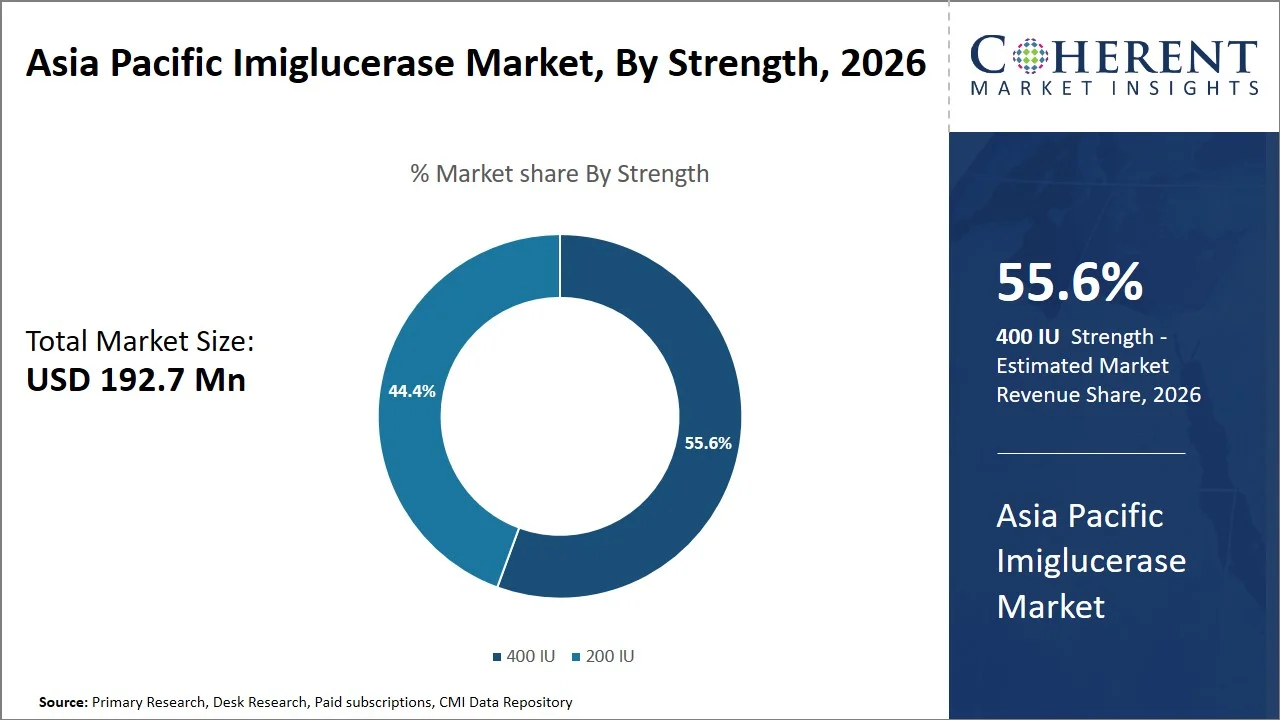
- 400 IU is projected to hold a market share of 55.6 % in the Asia Pacific imiglucerase market in 2026, making it the dominant strength segment, due to its widespread use in maintenance therapy for Gaucher disease requiring higher-dose enzyme replacement. For instance, Australia's Department of Health and Aged Care lists imiglucerase under the Life Saving Drugs Program (LSDP) for the treatment of eligible patients with Gaucher disease, improving access to enzyme replacement therapy through government-funded treatment.
- Cerezyme is projected to hold 88.6 % of the Asia Pacific imiglucerase market share in 2026, making it the dominant brand segment, owing to its established regulatory approvals and extensive clinical use across the region. For instance, Japan's Ministry of Health, Labour and Welfare recognizes Gaucher disease under its designated intractable disease framework, supporting access to approved orphan therapies such as imiglucerase through the national rare disease system.
- Expansion of National Rare Disease Screening and Patient Registries: The expansion of national rare disease screening programs and patient registries is improving early identification of Gaucher disease across Asia Pacific. Enhanced genetic testing capabilities and centralized patient databases enable timely diagnosis, treatment initiation, and long-term disease monitoring. As more countries strengthen rare disease surveillance, the eligible patient pool for enzyme replacement therapy is expected to increase, creating sustained demand for imiglucerase.
- Increasing Localization of Rare Disease Biologics Manufacturing: Growing investments in regional biologics manufacturing and technology transfer are creating opportunities to improve the supply and affordability of enzyme replacement therapies across Asia Pacific. Governments are encouraging the local production of high-value biologics to strengthen supply chain resilience and reduce dependence on imports. This trend is expected to support broader access to imiglucerase and future biosimilar products, particularly in emerging markets.
Segmental Insights
Why Does 400 IU Dominate the Asia Pacific Imiglucerase Market?
400 IU is projected to hold a market share of 55.6% in 2026, because it facilitates enhanced treatment flexibility for long-term enzyme replacement therapy (ERT), helping clinicians determine doses of the ERT tailored to the patient, and requiring fewer vials while simplifying the preparation for the infusion. Its applicability to maintenance therapy is also desirable from the point of cost-effective treatment, due to the elimination of logistic inconveniences in delivering repeated infusions. For instance, Sanofi's prescribing information for cerezyme advises a dosing plan individualized with 400 U vials for the chronic management of Gaucher Types 1 and 3, allowing dose adjustments based on clinical response.
- Current Industry Events of 2026
- Market Size Estimation
- Regional Breakdown
- Competitive Landscape
- Customer Intelligence
- Segmental Analysis
- Pricing Analysis
- Key Market Drivers, Challenges & Future Trends
- Customized Insights Section
Why is Cerezyme the Most Preferred Brand in the Asia Pacific Imiglucerase Market?
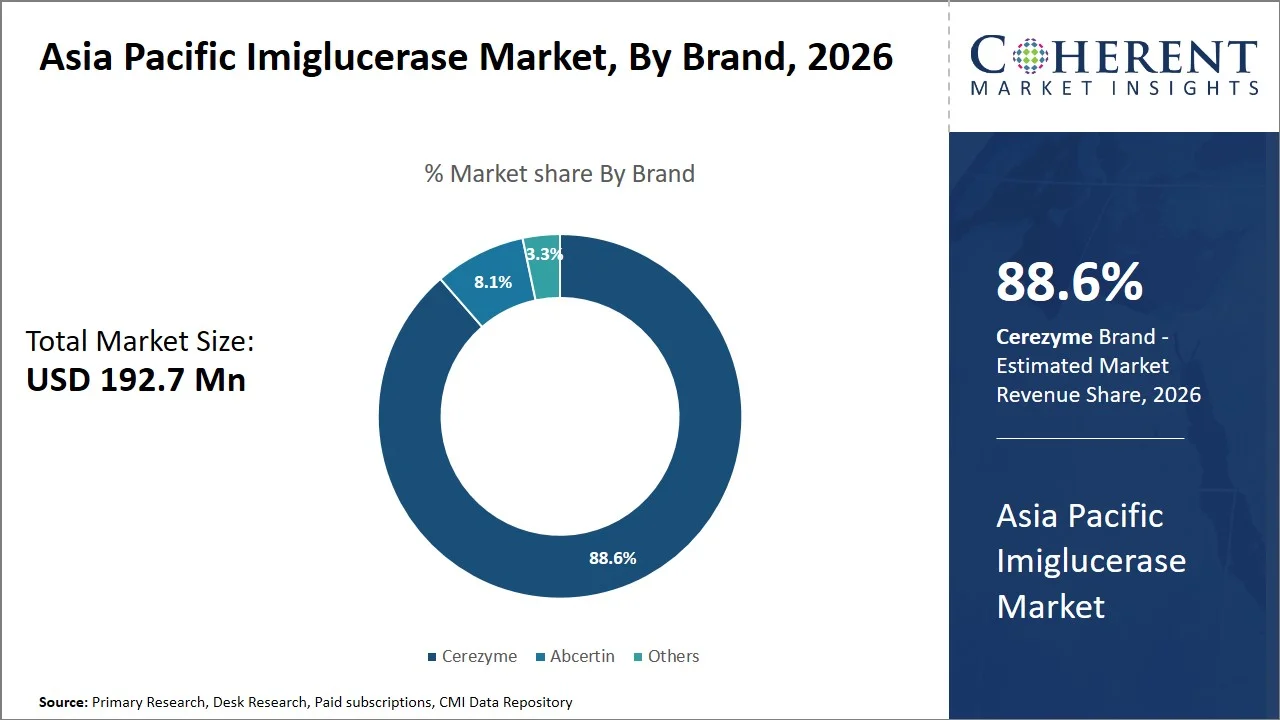
Cerezyme is projected to hold 88.6% of the market share in 2026, due to its well-demonstrated clinical efficacy, broad evidence base in the real world and widespread physician confidence in managing Gaucher disease. It is the leading enzyme replacement option in most public, as well as private, markets due to its status as the original imiglucerase drug with treatment guidelines across key global regions. For instance, in September 2025, Japan’s National Hospital Organization issued a procurement notice for Cerezyme IV Injection 400 Units to ensure its availability for the treatment of Gaucher disease in public health care institutions. (Source: Japan External Trade Organization(JETRO))
Current Events and their Impact
Current Events | Description and its Impact |
India Exempts Orphan Drugs from Mandatory Port Testing (March 2025) |
|
China Reinforces Accelerated Review Pathway for Rare Disease Medicines (March 2025) |
|
Asia Pacific Imiglucerase Market Dynamics
Market Drivers
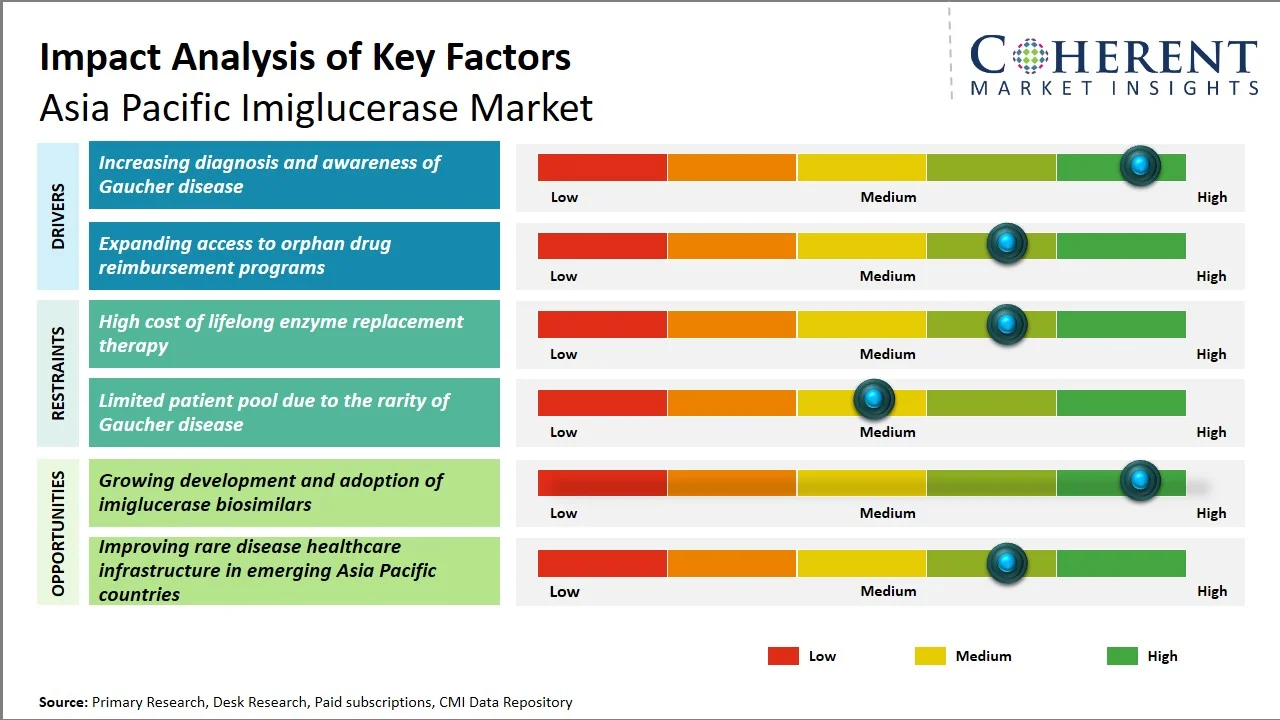
- Increasing diagnosis and awareness of Gaucher disease: Higher patient awareness and greater penetration of genetic and enzymatic testing in diagnosis contribute to an increase in the detection rate and number of Gaucher patients eligible for treatment in Asia Pacific. In turn, prompt diagnosis of these patients facilitates earlier initiation of therapy and thereby ensure sustained demand for imiglucerase. For instance, in April 2025, the Korea Disease Control and Prevention Agency (KDCA) launched its expanded Rare Disease Diagnostic Support Program, broadening access to whole-genome sequencing and diagnostic services for suspected rare disease patients.
- Expanding access to orphan drug reimbursement programs: The expansion of orphan drug reimbursement programs across Asia Pacific is improving patient access to high-cost therapies for rare diseases including Gaucher disease. Broader public funding and reimbursement mechanisms are reducing financial barriers to enzyme replacement therapy, supporting earlier treatment initiation and long-term disease management. For instance, in February 2025, Taiwan's National Health Insurance Administration (NHIA) announced expanded reimbursement coverage for several high-cost rare disease medicines under the National Health Insurance program, reinforcing access to orphan therapies through public healthcare financing.
Emerging Trends
- Integration of Biomarker-Based Monitoring in Gaucher Disease Management: Healthcare providers across Asia Pacific are increasingly incorporating biomarker-based monitoring, such as glucosylsphingosine (lyso-Gb1) testing, alongside enzyme replacement therapy to assess treatment response and optimize dosing. This trend is improving personalized disease management and supporting long-term clinical outcomes for patients receiving imiglucerase.
- Expansion of Multidisciplinary Rare Disease Centers of Excellence: Leading healthcare institutions across the region are establishing dedicated rare disease centers that integrate genetic counseling, diagnosis, treatment, and long-term follow-up under a single care model. This multidisciplinary approach is enhancing treatment adherence, improving clinical outcomes, and facilitating wider adoption of enzyme replacement therapies such as imiglucerase.
Key Regulatory Trends Shaping the Asia Pacific Imiglucerase Market
Country | Regulatory Development (2025/Latest) | Key Provision | Expected Impact on Imiglucerase Market |
India | CDSCO Orphan Drug Import Reform | Exemption from mandatory port testing | Faster import and availability of imiglucerase |
China | NMPA Priority Review | Accelerated review for orphan drugs | Reduced approval timelines and improved market access |
Japan | Rare Disease/Orphan Drug Framework | Priority review and regulatory incentives | Encourages commercialization of enzyme replacement therapies |
South Korea | Rare Disease Policy | Expanded diagnostic and reimbursement support | Earlier diagnosis and increased treatment uptake |
Australia | Life Saving Drugs Program (LSDP) | Government funding for eligible rare disease therapies | Sustains patient access to imiglucerase |
How is the growing development and adoption of imiglucerase biosimilars creating new growth opportunities in the Asia Pacific imiglucerase market?
Increasing biosimilar development in the coming years is set to be a major growth driving factor in the Asia Pacific imiglucerase market owing to their potential in reducing cost and enhancing availability of the enzyme replacement therapy for Gaucher disease. Increasing awareness about various costly biologic drugs in healthcare facilities and establishment of favoring regulatory environment for biosimilars is predicted to open wider market growth for new entrants and widen the penetration of treatment among emerging economics. For instance, in May 2025, the Government of India announced updated "guidelines on similar biologics" aimed at improving the quality standards and easing the process of development and regulatory review of biosimilar medicines in a drive to boost the market penetration of biologic treatments.
Market Players, Company Insights, and Competitive Landscape
Company Insights
- Sanofi
- Company Overview
- Headquarters: Paris, France
- Establishment Year: 1973
- Employee Strength: Approximately 86,000
- Leadership: Paul Hudson, Chief Executive Officer
- Core Services/Products: Cerezyme (imiglucerase) for Gaucher disease, enzyme replacement therapies (ERTs), rare disease biologics, lysosomal storage disorder therapies, orphan drugs, and specialty biologic medicines.
- SWOT Analysis
- Strengths
- Global leader in Gaucher disease treatment with Cerezyme, supported by decades of clinical evidence and extensive regulatory approvals across Asia Pacific.
- Strong rare disease portfolio, established manufacturing capabilities, and broad reimbursement coverage strengthen its leadership in enzyme replacement therapy.
- Weaknesses
- Premium pricing of biologic therapies may limit patient access in cost-sensitive Asia Pacific markets with limited reimbursement.
- High dependence on mature enzyme replacement therapies exposes the company to pricing pressure from emerging biosimilars.
- Opportunities
- Expansion of rare disease diagnosis, newborn screening, and reimbursement programs across Asia Pacific is expected to increase the eligible patient population.
- Growing adoption of orphan drug policies and improved healthcare infrastructure in emerging economies creates opportunities to strengthen regional market penetration.
- Threats
- Increasing development of biosimilar imiglucerase products may intensify price competition and reduce market exclusivity.
- Evolving pricing regulations and health technology assessment (HTA) requirements across Asia Pacific may impact reimbursement and commercial growth.
- Strengths
- Company Overview
- Takeda Pharmaceutical Company Limited
- Company Overview
- Headquarters: Tokyo, Japan
- Establishment Year: 1781
- Employee Strength: Approximately 50,000
- Leadership: Christophe Weber, President & Chief Executive Officer
- Core Services/Products: Rare disease therapeutics, plasma-derived therapies, specialty biologics, gastrointestinal medicines, oncology products, neuroscience therapies, and orphan disease treatment solutions.
- SWOT Analysis
- Strengths
- Strong global presence in rare diseases supported by advanced biologics expertise and an extensive commercial network across Asia Pacific.
- Robust research capabilities and strategic investments in rare disease innovation enhance long-term growth potential.
- Weaknesses
- Limited direct presence in the imiglucerase segment compared with Sanofi's established Cerezyme franchise.
- Significant investment requirements for rare disease R&D and commercialization may affect profitability in niche therapeutic markets.
- Opportunities
- Rising demand for rare disease therapies and expanding orphan drug incentives across Asia Pacific create opportunities to strengthen its enzyme replacement therapy portfolio.
- Strategic collaborations, licensing agreements, and regional partnerships can enhance market presence in the Gaucher disease treatment landscape.
- Threats
- Strong competition from established enzyme replacement therapy manufacturers and emerging biosimilar developers may limit market expansion.
- Increasing pricing scrutiny, reimbursement negotiations, and regulatory requirements across Asia Pacific could affect commercialization strategies.
- Strengths
- Company Overview
Competitive Landscape
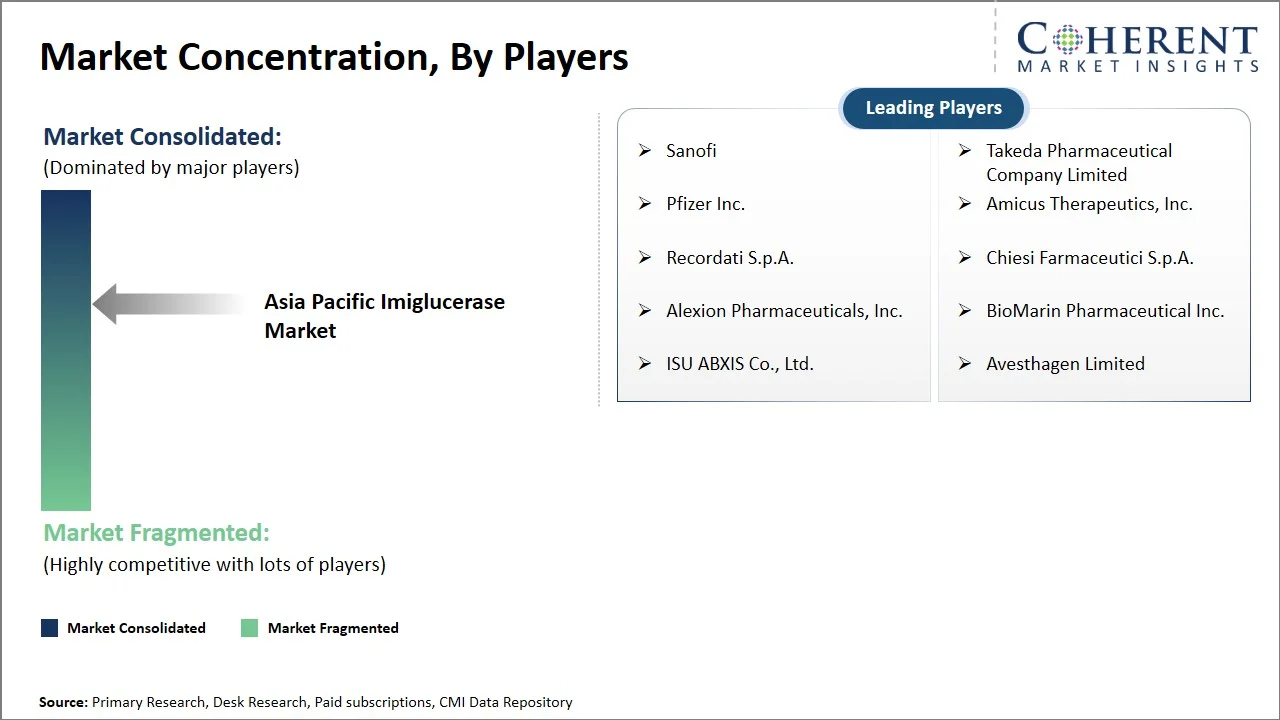
The Asia Pacific imiglucerase market is moderately consolidated, with a limited number of multinational biopharmaceutical companies and emerging regional biosimilar developers competing through regulatory approvals, manufacturing expansion, and rare disease portfolio development. Companies are focusing on strengthening enzyme replacement therapy access, enhancing biologics manufacturing capabilities, and expanding collaborations with healthcare institutions to improve the diagnosis and treatment of Gaucher disease. Key focus areas include:
- Expansion of biosimilar enzyme replacement therapy (ERT) pipelines
- Strengthening regional biologics manufacturing and technology transfer
- Pursuing orphan drug approvals, reimbursement inclusion, and market access strategies
- Collaborating with rare disease centers, hospitals, and patient advocacy organizations
Market Report Scope
Asia Pacific Imiglucerase Market Report Coverage
| Report Coverage | Details | ||
|---|---|---|---|
| Base Year: | 2025 | Market Size in 2026: | USD 192.7 Mn |
| Historical Data for: | 2020 To 2024 | Forecast Period: | 2026 To 2033 |
| Forecast Period 2026 to 2033 CAGR: | 4.5% | 2033 Value Projection: | USD 262.1 Mn |
| Geographies covered: | China, India, Singapore, Thailand, Vietnam, Malaysia, Philippines, Indonesia, Cambodia, and Rest of Asia Pacific | ||
| Segments covered: |
| ||
| Companies covered: | Sanofi, Takeda Pharmaceutical Company Limited, Pfizer Inc., Amicus Therapeutics, Inc., Recordati S.p.A., Chiesi Farmaceutici S.p.A., Alexion Pharmaceuticals, Inc., BioMarin Pharmaceutical Inc., ISU ABXIS Co., Ltd., and Avesthagen Limited | ||
| Growth Drivers: |
| ||
| Restraints & Challenges: |
| ||
Analyst Opinion (Expert Opinion)
- In the coming years, the Asia Pacific imiglucerase market is expected to witness steady growth over the coming years, supported by improving rare disease diagnosis, expanding orphan drug policies, and broader reimbursement coverage across developed and emerging economies. While enzyme replacement therapy (ERT) will remain the standard of care for Gaucher disease, the market is likely to evolve through increased biosimilar availability, improved patient access programs, and strengthened regulatory pathways for orphan biologics.
- The most promising opportunity are expected within enzyme replacement therapy (ERT) for Gaucher disease in China, driven by the country's large patient base, expanding rare disease policies, accelerated orphan drug review mechanisms, and continuous investments in healthcare infrastructure. China offers significant potential for manufacturers seeking to expand commercialization of imiglucerase and future biosimilar products.
- In order to gain an edge, market players should prioritize the development of cost-competitive biosimilar imiglucerase, strengthen partnerships with regional healthcare providers and rare disease centers, and pursue faster regulatory approvals and reimbursement inclusion across key Asia Pacific markets. Expanding local manufacturing capabilities and investing in physician and patient awareness initiatives will further enhance market penetration and long-term growth.
Speak to the analyst
Want personalized insights?
Take the findings above to one of our principal consultants, or have the report rebuilt around the segments, geographies and competitors you actually track.
Market Segmentation
- Strength Insights (Revenue, USD Mn, 2021 - 2033)
- 400 IU
- 200 IU
- Brand Insights (Revenue, USD Mn, 2021 - 2033)
- Cerezyme
- Abcertin
- Others
- Country Insights (Revenue, USD Mn, 2021 - 2033)
- China
- India
- Singapore
- Thailand
- Vietnam
- Malaysia
- Philippines
- Indonesia
- Cambodia
- Rest of Asia Pacific
- Key Players Insights
- Sanofi
- Takeda Pharmaceutical Company Limited
- Pfizer Inc.
- Amicus Therapeutics, Inc.
- Recordati S.p.A.
- Chiesi Farmaceutici S.p.A.
- Alexion Pharmaceuticals, Inc.
- BioMarin Pharmaceutical Inc.
- ISU ABXIS Co., Ltd.
- Avesthagen Limited
Sources
Primary Research Interviews
- Rare Disease & Lysosomal Storage Disorder (LSD) Specialists
- Metabolic Disease Physicians & Clinical Geneticists
- Enzyme Replacement Therapy (ERT) & Gaucher Disease Treatment Experts
- Hospital Pharmacy & Biologics Procurement Managers
- Biopharmaceutical Rare Disease Business Development & Market Access Directors
- Regulatory Affairs & Orphan Drug Specialists
Stakeholders
- Imiglucerase & Enzyme Replacement Therapy (ERT) Manufacturers
- Rare Disease Pharmaceutical & Biotechnology Companies
- Contract Development & Manufacturing Organizations (CDMOs)
- Academic & Rare Disease Research Institutions
- Specialty Infusion Centers & Hospital Pharmacies
- End-use Sectors
- Hospitals & Multispecialty Healthcare Centers
- Specialty Metabolic & Genetic Disease Clinics
- Academic Medical Centers & University Hospitals
- Government & Public Healthcare Institutions
- Home Infusion Service Providers
- Regulatory & Health Bodies
- National Medical Products Administration (NMPA), China
- Pharmaceuticals and Medical Devices Agency (PMDA), Japan
- Central Drugs Standard Control Organization (CDSCO), India
- Ministry of Food and Drug Safety (MFDS), South Korea
- Therapeutic Goods Administration (TGA), Australia
- Health Sciences Authority (HSA), Singapore
- Taiwan Food and Drug Administration (TFDA), Taiwan
Databases
- Orphanet
- ClinicalTrials.gov
- National Center for Biotechnology Information (NCBI)
- World Health Organization (WHO) – Rare Diseases Resources
- International Gaucher Alliance (IGA)
- National Organization for Rare Disorders (NORD)
- Japan Agency for Medical Research and Development (AMED)
- China National Knowledge Infrastructure (CNKI)
Magazines
- Pharmaceutical Executive
- BioPharma Asia
- Rare Disease Review
- Drug Discovery & Development
Journals
- Molecular Genetics and Metabolism
- Journal of Inherited Metabolic Disease
- Orphanet Journal of Rare Diseases
Newspapers
- The Economic Times (India)
- South China Morning Post
Associations
- National Gaucher Foundation
- Asia Pacific Society of Human Genetics
- International Gaucher Alliance
- Rare Diseases Asia Pacific Network
Public Domain Sources
- World Health Organization (WHO) Essential Medicines List
- Japan Pharmaceuticals and Medical Devices Agency (PMDA)
Proprietary Elements
- CMI Data Analytics Tool, Proprietary CMI Existing Repository of information for last 10 years.
Get access to 250+ pages report
Every segment, forecast, competitor profile and data table behind the analysis above — available for instant download.
- ESOMAR Member
- ISO 9001:2015 Certified
- D-U-N-S Registered
- GDPR & CCPA Compliant
Missing comfort of reading report in your local language? Find your preferred language:
Transform your Strategy with Exclusive Trending Reports
Frequently Asked Questions
The Asia Pacific imiglucerase market is estimated to be valued at USD 192.7 Mn in 2026 and is expected to reach USD 262.1 Mn by 2033.
400 IU dominates due to its widespread use as the standard maintenance dosage for Gaucher disease patients requiring long-term enzyme replacement therapy, offering dosing flexibility and reduced infusion frequency for many adult patients.
Imiglucerase is a recombinant enzyme replacement therapy (ERT) used to treat Type 1 Gaucher disease by replacing the deficient enzyme β-glucocerebrosidase, thereby reducing the accumulation of glucocerebroside in the body's cells.
The CAGR of the Asia Pacific imiglucerase market is projected to be 4.5% from 2026 to 2033.
Increasing diagnosis and awareness of Gaucher disease, and expanding access to orphan drug reimbursement programs are the major factors driving the growth of the Asia Pacific imiglucerase market.
Imiglucerase replaces deficient β-glucocerebrosidase, enabling the breakdown of accumulated glucocerebroside within lysosomes.
Imiglucerase is administered as an intravenous infusion, typically once every two weeks, with the dose individualized according to disease severity and patient response.