

Global At-Home Sample Collection Market Size and Forecast – 2026 To 2033
The global at-home sample collection market is expected to grow from USD 1.84 Bn in 2026 to USD 3.72 Bn by 2033, registering a compound annual growth rate (CAGR) of 10.6% from 2026 to 2033. The market for at-home sample collection is expected to register significant market growth during the forecast period owing to the increasing prevalence of chronic diseases and the surging demand for easy and accessible diagnostic testing.
The World Health Organization (WHO), has reported that noncommunicable disease made up 74% of worldwide deaths in 2023, increasing the demand for regular screening and tracking of illnesses. The growing number of health-conscious patients and quick adoption of preventive healthcare and decentralized diagnostic clinics are likely to enhance the demand for at-home collection of samples.
Key Takeaways of the Global At-Home Sample Collection Market
- Blood is projected to hold 41.6% of the global at-home sample collection market share in 2026, making it dominant sample type segment, across North America owing to the increasing penetration of diagnostic laboratory services and presence of home phlebotomy services in the region. For instance, Quest Diagnostics possess a mobile collection network for conducting blood draws and multiple other specimen collections in the U.S, Canada, and Puerto Rico.
- Self-collection is projected to hold 67.4% of the global at-home sample collection market share in 2026, making it dominant collection method segment across Europe attributed to structured screening initiatives to ensure better access among under-screened women. For instance, in March 2026, Scotland launched an HPV self-sampling programme that offered test kits to women through 22 general practitioner practices within four health board areas, with a target of engaging 17,000 women.
- Collection kits are projected to hold 58.7% of the global at-home sample collection market share in 2026, making it dominant product type segment, across Asia Pacific due to the rising preventive screening campaigns along with growing accessibility of home-based tests in the region. For instance, the National Bowel Cancer Screening Program of Australia offers home test kits that provide collection tubes and postage-paid return envelopes. This allows eligible participants to collect their stool samples at home before returning to laboratories for testing.
- North America market maintains dominance with an expected share of 38.7% in 2026, driven by the well-established diagnostic laboratories, awareness of consumer for preventive screening tests, and easy access to at-home diagnostic tests across the region. For instance, in 2019, the U.S. Centers for Medicare & Medicaid Services (CMS) began covering additional blood-based biomarker tests for colorectal cancer screening covered by Medicare, increasing access for patients.
- Asia Pacific is expected to exhibit the fastest growth in the global at-home sample collection market, registering an estimated CAGR of 13.2% during 2026–2033, due to the presence of well-established diagnostic infrastructure, rising healthcare expenditures, and demand for convenient testing facilities by the developing economies. For instance, the National Health Mission (NHM) of the government of India recommends population-based screening of high prevalence noncommunicable diseases like hypertension and diabetes through the dissemination of healthcare services at the community level with easy access to sample collection and testing.
Segmental Insights
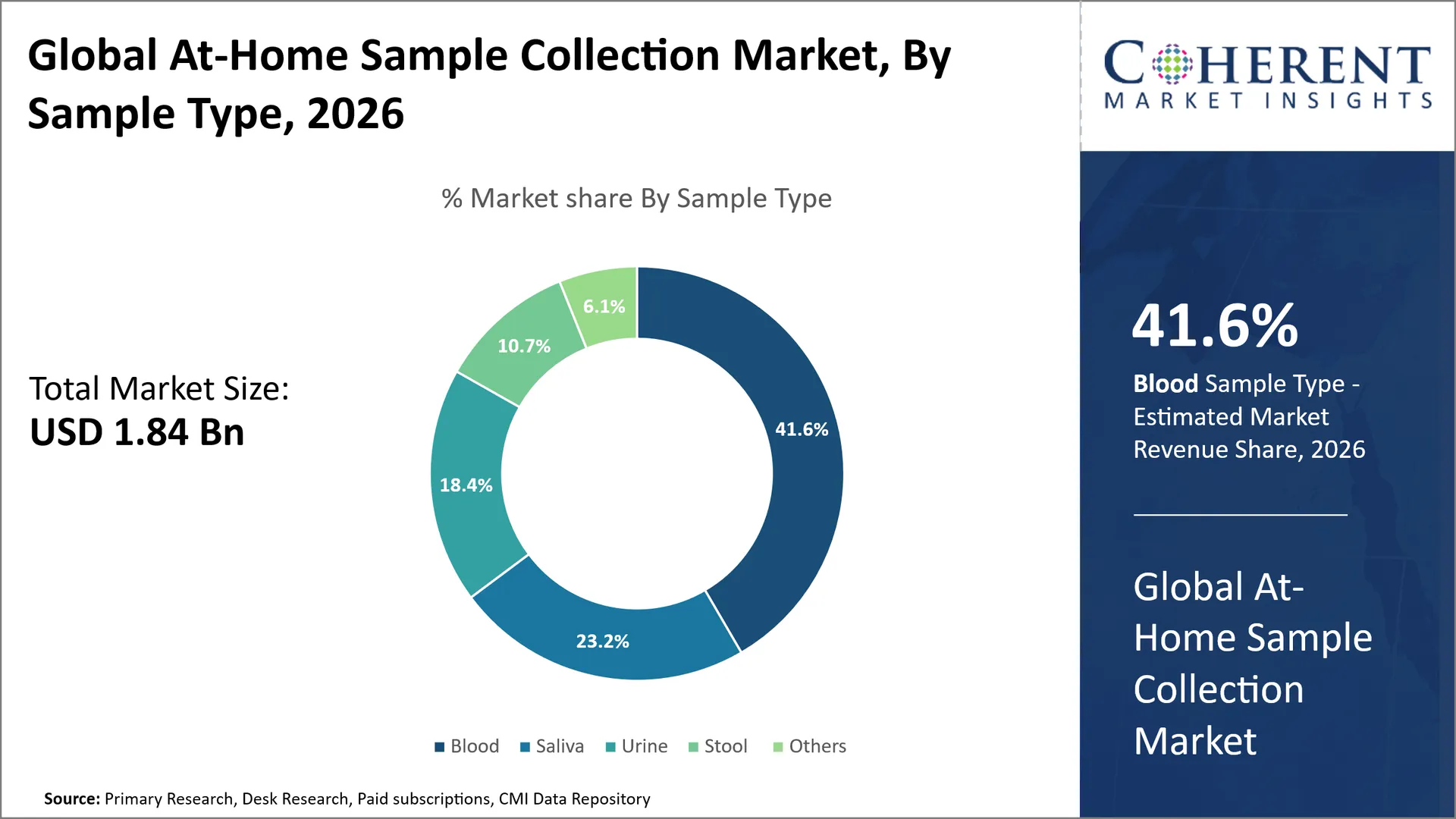
Why Do Blood Dominate the Global At-Home Sample Collection Market?
Blood is projected to hold the market share of 41.6% in 2026, attributed to the high usage of this sample type in monitoring of chronic diseases, infectious disease testing, and biomarker analysis. The development of improved techniques for dried blood spot and finger-prick has enabled sample collection in the home environment along with the ease of sample storage and transport. For instance, New South Wales Health, Australia, provides free self-sampling DBS kits for anyone who is eligible to test for HIV and hepatitis C. These kits allow to take a finger-prick blood test in the comfort of own home and mailed to laboratories for analysis.
- Current Industry Events of 2026
- Market Size Estimation
- Regional Breakdown
- Competitive Landscape
- Customer Intelligence
- Segmental Analysis
- Pricing Analysis
- Key Market Drivers, Challenges & Future Trends
- Customized Insights Section
Why Do Self-Collection Represent the Largest Collection Method Segment in the At-Home Sample Collection Market?
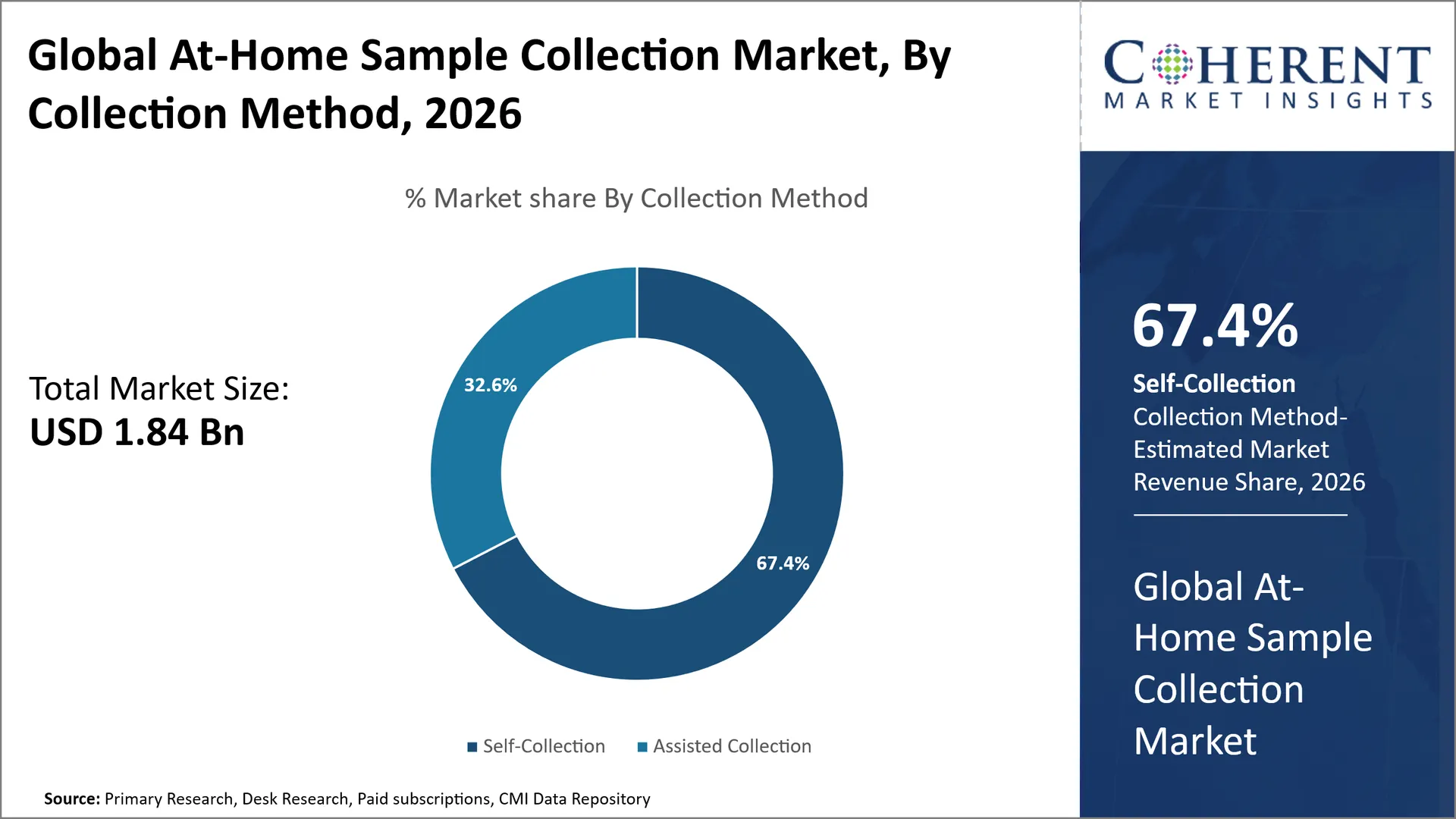
Self-collection is projected to hold a market share of 67.4% in 2026, driven by an increasing consumer demand for convenience, privacy, and autonomy in testing. This method requires no involvement of a healthcare professional to collect a patient sample, thus increasing access to routine screening and addressing the barriers that are often encountered during clinical visits. For instance, the National Cervical Screening Program in Australia allows women to collect a vaginal sample themselves with a simple swab. The sample can then be sent to an approved laboratory, demonstrating the expanding use of self-collection as a complement to existing diagnostic pathways. (Source: Australian Government)
Collection Kits Segment Dominates the Global At-Home Sample Collection Market
The collection kits segment is projected to hold a market share of 58.7% in 2026, attributed to its prefilled format, sample collection elements, and explicit instructions that ease sample collection and transportation process. These kits allow the reduction of errors, thereby ensuring the integrity of the sample during transportation to diagnostic labs. For instance, the U.S. National Cancer Institute provides an implementation guide for the mailed FIT kits. The guide lists typical kit components, which include stool collection device, pre-labeled sample tubes and return envelope and instructions for the patient, highlighting the importance of a kit for home-based screening programs.
Current Events and their Impact
Current Events | Description and its Impact |
ESIC Introduces New Version of Health Connect App with Home Sample Collection Service (February 2026) |
|
Sikkim Government Releases White Paper on HPV Self-Sampling Programme (March 2026) |
|
At-Home Sample Collection Market Dynamics
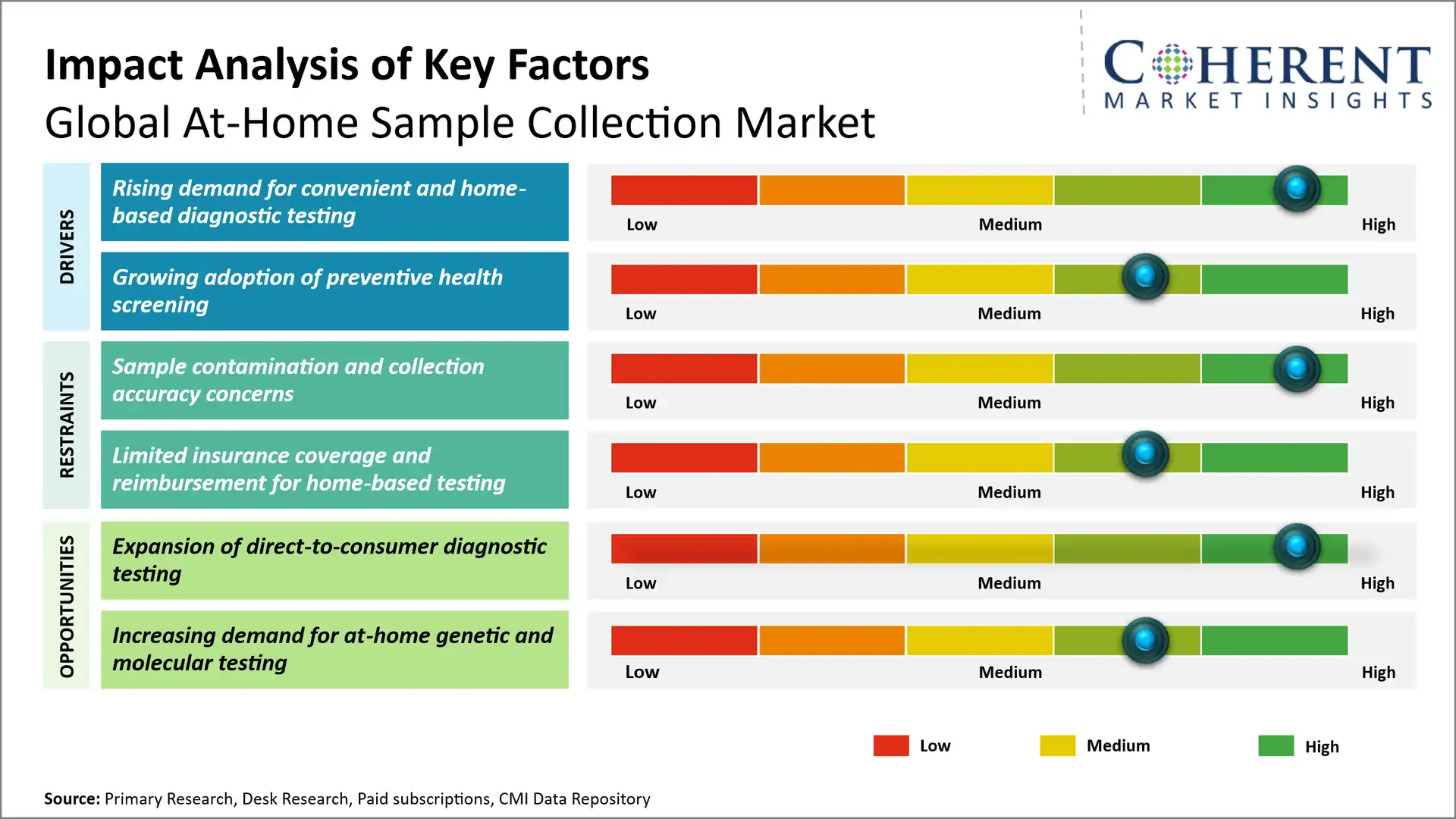
Market Drivers
- Rising demand for convenient and home-based diagnostic testing: The rise in demand for home sample collection services to enable access to digital laboratory is contributing to the demand for doorstep diagnostic services. This is driven by the fact that consumers are expected to have limited requirement to visit diagnostic stations and digital laboratory access. For instance, the Health Department of Kerala has launched the Nirnaya Lab Network, which offers 131 different tests from home through sample collection, laboratory integration, and a digital connection with the laboratory.
- Growing demand for preventive healthcare and personalized health insights: The increasing focus on early detection of disease is driving increased use of home testing kits, especially for detection of cancer and risk for chronic disease. Making screening more easily accessible will also help motivate people to participate in routine testing without multiple clinic visits. For instance, in July 2026, Ontario, Canada, reduced the age of access for publicly funded colorectal cancer screening from age 50 to 45 years. Eligible participants can receive fecal immunochemical test (FIT) kits in the mail to collect stool samples at home.
- Growing adoption of decentralized clinical trials: As adoption of decentralized clinical trials grows, so does the need for home collection of specimens, which allow study subjects to submit blood and other samples while requiring fewer visits to a site. Remote specimen collection can expand trial access, reduce the burden on participants, and enable remote collection of clinical data. For instance, a September 2024, guidance document from the U.S. Food and Drug Administration on decentralized trials specifically mentions the potential use of home collection kits to collect specimens for laboratory testing.
Emerging Trends
- Advancement in minimally invasive blood collection technologies: Advances in capillary blood collection, micro sampling, and dried blood spots are making it easier to collect specimens without traditional venipuncture.
- Impact: The benefits of these innovations include more convenient patient experience, reduced collection pain, and easier sample shipment.
- Market Relevance: This trend is driving up a demand for the latest generation of blood collection kits, especially for chronic disease monitoring and preventive screening.
- Integration of digital platforms with home-based sample collection: Collection services offered at home are increasingly using smartphone applications, online instructions, samples tracking and laboratory results are delivered online.
- Impact: This incorporation enhances the overall collection experience, improves specimen traceability and supports better communication between the end users and the diagnostic laboratory.
- Market Relevance: This trend is expanding the use cases for digitally connected collection kits as well as direct-to-consumer diagnostic offerings.
Regional Insights
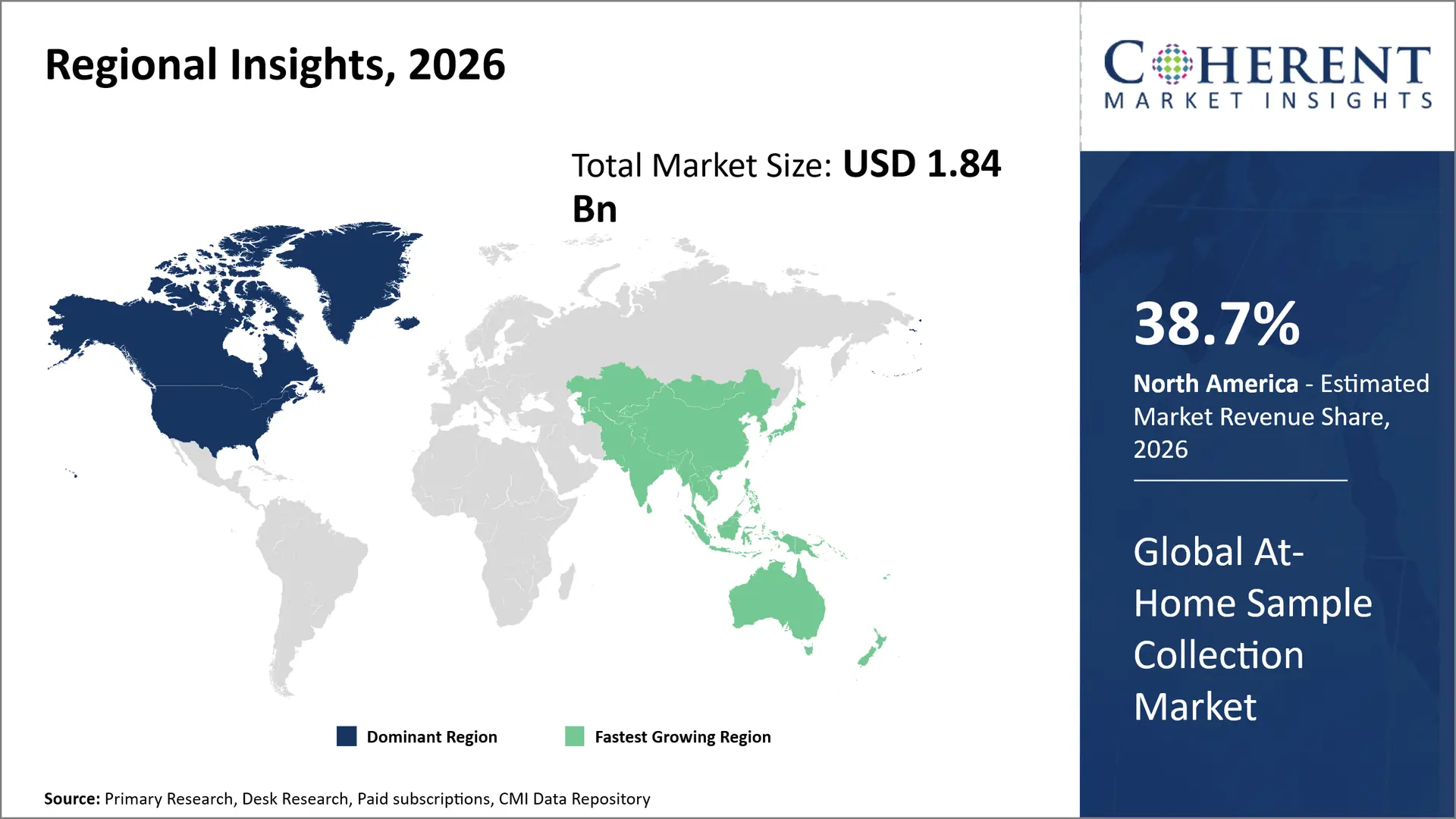
Why is North America a Strong Market for At-Home Sample Collection?
The North America region is expected to dominate the global at-home sample collection market with an estimated market share of 38.7% in 2026, owing to the growing adoption of decentralized testing, strong diagnostic infrastructure and rising digital health investments. Government initiatives and incentives such as the introduction of flexible regulatory pathways for access to home collected diagnostic tests, and specimen collection devices by the U.S. Food and Drug Administration (FDA) is likely to accelerate market growth, thus helping improve the access of home collection solutions across the region.
For instance, in October 2026, the U.S. FDA issued its final rule classifying testing systems for sexually transmitted infections (STIs) using specimen collection at home as Class II medical devices with special controls. The final rule provides a regulated pathway for both prescription and OTC use of home-collected specimen testing systems. FDA anticipates the new regulation will facilitate access to innovative testing options.
Why Does Asia Pacific At-Home Sample Collection Market Exhibit High Growth?
The Asia Pacific region is projected to grow at the highest CAGR of 13.2% in the global at-home sample collection market during the forecast period (2026–2033). The region is projected to contribute 24.1% of the global market in 2026, owing to the growing awareness about healthcare, increasing middle-class population, and rising acceptance of digital health services. Governments in the countries such as China, India, Japan, and South Korea are initiating healthcare programs that focus on upgrading healthcare systems to become more patient-centric, offer remote diagnostic services, and access healthcare services at home.
For instance, the eSanjeevani National Telemedicine Service in India has enabled and encouraged patients to stay at home and seek advice from healthcare providers, thus, paving the way for a digital and patient-centric approach to healthcare. The service has successfully delivered 493 million+ consultations till 16th August 2026, thus strengthening the digital health ecosystem and facilitating an enabling environment for connected home-based diagnostic services. (Source: Centre for Development of Advanced Computing (C-DAC))
Global At-Home Sample Collection Market Outlook for Key Countries
Why is the U.S. Leading Innovation and Adoption in the At-Home Sample Collection Market?
Innovation and adoption of at-home sample collection market is higher in the U.S. due to a thriving ecosystem of direct-to-consumer diagnostic providers, well connected laboratory networks and innovative blood micro sampling technologies. The at-home sample collection market is mature and growing rapidly in use of dried blood spot kits, finger-prick devices and digitally connected testing services. The seamless integration between diagnostic labs, telehealth providers, and home collection partners amplifies progress in the convenience-led laboratory connected testing space.
Is Japan a Favorable Market for At-Home Sample Collection Market?
Japan is an attractive market for at-home sample collection in the segment of blood micro sampling, DBS kits and chronic disease monitoring. Its deep clinical lab network coupled with the rising demand for convenient testing makes it suitable for at-home collection services. The market is attractive for the companies with highly dependable, minimally invasive collection devices and robust laboratory logistics.
Is China Emerging as a Key Growth Hub for the At-Home Sample Collection Market?
China is emerging as an important growth center for the global at-home sample collection market, specifically in the blood micro sampling, collection devices and self-testing solutions market. Increasing adoption of at-home collection services by end users for chronic disease management and prevention screening (alongside growth of diagnostic laboratories outside major cities) is creating demand for at-home sample collection options. Additionally, the country offers a lucrative ecosystem for companies that are developing cost-effective, minimally invasive blood collection kits and platforms for scalable sample transport.
Why Does Germany Top the European At-Home Sample Collection Market?
Germany is an attractive market for at-home sample collection due to a solid diagnostic environment, advanced diagnostic network, and sophisticated delivery system for healthcare. With the shift towards more emphasis on preventive screening, diagnostics on demand, decentralized diagnostic services and fast specimen processing, this creates opportunities for at-home blood, urine, saliva and plasma collection and shipping. The best opportunities exist for highly standardized collection kits as well as micro sampling, preserving the sample quality during delivery.
Is At-Home Sample Collection Market Developing in UK?
The UK is an emerging at-home sample collection market, driven by the UK National Health Service's focus on using home testing as a natural extension of diagnostic pathways. The UK market offers significant opportunities for growth in capillary blood self-collection, HIV and screening for health optimization. There is much interest in linking home- collected samples to validated laboratories and electronic patient records, and the NHS Home Test platform provides opportunities to expand self-collection service offerings for additional diagnostic test panels under clinical supervision.
Comparison of At-Home Sample Collection Methods by Sample Type
Sample type | Common collection method | Key diagnostic applications | Major advantage |
Blood | Dried Blood Spot, Finger-Prick, Micro sampling | Disease Testing, Diabetes, Lipid Profiling | Broad diagnostic applicability |
Saliva | Saliva Collection Swabs and Tubes | Infectious Disease Testing, Genetic Testing, Hormone Profiling | Non-invasive collection |
Urine | Sterile Collection Containers | Pregnancy, Kidney Function, Drug Screening | Convenient and simple collection |
Stool | Stool Collection Kits and Tubes | Colorectal Cancer Screening, Gastrointestinal Disorders | Supports non-invasive screening |
Others | Nasal, Vaginal, and Oral Swabs | Infectious Disease and Reproductive Health Testing | Application-specific collection |
How is the expansion of direct-to-consumer diagnostic testing creating new growth opportunities in the at-home sample collection market?
The global at-home sample collection market has huge potential for growth owing to the high growth in direct-to-consumer (DTC) diagnostic testing as consumers are looking for effective, discreet and rapid access to healthcare. The proliferation of online testing portals and sample collection kits is opening up new avenues of access for genetics, infectious disease and screening for health management. For instance, in November 2023, the U.S. Food and Drug Administration (FDA) approved the first home kit for collecting samples for laboratory testing for chlamydia and gonorrhea. Some kits are processed at a certified lab, while others can be collected as samples at home and mailed to a lab for processing.
Market Players, Key Development, and Competitive Intelligence
Key Developments
- In October 2026 Credent (C3logistics) launched a patient centric, demand-based home sample collection service for diagnostic labs, enabling diagnostic labs to offer sample collection at doorstep without managing city-based phlebotomist network of their own. The network operates across 10+ cities & 1500+ pin-codes currently and provides scheduled as well as same day sample collection. This accomplishment points to the increase in third-party home collection infrastructure & scaled diagnostic services in India.
- In June 2026, Sterling Accuris launched Accuris Express, a new at-home diagnostic sample collection service that provides sample pickup at the doorsteps within 30 mins of the booking of eligible tests through its portal and mobile application. The facility has been launched in Ahmedabad and aims to provide easy and quick access to diagnostic testing to senior citizens, working professionals and families.
Competitive Landscape
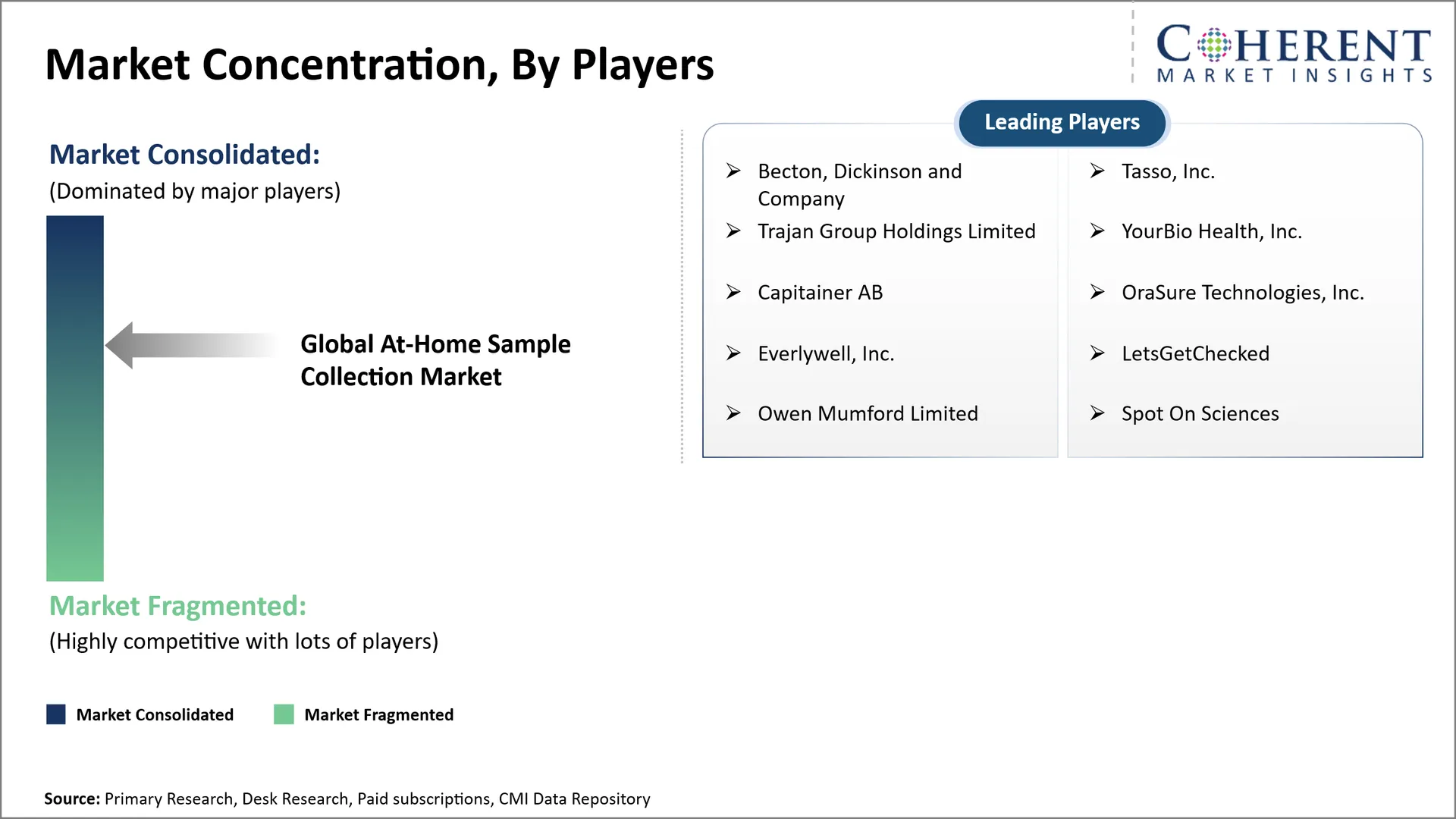
The global at-home sample collection market is moderately fragmented, with several international players competing in segments such as medical device manufacturing, testing providers, home healthcare organizations and DTC testing companies. The existing players are diversifying and introducing innovations to boost sample collection convenience and quality, improving logistics and transports efficiency and expanding overall accessibility. The competition is also driven by technological advancements, alliances with diagnostic laboratories and the growth of service networks. Key focus areas include:
- Develop technologies for minimally invasive blood collection and micro sampling
- Expansion of ready-to-use, multi-sample collection kits
- Enhancement of solution for conservation, stabilization and transport of samples
- Digital platforms for ordering of kits, guidance on collection and tracking of samples
- Broaden collaborations with diagnostic laboratories and telehealth service providers
- Enhancement of Quality Compliance, Regulation, and Sample Integrity
- Growth of networks for home collection and DTC testing
Market Report Scope
Global At-Home Sample Collection Market Report Coverage | |||
Report Coverage | Details | ||
Base Year | 2025 | Market Size in 2026: | USD 1.84 Bn |
Historical Data For: | 2020 To 2024 | Forecast Period: | 2026 To 2033 |
Forecast Period 2026 To 2033 CAGR: | 10.6% | 2033 Value Projection: | USD 3.72 Bn |
Geographies covered: |
| ||
Segments covered: |
| ||
Companies covered: | Becton, Dickinson and Company, Tasso, Inc., Trajan Group Holdings Limited, YourBio Health, Inc., Capitainer AB, OraSure Technologies, Inc., Everlywell, Inc., LetsGetChecked, Owen Mumford Limited, Spot On Sciences | ||
Growth Drivers: |
| ||
Restraints & Challenges: |
| ||
Analyst Opinion (Expert Opinion)
- In the coming years, the global at-home sample collection market is poised to transition to more personalized, decentralized and patient-centric diagnostic care. Blood micro sampling, automation of collection, and digital-enabled interfaces are set to play an increasingly important role in routine testing. The future expansion will ultimately hinge on the ability to improve collection quality, ease of sample processing, and improve connectivity to diagnostic laboratories.
- The best opportunity is expected to be in blood collection for chronic disease monitoring in India driven by the need to monitor diabetes, cardiovascular, and other chronic diseases regularly. With affordable finger-prick collection devices and ease of use for home collection kits, there is a great opportunity to improve accessibility to patients both in urban and semi-urban regions. Low-cost player solutions with trusted sample transportation can capture this opportunity.
- In order to gain a competitive advantage market players should focus on designing robust and easy-to-use collection kits, least-invasive sampling method and reliable sample preservation solutions. Tie-ups with diagnostic labs, hospitals and tele-health companies can help in the wider distribution. Alongside, investment in digital logistics tracking, instructions on sample collection and quality assurance to strengthen consumer confidence and reduce rejection rates of the collected samples.
Speak to the analyst
Want personalized insights?
Take the findings above to one of our principal consultants, or have the report rebuilt around the segments, geographies and competitors you actually track.
Market Segmentation
- Sample Type Insights (Revenue, USD Bn, 2021 - 2033)
- Blood
- Saliva
- Urine
- Stool
- Others
- Collection Method Insights (Revenue, USD Bn, 2021 - 2033)
- Self-Collection
- Assisted Collection
- Product Type Insights (Revenue, USD Bn, 2021 - 2033)
- Collection Kits
- Collection Devices
- Sample Preservation and Transport Supplies
- Application Insights (Revenue, USD Bn, 2021 - 2033)
- Diagnostic Testing
- Preventive Health Screening
- Disease Monitoring
- Genetic and Molecular Testing
- End User Insights (Revenue, USD Bn, 2021 - 2033)
- Hospitals and Diagnostic Laboratories
- Home Healthcare Providers
- Pharmaceutical and Biotechnology Companies
- Direct-to-Consumer Testing Providers
- Others
- Regional Insights (Revenue, USD Bn, 2021 - 2033)
- North America
- U.S.
- Canada
- Latin America
- Brazil
- Argentina
- Mexico
- Rest of Latin America
- Europe
- Germany
- U.K.
- Spain
- France
- Italy
- Russia
- Rest of Europe
- Asia Pacific
- China
- India
- Japan
- Australia
- South Korea
- ASEAN
- Rest of Asia Pacific
- Middle East
- GCC Countries
- Israel
- Rest of Middle East
- Africa
- South Africa
- North Africa
- Central Africa
- North America
- Key Players Insights
- Becton, Dickinson and Company
- Tasso, Inc.
- Trajan Group Holdings Limited
- YourBio Health, Inc.
- Capitainer AB
- OraSure Technologies, Inc.
- Everlywell, Inc.
- LetsGetChecked
- Owen Mumford Limited
Sources
Primary Research Interviews
- At-home sample collection device manufacturers and product development managers
- Diagnostic laboratory executives and pathology specialists
- Phlebotomists and home healthcare service providers
- Clinical research professionals specializing in decentralized clinical trials
Stakeholders
- At-home sample collection kit and device manufacturers
- Blood, saliva, urine, and stool collection technology developers
- Diagnostic laboratories and specimen transportation service providers
- Direct-to-consumer testing and digital health platform providers
- End-use Sectors
- Hospitals and diagnostic laboratories
- Home healthcare and telehealth providers
- Pharmaceutical and biotechnology companies
- Direct-to-consumer diagnostic testing providers
- Regulatory & Health Bodies
- U.S. Food and Drug Administration (FDA)
- Central Drugs Standard Control Organisation (CDSCO), India
- European Commission (Medical Device Regulation)
- Health Canada
Databases
- ClinicalTrials.gov
- WHO International Clinical Trials Registry Platform (ICTRP)
- FDA 510(k) Premarket Notification Database
Associations
- Association for Diagnostics & Laboratory Medicine (ADLM)
- Clinical and Laboratory Standards Institute (CLSI)
- College of American Pathologists (CAP)
- International Federation of Clinical Chemistry and Laboratory Medicine (IFCC)
Public Domain Sources
- U.S. Food and Drug Administration (FDA)
- Centers for Disease Control and Prevention (CDC)
- National Institutes of Health (NIH)
- World Health Organization (WHO)
Proprietary Elements:
- CMI Data Analytics Tool
- Proprietary CMI Existing Repository of information for last 10 years.
Get access to 250+ pages report
Every segment, forecast, competitor profile and data table behind the analysis above — available for instant download.
- ESOMAR Member
- ISO 9001:2015 Certified
- D-U-N-S Registered
- GDPR & CCPA Compliant
Frequently Asked Questions
The global at-home sample collection market is estimated to be valued at USD 1.84 Bn in 2026 and is expected to reach USD 3.72 Bn by 2033.
Blood dominates the market because of its broader diagnostic use in chronic diseases management, infectious disease detection, and health screening.
At-home sample collection is the process of collecting bio-specimens such as blood, saliva, stool, or urine samples at home for lab-based testing. This enables the convenience of collecting the sample at home, eliminating the need to visit a doctor.
The CAGR of global at-home sample collection market is projected to be 10.6% from 2026 to 2033.
Rising demand for convenient and home-based diagnostic testing, and growing adoption of preventive health screening are the major factors driving the growth of the global at-home sample collection market.
Sample contamination and collection accuracy concerns, and limited insurance coverage and reimbursement for home-based testing are the major factors hampering the growth of the global at-home sample collection market.
In terms of product type, collection kits are estimated to dominate the market revenue share in 2026.