

Automated Breast Ultrasound Market Size and Share Analysis – 2026 To 2033
The global automated breast ultrasound market size is anticipated to grow at a CAGR of 15.23%, from USD 2.75 Bn in 2026 to USD 7.42 Bn by 2033. The primary growth drivers are largely defined by the rising prevalence of breast cancer, increasing demand for early and accurate breast cancer detection, growing adoption of automated breast ultrasound (ABUS) systems for women with dense breast tissue, and technological advancements in AI-assisted breast imaging. According to WHO, about 2.4 million women globally were diagnosed with breast cancer in 2024. This highlights the increasing need for early detection and better accessibility of diagnostic tools.
Key Takeaways of the Global Automated Breast Ultrasound Market (2026–2033)
- The automated breast ultrasound (ABUS) segment is predicted to account for 61.0% of the global automated breast ultrasound market share in 2026. The growth in the segment is attributed to the increasing adoption of AI-assisted breast imaging, improved scanning efficiency, and rising demand for supplemental screening in women with dense breast tissues. The Invenia ABUS Prime and ABUS StreamVue, announced by GE HealthCare on August 3, 2026, provide enhanced imaging capabilities and Fast Scan technology that can improve scan speed by up to 40%.
- The hospitals segment is anticipated to capture 55.0% share of the global automated breast ultrasound market by 2026. Growth is driven by the increasing number of breast cancer screening volumes and investment in advanced diagnostic equipment and expansion of specialized breast imaging services. The U.S. Food and Drug Administration (FDA) reported 9,137 certified mammography facilities in the country as of October 1, 2026, reflecting its vast breast screening infrastructure and the potential for integration of supplemental ultrasound.
- North America is projected to hold the largest share in the global automated breast ultrasound market by 2026, with an estimated market share of 35.0%. Rising awareness of breast density, favorable regulatory developments, and well-established breast cancer screening infrastructure are driving the regional demand. As of November 1, 2026, the FDA projects approximately 45.2 million mammography procedures are performed annually.
- Asia Pacific is expected to account for 24.0% of the global automated breast ultrasound market in 2026 and is expected to witness the highest growth during the forecast period, 2026-2033. The increasing incidence of breast cancer, expansion of diagnostic infrastructure & better accessibility of automated imaging technologies are driving the regional growth. Asia accounted for an estimated 1.10 million new breast cancer cases (45.1% of the global total) in the GLOBOCAN dataset from the International Agency for Research on Cancer (IARC)
Segmental Insights
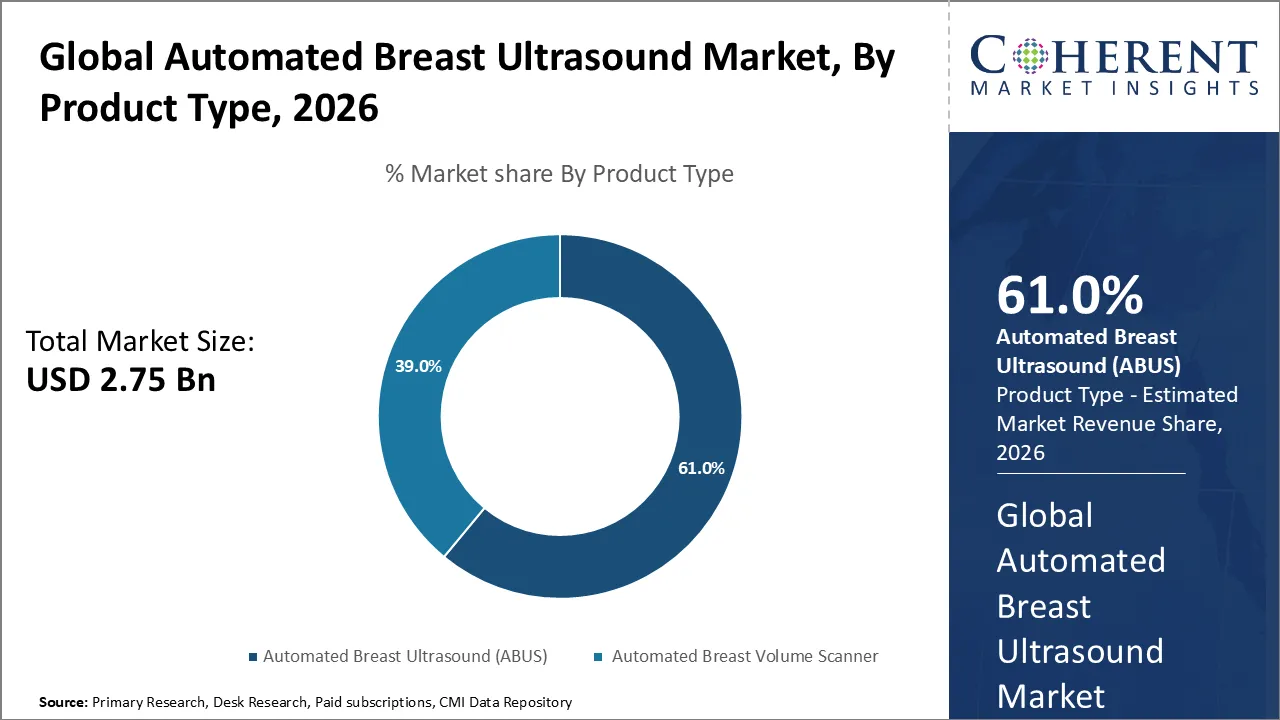
Why Does Automated Breast Ultrasound (ABUS) Dominate the Global Automated Breast Ultrasound Market?
The automated breast ultrasound (ABUS) segment is expected to hold the largest share of the global automated breast ultrasound market in 2026. Growth in this segment is being driven by demand for supplemental breast cancer screening among women with dense breast tissue, technological advancements in automated 3D imaging and increasing adoption of AI-assisted diagnostic workflows. ABUS systems standardize the acquisition of whole breast images, improve exam consistency and help radiologists evaluate breast tissue that may be difficult to assess by mammography alone.
According to the American College of Radiology (ACR) updated in 2025, supplemental screening with breast ultrasound identifies around 1.8–4.6 additional cancers per 1,000 women screened with dense breasts, highlighting the clinical value of ultrasound-based screening technologies
- Current Industry Events of 2026
- Market Size Estimation
- Regional Breakdown
- Competitive Landscape
- Customer Intelligence
- Segmental Analysis
- Pricing Analysis
- Key Market Drivers, Challenges & Future Trends
- Customized Insights Section
Why Do Hospitals Dominate the Global Automated Breast Ultrasound Market?
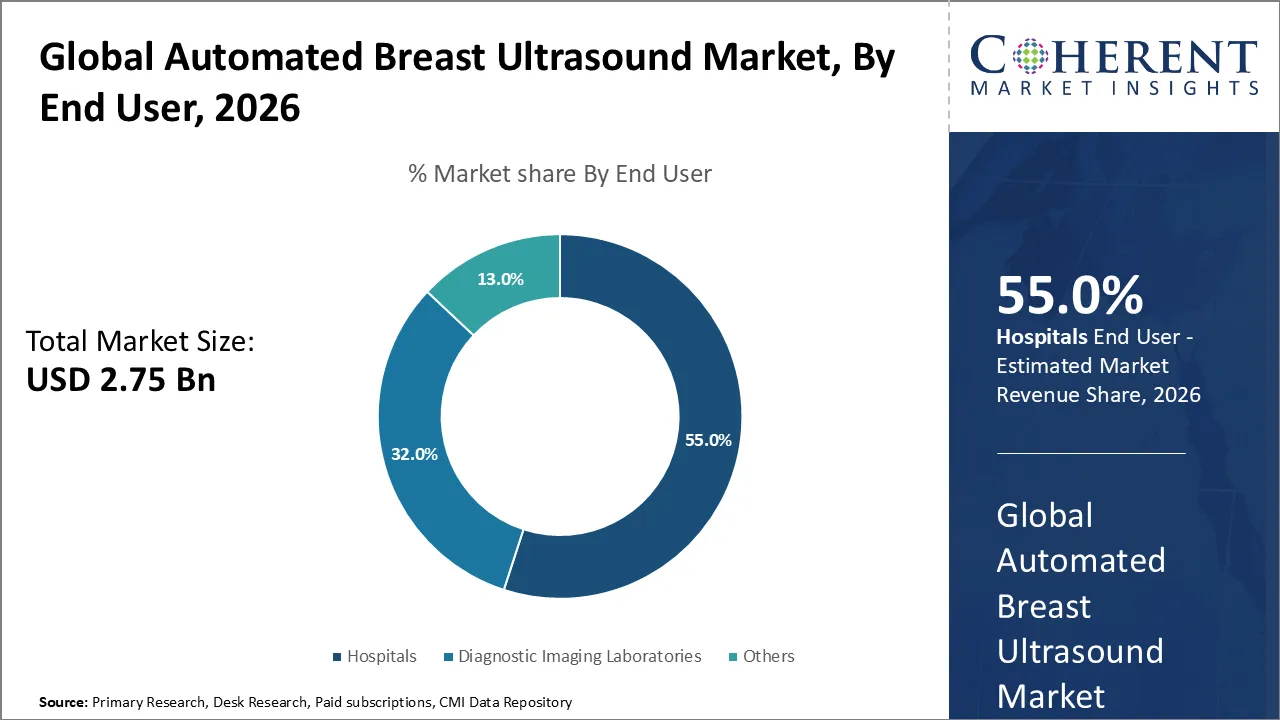
The hospitals segment is projected to account for a 55.0% share of the global automated breast ultrasound market in 2026. Hospitals are the main drivers of demand because they already have breast imaging infrastructure, access to specialized radiologists, screen large numbers of patients and can integrate automated ultrasound with mammography and other diagnostic modalities. The rising incidence of breast cancer and the emergence of multidisciplinary breast care services are also prompting hospitals to invest in advanced diagnostic systems. ABUS technology supports standardized imaging workflow, improves efficiency of examinations and provides supplemental screening for eligible women with dense breast tissue.
In October 2026, FDA announced that mammography facilities will begin using an updated electronic certification delivery process on October 22, 2026. This initiative supports administrative efficiency for certified breast imaging facilities while preserving current quality and certification standards.” This regulatory framework provides a platform for hospitals and affiliated imaging centers to evaluate and implement additional breast imaging technologies such as ABUS.
Current Events and Their Impact on the Automated Breast Ultrasound Market (regulatory shifts, government policies)
Current Event | Description and its Impact |
U.S. FDA Implements Nationwide Breast Density Notification Requirements (September 2024) |
|
U.S. FDA Approves Expanded Invenia ABUS System Capabilities (February 2025) |
|
Automated Breast Ultrasound Market Dynamics
Market Drivers
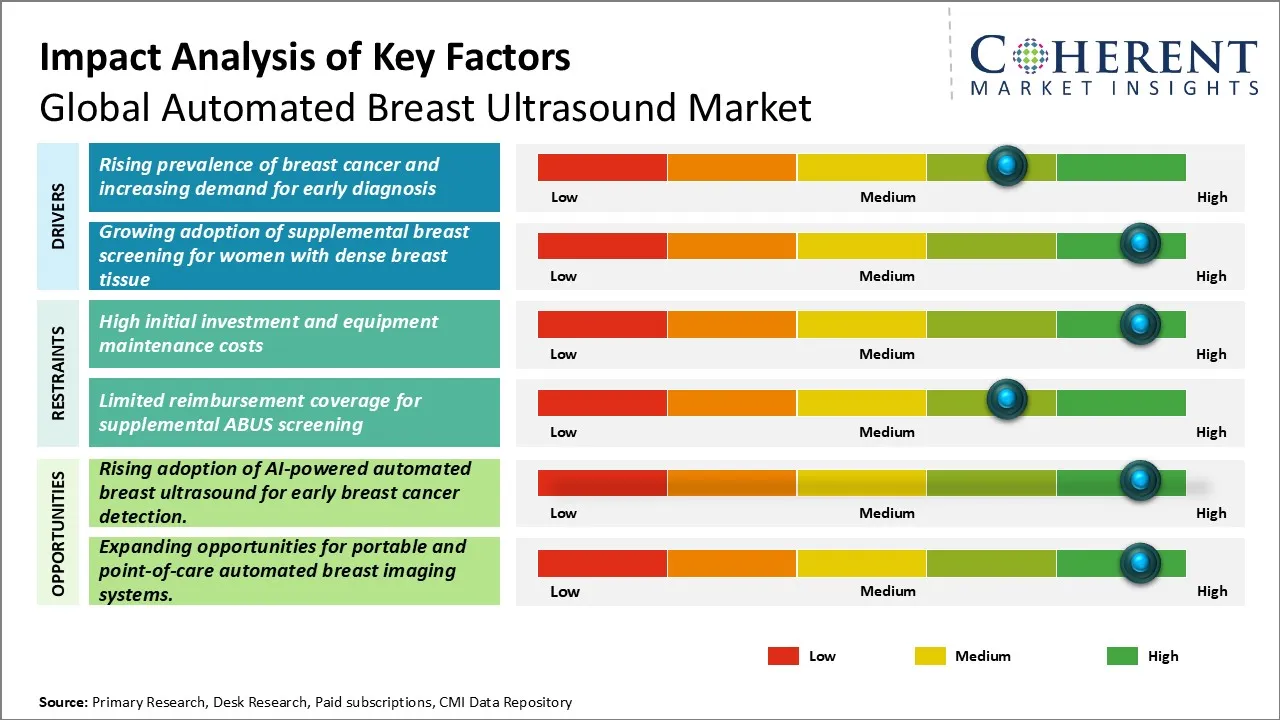
- Rising Global Burden of Breast Cancer and Need for Early Diagnosis: The rising incidence of breast cancer is a major factor driving the global automated breast ultrasound market. Healthcare providers are being encouraged to strengthen breast cancer screening programs, increase their capacity for diagnostic imaging and invest in technologies that can help with early detection as the disease becomes more common. The automated breast ultrasound systems provide standardized 3D imaging and can be used as a complement to mammography, especially in women with dense breast tissue. The growing awareness of the benefits of early detection, along with the increasing demand for full breast imaging services, is also contributing toward the adoption of ABUS in hospitals and diagnostic imaging centers.
- On February 24, 2025, International Agency for Research on Cancer (IARC) About 1 in 20 women worldwide will get breast cancer at some point in their lives. The agency estimates that by 2050, breast cancer cases could reach 3.2 million a year, resulting in about 1.1 million deaths, highlighting the need for effective screening and diagnostic technologies.
- Rising clinical need for additional screening in women with dense breast tissue: Growing awareness of the limitations of mammography for women with dense breast tissue is driving demand for supplemental breast imaging technologies. Automated breast ultrasound systems can provide support in additional examination and cancer detection as conventional mammograms are unable to detect suspicious lesions in dense fibroglandular tissue. ABUS provides volumetric breast imaging, standardized image acquisition and multiplanar visualization, enabling radiologists to evaluate breast tissue more comprehensively. The growing clinical evidence for supplemental ultrasound and increasing awareness of breast density are supporting its consideration in risk-based screening pathways.
- A 2026 systematic review and meta-analysis indexed by the U.S. National Library of Medicine (PubMed) showed that the addition of ABUS to mammography increased screening sensitivity by 6-35 percentage points and detected approximately 2.4-4.3 additional breast cancers per 1,000 women with dense breasts screened. The review also pointed out increases in recall rates and small decreases in specificity, stressing the importance of appropriate patient selection.
Automated Breast Ultrasound Market Trends
- Automated breast ultrasound is being used increasingly as an alternative to handheld ultrasound to help promote standardized breast screening and reduce operator-dependent variability in imaging. A study in the Journal of the American College of Radiology in October 2026 of 25,328 screening ultrasounds performed at 27 facilities found ABUS was similar to handheld ultrasound in cancer detection but resulted in fewer false-positive initial assessments.
- Increasing use of artificial intelligence and computer-aided detection technologies is improving lesion identification, diagnostic interpretation, and radiologist productivity. In December 2025, a study of 114 women and 228 breasts showed the potential of AI-supported image interpretation. The use of AI-assisted ABUS increased the diagnostic AUC of the least-experienced reader from 0.837 to 0.947.
- The growing roles of automated breast ultrasound in the preoperative assessment of breast cancer are promoting the integration of this modality into multidisciplinary diagnostic pathways. In a September 2026 multicenter prospective study, combination of ABUS and digital mammography and combination of handheld ultrasound and digital mammography both provided 100% detection of index cancer in the early-stage breast cancer cohort studied. These findings support further evaluation of ABUS for preoperative staging.
Regional Insights
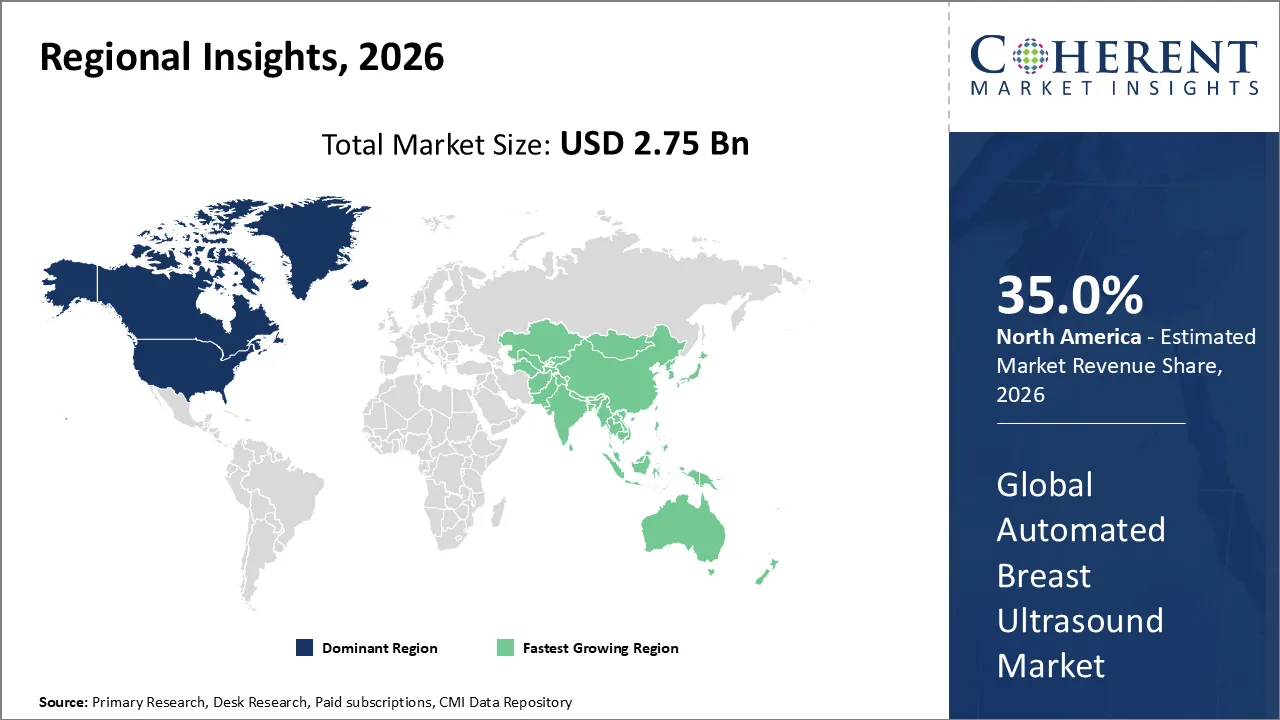
Why Does North America Dominate the Global Automated Breast Ultrasound Market?
North America is expected to lead the global automated breast ultrasound market with a market share of 35.0% by 2026. The region’s leadership is mainly attributed to its advanced breast imaging infrastructure, high adoption of diagnostic technologies, well-established healthcare reimbursement mechanisms, and increasing need for additional breast cancer screening services. The US represents a large market opportunity with dedicated breast imaging centers, widespread mammography screening and growing adoption of automated breast ultrasound into the traditional diagnostic workflow. Growing awareness of breast density and the availability of experienced radiologists are also driving demand. Canada too is seeing opportunities for advanced breast imaging technologies as healthcare providers ramp up early cancer detection and expand diagnostic access.
According to the American Cancer Society’s Cancer Facts & Figures 2026 estimates about 321,910 new cases of invasive breast cancer in women and 60,730 cases of ductal carcinoma in situ (DCIS) in the U.S. in 2026. The Canadian Cancer Society’s 2026 projections also forecast that roughly 32,400 new cases of breast cancer will occur in Canada. These numbers show the high burden of disease in the region and the importance of advanced breast imaging technologies for early detection & diagnostic work-up.
Why Does Asia Pacific Exhibit the Fastest Growth in the Automated Breast Ultrasound Market?
Asia Pacific is estimated to account for 24.0% of the global automated breast ultrasound market in 2026 and is projected to emerge as the fastest-growing region during 2026–2033. The regional market is supported by factors such as growing demand for advanced breast examination technologies, improving diagnostic imaging infrastructure, expanding breast cancer screening initiatives, and increasing healthcare expenditure. China, India, Japan, South Korea and Australia are among the countries increasing their capacity to detect breast cancer through modernizing health care and initiating preventive screening programs. The growing use of automated imaging technologies and development of dedicated breast diagnostic facilities are expected to provide further opportunities for manufacturers of ABUS. Growing awareness about dense breast tissue and availability of advanced diagnostic services are also fueling the growth in the region.
On April 21, 2026, India’s Ministry of Health and Family Welfare announced that under its nationwide noncommunicable disease screening programs, approximately 16.5 crore (165 million) breast cancer screenings have been conducted. In addition, the Australian Institute of Health and Welfare’s BreastScreen Australia Monitoring Report 2026 stated that approximately 1.94 million women aged 50–74 were involved in breast screening during 2024–2025, with a participation rate of 51.6%.
Global Automated Breast Ultrasound Market Outlook for Key Countries (2026–2033)
Why Is the U.S. a Leading Market for Automated Breast Ultrasound?
The U.S. Automated Breast Ultrasound Market Drivers and Restraints Increasing demand for supplemental breast cancer screening Wide availability of advanced imaging infrastructure Growing clinical adoption of automated three-dimensional breast imaging systems More and more health care providers are turning to ABUS technologies as a complement to mammography in selected women with dense breast tissue. Technological innovation is also supported by the presence of established diagnostic imaging centers, specialized breast care centers and major medical imaging manufacturers. Automated breast ultrasound systems are becoming a possibility due to artificial intelligence-assisted interpretation, standardized image acquisition and improved screening workflows. The U.S. Centers for Disease Control and Prevention (CDC) found in its 2025 study that about 80.0% of screening-eligible U.S. women were up to date with breast cancer screening in 2023.
Is China Emerging as a High-Potential Growth Market for Automated Breast Ultrasound?
The China automated breast ultrasound market is driven by the growth of breast cancer screening programs, rising investments in diagnostic imaging infrastructure, and increasing focus on preventive healthcare. The country’s health care system is improving breast cancer detection in all urban hospitals, regional medical centers and community health facilities. Ultrasound-based breast examination is especially pertinent to the Chinese screening setting, where clinical breast examination and ultrasound are established parts of screening pathways. With the upgrade of equipment in facilities, automated breast ultrasound has the potential to standardize image acquisition and improve consistency of examinations. On March 18, 2026, China’s National Health Commission reiterated that breast and cervical cancer screening services are primarily for women aged 35–64 years.
Germany Automated Breast Ultrasound Market Analysis and Trends
The automated breast ultrasound market in Germany is driven by the presence of a well-established breast cancer screening framework, rising access to preventive healthcare services, and increasing focus on quality-assured diagnostic services. Hospitals and breast centers with specialized expertise are looking into cutting-edge imaging technologies to perform comprehensive breast exams, particularly when further imaging is clinically indicated. The country’s organized mammography screening program provides a well-established framework for diagnostic referral and further breast imaging. In July 2024, the organized mammography screening program in Germany was extended to include women up to the age of 75 years.
U.K. Automated Breast Ultrasound Market Analysis and Trends
The U.K. automated breast ultrasound market is driven by growth in breast screening participation, increasing focus on early cancer diagnosis and the growing need for efficient breast imaging workflows. The National Health Service (NHS) is expanding breast cancer screening services by enhancing engagement strategies, increasing diagnostic capability and implementing targeted outreach programs. Advanced ultrasound technologies may be useful in further diagnostic assessment when clinically indicated, especially in specialist breast imaging centers. On February 19, 2026, NHS England said the proportion of women aged between 50 and 70 taking up breast screening rose from 70.0% in 2023 to 2024 to 70.6% in 2024 to 2025.
Japan Automated Breast Ultrasound Market Analysis and Trends
Japan’s automated breast ultrasound market is driven by its advanced diagnostic imaging sector, rising demand for breast cancer screening and increasing investment in precision medical imaging technologies. Japanese health care providers are focusing on boosting breast cancer detection through image accuracy, efficient examination and standardized diagnostic workflows. Automated ultrasound systems offer the opportunity for further assessment of the breast, especially for women with dense breast tissue. The fusion of artificial intelligence and advanced image reconstruction is improving the capabilities of breast imaging platforms. The Cancer Statistics in Japan 2026 by the National Cancer Center Japan, estimated the percentage of estimated new cancer cases in women in 2025, with breast cancer accounting for about 22%. The center estimated that 98,800 new breast cancer cases would be reported in Japan by 2025.
How Is the Expansion of Portable and Point-of-Care Breast Imaging Creating New Growth Opportunities in the Automated Breast Ultrasound Market?
The rising adoption of portable and point-of-care breast imaging technologies is creating new growth opportunities in the global automated breast ultrasound market. Therefore, healthcare providers are looking to compact, automated three-dimensional ultrasound systems to extend breast imaging services beyond the traditional hospital radiology departments. With these technologies, it is possible to standardize the acquisition of whole breast images, decrease the necessity for specialized operators when scanning, and perform imaging in women’s health clinics, outpatient facilities and community healthcare centers. Such as iSono Health’s ATUSA platform that leverages automated volumetric breast imaging, wearable scanning technology and remote image visualization to make breast exams easier. Such innovations enable manufacturers to design portable imaging platforms, cloud-enabled interpretation services, and flexible models for equipment deployment.
For instance, in January 2026, iSono Health announced the commercial launch of ATUSA, its FDA-cleared wearable automated 3D breast ultrasound platform. The manufacturer claims that ATUSA can complete a whole-breast scan in approximately 2 minutes per breast, making the scanning speed 10–15 times faster than manual probing.
Market Players, Key Development, and Competitive Intelligence
Key Developments
- In June 2026, Koninklijke Philips N.V. announced U.S. FDA 510(k) clearance for Elevate Plus for EPIQ Elite and Affiniti ultrasound systems. The update also provides AI-powered Koios decision support for classification of breast lesions and thyroid nodules.
- In October 2026, Siemens Healthineers announced a strategic pivot to procedural imaging and image-guided therapy, stating that it would no longer sell general imaging ultrasound systems, including ACUSON Sequoia, Redwood, Juniper and Maple.
Competitive Landscape
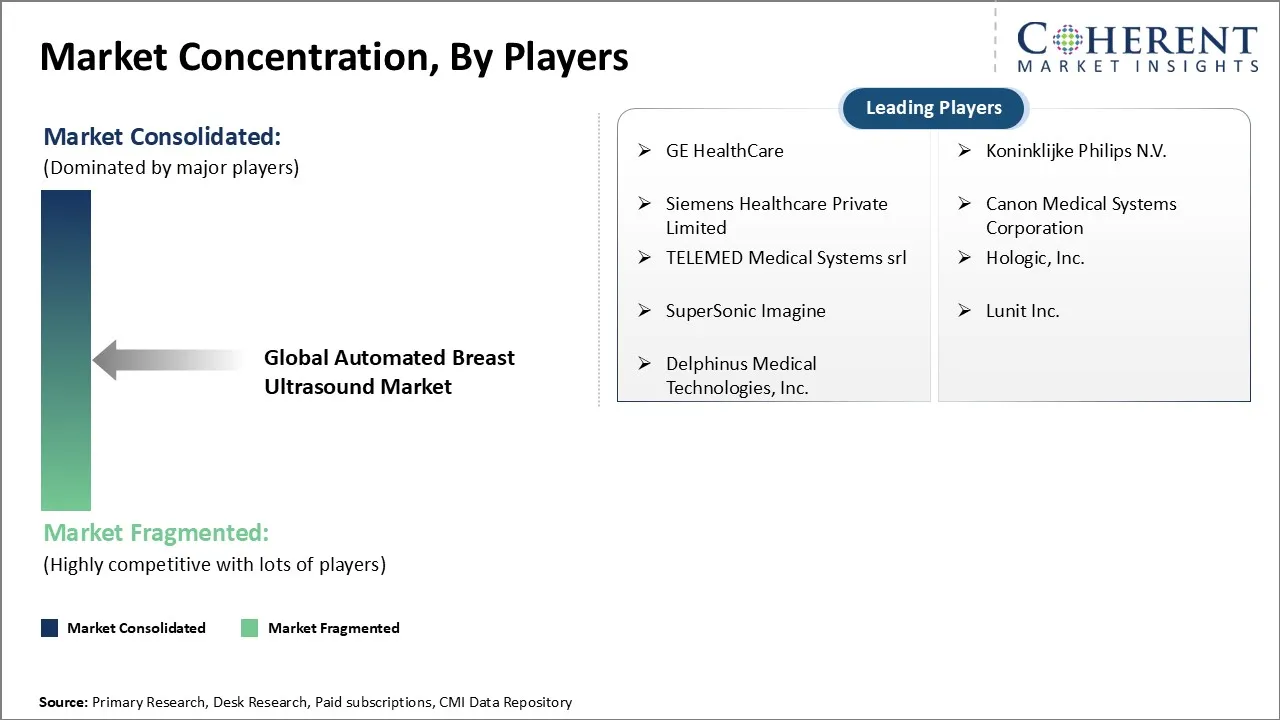
The global automated breast ultrasound market is characterized by competition between established medical imaging manufacturers and specialized breast imaging technology providers. GE HealthCare is also active with its Invenia ABUS portfolio focused on automated 3D breast imaging and improved scanning efficiency. Delphinus Medical Technologies markets the SoftVue ultrasound tomography system as an adjunctive tool for breast cancer screening. iSono Health is developing portable automated breast imaging through its ATUSA platform. Philips, Siemens Healthineers, Canon Medical Systems and Hologic are all active in the wider breast imaging ecosystem, whereas Lunit focuses on AI-powered breast imaging solutions. Critical to competitive differentiation are factors like imaging accuracy, AI integration, regulatory approvals, workflow efficiency and technological innovation.
Top Manufacturers and Notable Products/Solutions in the Automated Breast Ultrasound Market
Company/Manufacturer | Notable Product/Brand | Key Features |
GE HealthCare | Invenia ABUS Prime; Invenia ABUS Premium; ABUS StreamVue | Automated 3D whole-breast ultrasound imaging, dense breast screening, AI-assisted image review, advanced transducer technology, faster scanning, remote interpretation capabilities. |
Siemens Healthineers | ACUSON S2000 Automated Breast Volume Scanner (ABVS) | Automated breast volume acquisition, standardized 3D imaging, coronal-plane visualization, reproducible scanning, dedicated breast ultrasound analysis software. |
Delphinus Medical Technologies, Inc. | SoftVue 3D Whole Breast Ultrasound Tomography System | Automated whole-breast ultrasound tomography, ring-shaped transducer array, water-based imaging, 3D breast reconstruction, supplemental screening for women with dense breasts. |
iSono Health | ATUSA Automated 3D Breast Ultrasound Platform | Portable wearable scanner, automated volumetric image acquisition, standardized breast imaging, point-of-care deployment, digital image visualization |
Koninklijke Philips N.V. | EPIQ Elite; Elevate Plus with Koios AI | High-resolution breast ultrasound, AI-assisted lesion assessment, automated measurements, advanced transducers, integrated diagnostic imaging workflows. |
Canon Medical Systems Corporation | Aplio i-series; Aplio beyond | High-resolution breast ultrasound, shear wave elastography, advanced image processing, tissue characterization, breast imaging workflow optimization. |
Hologic, Inc. | SuperSonic MACH 30; SuperSonic MACH 40 | High-frequency breast ultrasound imaging, UltraFast imaging technology, shear wave elastography, breast lesion characterization, advanced diagnostic visualization. |
Market Report Scope
Automated Breast Ultrasound Market Report Coverage
Report Coverage | Details | ||
Base Year: | 2025 | Market Size in 2026: | USD 2.75 Bn |
Historical Data for: | 2020 to 2024 | Forecast Period: | 2026 to 2033 |
CAGR: | 15.23% | 2033 Value Projection: | USD 7.42 Bn |
Geographies covered: |
| ||
Segments covered: |
| ||
Companies covered: | GE HealthCare, Koninklijke Philips N.V., Siemens Healthcare Private Limited, Canon Medical Systems Corporation, TELEMED Medical Systems srl, Hologic, Inc., SuperSonic Imagine, Lunit Inc., Delphinus Medical Technologies, Inc. | ||
Growth Drivers: |
| ||
Restraints & Challenges: |
| ||
Analyst Opinion (Expert Opinion)
- The future of the global automated breast ultrasound market will increasingly focus on AI-assisted image interpretation, standardized screening workflows, and personalized breast cancer detection. Manufacturers that improve diagnostic accuracy while reducing radiologist workload and unnecessary patient recalls will be better positioned to gain market share. A 2026 study of 2,275 women explored the potential for AI-assisted selective ABUS interpretation as an alternative to reviewing each automated ultrasound examination and found potential for improved screening efficiency and clinical resource allocation.
- Growth will be fastest in Asia Pacific and North America, fueled by rising breast imaging infrastructure and supplemental screening demand. China is an opportunity for standardized, automated screening, and the U.S. has a well-developed market for specialized breast imaging technologies. A multicenter randomized clinical study was conducted in 9 districts in China in January 2025, involving 10537 women comparing automated breast volume scanning and handheld ultrasound. ABUS showed higher screening sensitivity without loss of specificity, supporting its potential use in larger screening programs.
- Instead of competing on imaging specifications, market players should focus on clinical performance, patient experience, workflow efficiency and cost-effective deployment of equipment. Manufacturers should demonstrate reliable lesion detection, shorter physician interpretation time, standardized image quality and compatibility with existing radiology systems. A prospective German study of 73 women undergoing a total of 162 ABUS exams, published on November 13, 2026, found that 98.2% of eligible respondents preferred ABUS to mammography for comfort and all 73 women were willing to undergo further ABUS exams.
Speak to the analyst
Want personalized insights?
Take the findings above to one of our principal consultants, or have the report rebuilt around the segments, geographies and competitors you actually track.
Market Segmentation
- By Product Type (Revenue, USD Bn, 2021-2033)
- Automated Breast Volume Scanner
- Automated Breast Ultrasound (ABUS)
- By End User (Revenue, USD Bn, 2021-2033)
- Hospital
- Diagnostics Imaging Laboratories
- Others
- By Region (Revenue, USD Bn, 2021-2033)
- North America
- U.S.
- Canada
- Latin America
- Brazil
- Mexico
- Argentina
- Rest of Latin America
- Europe
- Germany
- U.K.
- France
- Italy
- Spain
- Russia
- Rest of Europe
- Asia Pacific
- China
- India
- Japan
- Australia
- South Korea
- ASEAN
- Rest of Asia Pacific
- Middle East
- GCC
- Israel
- Rest of Middle East
- Africa
- South Africa
- Central Africa
- North Africa
- North America
- Key Players
- GE HealthCare
- Koninklijke Philips N.V.
- Siemens Healthcare Private Limited
- Canon Medical Systems Corporation
- TELEMED Medical Systems srl
- Hologic, Inc.
- SuperSonic Imagine
- Lunit Inc.
- Delphinus Medical Technologies, Inc.
Sources
Primary Research Interviews
- Breast radiologists and diagnostic imaging specialists
- Automated breast ultrasound (ABUS) technology developers
- Medical imaging equipment manufacturers and product managers
- Hospital radiology department heads and breast imaging center directors
- Breast cancer screening program coordinators
- Biomedical engineers and ultrasound application specialists
- Healthcare procurement managers and diagnostic equipment distributors
- Key opinion leaders (KOLs) in breast imaging, oncology, and diagnostic radiology
Databases
- World Health Organization (WHO) – Global Health Observatory
- International Agency for Research on Cancer (IARC) – Global Cancer Observatory (GLOBOCAN)
- National Cancer Institute (NCI) – Surveillance, Epidemiology, and End Results (SEER)
- U.S. Food and Drug Administration (FDA) – Medical Devices Databases
- Centers for Disease Control and Prevention (CDC) – Cancer Statistics
- National Library of Medicine – PubMed
- Eurostat – Healthcare and Cancer Statistics
- Organisation for Economic Co-operation and Development (OECD) – Health Statistics
Magazines
- Radiology Today
- Imaging Technology News (ITN)
- Diagnostic Imaging
- AuntMinnie
- Applied Radiology
- Health Imaging
Journals
- Radiology
- European Radiology
- American Journal of Roentgenology (AJR)
- Journal of Breast Imaging
- Journal of Ultrasound in Medicine
- Ultrasound in Medicine & Biology
- Academic Radiology
- Breast Cancer Research and Treatment
Newspapers
- The New York Times
- The Guardian
- The Wall Street Journal
- Financial Times
- The Economic Times
- The Japan Times
Associations
- American College of Radiology (ACR)
- Radiological Society of North America (RSNA)
- Society of Breast Imaging (SBI)
- European Society of Radiology (ESR)
- European Society of Breast Imaging (EUSOBI)
- American Institute of Ultrasound in Medicine (AIUM)
- Society of Diagnostic Medical Sonography (SDMS)
- International Society of Radiology (ISR)
Public Domain Sources
- Company Annual Reports and Investor Presentations
- Medical Imaging Manufacturer Product Catalogs and Technical Specifications
- FDA 510(k) Clearances, Premarket Approvals, and Medical Device Registrations
- WHO and IARC Breast Cancer Epidemiology Publications
- Government Breast Cancer Screening Guidelines and Healthcare Policy Documents
- Clinical Trial Registries, including ClinicalTrials.gov
- University and Hospital Clinical Research Publications
- Publicly Available Breast Ultrasound Clinical Validation Studies
- Patent Databases, including WIPO, USPTO, and Google Patents
- Government Healthcare Procurement and Medical Equipment Tender Databases
- Breast Imaging Reimbursement Policies and Medical Device Regulatory Publications
Proprietary Elements
- CMI Data Analytics Tool
- Proprietary CMI Existing Repository of Information for the Last 10 Years
Get access to 250+ pages report
Every segment, forecast, competitor profile and data table behind the analysis above — available for instant download.
- ESOMAR Member
- ISO 9001:2015 Certified
- D-U-N-S Registered
- GDPR & CCPA Compliant
Frequently Asked Questions
The global automated breast ultrasound market is expected to reach USD 7.42 Bn by 2033, compared to USD 2.75 Bn in 2026.
Major players operating in the global automated breast ultrasound market and broader breast imaging ecosystem include GE HealthCare, Koninklijke Philips N.V., Siemens Healthcare Private Limited, Canon Medical Systems Corporation, TELEMED Medical Systems srl, Hologic, Inc., SuperSonic Imagine, Lunit Inc., and Delphinus Medical Technologies, Inc.
High initial equipment investment, maintenance costs, limited reimbursement coverage for supplemental screening, and concerns regarding false-positive findings are key factors hampering market growth.
The rising prevalence of breast cancer, increasing demand for early diagnosis, growing adoption of supplemental screening among women with dense breast tissue, and advancements in AI-assisted breast imaging are driving market growth.
The global automated breast ultrasound market is anticipated to grow at a CAGR of 15.23% between 2026 and 2033.
North America is expected to dominate the global automated breast ultrasound market, accounting for an estimated 35.0% market share in 2026, supported by established breast imaging infrastructure and increasing demand for supplemental screening.
Automated breast ultrasound is a medical imaging technology that uses automated ultrasound scanning to generate three-dimensional images of breast tissue. It is primarily used as a supplemental imaging modality, particularly for women with dense breast tissue.