

Global Ultrasound Market Size and Forecast – 2026 to 2033
The Global Ultrasound Market is estimated to be valued at USD 10.93 Bn in 2026 and is expected to reach USD 17.67 Bn by 2033, exhibiting a compound annual growth rate (CAGR) of 7.1% from 2026 to 2033. This robust growth is driven by increasing adoption of advanced ultrasound technologies across healthcare sectors, expanding applications in diagnostic imaging, and rising prevalence of chronic diseases that necessitate non-invasive monitoring.
Key Takeaways of the Global Ultrasound Market
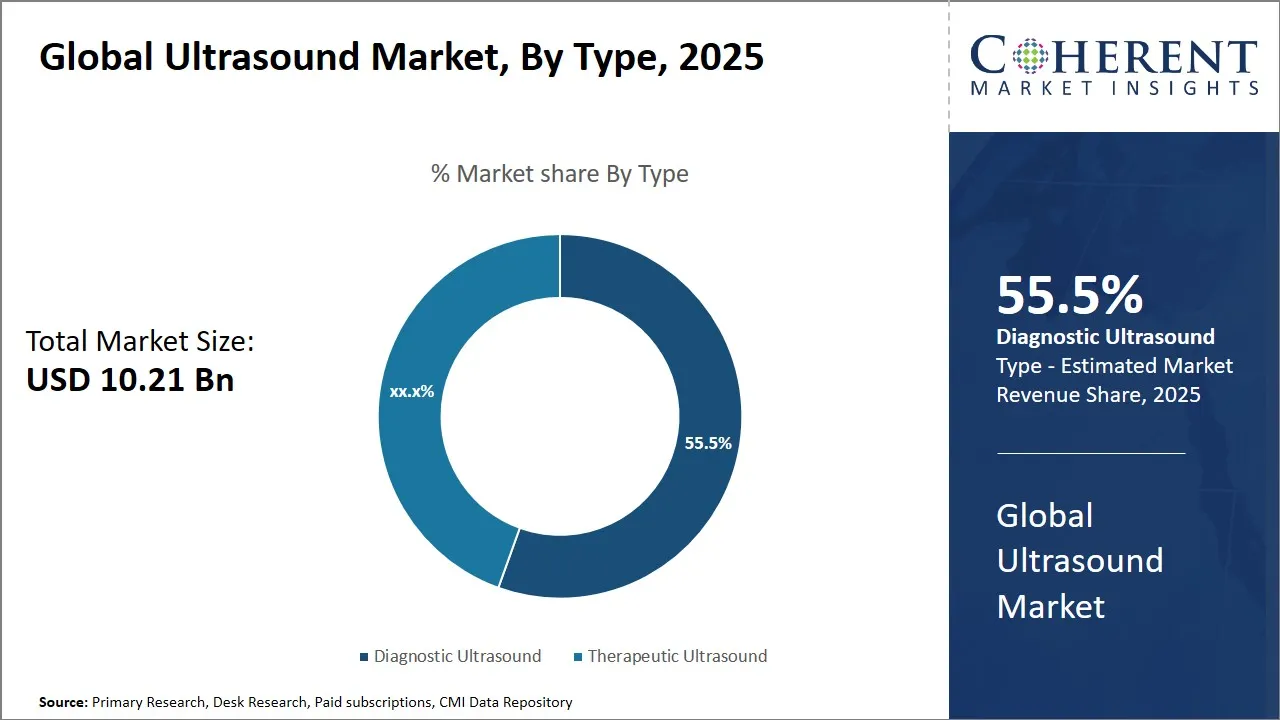
- In terms of type, diagnostic ultrasound is expected to hold the largest share of the global ultrasound market, accounting for 56.5% in 2026.
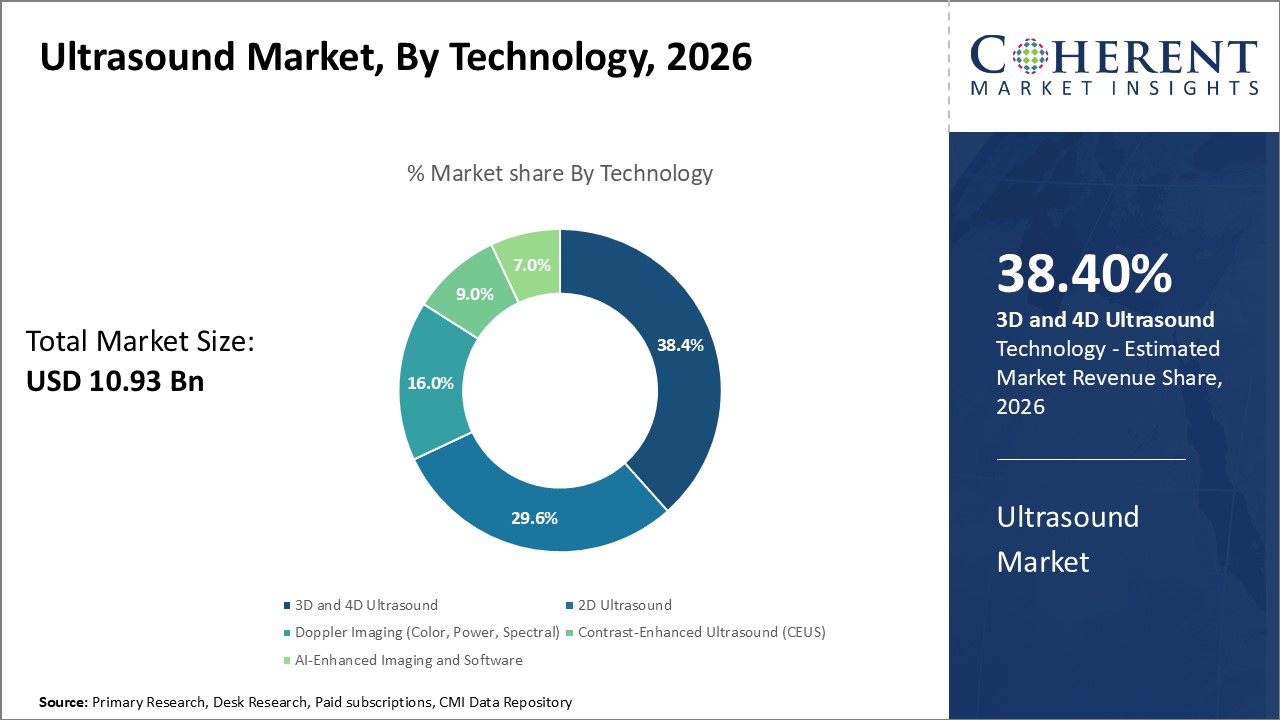
- The 3D and 4D ultrasound segment is also experiencing significant growth, projected to capture an estimated 38.4% of the market share by 2026.
- When examining the market based on portability, compact/portable systems are anticipated to lead with a 36.6% share in 2026.
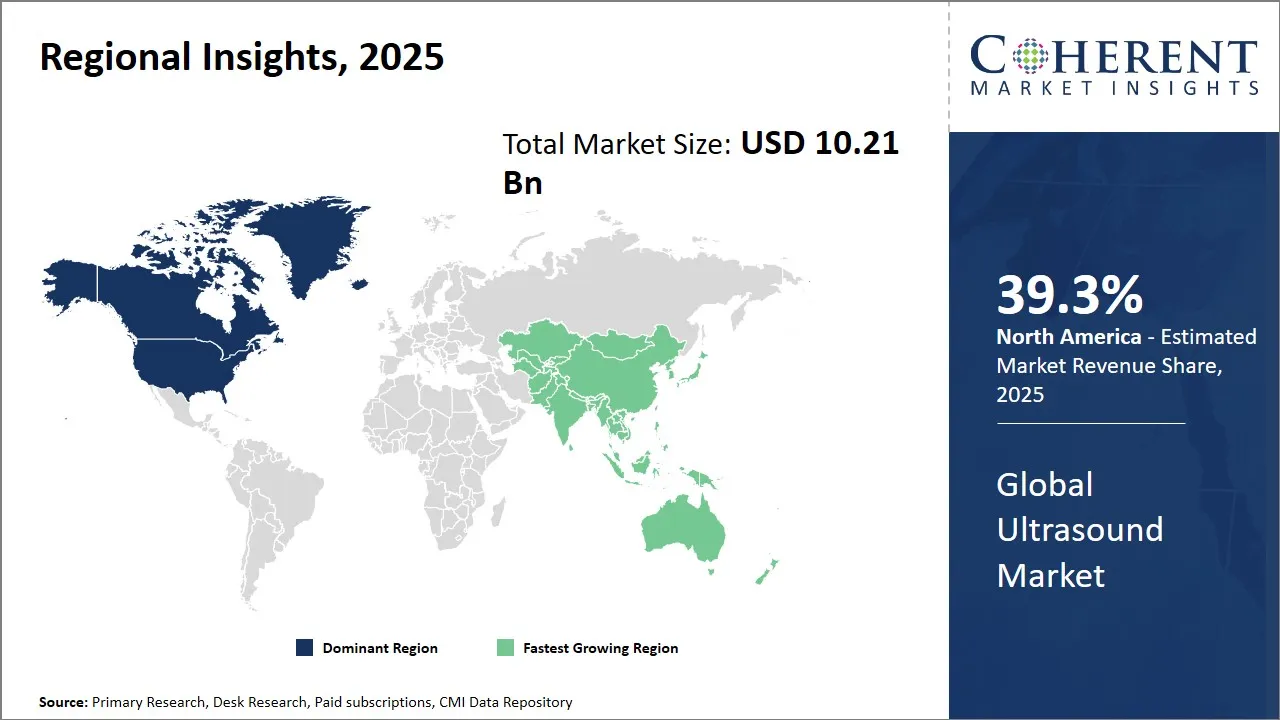
- North America is expected to lead the market, holding a share of 39. 3% in 2026. Asia Pacific is anticipated to be the fastest-growing region, with a market share of 23.6% in 2026.
Market Overview
Current market trends highlight a shift towards portable and handheld ultrasound devices, enabling point-of-care diagnostics and enhanced accessibility, especially in remote or underserved regions. Additionally, integration of artificial intelligence and machine learning algorithms in ultrasound systems is improving image accuracy and diagnostic efficiency. The market is also witnessing advancements in 3D ultrasound imaging, catering to growing demand in obstetrics, cardiology, and oncology, further propelling market expansion.
Current Events and Its Impact
Current Events | Description and its impact |
Launch of UK Focused Ultrasound Foundation |
|
Surge in Adoption of portable and Wireless POCUS Devices |
|
Segmental Insights
- Current Industry Events of 2026
- Market Size Estimation
- Regional Breakdown
- Competitive Landscape
- Customer Intelligence
- Segmental Analysis
- Pricing Analysis
- Key Market Drivers, Challenges & Future Trends
- Customized Insights Section
Ultrasound Market Insights, By Type – Dominance of Diagnostic Ultrasound is Driven by Expanding Clinical Applications and Technological Advancements
In terms of type, diagnostic ultrasound is expected to contribute the highest share of the global ultrasound market with 56.5% in 2026 owing to its widespread adoption across diverse medical specialties and continuous technological improvements that enhance diagnostic accuracy. Diagnostic ultrasound plays a critical role in non-invasive imaging, enabling real-time visualization of internal organs, tissues, and blood flow, which strongly supports clinical decision-making. Its non-ionizing nature, cost-effectiveness, and safety profile make it the preferred imaging modality, especially in obstetrics, cardiology, radiology, and emergency medicine. The broad spectrum of applications—from prenatal fetal monitoring and abdominal imaging to vascular assessments—has cemented its position as an indispensable diagnostic tool.
Factors propelling the growth of the diagnostic ultrasound segment include advancements in image resolution and the development of specialized probes that can accommodate different patient anatomies and pathologies. Integration with contrast agents has further amplified its diagnostic capabilities, improving visualization of microvascular structures and liver lesions. Moreover, the increasing prevalence of chronic diseases such as cardiovascular disorders and cancer has elevated the clinical demand for prompt, accurate diagnosis, thereby stimulating ultrasound use. Healthcare providers also benefit from the portability and ease of use of diagnostic ultrasound devices, which facilitate bedside examinations and enhance patient throughput.
Ultrasound Market Insights, By Technology – Prevalence of 3D and 4D Ultrasound Supported by Established Technology and Cost Efficiency
The 3D and 4D ultrasound segment in the global ultrasound market is rapidly gaining traction with an estimated share of 38.4% in 2026, driven by technological advancements and the increasing demand for high-resolution imaging in specialized diagnostics. These technologies offer significant improvements over traditional 2D ultrasound by providing detailed three-dimensional images that enhance the visualization of fetal development, organ structure, and blood flow patterns. 3D ultrasound creates static images, while 4D ultrasound adds the element of real-time motion, allowing clinicians to observe the dynamic movements of organs or fetuses during examination. These features make 3D and 4D ultrasound particularly valuable in obstetrics, cardiology, and musculoskeletal imaging.
Despite their growing popularity, the adoption of 3D and 4D ultrasound is still somewhat limited by factors such as higher equipment costs and the need for specialized training. While these technologies offer superior image quality and diagnostic precision, they require more advanced expertise, which can restrict their widespread use in lower-resource settings or smaller clinics.
In June 2024, Fraunhofer, a Germany-based publicly-owned research organization, announced that its researchers had developed a 3D ultrasound technology for precise, non-invasive brain stimulation. This system targets specific brain areas to treat conditions like epilepsy, Parkinson's disease, and stroke aftereffects, offering a safer alternative to traditional methods like Deep Brain Stimulation (DBS).
Ultrasound Market Insights, By Portability – Growth of Compact/Portable Ultrasound Systems Fueled by Increasing Demand for Mobility and Point-of-Care Accessibility
When analyzing the global ultrasound market based on portability, compact/portable systems command the highest share with an estimated 36.6% in 2026, driven primarily by their versatility and growing adoption in diverse clinical environments that demand quick, accessible imaging solutions. The rising need for imaging modalities that can be easily transported within hospital settings or deployed in remote locations has propelled the prominence of compact ultrasound devices, offering an effective solution where traditional bulky equipment falls short.
The compact form factor, combined with technological advances in miniaturized transducers and improved battery life, allows healthcare practitioners to perform high-quality ultrasound scans at the patient’s bedside or in emergency and critical care units. This flexibility significantly enhances workflow efficiency, reduces patient transfer times, and speeds up diagnosis and treatment initiation.
In July 2023, Konica Minolta Healthcare Americas, Inc., a leading provider of primary imaging solutions, launched the PocketPro H2, a wireless handheld ultrasound device designed for general imaging in point-of-care applications. Partnering with Healcerion, Konica Minolta will distribute the PocketPro H2 in the U.S. for both human and veterinary use. This compact system is optimized for musculoskeletal, pain management, vascular access, and needle guidance applications, offering excellent image quality and portability.
Role of Artificial Intelligence (AI) on the Global Ultrasound Market
- Artificial Intelligence (AI) is reshaping the global ultrasound market by driving efficiency, cost reduction, and process automation. AI-powered ultrasound systems enhance diagnostic accuracy through predictive analytics, reducing human error and enabling quicker, more reliable decision-making. By leveraging machine learning algorithms, AI systems can analyze vast amounts of imaging data to detect patterns and anomalies, improving the early detection of diseases like cancer and cardiovascular issues. Additionally, AI helps personalize patient care by providing tailored treatment plans based on individual imaging data, enhancing patient outcomes. AI also automates routine tasks, freeing up medical professionals to focus on complex cases, thus optimizing workflow efficiency. This transformation not only improves clinical outcomes but also reduces operational costs, making ultrasound services more affordable and accessible.
- Emerging opportunities within the ultrasound industry, driven by AI, include the development of innovative products and services that deliver greater value to healthcare providers and patients. AI enables companies to explore new business models, such as cloud-based ultrasound solutions, which provide remote access to diagnostic tools and expert analysis, especially in underserved regions. Companies like GE Healthcare and Konica Minolta are already incorporating AI into their ultrasound technologies, offering faster and more accurate imaging systems. However, while AI brings substantial advantages, there are potential drawbacks, including reliance on technology, data privacy concerns, and the need for continuous algorithm updates. Companies must balance the benefits of AI with thoughtful integration, ensuring that AI enhances, rather than replaces, human expertise. By strategically adopting AI, firms in the global ultrasound market can achieve scalable growth, improve patient care, and gain a competitive edge.
Regional Insights
North America Ultrasound Market Analysis and Trends
In North America, the dominance in the global ultrasound market is driven by a mature healthcare infrastructure with an estimated share of 39.3% in 2026, significant investments in medical technology, and favorable government policies promoting advanced diagnostic imaging. The presence of a robust ecosystem comprising leading medical device manufacturers, cutting-edge research institutions, and well-established distribution networks creates a fertile environment for market growth.
The U.S., in particular, benefits from comprehensive healthcare coverage and high per capita expenditure on medical equipment, facilitating the adoption of innovative ultrasound technologies. Prominent companies such as GE Healthcare, Philips Healthcare, and Siemens Healthineers have a strong presence, continuously advancing ultrasound equipment through technological innovations like portable and AI-integrated devices. Additionally, regulatory frameworks supporting timely approvals and reimbursement policies contribute to the entrenched market leadership of the region.
Asia Pacific Ultrasound Market Analysis and Trends
Meanwhile, the Asia Pacific region is expected to exhibit the fastest growth in the global ultrasound market, driven by expanding healthcare access with share of 23.6% in 2026, increasing prevalence of chronic and lifestyle diseases, and rapid modernization of medical facilities across emerging economies. Government initiatives aimed at improving healthcare infrastructure, along with rising healthcare expenditure, are significantly propelling market expansion. Countries such as China and India are witnessing substantial increases in diagnostic centers equipped with ultrasound systems, fueled by growing awareness and demand for non-invasive diagnostic procedures. The presence of both international giants like Canon Medical Systems and Mindray Medical, alongside rising domestic manufacturers, fosters competitive innovation and market penetration.
In June 2021, Wipro, a leading global information technology, consulting, and business process services company, and GE Healthcare, a global leader in medical technology, pharmaceutical diagnostics, and digital solutions, began local manufacturing of the Versana Ultrasound range in India. This initiative is part of their strategy to enhance localization and strengthen the supplier ecosystem.
Global Ultrasound Market Outlook for Key Countries
U.S. Ultrasound Market Trends
The U.S. ultrasound market is characterized by advanced diagnostic imaging practices supported by strong government funding and private healthcare investments. Major players including GE Healthcare and Philips Healthcare dominate the landscape, driving innovation in portable and AI-enhanced ultrasound systems. High clinical demand for specialties like cardiology and obstetrics fuels continuous upgrades and deployment. Furthermore, reimbursement policies under Medicare and private insurers encourage the adoption of cutting-edge ultrasound technologies, sustaining North America’s leadership in the global market.
For instance, in April 2024, Butterfly Network, Inc., a pioneer in ultrasound-on-chip technology and digital health solutions, launched Butterfly iQ3 in the U.S. The new device features their proprietary P4.3 Ultrasound-On-Chip technology, enabling faster image transfers, improved frame rates, and enhanced 3D imaging in a compact, ergonomic design.
Germany Ultrasound Market Trends
Germany’s ultrasound market benefits from a well-established healthcare system and a strong industrial base in medical technology. Siemens Healthineers, headquartered in Germany, plays a key role in delivering technologically advanced ultrasound solutions domestically and globally. The government’s emphasis on quality healthcare and technological innovation supports the integration of 3D/4D imaging and elastography in clinical practice. Germany's focus on research and development within the medical imaging sector ensures steady advancements and adoption within hospitals and outpatient centers.
In June 2024, Siemens Healthineers, a leading global medical technology company, introduced advanced ultrasound systems incorporating AI-powered features to increase diagnostic confidence and improve workflow efficiency across various clinical environments.
China Ultrasound Market Trends
China is rapidly expanding its ultrasound market amidst substantial healthcare reforms and increasing investments aimed at rural healthcare accessibility. Leading manufacturers like Mindray Medical have emerged as prominent players, offering cost-effective yet advanced ultrasound equipment tailored for diverse clinical needs. Government policies promoting technological self-reliance and hospital modernization have encouraged widespread adoption, particularly in second- and third-tier cities. The country’s growing middle class and increasing demand for maternal and chronic disease diagnostics bolster market prospects.
In October 2022, GE Healthcare, a global leader in medical technology, pharmaceutical diagnostics, and digital solutions, announced the establishment of its Greater China ultrasound headquarters in Wuxi New District (WND), China. The company has been operating in Wuxi since 1996, with the city becoming its largest global ultrasound center and most comprehensive production base for clinical diagnostic products.
India Ultrasound Market Trends
India's ultrasound market is growing swiftly due to increased healthcare infrastructure development and greater awareness of diagnostic imaging’s role in disease management. The presence of both multinational companies such as Philips Healthcare and local firms enhances technology penetration into urban and semi-urban areas. Government healthcare schemes aimed at expanding primary care facilities encourage the use of portable ultrasound devices, especially in maternal and fetal monitoring. The growing private healthcare sector also fuels demand, reinforcing India's position as a key growth hub in the Asia Pacific region.
In February 2024, FUJIFILM India, a leader in diagnostic imaging and information systems, has launched the ALOKA ARIETTA 850 Diagnostic Ultrasound System in India, with its first-ever installation at Fortis Hospital in Bengaluru, Karnataka. This state-of-the-art endoscopic ultrasound machine provides superior image quality and enhances diagnostic precision, particularly in detecting pancreatic cancers, early gastrointestinal cancers, and submucosal tumors.
Market Players, Key Developments, and Competitive Intelligence
Key Developments
- In June 2025, Royal Philips, a global leader in health technology, launched the Flash Ultrasound System 5100 POC, a next-gen point-of-care (POC) ultrasound system designed to meet the rapid needs of critical care, emergency medicine, anesthesia, and musculoskeletal imaging. This highly portable system combines exceptional image clarity, smart automation, and intuitive touchscreen controls, empowering clinicians to make confident, real-time decisions in high-pressure environments such as the ER, ICU, and trauma units.
- In March 2025, Vave Health, a leading innovator in affordable medical imaging solutions, has launched the world’s first wireless, handheld, whole-body ultrasound using a single PZT transducer. The Universal Wireless Probe combines linear and phased imaging technology, offering high-quality full-body imaging without ongoing subscription fees or hidden costs. Designed for clinical and educational settings, it enhances efficiency, accuracy, and diagnostics, making ultrasound more accessible and portable for medical professionals.
- In January 2025, Samsung Medison, a global leader in medical ultrasound technology, launched the Z20 AI-powered ultrasound system in the U.S., designed specifically for advanced obstetrician and gynecologist (OB/GYN) applications. The system introduces innovations to tackle diagnostic challenges such as high body mass index (BMI) patients and operator variability, while addressing staffing shortages that impact exam quality. Kyu Tae Yoo, CEO of Samsung Medison, emphasized the company’s commitment to transforming women’s health imaging with breakthrough technology.
- In January 2025, GE HealthCare received U.S. FDA 510(k) clearance for its Voluson Expert Series ultrasound systems, featuring high-resolution imaging, advanced ultrasound technology, and AI-powered automation to enhance diagnostics and workflow efficiency in women’s healthcare.
Top Strategies Followed by Global Ultrasound Market Players
- Established players dominate the industry by making substantial investments in research and development (R&D) to drive innovation and create high-performance ultrasound products. These companies focus on integrating advanced technologies such as AI-enhanced imaging, 3D/4D visualization, and portable system designs to meet the evolving demands of healthcare providers. Additionally, they form strategic partnerships and alliances with major Original Equipment Manufacturers (OEMs) and key industry stakeholders.
- In September 2024, Merz Aesthetics, a global leader in aesthetic treatments, has launched its updated, USFDA-cleared Ultherapy PRIME system for non-invasive skin lifting. Ultherapy uses ultrasound technology to stimulate collagen and elastin, lifting sagging skin in areas such as the eyebrow, neck, décolleté, and under the chin.
- Mid-level players in the ultrasound market adopt strategies that focus on delivering cost-effective solutions without compromising essential quality, catering primarily to price-sensitive segments such as small clinics and healthcare centers in developing regions. These companies concentrate on optimizing manufacturing processes and utilizing scalable technologies to reduce costs, thereby offering ultrasound systems that provide reliable performance at competitive price points. To enhance their market presence and technological capabilities, mid-level players frequently collaborate with research institutions, technology providers, and local manufacturers.
- For instance, in July 2023, Konica Minolta Healthcare Americas, Inc., a leading provider of primary imaging solutions, launched PocketPro H2—a wireless handheld ultrasound device designed for point-of-care use. Developed in partnership with Healcerion, PocketPro H2 is optimized for pain management, vascular access, and needle guidance.
- Small-scale players in the global ultrasound market often carve out niche opportunities by focusing on specialized features or innovative products that large and mid-level companies may overlook. These players emphasize the adoption of cutting-edge technologies such as miniaturization, wireless connectivity, and user-friendly interfaces to develop unique product offerings tailored to specific clinical applications or regional healthcare needs. By prioritizing innovation within limited resources, small-scale firms manage to stay competitive and agile in a rapidly evolving marketplace.
- For instance, in May 2024, Exo, a developer of point-of-care ultrasound (POCUS) technology, launched Exo Works Connect, a POCUS application package designed to streamline ultrasound adoption in healthcare settings.
Market Report Scope
Ultrasound Market Report Coverage
| Report Coverage | Details | ||
|---|---|---|---|
| Base Year: | 2025 | Market Size in 2026: | USD 10.93 Bn |
| Historical Data for: | 2020 To 2024 | Forecast Period: | 2026 To 2033 |
| Forecast Period 2026 to 2033 CAGR: | 7.1% | 2033 Value Projection: | USD 17.67 Bn |
| Geographies covered: |
| ||
| Segments covered: |
| ||
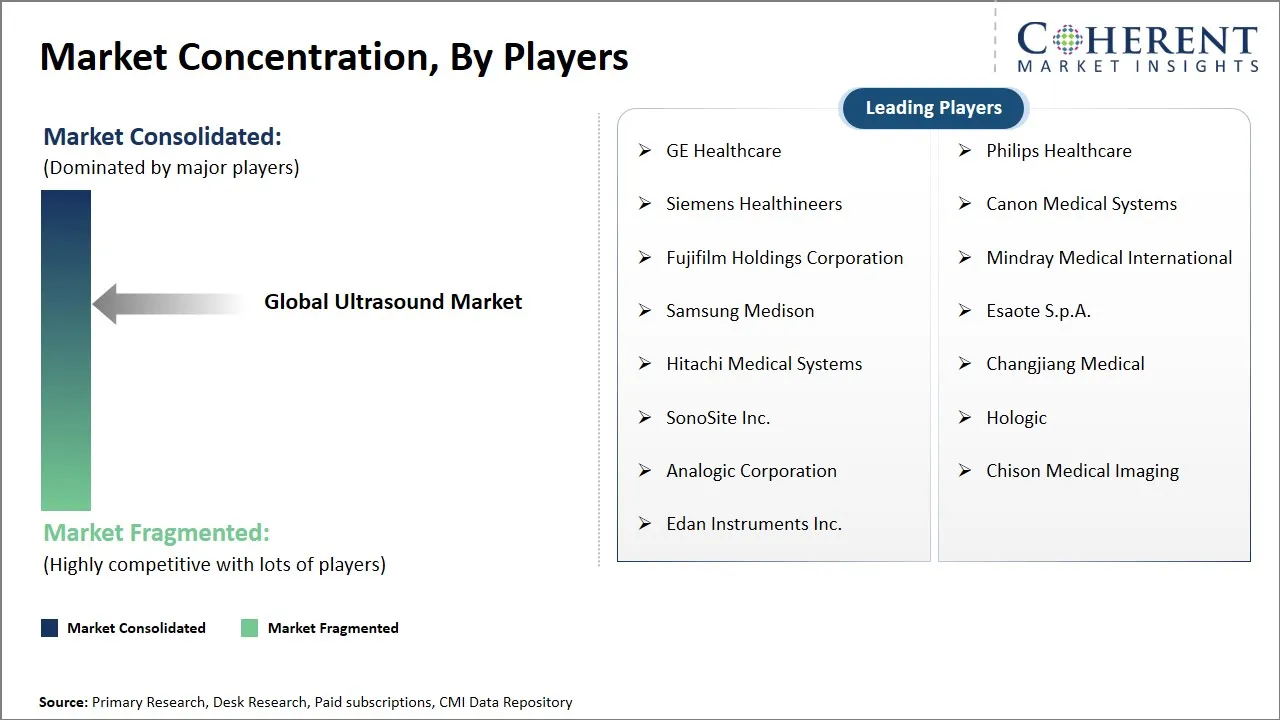
| Companies covered: | GE Healthcare, Philips Healthcare, Siemens Healthineers, Canon Medical Systems, Fujifilm Holdings Corporation, Mindray Medical International, Samsung Medison, Esaote S.p.A., Hitachi Medical Systems, Changjiang Medical, SonoSite Inc., Hologic, Analogic Corporation, Chison Medical Imaging, and Edan Instruments Inc. | ||
| Growth Drivers: |
| ||
| Restraints & Challenges: |
| ||
Ultrasound Market Dynamics
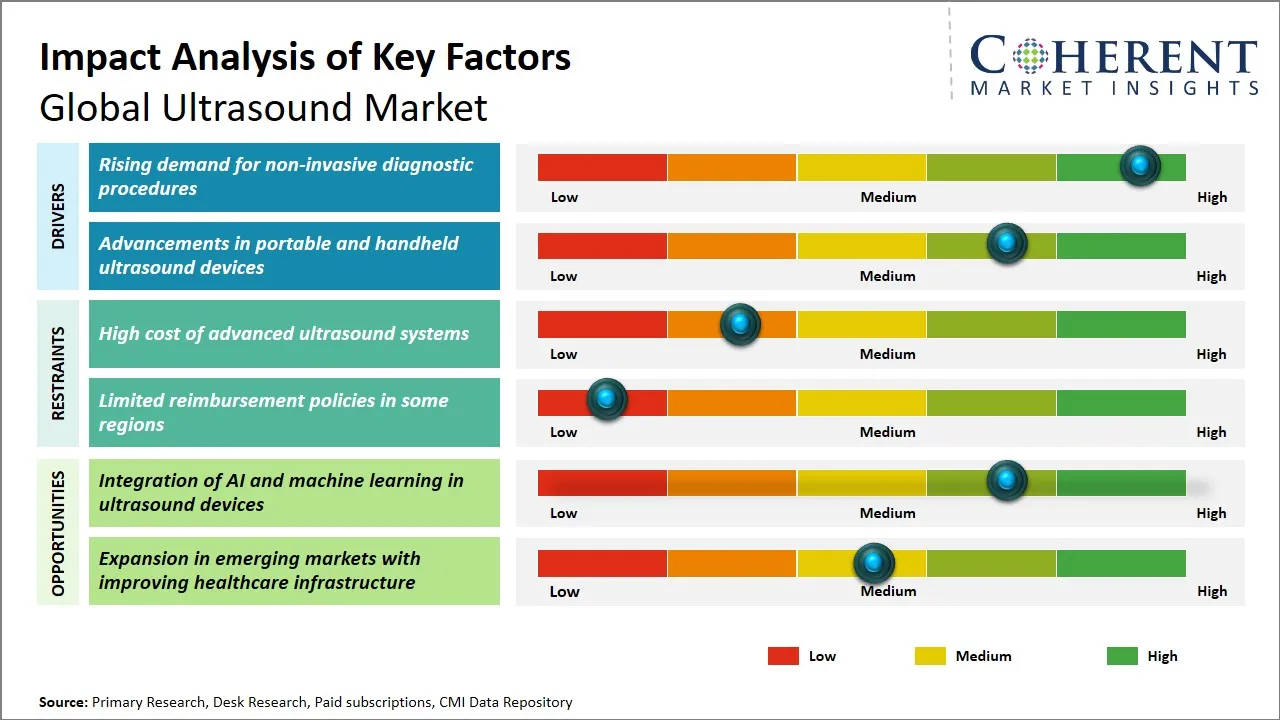
Ultrasound Market Driver - Rising Demand for Non-invasive Diagnostic Procedures
The increasing preference for non-invasive diagnostic techniques is significantly driving the adoption of ultrasound technology worldwide. Patients and healthcare providers alike are favoring methods that offer minimal discomfort, reduced risk of infections, and quicker recovery times, positioning ultrasound as a preferred diagnostic tool. Unlike other imaging modalities that may involve ionizing radiation or invasive interventions, ultrasound provides real-time imaging through sound waves, making it inherently safer for repeated use, especially in sensitive populations such as pregnant women and pediatric patients. Additionally, advancements in ultrasound technology, including improved image resolution and portable devices, have expanded its applicability across various medical fields, from cardiology to obstetrics and musculoskeletal assessments.
For instance, in July 2024, InMode Ltd., a global leader in advanced medical technologies, unveiled IgniteRF, a cutting-edge minimally invasive platform featuring nine technologies for soft tissue contraction across various depths. IgniteRF complements InMode's BodyTite, FaceTite, Morpheus8, and the newly introduced QuantumRF, which uses fractionated radiofrequency to deliver precise, deep tissue treatments without invasive surgery.
Ultrasound Market Opportunity - Integration of AI and Machine Learning in Ultrasound Devices
The integration of artificial intelligence (AI) and machine learning (ML) technologies into ultrasound devices represents a significant opportunity to transform the global ultrasound market. AI-powered ultrasound systems enhance diagnostic accuracy by enabling automated image analysis, reducing operator dependency, and facilitating real-time clinical decision-making. Machine learning algorithms improve image quality through noise reduction, segmentation, and artifact removal, which allows for clearer visualization of anatomical structures. Additionally, AI can assist in identifying patterns and anomalies that may be subtle or challenging for the human eye, thereby supporting early disease detection and personalized treatment planning. The adoption of AI also accelerates workflow efficiency by automating routine tasks such as measurements and report generation, ultimately reducing examination times and increasing patient throughput.
In April 2024, GE HealthCare, a leading global medical technology and digital solutions innovator, launched the AI-enhanced Voluson Signature 20 and 18 ultrasound systems to revolutionize women’s health imaging. These systems integrate advanced artificial intelligence and ergonomic design to enhance image quality and reduce exam time, supporting clinicians in making faster and more accurate diagnoses. The new technology helps address the increasing demand for women's health services while mitigating workforce shortages in healthcare.
Analyst Opinion (Expert Opinion)
- The global ultrasound market is experiencing strong growth driven by several key factors. Technological advancements have revolutionized ultrasound devices, with innovations such as portable and handheld models, enhanced imaging quality, and AI integration improving diagnostics and accessibility. Increasing healthcare awareness, a rise in chronic diseases, and the growing demand for non-invasive procedures also contribute significantly to market growth. The regulatory environment, especially in regions like North America and Europe, has supported the widespread adoption of ultrasound technology with clearer guidelines and reimbursement policies. However, challenges such as high equipment costs and the need for skilled professionals remain as barriers to broader market penetration, particularly in emerging economies.
- Emerging opportunities lie in the miniaturization of ultrasound devices, making them more affordable and accessible, especially in point-of-care settings. The integration of artificial intelligence is another promising development, improving diagnostic accuracy and operational efficiency. Conferences such as the Radiological Society of North America (RSNA) annual meeting and the European Society of Radiology (ESR) Congress have played a pivotal role in advancing ultrasound technology, showcasing breakthroughs and fostering collaboration. Additionally, programs like the "Ultrasound for Global Health" initiative by the World Health Organization (WHO) are focusing on improving ultrasound access in low-resource settings, a move expected to expand the market and address health equity challenges.
Speak to the analyst
Want personalized insights?
Take the findings above to one of our principal consultants, or have the report rebuilt around the segments, geographies and competitors you actually track.
Market Segmentation
- Type Insights (Revenue, USD Bn, 2021 - 2033)
- Diagnostic Ultrasound
- Therapeutic Ultrasound
- Technology Insights (Revenue, USD Bn, 2021 - 2033)
- 2D Ultrasound
- 3D and 4D Ultrasound
- Doppler Imaging (Color, Power, Spectral)
- Contrast-Enhanced Ultrasound (CEUS)
- AI-Enhanced Imaging and Software
- Portability Insights (Revenue, USD Bn, 2021 - 2033)
- Compact/Portable Systems
- Handheld/Point-of-Care (POC) Systems
- Cart/Trolley-Based Systems
- Product Insights (Revenue, USD Bn, 2021 - 2033)
- Ultrasound Probes
- Ultrasound Gel
- Ultrasound Software
- Ultrasound Devices
- Other Consumables and Accessories
- Display Type Insights (Revenue, USD Bn, 2021 - 2033)
- Colored Display Systems
- Black and White Systems
- Application Insights (Revenue, USD Bn, 2021 - 2033)
- Obstetrics and Gynecology
- Cardiology
- Musculoskeletal
- Abdominal Imaging
- Urology
- Neonatal Care
- Oncology
- Vascular Imaging
- Emergency Medicine
- Ophthalmology
- Others
- End User Insights (Revenue, USD Bn, 2021 - 2033)
- Hospitals
- Clinics
- Ambulatory Surgical Centers
- Diagnostic Imaging Centers
- Homecare and Telemedicine Settings
- Others (Academic and Research Institutes, etc.)
- Regional Insights (Revenue, USD Bn, 2021 - 2033)
- North America
- U.S.
- Canada
- Latin America
- Brazil
- Argentina
- Mexico
- Rest of Latin America
- Europe
- Germany
- U.K.
- Spain
- France
- Italy
- Russia
- Rest of Europe
- Asia Pacific
- China
- India
- Japan
- Australia
- South Korea
- ASEAN
- Rest of Asia Pacific
- Middle East
- GCC Countries
- Israel
- Rest of Middle East
- Africa
- South Africa
- North Africa
- Central Africa
- North America
- Key Players Insights
- GE Healthcare
- Philips Healthcare
- Siemens Healthineers
- Canon Medical Systems
- Fujifilm Holdings Corporation
- Mindray Medical International
- Samsung Medison
- Esaote S.p.A.
- Hitachi Medical Systems
- Changjiang Medical
- SonoSite Inc.
- Hologic
- Analogic Corporation
- Chison Medical Imaging
- Edan Instruments Inc.
Sources
Primary Research Interviews
- Industry Stakeholders List
- Institute of Cancer Research (UK)
- Oxford University
- Imperial College London
- King’s College London
- University College London
- Sonablate
- End-users List
- NHS England
- Guy’s & St Thomas’ Hospital
- Royal Marsden Hospital
- St Bartholomew’s Hospital
- Mayo Clinic
- Cleveland Clinic
Government and International Databases
- National Institute for Health and Care Excellence (NICE)
- U.S. Food and Drug Administration (FDA)
- European Medicines Agency (EMA)
- World Health Organization (WHO)
- National Health Service (NHS)
- United States Centers for Disease Control and Prevention (CDC)
Trade Publications
- Ultrasound Journal
- Radiology Today
- Journal of Diagnostic Medical Sonography
- Journal of Ultrasound in Medicine
- Imaging Technology News
- European Journal of Radiology
Academic Journals
- The Lancet
- Journal of Clinical Ultrasound
- Radiology Journal
- British Journal of Radiology
- Ultrasound in Medicine & Biology
- Journal of Ultrasound in Medicine
Reputable Newspapers
- The Guardian
- Financial Times
- The New York Times
- The Independent
- The Wall Street Journal
- BBC News
Industry Associations
- European Society of Radiology (ESR)
- American Institute of Ultrasound in Medicine (AIUM)
- Radiological Society of North America (RSNA)
- International Society of Ultrasound in Obstetrics and Gynecology (ISUOG)
- American College of Radiology (ACR)
- World Federation for Ultrasound in Medicine and Biology (WFUMB)
Public Domain Resources
- Google Scholar
- OpenAIRE
- US National Library of Medicine
- National Institutes of Health (NIH) Database
- World Bank Open Data
Proprietary Elements
- CMI Data Analytics Tool: Proprietary analytics tool to analyze real-time market trends, consumer behavior, and technology adoption in market
- Proprietary CMI existing repository of information for last 8 years
Get access to 250+ pages report
Every segment, forecast, competitor profile and data table behind the analysis above — available for instant download.
- ESOMAR Member
- ISO 9001:2015 Certified
- D-U-N-S Registered
- GDPR & CCPA Compliant
Missing comfort of reading report in your local language? Find your preferred language:
Transform your Strategy with Exclusive Trending Reports
Frequently Asked Questions
The global ultrasound market is estimated to be valued at USD 10.93 Bn in 2026 and is expected to reach USD 17.67 Bn by 2033.
The CAGR of the global ultrasound market is projected to be 7.1% from 2026 to 2033.
Rising demand for non-invasive diagnostic procedures and Advancements in portable and handheld ultrasound devices are the major factors driving the growth of the global ultrasound market.
High cost of advanced ultrasound systems and limited reimbursement policies in some regions are the major factors hampering the growth of the global ultrasound market.
In terms of Type, Diagnostic Ultrasound is estimated to dominate the market revenue share in 2026.
The market will grow with technological innovations, expanding access in emerging countries, and increasing demand for personalized healthcare solutions.
Ultrasound aids in early cancer detection by identifying abnormal growths and monitoring existing tumors, especially in organs like the liver, breast, and prostate.