

Positron Emission Tomography Scanners Market Size and Trends
The global positron emission tomography (PET) scanners market is estimated to be valued at USD 2.70 Bn in 2026 and is expected to reach USD 4.06 Bn by 2033, exhibiting a compound annual growth rate (CAGR) of 6.0% from 2026 to 2033.
Key Takeaways
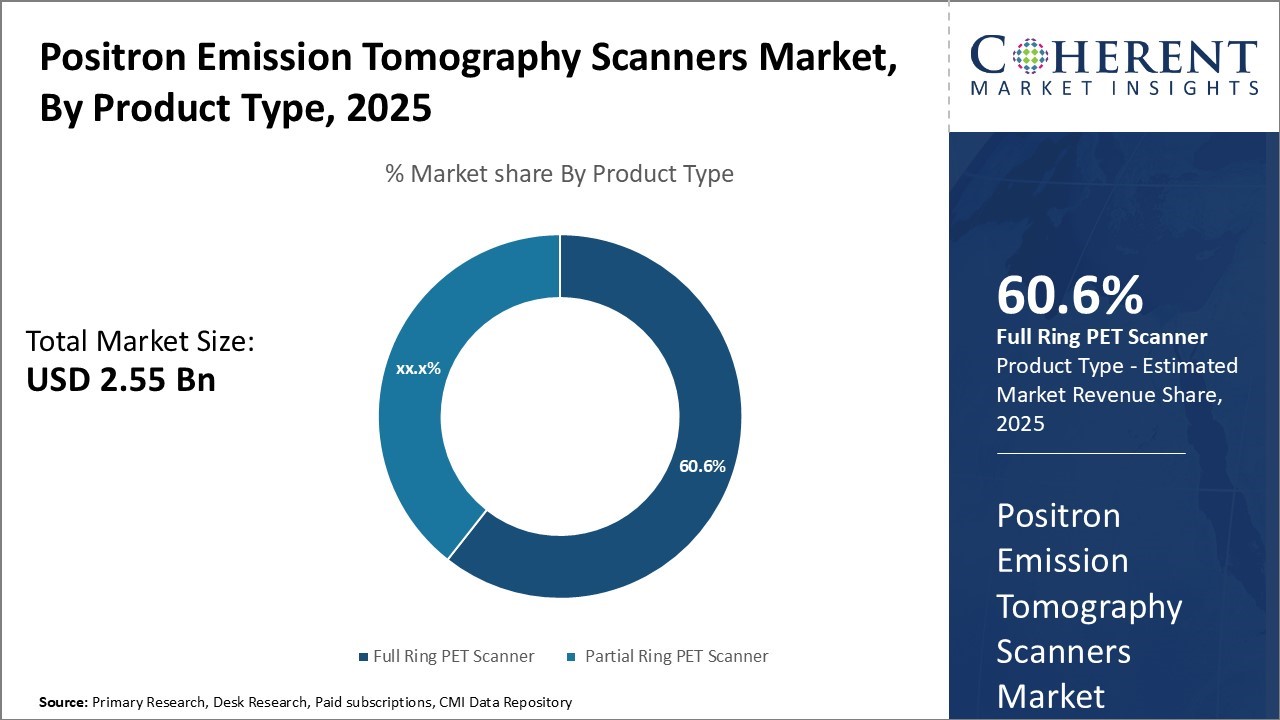
- Based on the Product Type, the Full Ring PET Scanner segment is dominating the market with 61.6%, owing to the technical advancements.
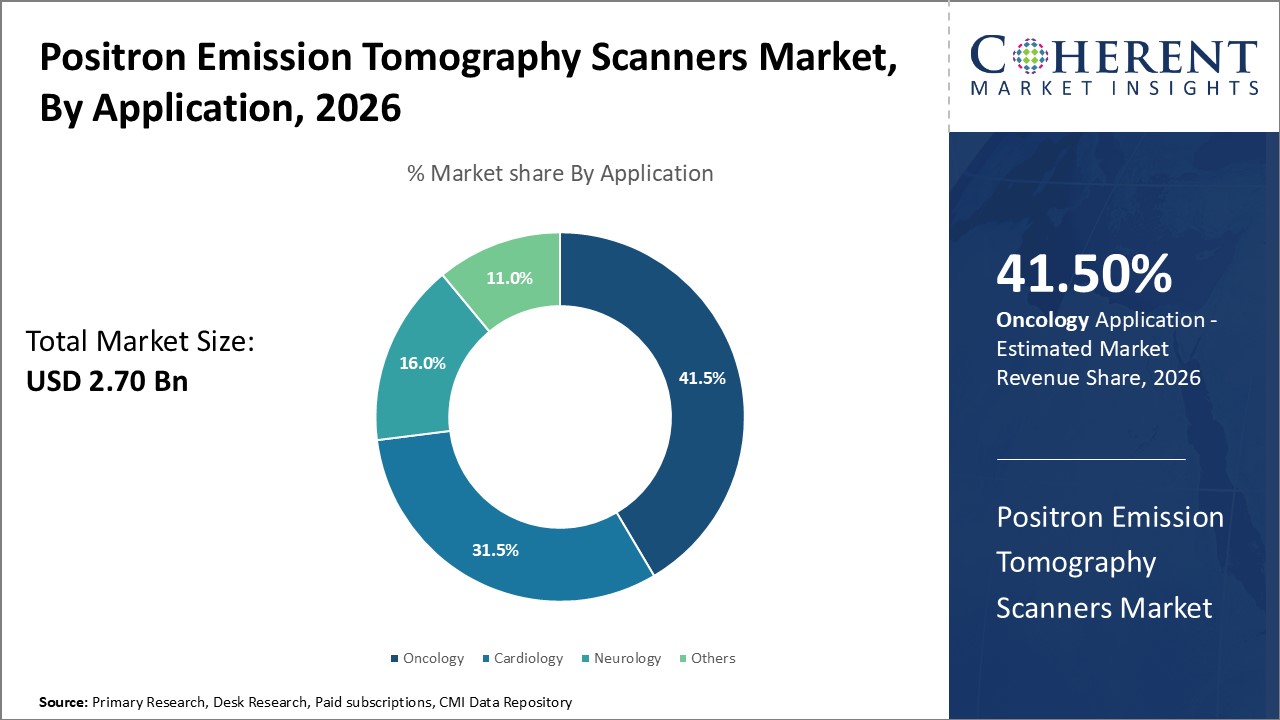
- Based on Application, the Oncology segment is leading the market in 2026 with 41.5%, owing to the increasing cancer cases worldwide.
- Based on Detector Type, the lutetium oxyorthosilicate segment is expected to dominate the market in 2026 with 35.5%, owing to its superior performance attributes.
- Based on End User, the Hospitals segment is expected to dominate the market in 2026, owing to a high volume of patients.
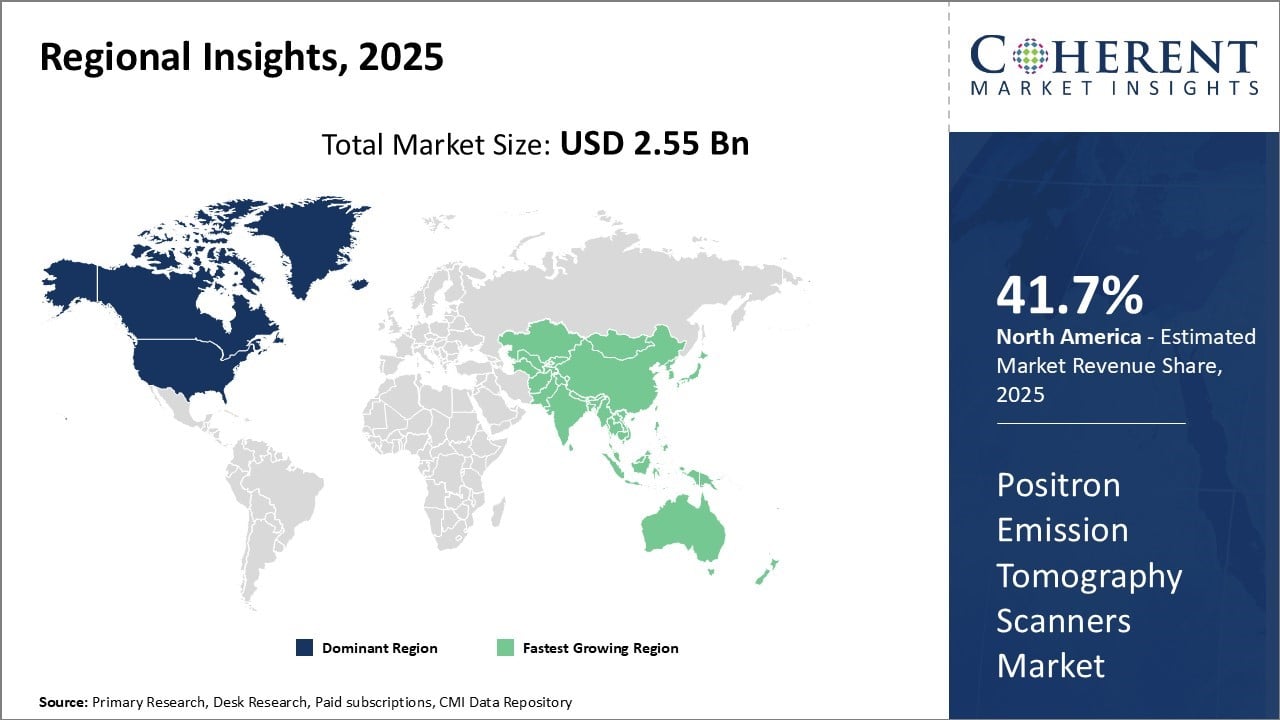
- Based on Region, North America is dominating the market with 41.7% in 2026, owing to a strong industry presence.
Market Overview
The global positron emission tomography (PET) scanners market is expected to witness considerable growth during the forecast period due to the increasing prevalence of chronic diseases such as cancer and cardiovascular diseases. Continuous technological advancements in the development and quality of PET scanners, to provide high-resolution images, can also drive the market growth during the forecast period. Adoption of hybrid PET scanners integrated with CT or MRI can also drive the market growth.
Current Events and Their Impacts
Current Events | Description and its impact |
Aging Global Population and Rising Cancer Incidence |
|
China's Healthcare Infrastructure Expansion and Technology Localization |
|
Segmental Insights
- Current Industry Events of 2026
- Market Size Estimation
- Regional Breakdown
- Competitive Landscape
- Customer Intelligence
- Segmental Analysis
- Pricing Analysis
- Key Market Drivers, Challenges & Future Trends
- Customized Insights Section
Positron Emission Tomography Scanners Market Insights, By Product Type
Technological Advancements Boost Adoption of Full Ring PET Scanners
In terms of product type, the full ring PET scanner segment is estimated to contribute the highest market share of 61.6% in 2026, owing to continuous technological advancements. Full ring PET scanners capture data from the entire circumference of the body simultaneously, thus providing better image resolution and reduced scanning time as compared to partial ring scanners. This advantage boosts demand across diverse medical settings. Novel innovations such as digital photon counting and time-of-flight technology have further enhanced the diagnostic capabilities of full-ring scanners. Their high-end configurations with upgraded detectors and data processing hardware allow procurement of finer anatomical details essential for accurate disease staging and treatment planning.
The ability of full ring scanners to effectively detect metastatic cancers and subtle abnormalities has cemented their role as indispensable tools in diverse clinical specialties, including cardiology. With continual R&D focused on performance optimization, affordability, and compact designs, the full ring scanners segment will witness growth shortly. For instance, in June 2025, Scotland’s first ever total-body PET scanner became operational at Edinburgh’s Royal Infirmary. It is jointly managed by the Universities of Edinburgh and Glasgow.
Positron Emission Tomography Scanners Market Insights, By Application
Rising Disease Burden Propelling Oncology Segment
In terms of application, the oncology segment is estimated to contribute the highest market share of 41.5% in 2026, owing to the rising global incidence of cancer cases. Cancer has become one of the leading causes of mortality worldwide, with an estimated 19 million new cases reported annually, as per WHO data. Early and accurate diagnosis plays a critical role in successful cancer management. PET imaging utilizing radionuclides such as fluorodeoxyglucose (FDG) enables detection of primary tumors and metastases with high sensitivity and specificity. This ability to map tumor metabolism at the cellular level has widened PET's clinical utility across diverse cancer types for diagnostic, staging, and restaging purposes. PET also aids chemotherapy response monitoring and tumor recurrence follow-up. With a continually aging population concurrently dealing with other cancer risk factors such as obesity and lack of physical activity, cancer incidences will increase shortly. This looming disease burden can boost demand for PET services within the oncology segment.
Positron Emission Tomography Scanners Market Insights, By Detector Type
Superior Performance Attributes Propel LSO Detector Dominance
In terms of detector type, the lutetium oxyorthosilicate (LSO) segment is estimated to contribute the highest market share of 35.5% in 2026, owing to its superior performance attributes over other detector materials. LSO crystals offer high photo-fraction and stopping power due to their high effective atomic number and density. This allows them to efficiently absorb 511 keV annihilation photons and produce signals with good timing precision. LSO crystals demonstrate high light output, resulting in superior spatial resolution, thus enabling better delineation of anatomical structures and small lesions.
LSO detectors also exhibit low intrinsic background noise and minimal afterglow effects, enabling rapid acquisition of high-quality PET images. Their properties have facilitated the development of PET systems with time-of-flight capabilities and digital photon-counting for enhanced lesion detection. With ongoing innovations to further optimize light yield and reduce cost, LSO is anticipated to maintain its predominance in detector technology owing to advantages such as superior image noise characteristics and lesion contrast. In June 2024, Siemens Healthineers introduced the Biograph Trinion PET/CT scanner, featuring LSO crystal detectors. It offers high spatial resolution, ultrafast time-of-flight performance at 239 picoseconds, and effective sensitivity up to 128 cps/kBq, enabling rapid scans and reduced radiation doses.
Positron Emission Tomography Scanners Market Insights, By End User
High Patient Volumes Drives the Hospital Segment Growth
Based on the End User insights, the Hospitals segment is expected to dominate the market in 2026. The growth of this segment can be attributed to a high volume of patients, integrated referral networks, insurance coverage for PET procedures, etc. However, the diagnostic imaging centers industry is also a rapidly growing segment. The growth is fuelled by the rise in outpatient demand for comprehensive imaging service, investments in healthcare facilities, and decreasing costs of PET systems.
Regional Insights
North America Positron Emission Tomography (PET) Scanners Market Trends
North America dominates the global positron emission tomography (PET) scanners market with an estimated market share of 41.7% in 2026, owing to strong industry presence and high healthcare expenditure in the U.S. and Canada. The region is home to most of the major PET scanner OEMs as well as radio pharmacies supplying radiotracers required for PET imaging procedures. Higher acceptance of PET as a diagnostic imaging modality relative to other regions drives the market growth. Moreover, favorable reimbursement policies have made PET scans affordable for patients.
U.S. Positron Emission Tomography Scanners Market Trends
The United States is the largest market in the North American region. It dominates the PET scanner market due to various reasons, including an increase in healthcare spending, advancements in diagnostic infrastructure, high usage in oncology, cardiology, etc., along with an increase in the preference for PET/ CT scanners, which is also driving the market. For instance, as per a report published by Cardiovascular Business, in September 2024, the use of PET scanners rose by 25% among U.S. cardiologists between 2018 and 2022, making it the second most used modality for examining coronary artery disease.
Canada Positron Emission Tomography Scanners Market Trends
Canada follows the U.S. It is the second-largest market in North America. The growth of the market in this region can be attributed to the growing support from the government for medical imaging and cancer screenings to increase awareness. High amounts of investments in public healthcare systems, collaborations taking place between hospitals and research centres, etc., are driving the market’s growth in Canada. For instance, in June 2026, Siemens Healthineers’ Biograph Trinion PET/CT scanners got the license from Health Canada. It is available all over Canada and is used for advanced diagnosis.
Asia Pacific Positron Emission Tomography Scanners Market Trends
Asia Pacific region, excluding Japan, is poised to be the fastest-growing market for PET scanners. Rapid economic development and rising healthcare investments in countries such as China and India have increased patient access to advanced diagnostic technologies. The growing incidence of cancer and cardiac ailments has led to higher demand for PET procedures. Local manufacturers are also expanding their production capacities to cater to the domestic demand. PET services providers from developed markets are entering emerging nations by establishing new operation centres or through partnerships with local players. This is expected to boost the import of scanners as well as radiotracers in the coming years.
China Positron Emission Tomography Scanners Market Trends
China dominates the Asia Pacific Positron Emission Tomography Scanners Market. This domination can be attributed to a wide range of factors, including a large aging population in the country, which leads to a rise in the number of patients with chronic diseases. Upgradation in hospital technology and support from the government are driving the market. For instance, in September 2023, NMPA gave approval to Florbetaben F‑18, which became China’s first approved amyloid-PET radiotracer for Alzheimer’s diagnosis.
India Positron Emission Tomography Scanners Market Trends
India is the second-largest market for PET scanners in the Asia Pacific region. It is an emerging market that is witnessing a robust growth due to the prevalence of cancer cases, increasing awareness regarding health, and government initiatives to improve the healthcare infrastructure. For instance, in May 2026, Mahajan Imaging &Labs in Gurugram, India, launched North India’s first ever digital AI-powered PET-CT Omni Legend machine. It can be used to enhance accuracy, speed, and early detection.
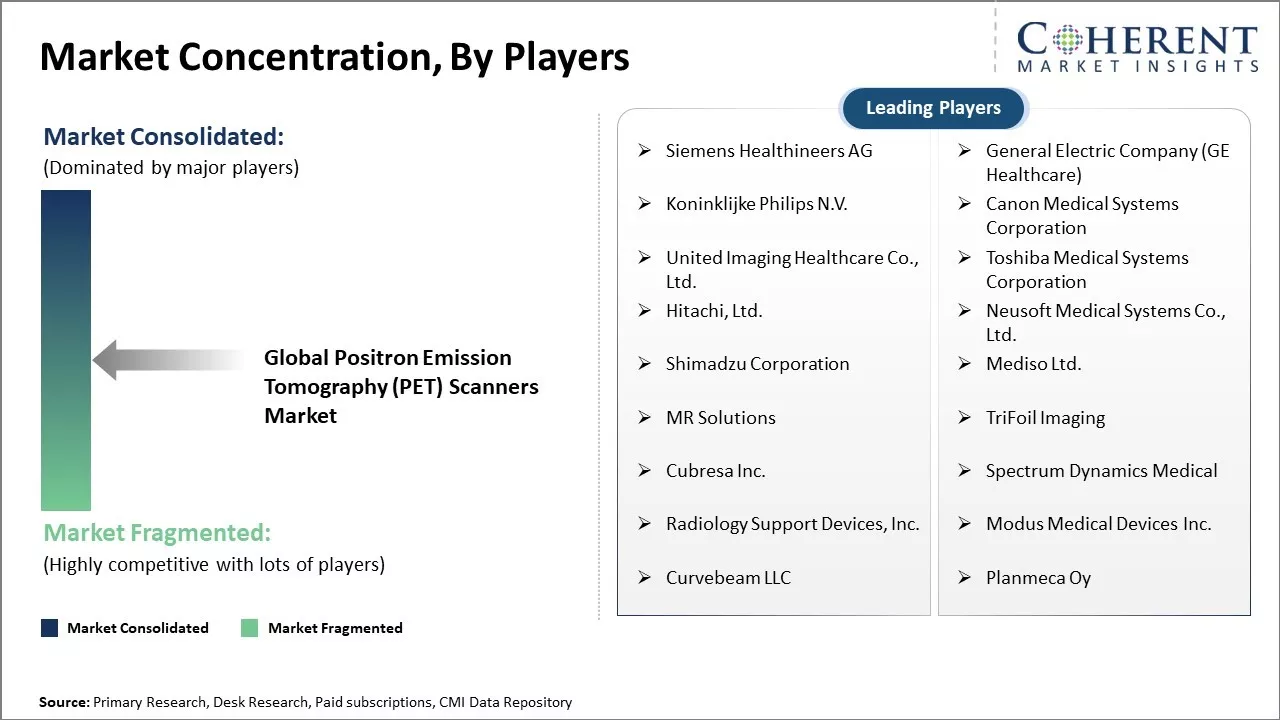
Market Concentration and Competitive Landscape
Key Developments
- In June 2025, S.L.Raheja Hospital in Mumbai, India introduced its new AI-enabled digital PET-CT and 3 Tesla MRI scanners. This move has made it the city’s second PET-CT facility.
- In June 2025, Kazakhstan announced its plans to inaugurate 5 new PET/CT centres, which would result in the expansion of its nuclear medicine network beyond the existing centers.
- In November 2023, Siemens Healthineers, a Health accompany announced the Biograph Vision. X, a positron emission tomography/computed tomography (PET/CT) scanner, has received clearance from the Food and Drug Administration (FDA). This next-generation system features a time of flight (TOF) of 178 picoseconds (ps), making it the fastest in the industry.
- In August 2022, Positron Corporation, a company specializing in nuclear medicine PET imaging devices and clinical services, acquired its first PET-CT system from its partner Neusoft Medical Systems. The "Affinity PET-CT" system is currently en route from China to its validation partner in the United States.
- In July 2022, Radialis Inc., an innovative medtech company received approval to market its Radialis PET Imager in the United States. This organ-targeted positron emission tomography (PET) system boasts advanced sensitivity to radiotracers, allowing it to produce high-resolution functional images and enhance the insights gained from molecular imaging.
Market Report Scope
Positron Emission Tomography (PET) Scanners Market Report Coverage
| Report Coverage | Details | ||
|---|---|---|---|
| Base Year: | 2025 | Market Size in 2026: | USD 2.70 Bn |
| Historical Data for: | 2020 To 2024 | Forecast Period: | 2026 To 2033 |
| Forecast Period 2026 to 2033 CAGR: | 6.0% | 2033 Value Projection: | USD 4.06 Bn |
| Geographies covered: |
| ||
| Segments covered: |
| ||
| Companies covered: | Siemens Healthineers AG, General Electric Company (GE Healthcare), Koninklijke Philips N.V., Canon Medical Systems Corporation, United Imaging Healthcare Co., Ltd., Toshiba Medical Systems Corporation, Hitachi, Ltd., Neusoft Medical Systems Co., Ltd., Shimadzu Corporation, Mediso Ltd., MR Solutions, TriFoil Imaging, Cubresa Inc., Spectrum Dynamics Medical, Radiology Support Devices, Inc., Modus Medical Devices Inc., Curvebeam LLC, Planmeca Oy | ||
| Growth Drivers: |
| ||
| Restraints & Challenges: |
| ||
Positron Emission Tomography Scanners Market Trends
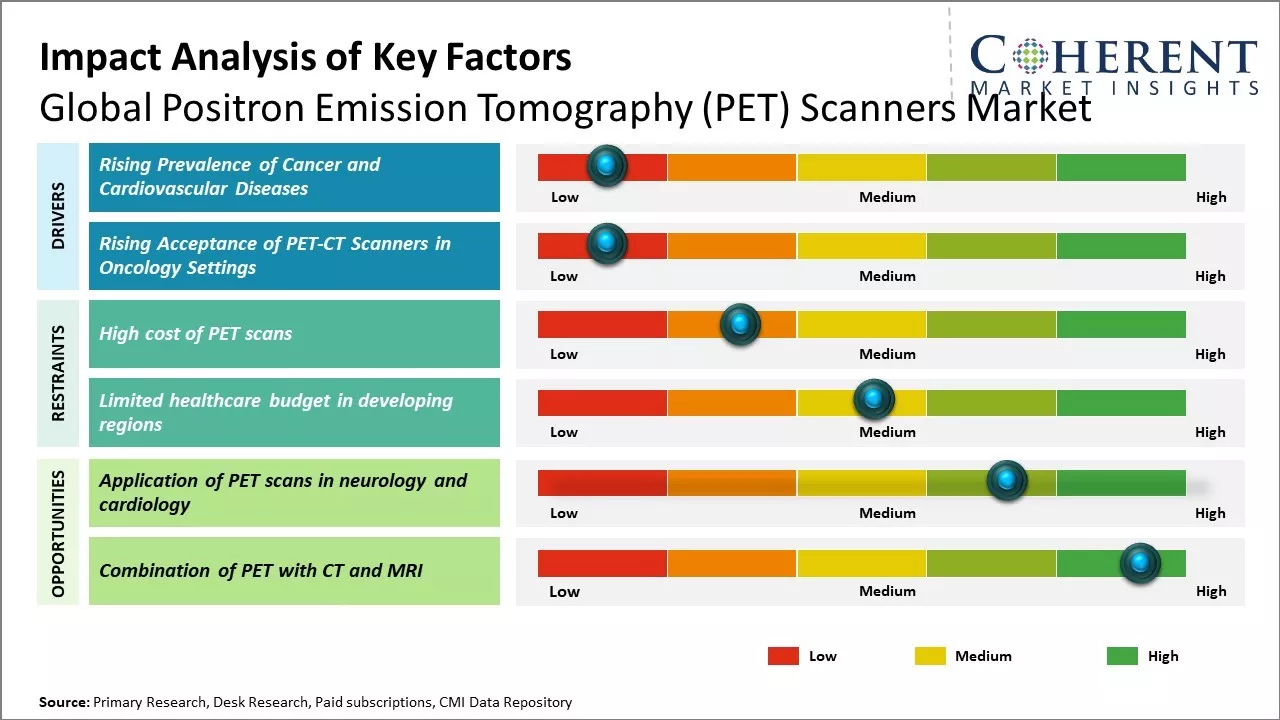
Rising Prevalence of Cancer and Cardiovascular Diseases
The rising burden of cancer and cardiovascular diseases can drive the market growth. As per the data from the WHO, cancer accounted for nearly 10 million deaths in 2020 worldwide. Key factors contributing to cancer incidence include the growing prevalence of risk factors such as smoking, obesity, physical inactivity, and changing lifestyle habits. Cardiovascular diseases remain the top cause of mortality, with over 17 million deaths reported annually, as per the WHO.
Aging population worldwide and increasing life expectancy have further contributed to escalating cases of cancer and heart conditions, which often require medical imaging for accurate diagnosis and staging of the disease. PET scanning has emerged as an important imaging modality, owing to its high sensitivity and ability to detect even small malignant tumors or early signs of heart diseases. Its utilization continues to grow rapidly, especially in developed nations, for cancer screening and detection of recurrence. This growing disease burden, as well as emphasis on early detection, can boost demand for PET scanners.
Positron Emission Tomography (PET) Scanners Market Drivers
Rising Acceptance of PET-CT Scanners in Oncology Settings
PET scanning technology has witnessed substantial evolution over the past decades. The emergence of hybrid PET-CT imaging, where both anatomical and metabolic information can be obtained from a single scan session, has remarkably increased the clinical applications of PET imaging. PET-CT scanner device is now considered the standard of care for accurate cancer staging, treatment planning, therapy response assessment, and detecting relapse or metastasis. Its high diagnostic value in oncology compared to other conventional imaging modalities like CT, MRI, or ultrasound has boosted the installation of PET-CT systems globally.
Moreover, oncologists are relying more on PET-CT for tumor imaging, considering its ability to detect cancer recurrence earlier than other tests. Reimbursement policies in several countries now cover PET-CT for various cancer indications. Therefore, expanding clinical applications and growing insurance coverage for PET-CT scans in cancer management across hospitals and diagnostic centers worldwide can boost demand for PET scanners. Manufacturers are also introducing new generation PET-CT devices with faster acquisition time, enhanced resolution, and throughput, which boosts their adoption rate in clinical oncology practice.
Positron Emission Tomography (PET) Scanners Market Opportunities
Application of PET scans in neurology and cardiology
The application of PET scans in neurology and cardiology provides immense scope and opportunity for the global positron emission tomography (PET) scanners market. PET scanning uses radioactive tracers to help reveal molecular processes in the body. It has revolutionized the field of neurological and cardiac diagnostics in recent times. PET scans help identify the presence and extent of many neurological conditions non-invasively. Diseases like Alzheimer's, stroke, epilepsy, brain tumors, and Parkinson's disease leave distinct biochemical signatures that PET is exceptionally sensitive in detecting. Its utilization is growing rapidly for both research and clinical purposes in neurology. For instance, according to a 2021 report published by the World Health Organization, dementia affects over 55 million people worldwide currently and is projected to nearly triple to 152 million by 2050 due to the aging global population.
PET scans play a pivotal role in the accurate diagnosis and monitoring of different types of dementia. In cardiology, PET scans have emerged as a powerful tool for the diagnosis of coronary artery disease. It can identify vulnerable plaque in arteries that may rupture and cause a heart attack. PET is also widely used for the assessment of myocardial viability, which has implications in decisions around revascularization procedures. In 2020, a study published in the European Heart Journal found that routine use of PET imaging led to improved patient outcomes and significantly lower healthcare costs through better identification of patients who would benefit most from invasive treatments like bypass surgery.
Analyst Viewpoint
- The PET scanner market is entering a technological inflection point where innovation is no longer a differentiator but a survival imperative. Traditional PET systems are fast becoming obsolete as the industry pivots toward digital PET and total-body imaging technologies—advancements that are rewriting diagnostic protocols and reimbursement models across oncology, neurology, and cardiology.
- Digital PET systems, which utilize silicon photomultipliers (SiPMs) instead of traditional photomultiplier tubes, offer a 2–4x improvement in time-of-flight resolution and sensitivity. This directly translates to shorter scan times, reduced radiotracer doses, and superior lesion detectability. For instance, studies at Memorial Sloan Kettering have shown that digital PET scans reduced acquisition times by 50% while maintaining diagnostic integrity.
- Total-body PET, such as United Imaging’s uEXPLORER, is more than a technological marvel—it’s a foundational shift in imaging philosophy. It enables dynamic whole-body imaging in seconds, providing simultaneous pharmacokinetic data across organs. In oncology trials, this has profound implications. Real-time tracking of radiotracer biodistribution allows for adaptive therapy planning, a capability that will only grow in value as theranostic agents proliferate.
- Data from the EXPLORER Consortium have demonstrated that total-body PET can detect metastatic lesions up to 10 mm that standard PET missed, which has significant implications for patient staging and clinical trial stratification. If CMS decides to reimburse based on quantifiable imaging biomarkers instead of static anatomical scans, total-body PET will become the gold standard—especially in complex cases like immunotherapy response tracking, where precision is non-negotiable.
- While there's explosive growth in novel tracers—[^68Ga] PSMA for prostate cancer, [^18F] flortaucipir for Alzheimer’s diagnostics, and fibroblast activation protein inhibitors (FAPI)—scanner infrastructure is lagging. A misalignment exists between pharmaceutical innovation and imaging hardware readiness. In Europe, nearly 35% of PET scanners are more than 10 years old, creating a diagnostic bottleneck even as molecular imaging becomes more targeted.
Market Segmentation
- By Product Type (Revenue, USD Bn, 2021 - 2033)
- Full Ring PET Scanner
- Partial Ring PET Scanner
- By Application (Revenue, USD Bn, 2021 - 2033)
- Oncology
- Cardiology
- Neurology
- By Detector Type (Revenue, USD Bn, 2021 - 2033)
- Bismuth Germanium Oxide (BGO)
- Lutetium Oxyorthosilicate (LSO)
- Gadolinium Oxyorthosilicate (GSO)
- Lutetium Fine Silicate (LFS)
- Lutetium Yttrium Orthosilicate
- By End User (Revenue, USD Bn, 2021 - 2033)
- Hospitals
- Diagnostic Imaging Centers
- Academic & Research Institutes
- Others
- Regional Insights (Revenue, USD Bn, 2021 - 2033)
- North America
- U.S.
- Canada
- Latin America
- Brazil
- Argentina
- Mexico
- Rest of Latin America
- Europe
- Germany
- U.K.
- Spain
- France
- Italy
- Russia
- Rest of Europe
- Asia Pacific
- China
- India
- Japan
- Australia
- South Korea
- ASEAN
- Rest of Asia Pacific
- Middle East
- GCC Countries
- Israel
- Rest of Middle East
- Africa
- South Africa
- North Africa
- Central Africa
- North America
- Company Profiles:
- Siemens Healthineers AG
- General Electric Company (GE Healthcare)
- Koninklijke Philips N.V.
- Canon Medical Systems Corporation
- United Imaging Healthcare Co., Ltd.
- Toshiba Medical Systems Corporation
- Hitachi, Ltd.
- Neusoft Medical Systems Co., Ltd.
- Shimadzu Corporation
- Mediso Ltd.
- MR Solutions
- TriFoil Imaging
- Cubresa Inc.
- Spectrum Dynamics Medical
- Radiology Support Devices, Inc.
- Modus Medical Devices Inc.
- Curvebeam LLC
- Planmeca Oy
Sources
Primary Research Interviews
- Interviews with radiologists, nuclear medicine physicians, hospital procurement managers
- Discussions with PET scanner manufacturers and component suppliers
- Input from regulatory bodies and healthcare administrators
Databases
- World Health Organization (WHO) Global Health Observatory
- OECD Health Statistics
- gov (for ongoing PET research & applications)
- U.S. FDA MAUDE Database (for device approvals and recalls)
Magazines
- Imaging Technology News (ITN)
- Medical Imaging
- DOTmed HealthCare Business News
- Radiology Today
Journals
- Journal of Nuclear Medicine
- European Journal of Nuclear Medicine and Molecular Imaging
- Radiology (published by RSNA)
- IEEE Transactions on Medical Imaging
- American Journal of Roentgenology (AJR)
Newspapers
- The New York Times – Health Section
- The Guardian – Healthcare Innovations
- Economic Times – Healthcare & Diagnostics
- Times of India – Medical Devices News
Associations
- Society of Nuclear Medicine and Molecular Imaging (SNMMI)
- Radiological Society of North America (RSNA)
- European Association of Nuclear Medicine (EANM)
- Medical Imaging & Technology Alliance (MITA)
- World Molecular Imaging Society (WMIS)
Public Domain Sources
- U.S. Food & Drug Administration (FDA)
- European Medicines Agency (EMA)
- National Institutes of Health (NIH)
- Ministry of Health and Family Welfare (India)
- World Bank – Health expenditure and infrastructure reports
- PubMed Central (PMC) – Open-access research
*Definition: Positron Emission Tomography or PET scanners are medical imaging devices that help doctors diagnose and manage diseases. PET scanners detect gamma rays emitted indirectly by a positron-emitting radionuclide (tracer), which is introduced into the body on a biologically active molecule. The three-dimensional anatomical images provided by PET scanners allow practitioners to see how organs and tissues are functioning, to accurately detect and localize tumors, determine the stage of some cancers, and guide treatment.
Get access to 250+ pages report
Every segment, forecast, competitor profile and data table behind the analysis above — available for instant download.
- ESOMAR Member
- ISO 9001:2015 Certified
- D-U-N-S Registered
- GDPR & CCPA Compliant
Missing comfort of reading report in your local language? Find your preferred language:
Transform your Strategy with Exclusive Trending Reports
Frequently Asked Questions
The Positron Emission Tomography Scanners Market is estimated to be valued at USD 2.70 Bn in 2026, and is expected to reach USD 4.06 Bn by 2033.
The CAGR of the Positron Emission Tomography Scanners Market is projected to be 6.0% from 2026 to 2033.
Rising prevalence of cancer and cardiovascular diseases and rising acceptance of PET-CT scanners in oncology settings are the major factors driving the growth of global positron emission tomography (PET) scanners market.
High cost of PET scans and limited healthcare budget in developing regions are the major factors hampering the growth of global positron emission tomography (PET) scanners market.
In terms of product type, the full ring PET scanner segment is estimated to dominate the market in 2026.
Siemens Healthineers AG, General Electric Company (GE Healthcare), Koninklijke Philips N.V., Canon Medical Systems Corporation, United Imaging Healthcare Co., Ltd., Toshiba Medical Systems Corporation, Hitachi, Ltd., Neusoft Medical Systems Co., Ltd., Shimadzu Corporation, Mediso Ltd., MR Solutions, TriFoil Imaging, Cubresa Inc., Spectrum Dynamics Medical, Radiology Support Devices, Inc., Modus Medical Devices Inc., Curvebeam LLC, and Planmeca Oy are the major players.
North America is expected to lead the global positron emission tomography (PET) scanners market.